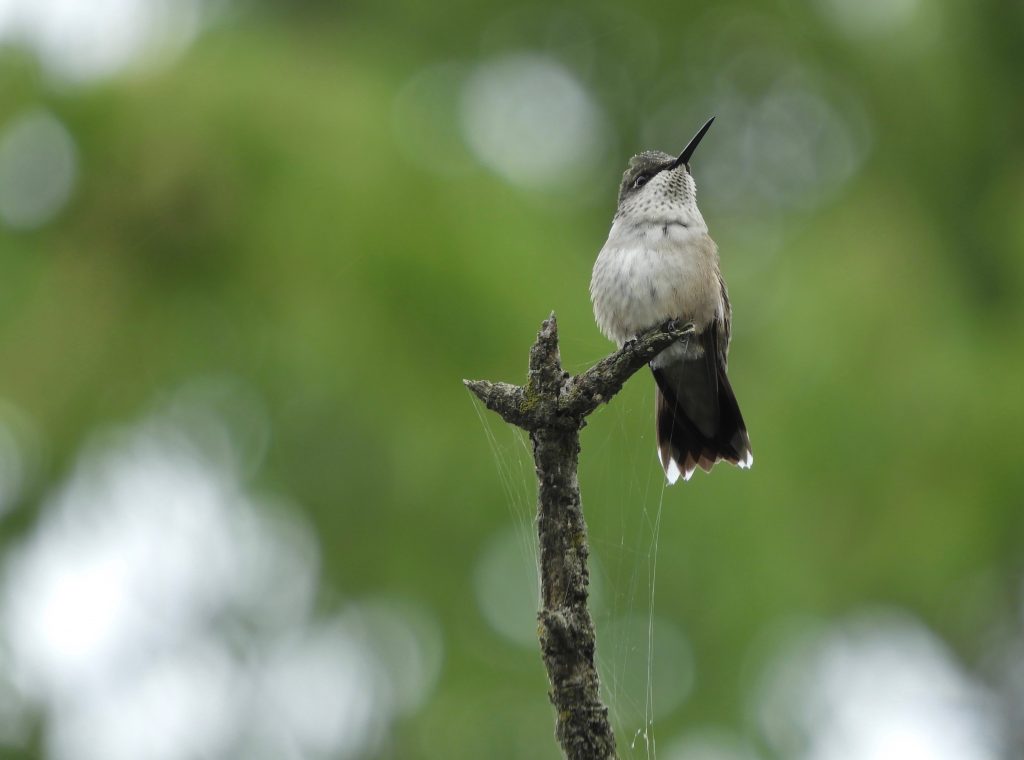
Ruby-throated Hummingbird

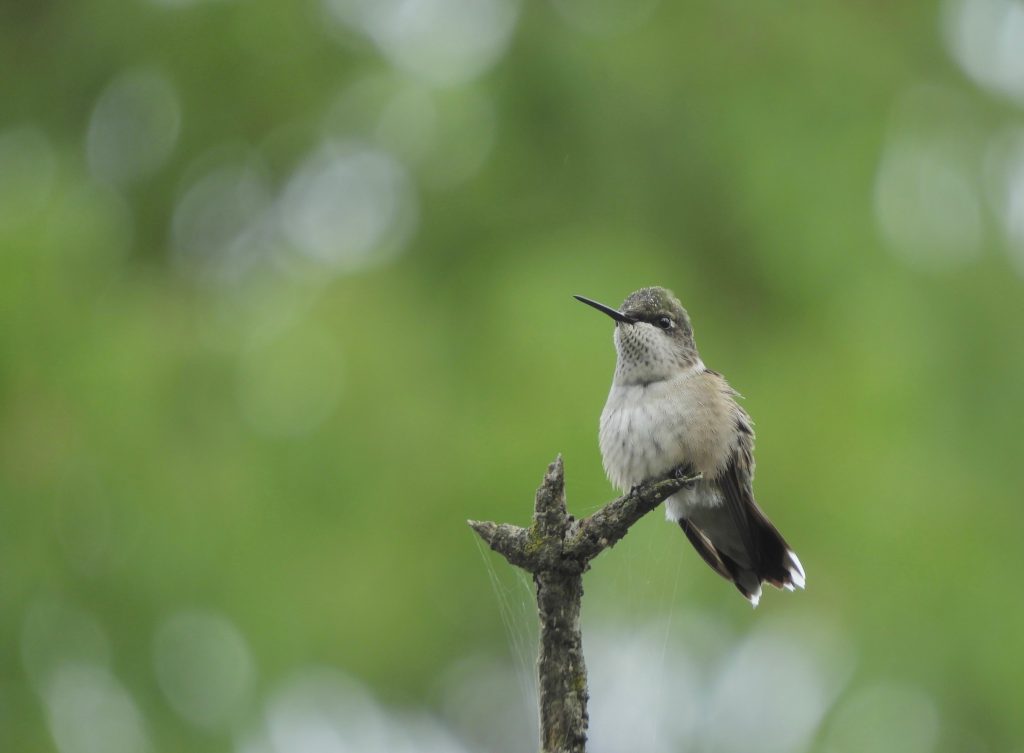
RBG. Hendrie Valley, Burlington ON. August 26 2020. On this morning’s walk around familiar trails, there was almost too much to choose from. Late August, slightly cooler weather and birds are on the move, these are the early days of what will become a flood of migrants heading south. I look at them and wonder how they know what they know; how does this five-iridescent-grams of a young Ruby-throated Hummingbird, know that it’s time to go to Panama? Science has teased out answers but not all of them, not the biggest one – how they know what they know.

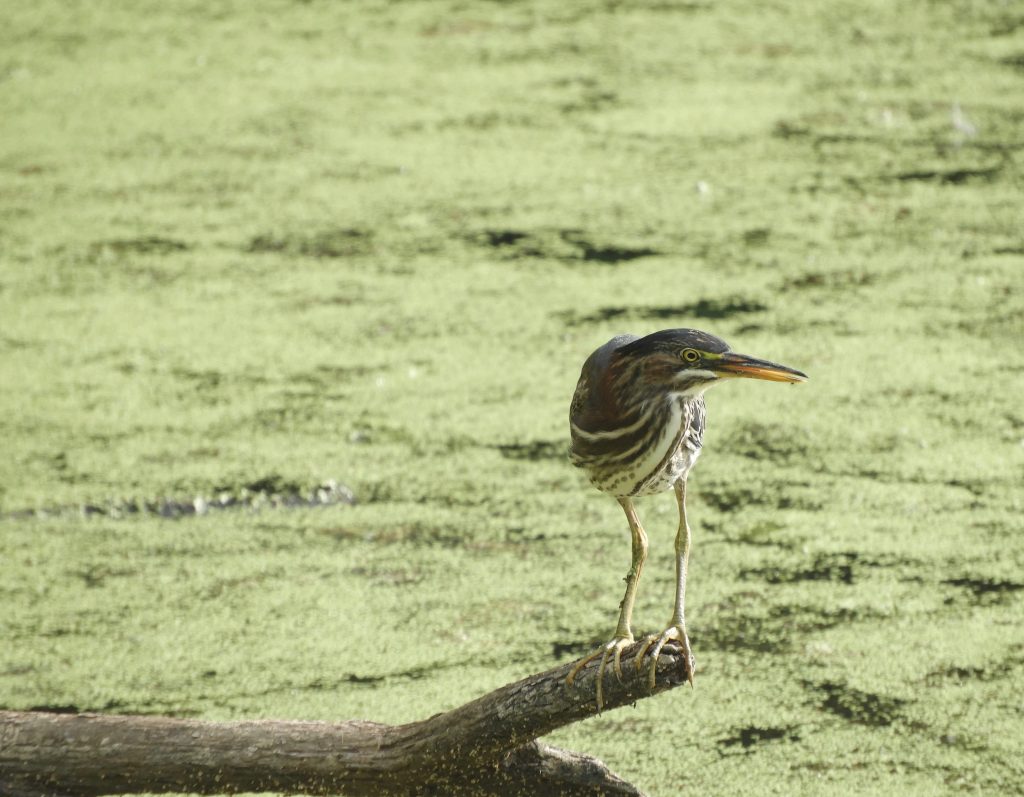
The hummingbirds was one of several attention getters, there was also: a family group of Redeyed Vireos – one of my favourite birds and one that I have not seen enough of this strange summer, a Warbling Vireo, a couple of Ospreys, one of them holding a flapping fish, and a beautiful young Green Heron stalking the length of a sodden log, peering and posturing, hoping to spearfish a late breakfast.
Warbler species can be a difficult identification challenge in fall. We found three: a small group of American Redstarts flitting and foraging, they are easy enough to identify at any time of year – as long as you can follow their constant movement; a lucky couple of photographs enabled us to identify a Blackburnian Warbler in its fall drabness, a striking contrast to the flaming orange beauty of spring; and two active Chestnut-sided Warblers – so utterly different now in fall plumage.
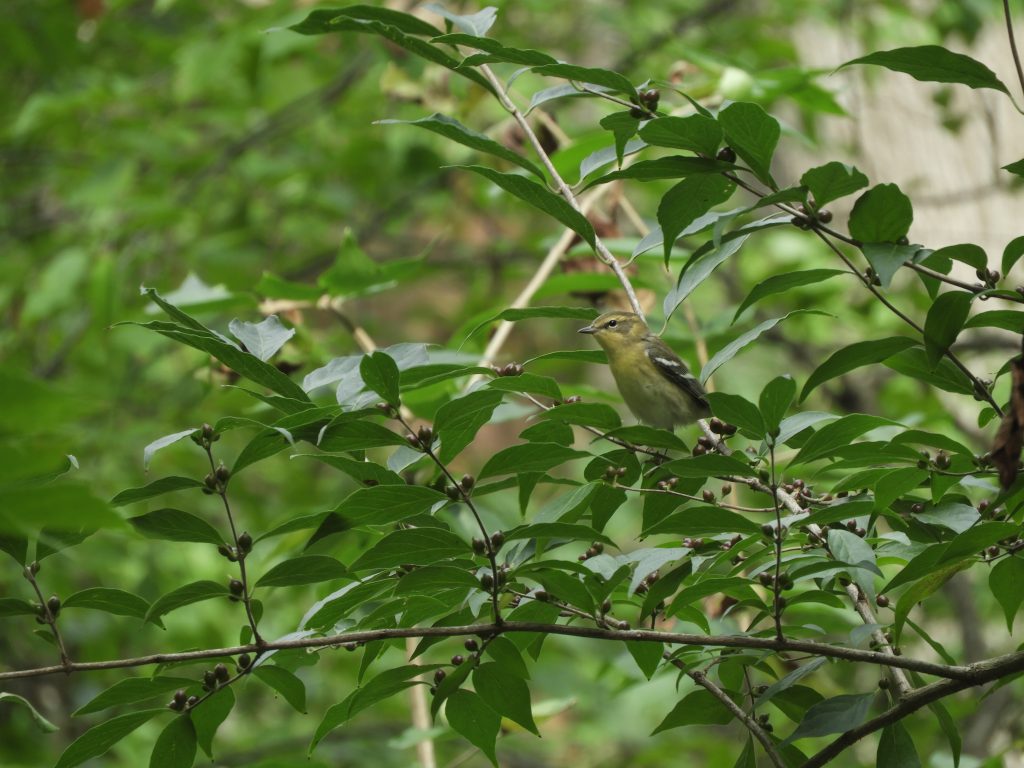
Blackburnian Warbler

Quite unexpected was this Pied-billed Grebe. Maybe it’s the time of year or maybe it’s just a naive youngster, but Pied-billed Grebes are usually difficult birds to get close to. They prefer to keep their distance, and, if in the slightest bit threatened, retreat into pond-side vegetation or dive, sometimes slipping below the water like a submarine. Not this one though, it was on the edge of a too shallow pond, barely 5 metres from us and showed no alarm about our presence, conversation or movement.
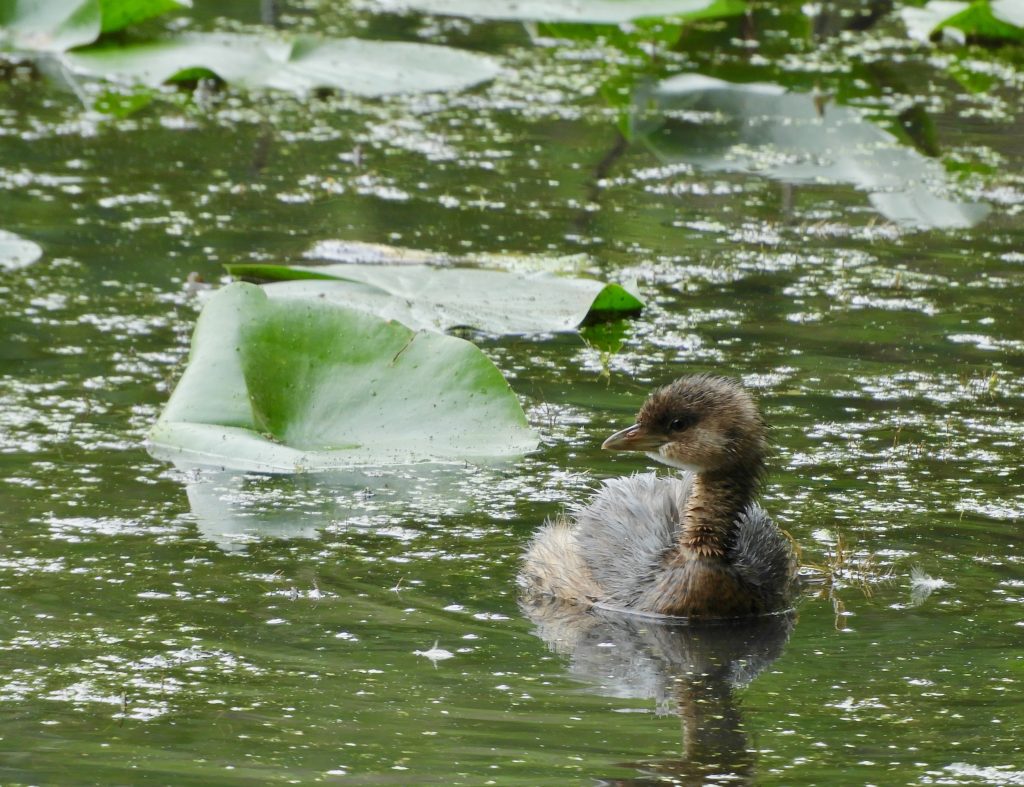
Pied-billed Grebe

Our 3-hour morning hike turned up nearly 40 different species. All the familiars: Blue Jays, American Goldfinches, Gray Catbirds, Great Blue Herons and Hairy Woodpeckers included, but some intriguing specials too. The best of which could easily be the Pied-billed Grebe, the Blackburnian Warbler or Chestnut-sided Warblers, but I think My Bird of the Day would be this lovely young female Ruby-throated Hummingbird perhaps for the secrets she holds.
Common Nighthawk

Home, Burlington, ON. August 23 2020.  I write this as the last light of the day smudges the north-western horizon leaving faint pink edges around distant thunder clouds. We have just come in from sharing a home-made peach pie with friends and catching up on progress: them, us, various children and partners, and grandchildren of all ages.

In the warm comfort of an August evening it entered my mind that I should look skyward in case a Common Nighthawk should happen to pass overhead, this is about the time of year and time of day when they might be seen.  And, almost as if it had been staged, one and then a second passed quite low above me. Their characteristic flight makes me think of them as if hanging on long springs, and perhaps described best by Pete Dunne, “ Flight is wheeling, darting and tipsy. Wingbeats are given in a quick or slow series followed by an unsteady raised-wing glide.”

Yesterday, a small, carefully distant, group of birder friends and I had been discussing the annual, late summer flight of Common Nighthawks. We had noted that now, late August, is the time to be looking for them and dusk seems to be their favoured flight time so, we’ve been watching.  A bit of research found that they have a long flight ahead of them: from here to Florida, across the Gulf of Mexico to the Yucatan Peninsula, then continuing south to half way down the length of South America into southern Brazil, Paraguay and Uruguay where they’ll spend our winter; roughly 10,000 kilometres and all on a diet of insects caught in mid-air. Reportedly, they often move in big, leaderless flocks, sometimes in long rectangles, adding local birds, pied-piper style, as they go. Curious and incredible.

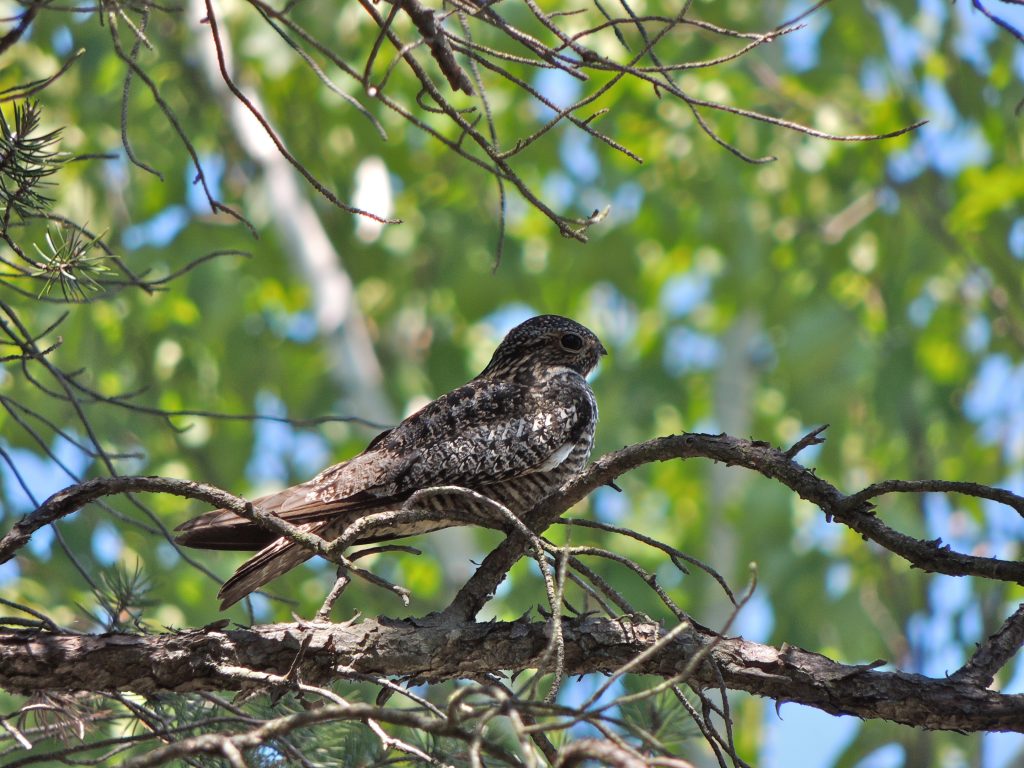
It is unusual to see a Common Nighthawk anywhere other than overhead because by day they remain hidden and, like all members of the Nightjar family, they are cryptically patterned. Several years ago, we disturbed one on its forest-floor nest, it flew moth-like to a nearby branch and sat, waiting for us to go and hoping not to be seen. Here it is.

P.S. The day after this post was published, a friend emailed me to say she’d like to see a nighthawk, had never seen one. She lives in quiet part of town, fairly close to Lake Ontario where it should be fairly easy to see one given the right time and tide. I replied later and we agreed to meet at 7 that evening (yesterday August 24) in a strategic, wide open view, spot (actually a cemetery). Hardly had we set up our folding camp chairs and blown the dust off our binoculars than the first nighthawk appeared and passed almost overhead, then second, third, fourth ..all the way up to 7. Wow!

Those Swallow kids

Northern Rough-winged Swallow

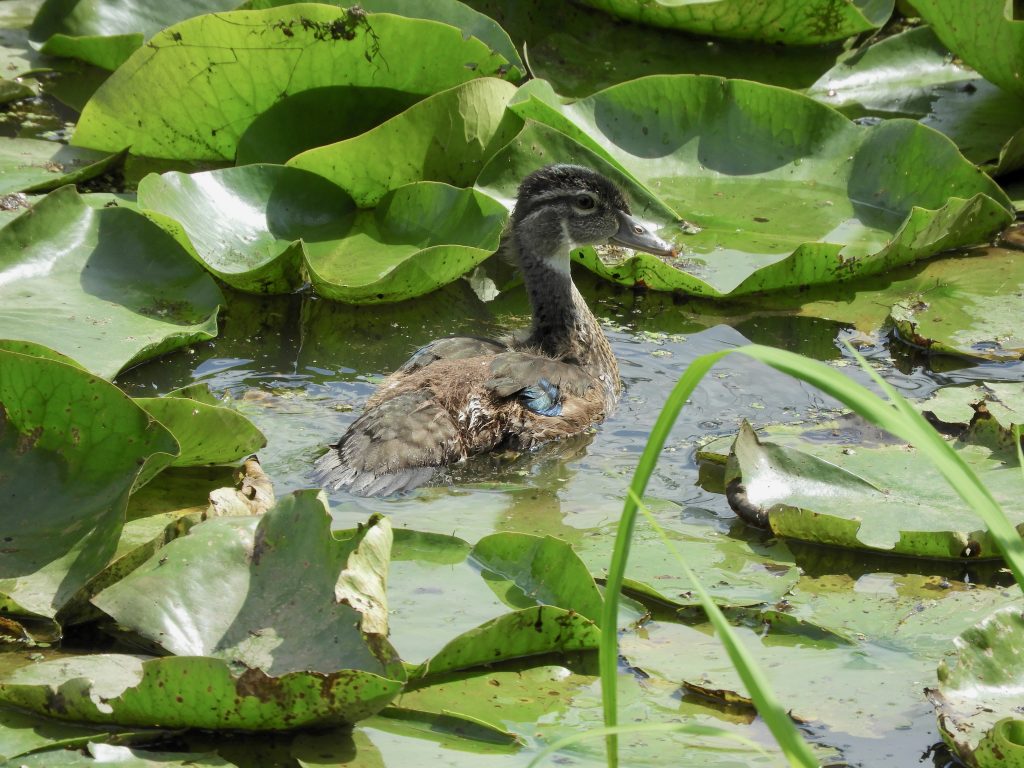
Royal Botanical Gardens. Hamilton and Burlington ON. August 17 2020. I have been following the fortunes of a Barn Swallow nest over the past couple of weeks, it is located under a pond-side viewing platform . The platform is a good birding place to linger, it has a long commanding view of the pond to a far, dark forested bank. The pond itself is a sure place to find Wood Ducks, Mallards, Great Blue Herons and Belted Kingfishers and its edges are thick with Cattails (aka Bullrush or Reedmace in other parts of the world) and more recently Wild Rice has become established. A week ago, I photographed this young Wood Duck just a few feet out from the platform.

I saw it again today together with its mother and siblings and most of that immature pin-feather growth and fluffiness had grown out.

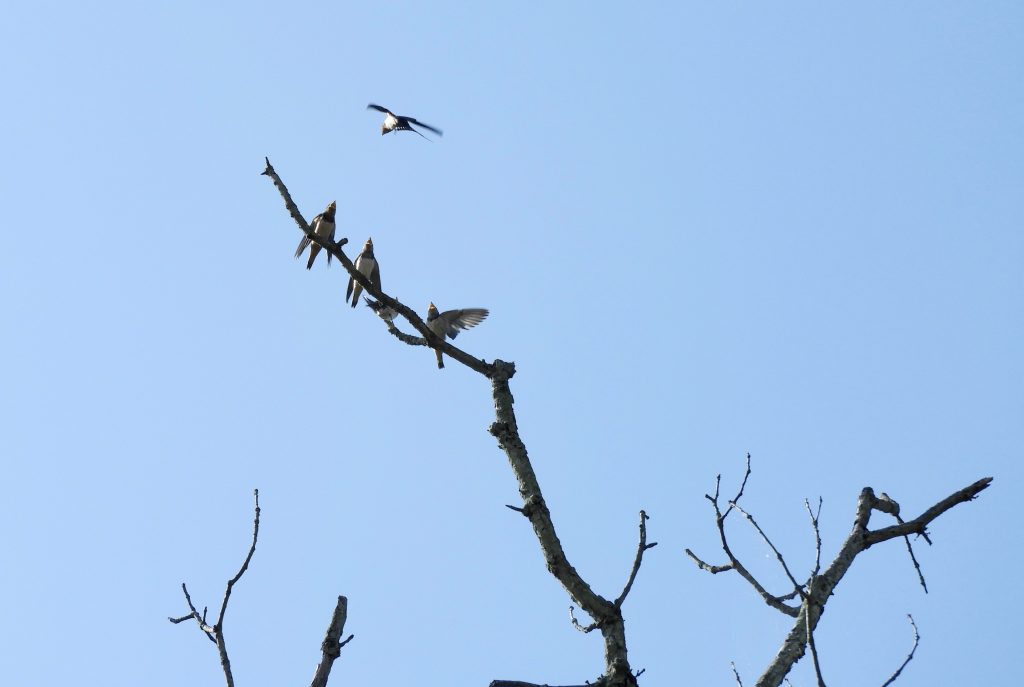
Back to the Barn Swallows. A pair has nested under the platform for several years, always in the same spot. The presence of the nest only becomes evident with the endless coming and goings of the food-carrying adults. Two weeks ago, I noticed they were delivering food again so probably to their second brood of the year. It takes about five or six weeks to complete the full nest-preparation to fledging cycle so they could have started on today’s brood in early July.   So, it’s possible that they had already raised (or at least tried to raise) an earlier brood here starting in mid-late May, shortly after arrival. Anyway today, the latest brood were lined up on a bare branch above the platform, waiting for food.

Young Barn Swallows with food arriving

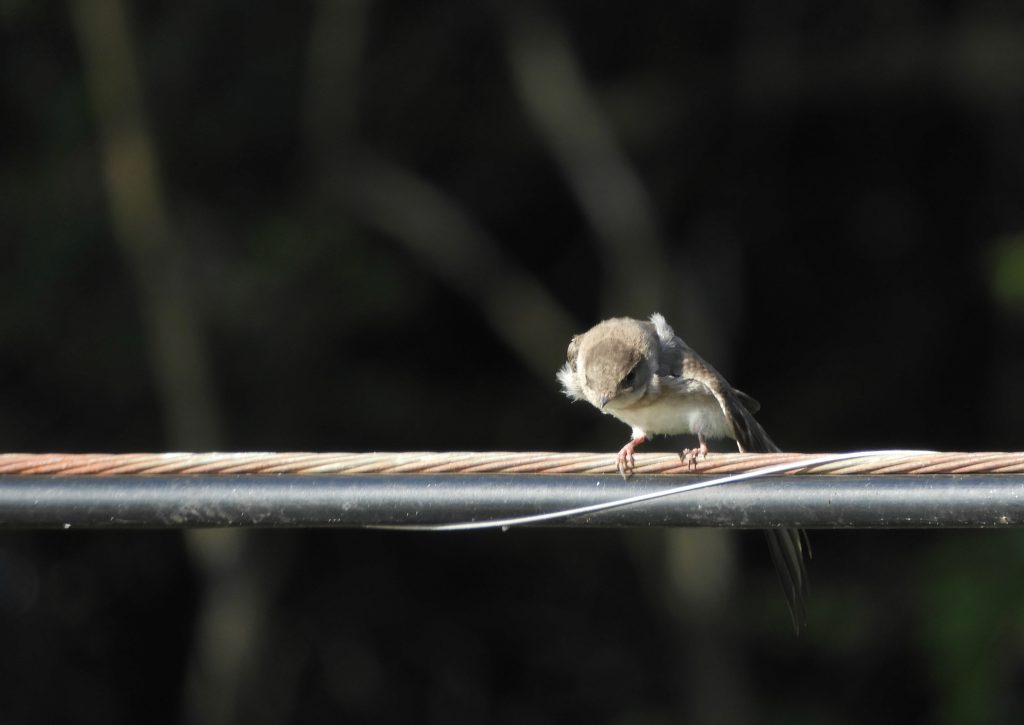
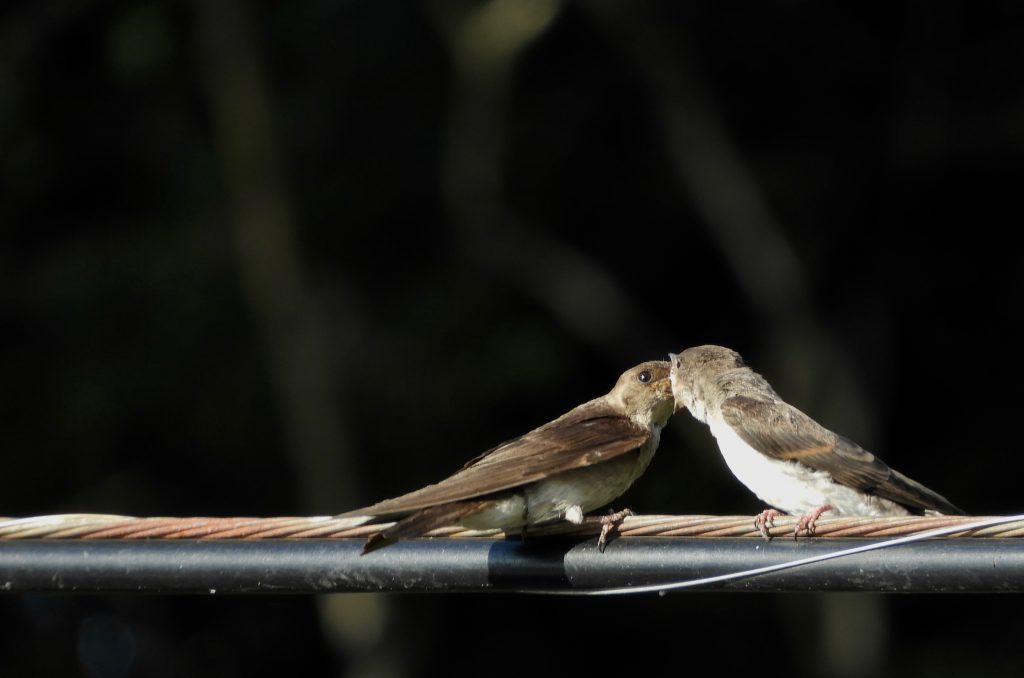
This was not my first encounter with hungry swallow kids today. Shortly after sunrise, along a lakeside path where Northern Rough-winged Swallows are often to be found, I watched two fledglings sitting on an overhead wire, patiently waiting for breakfast.  As a parent approached with food, the young started the anxious, feed-me feed-me twittering. At the masthead above, a youngster sits waiting and below we see the parental duty fulfilled.

Northern Rough-winged Swallows.

I’ll close by noting that I got a glimpse of fall migration today, passerine migration that is, the little birds. Some shorebirds have been conspicuously on the move for a month, not so the passerines. But today as I walked a creek-side trail I glimpsed a Least Flycatcher, it was nervous and kept its distance but I took it as an early migrant and I expect and hope there will be lots more to come. 

Green Heron

Green Heron

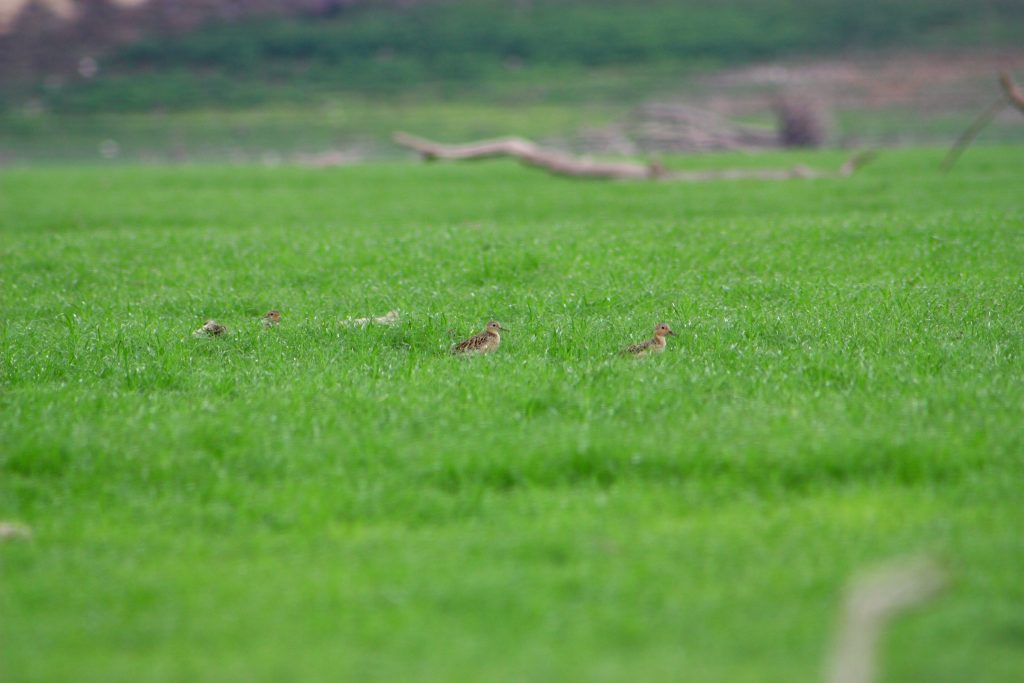
Grimsby Wetlands, Grimsby, ON , August 16, 2020.  I saw a Buff-breasted Sandpiper this morning – through my telescope, some 350 metres distant (according to Google Maps), and hard to make out against the background clutter. Well, but I saw it and it is a helpful and unexpected addition to my 5-mile-radius bird list. But I can’t say it was a particularly memorable birding moment, unlike my last Buff-breasted Sandpipers. That was May 2013 in Suchitoto, El Salvador. There, I saw a field of them, still a long way off but rather charming as they sought food among longish grass, their heads popped up in turns to check for trouble. It is a vivid memory for the setting as much as for the bird. I mean, why would anybody be birding in distinctly unsafe El Salvador of all places? Well, you can find out more by following this link.

Buff-breasted Sandpipers

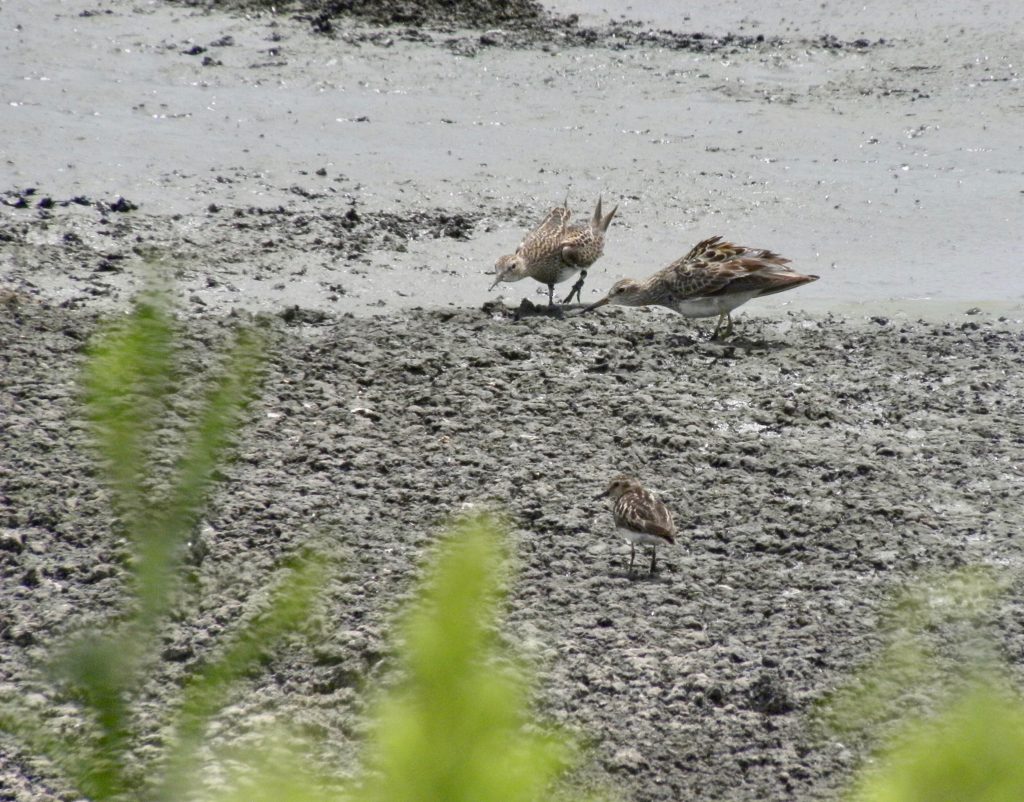
But before the Buff-breasted Sandpiper stop, I revisited the wetland that has been so productive of shorebirds in the past couple of weeks. The soggy mudflats had largely dried up and where some water remained, I found four Pectoral Sandpipers picking for food. They provoked another vivid memory, this time of Pectoral Sandpipers in late July nine years ago when I watched several at quite close quarters and witnessed a lengthy posturing squabble between two of them. What purpose the elaborate aggression served I can only guess at, perhaps a lingering testosterone-driven bit of oneupmanship. Here’s a photo of those two combatants.

Pectoral Sandpipers

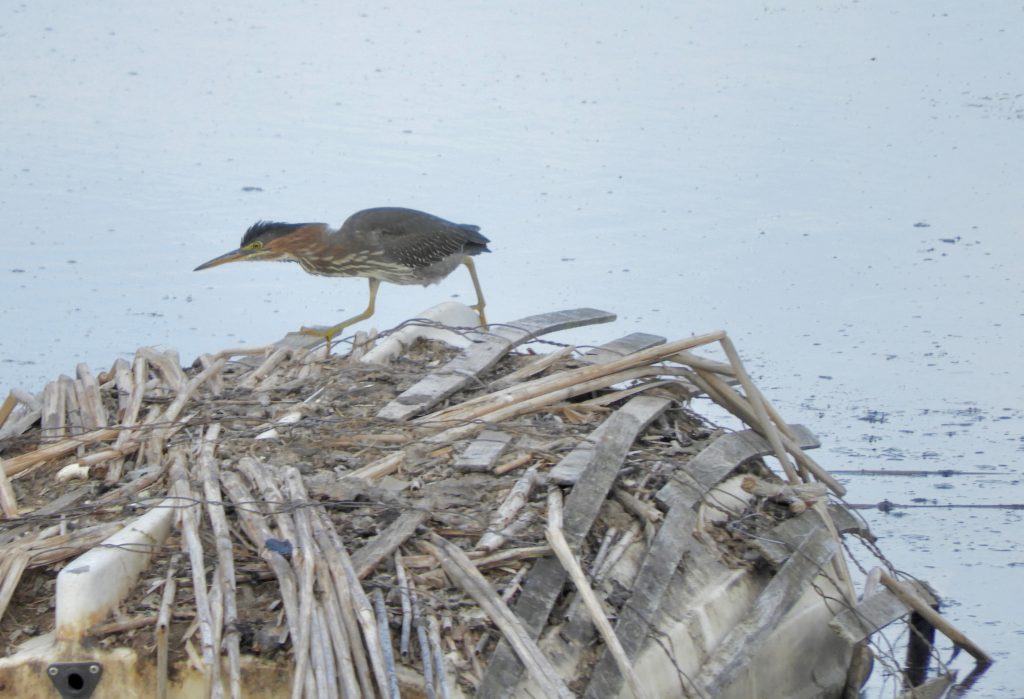
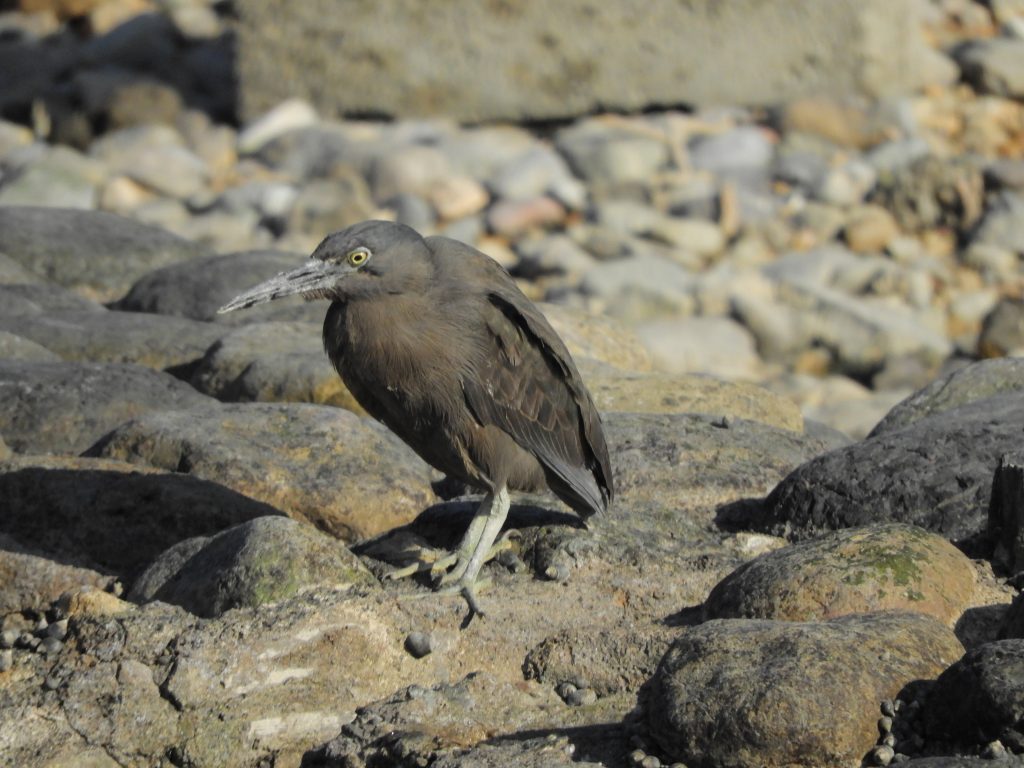
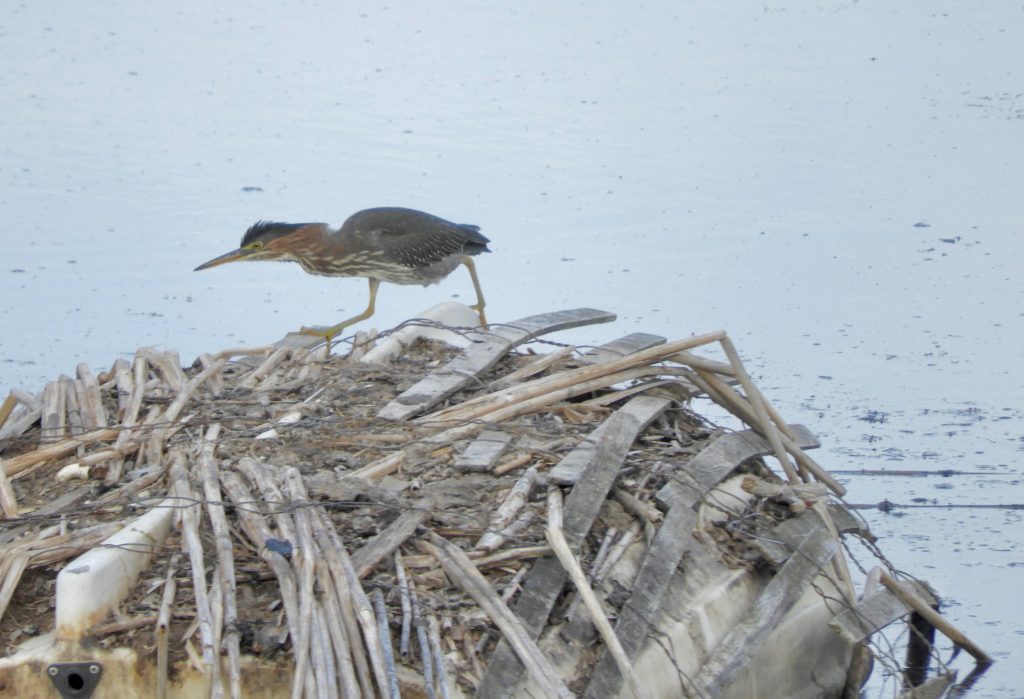
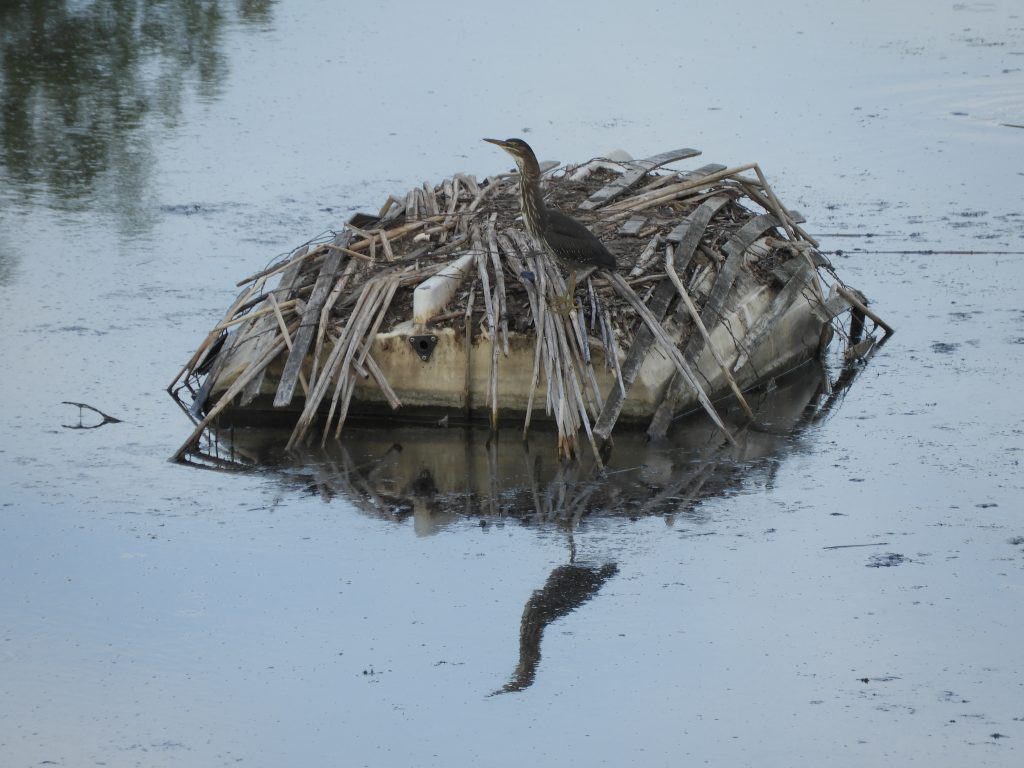
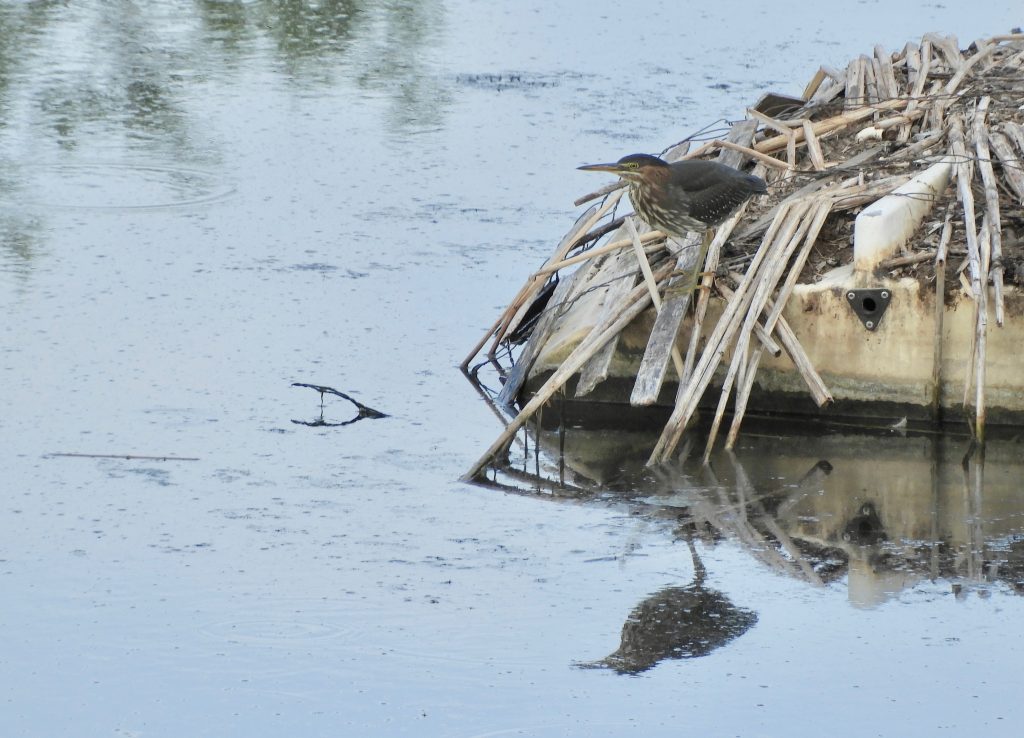
Found on a raft of old weeds in a nearby pond, my Bird of the Day this morning was a streaked-necked, and therefore young, Green Heron prowling the water’s edge for a meal. It reminded me (another flashback) of a Striated Heron seen and photographed in Oman earlier this year. It had really baffled me because it is a melanistic Striated Heron, a colour aberration not illustrated in my field guide. The Striated Heron and the Green Heron are very closely related, in fact a debate rages as to whether they are both sub-species of a superspecies. I’ll leave that with the hairsplitters.

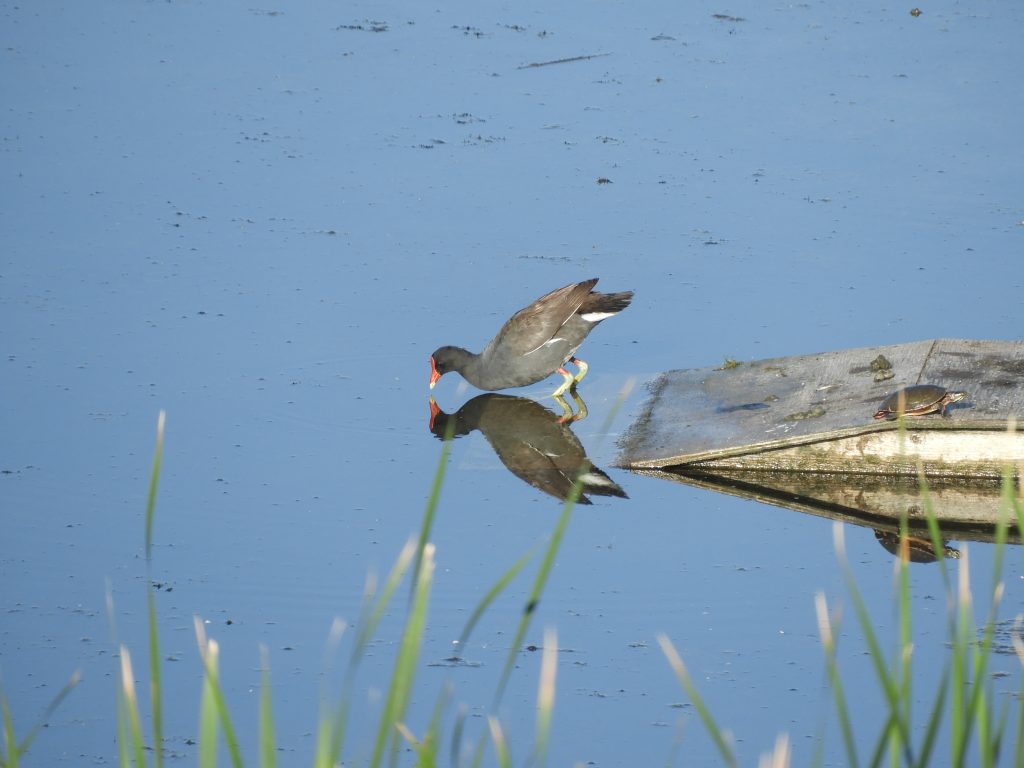
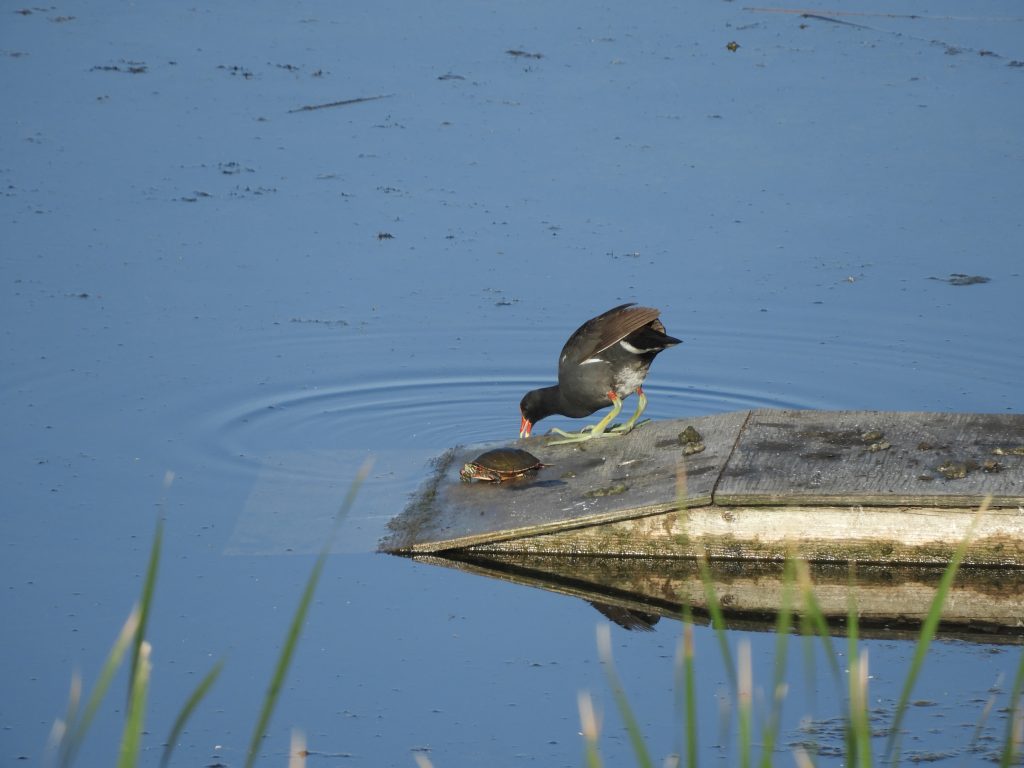
Common Gallinule

Grimsby Wetlands, Grimsby, ON , August 7, 2020.  I was fairly sure I’d run into a Common Gallinule today, a family of adults and young have been much discussed and celebrated among birder circles lately. Although this part of Canada is considered well within Common Gallinules’ range they are nevertheless a little uncommon and noteworthy when found. 

Where I grew up in the south of England, their very close lookalike cousin the Eurasian Moorhen was reliably common and could be found on almost any reed-edged water by almost any band of wandering boys. For a while the gallinule and moorhen were considered to be the same species but closer study put paid to that belief. I did a bit of research and found the gallinule family to to be globally widespread with some member-species found solely on some very lonely mid-South Atlantic islands; and they all look much the same.

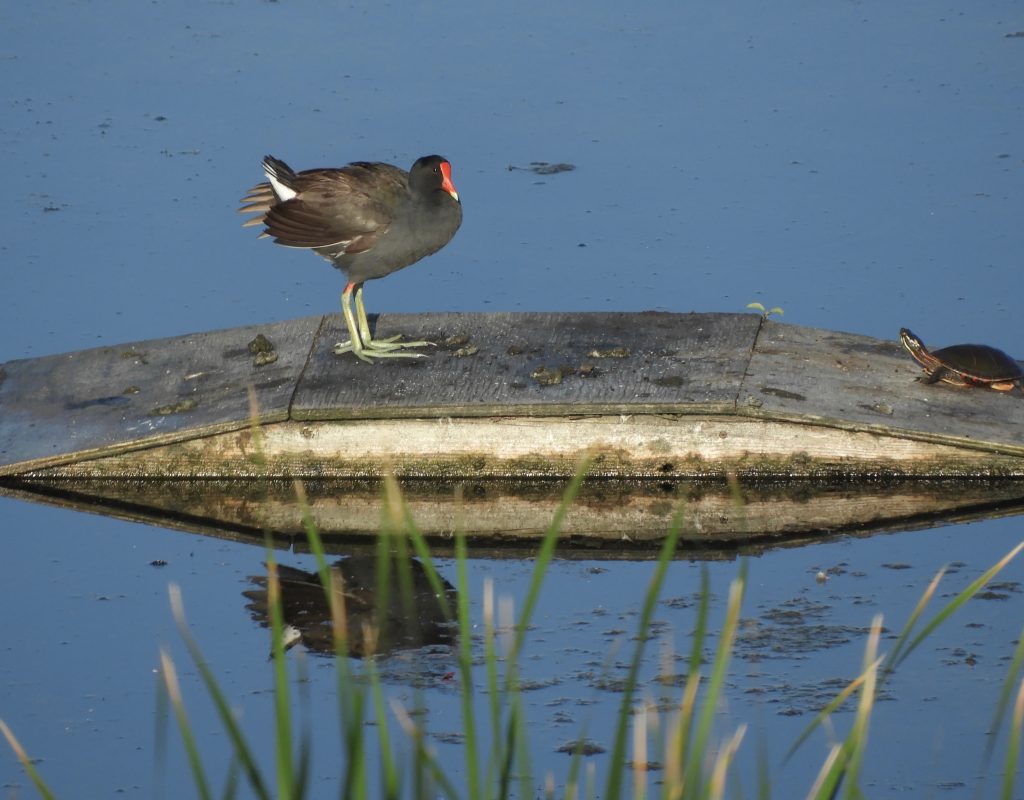
Today’s Common Gallinule was easily seen and watched from a screened viewing platform so it was hardly an exercise in birding skill, but satisfying nonetheless.  My fieldcraft skills had been tested a little earlier sorting through a number of shorebirds, mostly Lesser Yellowlegs, although a lone Semi-palmated Plover was rewarding particularly as it was a lifer-triumph for a youngish birder-friend who happened to be there at the same time.

We watched the gallinule for quite a while, both of us with our cameras working overtime, I came home with around 350 photos to sort through. It was very photogenic, preening and occasionally dipping for something edible, note the little Painted Turtle sharing the platform.

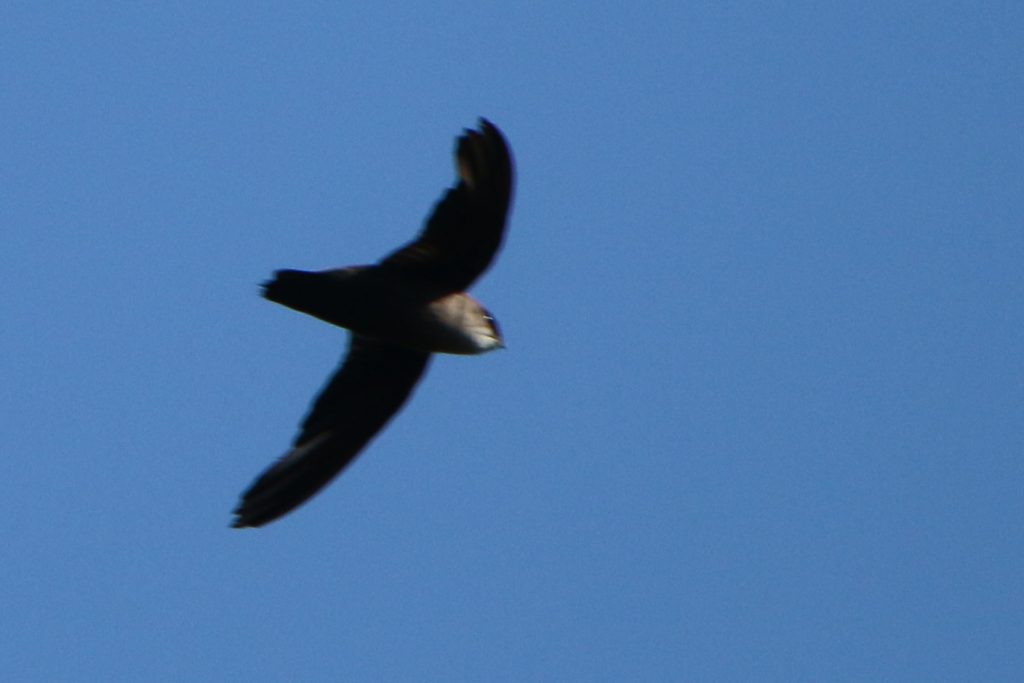
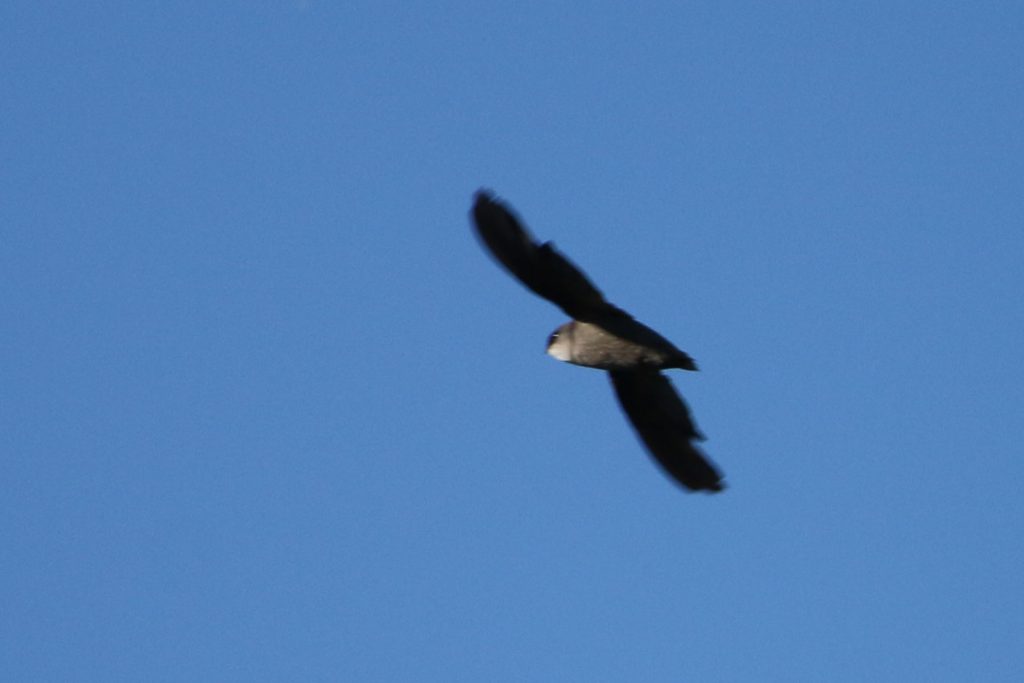
Chimney Swift – photo by Colleen Reilly

As I was preparing to leave, I made a passing comment on a couple of Chimney Swifts wheeling around. My youngish birder-friend was somewhere between startled and impressed, “I’ve never seen a swift.” She said. They were her second lifer for the day and as I left she was following the swifts with her long-lens camera. Here’s a couple of her photos, an accomplishment because swifts in flight are hard enough to follow visually and surely that much harder to photograph.

Photo- Colleen Reilly