Short-billed Dowitchers

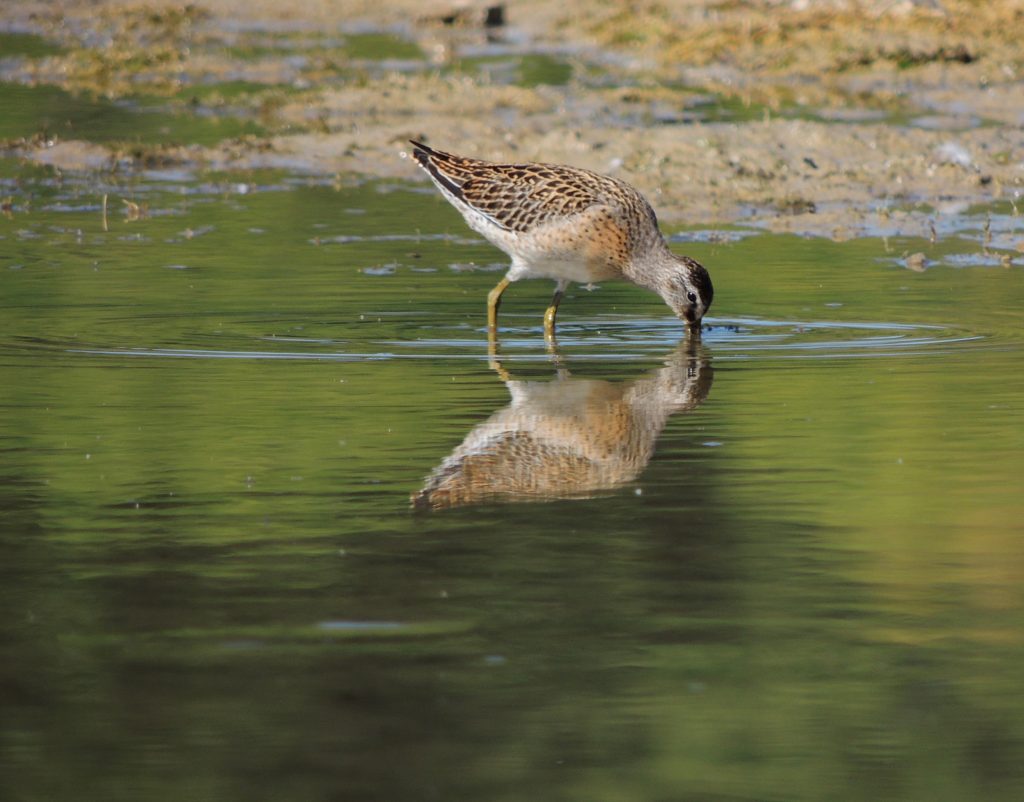
Grimsby Wetlands, Grimsby, ON , August 4, 2020.  This may end up being more of a photo-essay than a day-in-the-life-of-a-birder because todays birds, Short-billed Dowitchers are so photogenic, in the right light anyway. It was not the right light this morning, a day’s rain had sent the sun packing, it was soft, misty and things squelched, the laundry had not yet dried.
Semi-palmated Plover

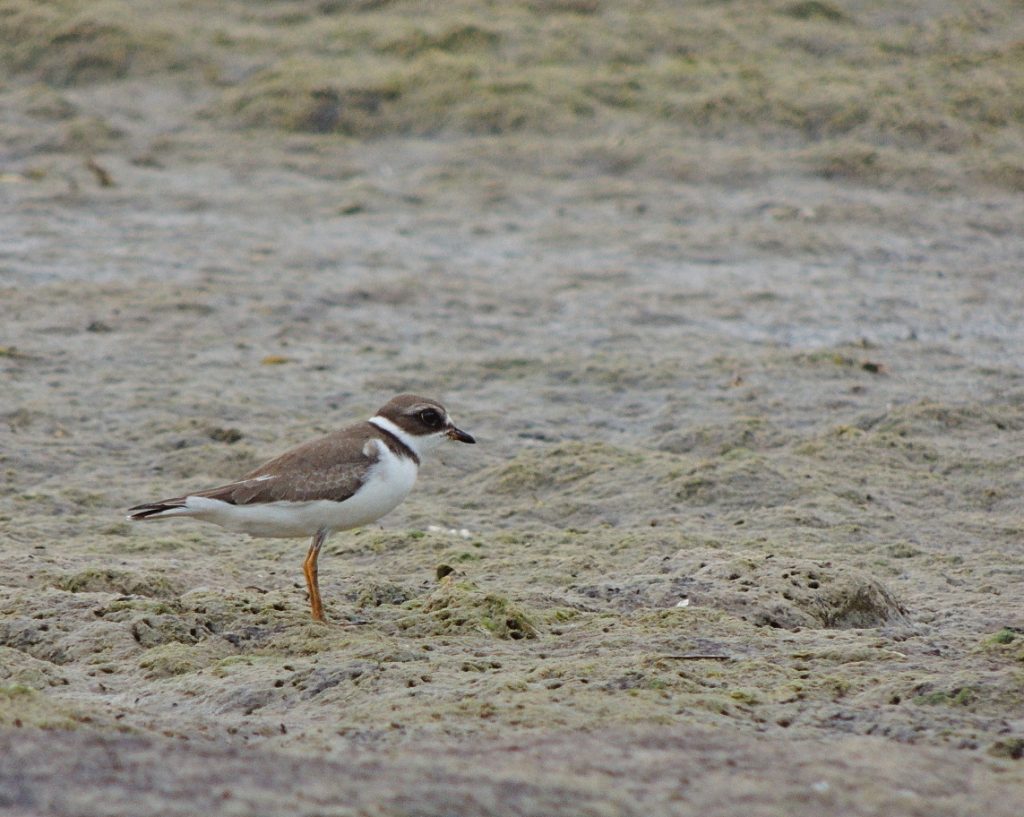
I wanted to see if there had been any change in the cast of characters at this wetland; there had. A Semi-palmated Plover and a Pectoral Sandpiper were both new arrivals and two Short-billed Dowitchers too. Numbers had thinned a bit but I enjoyed sorting through and identifying Spotted, Solitary and Least Sandpipers, Greater and Lesser Yellowlegs, a scattering of Killdeers and a few Virginia Rails too.
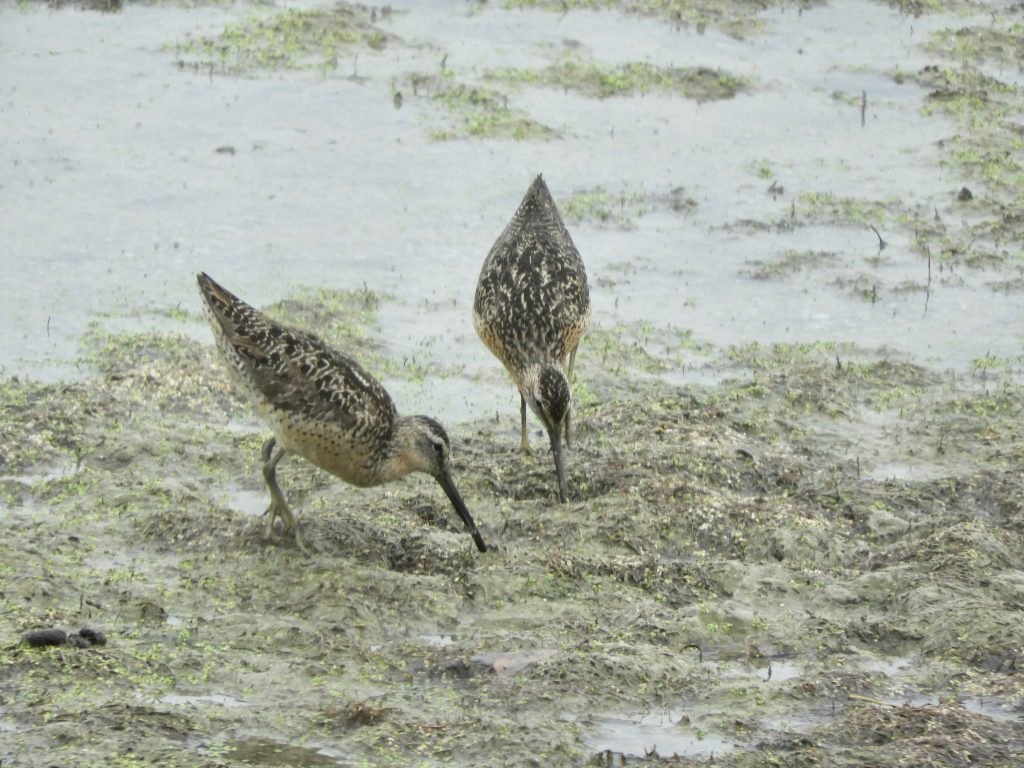
I tried to honour the Dowitchers (above) with suitable photos befitting them as My Birds of the Day, but fell short. These gloomy shots were the best I could do, my mistake was in overreaching in low light conditions.
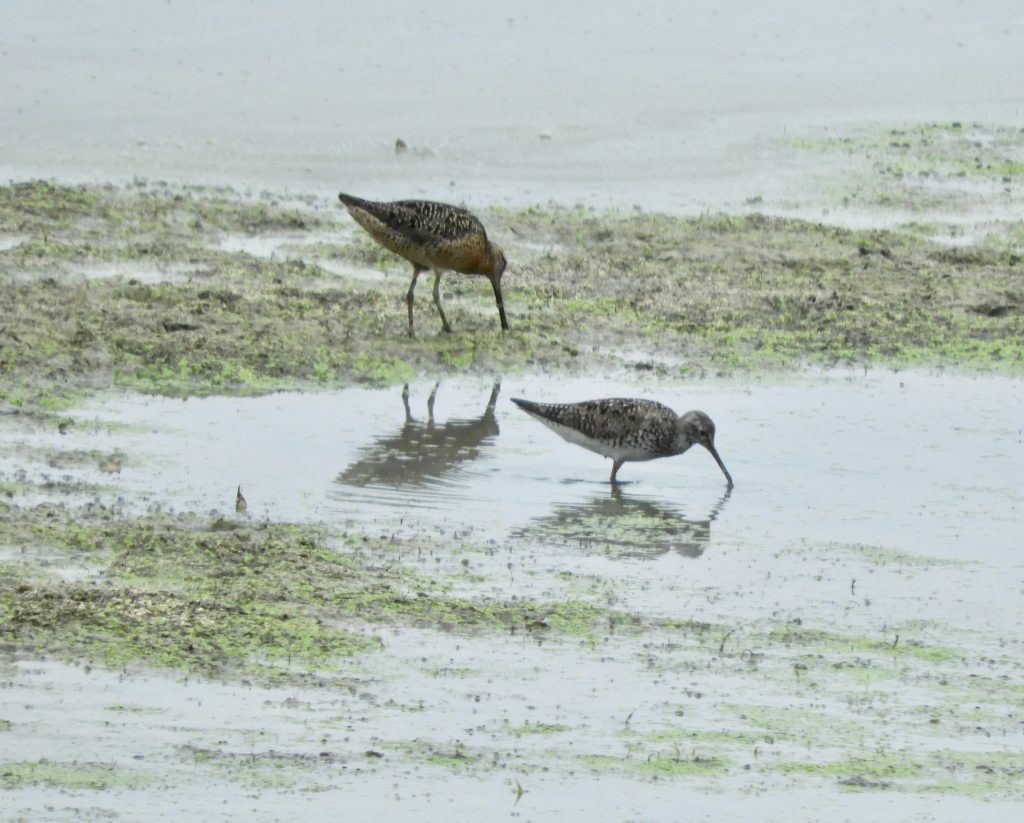
Short-billed Dowitcher with Lesser Yellowlegs in front

Good light does justice to the delightful wash of chestnut on a dowitcher’s breast and the spangling of warm browns, ochre and creams that overlay their wings and back. They carry an overall sense of balance, achieving a happy medium of shorebird proportions unlike their leggy, high-stepping, needle-nosed, yellowlegs cousins or fussy, thigh-deep-in-mud, peep sandpipers.
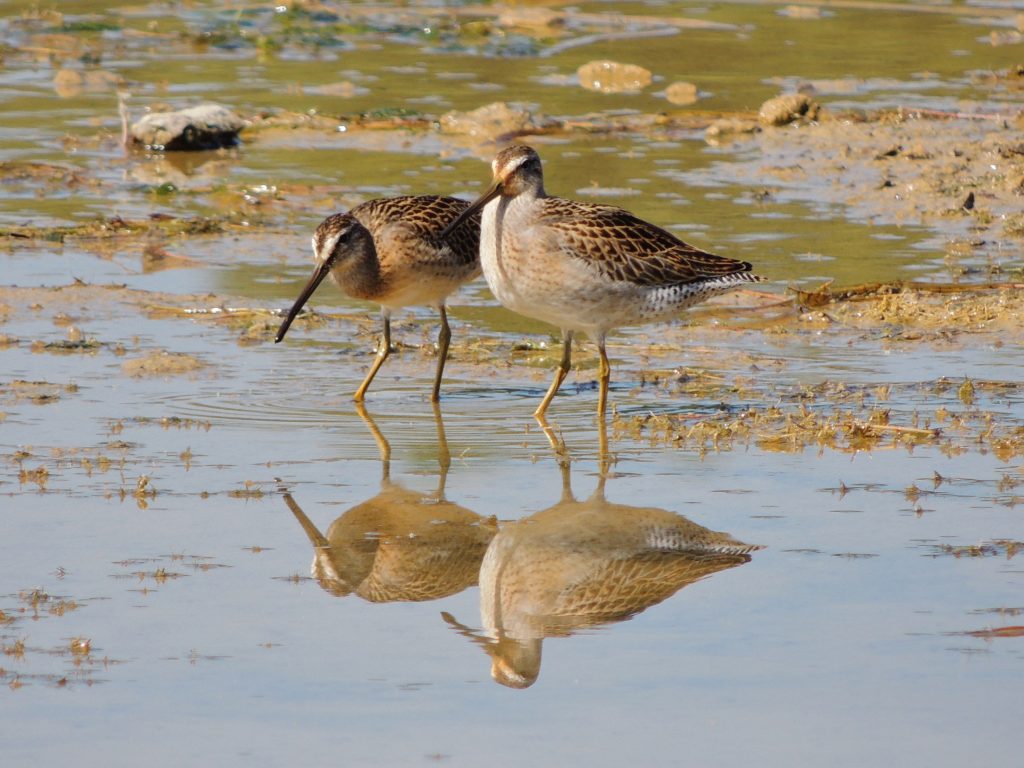
Short-billed Dowitchers

Five years ago I found a small group of Short-billed Dowitchers resting for the day in a shallow pond at an abandoned quarry. I was able to approach quite easily and eventually sat within a few yards of them. These and the masthead photo are from that day.
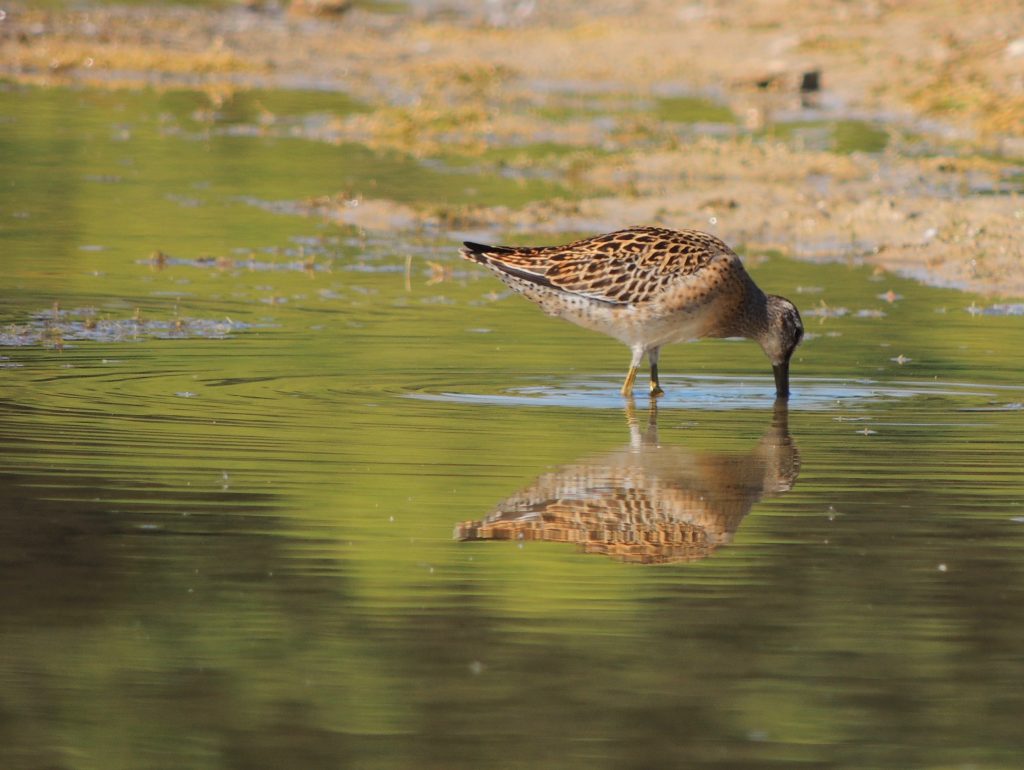
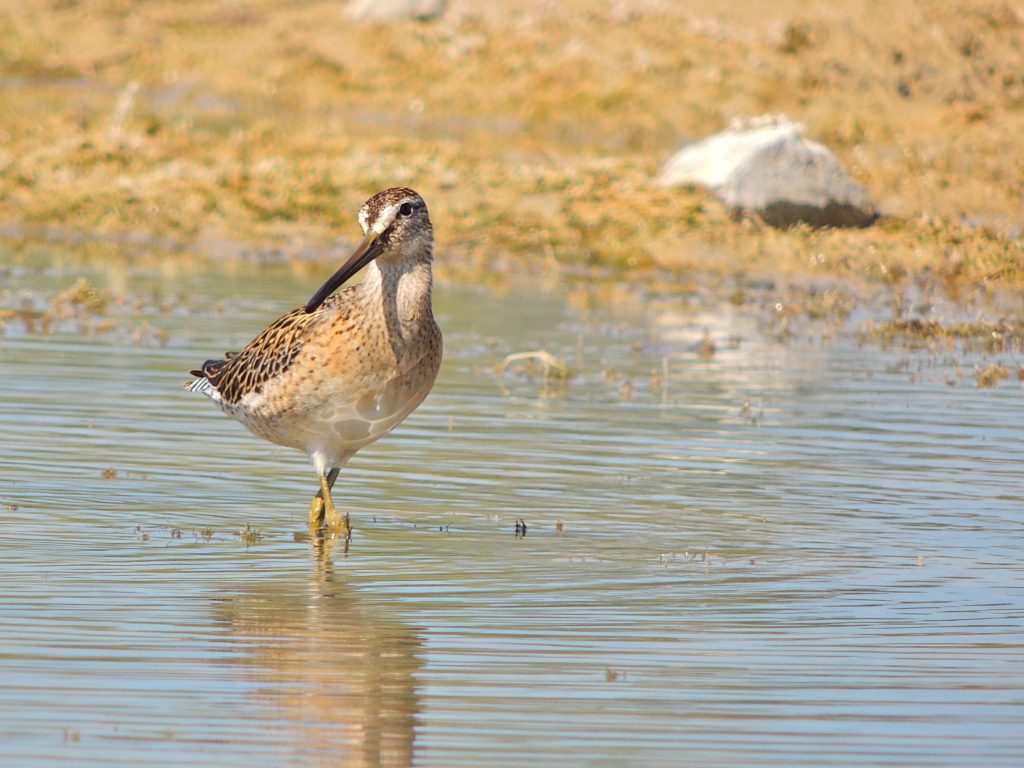
Short-billed Dowitcher

Virginia Rails

Grimsby Wetlands, Grimsby, ON , July 31, 2020.  On a tip-off I made a pre-breakfast run to an obligingly convenient wetland in hopes of seeing Virginia Rails. It was time well spent. The wetland was once a sewage settlement pond, then a decade or two ago the municipality upgraded its sewage treatment facilities and was persuaded to allow this noisome site to be turned back into a natural(ish) state. The alternative might have been 100 acres of lakeside housing but, inasmuch as new residential developments often feature street names celebrating the land’s previous use then maybe Wastewater Way or Aeration Avenue didn’t quite cut it. Anyway, now we have a big, shallow pond turned mudflats and a good birding destination.  At my early hour it was quite delightful.

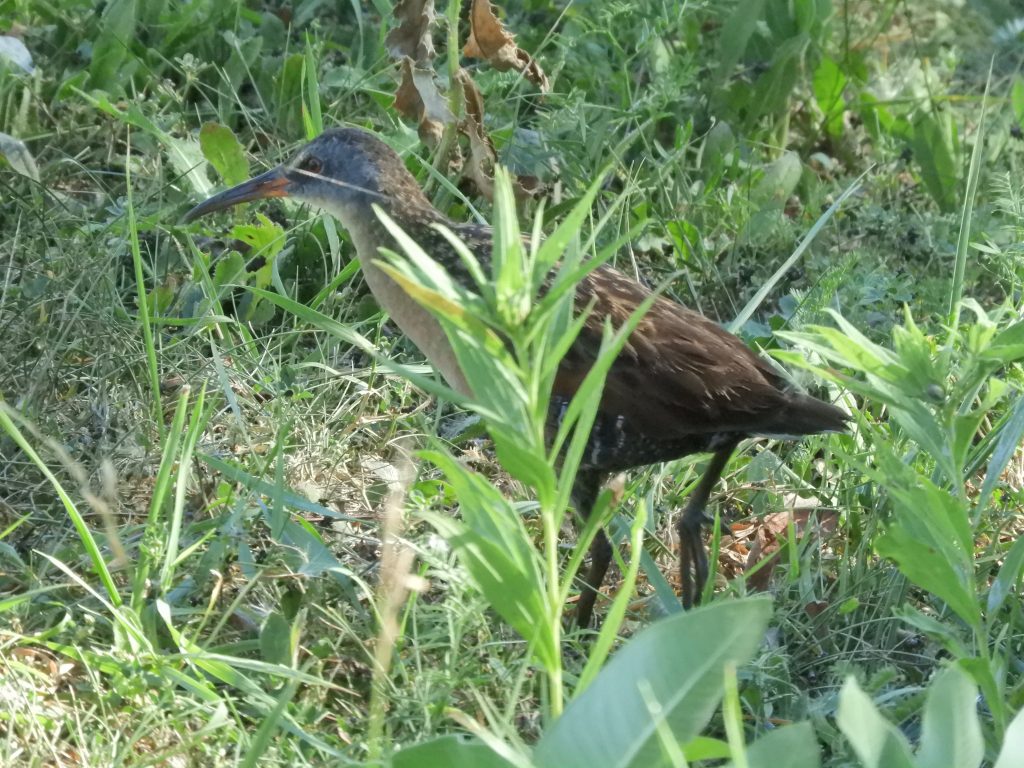
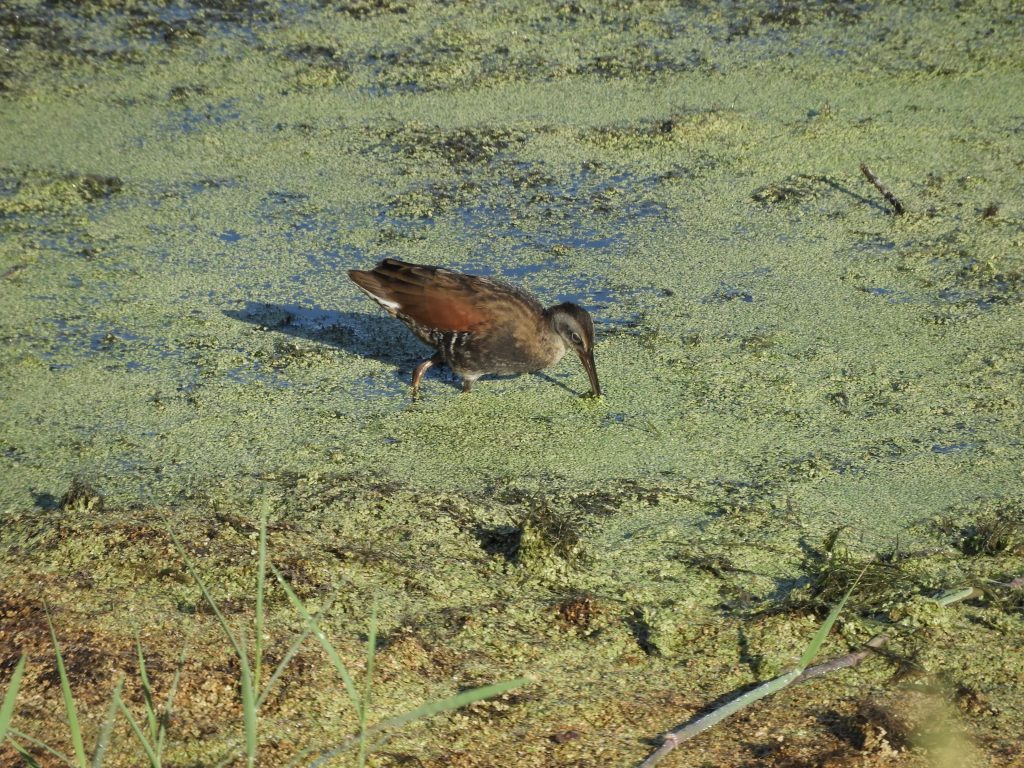
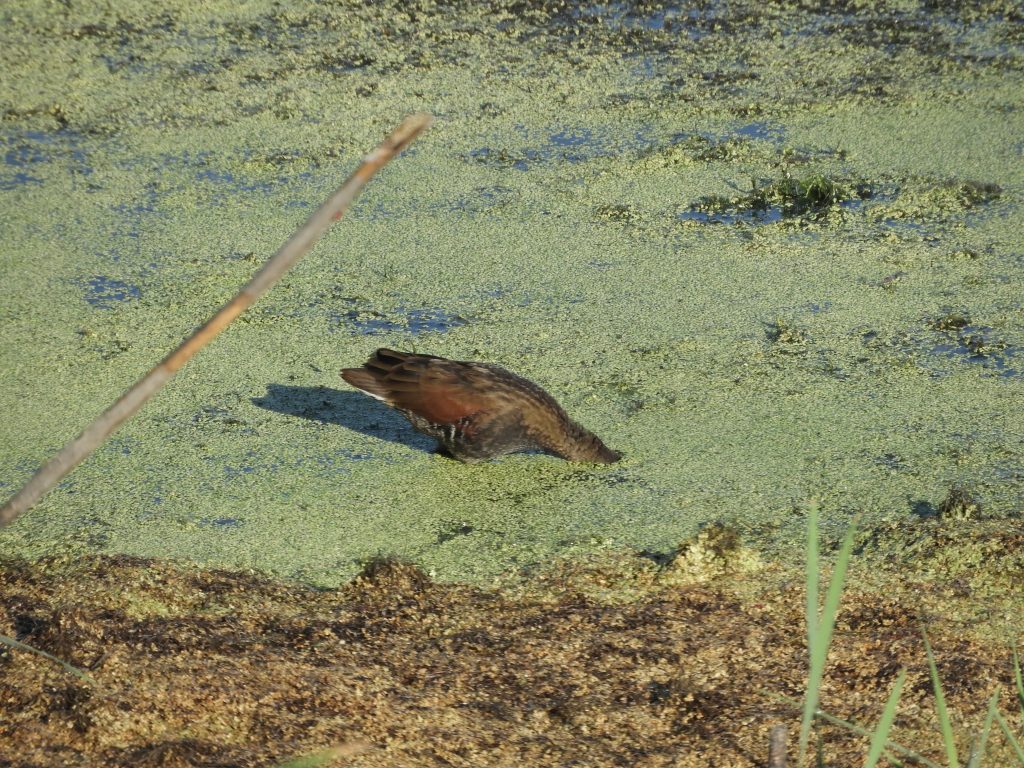
Virginia Rail

I had no trouble spotting Virginia Rails: first an adult with six or seven black-fluffball young, then another two adults with one and two young respectively. And there were a few single adults working their way along the cattail border; I think I saw fifteen at least. Virginia Rails and their lookalike kin, Soras, are notoriously difficult to see. I sometimes hear them and occasionally get a momentary glimpse, but more often than not I’ll stare long and hard at a patch of barely moving vegetation and see nothing at all. But when I do get a sighting, a decent one, it can be well, My Bird of the Day.

Just as engaging this early morn were several Spotted, Least and Semipalmated Sandpipers, Greater and Lesser Yellowlegs, and a scattering of Killdeers. Maybe the Killdeers were locals but the others were certainly early southbound migrants, perhaps failed breeders.

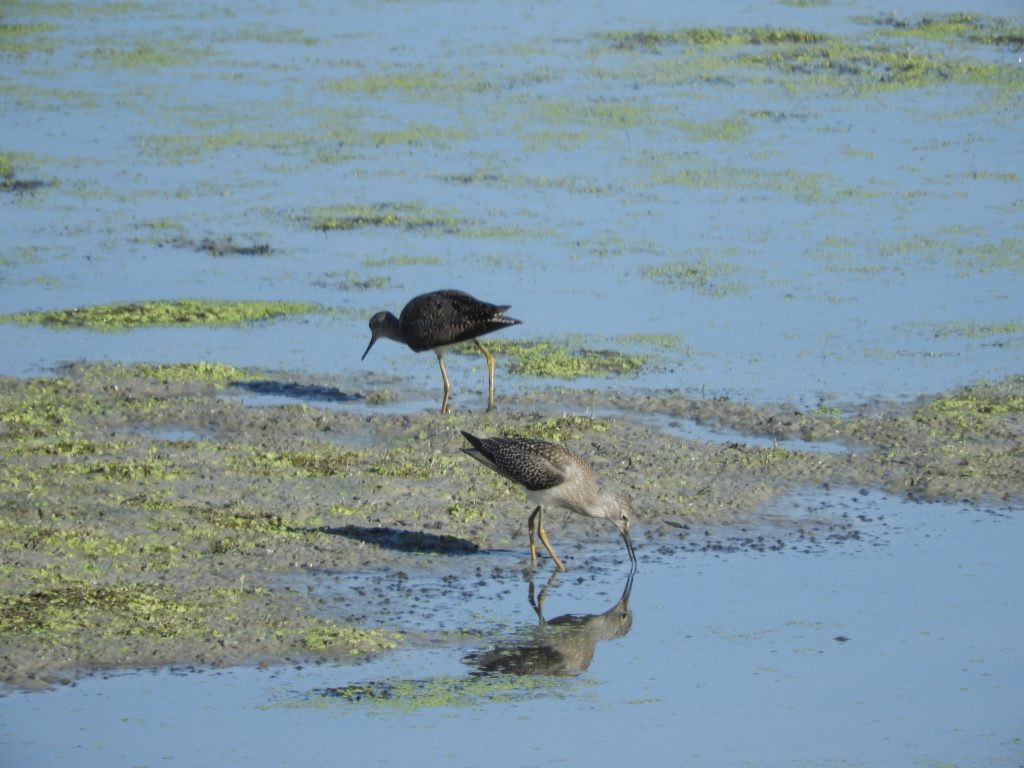
Two Lesser Yellowlegs

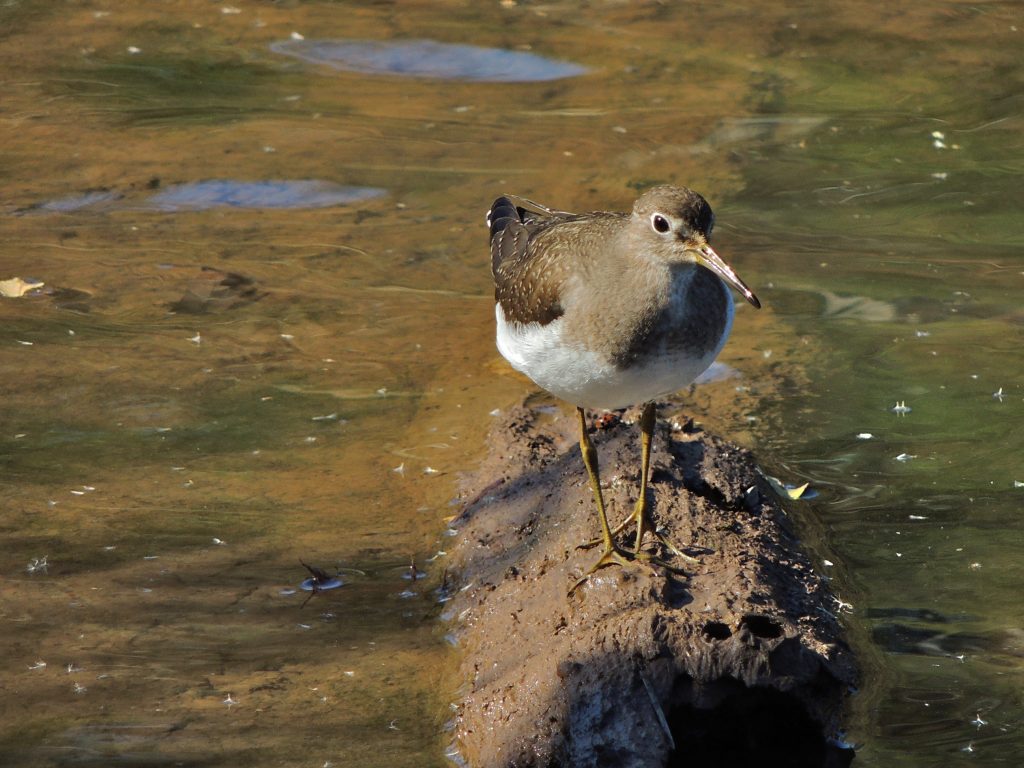
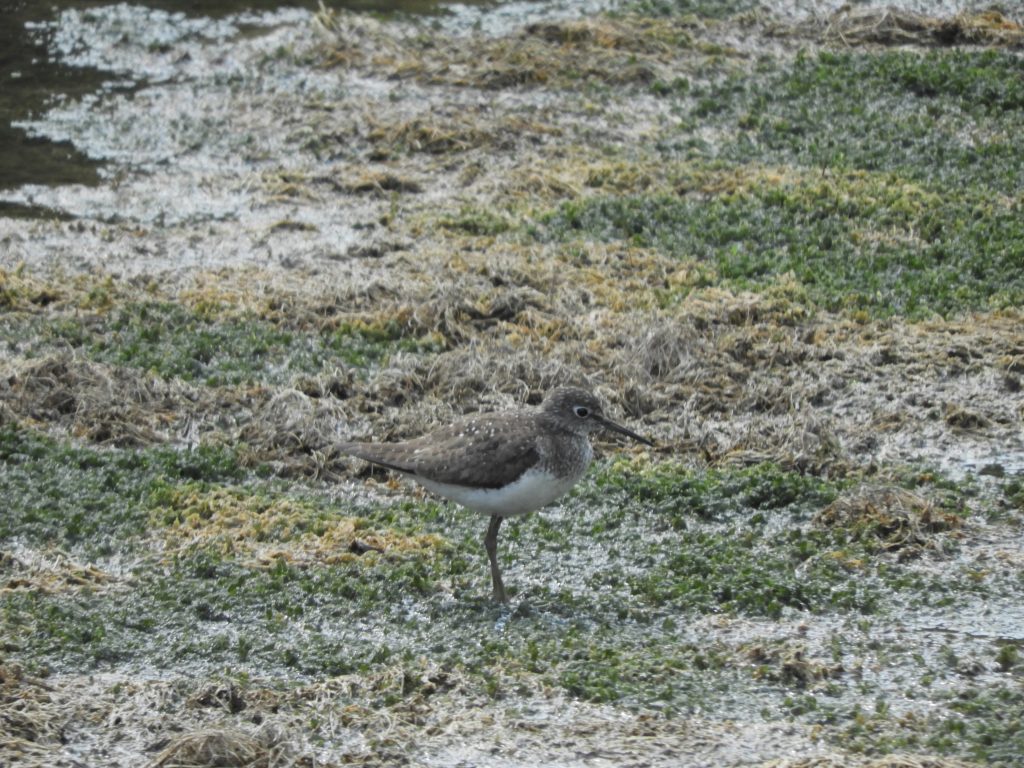
Solitary Sandpiper

Blue Lakes, Brant County, July 24, 2020.  Despite my many assertions that birding in July is time ill-spent, I do get restless and always undertake a few longer-range trips in pursuit of almost-certain sightings, pilgrimages you might call them. Today I went looking for Sandhill Cranes in a wide boggy valley where I felt sure they’d be; and they were.

My journey there took me past rolling, just-harvested wheat fields, where the passage of big-swath farm equipment was preserved like wide stripes on a tea towel. I always view those first harvests of high summer with a twinge of regret, as if they mark the end of summer for fields having done all that was asked of them.

I stopped at small roadside pond just in case. The water level was low and the pond scummed over with weed and algae, the sort of surface you hope you never have to come face to face with. A female Hooded Merganser paid me little attention, making me think that perhaps either she had not produced a brood this year or, her nest and young had been lost to predators. In the normal course of things, she should have been the nervous mother-ship to a fleet of hyper-active young.  A few yards from her I noticed a quiet Solitary Sandpiper, it was just standing on that mat of algae bobbing its head, as they characteristically do. Rather a pretty shorebird and well named, solitary, for we rarely see more than one and they prefer just the sort of small mushy pond as this. This is the bird, fitting in perfectly. 

I was pleased to see it because I hadn’t as much as glimpsed one during the spring migration making this my first of the year, and My Bird of the Day. This is not unusually early for a Solitary Sandpiper to be on its way south (as it assuredly was); perhaps a failed breeder or perhaps a one-year old who hasn’t quite got the hang of things.

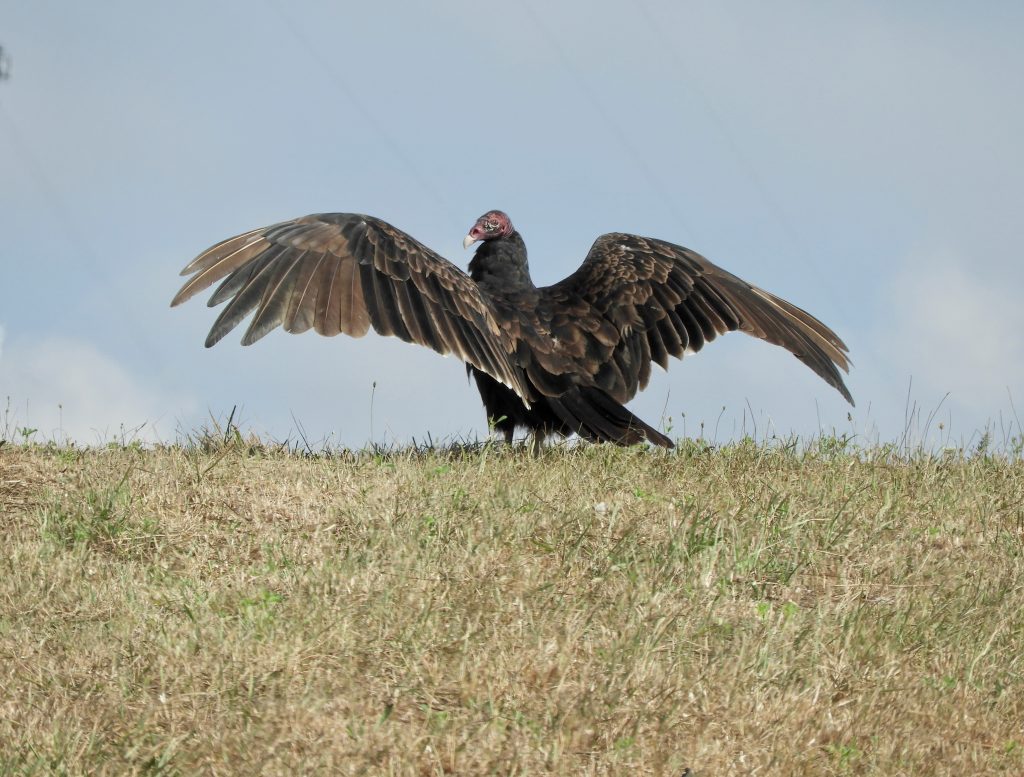
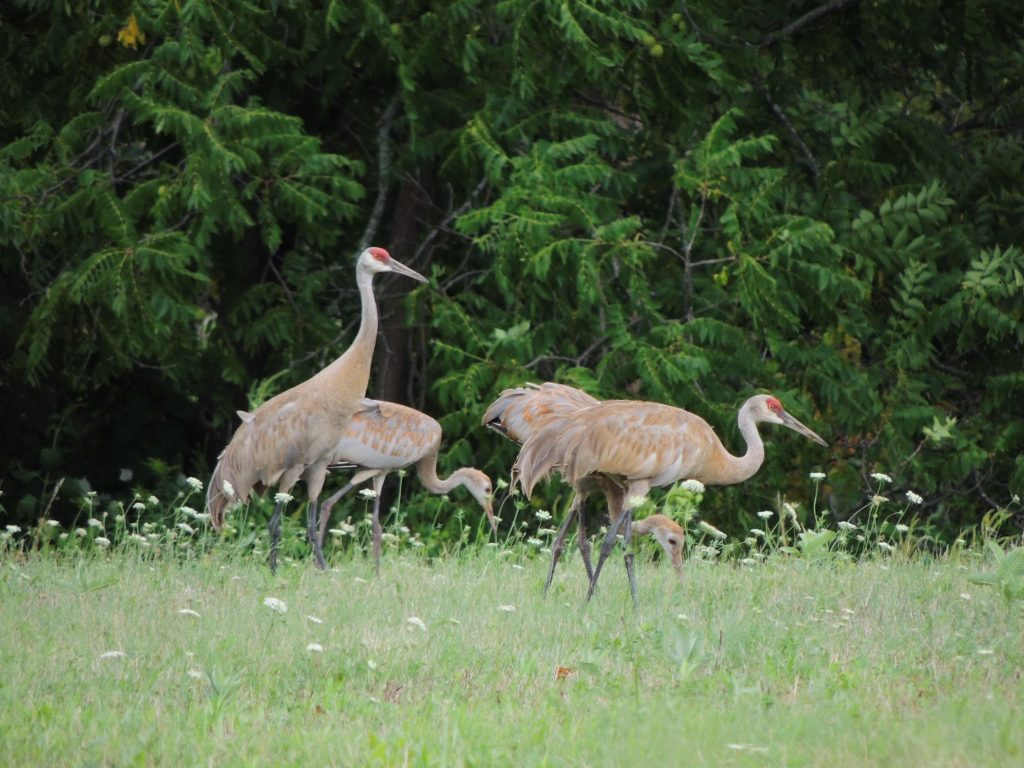
My morning continued with entertainment from a group of ten Turkey Vultures spread-winged and sunning themselves, (a behaviour thought to be effective using the sun’s UV to kill feather mite) and of course my target birds, three Sandhill Cranes. They were feeding knee deep in boggy pools and looking as elegant as cranes always do. The adults and young sandhills below, are from the same time of year but another time and place.

Sandhill Crane family

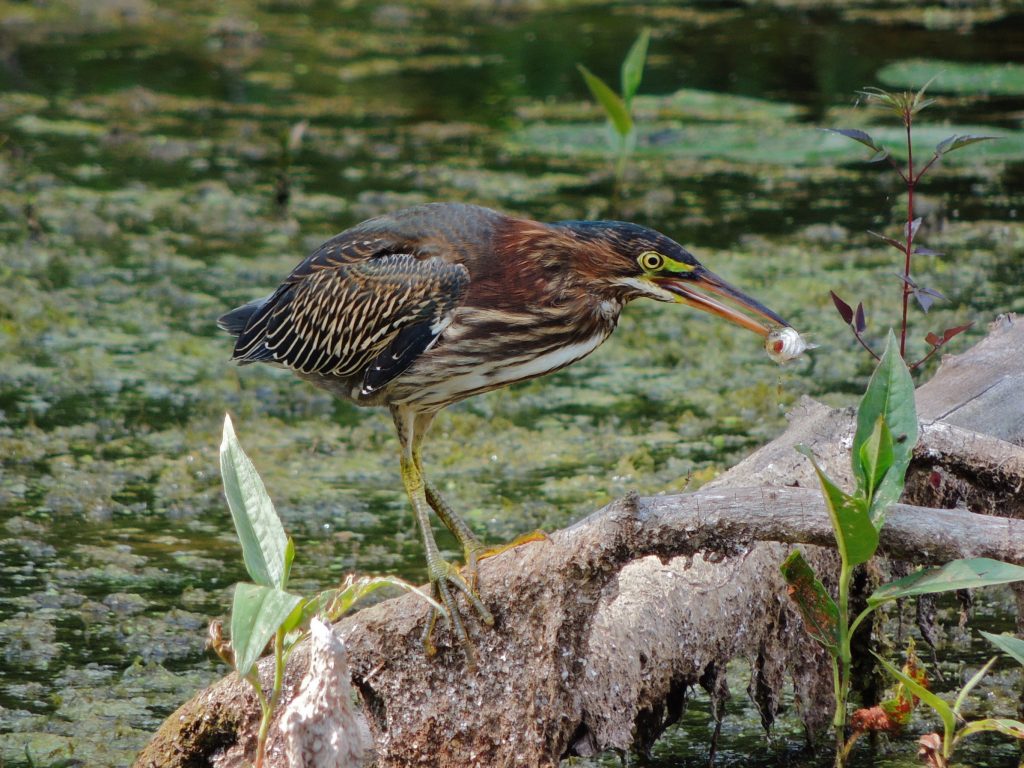
Green Heron

Mountsberg, ON. July 17, 2020. Good birding ends on July 7th. I tell everyone that because it’s true, it all goes deadly quiet and for the next four to six weeks, time spent birding is scarcely rewarded. But I went today, I needed to and wanted to get out and visit many of the places I’d missed this spring.

First stop was a forest trail that was under the control of mosquitoes. I could hear one or two Chestnut-sided Warblers singing half-heartedly, but I think everything else had been sucked dry. In an open clear-cut area, the mosquitoes handed over to squadrons of larger flies with more efficient mouth parts, Deer Flies I think. I would (perhaps should) have lingered longer because I found, picked and ate many delicious handfuls of Wild Raspberries, sweeter and tastier by far than anything now found in the supermarkets. My invaluable Shrubs of Ontario reference book describes the raspberry fruit as “… usually red, rarely yellow to amber coloured, about 1 cm in diameter, edible, falling intact from the dry receptacle” All of which is true but I don’t think it would have gone amiss to insert  ‘succulent and aromatically delicious’ somewhere in the text. Turkey Vultures circled high above and a Gray Catbird skipped through low bushes anxious to remain unseen.  But the Deer Flies made things difficult so I left, but happy when a Yellow-billed Cuckoo called faintly and then flew across the opening; it exceeded my expectations.

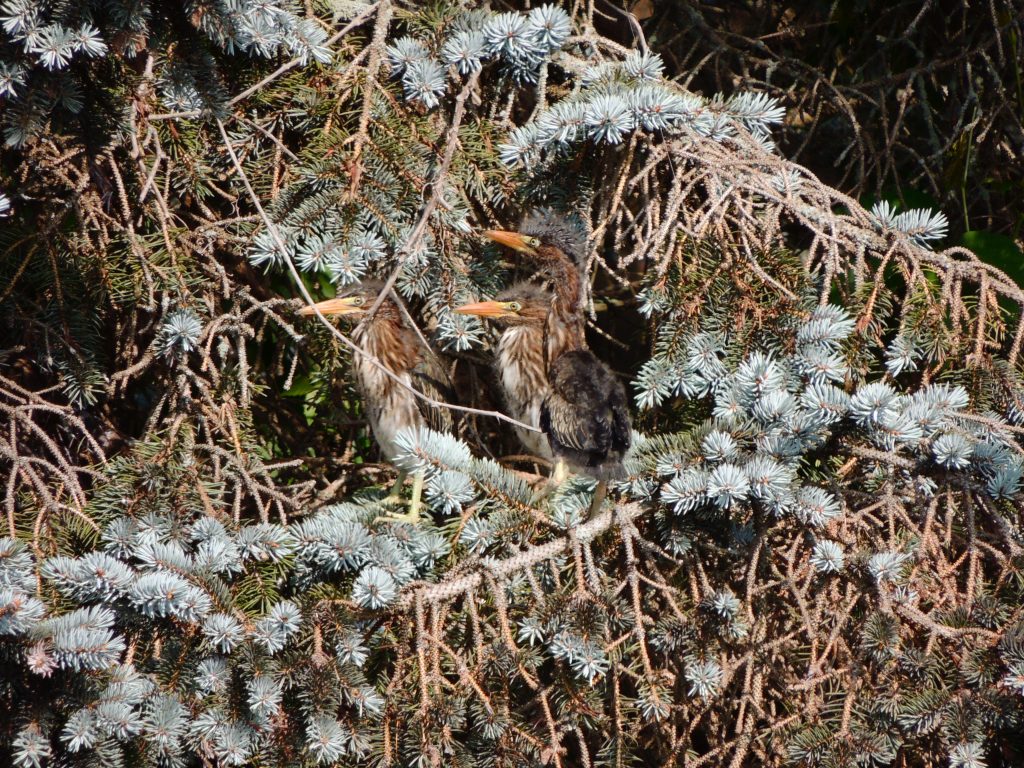
I wound my way back home stopping at a couple of roadside openings where I could look across a shallow lake. The Cattail marshes were the right sort of places for Marsh Wrens, Soras, and Virginia Rails. I hoped for them but had to make do with a two irritated Swamp Sparrows and a fleeting visit from a Common Yellowthroat. Bird of the Day was a very young Green Heron who, at my appearance, fluttered weakly away from the edge of the marsh to a more secure hiding spot. Like the cuckoo he exceeded my expectations.

Nestling Green Herons

I was home by lunch time as the day grew hotter. It’s mid-July, time for heat and no time for birding.

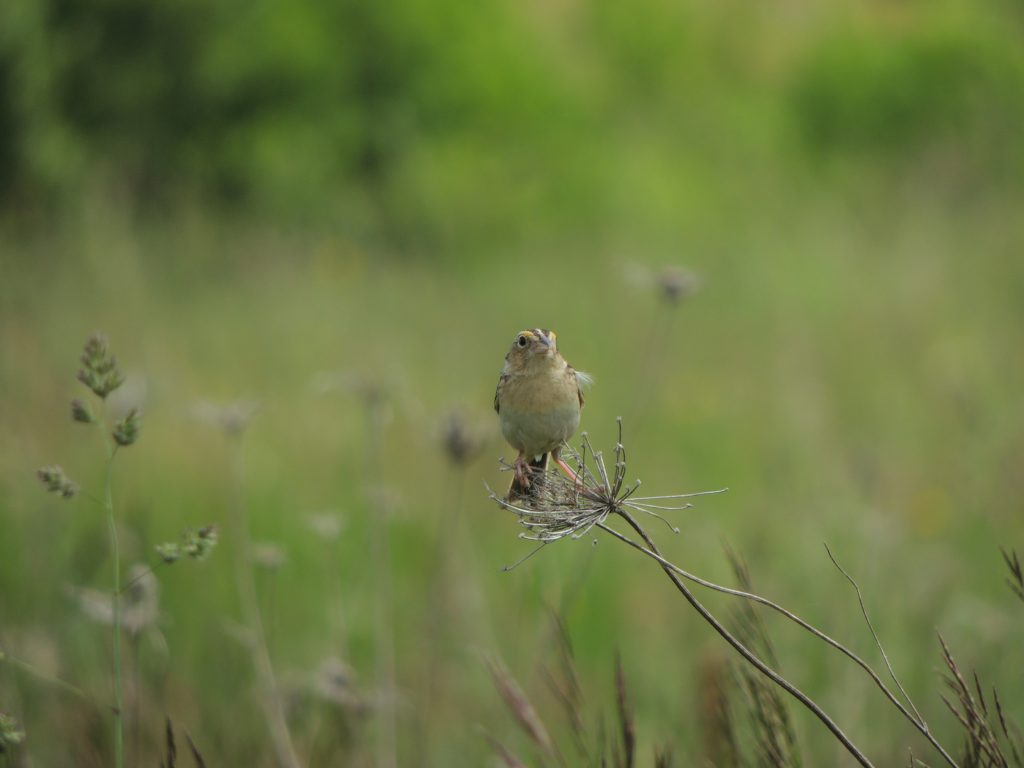
Grasshopper Sparrow

Grasshopper Sparrow

Flamborough, ON. July 14, 2020. I went birding today, my first such purposeful foray in several weeks. Watching an Eastern Kingbird, I soon realised that every and any bird would be special today, all could be Bird of the Day just for being there.

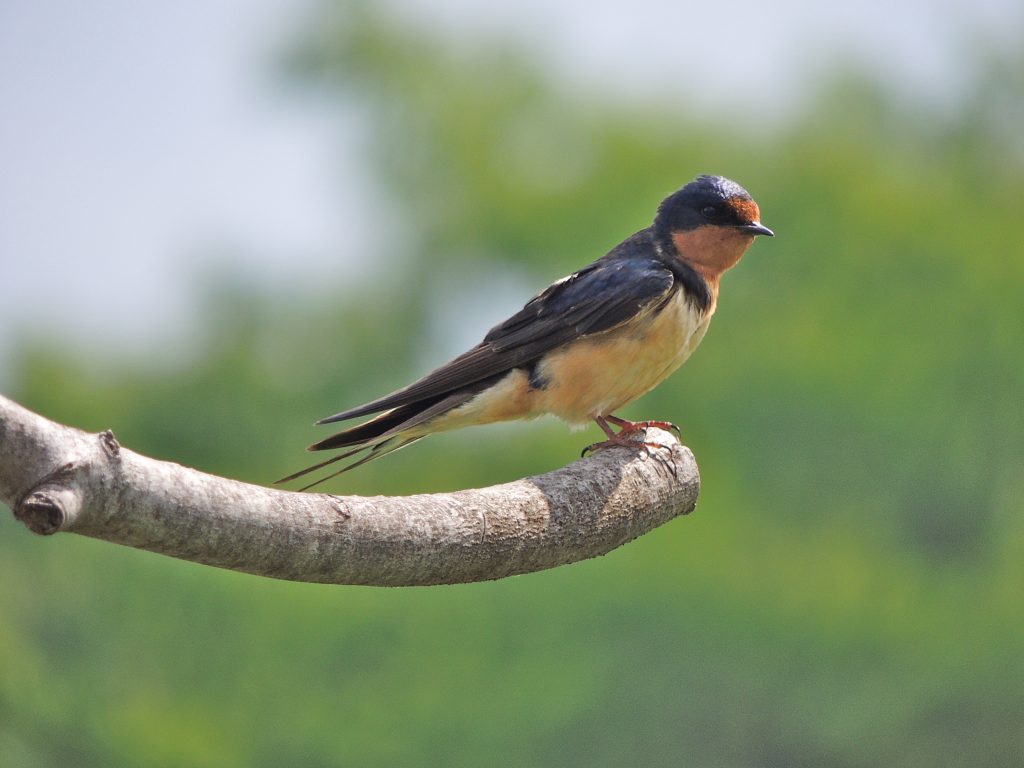
Barn Swallow

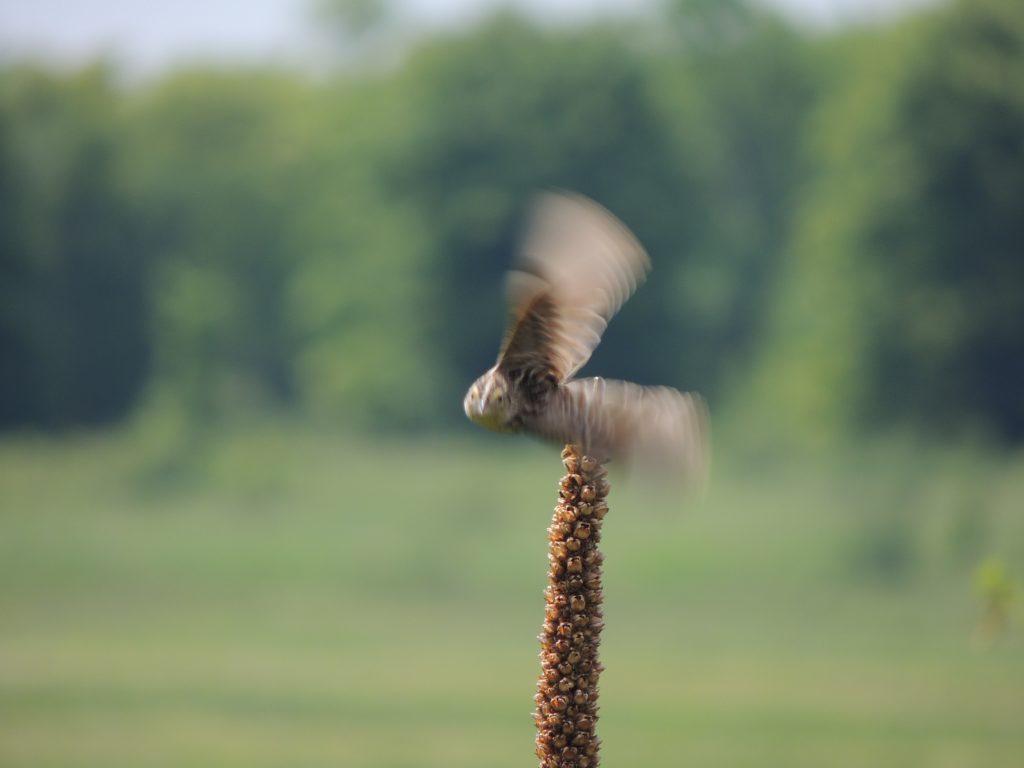
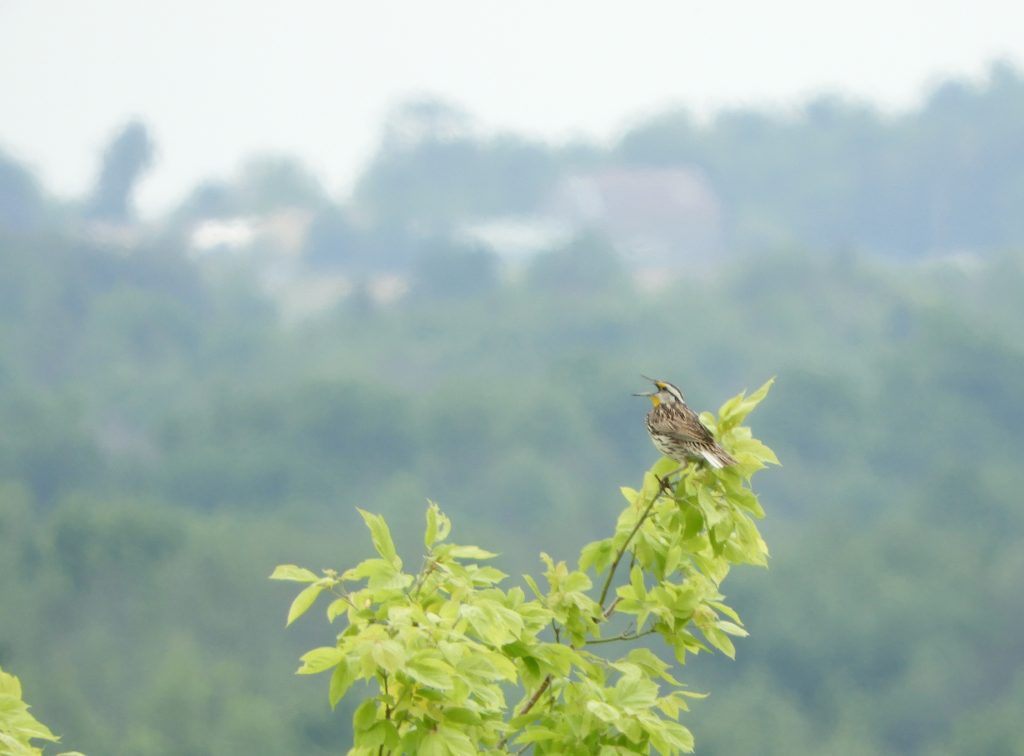
My first stop was in hope of finding Virginia Rails but there was nothing, the cattail reeds and some dense algae had grown in thickly and only a couple of Northern Watersnakes were quite happy to be exposed and basking. So, I tried a couple of other favourite spots and found myself among true birds of summer: Eastern Towhees (still singing), Eastern Meadowlarks and Barn Swallows.  I had hopes of finding a Blue-winged Warbler, (or maybe a Prairie Warbler!) but came up empty-handed. Although, in my efforts I apparently stirred a Grasshopper Sparrow into some kind of possessive-defensive action. It appeared from nowhere and circled me anxiously and getting a little closer with each circuit.

Grasshopper Sparrow approaching!

It’s a curious looking sparrow.  I have increasing difficulty hearing its almost inaudible buzzing wisp of a song and certainly would have missed it if it hadn’t taken such strong objection to my presence. I left it alone quite happy with it as My Bird of the Day.

Eastern Meadowlark