September 4. 2025. Churchill Park, Hamilton, ON. Canada. My encounter with Common Nighthawks a couple of weeks ago inspired me to see if I could find more. I know enough about them, their migration and flight times, to be reasonably assured of finding them, or at least of tipping the odds in my favour. This park is well positioned along a probable flight path, is wide and grassy and not at all a bad place to sit and watch the evening sky. Tonight, just as the undersides of clouds had started to redden, the first nighthawks appeared over the tree line, heading west and swooping, soaring and swerving; seizing insects to fuel the journey. By the time the sun’s last light faded I had seen perhaps twenty.
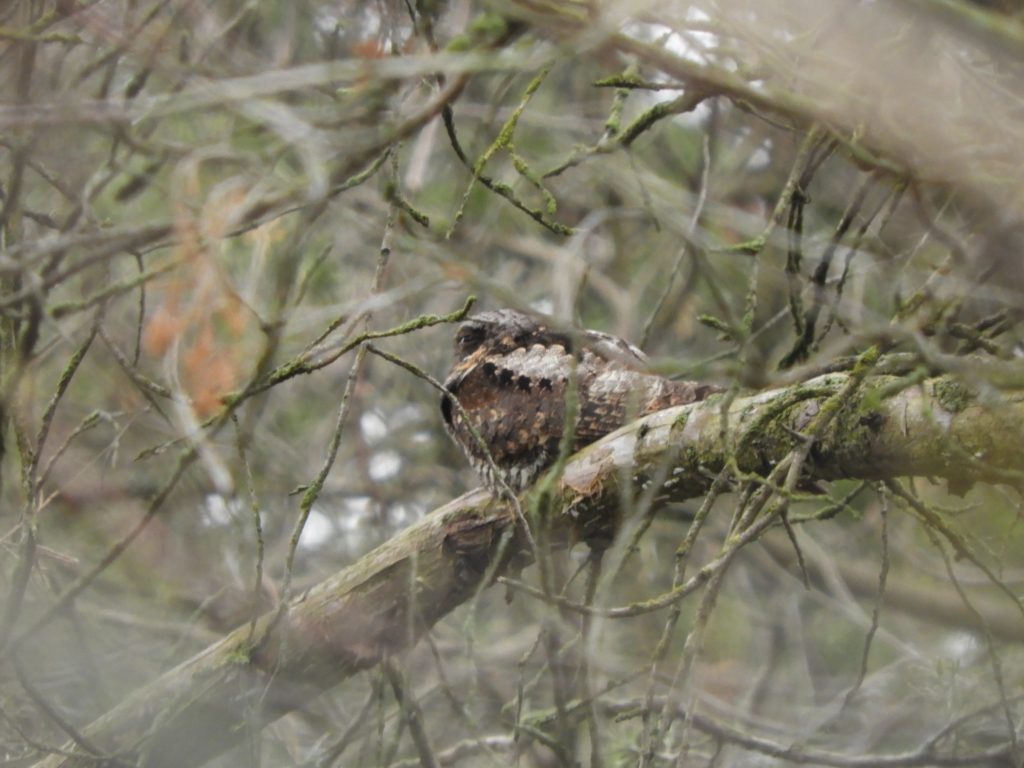
I was conspicuously out of place among the many joggers, dog-walkers and soccer players. To the oft asked question, what are you seeing? I had no short answer, these are birds around which myths and legends have grown; strange birds, goatsuckers, nightjars, nighthawks. Here are a few fragments.
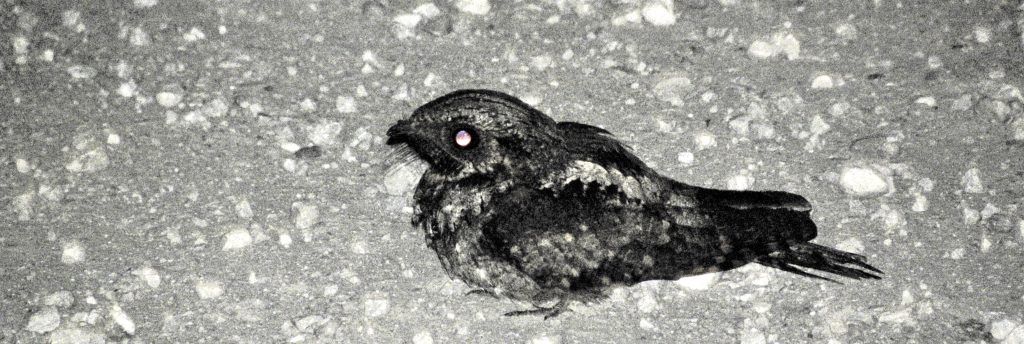
There are about 100 related Caprimulgid species worldwide, broadly they are nightjars. They all share the same characteristic cryptic plumage, enormous moth-catching mouths and sometimes jarring calls which have earned them the common names of nightjars.
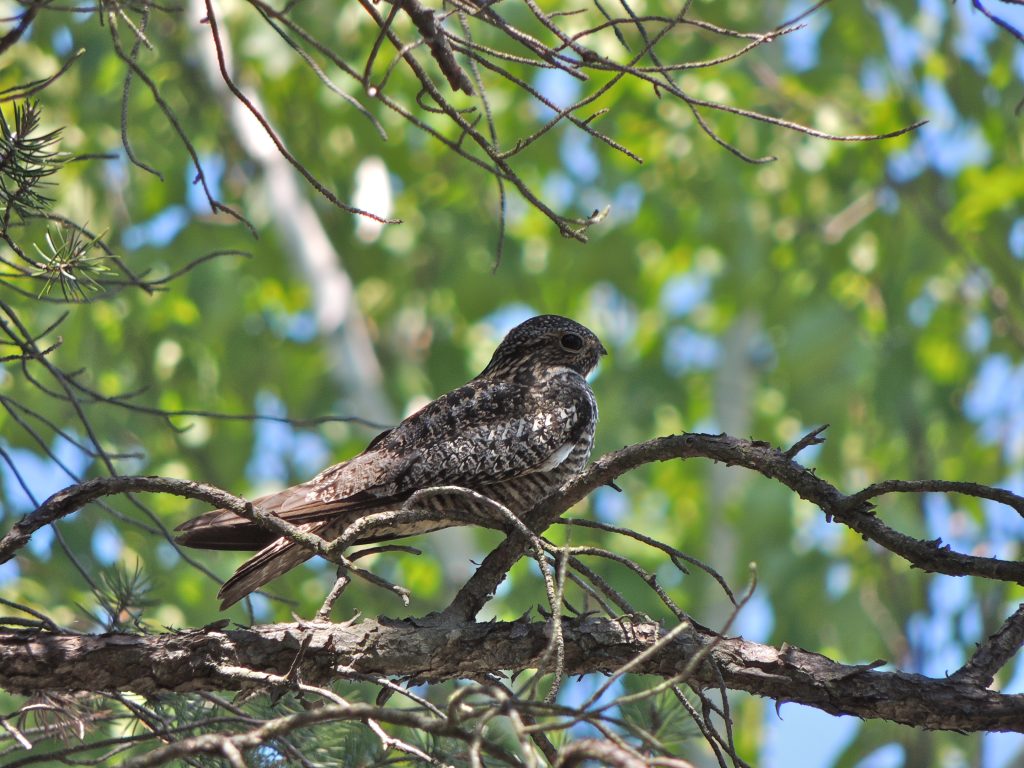
A couple of North American nightjars are onomatopoeically named to describe their almost bewildering, sometimes wearying, night-long songs: Chuck-wills-widow and Whip-poor-will. Our Common Nighthawks are not known for their song, their brief, nasal Peent is distinctive and unremarkable and sounds very similar to the territorial grunt of an American Woodcock (if that helps).
Europe’s Common Nightjar convinced observers of Ancient Greece that their proclivity for catching moths around domestic sheep and goats surely meant they also stole their milk. It earned them the name of goatsuckers which gave rise to the generic name Caprimulgus, the Latin roots of which are capra (nanny goat) and mulgere (to milk).
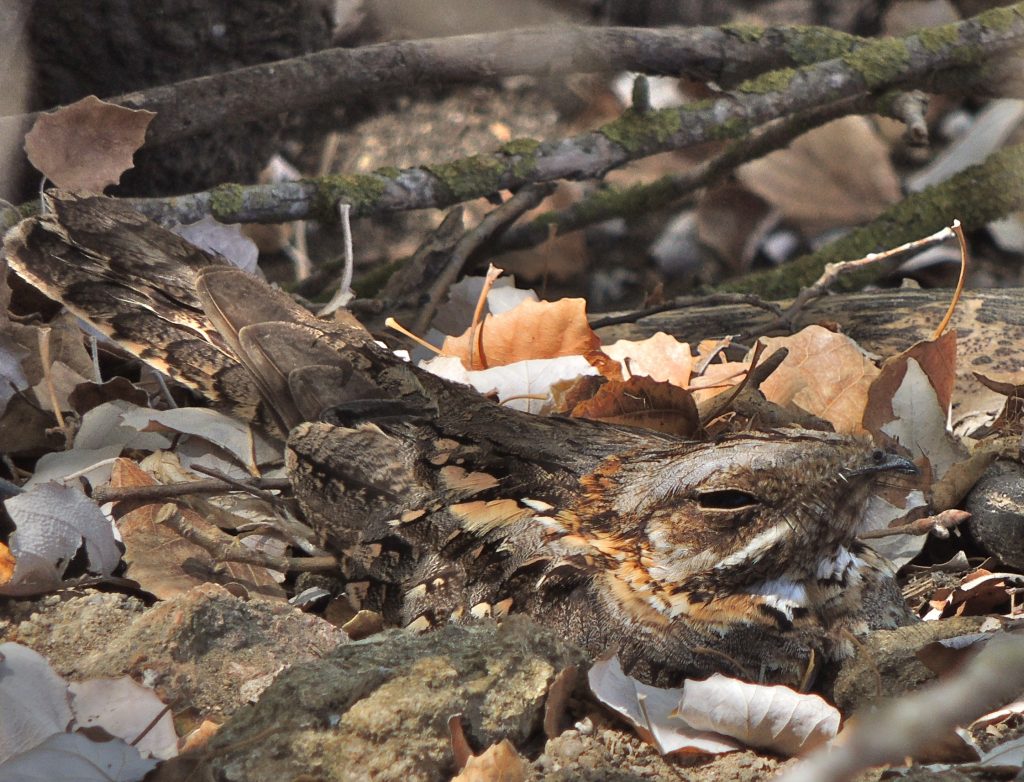
Nightjars are birds of the half-light, insectivores and almost impossible to distinguish from the leaf litter or branch where they choose to rest by day. This tight-sitting, Red–necked Nightjar was shown to a small group of us, I had little problem making it out, but one or two of the group never did.