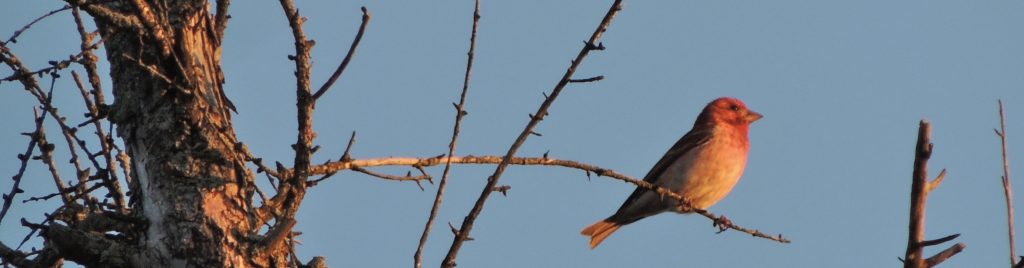
April 12 2026. Royal Botanical Gardens Arboretum, Hamilton ON. We found a small flock of Purple Finches today, it took a moment to i.d them because I had to do a mental roll call first: Goldfinch No, Pine Siskin No, House Finch Maybe, then… Purple Finch – Yes. Confirmed at the same instant by a clear burst of song from behind; described succinctly by Pete Dunne in his excellent Essential Field Guide Companion as , “ a hurried mumbled run-on warble that is sweeter and less histrionic than House Finch.”
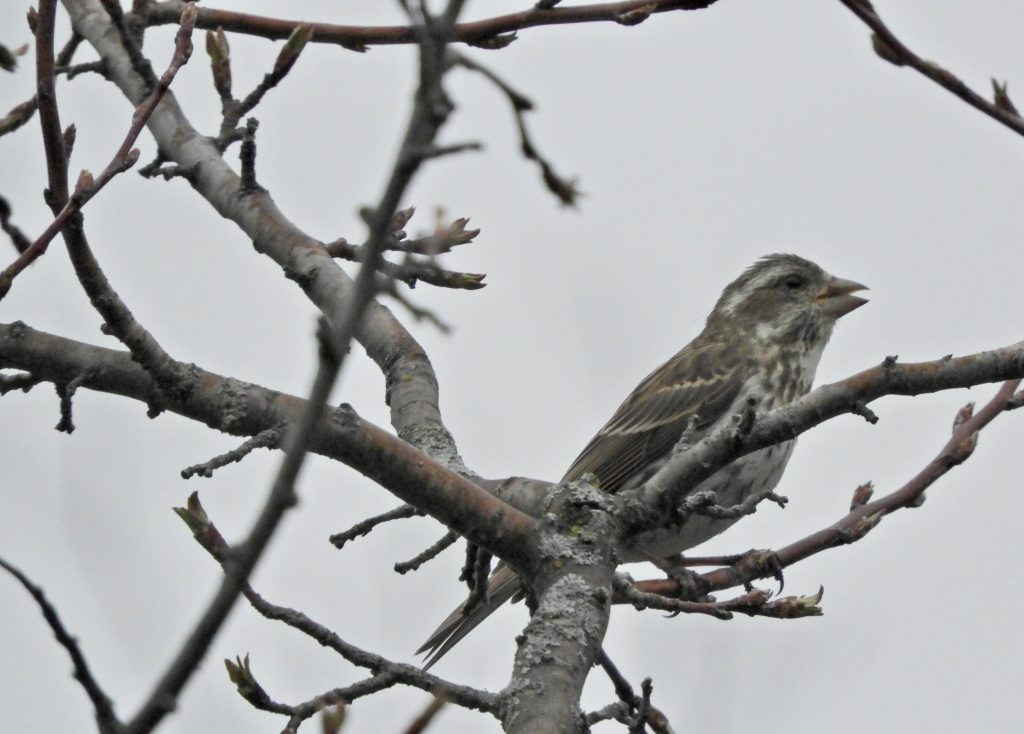
I was very pleased, it’s been a long time, since I last saw one. I’m not sure that my two companions quite understood what was so special about them. Perhaps they viewed them as little more than House Finches, an easy mistake because the females, which all but one of them were, can easily be mistaken, and House Finches are quite common and widespread.
It’s not that Purple Finches are rare but at the same time, neither are they common. Most Purple Finches spend their winters a little bit south of us and their summers a little bit north, making us just somewhere along the way, somewhere to fly over. Various references say that they prefer moist coniferous forests particularly during the breeding season and just about anywhere at other times including mixed woodlands and backyard feeders. Interestingly, Cornell Lab of Ornithology notes of Purple Finch that “Although widespread and regularly seen, this bird is one of the least-studied finches in North America because it is neither common enough to be easily studied nor rare enough to be threatened with extinction.” Falling between two stools.
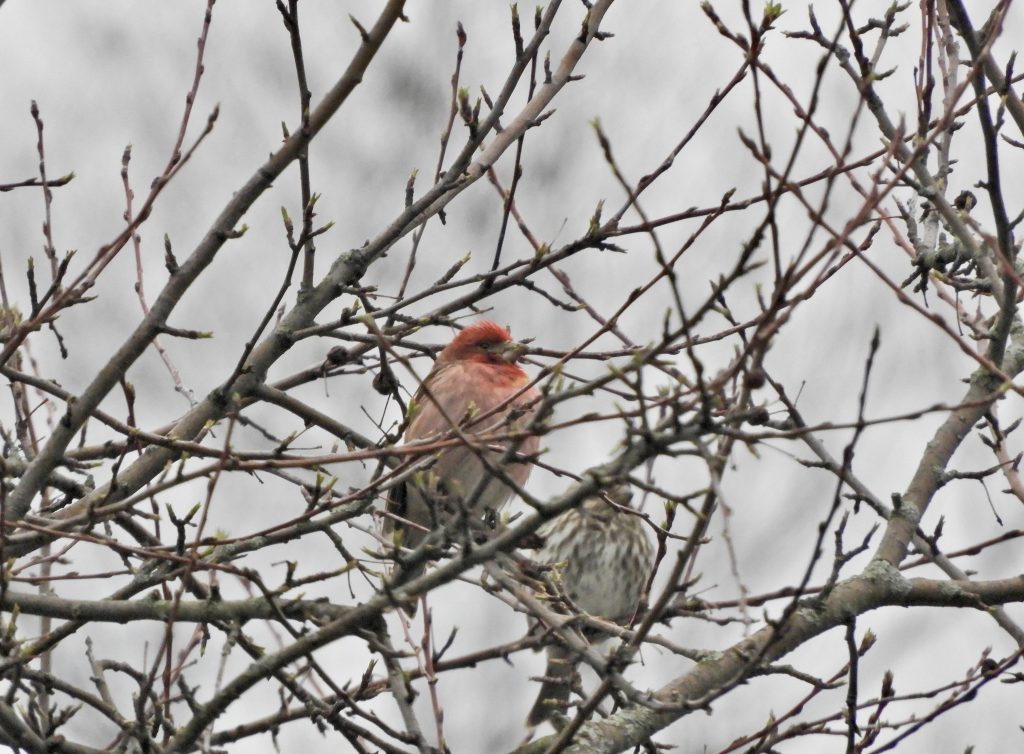
This all happened at the start of our transect and we had to keep moving. But I came back later and they were still where we’d found them, feasting on desiccated fruit from the tops of some winter weary, crab apple trees. The passage overhead of a Sharp-shinned or Cooper’s Hawk flushed the flock, and I was able to estimate its size at about twenty, and for all the time I spent following them I could only be sure of one male. Here he is with part of his harem, and at the top of the page is an evening photo of male who I think was overseeing his territory.
And the rest of the transect? A cold east wind took some of the fun out of it, but we watched a small group, gathering numbers, of recently returned Tree Swallows spiral up in and overhead for no accountable reason, and, as we watched the skies above two long and straggling strings of migrating waterfowl passed over, very high and far beyond identification.