Bay-breasted Warbler

Hamilton Beach Strip, Hamilton ON. September 17th. 2020. I took a moment this afternoon to look for a tropical rarity, the gannet-like Brown Booby. It belongs in the southern oceans of the world but one has been around here for a week or so.  Making special trips to see oddball rarities is not usually my kind of birding, but today I had some spare time and well, I went.… I didn’t see it.

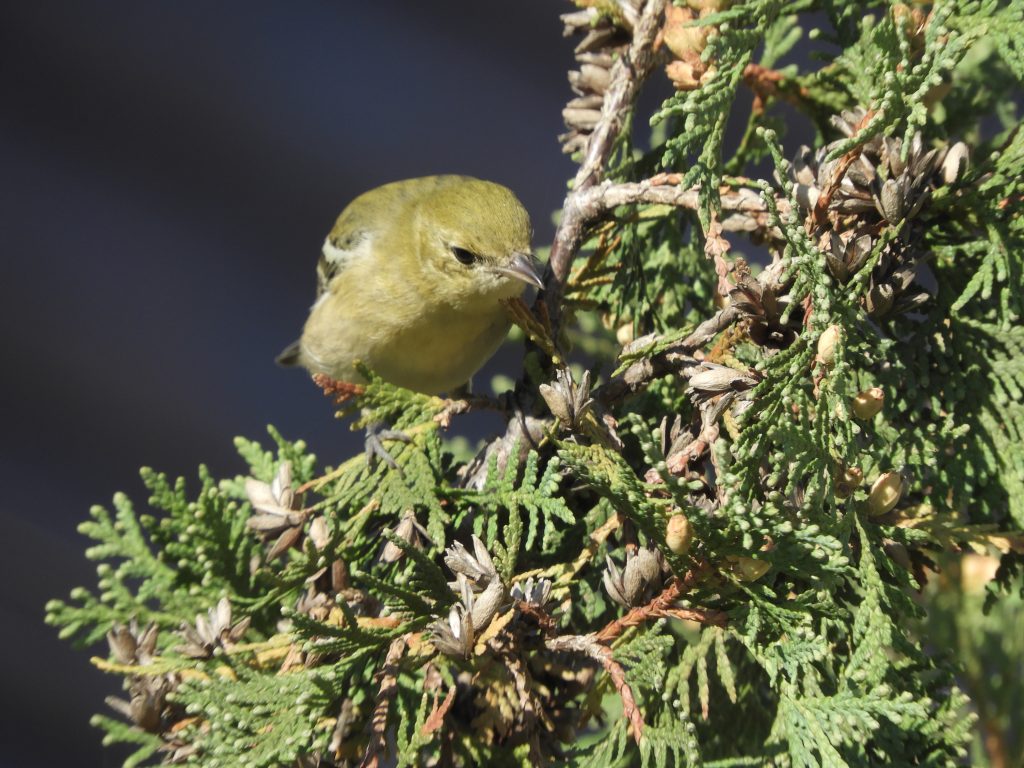
Returning to my car, I spotted a flitting bird movement that seemed to be out of place. I paused and made a few soft ‘tsst’ sounds, moments later a small, rather plain warbler appeared from the folds of an ornamental cypress to see what the fuss was all about.  Now, here was something worth investing my time on, a migrant warbler, a spark of lightness in an otherwise rather drab and dusty semi-industrial neighbourhood.

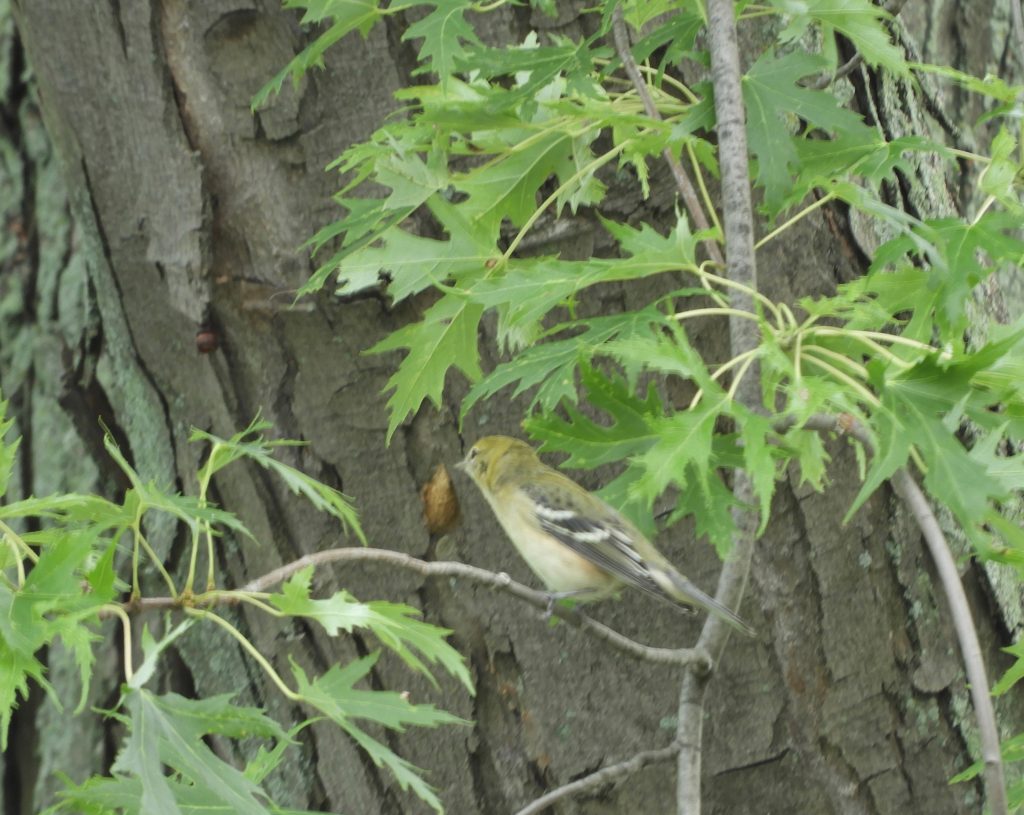
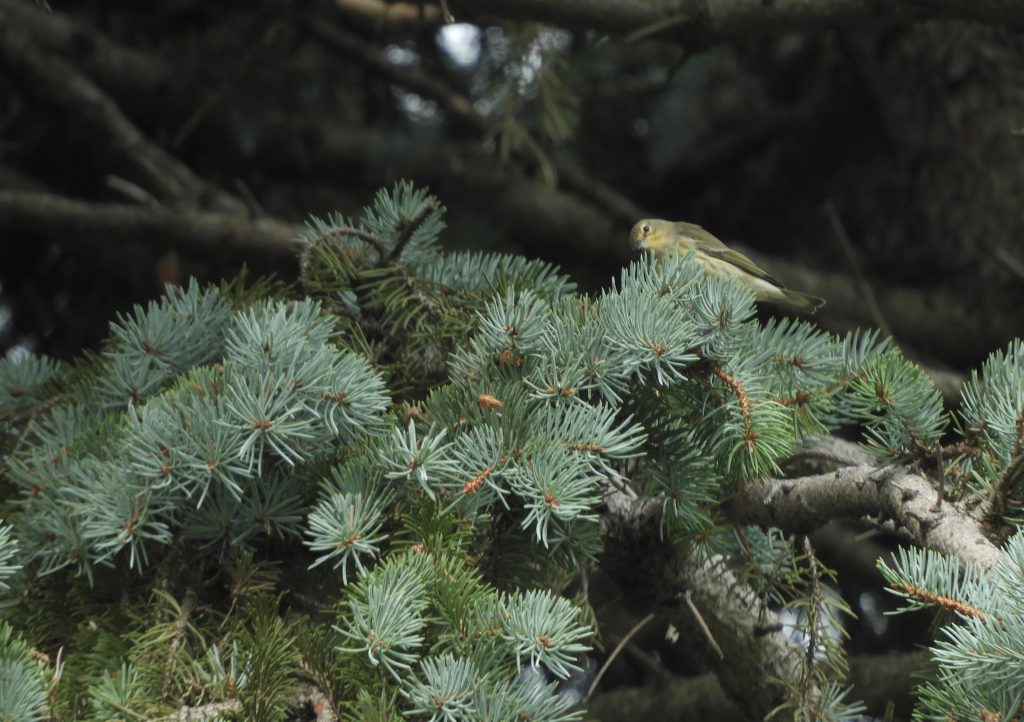
I told it to stay put while I took a minute to fetch my camera, mystery birds are very often best analysed later with photos. It moved on a little, though not too far, and with a bit of work I was able to get its fleeting attention again. It showed the sort of field marks: olive-green above, indeterminately pale below and conspicuous white wing-bars, that help narrow down the choices to a small handful of species, while still leaving lots of room for conjecture and guesses.  This is where photos can make or break an identification, and my camera was now warmed up and ready. The bird appeared a couple of times, posed briefly and promptly flew across the road, leaving for good; still, I’d got some photos, not necessarily crisp and clean, some of them are here.
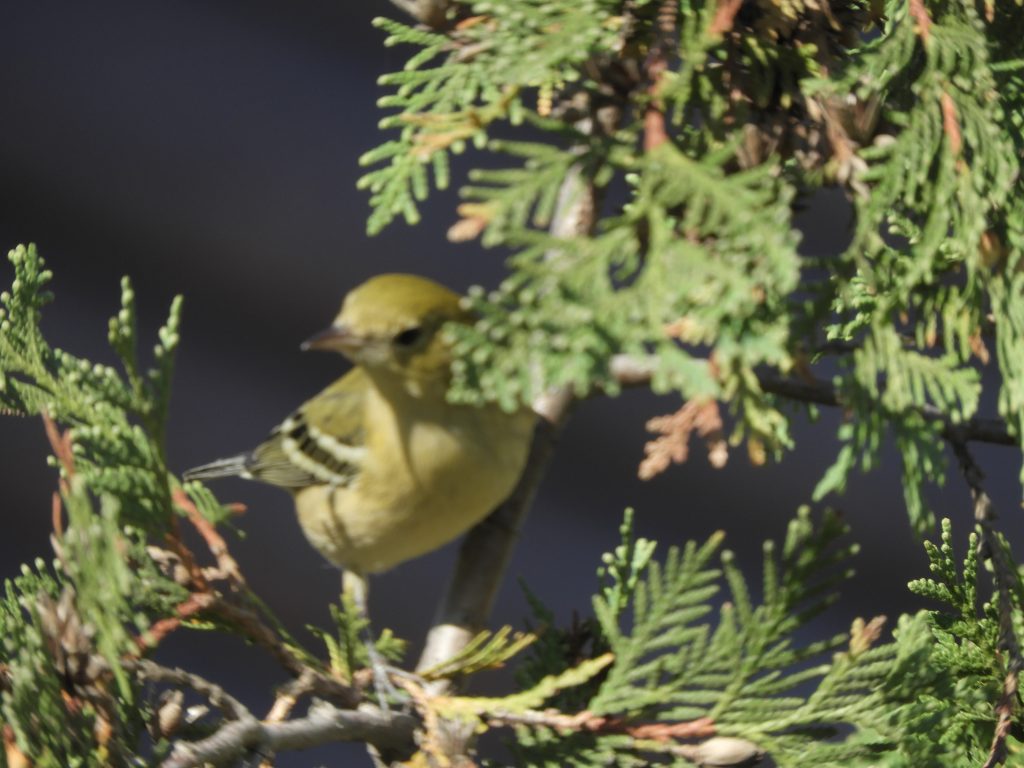
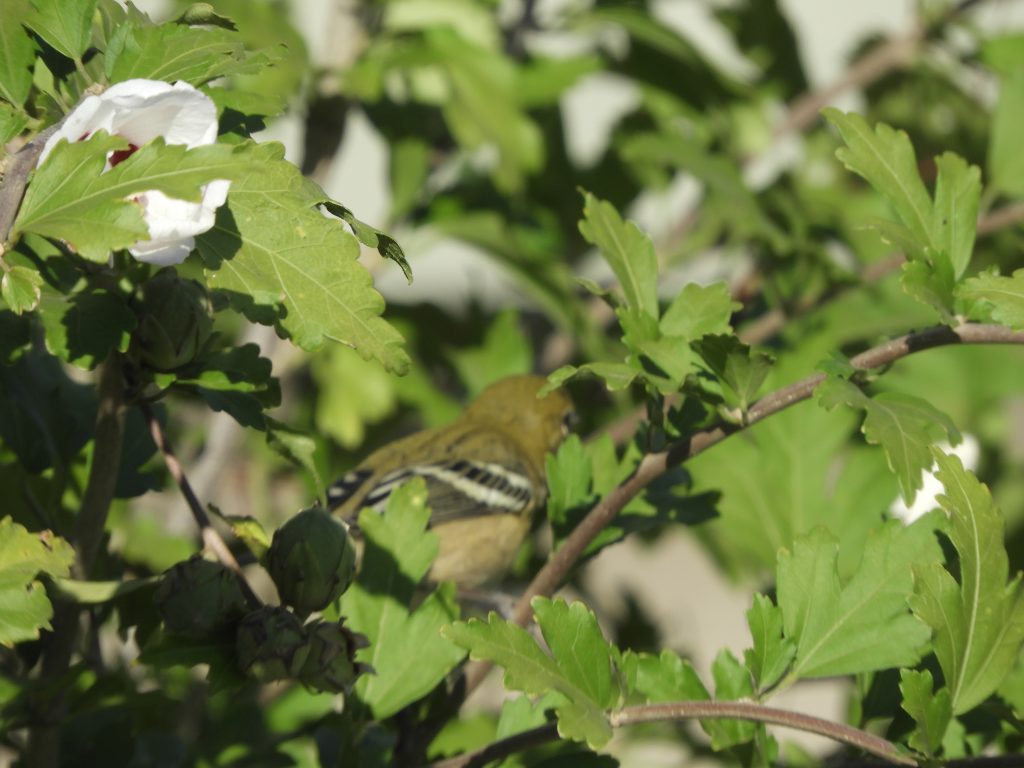
On-the-run photos like these often miss key features but, if you’re lucky, provide just enough. The bird turned out to be a Bay-breasted Warbler, a young female. Being young and female took it about as far from the classic look of a Bay-breasted Warbler in May as is possible. I have to acknowledge the help of one of our newest and probably youngest birders on the scene. I sent him my photos and asked for his opinion. Liam replied, “I would say Bay-breasted Warbler. There’s very faint notes of warm brown on the flanks, and no yellow/orange feet mean it’s not Blackpoll Warbler.” I think he nailed it.
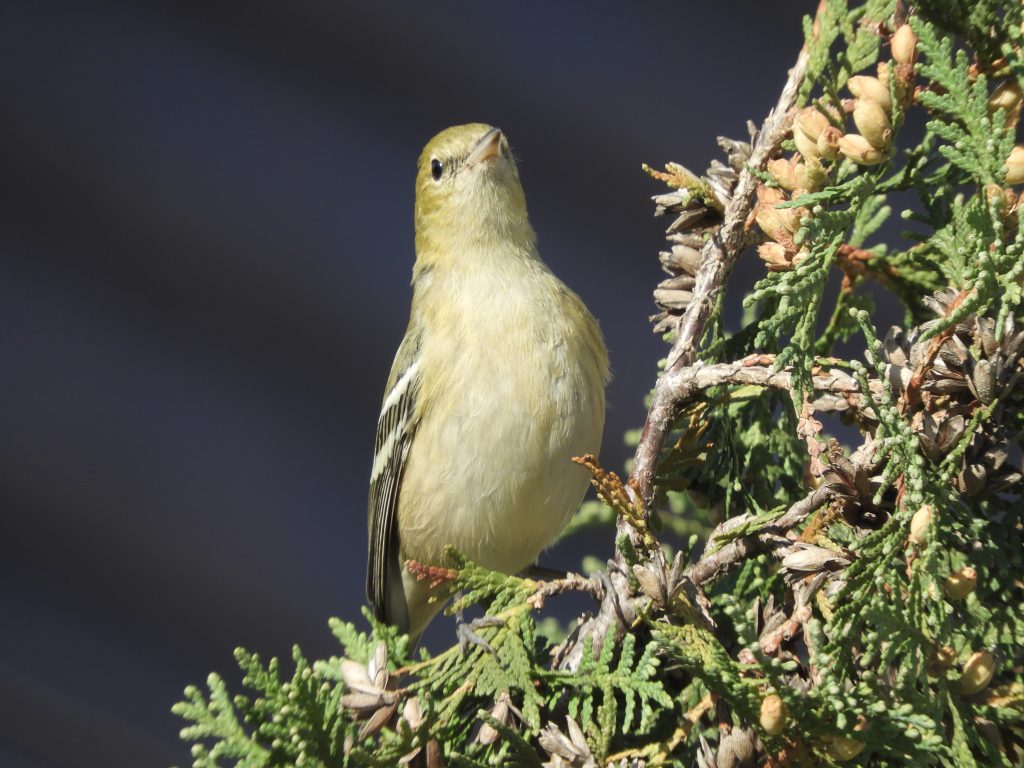
Despite a morning of transect birding that had produced a few memorable species: Lesser Yellowlegs, Pectoral Sandpiper, Traills Flycatcher, Merlins and Sharpshinned Hawks, this little warbler was a genuine My Bird of the Day. It was a bit improbable, a quiet wow!, and a challenge.
Philadelphia Vireo

Philadelphia Vireo

RBG. Hendrie Valley, Burlington ON. September 14th. 2020. I was a bit tight for time this morning and would have benefitted from another hour on the valley transect route. But never mind, it was an interesting, surprising, and delightful hour and forty-five minutes.

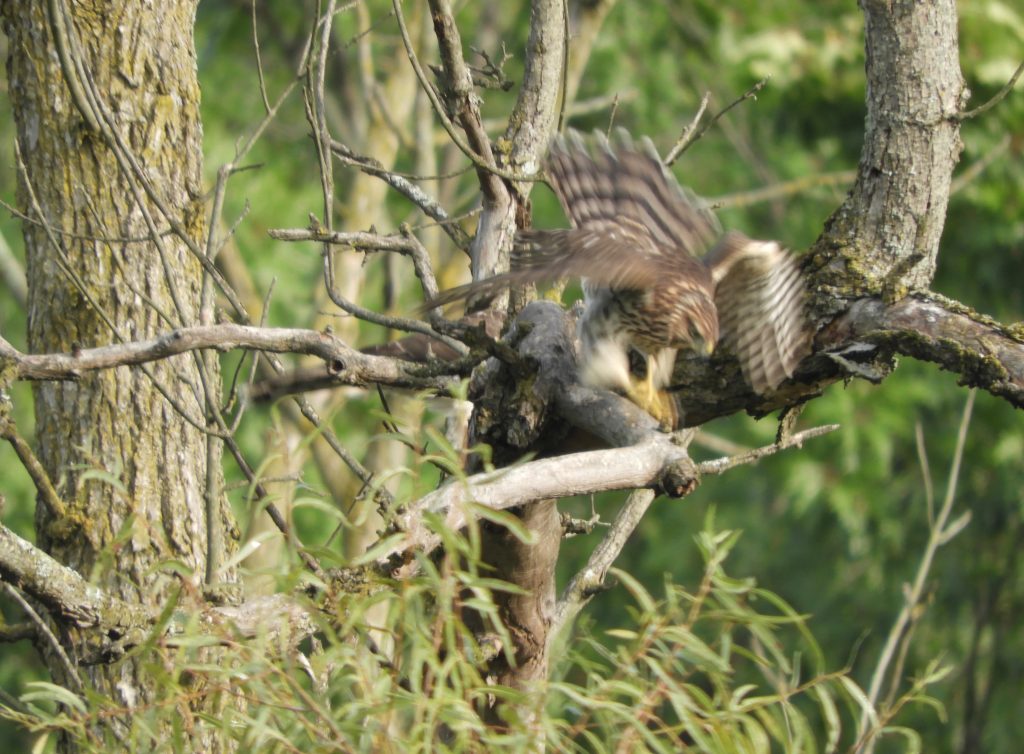
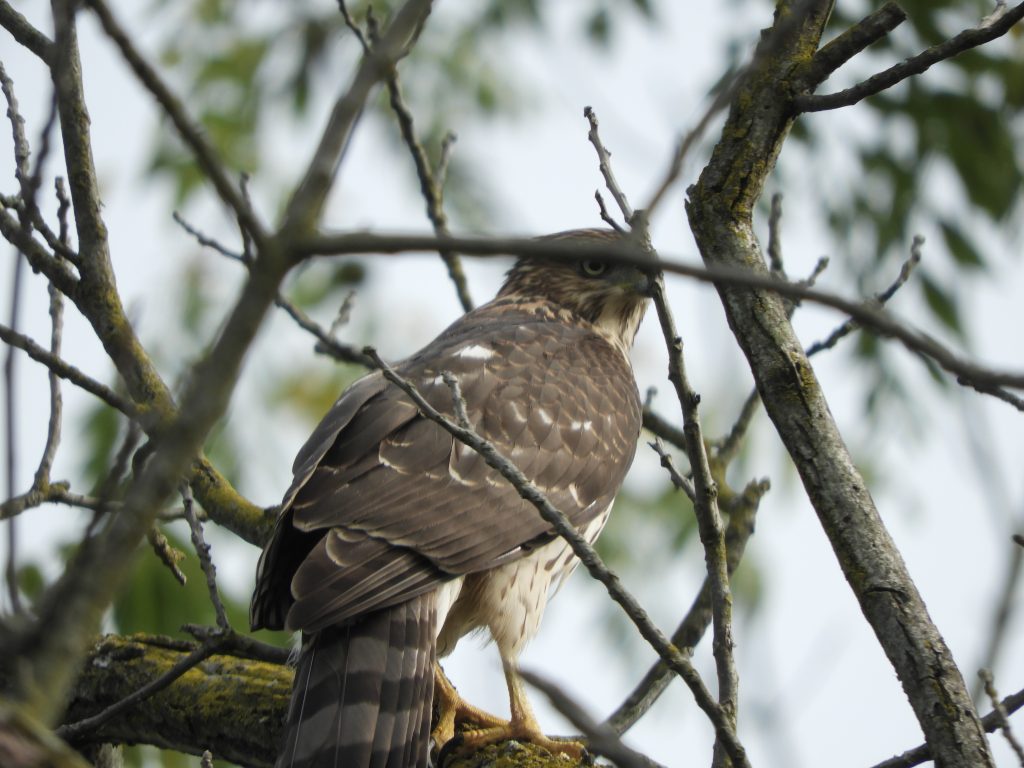
young Cooper’s Hawk

Most interesting was a group of three Cooper’s Hawks engaged in some kind of wide-ranging flight play, although play may not be quite the right choice of word.  A more realistic interpretation might be that they were engaged in non-combative, high-speed chases to develop the flight skills needed to capture prey. Whatever the reason, it was quite exciting to watch. Many a photograph was missed as a bird launched away just as I focussed – although as any bird photographer knows, that happens more often than not.

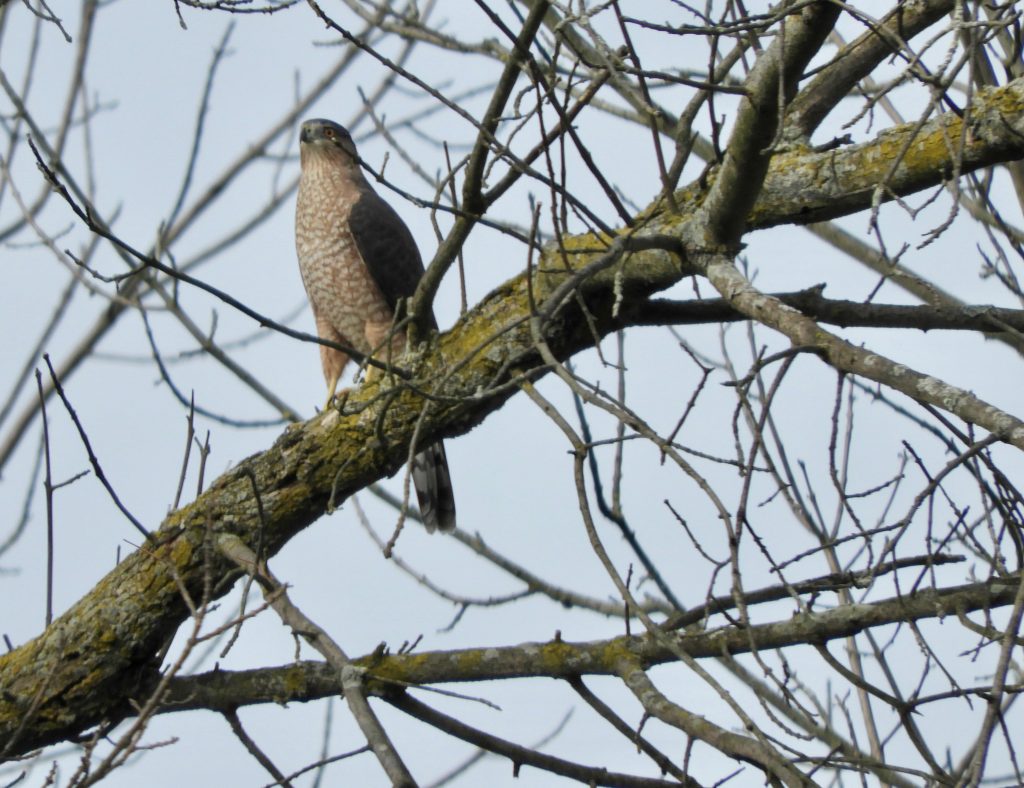
adult Cooper’s hawk

I think the trio may have been a parent and two young, certainly one was a mature adult showing pale brownish-pink barring across the breast and belly and the other two were brown-streaked youngsters. We’ve known of the presence of Cooper’s Hawks in the valley over the years and it is almost a certainty that breeding has occurred and that youngsters would become apparent sooner or later.

Most surprising today was a glimpse of a Whitethroated Sparrow. It will be the first of thousands to come, but being first is being noticed, being last is usually recalled retrospectively.

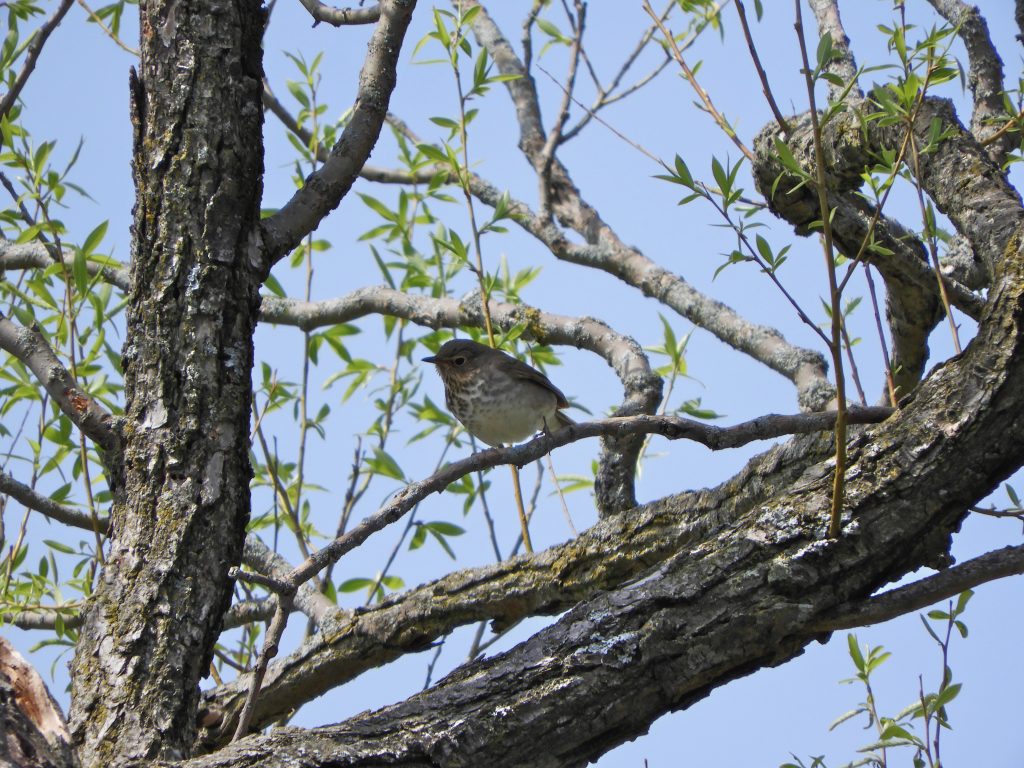
The morning produced several pretty migrants, a Common Yellowthroat, a shy Swainson’s Thrush, two or three American Redstarts and a quickly vanishing Magnolia Warbler.

Swainson’s Thrush

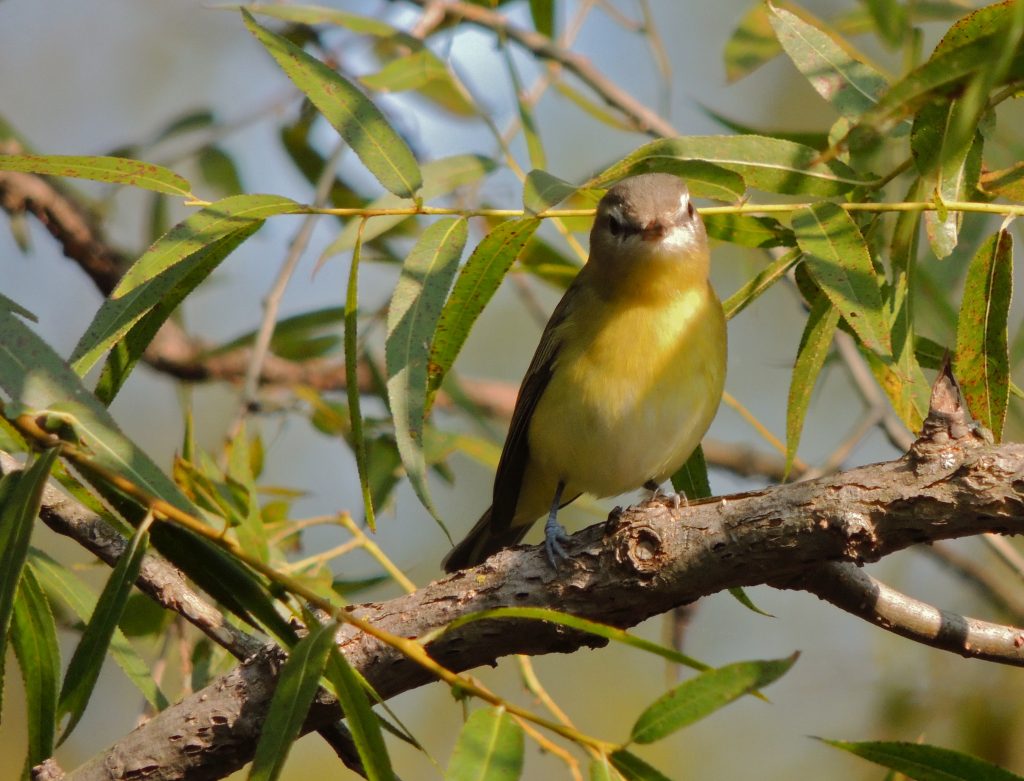
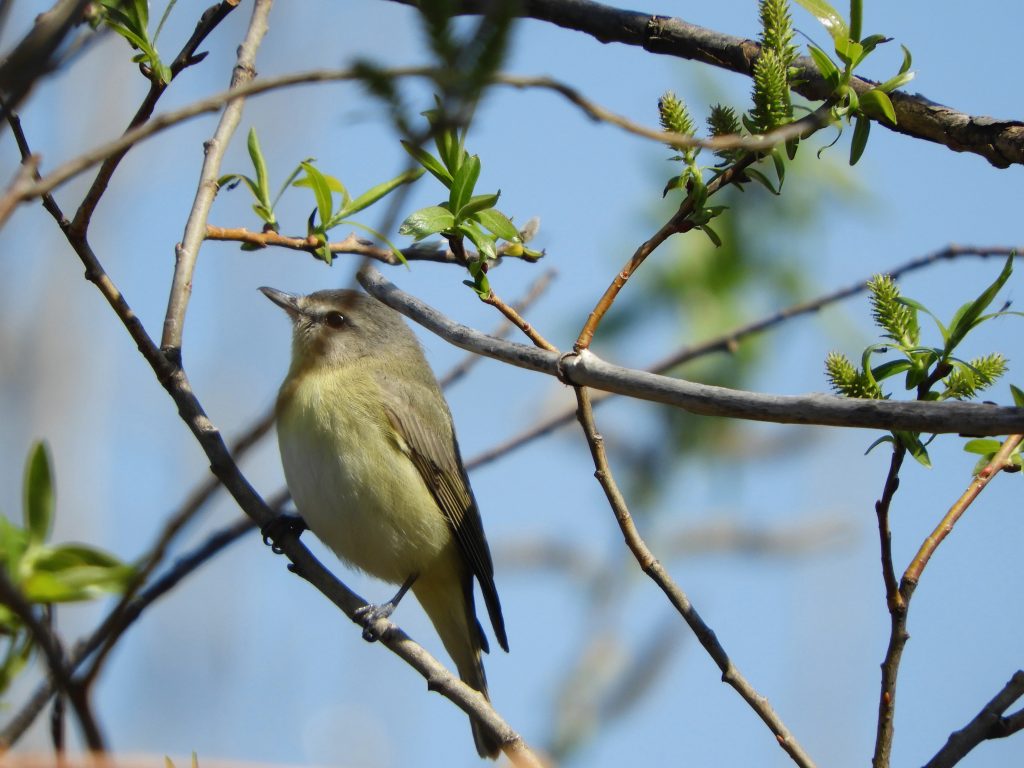
Best and most delightful was a Philadelphia Vireo. I like all vireos a lot, I’ve gushed about then on these pages many times. The much-to-be-admired Red-eyed Vireo is, for me, the standard from which I compare others in the family. Here’s how I get from a Red-eyed to a Philadelphia Vireo: Scale down the size by about 15%; tone-down the iris colour from crimson to a warm hazel brown; and add a wash of delicious yellow its underparts; and there – a perfect Philadelphia Vireo.

Philadelphia Vireos, especially today’s can be rather flitty and active, certainly today’s was but this one was photographed just about three years ago to the day. Philadelphia Vireo – My Bird of the day.

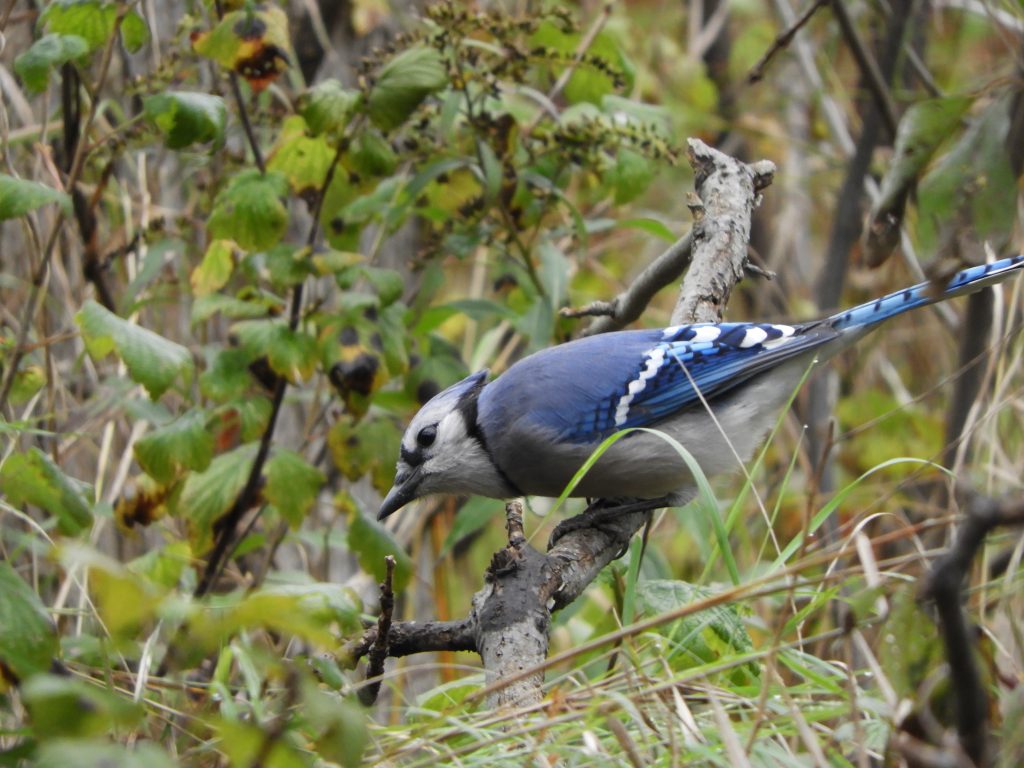
Merlin and Blue Jays

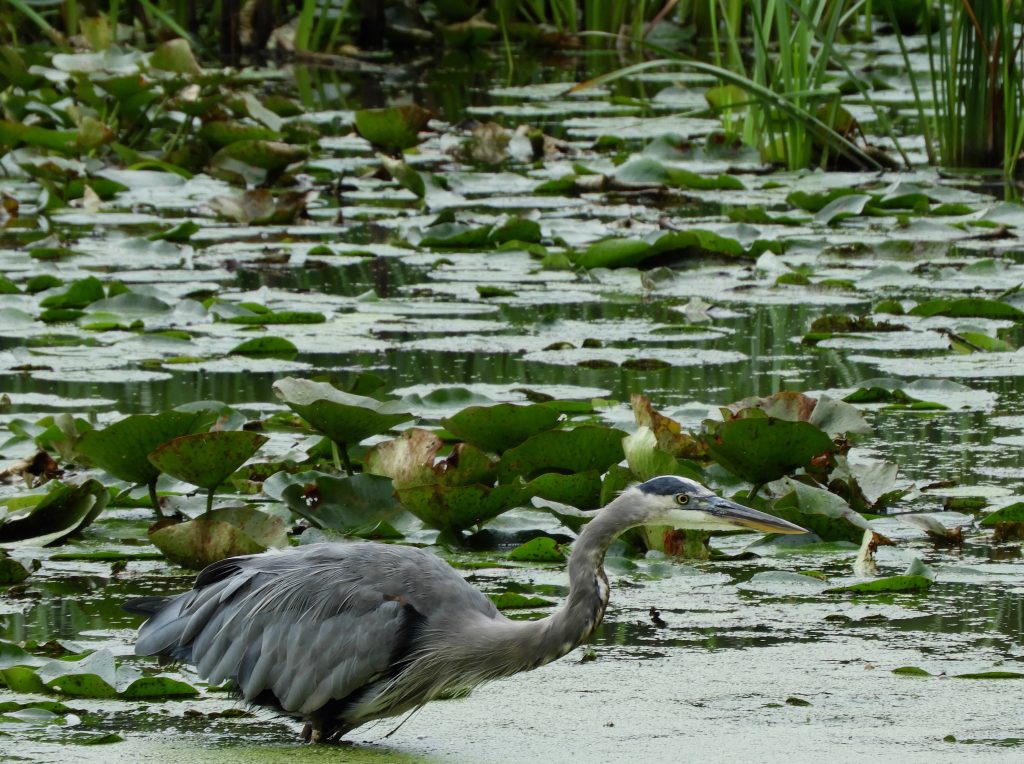
RBG. Hendrie Valley, Burlington ON. September 7th. 2020. Strong winds this morning blew fat rain drops from the trees, left from a riotous and drenching overnight thunderstorm. The natural world was drying out and few other souls ventured out when I walked one of my regular transects. The birding was somewhere between fair and good, small birds like warblers and flycatchers were conspicuously absent, but there were lots to see among larger ones. I watched this belly deep Great Blue Heron patiently stalk and spear a couple of cold, wriggling, protein packages.

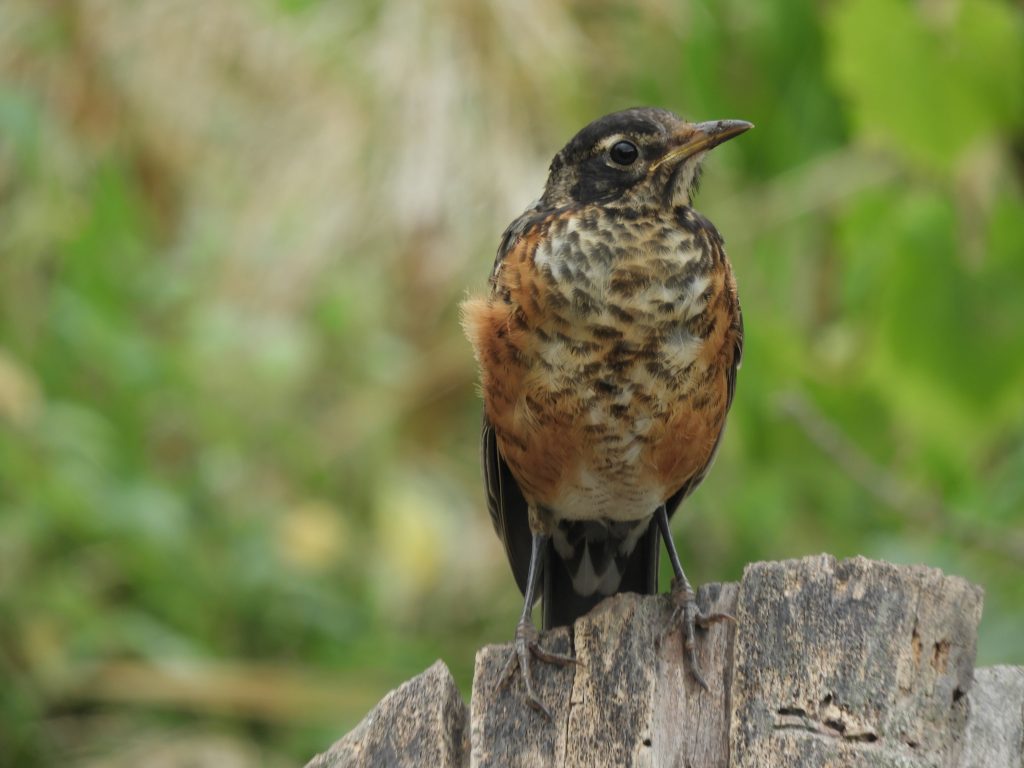
Young American Robin

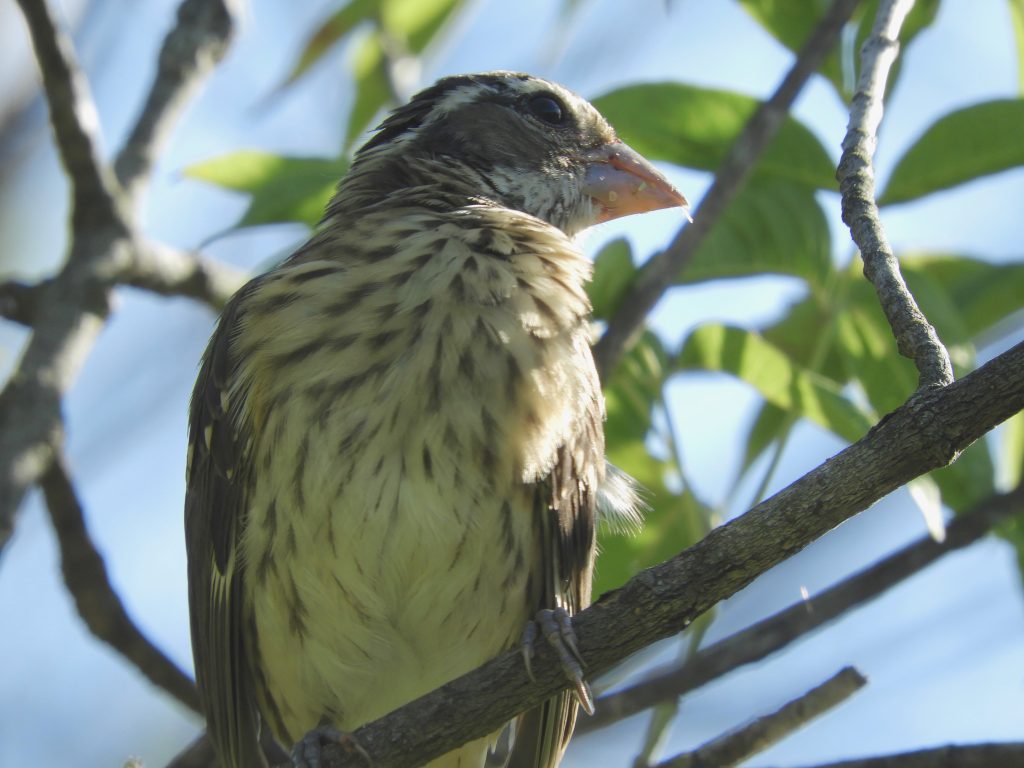
Despite noting many speckle-breasted juvenile American Robins, a Black and White Warbler, two Ospreys a few young Rosebreasted Grosbeaks and a Warbling Vireo, easily the highlight of the day was watching and puzzling over the combative behaviour of a group of about 8-12 Blue Jays and a single Merlin. It was an avian version of that childhood game; What time is it Mr. Wolf? Except that Mr. Wolf, the Merlin in this case, is a predator who lives on a diet of smaller birds snatched out of the air in fast pursuit. A Blue Jay would make a good meal.

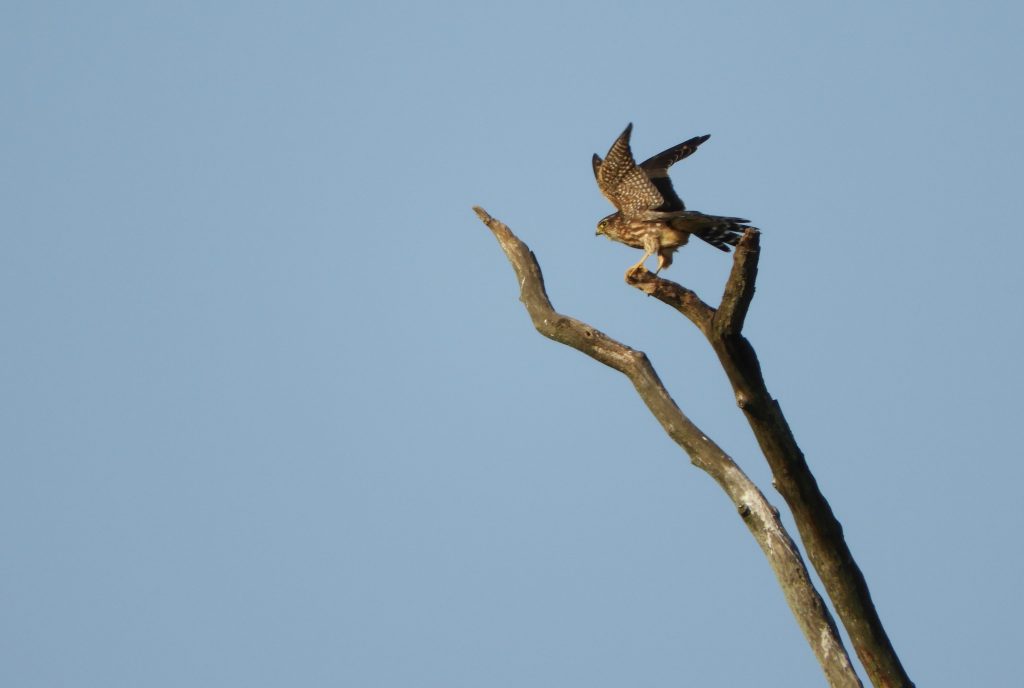
Merlin

The play went like this: The Blue Jays, as teasers, perched conspicuously distributed around the high branches of a bare or sparsely-leaved tree, the Merlin swooped in, took up a strategic perch, surveyed the meal opportunities and then made a dive or maybe a feint for one of the teasers. The teasers all scattered, shrieking like 7-year olds, and then promptly reconvened, often in the same tree. The Merlin returned as before but empty-handed and they did it all over again and again and again.

This is not the first time I’ve witnessed this cat and mouse game and I wonder what this is all about. Could it be that they’re all young birds, hatched this year, engaged in mutual learning; albeit with the possibility of a bad outcome for one of them.

Blue Jays were around in the valley in huge numbers today, a big migratory pulse I’m certain. The Merlin looked very crisp, in fine fettle. I’m sure it would soon find a meal not necessarily a playmate. My Birds of the Day.

Young Rose-breasted Grosbeak

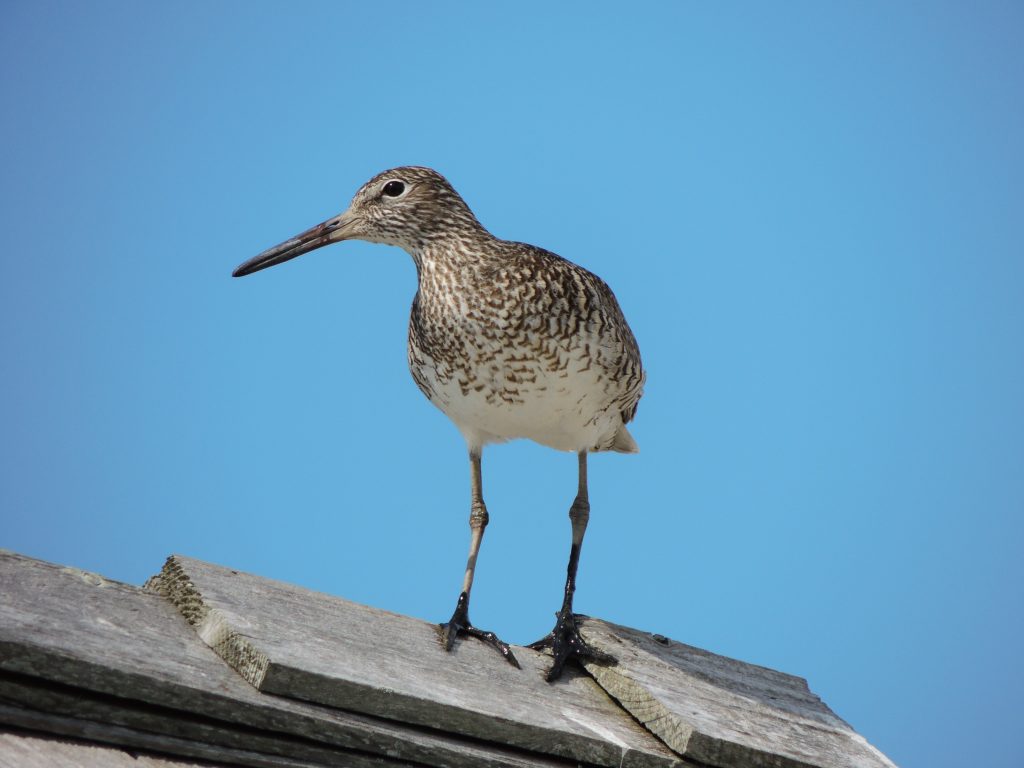
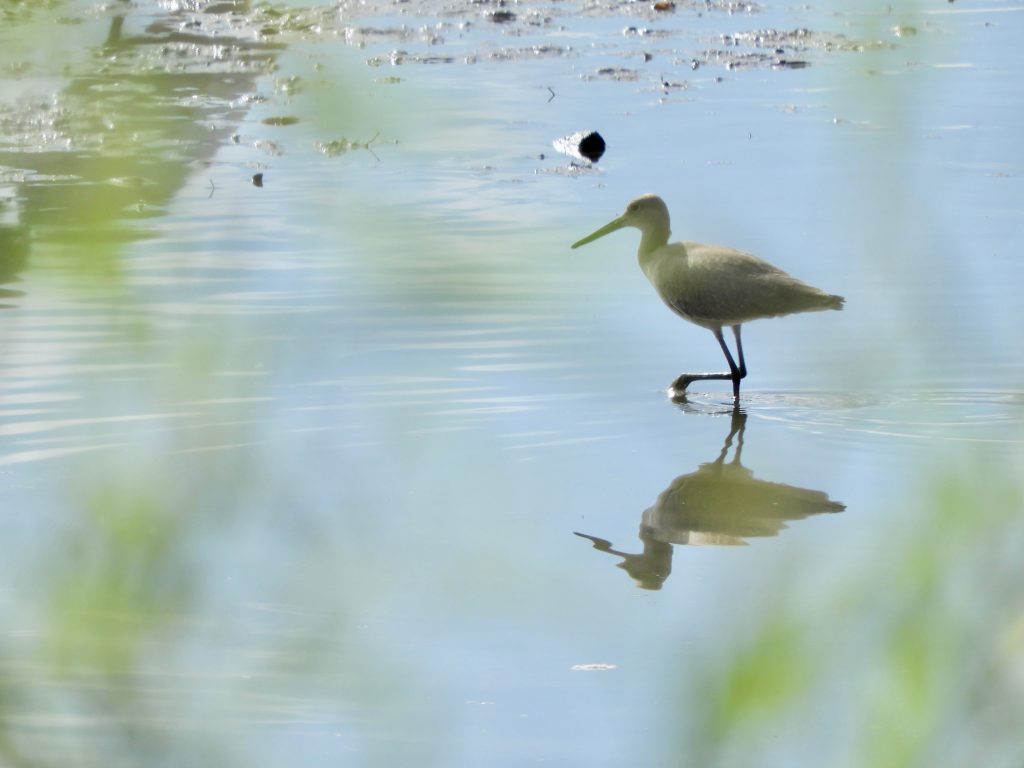
Willet

May 2015 Willet

Royal Botanical Gardens Arboretum, Hamilton, Ontario. August 30 2020. Some birders make a weekend out of following up reports of others’ notable bird sightings. Just before lunch, I met a couple who had already logged about 200km chasing sightings in central Ontario.  They were far from home with more leads to follow. For their troubles they had seen a Buff-breasted Sandpiper (a good find) but missed a Western Sandpiper. I may have added joy to their day by pointing them in the direction of a Willet that I had found just an hour earlier.

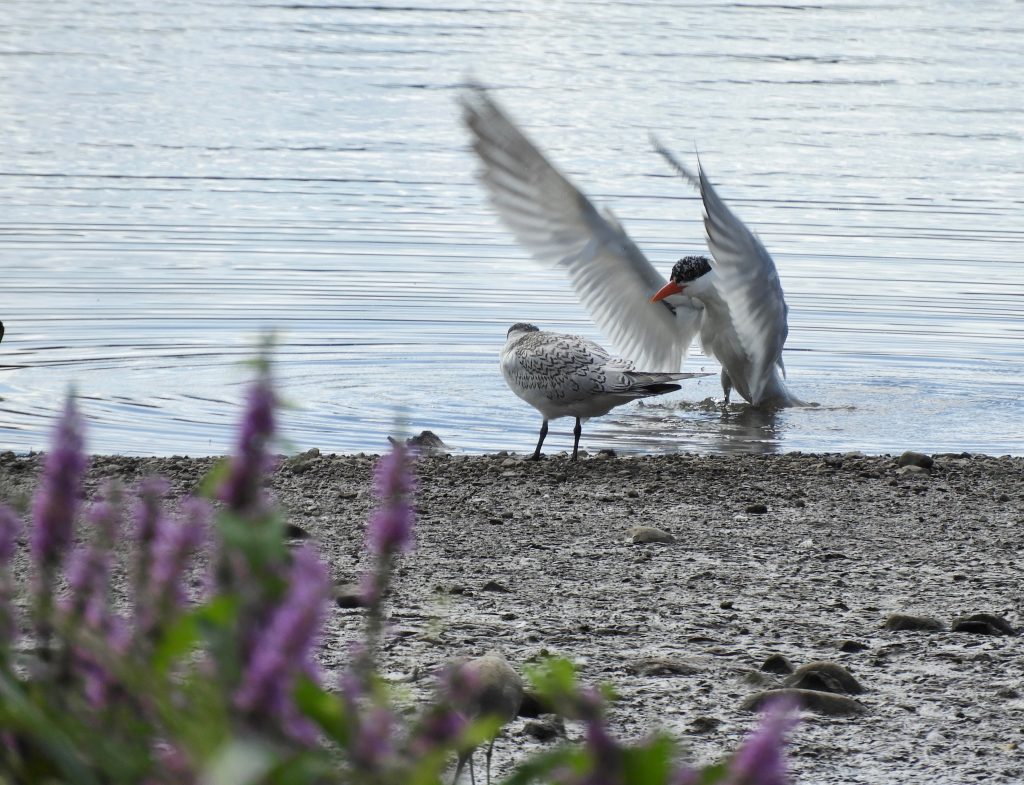
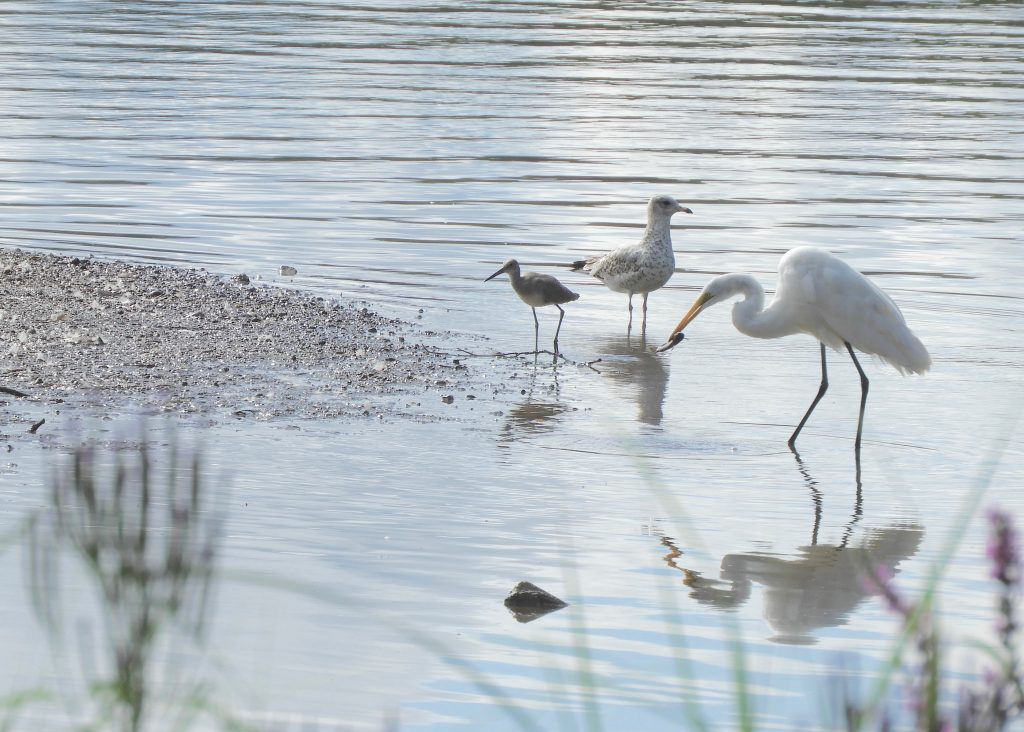
The Willet caught my eye as I was doing one of our just-restarted fall transects. The morning had been rather slow going as far as species numbers and mix were concerned, but entertaining with a couple of young Bald Eagles playing aerial acrobatics, a Great Egret softening up a catfish meal, and squabbling Caspian Terns.

Young Caspian Terns

The Willet was an identification challenge and I spent quite a few minutes going through my mental rolodex. For a while I couldn’t shake the word whimbrel from my mind, I knew it was wrong. But W… W… W-something?

Willet, Herring Gull and Great Egret

A Willet is a notable but not totally unexpected migrant, a handful are seen here most years. The question that puzzled me later was, to which of two subspecies, Eastern or Western, do our birds belong?  The Eastern breeds along the Atlantic on coastal flatlands anywhere from Virginia north to Newfoundland, then winters on open mudflats and beaches almost anywhere south of that, including the Gulf of Mexico.  The Western subspecies is a bit more widespread and breeds in the vast centre of the North American continent, and spends its winters on the Atlantic and Pacific coasts, from California or Virginia south including tropical South America.

In all likelihood today’s bird was a Western Willet on its way from somewhere far inland to the Atlantic coast. Perhaps to spend its winter dodging the throngs of winter escapees on Florida beaches.

Willet

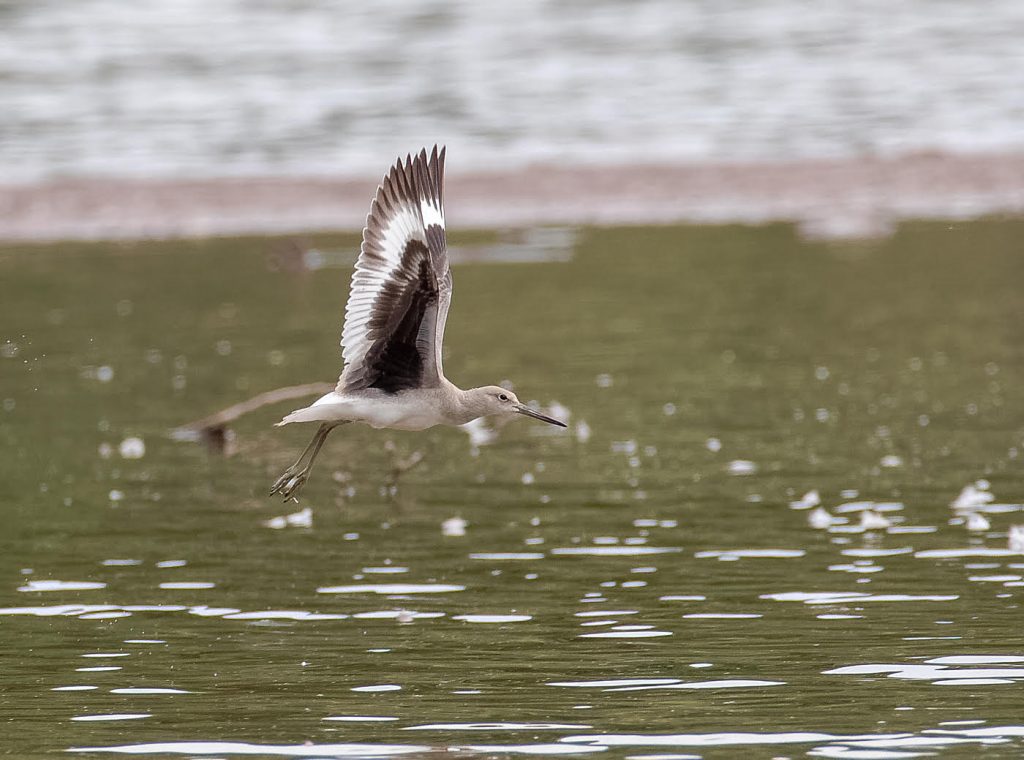
On first meeting, a Willet is a conspicuously large but rather plain shorebird, especially a post-breeding one like this. At any time of year, they are a long-legged bird about the same colour as the mudflats. But all is forgiven when they fly, whistling loudly in alarm and exposing beautiful, bold, under-wing panels in black and white.  My thanks to Andrew Mactavish for this revealing photo.

Willet Photo by Andrew Mactavish

It was unquestioningly my Bird of the Day.

Confusing Fall Warblers

What?!

Woodland Cemetery, Burlington ON. August 28 2020. Roger Tory Peterson’s book, A Field Guide to the Birds (first published in 1934 and for decades North America’s bird-identification bible) was, for the most part an invaluable revelation. When I started birding in Canada it was almost alone in shining a light on bird identification mysteries. The only stumbling block was its two-page section on Confusing Fall Warblers. Those few discouraging pages clouded the other 200 of confidence and joy earned in finding and knowing what you were looking at. It was enough to put many people off looking at little birds. The taint has stuck, undermining some birders’ confidence still.

I met with friends this morning to look for migrants of any and all kinds among the trees and shrubs in a large cemetery. The weather has cooled in the past couple of days and many bird species have taken the hint that it’s time to move on.

I felt like a beginner birder today, the trees were hopping with birds, there was too much to absorb in not enough time and it was all moving around. I had no trouble with Red-eyed Vireos, a glimpsed Philadelphia Vireo, many Chipping Sparrows, Blackcapped Chickadees, American Redstarts, a Magnolia Warbler or two, a Bluewinged Warbler and Redbreasted Nuthatches, but there were many more active little birds moving quickly, flitting, dropping and vanishing before you could get your binoculars on them. To complicate things, several of them fit right into Peterson’s ‘Confusing’ category: Cape May, Baybreasted, Pine, Blackthroated Green, and Blackburnian Warblers. They were all there, undoubtedly dozens of them, bouncing and fluttering, teasing us. You can usually figure them out given field guide in hand, time, and a reasonable look. But today it was difficult to make certain identifications, my colleagues were more confident and I owe it to them that I was able to latch on to some of those tricky ones.  

I managed to get this poor photo, below, of a young female Cape May Warbler. She’s brownish, shows no wing markings and is faintly streaked on the breast.

female Cape May Warbler

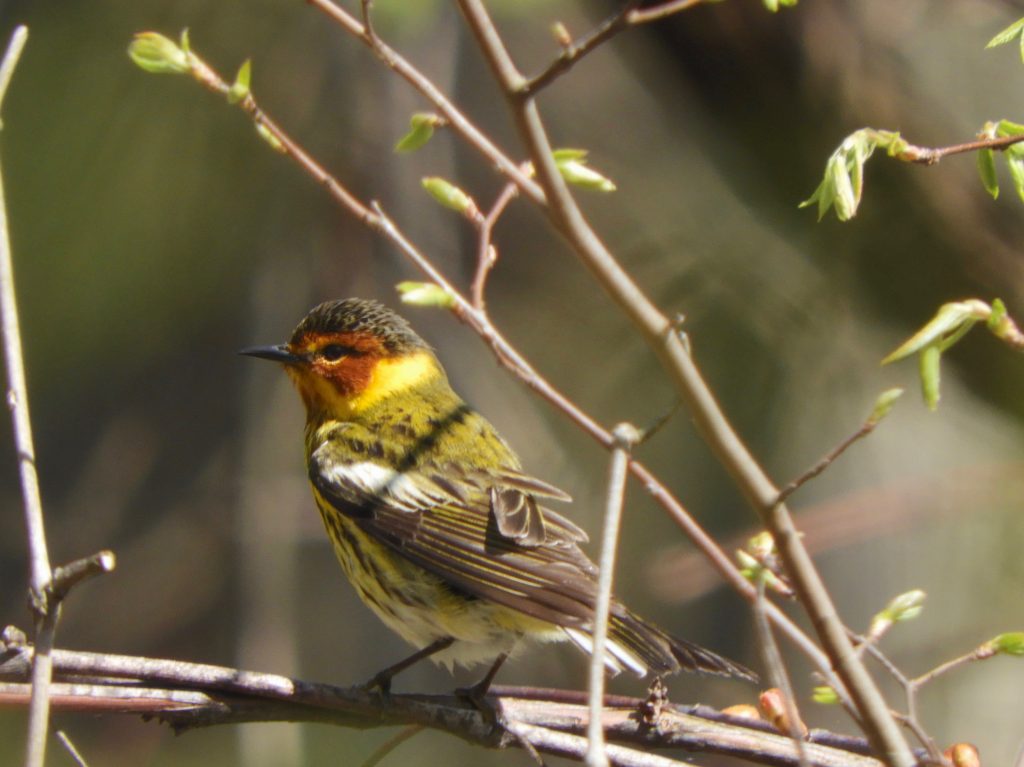
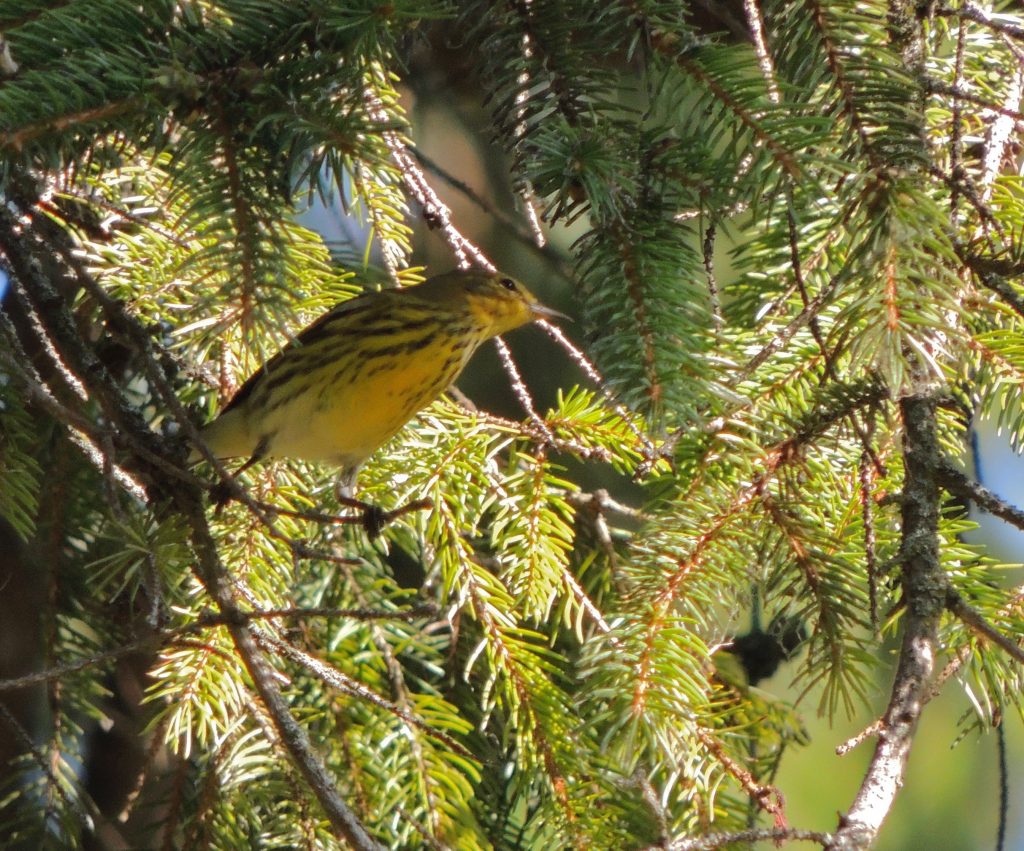
On the other hand, the next two, below, are also Cape May Warblers, both adult males, one in spring, the other in fall. Some quite radical differences, you can see a bit of what Peterson was getting at.

Male Cape May Warbler – in May
Male Cape May Warbler – in September

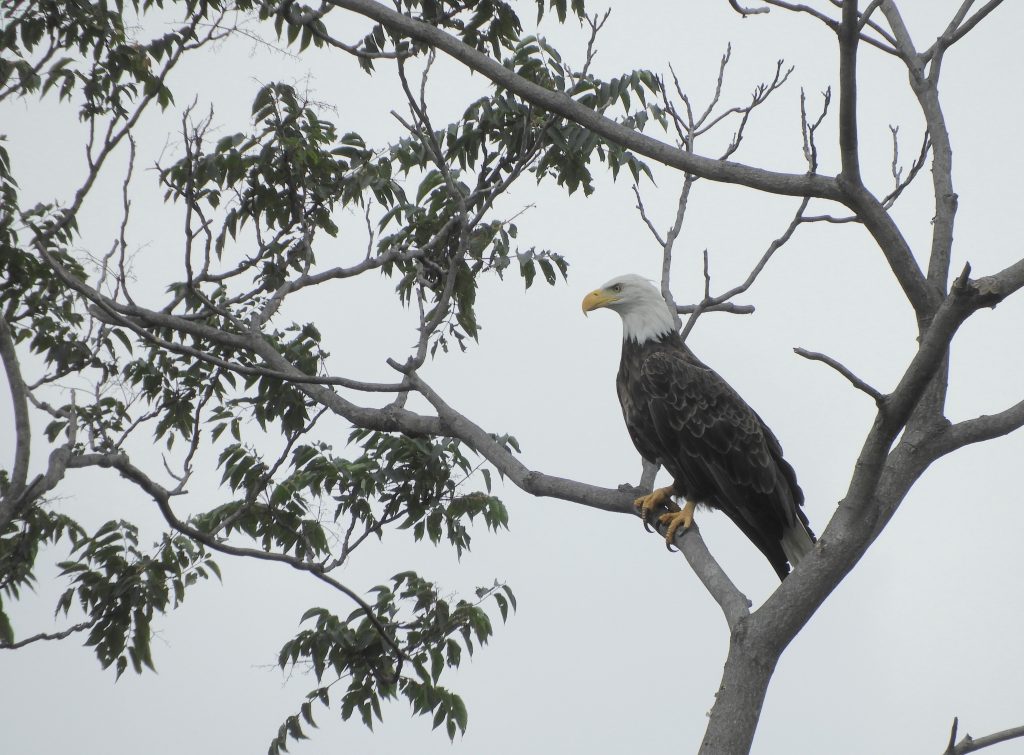
Finally for today, as we were about to head for home, with my head still trying to catch up, we heard a piercing three-note whistle and looked up to see this adult Bald Eagle, no mistaking.