Orange-crowned Warbler & Gray-cheeked Thrush

RBG. Hendrie Valley, Burlington ON. October 5th. 2020. Following 24 hours of mixed, sometimes dirty, weather my companion and I sensed a good chance of rewarding birding this morning; and it certainly delivered. We racked up 52 species of birds and it took us three and a half hours to do a transect that usually takes two. 

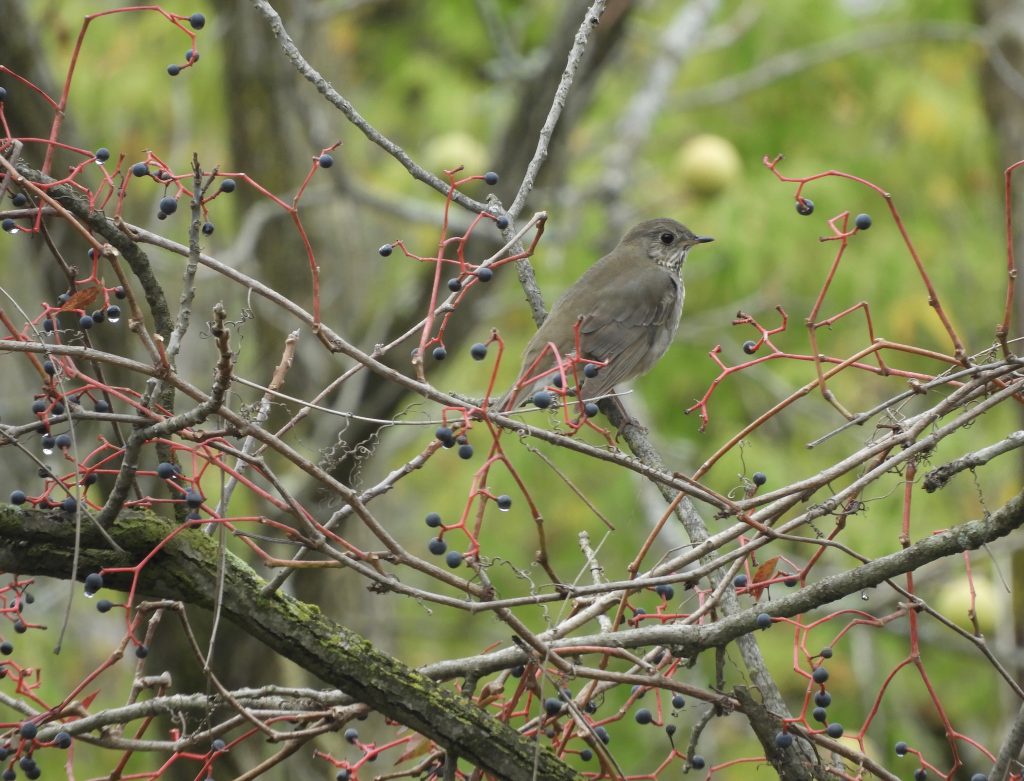
There were two Birds of the Day today, both special because of their quiet, fleeting scarcity, not because of the one thing they have in common, that neither is particularly engaging to look at.  The second one, a Gray-cheeked Thrush, like all of its thrush cousins, is modest in behaviour and subtly and beautifully dressed in earth tones. I hadn’t seen one for many months, maybe a couple of years, and was pleased when one landed close to us. Here’s a photo of it, not spectacular – but precious in its own way.
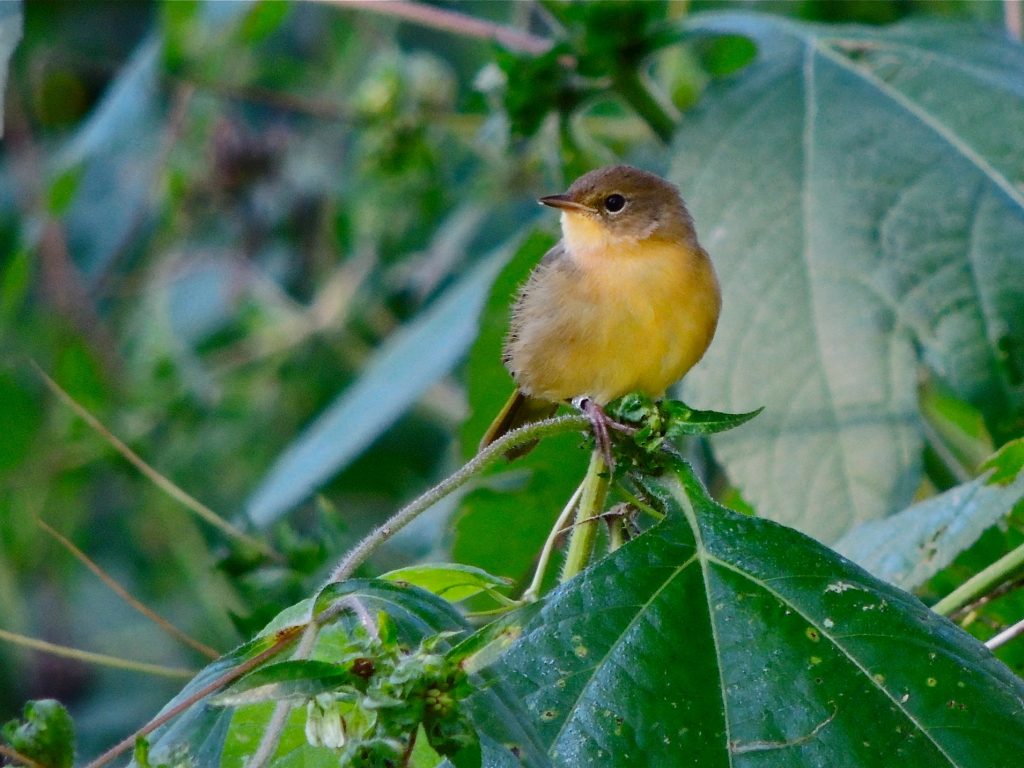
My other Bird of the Day was an Orangecrowned Warbler, a bird that stands out for being uncommon, uncommonly plain and somewhat inappropriately named. We see very few of them here, they are much commoner on the west half of the continent, commoner to the point of being a bit tiresome. In some sort of compensation for their commonness, the western birds are much brighter than eastern individuals. (A middling yellow versus a greyish with a wash of yellow on the undersides). Perhaps the easterners are more likely to be overlooked than truly absent.
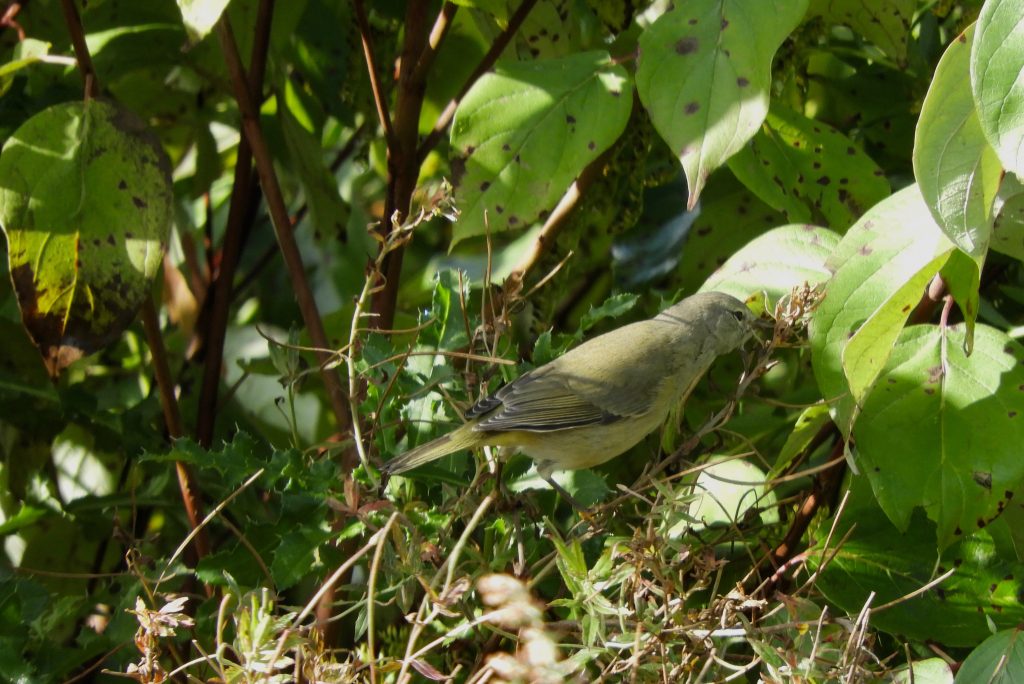
Seeing one today was sort-of anticipated, it is the right time of year. They are a latish migrant among warblers and we were examining an expanse of seedy herbaceous plants, their sort of place. The bird we found was searching for food, obligingly not too far from us, but made a point of digging deep and staying buried in the thick vegetation. Being a bit of a triumph propelled today’s Orange-crowned Warbler into shared My Bird of the Day status. And as to the orange crown, we didn’t see it, few do, it is rarely visible and said to be more obvious on bathing or scolding birds.

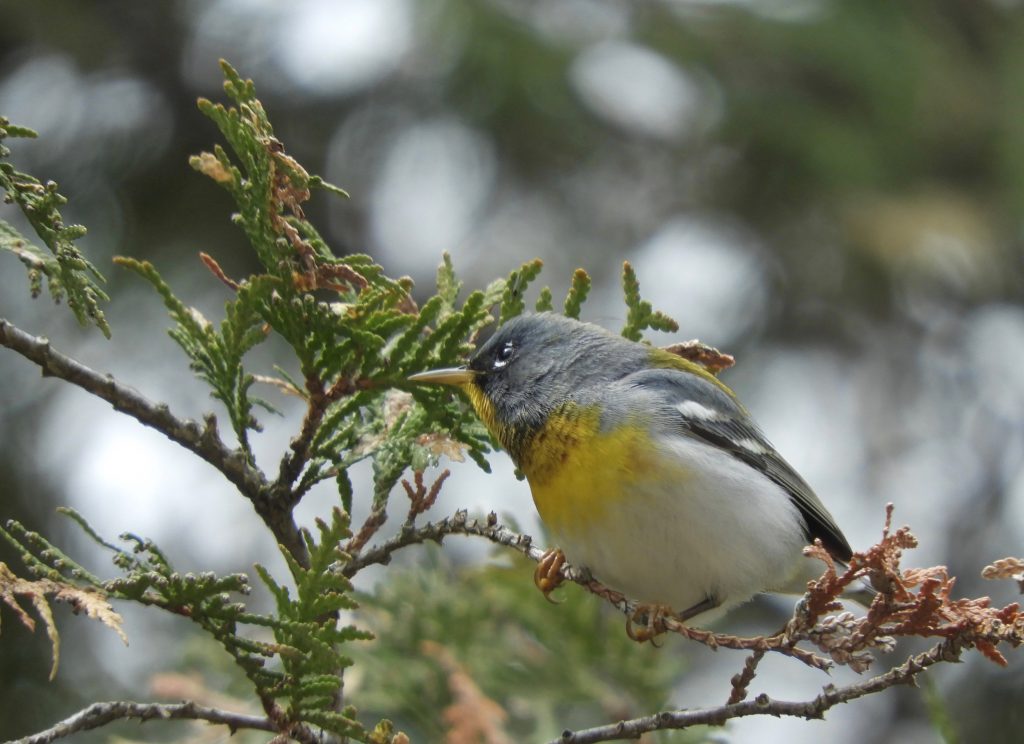
Our morning was as broadly rewarding for many notables as it was for the Gray-cheeked Thrush and the Orange-crowned Warbler. We found a few other late moving warblers: Northern Parula, Common Yellowthroat and Magnolia, Blackthroated Green and Yellowrumped Warblers. A Blueheaded Vireo, some Rubycrowned Kinglets, two late Least Flycatchers and a few Greenwinged Teal and two American Wigeons.
Blue Jays

Woodland Cemetery, Burlington ON. September 29, 2020. After a stretch of warm, dry days a cold front swept across the land last night. It really stirred things up. For the many birds who had been hanging around, failing to make hay while the sun shined, last night was a time-to-get-moving wake-up call. 

With no urgent duties of my own, I headed to this quiet , well treed cemetery, eight kilometres from home, hoping for a lively morning of birds on the move. The cemetery commands a peninsula of land overlooking a long stretch of water. It lies squarely on a coastal flyway followed by thousands of fall migrants, it’s almost a bird trap. 

On my way, I noticed a large flock of Blue Jays, flying alongside me and pretty well keeping up at 40 Kmh. Hmmm well, Blue Jays are on the move, I thought and anticipated meeting up with them again as they passed the cemetery. A small group of birder photographers had gathered in their favoured spot among the headstones, but I avoided them.  Instead I found a quieter corner away from the guy-talk and one-upmanship that seems to go with the group.

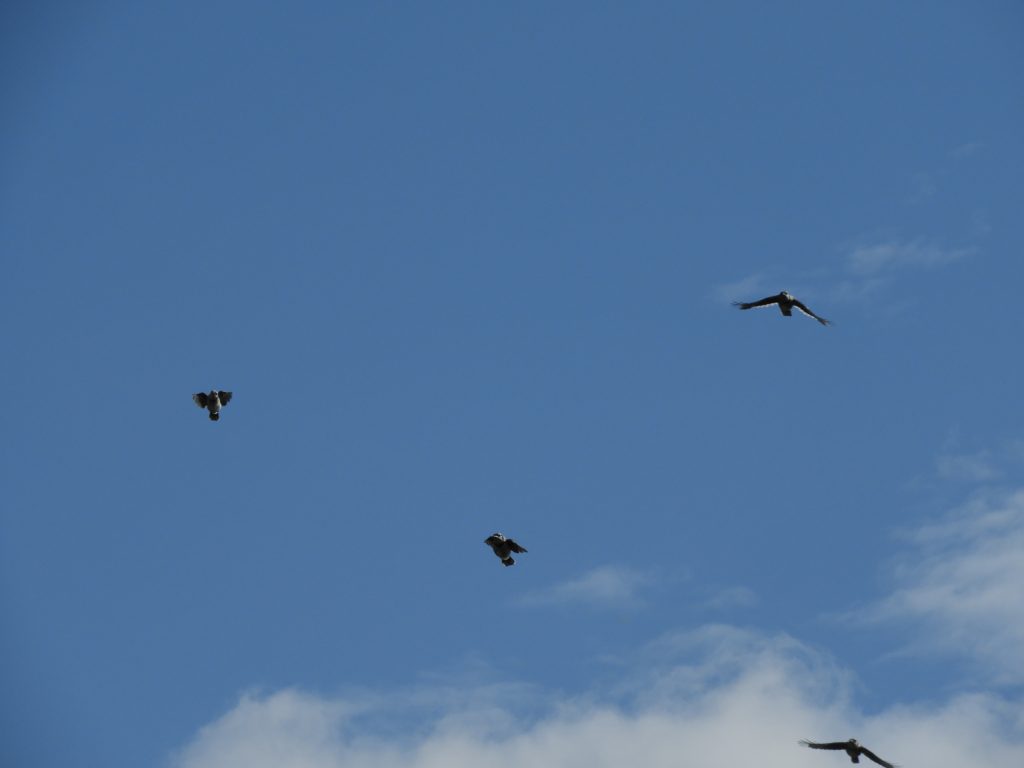
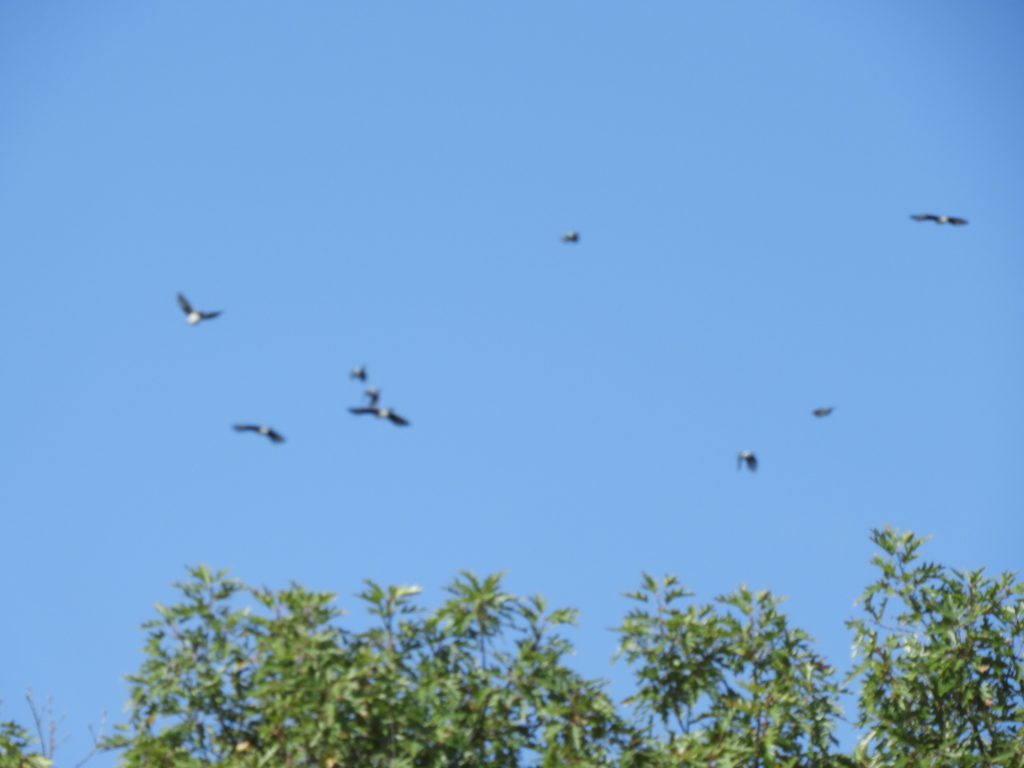
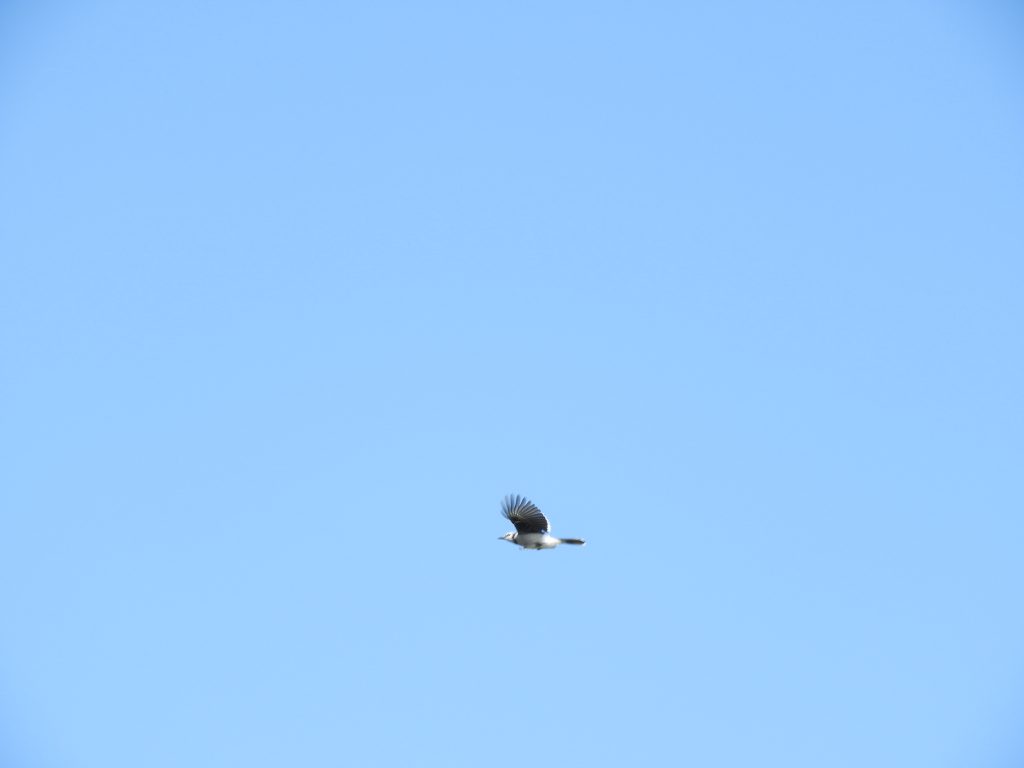
A flock of jays swept low overhead, coming from the east, heading southwest, I couldn’t count them. I tried for photographs with limited success. Only this one (normally not a keeper) manages to hint at the spectacle of a sky full of Blue Jays.

A few more trickled through and I was distracted for a while by a large group of Dark-eyed Juncos.  New overnight arrivals I’m sure, certainly, the first I’ve seen since the end of April.

But jays kept appearing in loose but purposeful flocks, passing over all morning at little more than treetop height and screeching as they went. Counting them was pointless, small flocks might have been 20 birds-strong, and large flocks five or ten times as large. It went on all morning that way, there were pauses but not for long. Among these hundreds and thousands, I noted a migrating falcon very high overhead, perhaps a Merlin, and a Yellow-billed Cuckoo that seemed a bit baffled by the clamour of jays all around it as it searched for food in a thick mulberry.

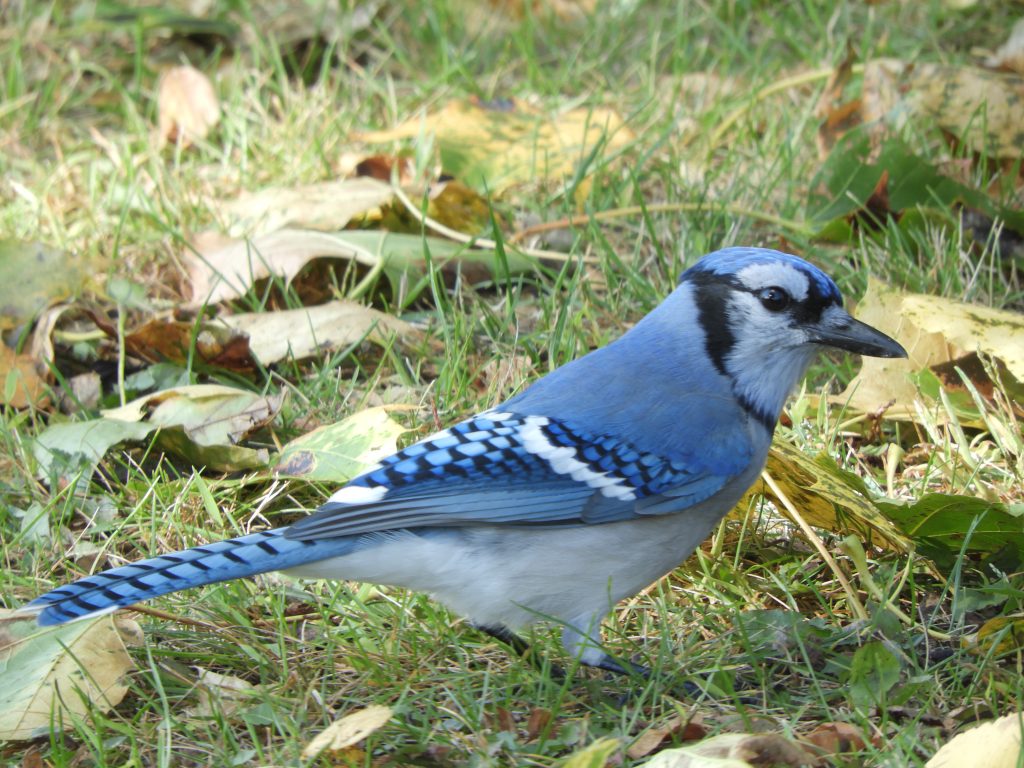
It was in the first week of October last year that I celebrated Blue Jays as My Bird of the Day. I remember that day and the clamour of jays feasting on acorns. I remember recalling then how a South African birder had breathlessly said of her first Blue Jay, “What a beautiful bird!” And it surely is. This was one of today’s birds, it was among a small detachment that paused for lunch.

Indigo Bunting

RBG. Hendrie Valley, Burlington ON. September 28th. 2020. I scheduled myself to complete one of our regular transects in the valley this morning. These late September days hold many surprises and delights most of which are milestones in the seasonal shift. Today dealt many delights and at least four surprises.

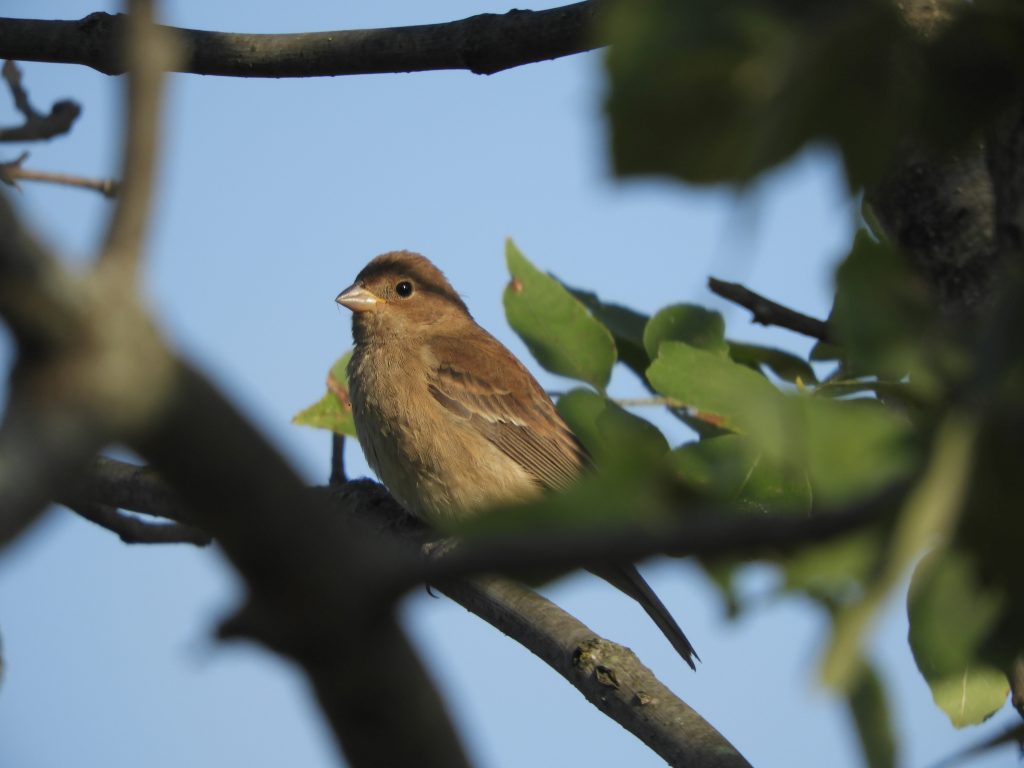
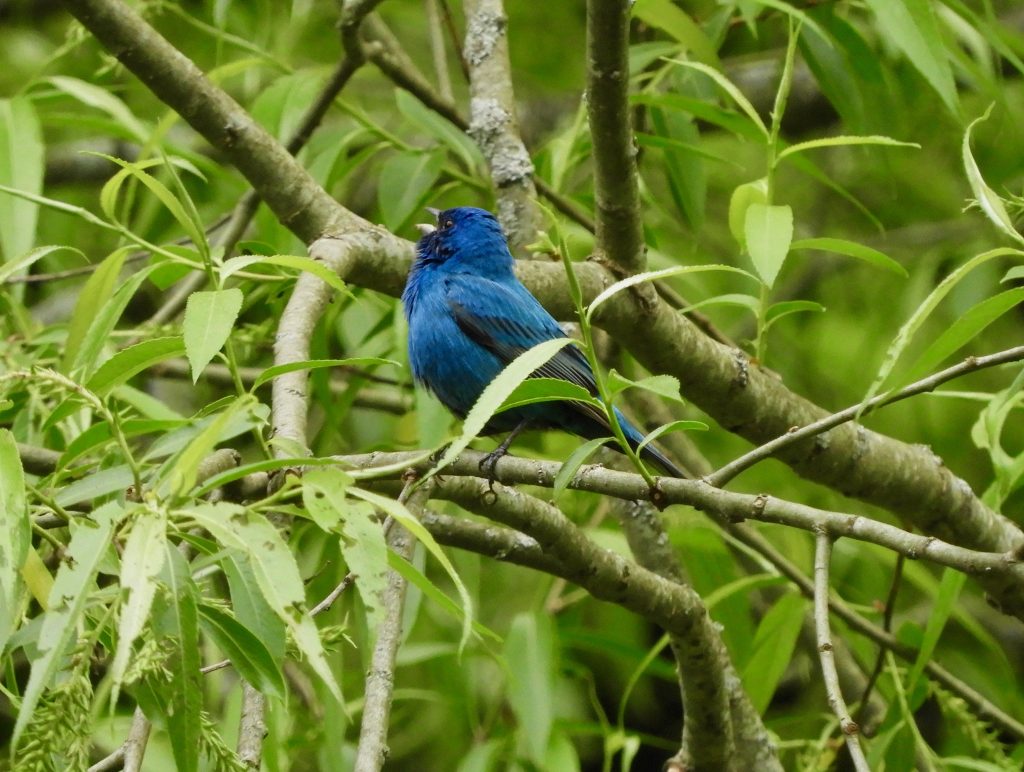
First delightful surprise and Bird of the Day, was this Indigo Bunting, a female. Indigo Buntings are not rare but somehow are much more often heard than seen. Following the distinctive song of a male in summer will lead you to a small, almost electric-blue bird, but almost never will you see the female. She does her job best staying out of sight after all, and she is every bit as plain as the male is gaudy, indeed plainness is her defining characteristic.

Presence or absence of field marks is what makes bird identification the challenge it is. In the case of a female Indigo Bunting the plot thickens: Head stripes? No; Facial markings? No;  Eye ring? No; streaking, spots or blotches? Nothing.  Wing bars? Yes but faintly.  Above is today’s bird and, for contrast, a male (below) in all his glory, photographed last May.

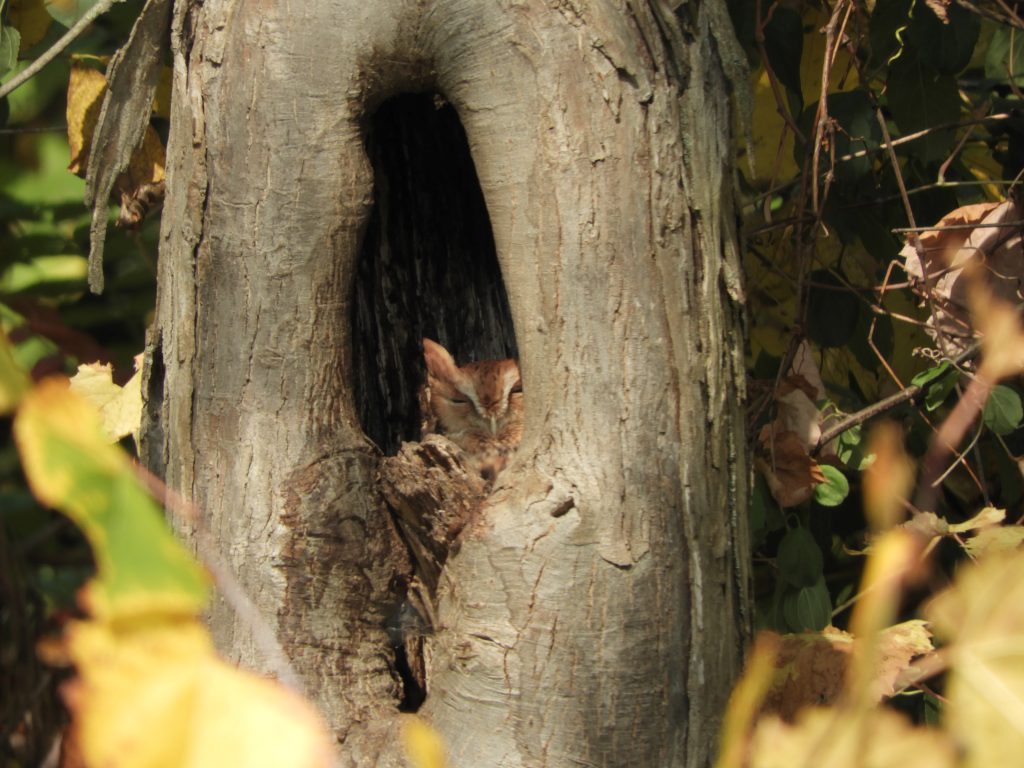
Spotting an Eastern Screech Owl was a nearly-surprise. We know this bird and that it favours a particular tree cavity but rarely do we actually see it. Whether it is always there but usually hunkered down, or whether it has several daytime refuges I don’t know. But it was photo-worthy out sunning itself today to the delight of many passers-by.  

Eastern Screech Owl

Surprise number three was to watch a Sharp-shinned Hawk being drawn reluctantly into a catch-me-if-you-can game with a group of Blue Jays.  Although the jays seemed to want to play, the Sharp-shinned Hawk wasn’t very interested and preferred to sail around in wide circles warmed by the September sun.

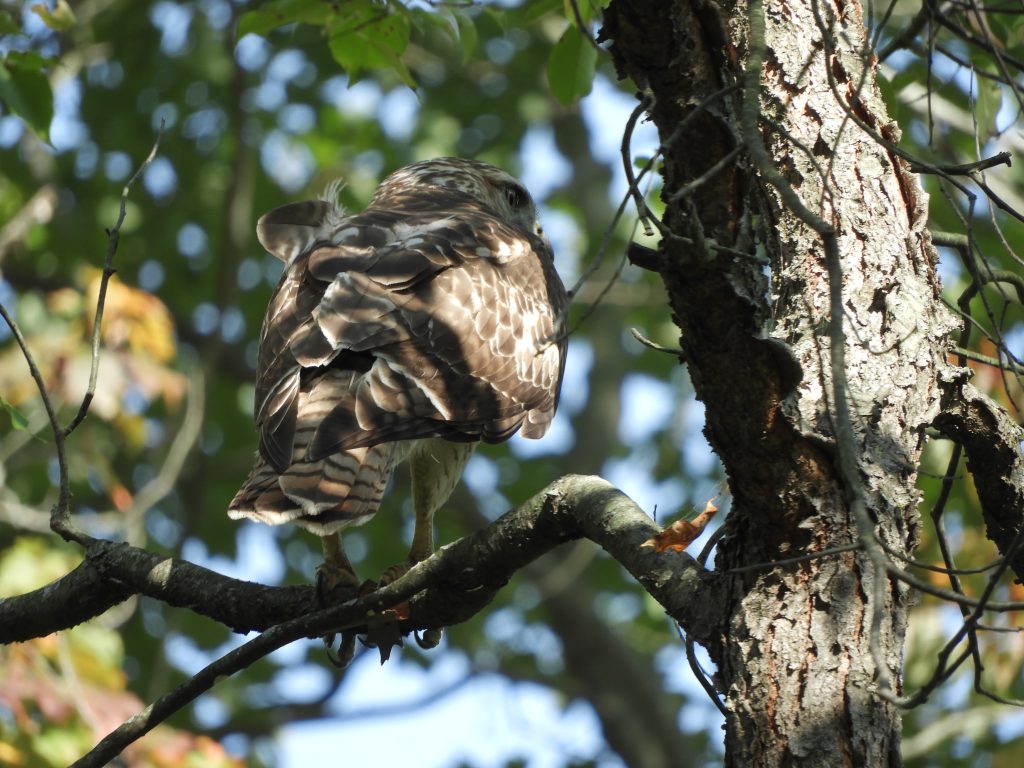
As we wrapped up our circuit we stopped to watch a Red-eyed Vireo feasting on the berries of a Spindle Tree. We commented on how unusually motionless and obscure it had become and then the answer sailed overhead and perched just a few metres away: this Cooper’s Hawk. The presence of predators will often make potential victims freeze and I’m sure that’s what was on the vireo’s mind.

Cooper’s Hawk

Birding a transect

One of the rewards of a transect

RBG. Hendrie Valley, Burlington ON. September 28th. 2020. I scheduled myself to complete one of our regular transects in the valley this morning. But wait! Before I go any further, it’s perhaps time to expand a little on what I mean by ‘completing one of our transects’.

It’s a longish story, but in brief I am one of a team of capable birders who gather data on bird populations on the natural lands of Canada’s Royal Botanical Gardens, (RBG). Our task, in April, May, September and October, is to walk the length of any of three defined routes recording all birds seen and heard; that’s it, that’s a transect. 

Today’s route, Cherry Hill, takes us along trails in a loop through hardwood forest, across a wide river valley, skirts three woodland-enclosed ponds and follows a lightly-treed river bank. It is a very beautiful walk any day of the year and the habitat is so varied that the birding is about as good as it gets in this part of Ontario. 

Cherry Hill is one of three defined routes, the others are different but just as interesting in their variety.  We count and record all birds seen and heard, then upload a report to a compiler. We are gathering very raw data for the use of RBG with the goal of accumulating many years and decades of such data. The more we gather the greater its value. (We call our project the Longwatch and this website has a lot more background information.)

Vireos three

Philadelphia Vireo

Royal Botanical Gardens’ lands ON. September 19th & 20th 2020. I write this after (and about) two consecutive birding mornings. Cool, almost cold, nights gave way to brilliant blue days. Both mornings I walked transect routes in what felt like the peak of the fall migration. There were many familiars, many happy returnees, several surprises and a few challenges that required after-the-fact photo scrutiny. 

Red-eyed Vireo

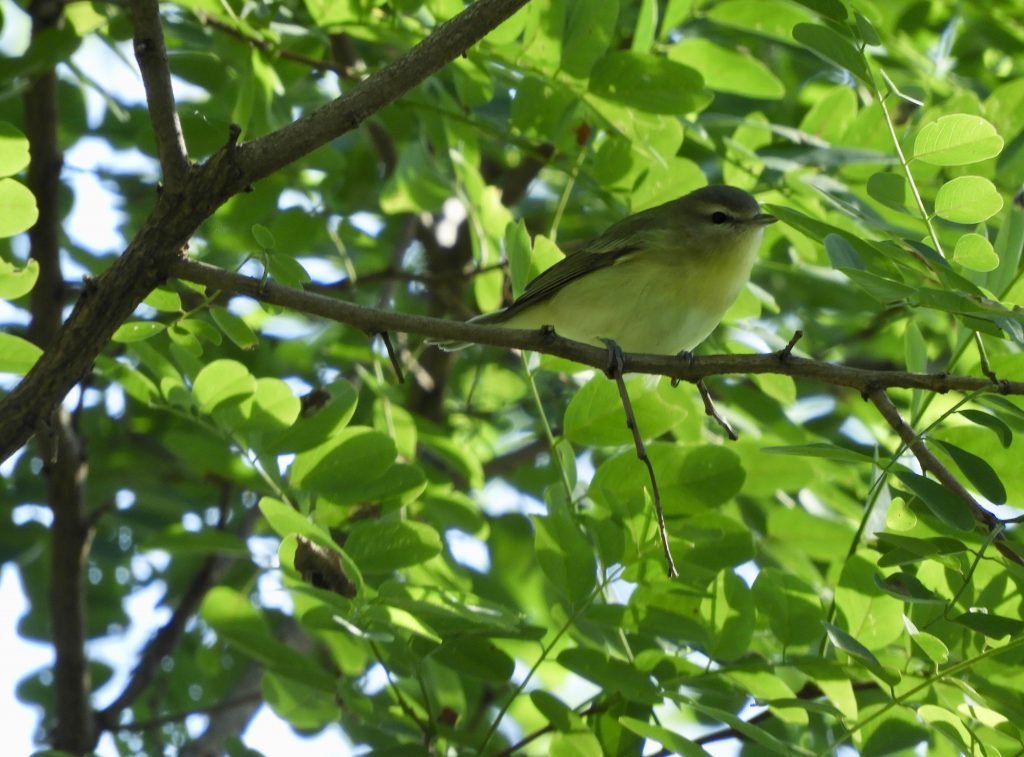
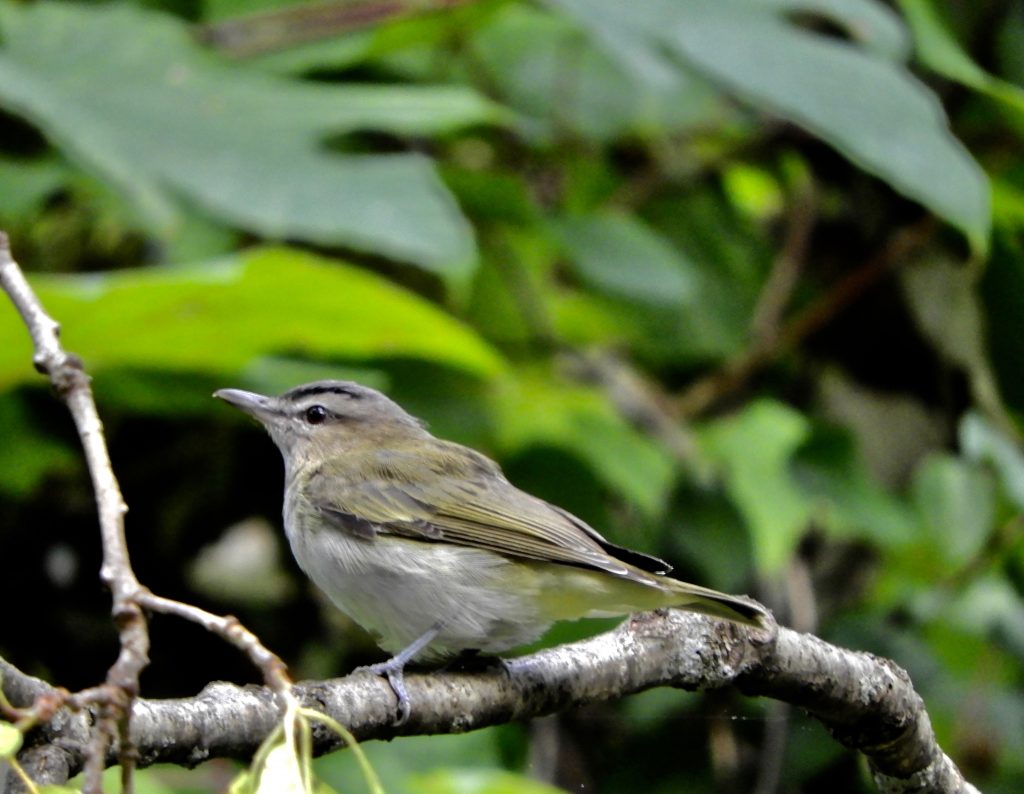
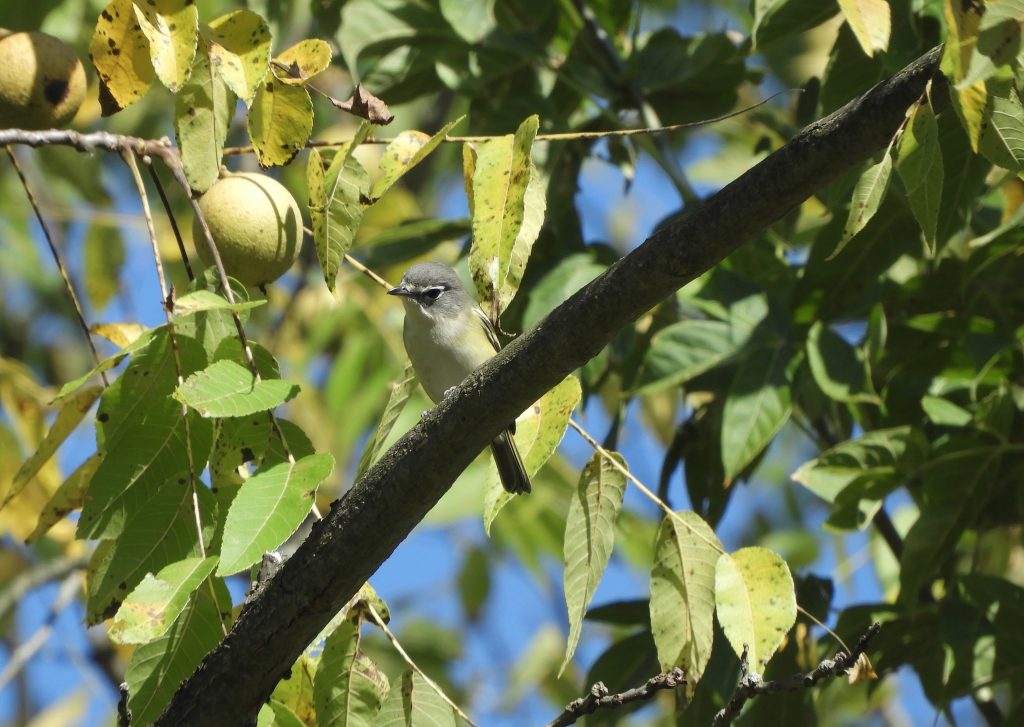
My Birds of Both Days were Vireos. They kept stopping me in my tracks, they have that power: Red-eyed Vireos appearing on strategic branches ; Bright yellow, acrobatic Philadelphia Vireos, flitting and staying just a few yards ahead of me; And Blueheaded Vireos slinking through leafy clusters.

Blue-headed Vireo

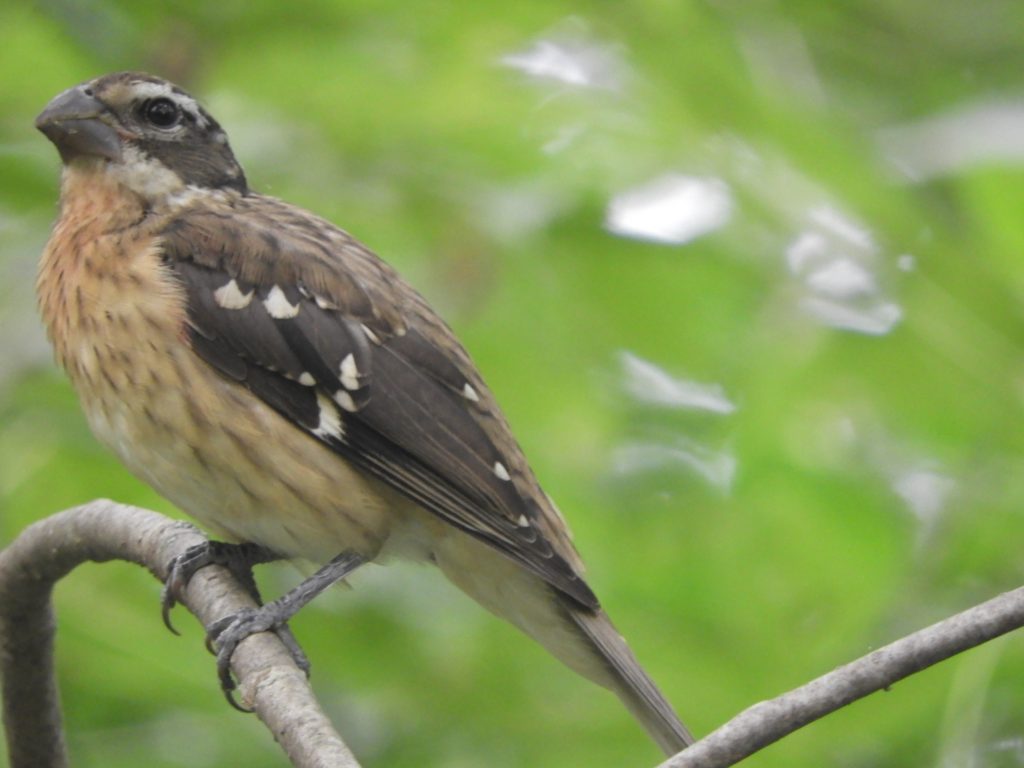
The familiars, some just passing through, others probably here for the winter included Blue Jays in small groups swooping and screeching as they passed overhead; Rosebreasted Grosbeaks now dressed in olive-brown, black and buff; groups of Cedar Waxwings; a pair of Trumpeter Swans here for the winter from points not too far north; and many just-passing-through Whitethroated Sparrows.

Rose-breasted Grosbeak

My surprises were: a Black-billed Cuckoo, two early Rubycrowned Kinglets, a Yellowbellied sapsucker, two Greenwinged Teal and four Northern Pintails.

Northern Parula

And of course in the sparkling delights category some warblers: Nashville and Tennessee Warblers, American Redstarts, Common Yellowthroats, and a Northern Parula.

Common Yellowthroat

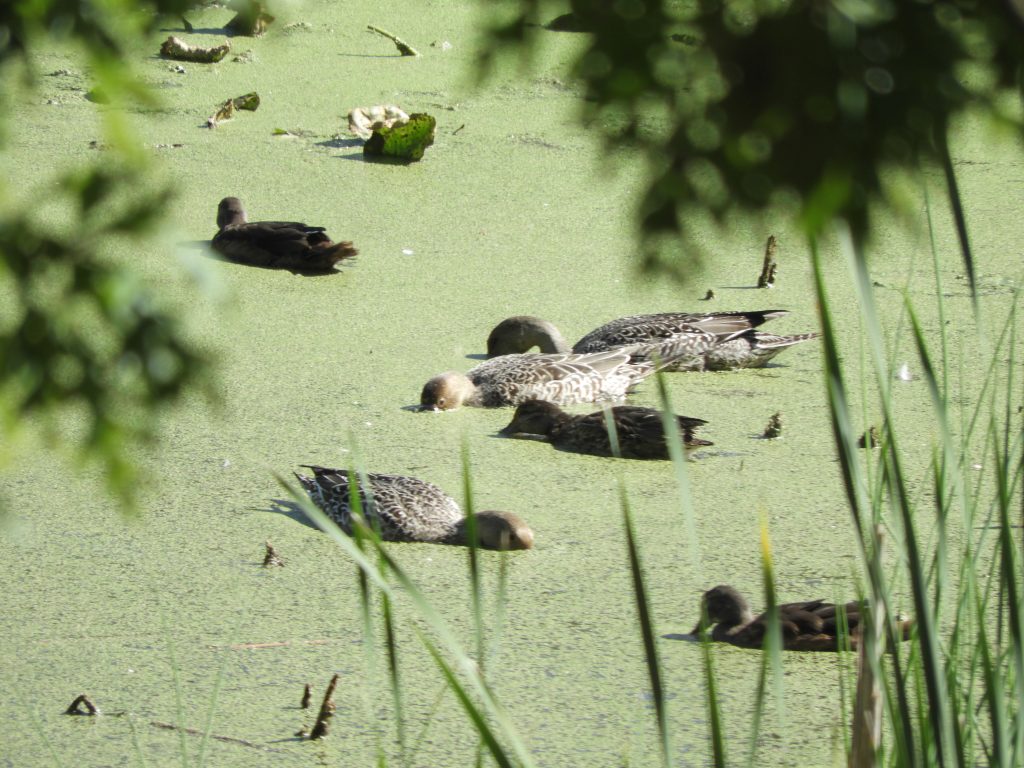
The Greenwinged Teals challenged me for a while, I could make them out only as silhouettes against bright reflections, in silhouette they look like mini-Mallards. But I knew, by their size, they had to be Green-wings; they are small, one step smaller than Wood Ducks and two big steps smaller than Mallards. I felt I needed to see a little bit more, enough to clinch the identification, so I watched for a long time and the longer I looked the more I could see behavioural differences. One or two of my photos are persuasive, but it was experience that convinced me.

The Northern Pintails presented another duck challenge. Looking down on them from afar, I saw at once that they were not Mallards, they were longer, greyer and just somehow different. I took many photos and it was only when I could examine the photos in comfort that I realised they were pintails.

3 Northern Pintails and (smaller) Wood Ducks

Neither the Greenwinged Teal nor the Northern Pintails breed around here, not in any numbers anyway, so I think they must have just arrived, they may linger for a very few days.