King Eiders

5 March 2014. Bronte Harbour, Ontario. I’m running out of ways to make winter birding sound like something you might want to try someday.  Today promised to be a decent, albeit chilly, birding day, so I set off to check out a couple of bird-rich sites along the shore of Lake Ontario.  An inevitable cost of lakeside birding is exposure to the wind, I accept that and dress accordingly, but for reasons that I can’t quite fathom, it seems that icy winds (in particular) are almost never at your back, they prefers to attack head-on.

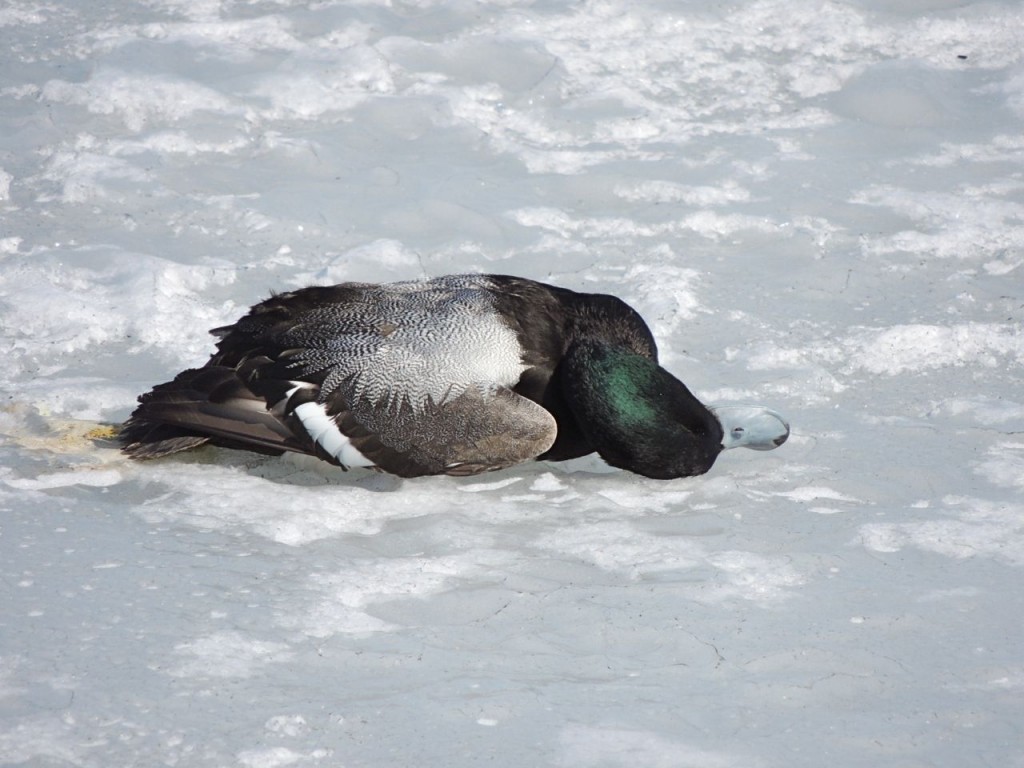
There was nothing unexpected in the way of birds out there although I think I saw more than usual numbers of ducks and swans that had reached the end of their tether and died on the ice.  Perhaps at anytime there’s always a few corpses floating around but when the ice persists as it has this winter well, some stay where they drop and neither float nor sink. This young female Long-tailed Duck looks hale enough but was ambling along on ice looking quite disoriented; exposed like that she’s vulnerable to any number of opportunistic predators including: Great-Black-backed Gulls, Herring Gulls and Bald Eagles.
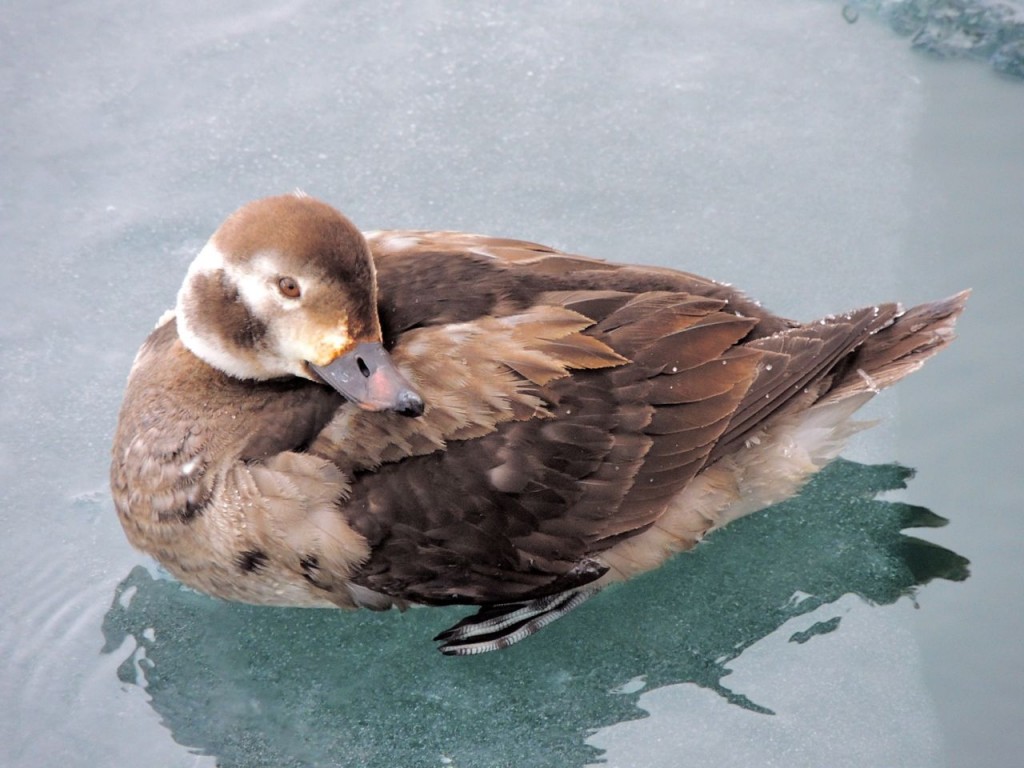
Female Long-tailed Duck

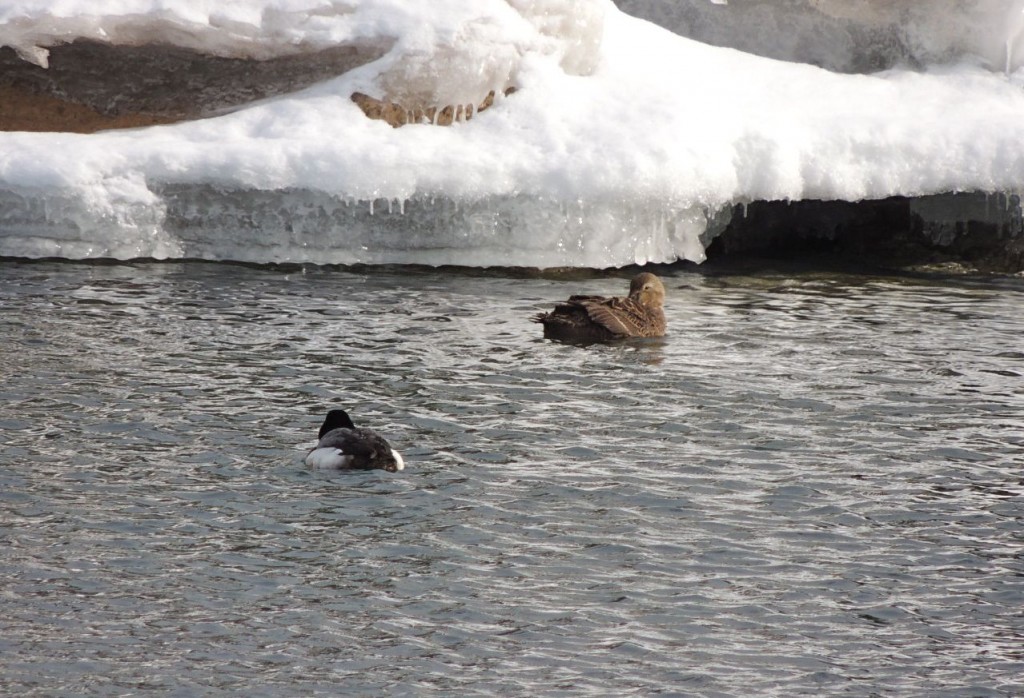
My day’s tally included three species that should turn heads: A pair of Peregrine Falcons, but then I had expected them, they’ve been using a large bridge structure as a nest site for six or seven years now; A Snowy Owl, but then we’re seeing lots of them this winter, and this was yet another one; and a group of King Eiders – and they were Birds of the Day.
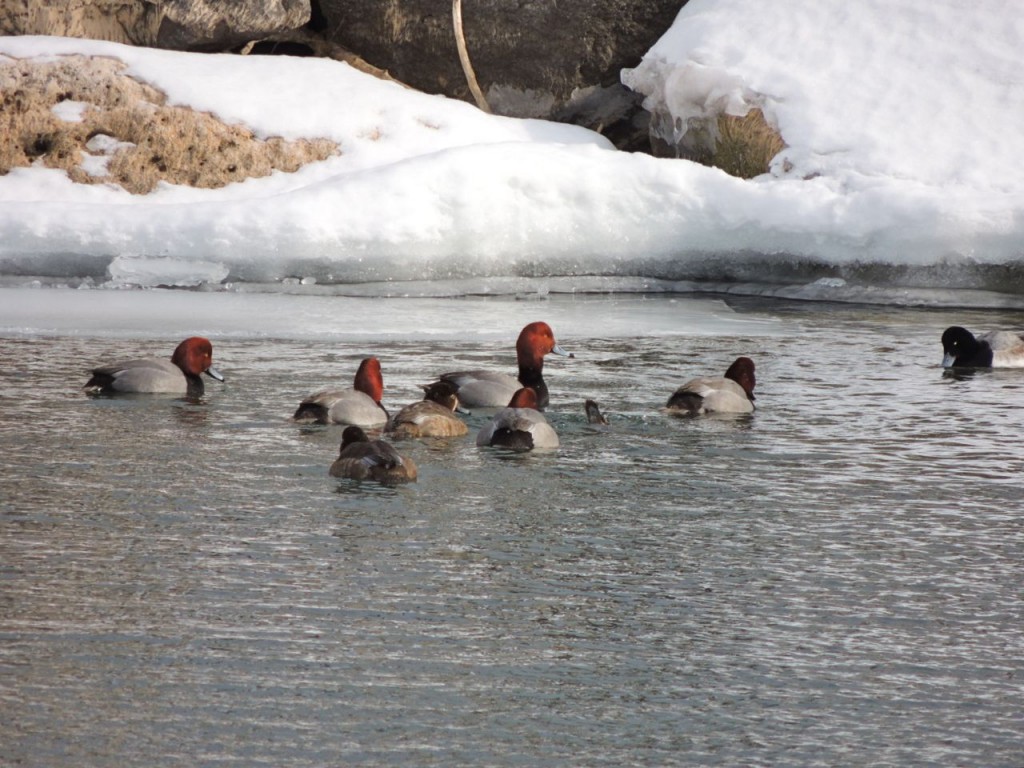
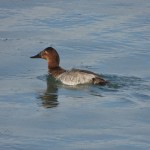
Redheads - mostly
Redheads – mostly
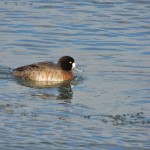
Lesser Scaup and King Eider (back)


King Eiders commonly winter along the Atlantic shore but are very uncommon visitors to inland waters. I had to refer to Bob Curry’s authoritative book, “Birds of Hamilton and Surrounding Areas” to learn more.  He notes that a few King Eiders find their way to the Great Lakes in November when things start getting cold and Arctic seas freeze over.  Most King Eiders seen here are either females or young males although the occasional adult male shows up and that causes quite a stir because their “stunning plumage attracts birders and photographers.”  I have to admit that my sighting of them was distant and the in-my-face wind off the lake didn’t help matters.

Redheads - mostly
Redheads – mostly

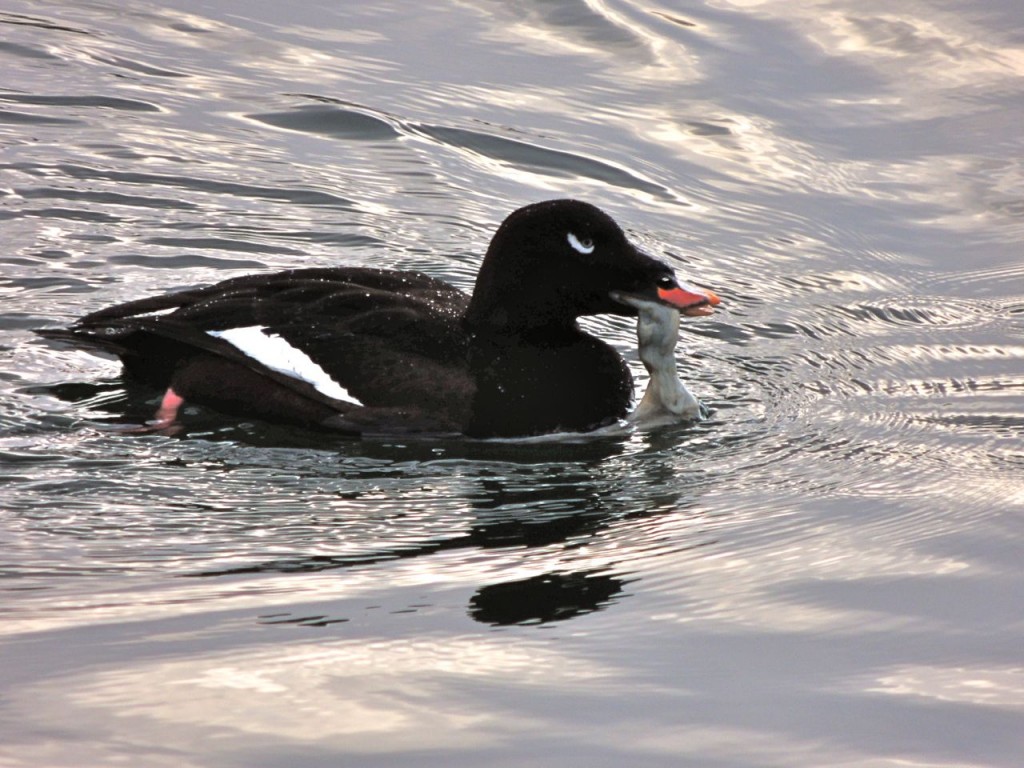
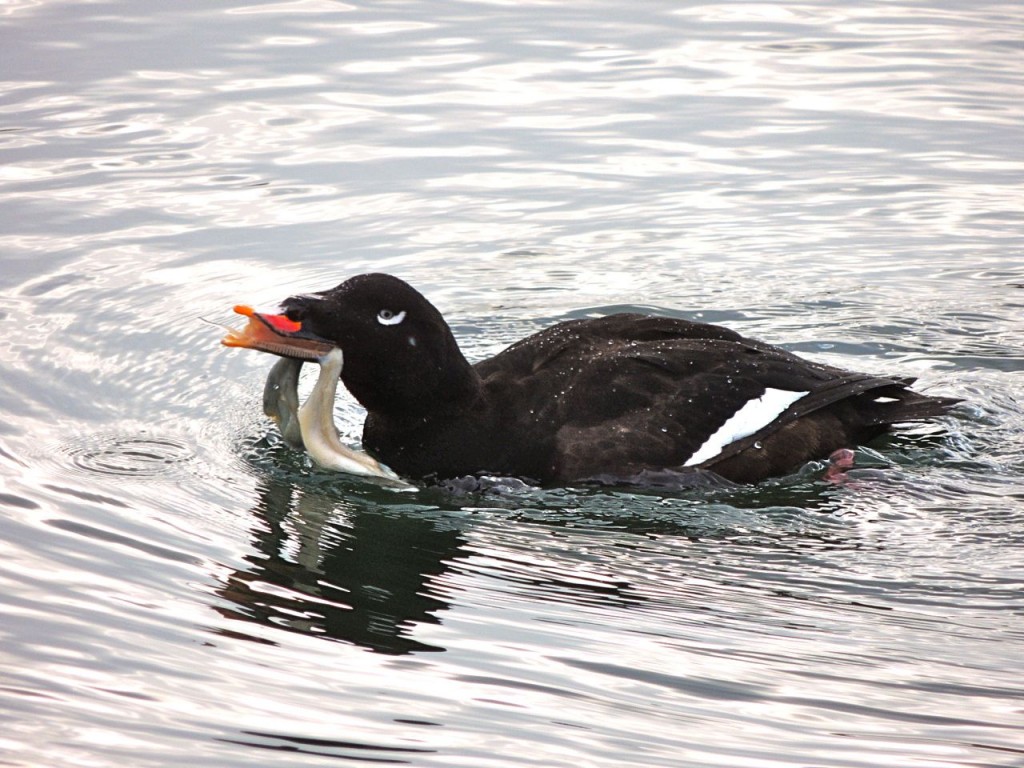
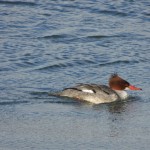
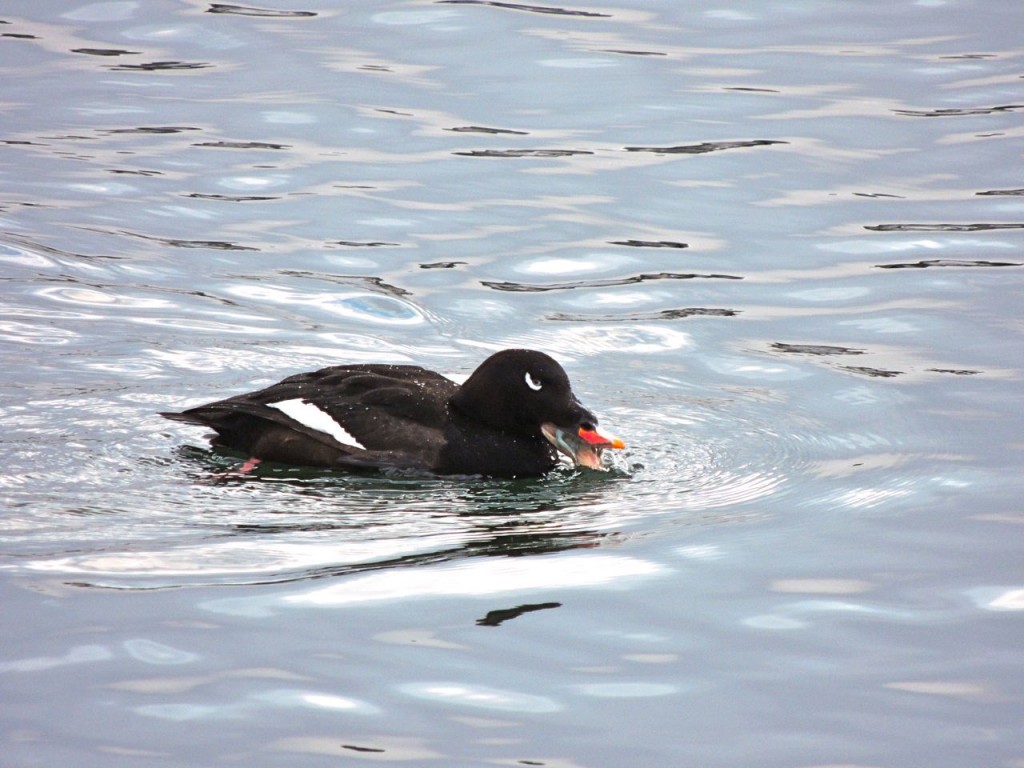
I rounded out the day with a tally of some 15 or so species, mostly common ones but also including White-winged Scoters, Red-breasted and Common Mergansers, Black Ducks, Trumpeter Swans and some gleaming Redheads.  The photo series below is of a White-winged Scoter battling with a recalcitrant delicacy that he obviously viewed as needing taming.  I couldn’t quite make out what he had and hoped that one of my photos would help, but all that I can say is that it looks to be organic, slippery and succulent.
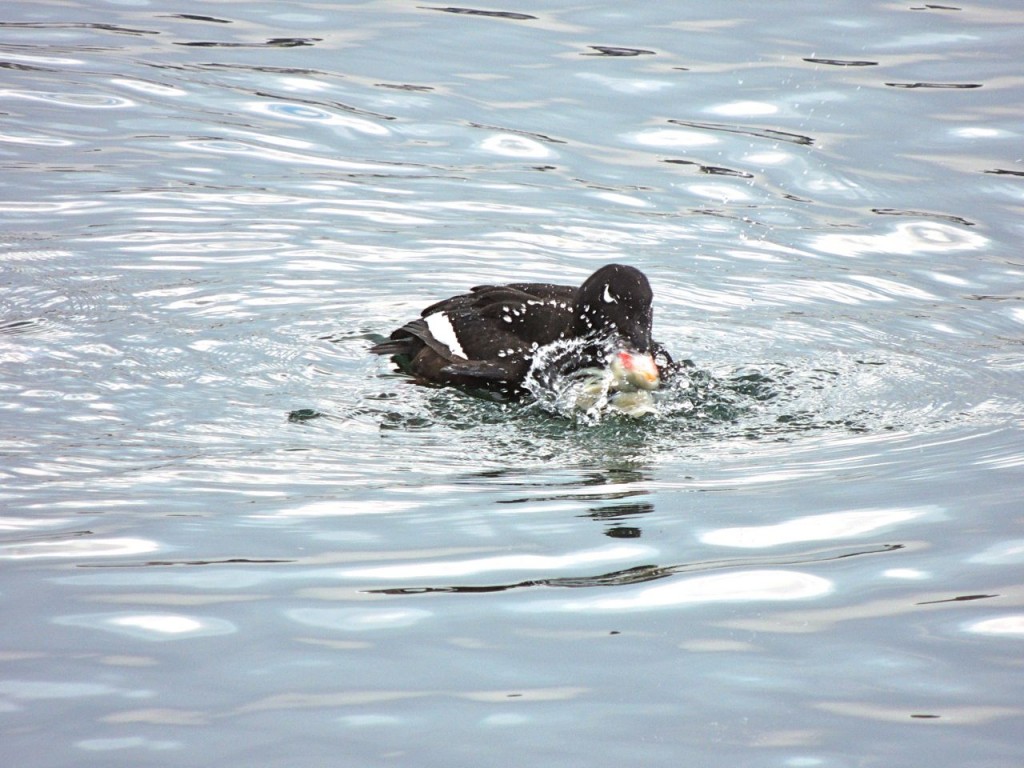
First you assert control...
First you assert control…
White-winged Scoter
….then subdue it
White-winged Scoter 1with food
Possibly edible
Would you eat that?
Would you eat that?


Northern Cardinal

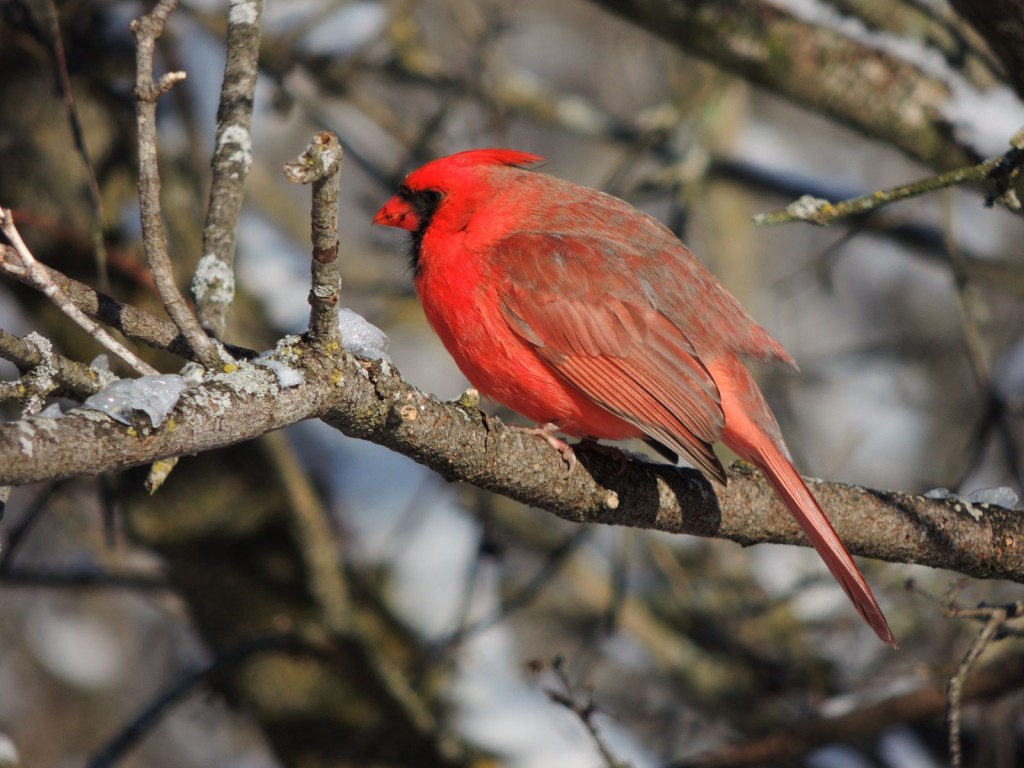
3 March 2014. Burlington, Ontario. It’s perhaps precipitate of me to declare my bird of the day before breakfast, but I’ll chance it.  Monday is garbage day here, we need to get the blue box, the green bin and the non-recyclables out to the road-side early, otherwise well, you know. And it was while doing just that, in that first hour of the day, that I saw and heard a male Northern Cardinal in full song, my Bird of the Day.

Male Northern Cardinal

It’s a bright full-sun March morning although still January cold. The cardinal was, and still is as I write, singing loudly from the top of a small ash tree that marks the boundary of a neighbour’s back yard.  The cardinal’s song, to those not familiar with it, is a forceful series of whistles; first an increasingly assertive series of three or four notes:  feeta-feeta-feeta-feet,  followed by a couple of long exhalations: tewww tewww. It’s a hallmark song of suburban North America and heard in February or March, a sign of spring approaching.

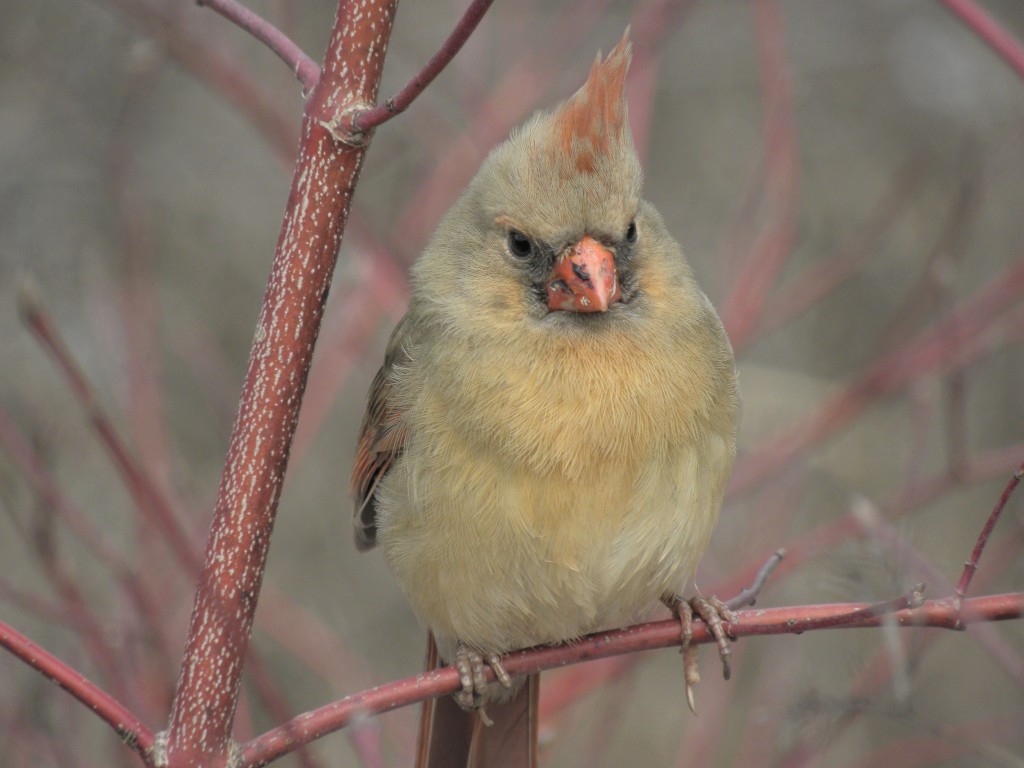
Female Northern cardinal
Female Northern Cardinal
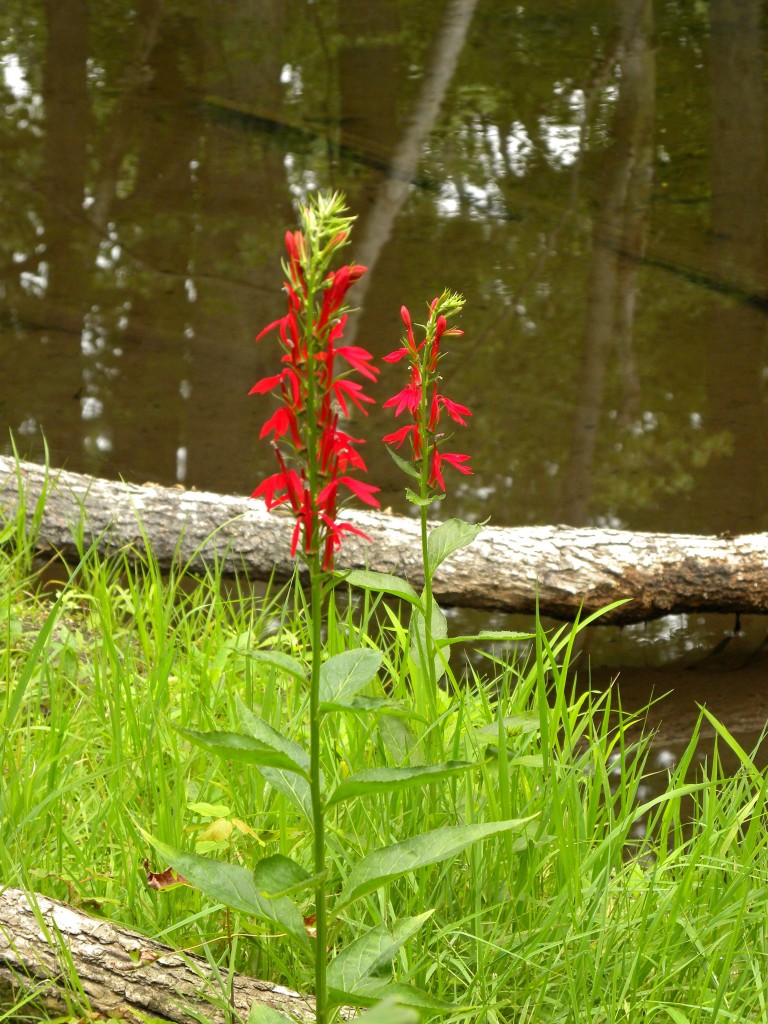
Cardinal Flower - a little preview of July.
Cardinal Flower – a little preview of July.


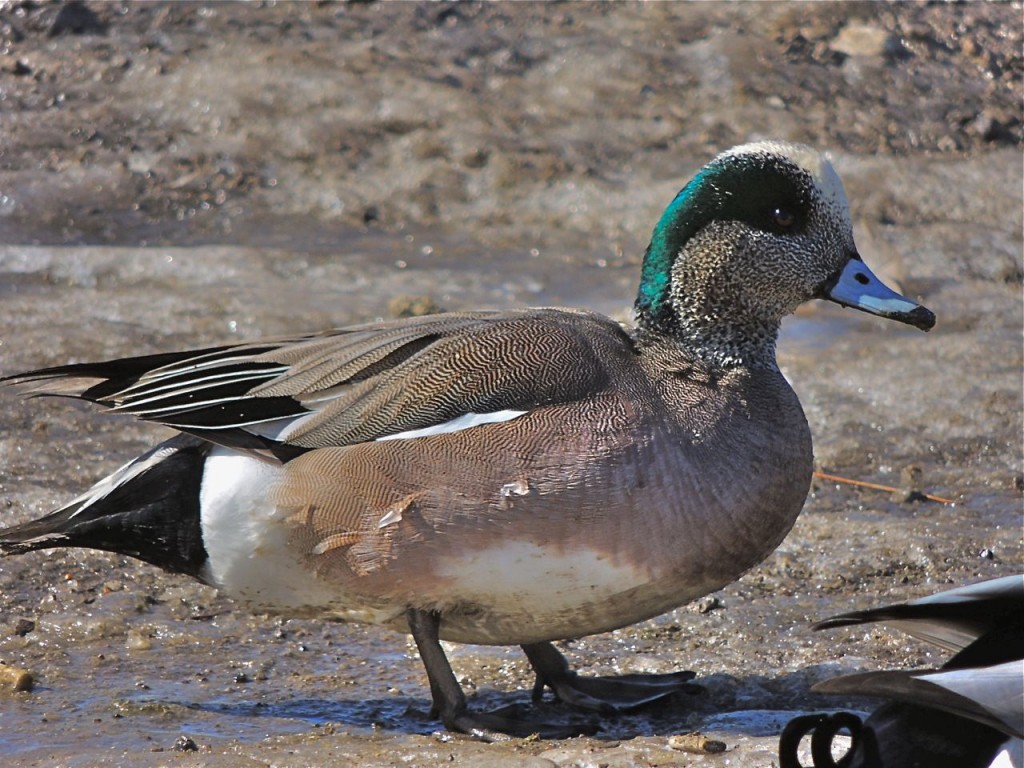
American Wigeon

28 February 2014. Dundas, Ontario. I’d been hearing of various places around town where lots of birds may still be seen, mostly waterfowl, so I decided to visit half a dozen sites with open water and see for myself.  Under winter conditions such as ours this year, there are few spots where open water remains unfrozen.  I could show you a couple of quite enchanting fresh-water springs where the water flows year-round at a steady temperature of about 5 deg, C.; or there’s the dynamic bodies of water like Lake Ontario or the Niagara River which are far too busy to have time to freeze. But at the other end of the spectrum, there are unfrozen places close to sewage outfalls and they seem to be particularly appealing to waterfowl.

My first stop was at the remnants of a 19th century canal which at one time was the absolute limit of access by water from the Atlantic and Lower Canada into southwestern Ontario. This historic artifact is now distinguished as the discharge point for a tertiary sewage treatment plant, an irony deserving much further comment; but enough for now.  Today it’s a happy (and perhaps delicious) wintering place for ducks, geese and swans.

American Wigeon
American Wigeon

Upon my arrival I was pleased to see an American Wigeon among a large gang of Mallards and Canada Geese all picking at the rutted mud of the parking area in hopes of sorting out something edible.  I managed to get a number of photos of the wigeon before it hastened back to the water, but feeling sorry for it and hoping that maybe I’d help it get through the winter, I fetched a small bag of bird seed from my car.  Well, by the time I scattered the seed about, the wigeon was nowhere to be seen; instead my generosity was appreciated by dozens of Canada Geese.  They came in from every direction, many of them flying across the road causing several near misses with passing trucks.  I could imagine the swearing and eye-rolling and was rather embarrassed at having unwittingly caused such havoc and ; so I left to buy some cheese.

On my return the chaos had passed and I was able to take more time appreciating what it means to spend your winter days on or near ice.  I found a pair of Hooded Mergansers and thought for a while that the male for all his colour and splendour would look pretty good as Christmas ornament; he’d be no more preposterous than much of contemporary  iconography.

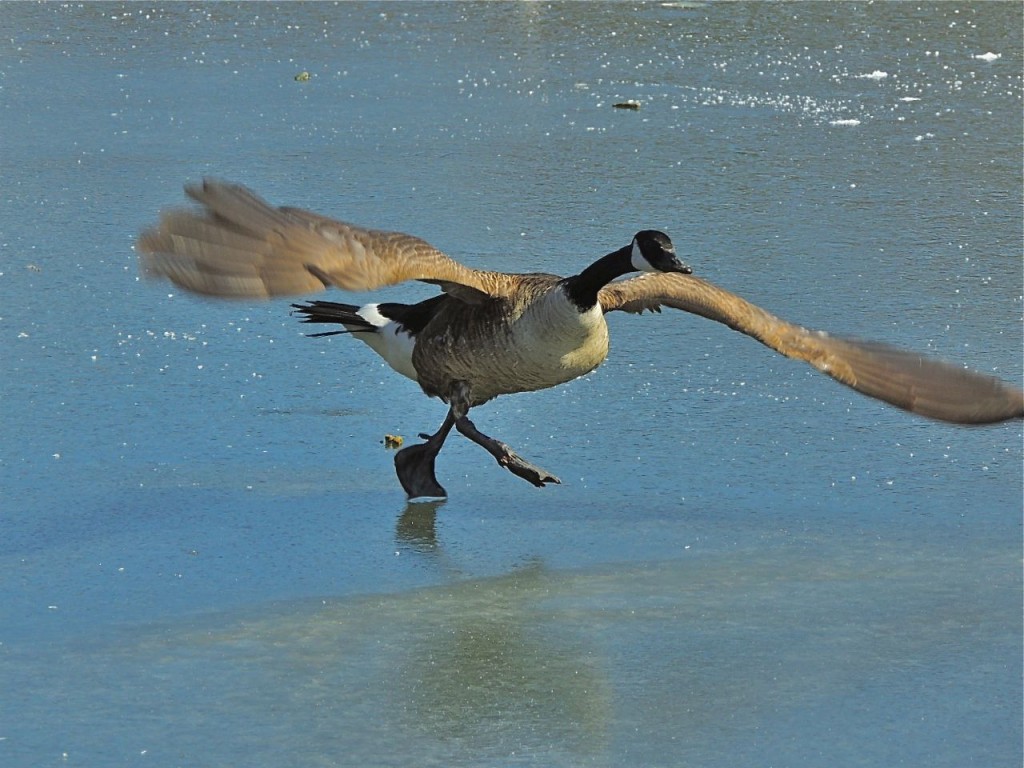
Canada Goose take off on ice

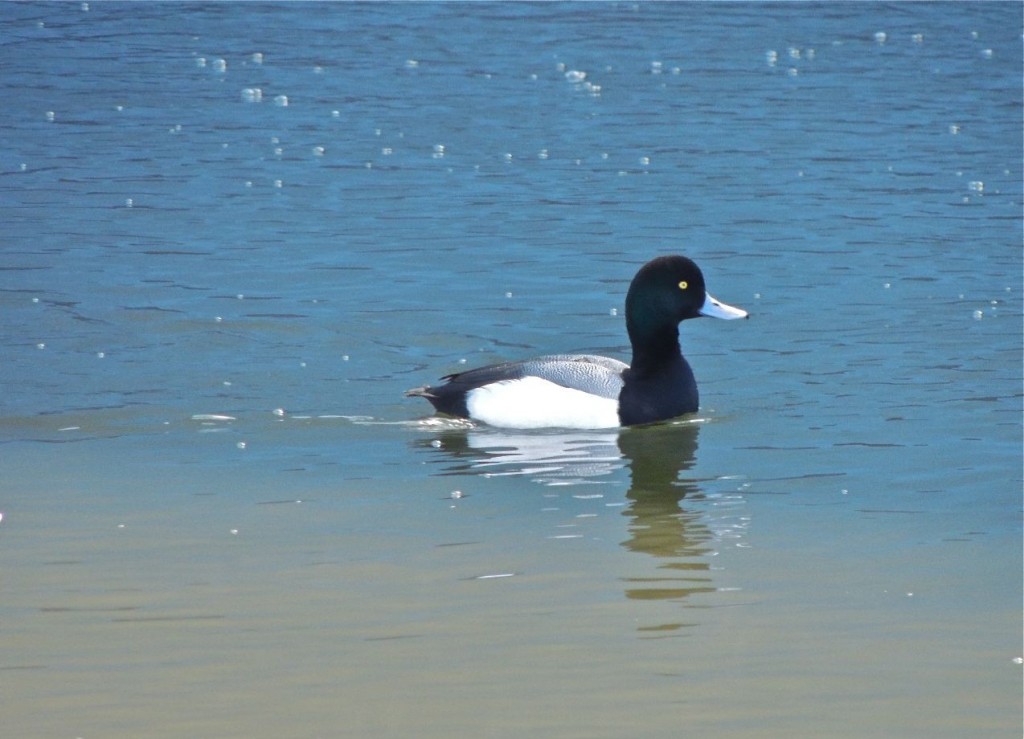
Leaving this rather sordid neck of the woods I went to the edge of our industrial harbour to where I’d been told that a preserved WWII destroyer had been kept ice-free by a submerged bubble system and where consequently birds were hanging around.  It wasn’t as good as I’d hoped but I was able to get a good look at this rather handsome Greater Scaup.  Scaup, Lesser and Greater, are infernally difficult to tell apart, but I think the overall roundness of this bird’s head and the gleaming white flanks point to a Greater Scaup; the Lesser’s head profile has a bit of a peak at its forehead and is often (but not always) rather muddier in its flank colour.

Greater-Scaup
Greater-Scaup

I was of half a mind to view the scaup as my bird of the day; it is certainly rather eye catching, but it was seeing the American Wigeon surviving in its hard-scrabble existence among all those pugilistic Mallards and heavyweight Canada Geese, that stole my heart.

This winter's toll.
This winter’s toll.

This post contains photos in galleries visible only on the website, not if you’re reading this as an email.


Glaucous Gull

26 February 2014. Niagara River, Ontario. A year ago I drove the length of the Niagara River to see what species of waterfowl  (ducks, geese and swans) were spending the winter there.  It was a rewarding trip, so I repeated it today, partly just to get out birding and partly for the sake of comparison (and a re-read of last year’s post shows how much alike the two expeditions were).

The Niagara River is some river, more like a fast-running sluiceway connecting Lake Erie with Lake Ontario.  The latter is about 300 feet lower than the former and the spectacular drop over Niagara Falls needs no introduction.  It gives me the chills to think about the risks associated with venturing into or onto the river, it rushes rather than flows from one lake to the other. Today, as if to emphasize its malevolent potential, it carried bright, white ice floes along with it.

My Bird of the Day, a Glaucous Gull, came right at the start. I was looking at the expanse of river right in front of me and mentally checking off: Red-breasted Merganser, Greater Scaup and Great Black-backed Gull, when one of the shoreline gulls took off and flew lazily away, circling in a wide arc.  I noted its pink feet, thinking how much they look like those of a Great Black-backed Gull, when I suddenly realized that I was looking at a gull with pure white wings; a bird that could only be a Glaucous or an Iceland Gull.  Both are winter visitors to the Great Lakes but the Glaucous is somewhat commoner, quite large and, if anything, purer white.  The bird I watched was larger than a Herring Gull and close to the size of a Great Black-backed.  I know I’ve seen Glaucous Gulls before but not often, being a bit of a fair weather birder.  Anyway it was a nice surprise, a bit of a treat really, and I immediately put an asterisk beside it in my notebook.

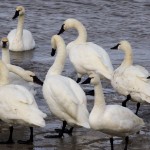
The rest of my drive was as expected: where the river flowed fastest, Greater Scaup and Red-breasted Mergansers dominated. In quieter stretches, particularly hugging the shore, were hundreds of Canvasbacks, Common Goldeneyes and Common Mergansers. And scattered here and there: Redheads, Mute Swans, Long-tailed Ducks and one, just one, Hooded Merganser.  Along one short stretch of the shore was a straggling flotilla of perhaps two hundred Tundra Swans. And everywhere: Great Black-backed, Herring and a few Ring-billed Gulls, just loafing on ice whiling away the winter.

Here are a couple of galleries of some of today’s birds, click to enlarge.

As I drove close to the falls I could see massive curtains of ice obscuring the face of the cascading water; it really is a spectacle at any time of year.

This post contains photos in galleries visible only on the website, not if you’re reading this as an email.

Great Gray Owl

28 February 2011. Vineland, Ontario. I try to stay on topic with these postings but somehow the weather finds its way into the picture quite often. This winter, weather is THE topic; those of us who are immigrants are quite stunned by winter’s ferocity while native-born Canadians (with pre-1970 memories) say it’s just a good old-fashioned Ontario winter, the way they always used to be.  That’s as may be, but it’s not so good for fair weather birders like me.

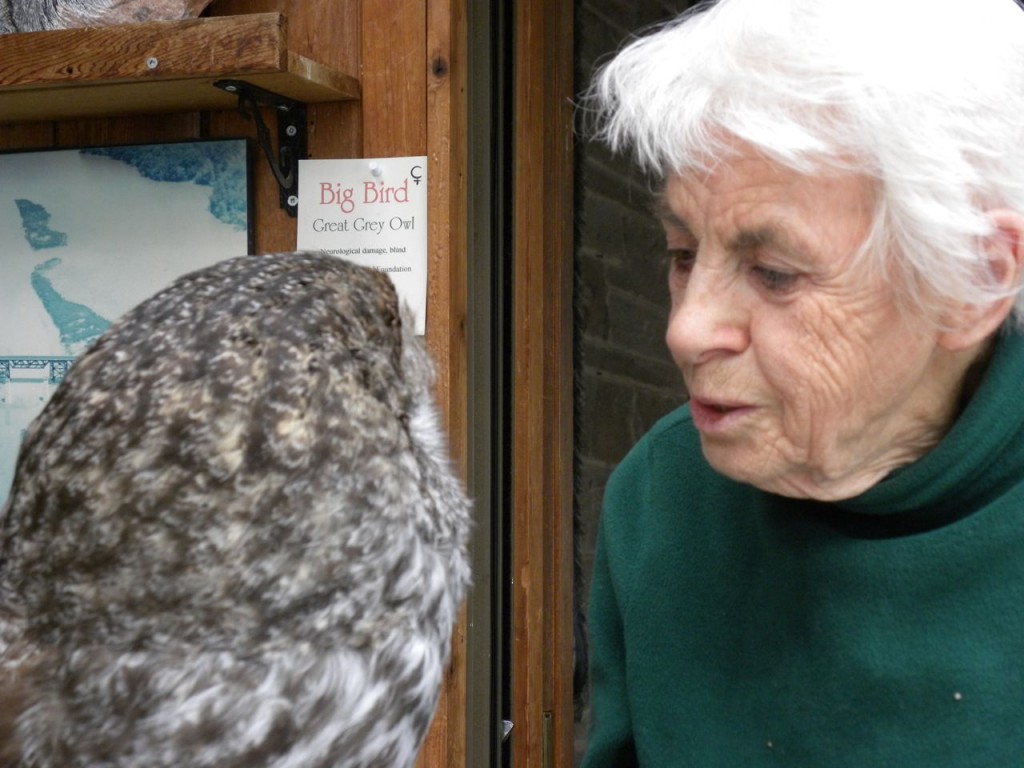
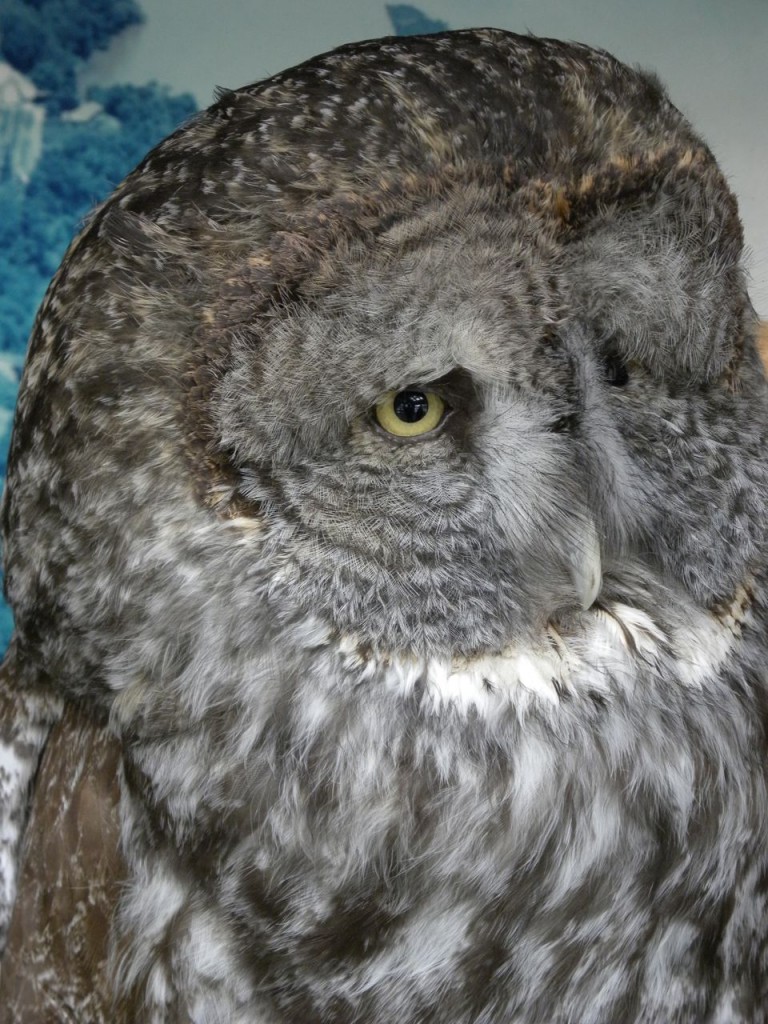
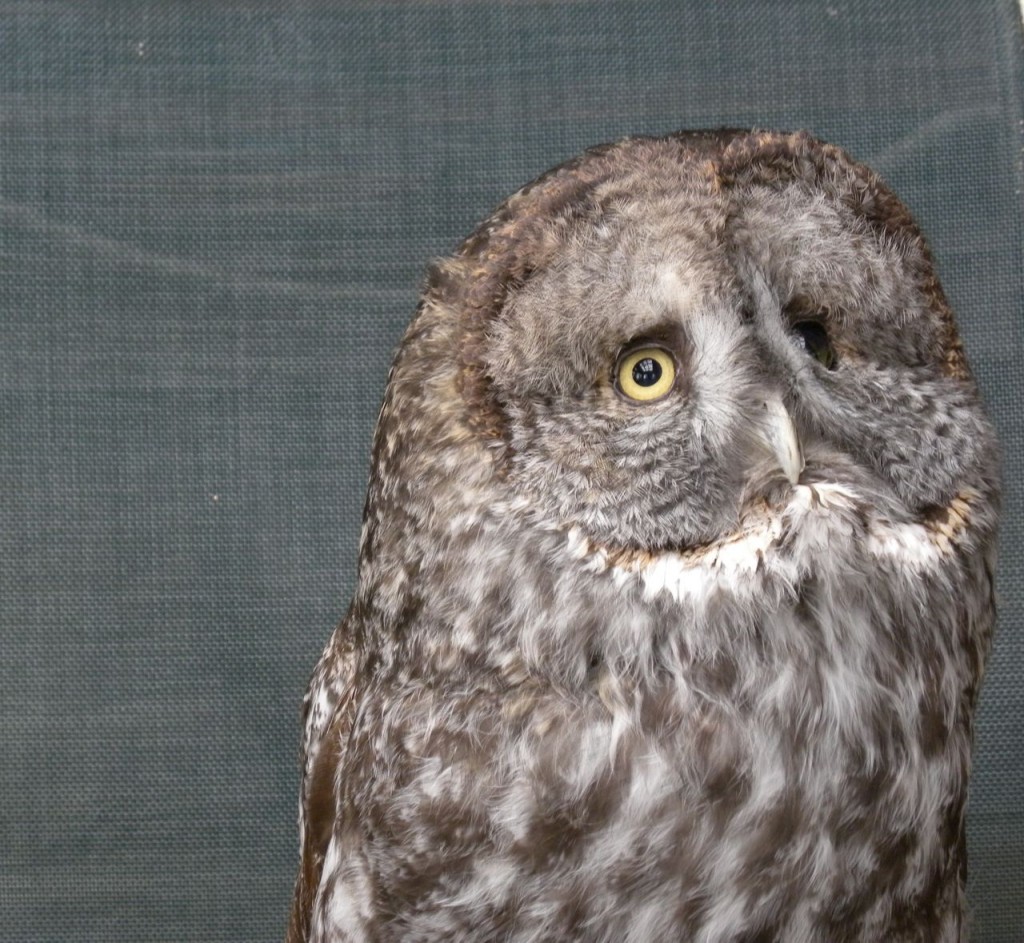
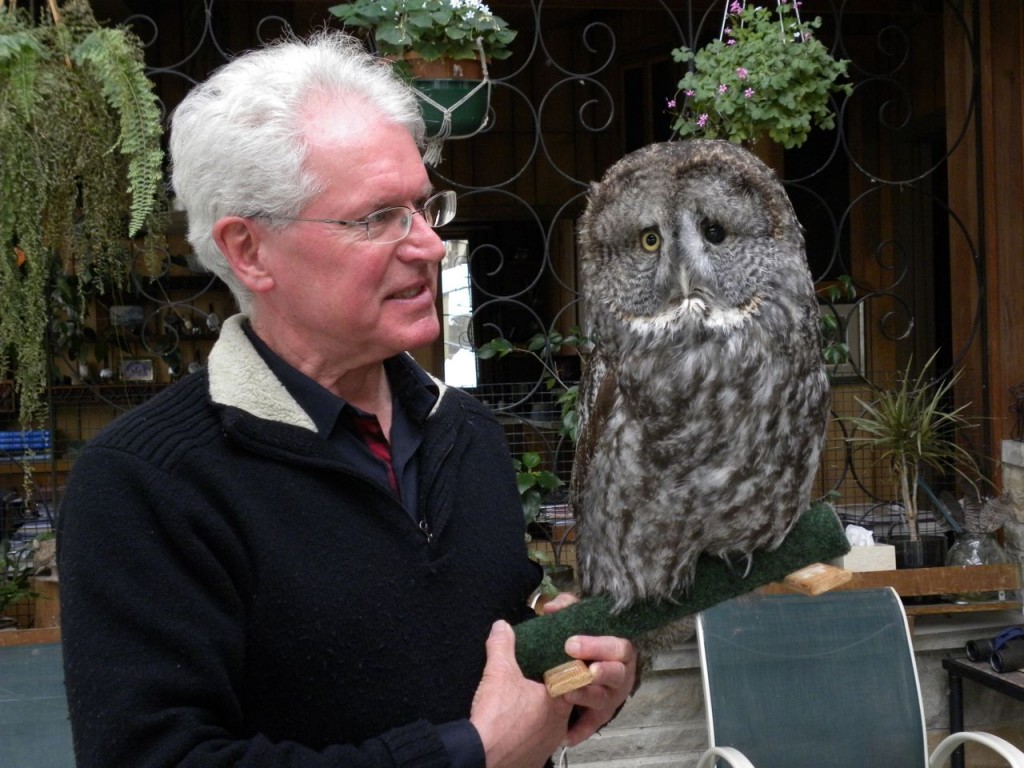
As an idle indoor quest I started looking back through my photos to see what sorts of outdoor experiences I’d had on or about this date in years past.  I came upon photos of a Great Gray Owl that I’d had the privilege of meeting in February three years ago.  Her name is Granny and she is the companion of one of Ontario’s greatest philanthropist personalities, Kay McKeever.

Granny the Great Gray Owl

Kay and her late husband Larry started rescuing orphaned and wounded owls many decades ago.  They became the de facto experts in owl rehabilitation and, while it’s a long story,  the upshot of it all is that today The Owl Foundation (TOF) remains just about the only place in Canada where an injured owl has a chance of treatment, recovery and eventual release. (Learn more about TOF by following this link) TOF employs a small group of young avian biologists who care for the owls, and a cadre of volunteers clean cages, prepare food, transport birds and raise operating funds.  Theirs is an almost endless job that deserves our support; new patients are always arriving.

When birders or bird-watchers celebrate the occasional winter irruption of Snowy Owls, as has occurred this winter, or Great Gray Owls, as happened some ten years ago, the unreported half of the story is that these birds don’t do well away from their home turf.  Unfamiliar with urban ways, many of them collide with cars and trucks.  Of course most such collisions are fatal to the bird but a few find their way to TOF where some, the not too mortally wounded, are treated and eventually returned to their native habitat; those are the good stories.

Granny

DSCN8376Granny is a not-so-good-but-not-totally-bad story.  She was involved in a collision with a truck and while apparently restored to good health, she’s blind in one eye. Deemed unfit to survive in the boreal forests of northern Manitoba from whence she probably came, she is now the constant companion of Kay McKeever.  It’s an oddly heartwarming juxtaposition; a large impassive bird that shows no sign of either accepting or rejecting its fate, spending days on the forearm arm of a gentlewoman.  Granny is as alert as any owl should be, she’s constantly checking out her world, swivelling her head to left and right through 270 degrees without any evident sign that what she observes is in the slightest bit incongruous.

That large facial disk of feathers serves to direct sound to Granny’s ears which are offset, one slightly higher than the other, to further fine-tune her stereophonic hearing and hence ability to pounce precisely on a vole moving inches below the surface of the snow.

Great Gray Owls stand tall and look heavy, yet they are mostly feathers.  An adult Great Gray Owl weighs about 2.5 lbs, half the weight of the comparably sized Snowy Owl and about the same as a Mallard.

Yes, that's me with Granny.
Yes, that’s me with Granny.

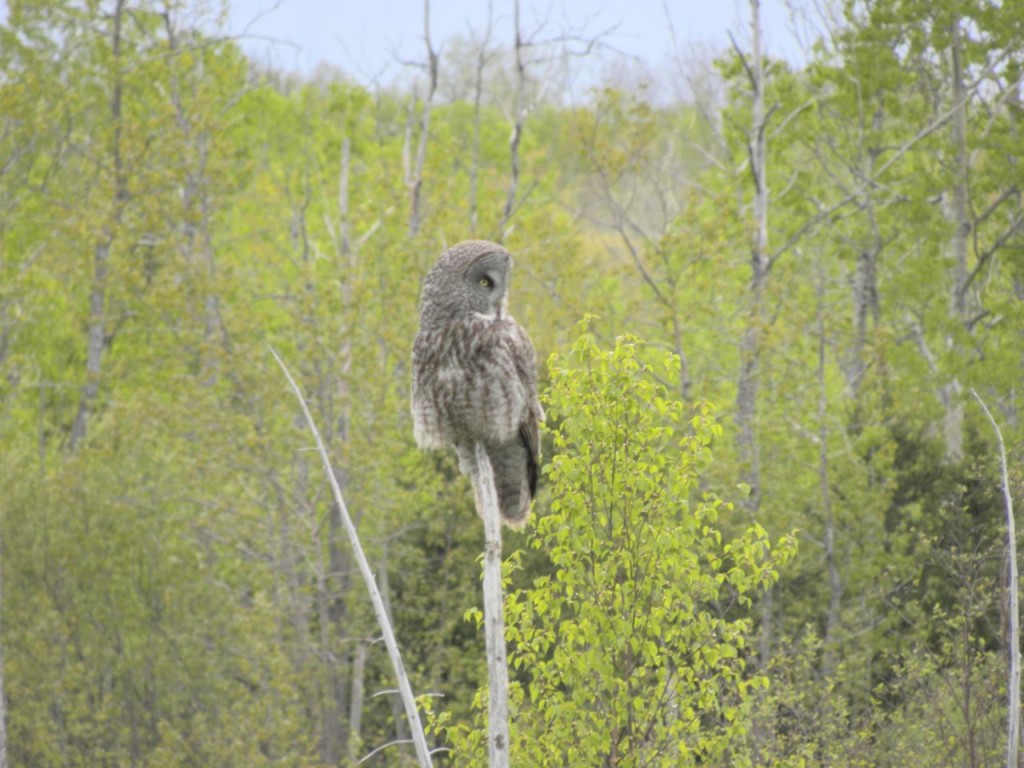
The photo below is of a Great Gray Owl seen along the margins of a large lake last May and which I eventually decided was my Bird of the Year in 2013.  Even though Granny is a disabled captive bird, she is every bit as magnificent and just as much a privilege to have met.

Great Gray owl
Great Gray owl