Cooper’s Hawks

September 26th 2017. RBG Arboretum, Hamilton, ON. Another hot day brought low expectations for bird activity. Today was forecasted to be almost the last of this dehydrating heat wave. My companion and I made our way through woodlands listening to Blue Jays screeching and chuckling and walked a lakeside trail scanning the waters hoping for something more interesting than the usual rolling and roiling flocks of hungry Double-crested Cormorants.

At a time when we would normally be seeing active small migrants, warblers, vireos and the like, we struggled to find much movement in the trees at all. We spent an inordinate amount of time trying to make out this small warbler, neck-wrenchingly high overhead. Here’s a blown-up photo, the best I could get and I think it was a Myrtle Warbler.
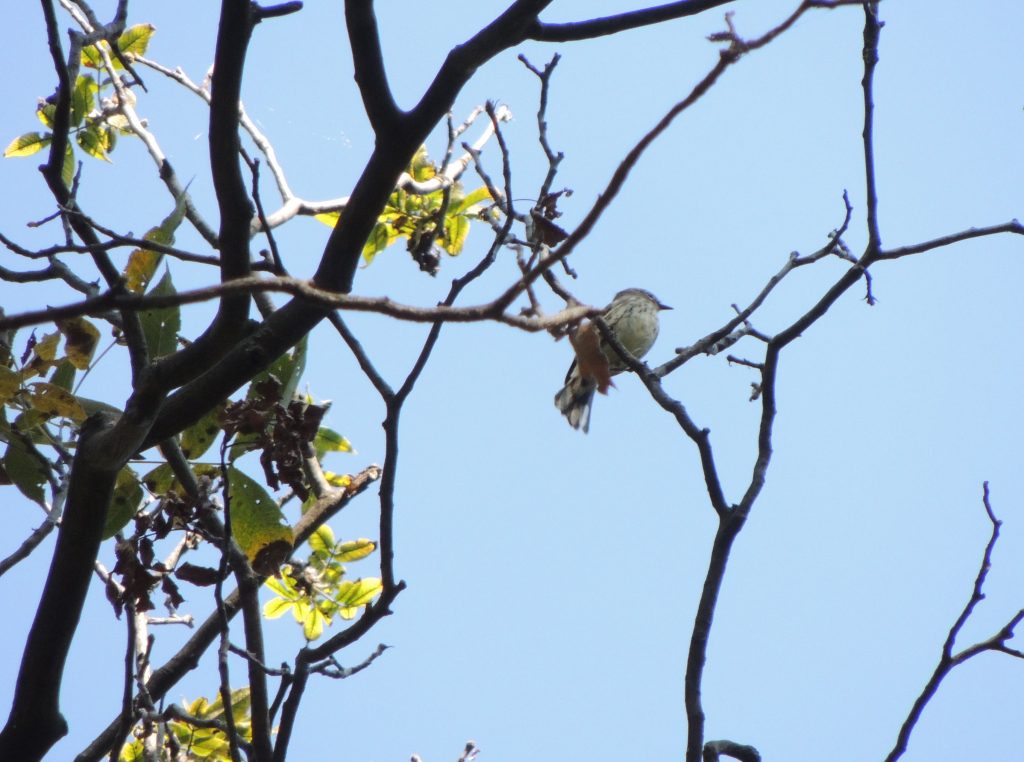
Myrtle Warbler

A word about Myrtle Warblers is in order here. In about 1974 when I first started birding in Canada there were Myrtle Warblers, I won’t say I knew them well; they were just one more puzzling warbler species among the two or three dozen that might be encountered. Around that time a formal committee of the American Ornithologists’ Union decided that Myrtle Warbler was too sweepingly vague and that it should thereafter be split into at least two species; our local bird would become the Yellow-rumped Warbler and out west there would be Audubon’s Warbler. Well, that did make it easier for many of us; Yellow-rumped is after all a perfectly descriptive name (whereas neither Myrtle nor Audubon’s tells a novice birder anything helpful). And so for as long as I have been posting to this site I have greeted Yellow-rumped Warblers countless times, they are a conspicuous and much-loved part of our avifauna. But the Yellow-rumped is no more: it and its close relatives have been re-sorted and the Myrtle Warbler is back with us.

Our Bird of the Day was a pair of young Cooper’s Hawks that stormed us, flying low and fast up the middle of a trail, approaching us at eye-level and only breaking away at the last moment. They split, one veered to the lake while the other shot to our right and settled in a tree not five metres away. It sat nervously on a branch watching us warily but allowed me to take several pictures, here’s one of the best.
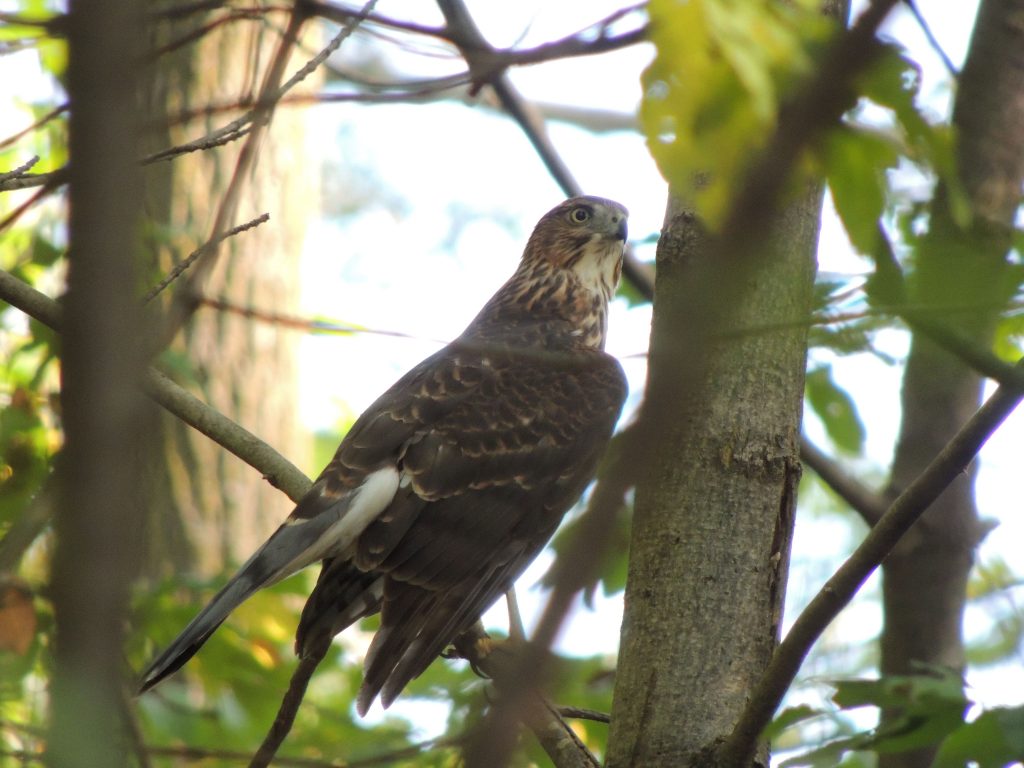
Cooper’s Hawk

It all happened so fast and I was uncertain, were they Sharp-shinned or Cooper’s Hawks? The two species are all but identical and my opportunistic photos didn’t help much. There are some subtle plumage and structural differences and Sharp-shins are generally smaller, but only generally smaller because a female Sharp-shinned may be larger than a male Cooper’s. After the fact examination of my photos and some poring over texts persuaded me these were young Cooper’s Hawks.

We were still tingling from this close engagement when a little later we saw two more Cooper’s Hawks who were trying to ignore groups of protesting Blue Jays; the jays chased and screamed and the hawks coarsely SSHHhhhd back at them.
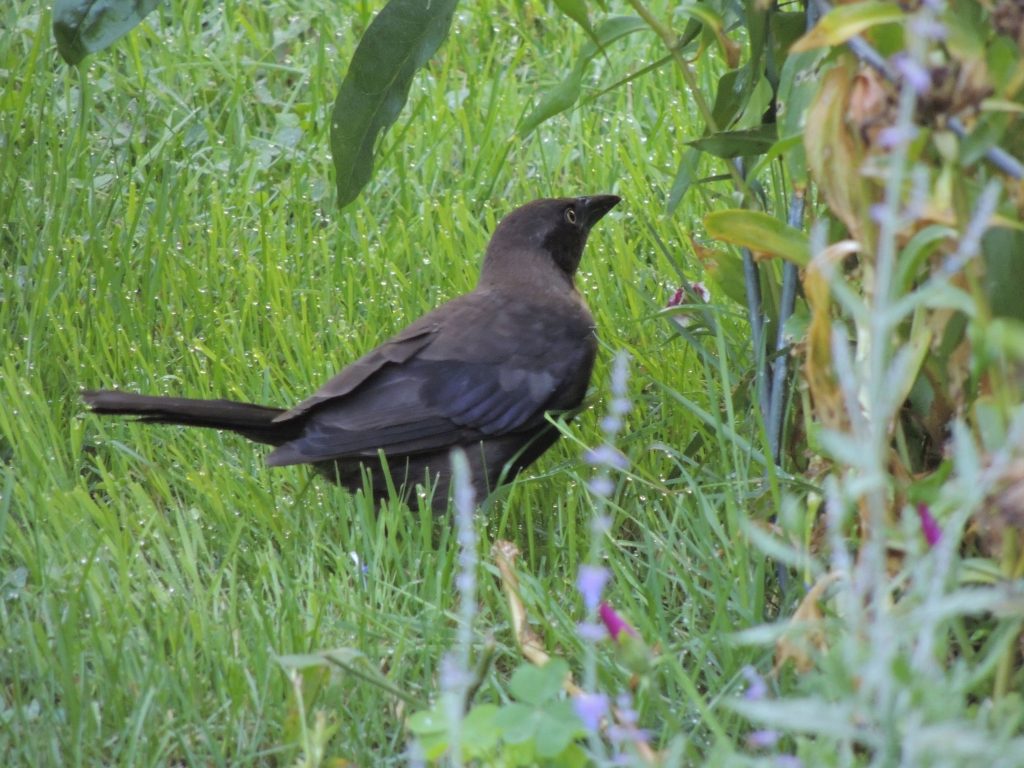
Common Grackles

September 23rd 2017. RBG Arboretum, Hamilton, ON. A blanket of hot weather has rolled over us and promises to hang around for a few days yet. Heat really puts the damper on all bird activity so my companion and I had low expectations of today’s count around one of our defined routes.

Saving the day though were uncountable numbers of Common Grackles pacing around and feeding across a wide-open expanse of short grass. By wide and open I’m referring to an expanse, perhaps five or ten acres, of clear, tree-dotted parkland, and the grackles were thick on the ground. We approached slowly hoping for a closer look suspecting that the group included some Red-winged Blackbirds and hoping that maybe, with luck, a few Rusty Blackbirds too, but no, it was all grackles.

Common Grackle

They were quite a spectacle and counting them was impossible. They were flighty anyway and kept moving, marching and leap-frogging, group over group as if they were anticipating a call any moment to take off and leave for good; a bit like waiting for your flight to be announced. Enough of a spectacle to be Birds of the Day, especially in light of the rest of a hot day’s birding.

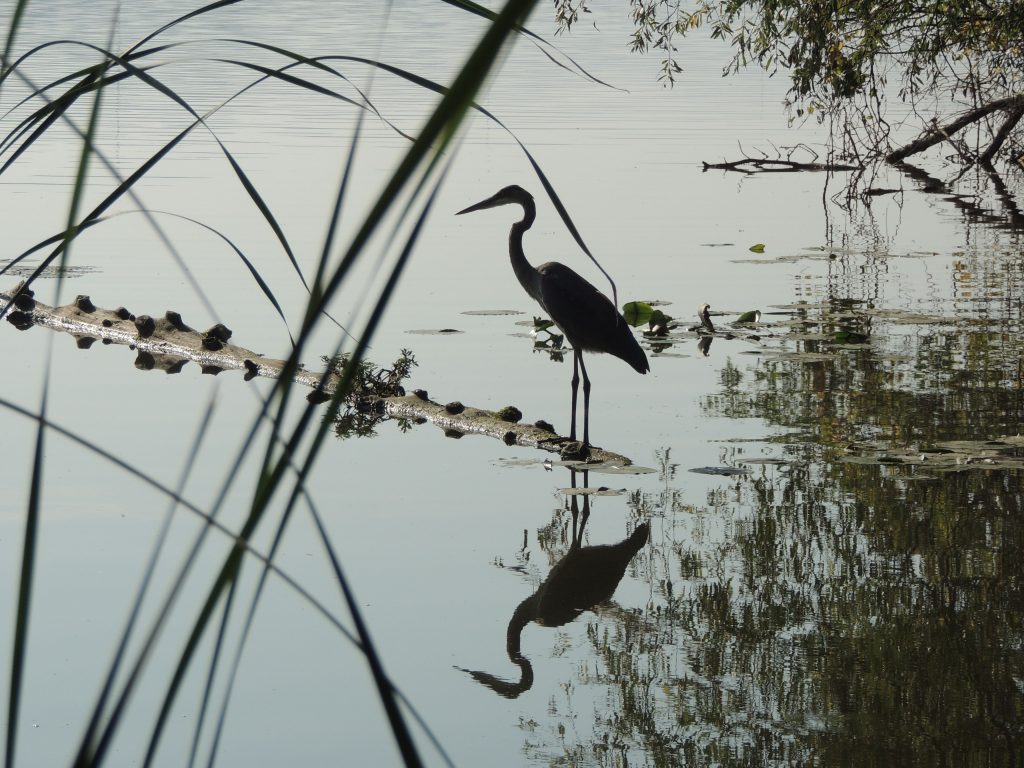
The woods and skies were noisy with migrating Blue Jays, but otherwise we were recording species numbers in ones and twos. One White-breasted Nuthatch, one Great Blue Heron (see artsy photo below), two Hairy Woodpeckers and so on. An hour later sticky and weary it really was time to call it quits.

Great Blue Heron

Lincoln’s Sparrow.

September 12th 2017. RBG Hendrie Valley, Burlington, ON. Cool weather continues to chase the birds south. It was just 14 degrees C. at 8.50 this morning when I started a count of birds in the valley.

It starts with a stretch of trail that gets a lot of foot traffic, much of it families bringing offerings of cracked corn and sunflower seeds for the waiting Gray Squirrels, Eastern Chipmunks, Black-capped Chickadees, White-breasted Nuthatches and Mourning Doves. Occasionally (and this was one of those days) something unusual and migratory stumbles upon the bounty, we sometimes see Fox Sparrows and White-throated Sparrows mixed in. Today there was something altogether new – Lincoln’s Sparrows.

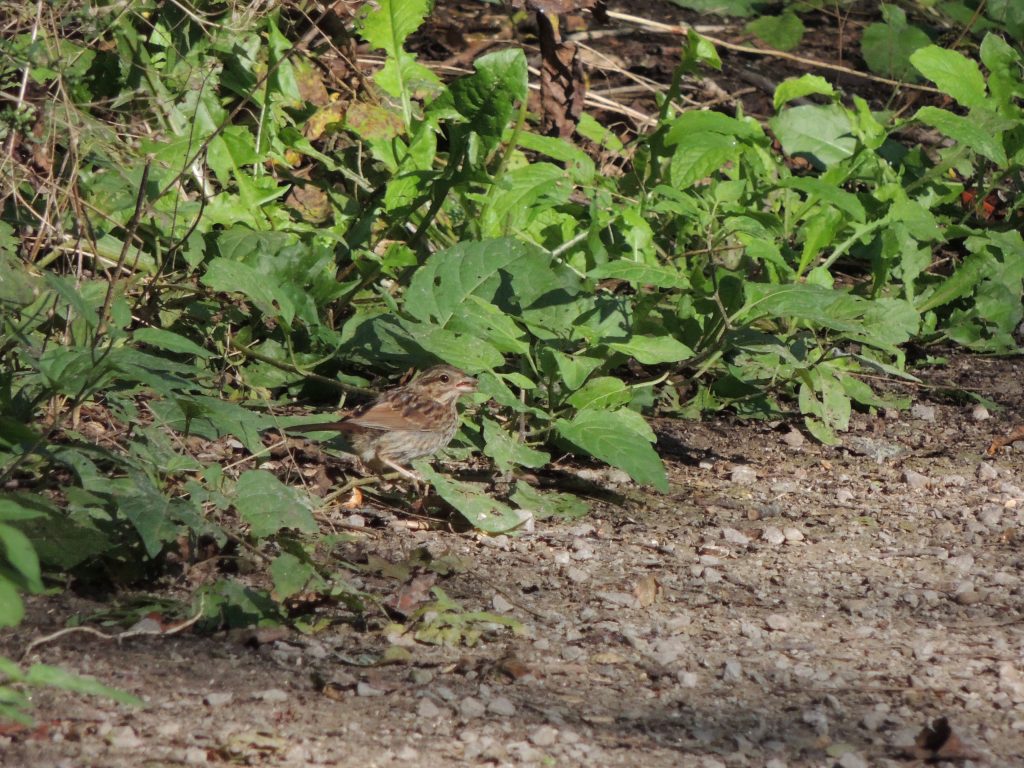
Another day I might have overlooked them. As I approached the bottom of a small hill I saw and noted what I took to be a couple of Song Sparrows scuffling with all the usual ruffians. Then one of them shot across the path running (yes running) like a panicked rodent. I wondered for a moment if what I’d seen was a large vole and not a bird; a worrying sort of misidentification for an experienced birder you’ll understand, or maybe I’d just imagined something. Then it happened again and this time I knew it was a bird, but this was behaviour unlike any I’d ever seen before. Birding is full of new experiences most of which get tucked away and absorbed as part of the lore and so far this rodent run was nothing more than that.

Then moving on I heard a song I didn’t recognize, a weak musical trill, pretty and puzzling. I found who was singing it and I realized it was a Song Sparrow lookalike but definitely not a Song Sparrow. It didn’t take long to narrow the field to Lincoln’s Sparrow, not that I’ve seen many, but there were a few field marks to point in that direction. I found a recording of the song on an iPhone app to clinch the identification and smiled inwardly; a new one for the valley.

Lincoln’s Sparrow getting ready to run across the path

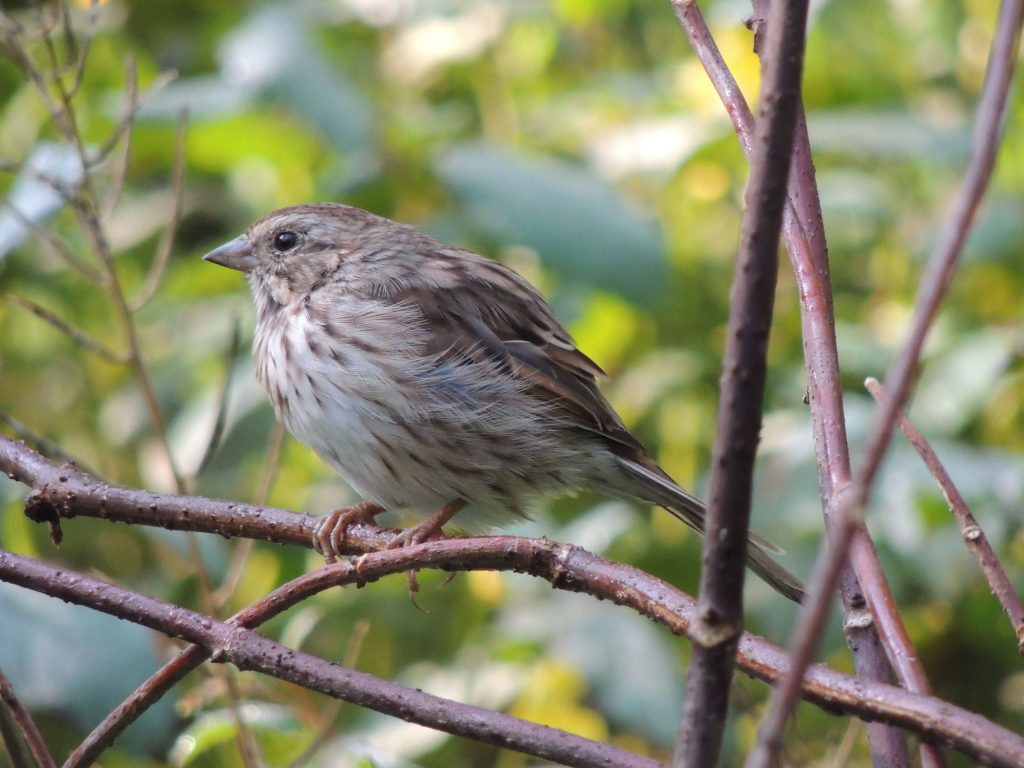
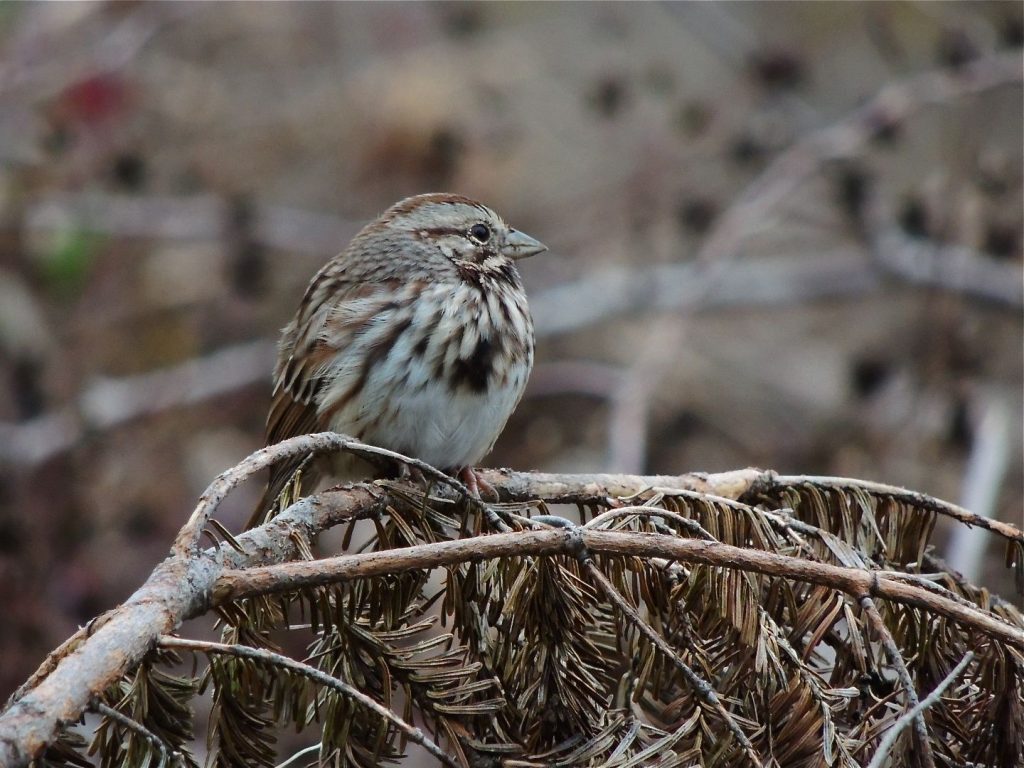
A little later I met one or two more Lincoln’s Sparrows, singing too. Song at this time of year is unusual but without it I might well have noted a handful of Song Sparrows. Here is a better picture of a Lincoln’s Sparrow followed by one of a Song Sparrow, you’ll understand the confusion.

Lincoln’s Sparrow
Song Sparrow

There was more to the day of course. The last of the season’s vireos: Philadelphia, Warbling and Red-eyed, a couple of Belted Kingfishers patrolling the waterways and a shy Green Heron. All delightful birds but it was definitely the Lincoln’s Sparrow that carried the day.

Philadelphia Vireo

September 10th 2017. RBG Hendrie Valley, Burlington, ON. The vireos are on the move, Red-eyed, Warbling and Philadelphia, all heading south. I’m sad to see them go, but it’s time and birding would only be half the fun if we didn’t have the ebb and flow of migrants in their varying seasonal plumages. In the valley there were lots of vireos in what seemed to be small groups, I think though it could well have been a mass movement and I was just seeing several whenever I stopped to look.

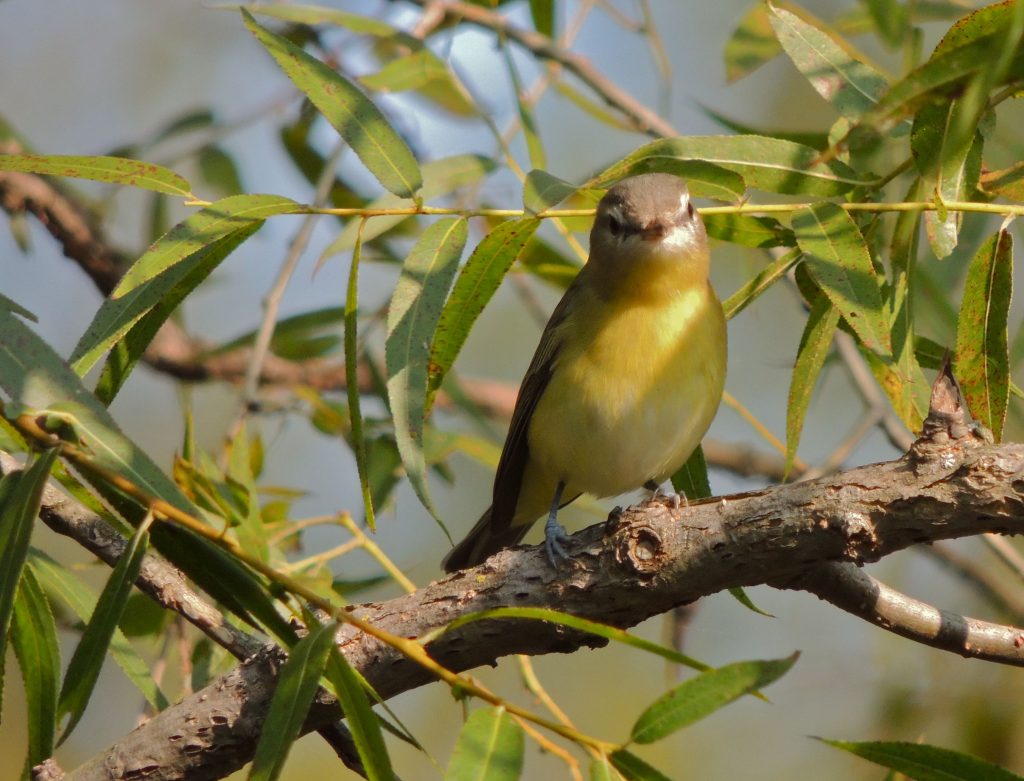
It wasn’t only vireos; the valley was busy with birds (and Sunday strollers). Obvious migrants included Swainson’s Thrushes, American Redstarts, Rosebreasted Grosbeaks and a pair of Scarlet Tanagers, the male now dressed in olive green rather than the fiery scarlet of spring and summer.  Few birds stay still long enough to allow me a good photo, for every one photo I post dozens are discarded. But today a pair of vireos was moving slowly enough for me to get at least one decent shot.

Philadelphia Vireo

I have to admit that I was surprised to see I’d photographed a Philadelphia Vireo and not a Red-eyed Vireo as I had assumed. While they are quite similar my pride had assured me I knew the difference, the Philly is a bit smaller and distinctly washed yellow below, but somehow I’d missed the cues. It doesn’t matter, I’m happy to have a decent picture of a Philadelphia Vireo and it was my bird of the day.

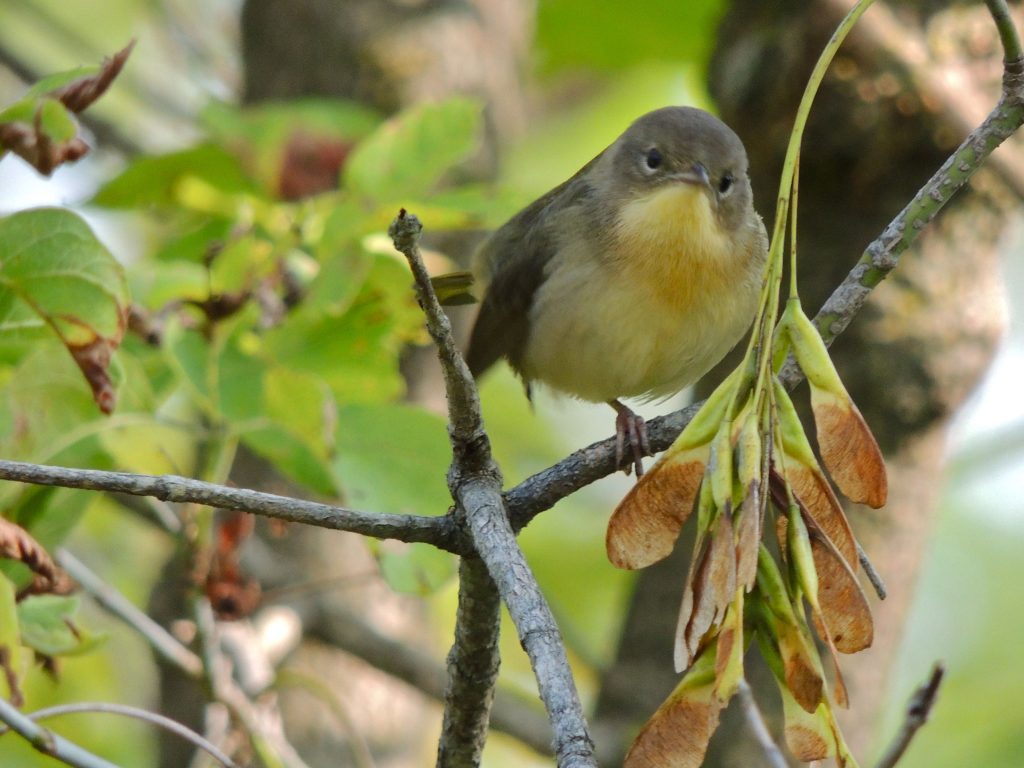
Common Yellowthroat (juv)

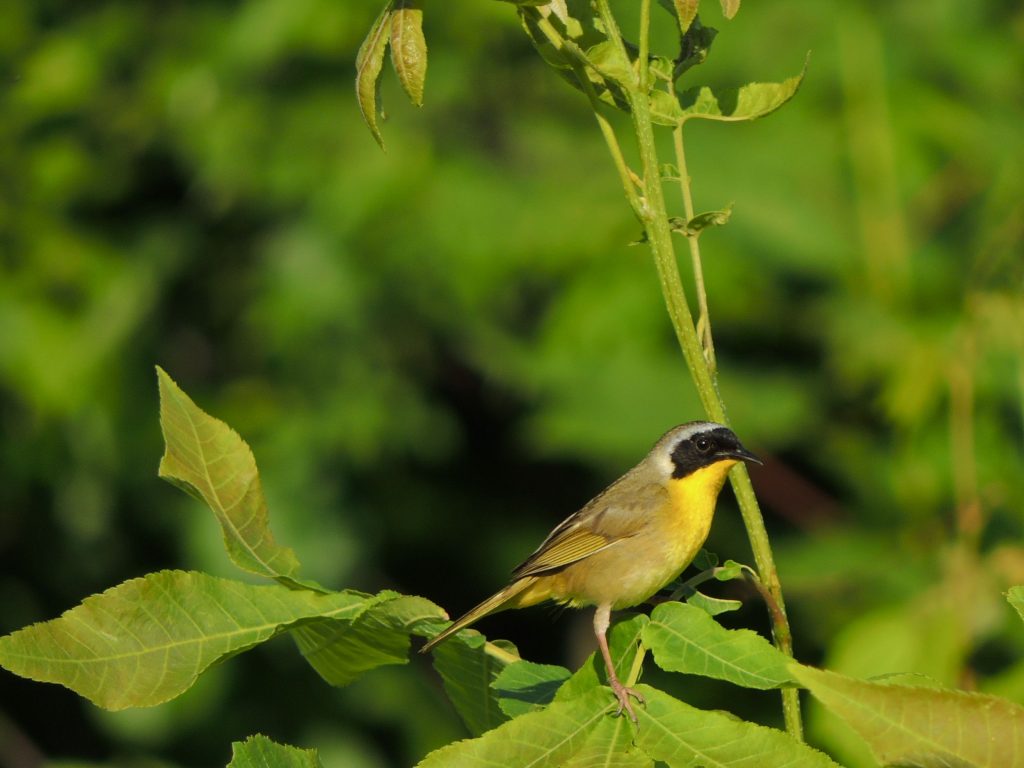
There were many Common Yellowthroats too. The adult males of the species with their bold Lone Ranger mask are unmistakable all year, but the females and juveniles are much subtler. Here, above, is one from today showing a yellow throat as you might expect but little else to make it an easy identification. Their damp habitat behaviour and rather flinty chip note helps with identification but I have to say there’s lots of room for mistakes.

Common Yellowthroat.

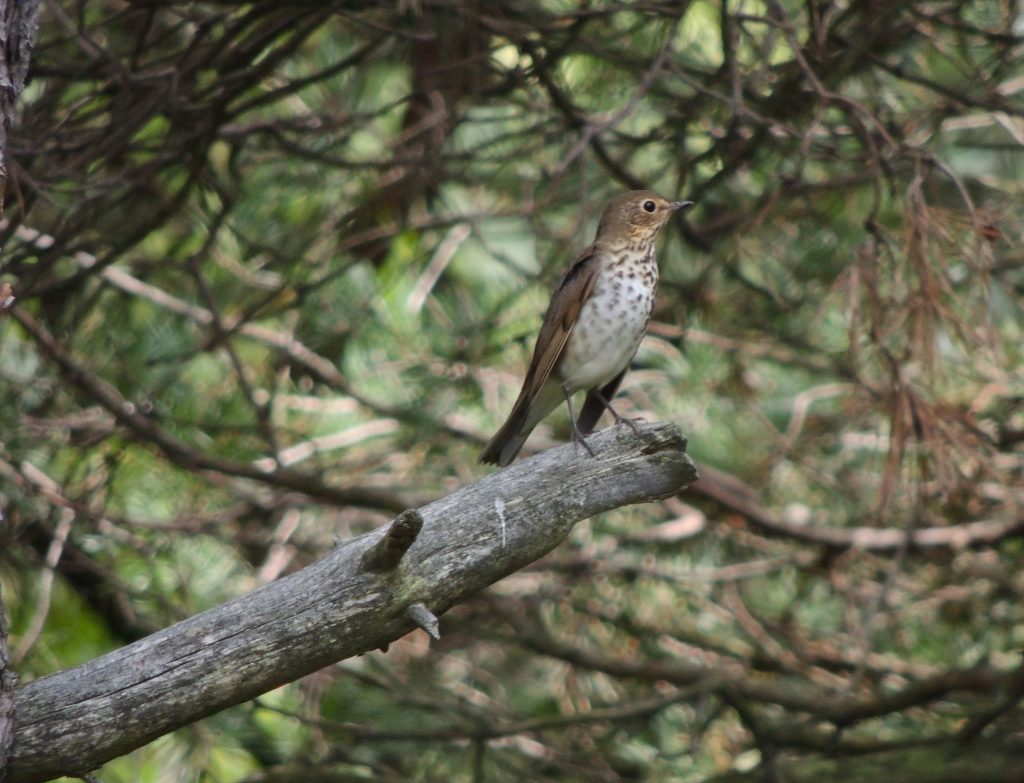
Swainson’s Thrush

September 6th 2017. Morgan’s Point, Ontario. My calendar was open and invited me to squander a day in aimless birding.  Well not quite aimless, I had some ideas where good birding was to be found so made my way to the shores of Lake Erie. At this time of year there’s a reasonable chance of finding gatherings of southbound shorebirds; conditions have to be right.

What makes Lake Erie most productive for birds and birders is a spell of churning stormy weather to drive swaths of loose aquatic vegetation ashore. Then allow a week or so for rank decay to begin and you have an odiferous feast of invertebrates for hungry birds. Understandably these are conditions that shoreline property owners hate and believe that ‘they’ (government at some level) should do something about it.  It was that way at the end of August four years ago when I had a marvellous day studying and photographing yellowlegs, sandpipers and plovers.  But today was the sort of day made for beach-strolls and sunbathers but not much good for birds and birders. Inland was a little different though.

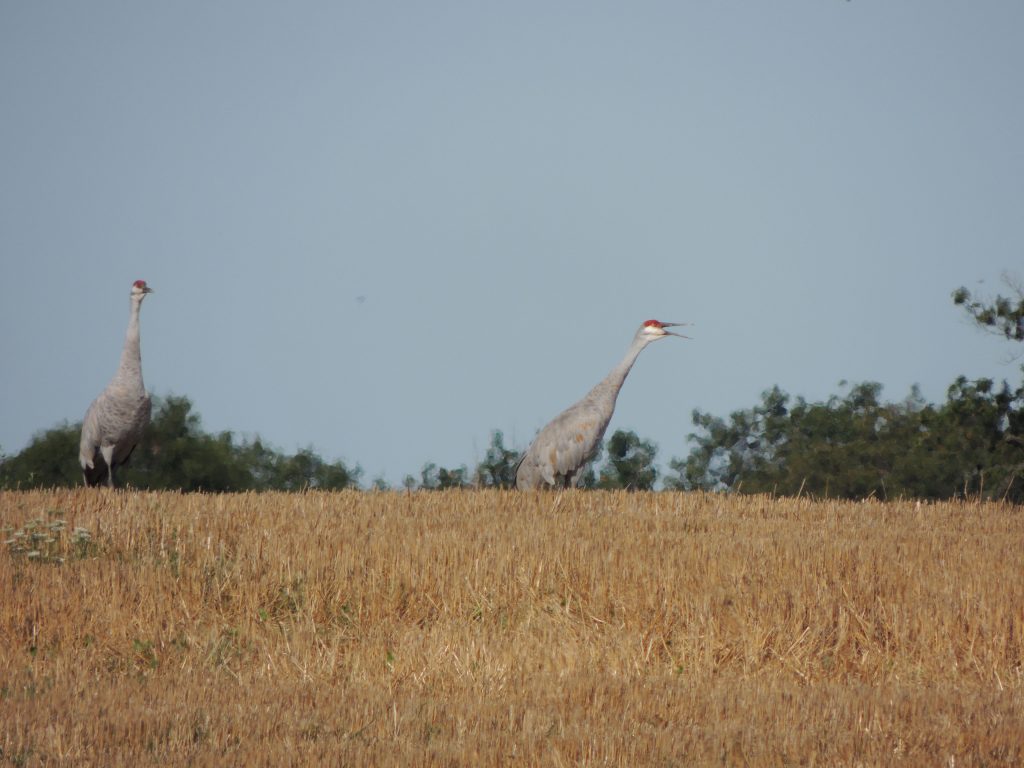
Sandhill Cranes

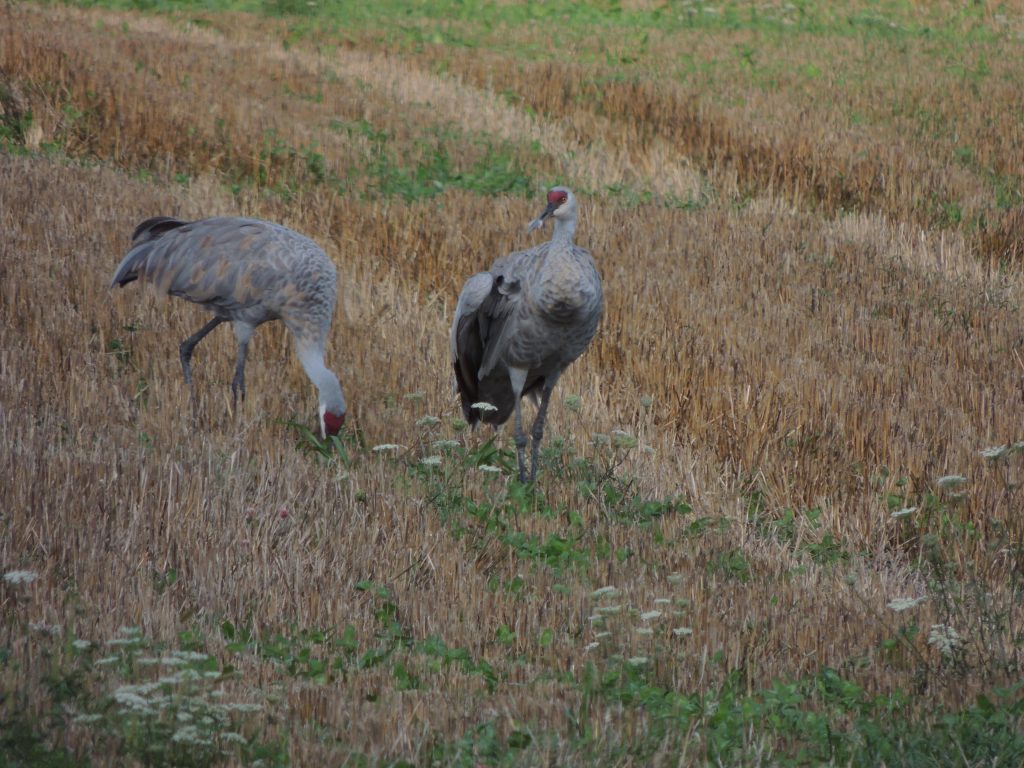
It’s an hour’s drive to Lake Erie and I took back roads as much as possible. A couple of open fields held distant clusters of what I assumed were Killdeers, but they were too far away to invest a lot of time studying.  Much better were a pair of Sandhill Cranes seen gleaning a recently harvested wheat field.  I pulled to the shade of a Burr Oak and watched them for a while thinking of the Grey Crowned Cranes of Uganda I had admired for the same reasons six months ago.  Stately would be the right adjective for cranes.  What would it be like, I wondered, to be a crane, stalking fields with precisely chosen strides, hunting late summer grasshoppers, tidying up grain spills and unafraid; at that size and with a dangerous looking spear of a beak you would think cranes are pretty well unassailable.  I know that in some mid-western farmlands crane populations have become a nuisance and many are shot, whether a ‘harvest’ is really warranted or whether it’s itchy trigger fingers I don’t know; I hope they taste good.

I was sure these Sandhill Cranes would be my Birds of the Day but it was still early and exploring the shores of Lake Erie was yet to come. I stopped for a while at a wooded lakeside park, it was unexciting and I didn’t see much except for this delightfully subtle Swainson’s Thrush, it stopped me in my tracks; my Bird of the Day.

Swainson’s Thrush

It’s hard to put my finger on just what it is about these reclusive birds, all of our thrushes: Swainsons, Grey-cheeked, Hermit and Wood Thrushes and their Veery cousins are generally soft brown, cream or buff; hardly showy. But they are songsters that lay down ethereal and fluting songs in the spring forests, sounds that always make birders stop and listen.

I wrapped up my day gazing at a scattering of shorebirds working the shallow stretches of a flooded and now abandoned quarry. There were several Greater Yellowlegs and to my surprise two Black-bellied Plovers, one adult and one juvenile. It’s been a few years since I last saw this species and they always make for a satisfying sighting. I wouldn’t call them stocky or stolid but they are well-proportioned and handsome, typically plover-ish like their Killdeer cousins, only better. Killdeers are inclined to act a little hysterically, like street performers and so are hard to take very seriously. Black-bellied Plovers on the other hand conduct themselves with an air of solemnity, more ringmaster than juggler.

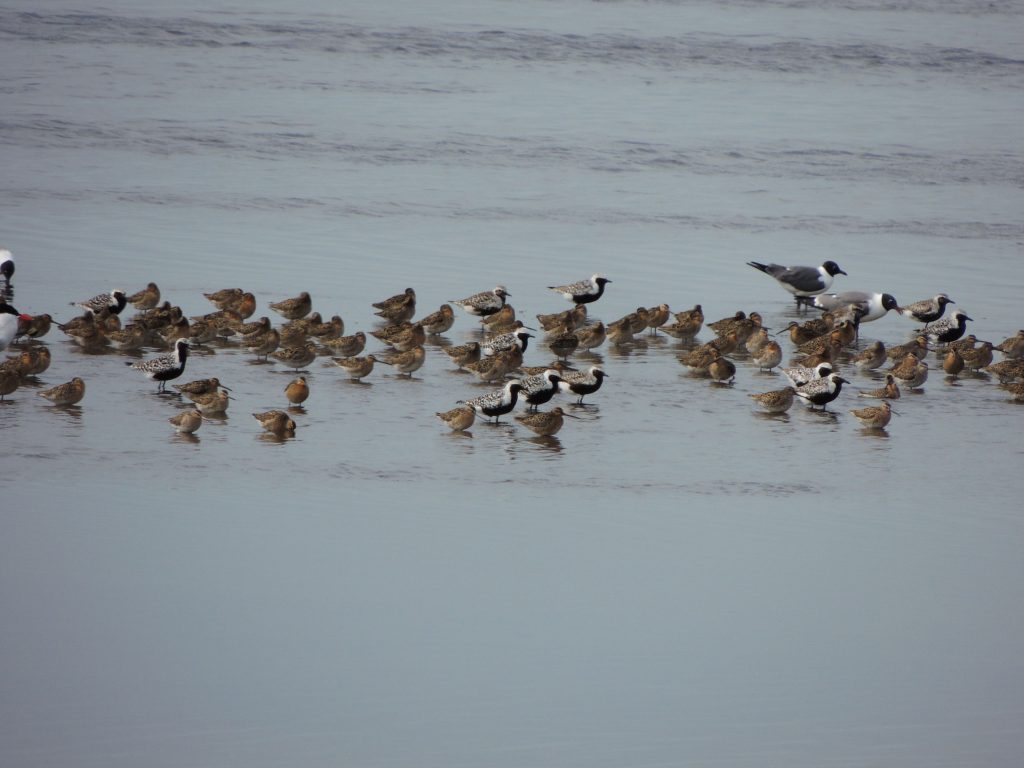
The shot below shows Black-bellied Plovers in spring, at their most handsome, surrounded by a mass of Short-billed Dowitchers.

Black-bellied Plovers and Short-billed Dowitchers