Golden Eagle

December 13th 2017 Milgrove, ON. Driving a busy road, on my way to re-find if possible a flock of mystery birds seen two days ago, (possibly Horned Larks, American Pipits or Lapland Longspurs) I noted high overhead a westward drifting, large, black bird. It could only be one of two things, either a Turkey Vulture (too late and too small) or a Golden Eagle.

I was lucky to be able to turn off, leaving the heavy traffic, and follow the bird along a country road that ran almost parallel to the eagle’s line of flight. It was high, almost at the limit of naked-eye sight, but with binoculars I was able to study it quite well and with my camera get several reasonable photos. Here’s one, hardly a show-stopper but as for-the-record shots go it’s conclusively a Golden Eagle.
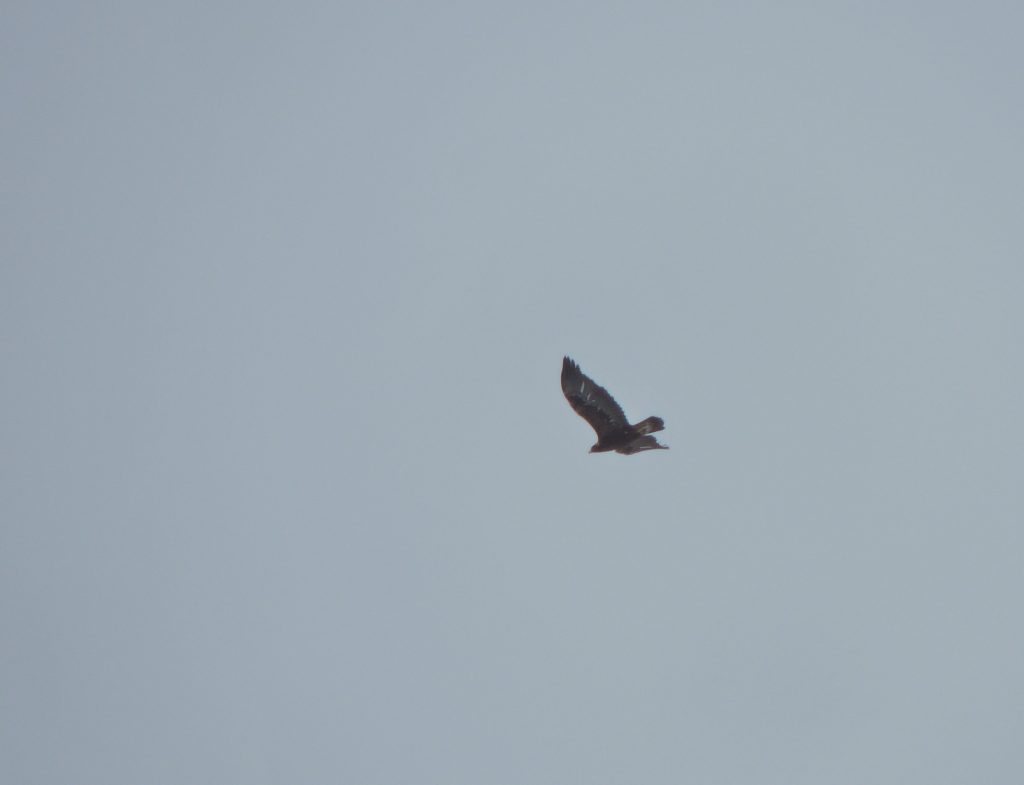
Golden Eagle – Milgrove

The amount of white in the under-wing used to be considered an indicator of age in Golden Eagles but is no longer, it is quite variable between individual birds, you’ll note this birds shows a couple of flecks. But the slightly irregular trailing edge of the wing suggests this one is a two year old.

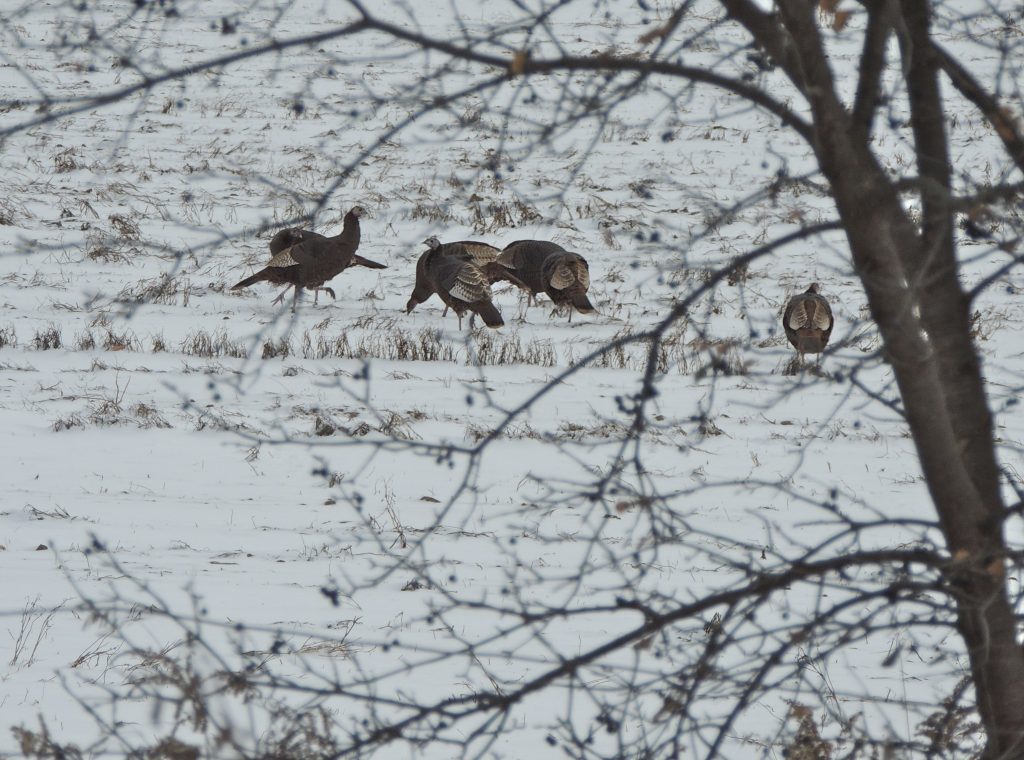
Well, that was quite a reward for a cold winter day’s birding and it would be impossible to outdo a Golden Eagle as Bird of the Day.  I could not re-find any evidence of the flock of mystery birds I’d set out for but saw two groups of Turkeys. The birding establishment (everyone else) calls them Wild Turkeys, I don’t, I think calling them ‘Wild’ is demeaning; of course they’re wild. This is a species in need of a new name and I’ve been waging an ineffectual, low-key, one-man campaign to get the bird re-named Woodland Turkey – or something like that. My campaign has gone nowhere probably because of my failure to pursue the matter with any passion. It doesn’t matter, here’s a group of them.
Baird’s Sandpiper

August 31st. 2017. Presqu’ile Provincial Park, Brighton, ON. This is a dip back into my archives to a story written three and a bit moths ago but which was set aside for one reason or another.

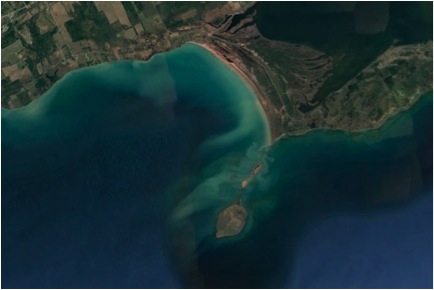
Presqu’ile Provincial Park on the shore of Lake Ontario

It’s a long drive east to Presqu’ile Provincial Park, but the park is a bit legendary among birders, the day was open to ideas and I’d heard that there were some good shorebirds there. Too far to go chasing birds in the normal run of things but the idea just popped into my head, so I went.

Entering the park, paying the admission fee and accepting a handful of park-users’ information I was directed to the birders’ beach. Well, now there’s a nice idea, to think that some beaches could be Frisbee-free. It turned out that the birders’ beach wouldn’t have held much appeal to normal people anyway. The waters of Lake Ontario had inundated it through the spring and early summer and its sands were still soggy, offensively smelly and alive with flies and other invertebrates; conditions more appealing to shorebirds than sun worshipers.

As far as shorebirds go it was rather unexciting, a couple of flocks of Semipalmated and Least Sandpipers skittered at the water’s edge. Every now and then they’d take off as if in panic, head out over the lake but quickly circle back to the beach a hundred meters along from where they’d started. It was a good opportunity to study and compare the two very much alike species but well, hardly worth the long drive.

Things looked up when I noticed a small group of new birds arrive, somehow a bit different, perhaps a bit larger, or maybe it was just the way they flew. I found them again later among shoreline-feeding Semipalmated Sandpipers, very similar but yes, a little larger and subtly different. My mind worked over the options and isolated Baird’s Sandpipers as most likely.

Distinguishing between lookalikes can be very challenging and if done incorrectly can be career-ending. Think of the poor souls who sailed back to Europe with a ship loaded with supposed gold which turned out to be chalcopyrite. (Superficially they look alike but an experienced field geologist told me the geologists’ maxim is, if you think it’s gold – it’s not!) Practice and experience will never go out of style.

Baird’s Sandpipers are a generally more western species and while most adults migrate south down the middle of the continent the young of the year are less disciplined and a few show up around Lake Ontario at this time of year, although they’re still not common.

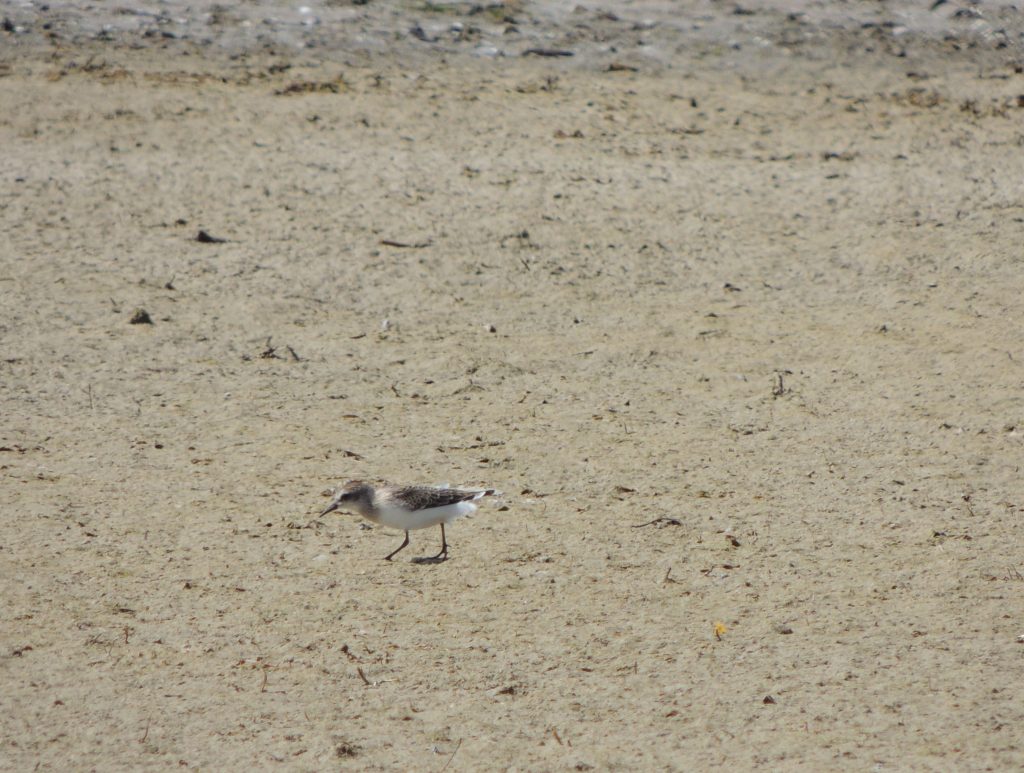
I left Presqu’ile satisfied that I’d finally seen the place and understood its attraction, happy to have picked out the Baird’s Sandpipers among Semipalmated Sandpipers, Lesser Yellowlegs, Semipalmated Plovers and not much else. Baird’s Sandpiper, here’s one– Bird of the Day.

Nashville Warbler

December 6th. 2017 Sedgewick Forest Park, Oakville, ON. I’ve scarcely touched my binoculars in a month, not since we wrapped up two months of bird population transects that started in with Chimney Swifts and ended with Fox Sparrows. Today with a north-west wind blowing cold and hard a young birder friend reported watching a wind-tossed Golden Eagle circling high overhead. Late fall cold fronts are legendary for Golden Eagles, and while he may nurture some lingering doubts I’m happy to believe that’s what he saw.

Meanwhile on a more mundane birding front, and perhaps inspired by my friend to get out, I visited one of this area’s most celebrated sewage treatment facilities. Such places are not everyone’s cup of tea I know, but birds like them for the nourishing insect life to be found thereabouts. Every late fall and early winter this place holds a few oddities, last year for example I wrote “ American Robins all clucking and squawking … many Yellow-rumped Warblers and Ruby-crowned Kinglets; an Eastern Phoebe and …Probably the drabbest warbler we ever encounter, an Orange-crowned Warbler and arguably the most beautiful a Northern Parula.

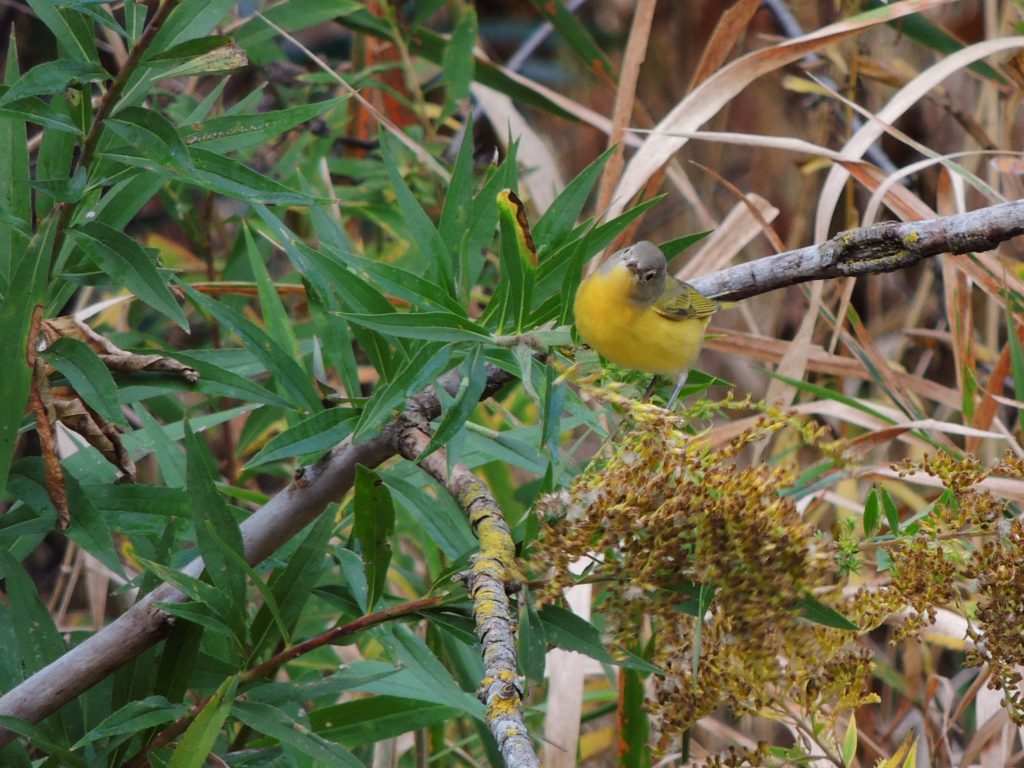
On arrival today I could hear a Winter Wren purring to itself somewhere low and gloomy, and see and hear small groups of American Robins, House Finches and American Goldfinches. A couple of warmly-dressed birders were prowling around, pointing and staring at a tangle of old grapes and blackberry, but I was under-dressed so stayed just long enough to see two or three Yellowrumped Warblers, a pair of Northern Cardinals, a bashful Hermit Thrush and, Bird of the Day, a glowing Nashville Warbler. The place wasn’t devoid of colour, after all House Finches show some crimson-red and Yellow Rumped Warblers have butter-yellow rumps (as you might expect). But this little Nashville Warbler with its yellowy-orange throat and breast seemed to radiate light from within the woody tangle.

Nashville Warbler. 14 Oct 2015

Here’s a Nashville Warbler, just as engaging, but photographed at another, greener time of year.

Great Black-backed Gull

October 29th. 2017. LaSalle Park, Burlington, ON. Whenever I keep field notes of birds seen, usually for our transect work, I habitually list the passerines on the left side of the page and non-passerines on the right. (Passerines are often thought of as songbirds, but are officially defined as birds distinguished from other orders of Aves by the arrangement of their toes, three pointing forward and one back, which facilitates perching.) I mention this because almost always, passerine species far outnumber non-passerines; today it was the other way around, literally a sign of the times.

The great autumnal purge of song birds is almost complete and things must be getting hostile to the north of us because large flotillas of migrant ducks are appearing on our lakes and waterways. Along the pathway that defines one of our transect routes I spotted a convoy of ten Common Mergansers, followed later by three Redbreasted Mergansers and much later one Hooded Merganser. There were Northern Shovelers, Gadwall, Mallards, Mute Swans and Greenwinged Teal too; only Mallards are year round residents here.

On the way home I made a stop at a couple of parks along the shore of our large harbour and scanned a bobbing raft of Redheads, Gadwall and Lesser Scaup, I looked for Tundra Swans and Canvasbacks but saw neither, late October is when they start to appear.

Great Black-backed Gull

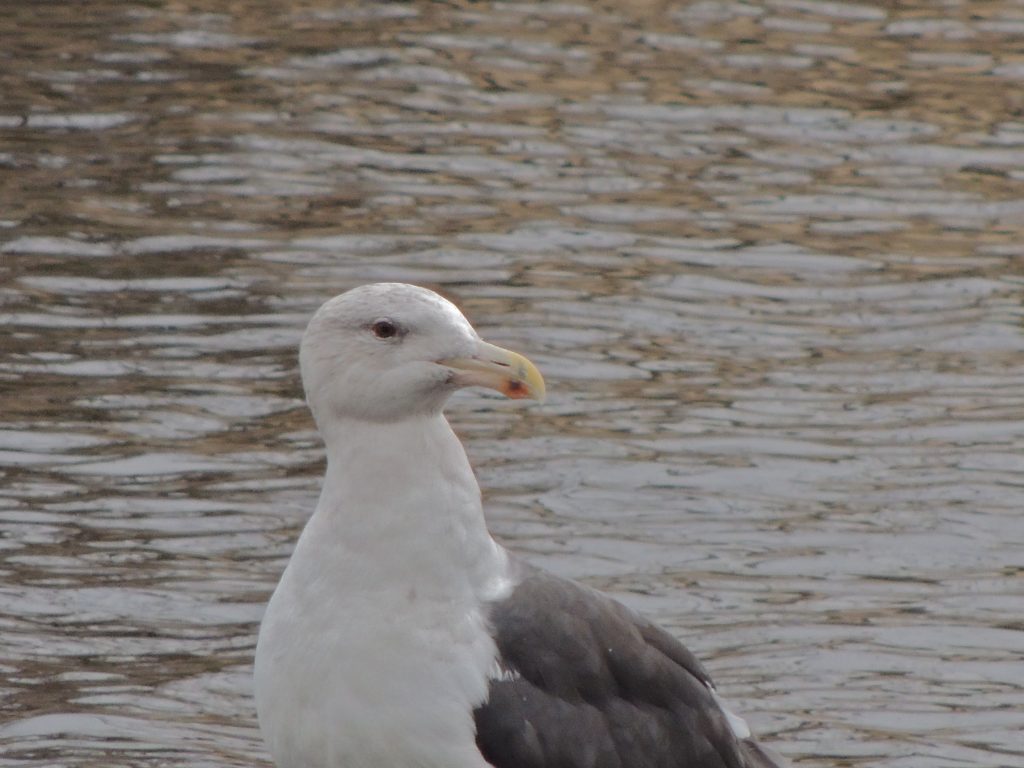
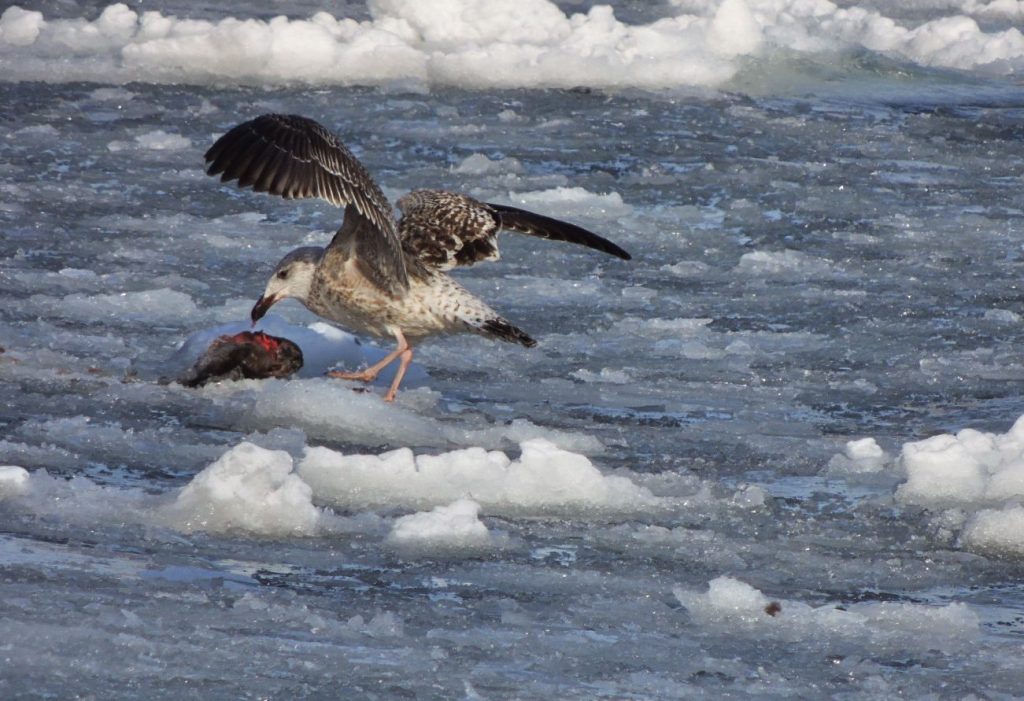
But the bird that stood out, the bird that met my Bird of the Day test by prompting a wow response in me, was a solitary Great Blackbacked Gull. They’re not rare, not common either, but wherever and whenever they occur they have presence; perhaps as the world’s largest gull species they could hardly fail. I think most gulls are omnivorous and opportunistic feeders, anything goes, but Great Black-backed Gulls are rapaciously omnivorous and opportunistic. This photo below was taken three of four years ago in a time of deep cold and the young Great Black-backed Gull, drifting along on a plate of ice, had either preyed upon a seriously weakened duck or scavenged a corpse. That’s the sort of thing they go in for, I’d advise against showing signs of weakness when Great Black-backed Gulls are at hand.

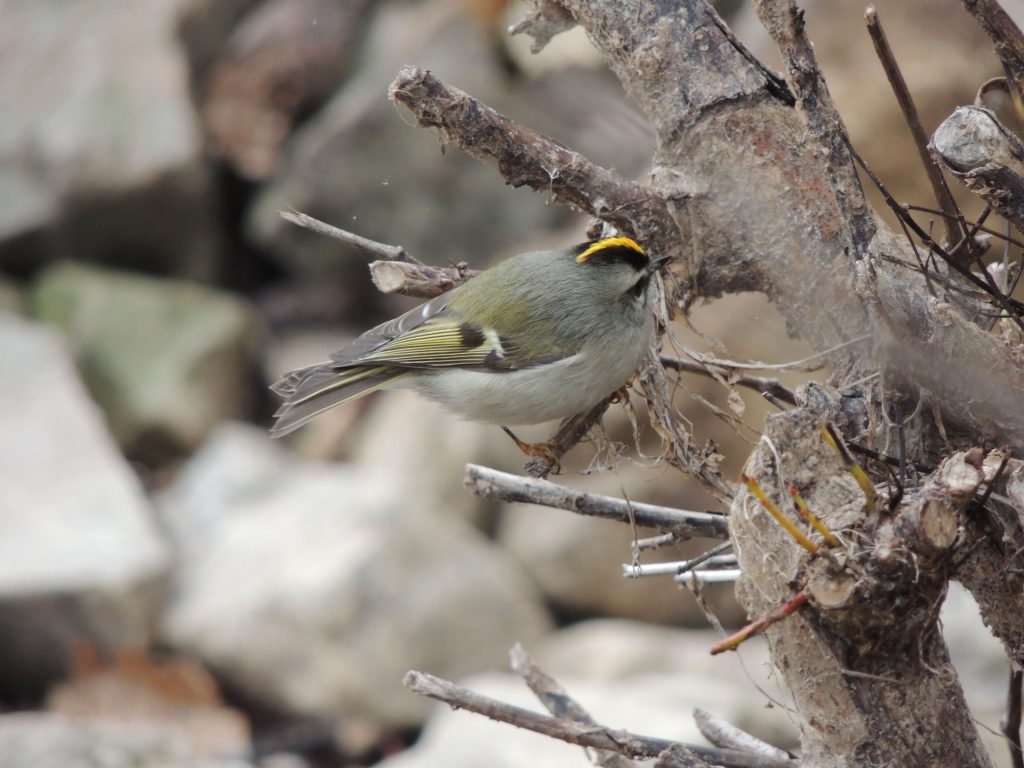
With reference to my comments in my previous post about the difficulty of photographing a Golden-crowned Kinglet, well I came close to success today with this one.

Golden-crowned Kinglet

Fox Sparrows

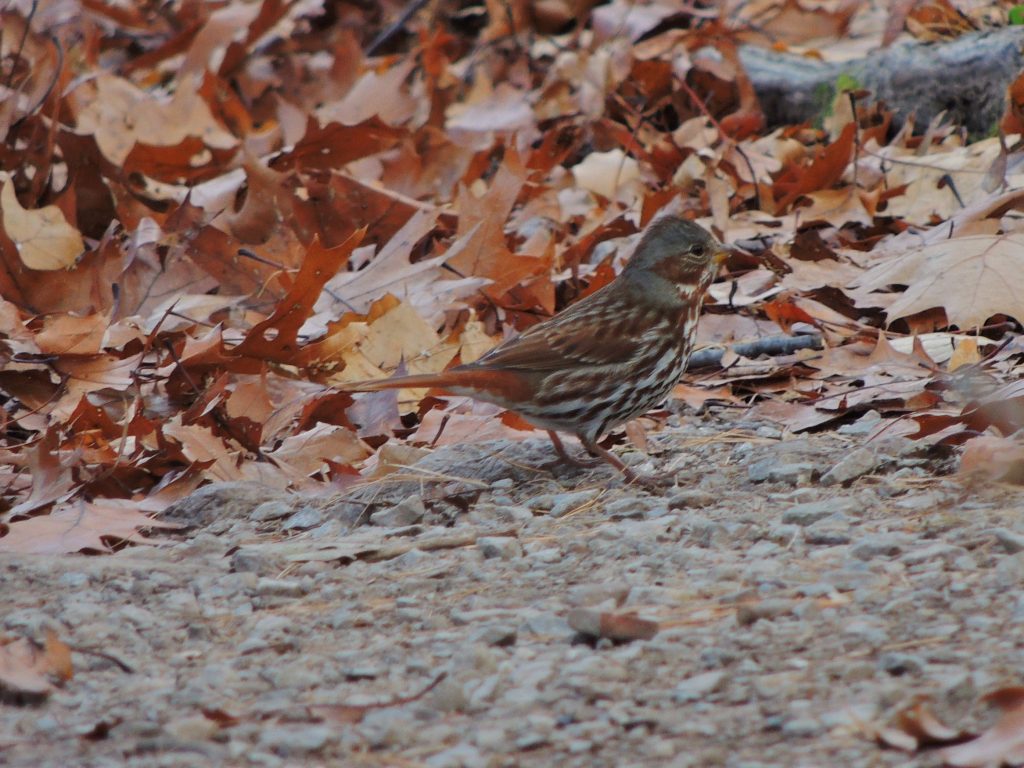
October 27th. 2017. RBG Hendrie Valley, Burlington, ON. I have been anticipating the appearance of Fox Sparrows for a week or so and today I was rewarded with the sight of two of them. They popped up from somewhere deep in a thicket of Red Osier Dogwoods, surveyed me disapprovingly for half a minute and then left. Just the sight of them, the fulfillment of an expectation, made them Birds of the Day in a day full of interesting stuff.

Fox Sparrows pass through in spring and fall on their way to and from winter spent in the central southern U.S and summer in subarctic Alaska to Labrador. In spring we look for them picking through spilled seed around bird-feeders where they sometimes take a few minutes off to try out their melodious yet somehow secretive song. Spring or fall it’s their sturdy angular build and rich foxy red plumage that makes you stop and stare. This photo was taken on about this date a couple of years ago.

Fox Sparrow.

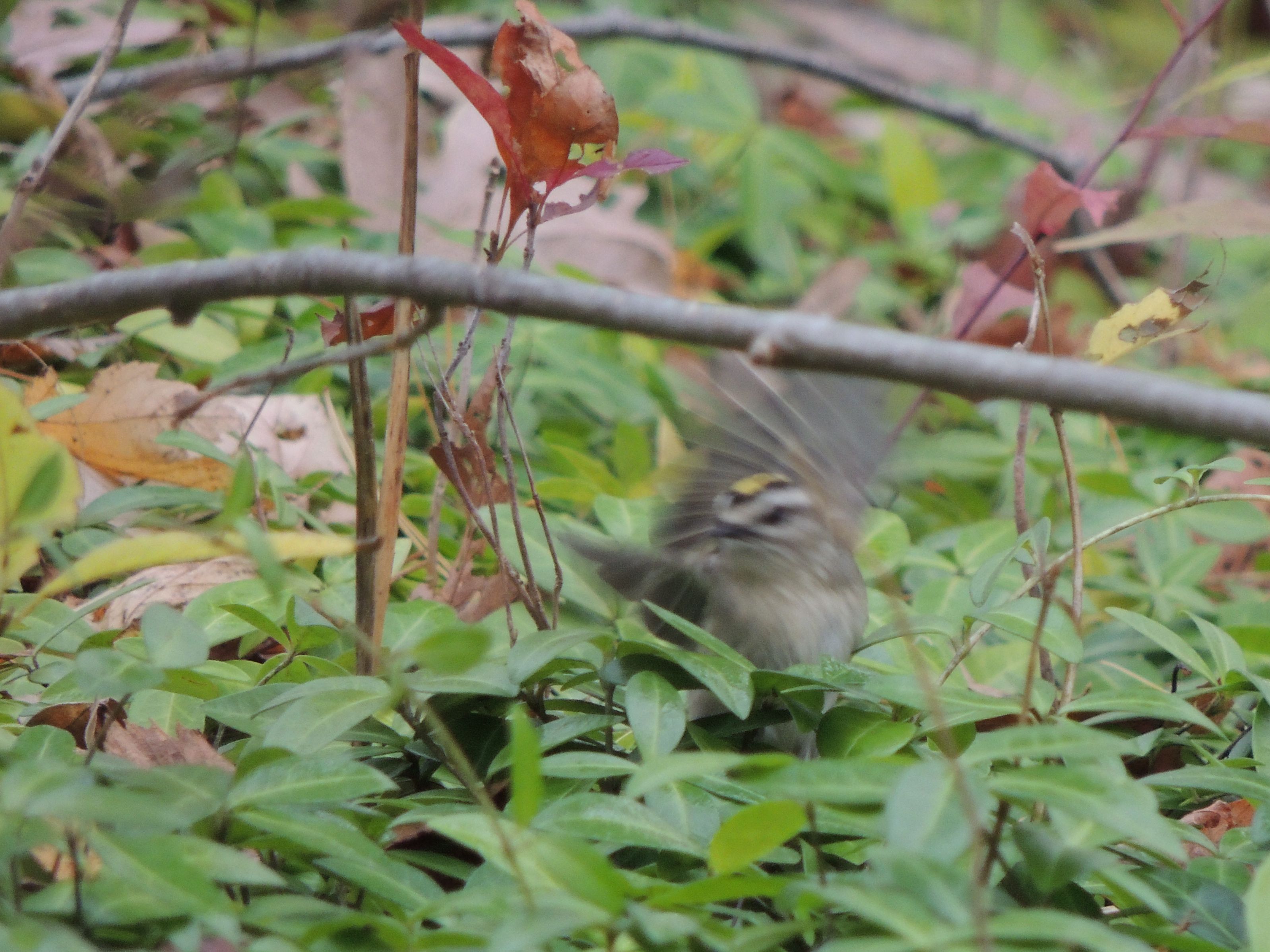
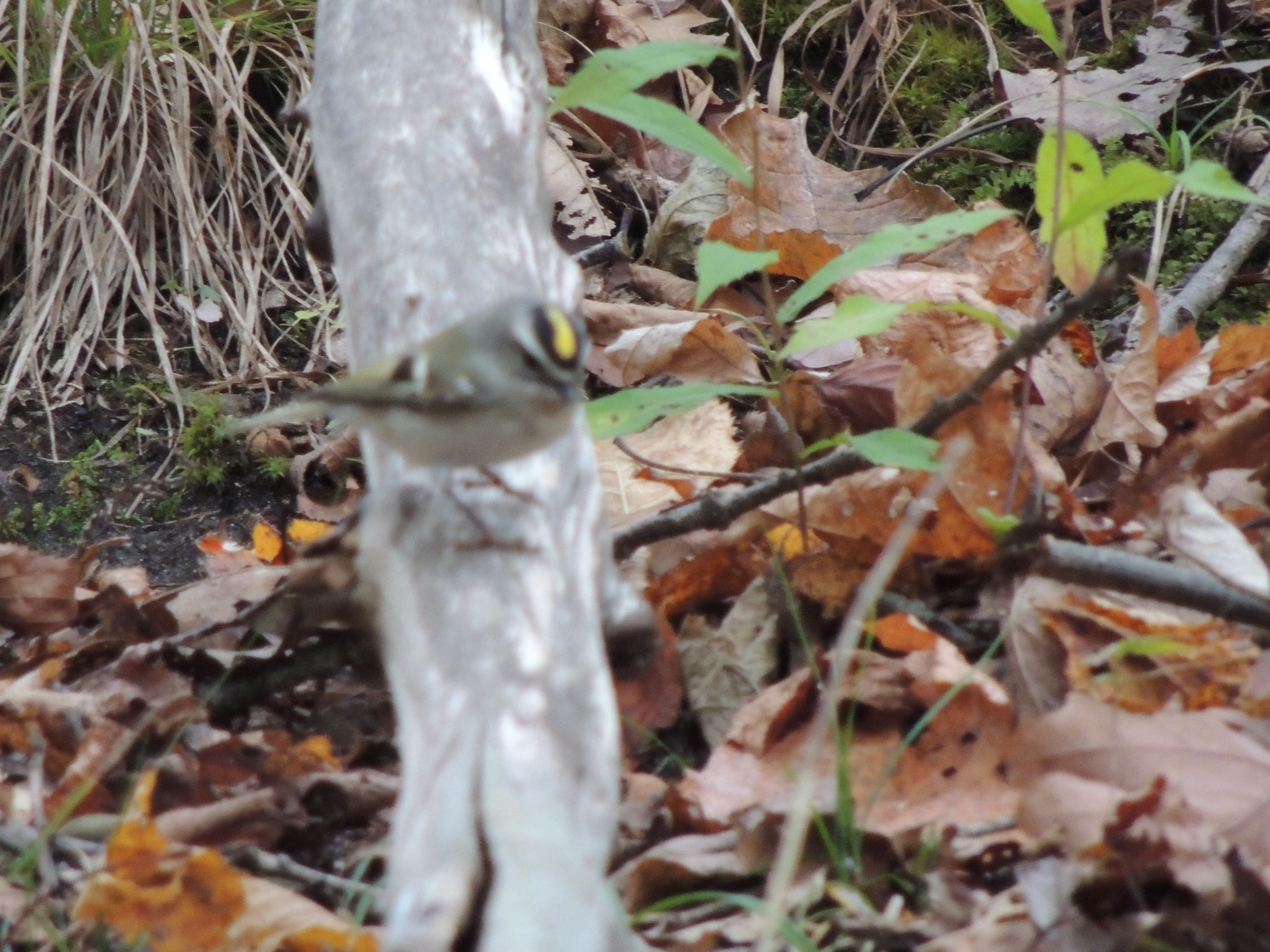
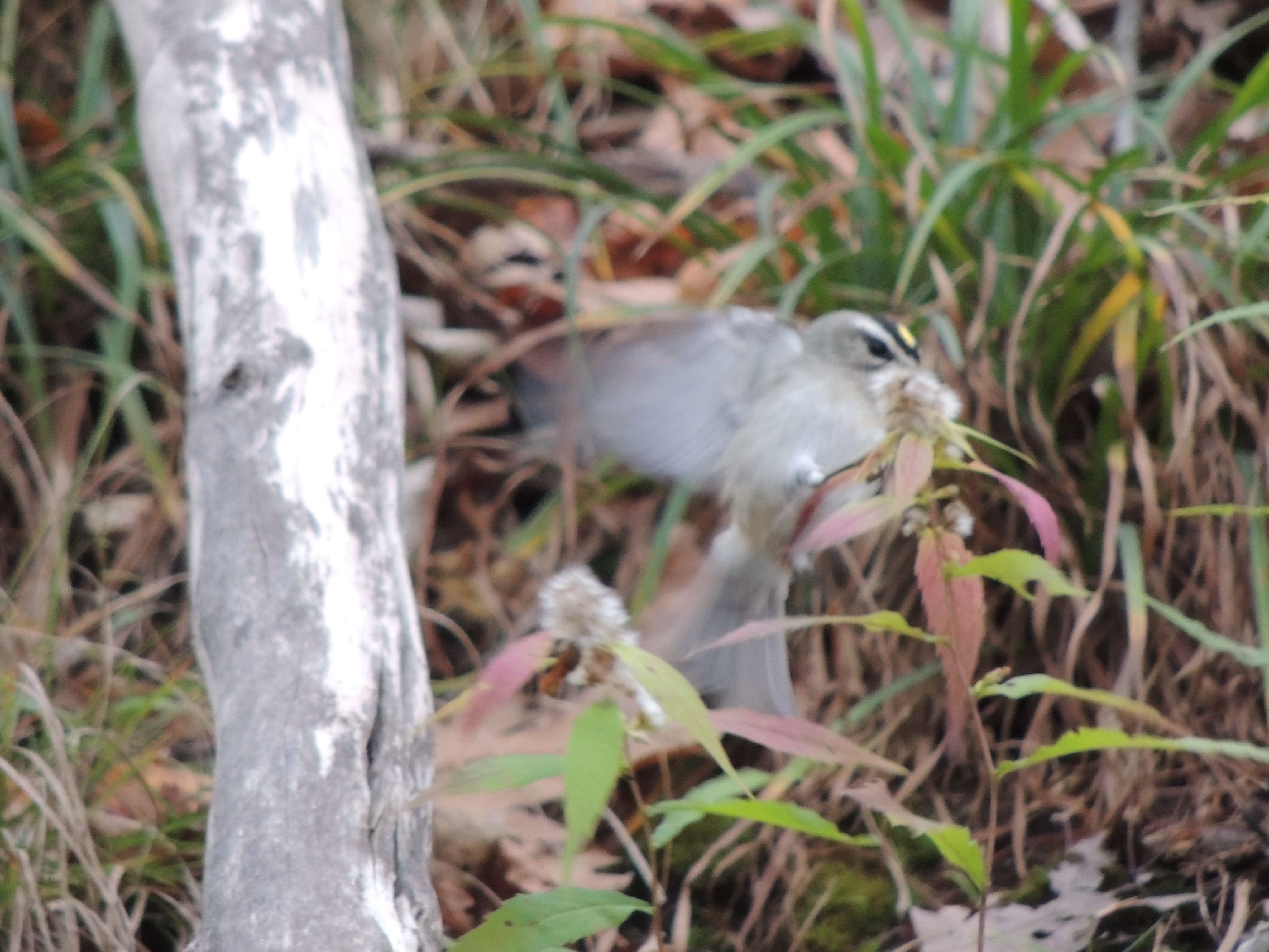
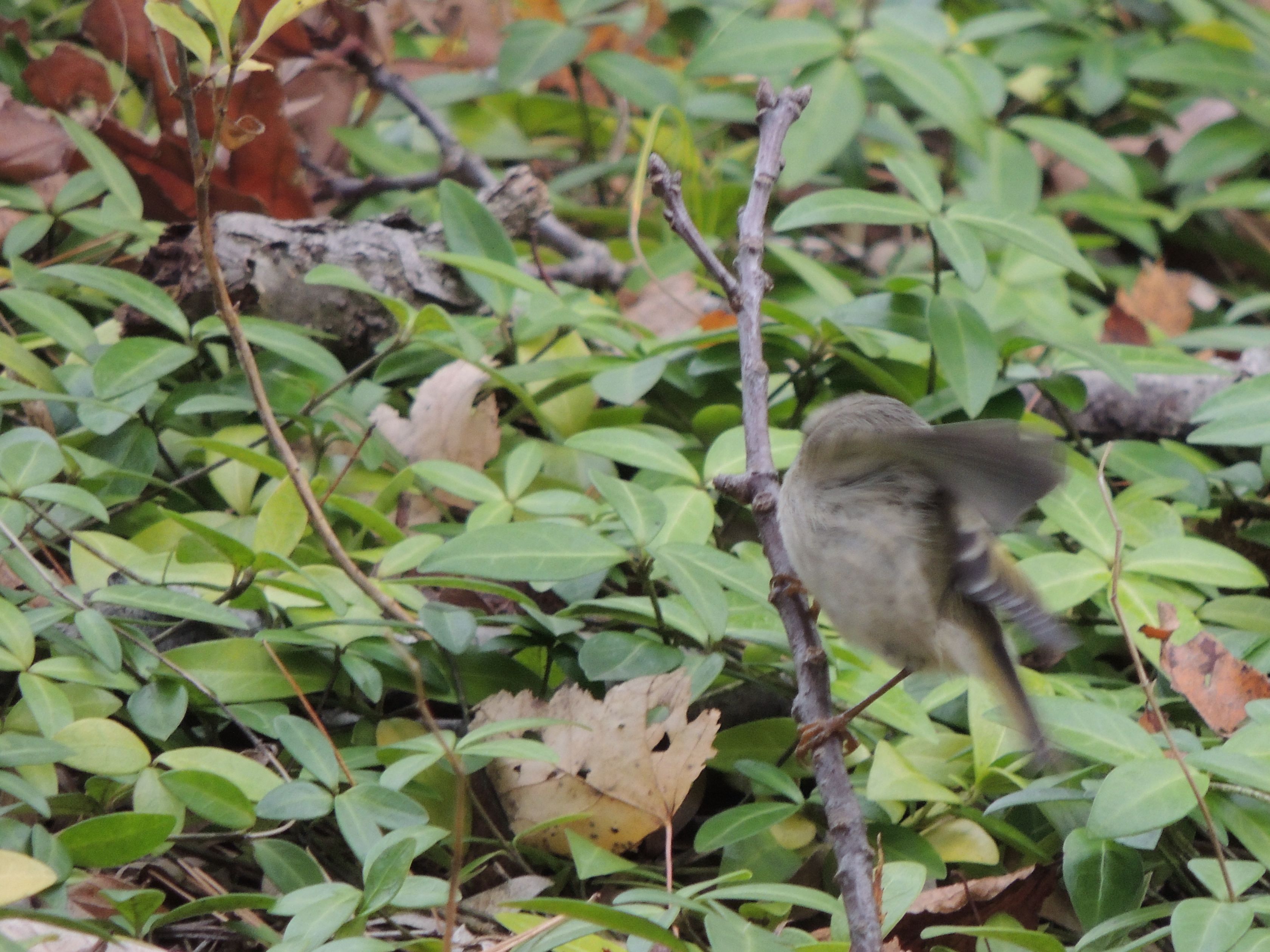
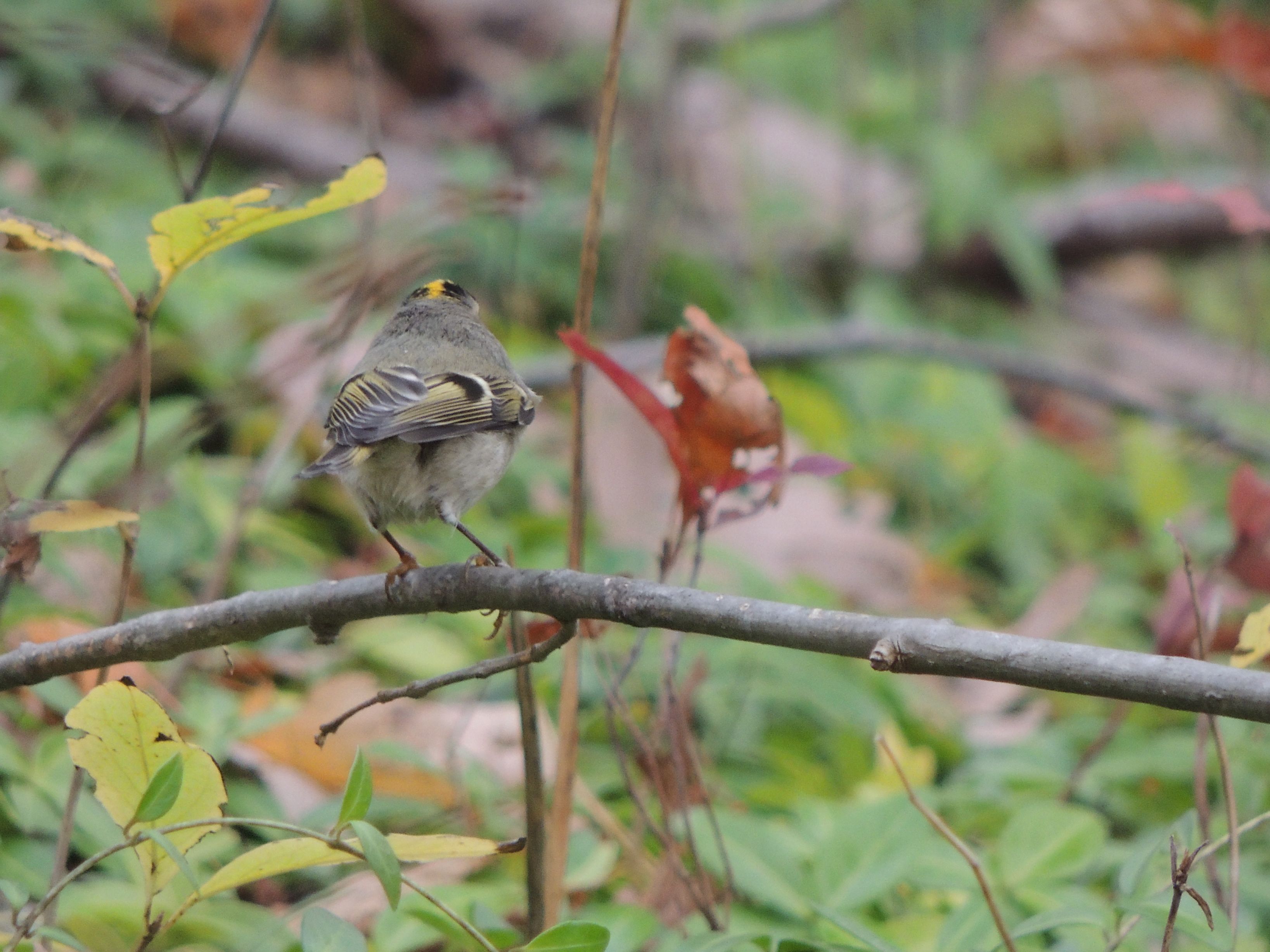
For a short while later I watched a posse of ten Goldencrowned Kinglets working over a patch of Periwinkle searching for the kind of microscopic food that keeps these engaging little mites alive. They were close enough and bold enough, and I optimistic enough, that I invested perhaps too much time trying to get a good photo of one. Goodness knows I’ve tried and tried but they rarely stay in one place for more than a moment and I always seem to get blurry, out of focus, or just-leaving-you-now shots or, if I’m lucky a well focused back-end portrait. I did no better today, here’s a gallery of today’s shots, just as I described.

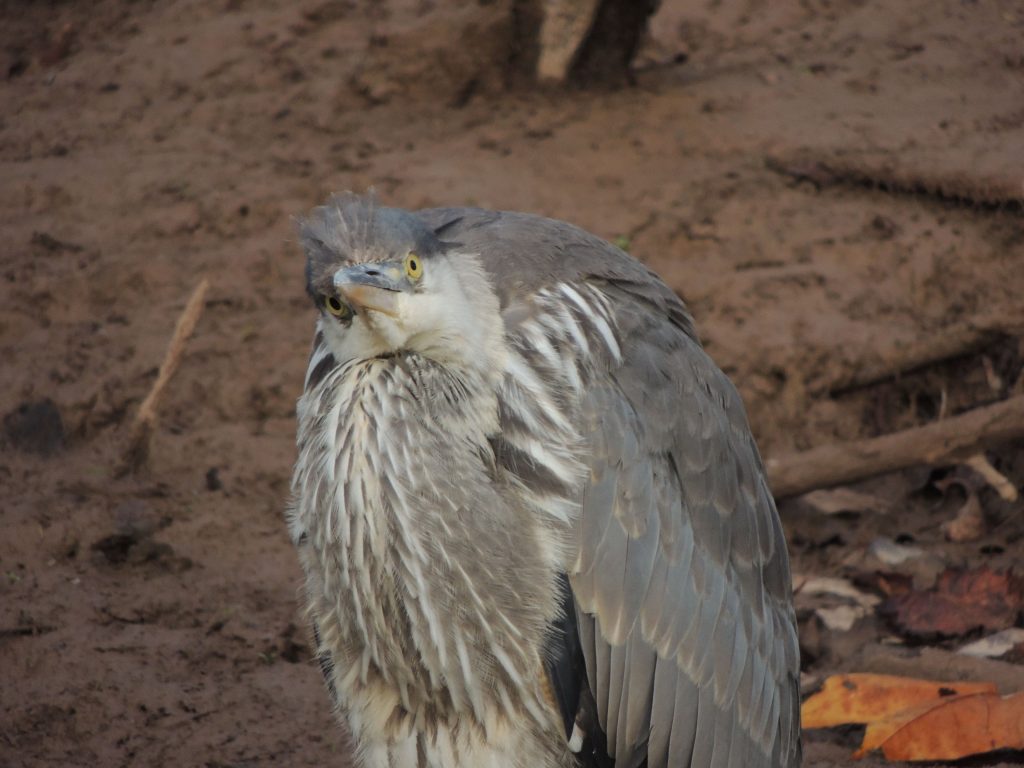
They are in marked contrast to this shot of a stoic Great Blue Heron who stood watching me warily, but nevertheless chose to stay at the river’s edge where there was the chance of a meal.