Fox Sparrows

RBG. Hendrie Valley, Burlington ON. October 26th. 2020. This site is not noted for its biblical references, but this from Ecclesiasties, “To every thing there is a season, and a time to every purpose under the heaven:” is surely appropriate in the world birders inhabit. In the case of Fox Sparrows, today’s Bird of the Day, it is particularly apt. We expect to see them in the last two or three weeks of October and, like clockwork, my first fall sighting this year was six days ago, today I encountered another seven.

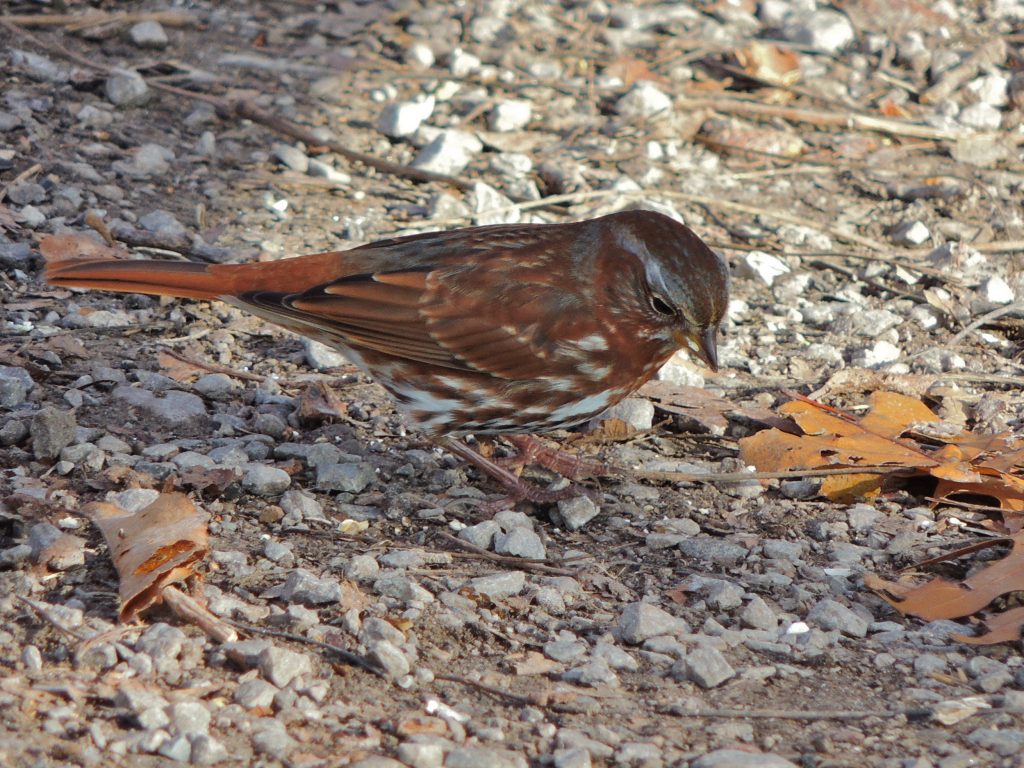
Fox Sparrows are appropriately named for their all-over foxy-red plumage which is saturated in varying intensities. All-over other than for some rather clay-coloured facial markings and the pale background to the breast splotches.  We usually find them actively tossing, picking and scratching through the freshly-fallen leaf litter, they’re sometimes difficult to pick out in the leafy debris. Today’s Fox Sparrows easily made My Birds of the Day for their gorgeous colours and seasonal reliability.
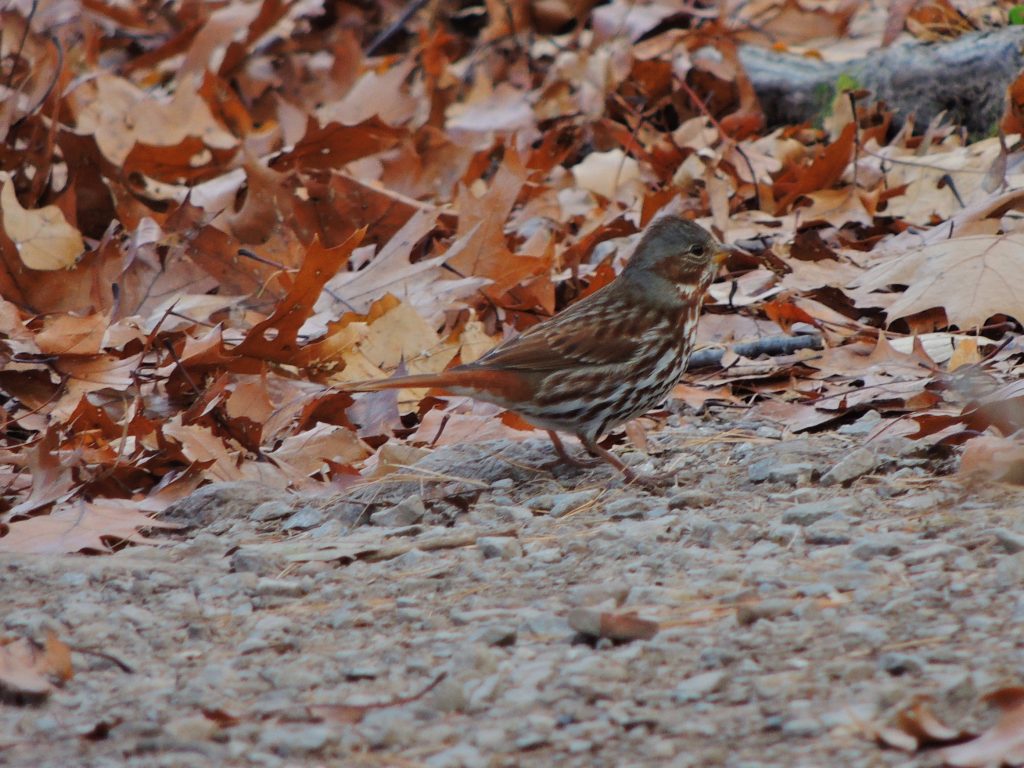
The Fox Sparrow is a very widespread North American species and one of the most geographically variable. There are four subspecies and much colour variation within them, not all are nearly as foxy-red as the ones we meet around here. I remember, a dozen years ago, puzzling over an unexpected Fox Sparrow on coastal British Columbia. The western subspecies is a much sootier brown and it was a bit of a struggle to identify because my field guide emphasised the redness of more eastern populations. It was, I recall, something of a disappointment.
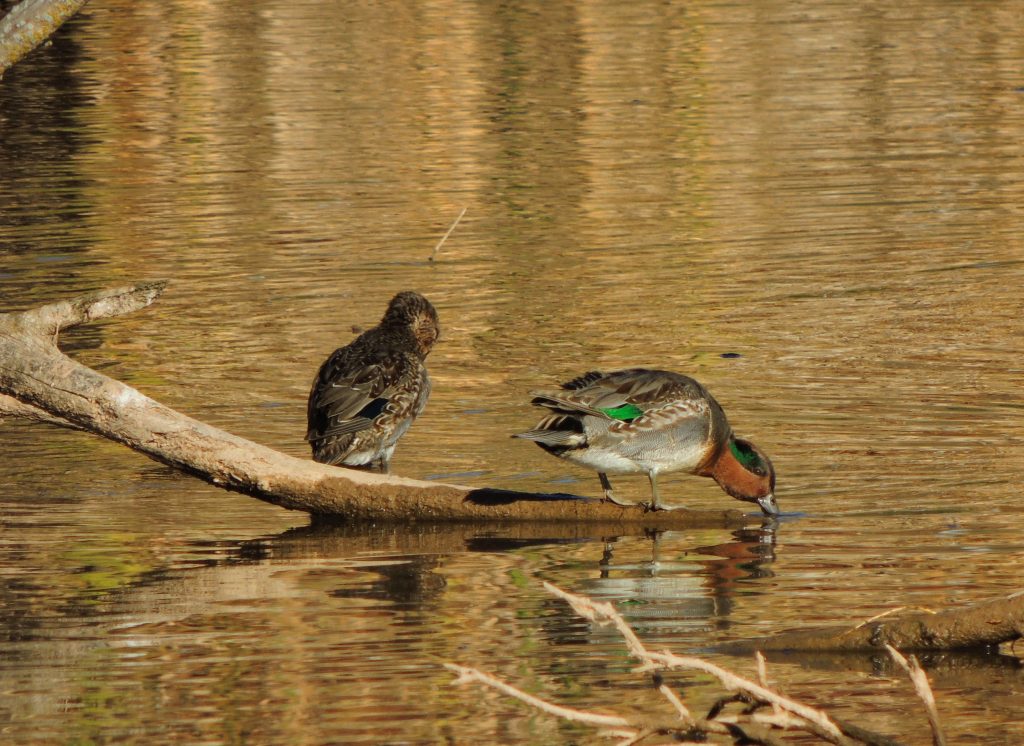
Green-winged Teal (f&m)

There was more to the day though and on our transect the Mallard count was 189 (see yesterday’s post), we watched Purple Finches feeding greedily on thick seed-heads, and found three Greenwinged Teal mixed in among a group of Mallards and Wood Ducks.
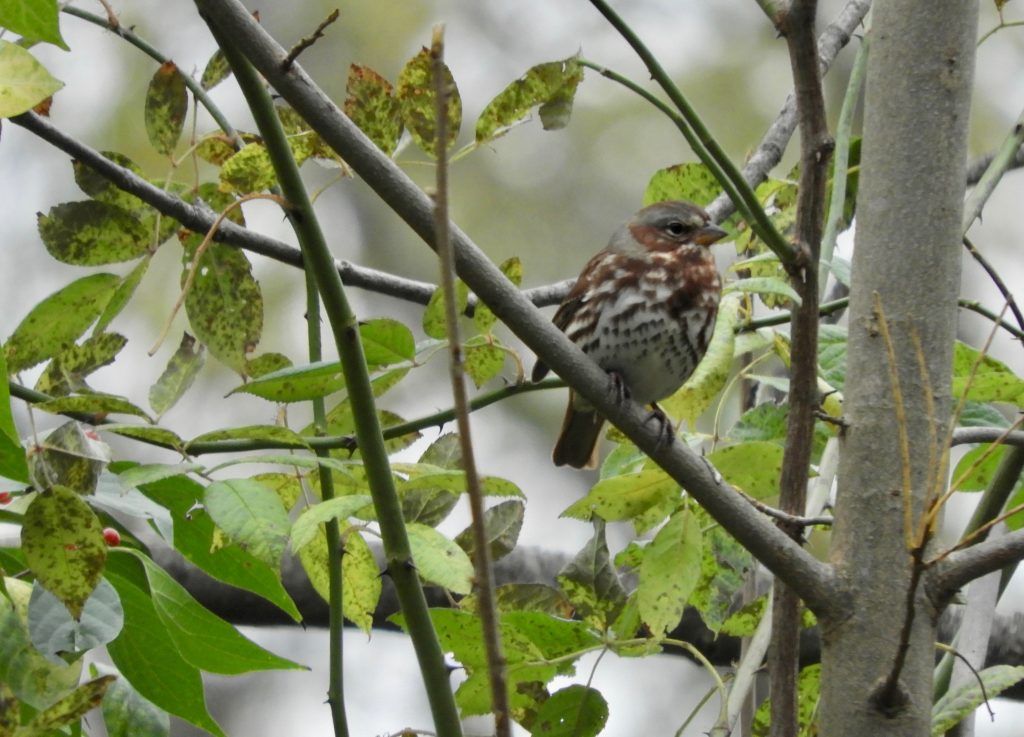
Fox Sparrow

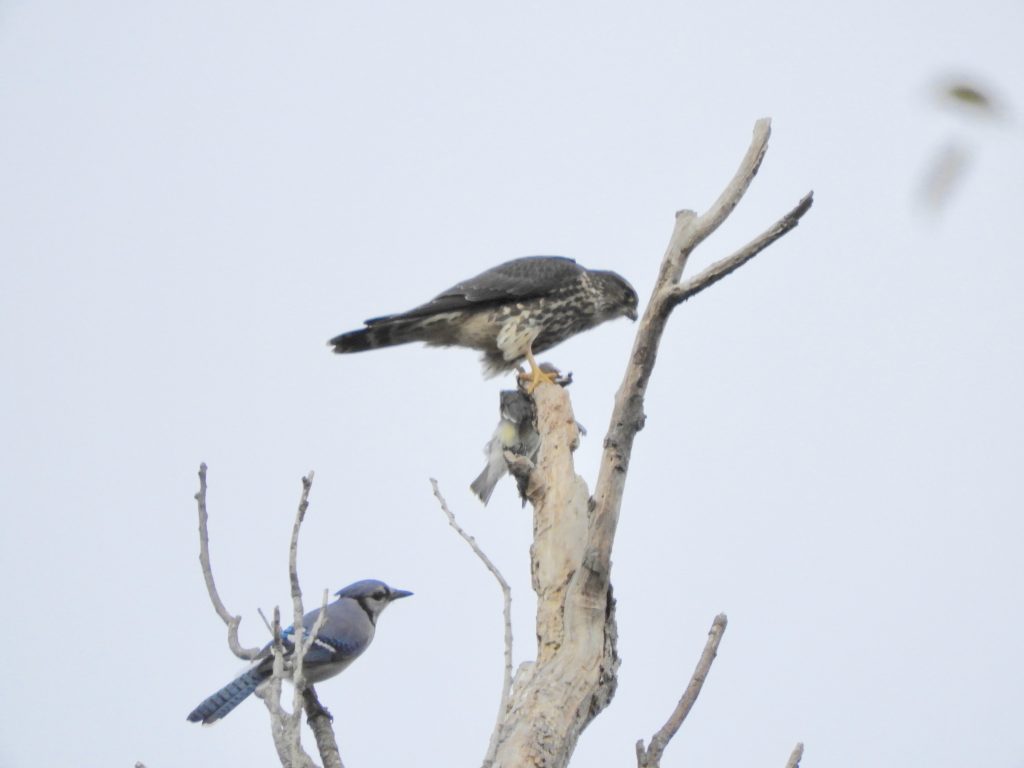
Merlin and Cedar Waxwing

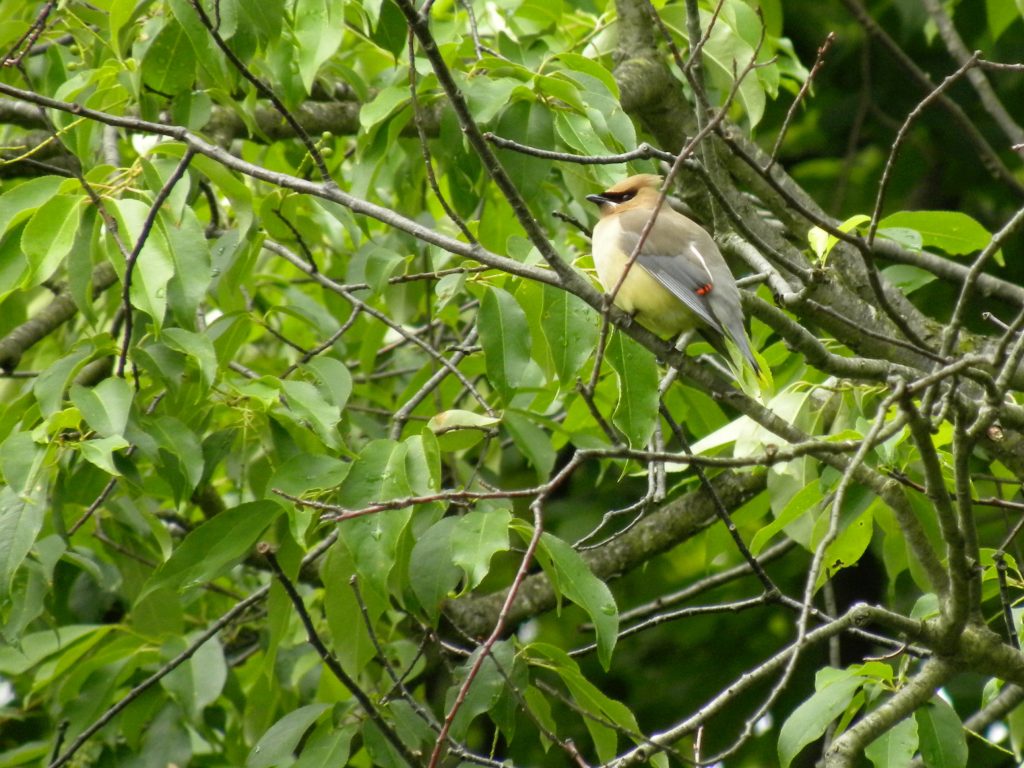
Cedar Waxwing

RBG. Hendrie Valley, Burlington ON. October 25th. 2020. I’m certain all birders scan the sky, the skyline and exposed branches. It’s easy pickings sometimes, we do it without thinking and constantly.  On our regular transect in this valley there are a number of old spikey snags, once formidable trees, now just crooked fingers. Today I noted a bird atop one of them and assumed it to be a lingering Red-winged Blackbird, it’s the sort of thing they do. My companion though took a little more care and wondered what it was on that dead old tree.  I looked again. “Merlin I think. Let’s get a bit closer.” 

Fearing that it might fly off at our approach, needlessly as it turns out, we hurried closer and discovered that it was indeed a Merlin, it was too busy plucking a Cedar Waxwing for breakfast to care about us, and besides it was a full twenty metres above us.

Merlin eats Cedar Waxwing as Blue Jay disapproves

Just minutes earlier we had seen a tight flock of twenty or so waxwings and not paid it a lot of attention; they’re quite common about now but Merlins are among the many hazards that thin out bird populations.

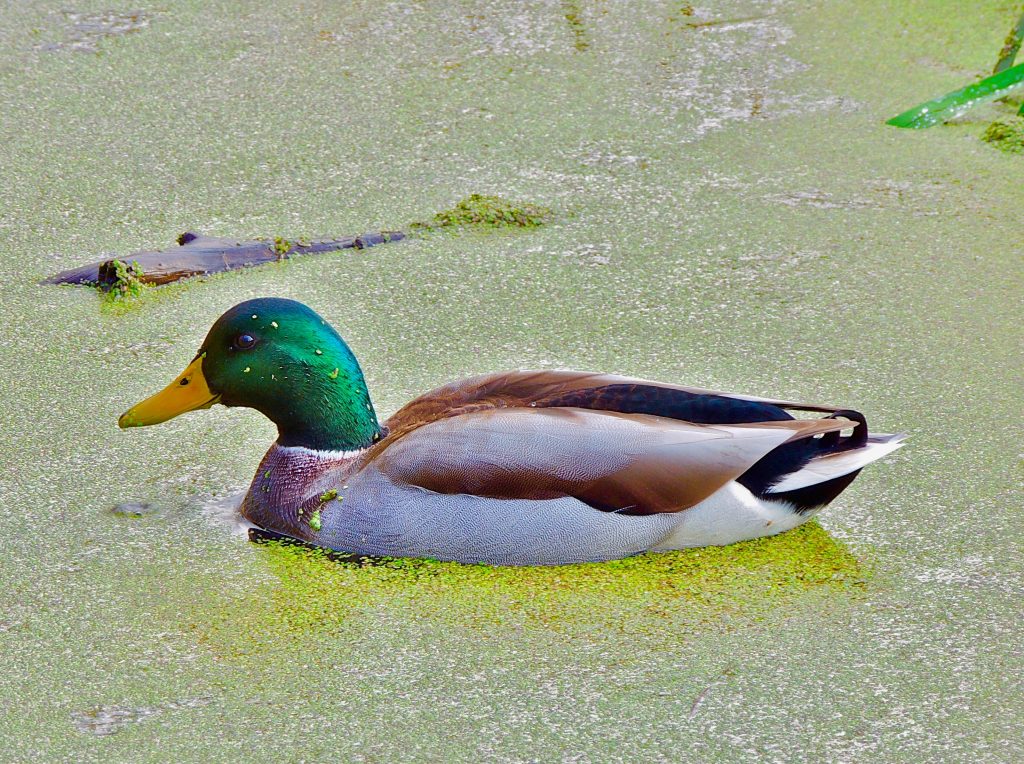
Our transect this day was uneventful, typically autumnal although, I should note that the Mallard population in this valley has swollen enormously. We are experiencing days with three or four times the usual number.  Fifty or sixty Mallards is not unusual in the valley, but today it was 213, five days ago 133. The valley must look ideal to migrating birds high above and on their way south but, looking down to see a sheltered place with quiet ponds and plenty of food, how could they resist. I’m sure they are feeding on appropriately named Duckweed, a tiny green plant the size of a match-head, millions of which may carpet a pond bright green making it look sinisterly unhealthy, but in fact fuel for ducks, geese and swans. In short order the Mallards will leave and the ponds will become more suitable for skating.

Today the Merlin and its Cedar Waxwing breakfast were My Birds of the Day but the Mallards, in their own way, set the scene.

Mallard in Duckweed

Nashville and Bay-breasted Warblers

RBG. Hendrie Valley, Burlington ON. October 16th. 2020. Yesterday was another nasty weather day, the third in two weeks, it made me want to get out on a freshly-washed morning with the possibility of interesting birding.

The day was dazzlingly bright and the air full of the taste and scent of ripeness. Maple, ash and oak leaf colours were eye-popping and, while for now, there are more leaves on the trees than off , the next two weeks will likely see a big change.

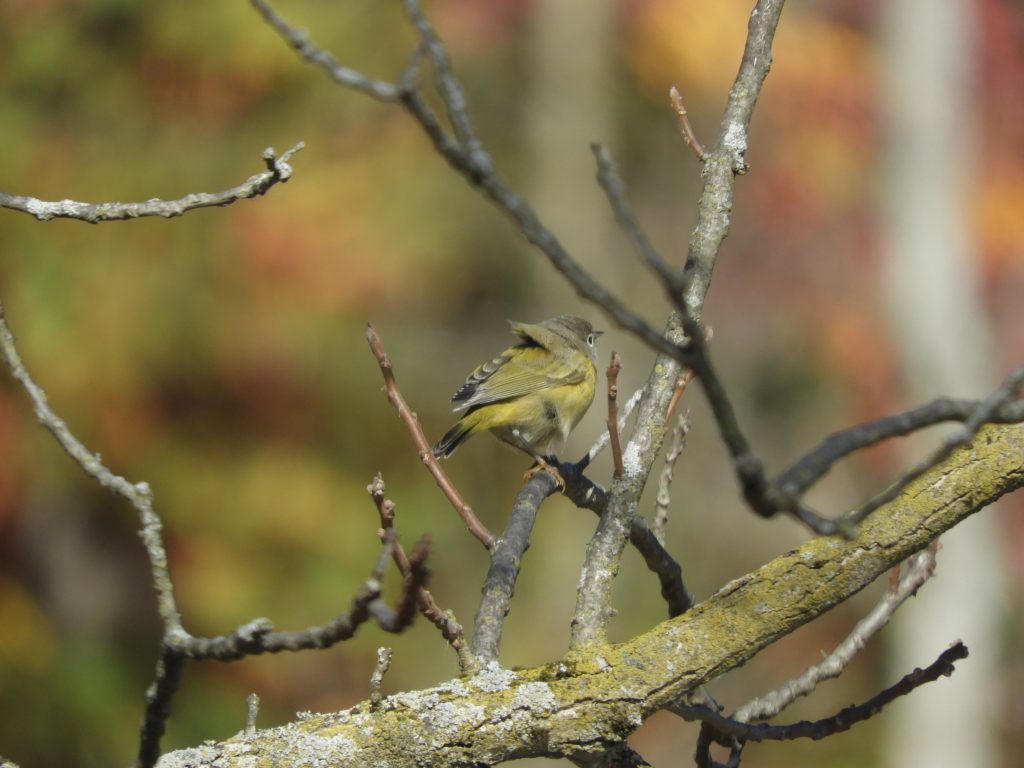
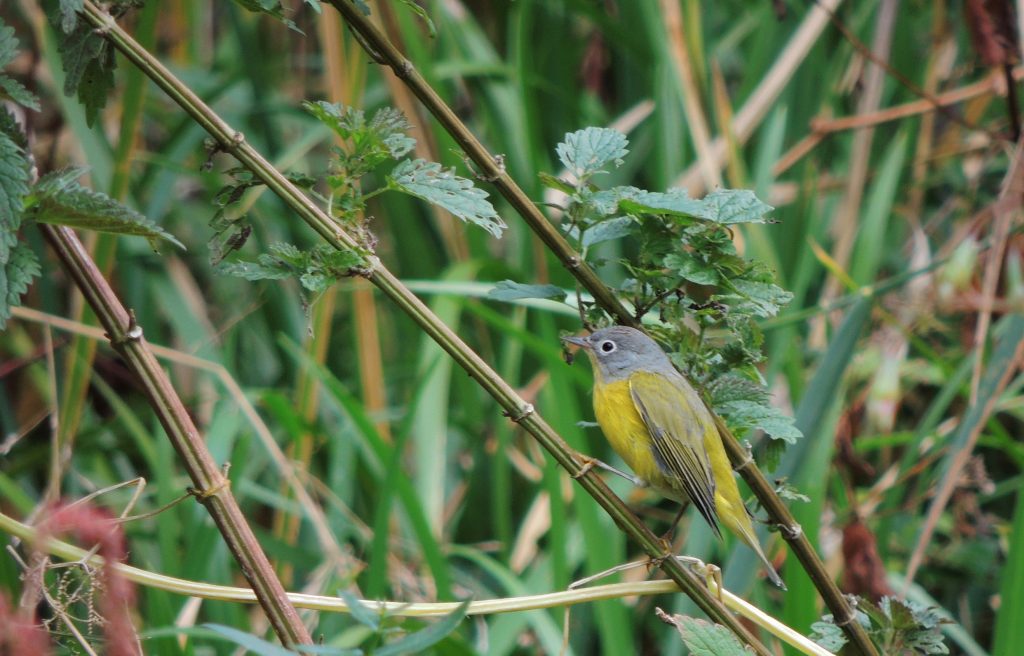
Today’s Nashville Warbler

I trudged some of my familiar trails and came to the realization that the big flush of fall birds is probably behind us.  Any bare branches now rattle on their own with no-one to share them. I saw almost nothing unusual until a tiny movement on the opposite bank of the creek caught my attention, it was a Nashville Warbler picking and searching in the collapsing debris, an eye-catching flash of lemon yellow. It reminded me of another Nashville seen five years ago almost to the day, and not 100 M from this bird. I wrote about it then with an account that could, just as easily, have described today.

another Nashville Warbler, from 2015

Just as that time before, I was inspired by this little Nashville Warbler and started keeping notes for the day. I soon added a Winter Wren, (which may have decided on this sheltered valley as its home for the winter) a Yellow-rumped Warbler, a Hermit Thrush or two and a surprise Eastern Towhee. And that was it…

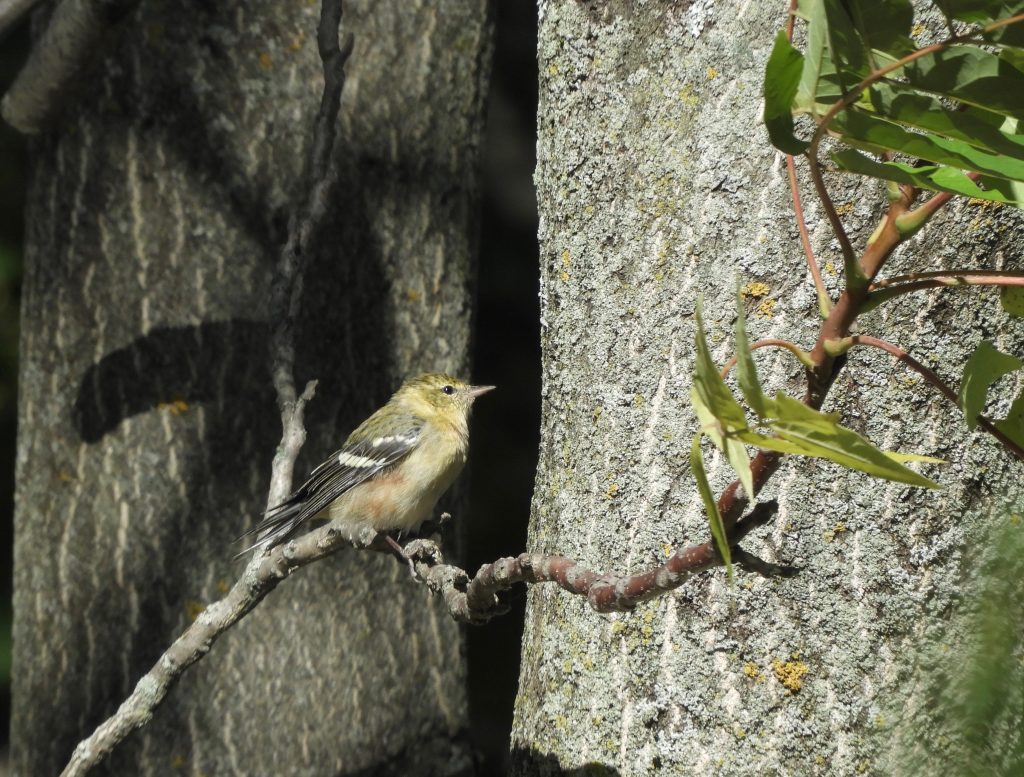
Baybreasted Warbler (adult male)

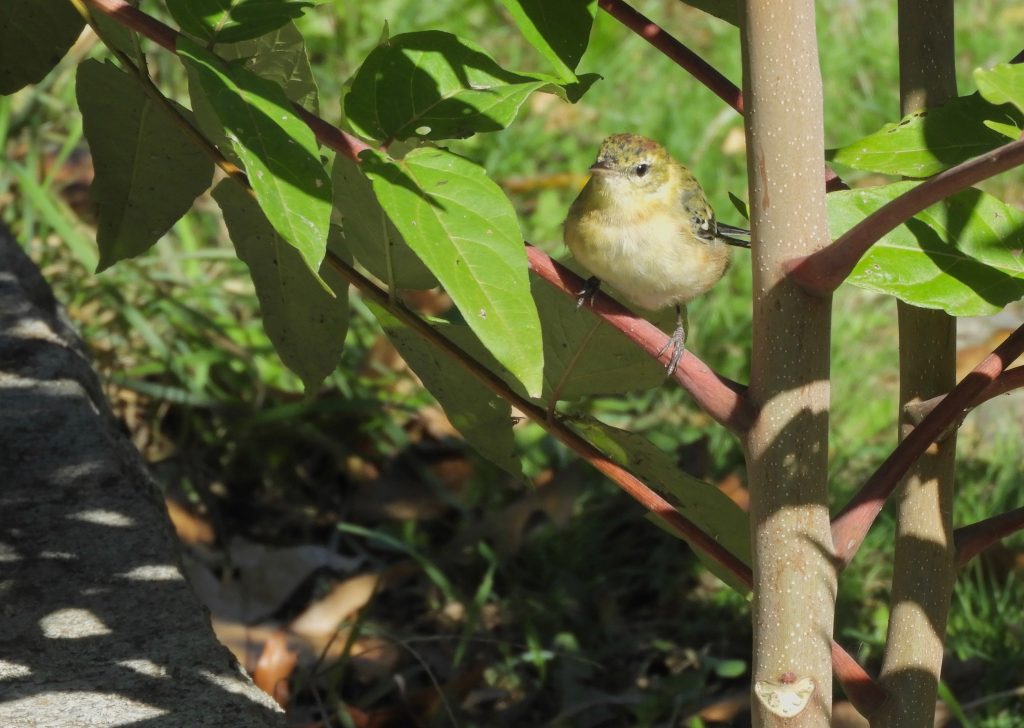
…until before heading home, I paid a quick visit to the nearby cemetery, just in case.  I wandered the forested edges of a small enclave of headstones but it was all was pretty bird-less.  I paused to rest in a sun-warmed spot and a little movement caught my eye. To cut short what could be a needlessly long story, for perhaps half an hour I followed the efforts of an actively feeding Baybreasted Warbler. It was far more interested in seeking scraps of wriggling food than any threat from my presence. Of course, I hoped for a photo but it moved quickly and restlessly and nine times out of ten was half-a-second jump ahead of me and my camera. I ended up with a small handful of photos to confirm the identification and perhaps to warm a January day.

Baybreasted Warbler

For me, seeing a Bay-breasted Warblers is a rare treat, particularly in spring when they are late arrivals and can be very difficult to find and follow in the newly opened upper-canopy levels. So, spending time today studying and enjoying this admittedly rather drab, fall-plumaged, bird at such close quarters was something of a privilege.

The bright yellow splash of the Nashville Warbler made it an immediate Bird of the Day but it was nudged aside to give equal billing to the Baybreasted Warbler for many satisfyingly close (if fleeting) looks.

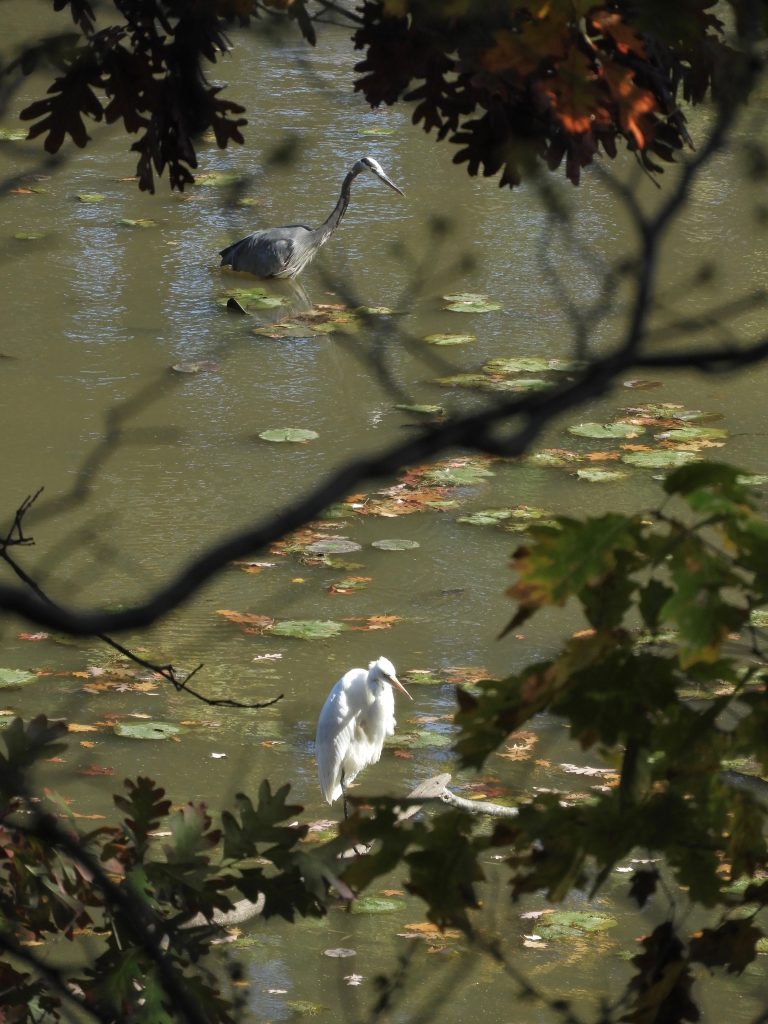
Two herons

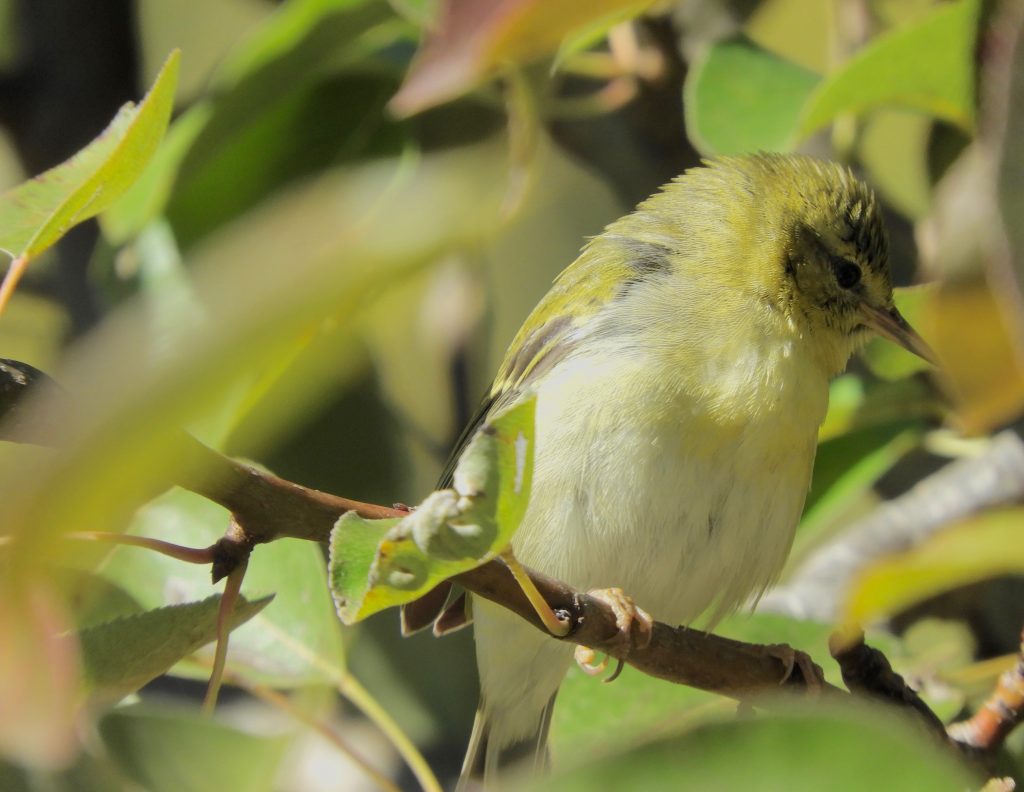
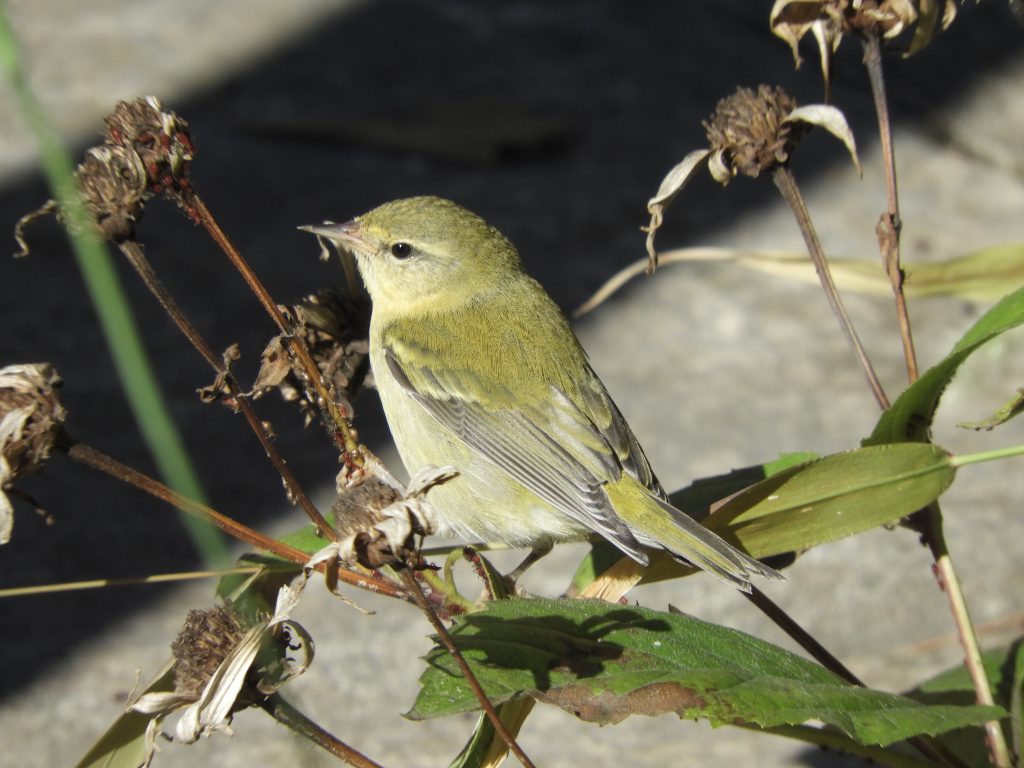
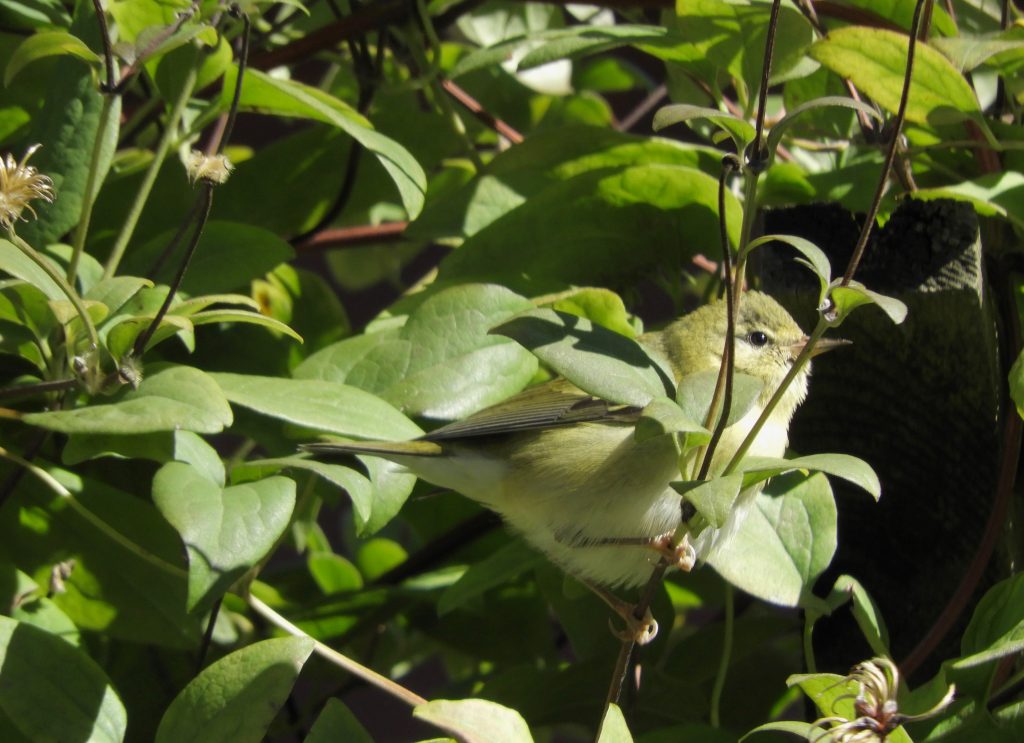
Tennessee Warbler

Home, Burlington ON. October 13th. 2020. Sitting for a moment, pausing between morning garden chores, I had hardly got comfortable when I spotted twitchy movement low down among some overgrown Oxeye Sunflowers.

Over the years, I have many times spotted an interesting bird and made a fingers-crossed dash indoors to get my binoculars and camera; more than half the time it was wasted effort, the bird left.  Not today though! I had pre-thought the possibility and had everything I needed at hand. I got a quick binocular look at a small, olive-green warbler of some kind searching for food, and I had my camera ready for a record shot too. I needn’t have rushed, this little bird picked and paused its way around the sunflowers paying no attention to me even as I moved to get a little closer, camera clicking all the time.

It moved from the sunflowers to our old pear tree and back, and from there to a clematis tangle. I was enjoying long binocular studies and took many pictures – hoping of course that some would clinch the identification if it came to that.  

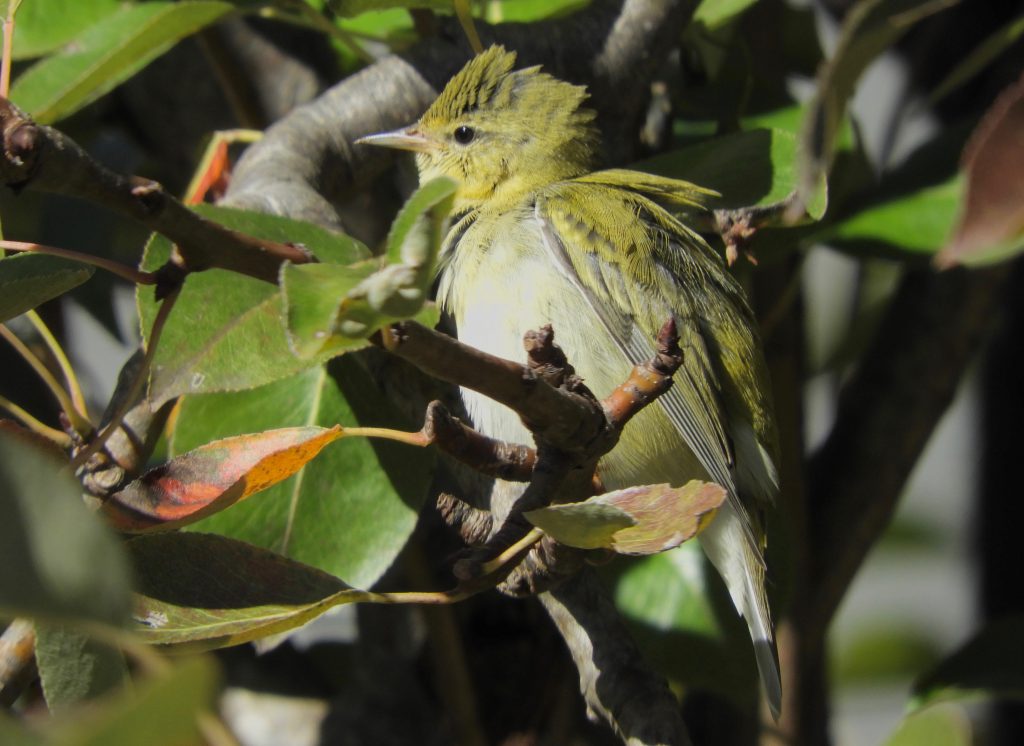
I write now, with confidence, that it was a Tennessee Warbler but at the time I was not at all certain; two key field marks, a dusky line through the eye and a pale supercilium (eyebrow) were not quite obvious enough.  If not a Tennessee then the options were limited, Orange-crowned Warbler was the likeliest alternative or perhaps a young female of who-knows-what. And just in case it turned out to be an Orange-crowned, I took a couple of photos of the bird with its crown feathers raised, it sure would be a a coup to get photos of an OC’s rarely-seen orange stripe. But it wasn’t an Orange-crowned and here, for the record (needlessly), is a Tennessee Warbler with its crown feathers raised.

It was a gardening day punctuated by three or four stops for birds: a large flock of Common Grackles, a murder of a dozen American Crows noisy like a crowd after the bars close, a Downy Woodpecker and of course My Bird of the Day, this Tennessee Warbler.

Purple Finch

RBG. Hendrie Valley, Burlington ON. October 10th. 2020. I always like seeing Purple Finches. No special reason except that I don’t very often, but I did today and was cheered by them. It’s not that they’re rare but at the same time, neither are they common. Most Purple Finches spend their winters a little bit south of us and their summers a little bit north, making us just somewhere along the way, somewhere to fly over rather than to stop and say hello. 

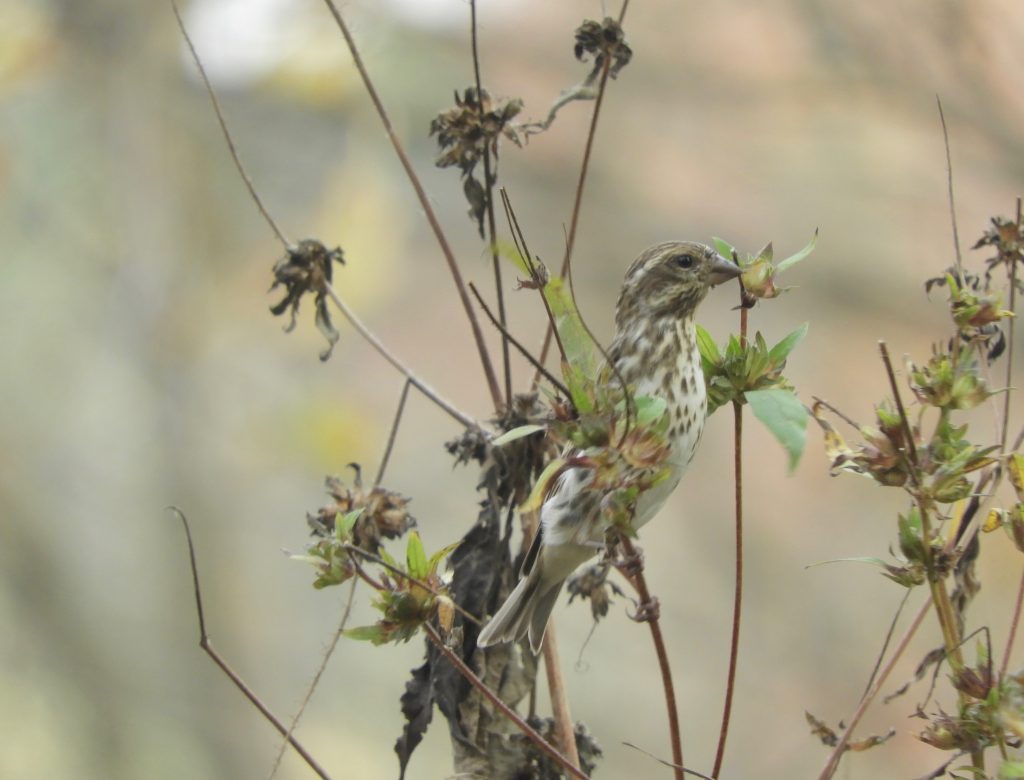
Today’s Purple Finches were among a small group of American Goldfinches picking seed from the heads of exhausted summer sunflowers. Here is a photo of a female from today.

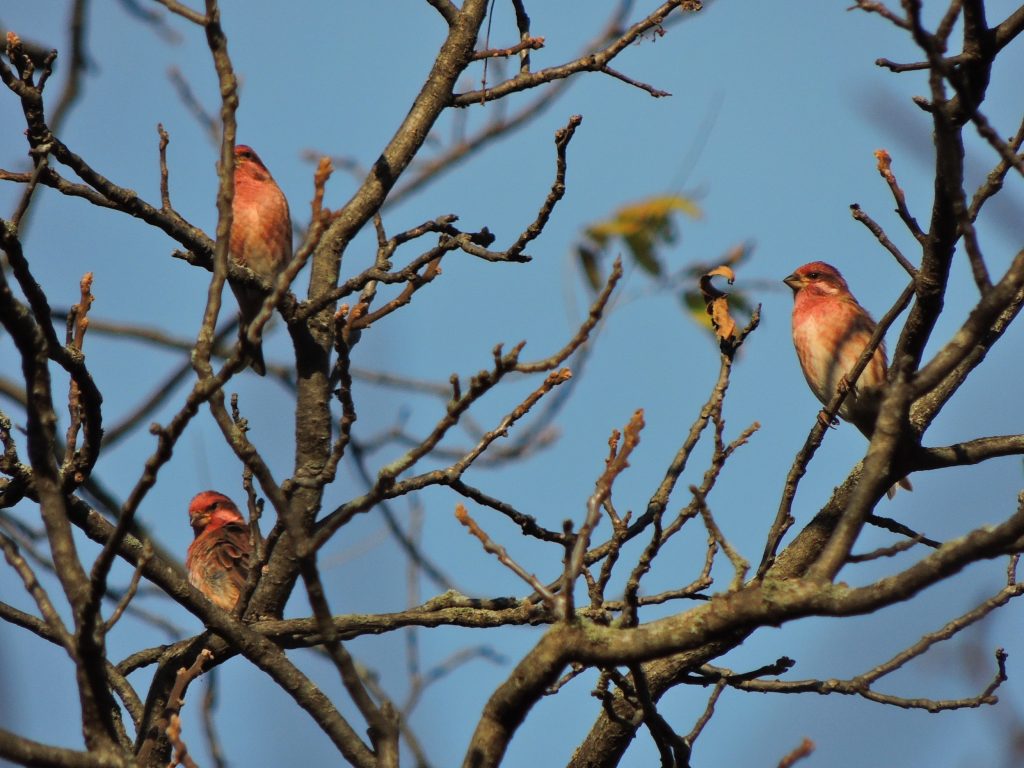
…and in the masthead a group of males photographed six years ago – a testament perhaps to how infrequently I get the chance.

Interestingly, Cornell Lab of Ornithology notes of Purple Finch that “Although widespread and regularly seen, this bird is one of the least-studied finches in North America because it is neither common enough to be easily studied nor rare enough to be threatened with extinction.” Falling between two stools.