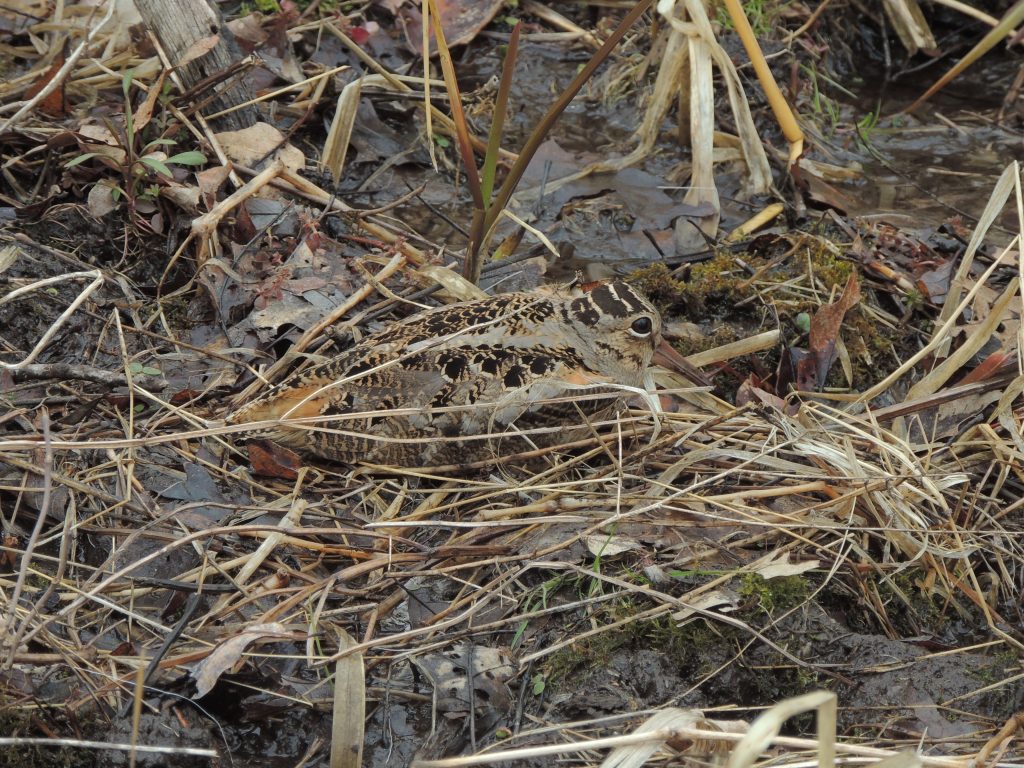
American Woodcock

King Rd, Burlington ON. March 23rd.2021. The thing about American Woodcocks is that although they’re fairly common, you rarely ever see them. They have just returned from warmer parts and started pair-bonding and staking out their territory, but they’re secretive. Fluky sightings offer some of the best views and they do happen: in mid-April 2018, a very late, ground-freezing, cold snap forced woodcocks out of their habitual deep-cover habitat to find soft ground and we happened upon one at the soft edge of a little spring. An accidental woodcock.
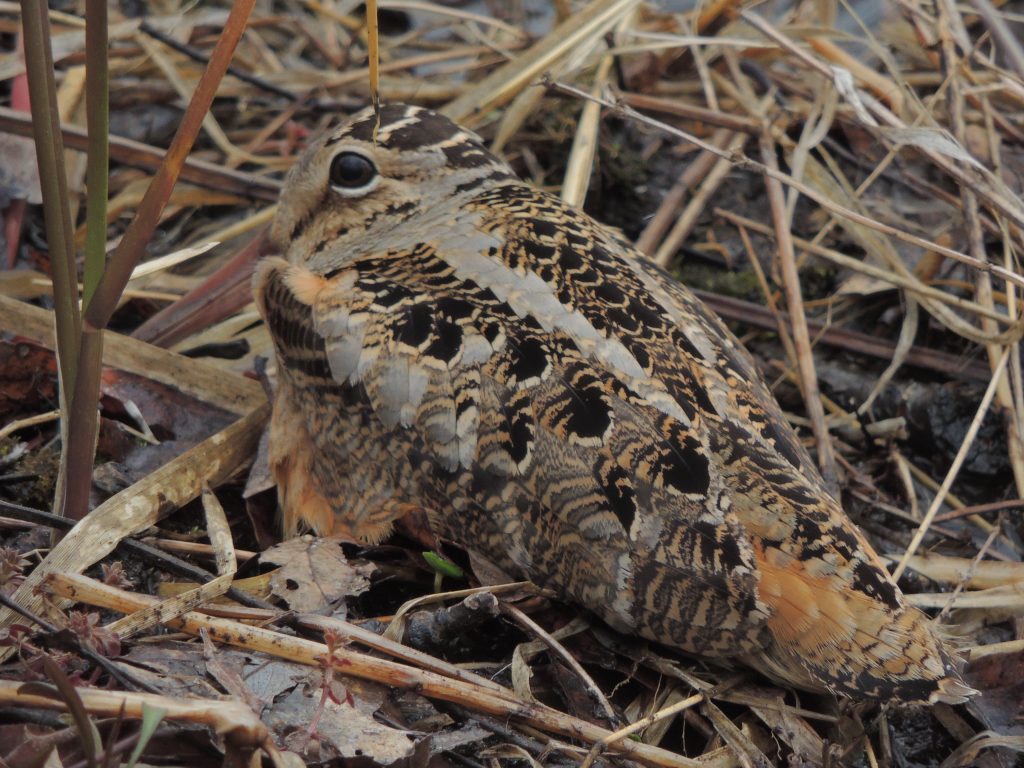
Accidental American Woodcock

But to go looking for woodcocks takes effort, good eyesight in fading light and hearing much better than mine.  If and when you do finally see one, visual connection is usually very short-lived. Why bother at all, you might reasonably ask.,

Well, American Woodcocks are a common enough breeder around here (if largely invisible), I know that, and wanted evidence for my atlas work, so we made a sunset-hour outing to find them. You have to look and listen for them where forest edges give way to clearings, that’s where they come out to court.

As it gets dark, males make little, rhythmic nasal grunts. Apparently, the females are impressed so, to reinforce their point, the males take bold flight in a sweeping, climbing spiral, way up high, perhaps 100 metres, pause, and then descend singing a sibilant twittering before returning to their starting point. So, what we listen for are the grunts, (‘peents’ is how they’re usually described) and then watch for what looks like a running shoe catapulted overhead on whirring wings.

Like many things that happen in the fading light of day, finding American Woodcocks has its special attraction. We saw four or five last night, more than enough to make them My Birds of the Day.
Ontario Breeding Bird Atlas

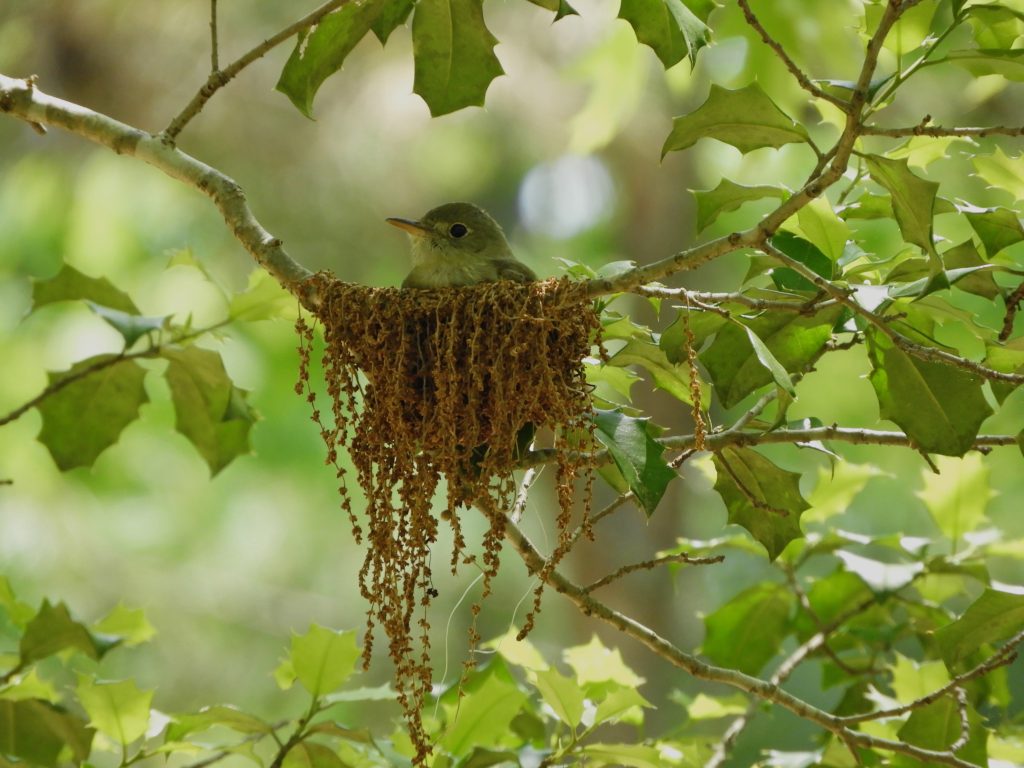
Acadian Flycatcher. Confirmed.

I know I will be referring to the Ontario Breeding Bird Atlas (OBBA) many times in forthcoming posts. So, here’s a quick backgrounder: OBBA is a project to map the distribution of all birds that breed in Ontario. It is the third such exercise following our atlas work of 1981-85 and 2001-2005.  Five years of data gathering starts now.

It is work to be done largely by amateurs, birders willing to methodically observe and collect indicators of breeding. Our observations and discoveries in the field will provide evidence in one of four categories of increasing value: Observed, Possible, Probable, and Confirmed.  A male singing his territorial heart out is considered as ‘Probable’, while a nest with eggs or young is considered to be ‘Confirmed’, there are many more fragmentary pieces of evidence within each category.

I have been assigned an interesting square to scour for evidence of breeding over the next 5 years. It measures 10Km. X 10Km. and includes farmland, woodland, suburban tracts, old city, industrial lands and our large harbour, very varied and none of it far from home, it will be interesting. It is an opportunity to explore places that I know about but but scarcely know at all. As and when I find birds of the day, I’ll let you know.

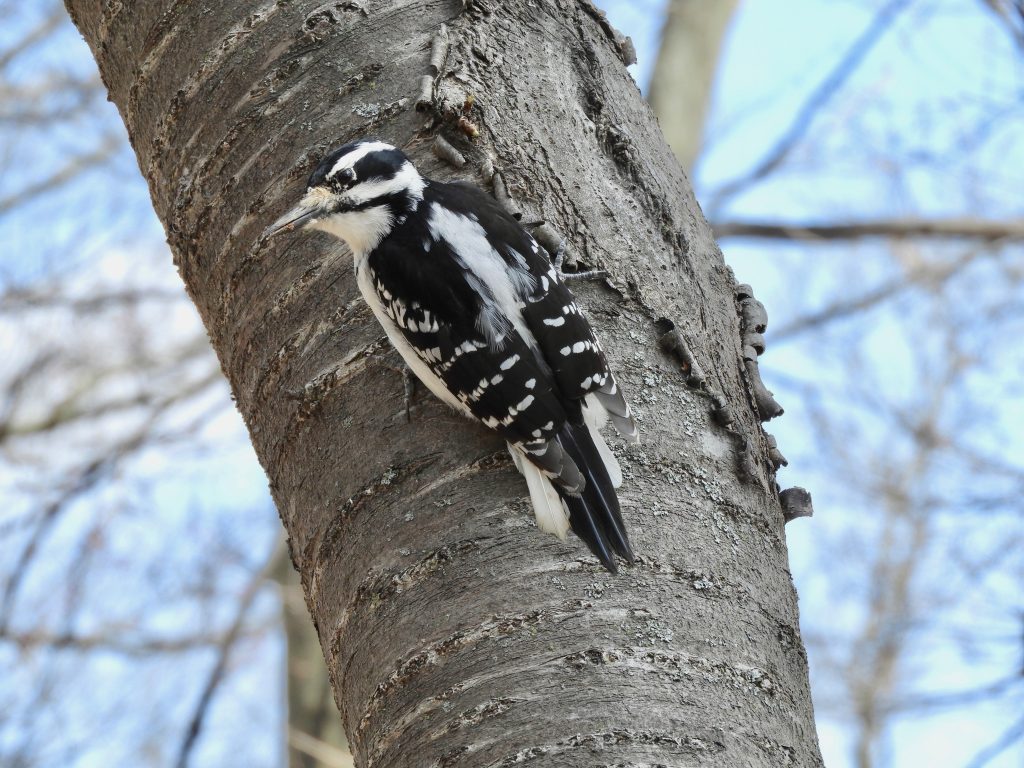
Hairy Woodpecker – and that Turkey

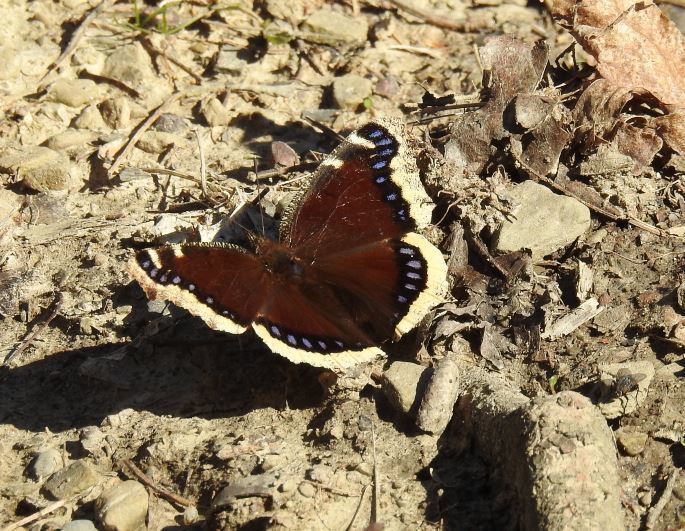
Snake Rd, Burlington ON. March 20th..2021. I went to one of my favourite woodlands this morning, looking for signs of spring. It’s a quixotic exercise in mid-March but I want to make sure I don’t miss anything and the reality is that animals, rather than plants are the first to declare the season, green shoots will follow in a week or two. Perhaps the nicest sighting was a fast-moving butterfly, a Mourning Cloak. I know almost nothing about them except that they are always the first butterfly to appear, and typically in open deciduous woodland where there may still be snow on the ground, just as I saw mine today. They are very attractive: quite a large butterfly, mostly chocolate brown with a line of purple/blue dots along a creamy white band along the trailing edges of their wings. It is a noteworthy ‘winter’s gone’ sighting and it really made the grade as a sign of spring, but one butterfly does not make a spring and that’s where the Hairy Woodpecker comes in.

Mourning Cloak – photo by Chris Cheatle.

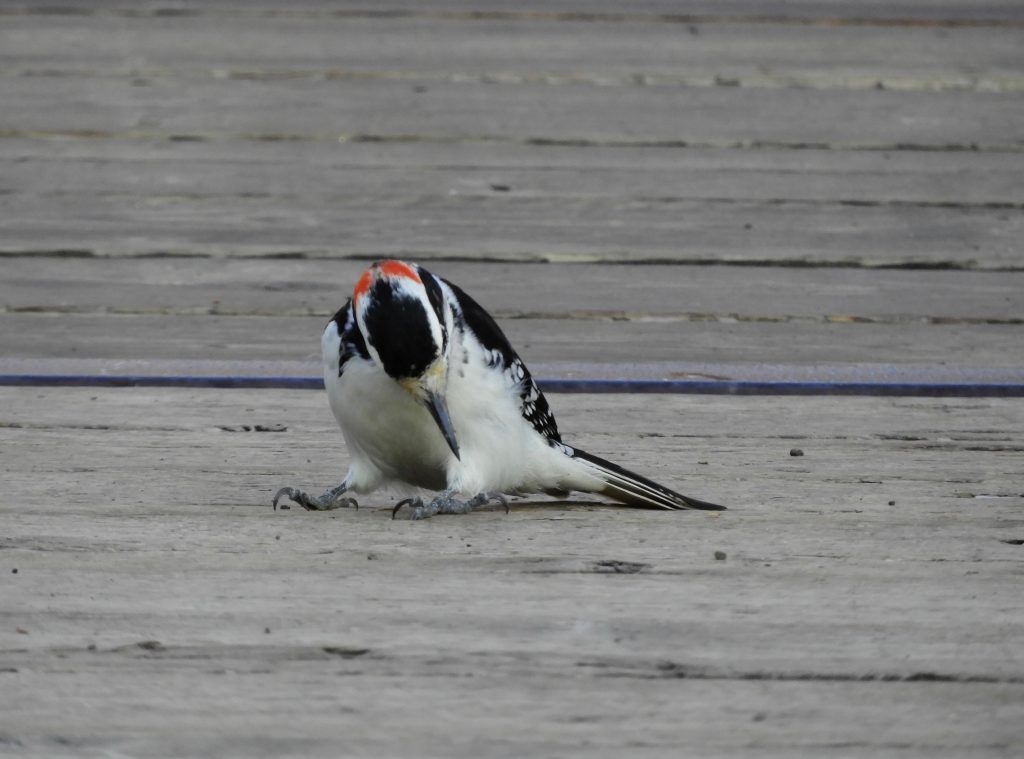
It was warm and calm enough to enjoy sitting quietly, watching and waiting, one of the most productive way to sample nature. I found a treefall at a comfortable height and sat, and listened. A regular tapping overhead became an insistent drumming. I looked up expecting a woodpecker, either a Downy or Hairy but could see neither, but I could clearly see the cast shadow of one,  intriguing but not helpful as to species. Then a Hairy Woodpecker moved into sight higher overhead while the cast shadow stayed where it was. So there, two Hairy Woodpeckers, (both, I assume) one drumming up courtship the other happily entertained. My Birds of the Day.

Hairy Woodpecker
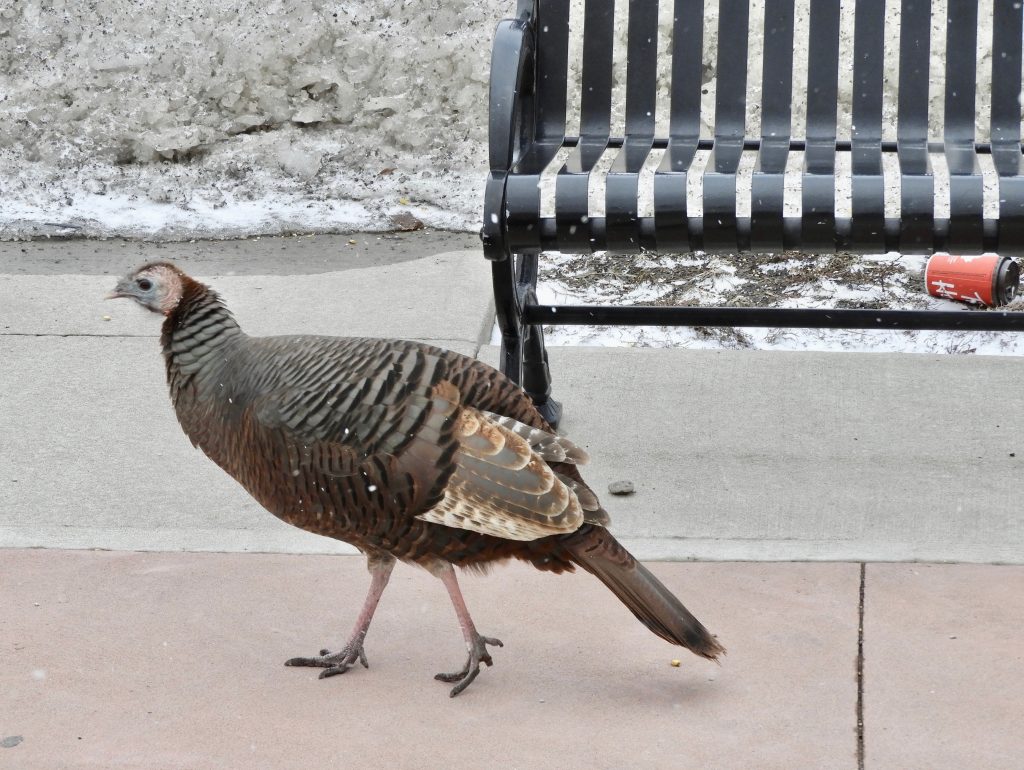
Wild Turkey and coffee cup

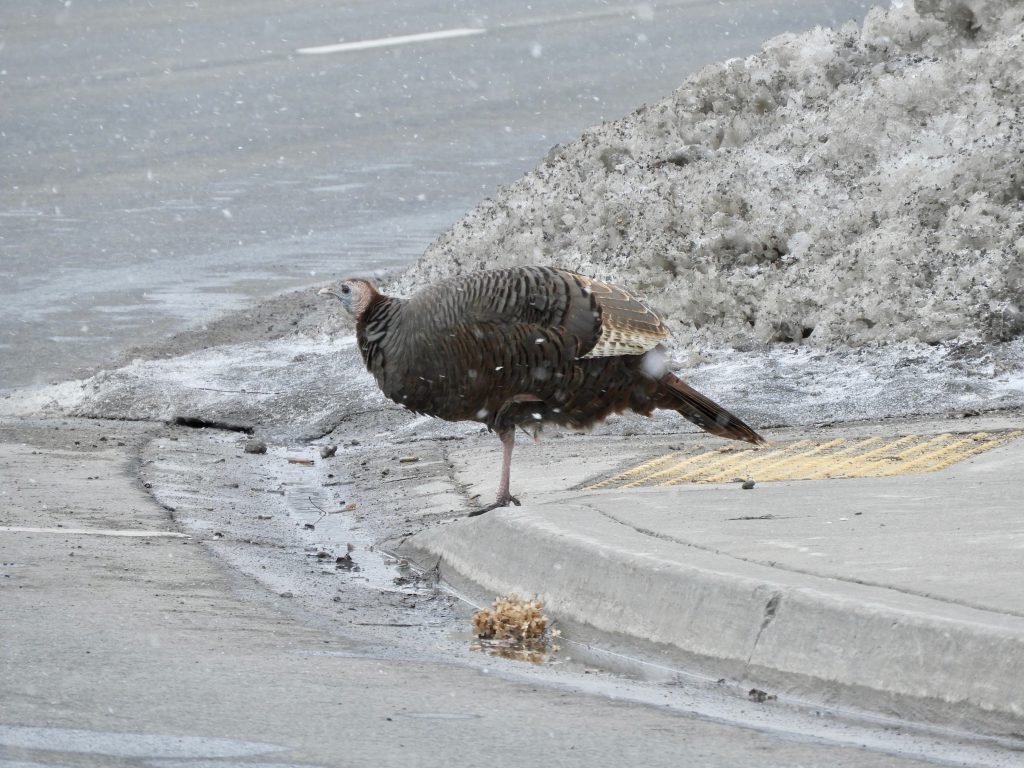
On a very sad note, our local Suburban Turkey was killed today. Anecdotally, I understand that it was pacing around in the forecourt of the Esso gas station when it tangled with a vehicle. There was much indignant reporting of the incident. Police got involved and were satisfied that it was an accident. Just sad.

Traffic-savvy Wild Turkey

Fish Crow

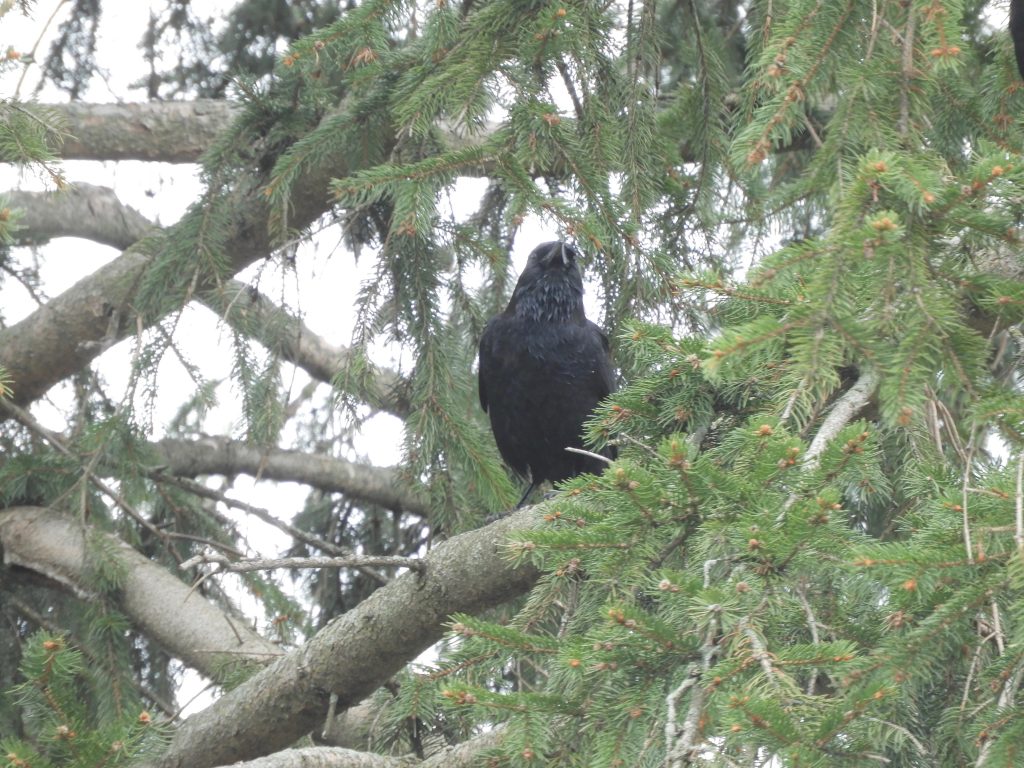
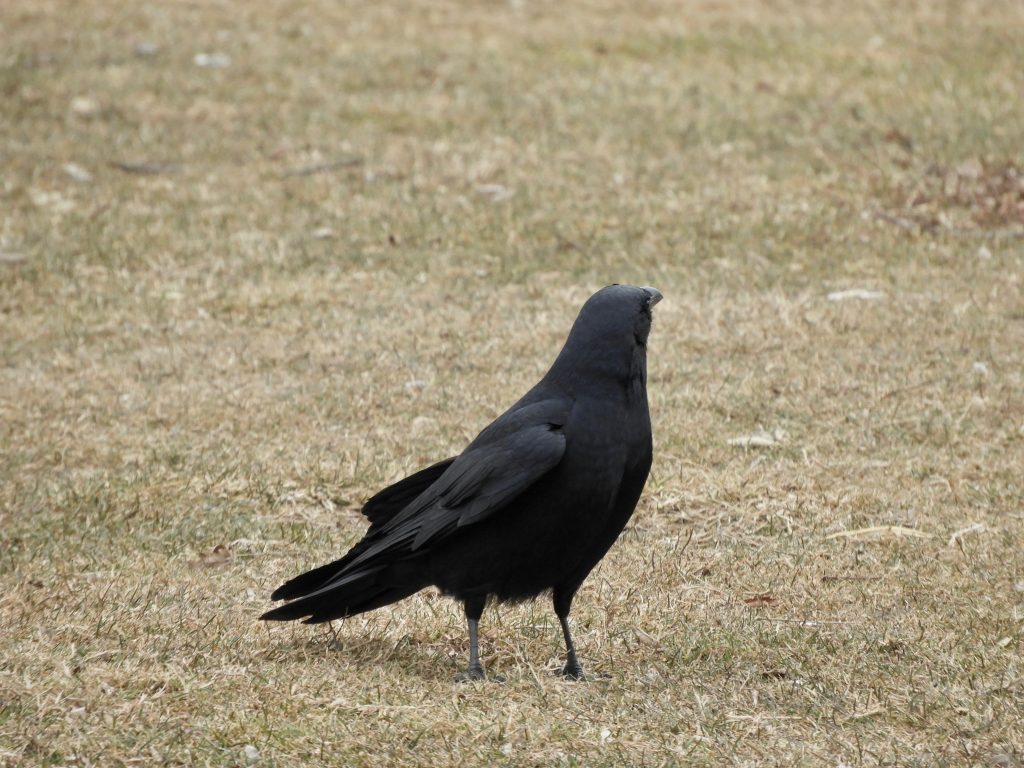
Lakeshore, Burlington, ON. March 18th. 2021.  Fish Crow! So, which is it: fish or crow? Well it is a crow, but after that it becomes tricky so, bear with me.  Across most of eastern North America the common, default crow is the American Crow, its range is essentially everywhere south of the Arctic Circle and coast to coast; it has several lookalikes including this one, the Fish Crow. It is almost identical, though with a somewhat slighter build, a different voice, and its much smaller range is a narrow band along the Atlantic and Gulf coasts from Rhode Island to Texas. However…

Just a handful of years ago Fish Crows started showing up here on the shores of Lake Ontario, first one, then another, and another, a totally unexpected surprise.  They stayed and in time their numbers have increased.  They are very much a novelty restricted to a few small corners in a couple of leafy lake-side neighbourhoods.

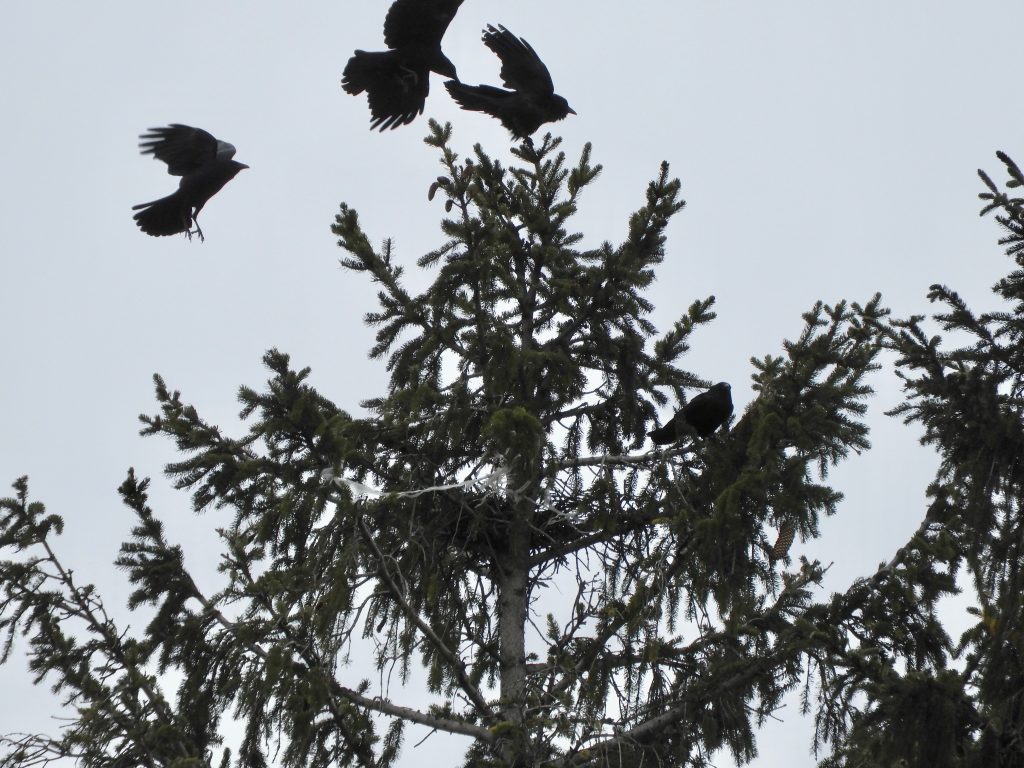
This year is the first of five years of field work to gather and compile evidence of breeding for Ontario’s third Breeding Bird Atlas. Our task is to find signs of breeding activity of any and all species. So today, even though it’s still a bit early in the year, I went looking for Fish Crows.  I wanted to see if their activity would look like courtship or perhaps point to possible nest sites, work easier done before the trees leaf out. I found the crows in their leafy neighbourhood, as anticipated, but many more than expected. At times there were seven or eight flying, tumbling, chattering and chasing each other around, like children in a school playground. Fish Crow is a notably sociable species and, because it’s still a little early, such play doesn’t necessarily mean that breeding will follow. It’s also possible that all the birds within this group were related, parents and a couple of years’ offspring.

Now that said, some of them, sometimes two, sometimes four, gathered around what looked like a tattered old nest at the top of this towering Norway Spruce. It might turn out to be a renovation project for this year’s brood or it maybe it’s just somewhere that makes them think. It’ll all become clear in a month or two.

Crow – American Crow or Fish Crow?

Common Grackle

Long Point, Norfolk Co. ON. March 12th. 2021. Last summer I was asked to be the guest expert in a sort of, well let’s call it, phone-in programme. I hesitated to call it that it lest you get the idea that it had a wide audience, which it didn’t. But it was moderated and the unseen and anonymous audience phoned in with questions. I was billed as the Birdman – hardly surprising.

One of the callers, Colleen, asked, “What can I do to scare away the Grackles? I hate them. They’re in and out of my cedar hedge all the time and they’re so aggressive, ugly bullies.  I don’t want them, they scare off all the nice birds. How can I get rid of them?”  It was a sincere plea, and I was no help at all. Actually, I laughed; perhaps not what our hosts had expected of me.

My response was something like this. “You can’t. They probably have nests in the hedge, so, they’re with you until they’ve finished breeding.  They’ll probably leave when they’ve had enough of your place, maybe mid-August if you’re lucky. In September they congregate in big flocks, getting ready to head south. But until then…. I can’t think of anything you can do – except stand outside all day and wave your arms. Well, or you could move. No, I’m afraid, it’s Grackles one – Colleen zero.”

Despondent Colleen was a good sport; at least she was back for subsequent phone-ins.

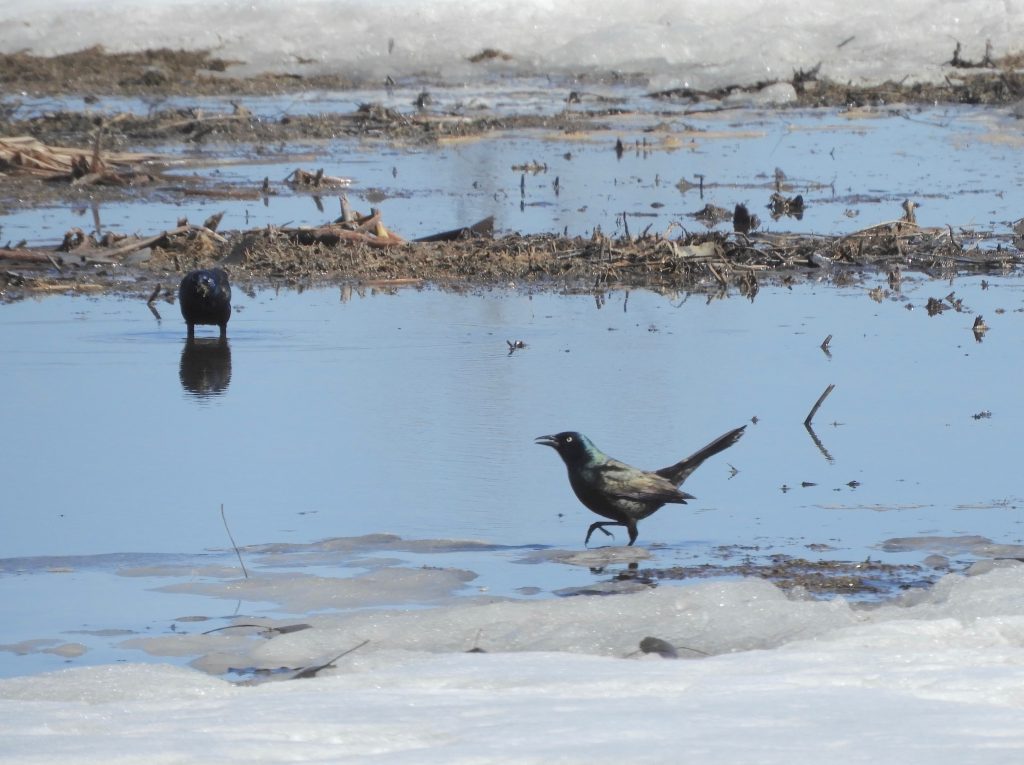
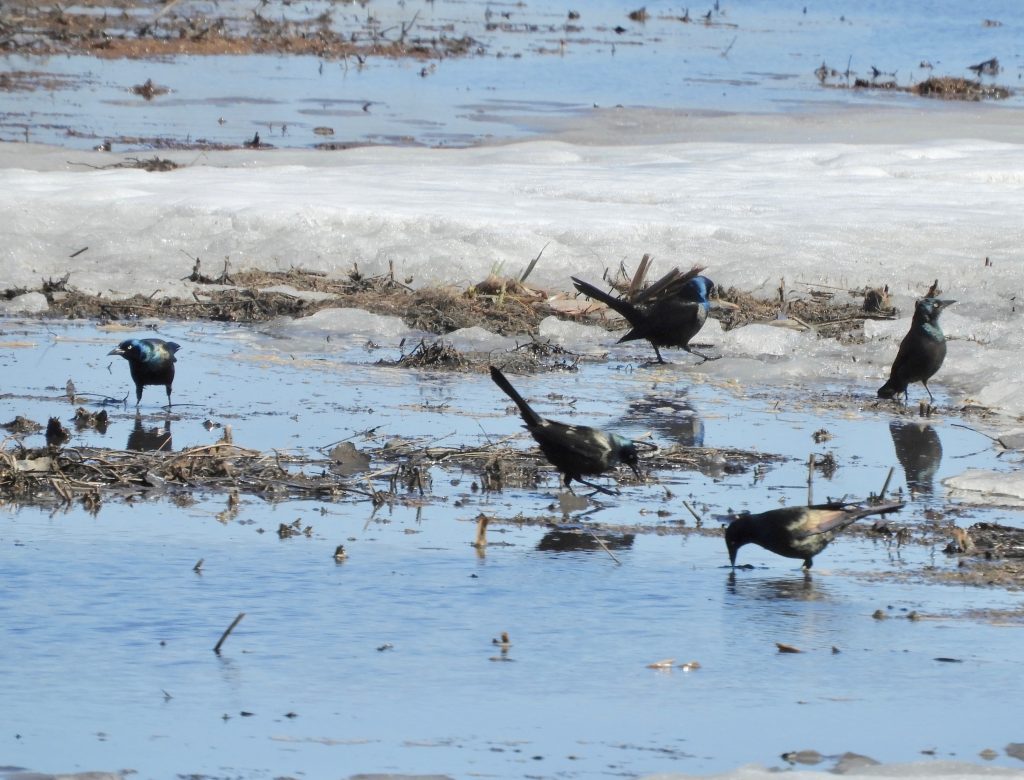
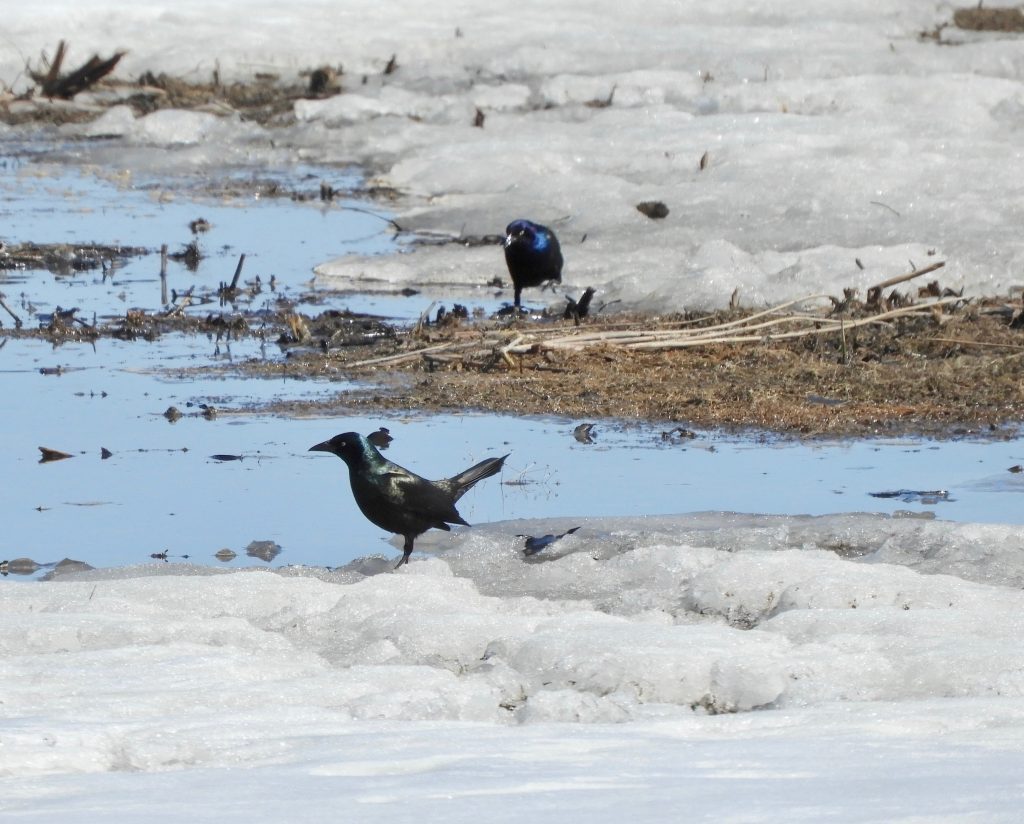
I thought of her yesterday as I watched this animated group of Common Grackles who had just arrived having flown across Lake Erie from points further south. They were picking away around the wet margins of a meltwater pond searching to refuel.  I think they’re rather handsome, I like the way they show a bronze and/or purple iridescent sheen when the light is right. That long tail adds a demonstrative flair to an already strutting deportment.

I understand why some, like Colleen, dislike them. They are assertive, increasing in numbers, a significant agricultural pest, and predatory (they eat other birds’ eggs and nestlings). They’re also black and we seem to dislike black birds: Crows, Ravens, Starlings, Jackdaws, Rooks and more.

Still, these Common Grackles were my Birds of the Day for all of those endearing points above and, it must be said, I also like their scientific name Quiscalus quiscula. Say it aloud a couple of times.

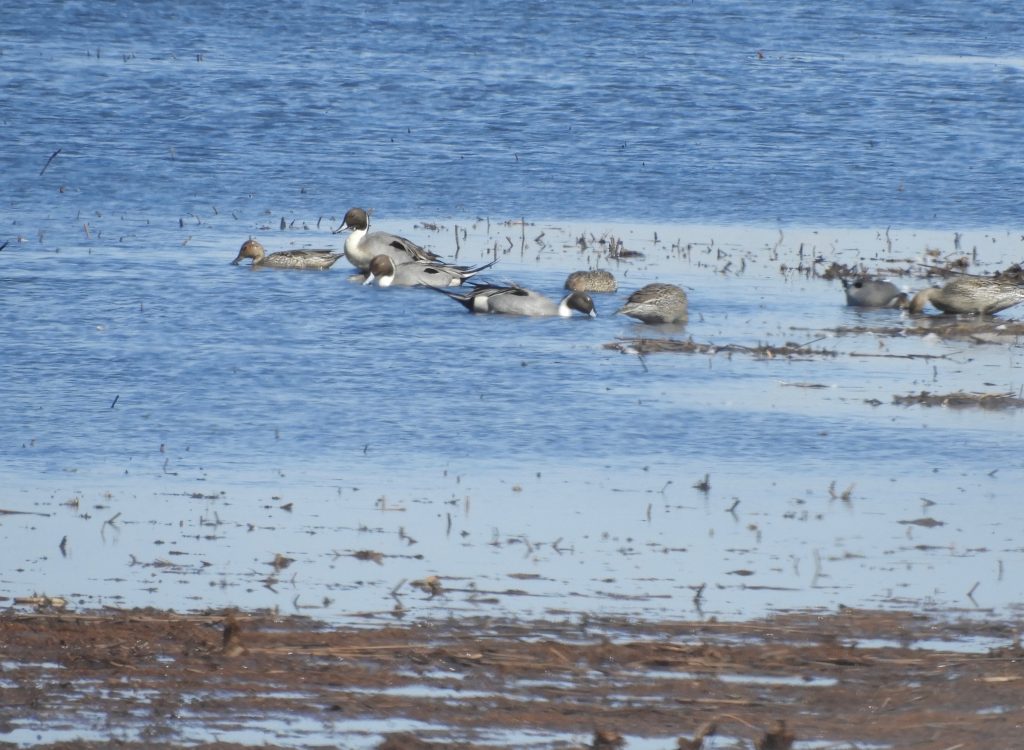
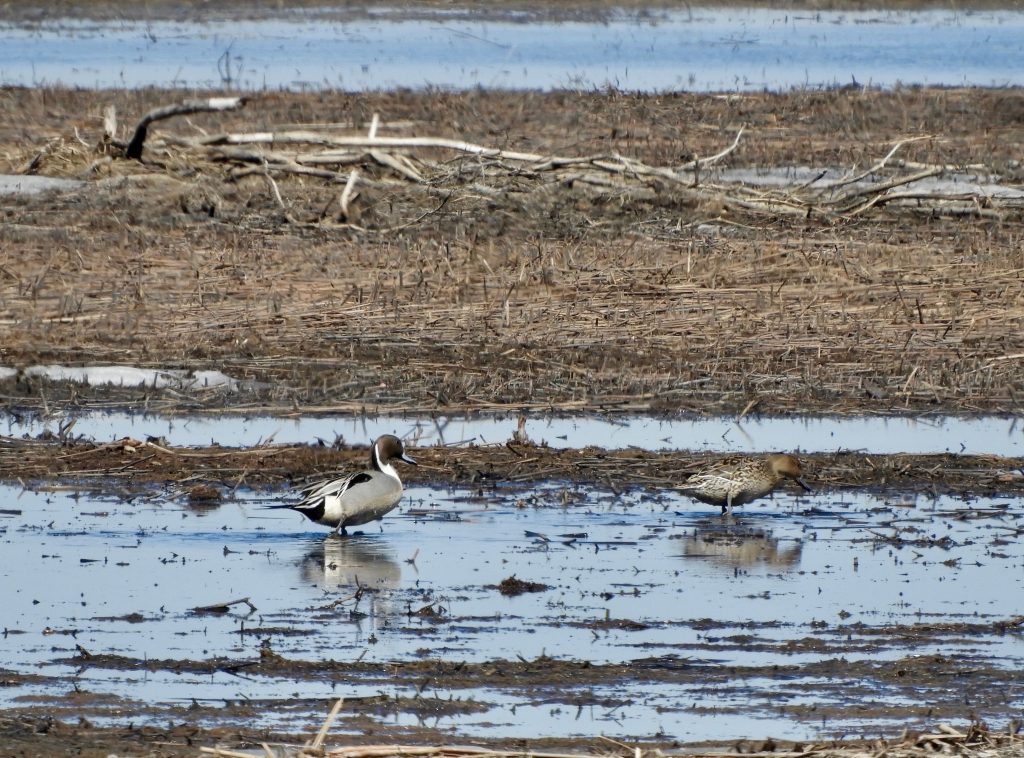
There were other great birds here today. Among them, some irrepressibly handsome Northern Pintails

Northern Pintails
Northern Pintails