 March 9, 2026. Aldershot, ON. It’s the same happy thing every March: spring is imminent, the first Snowdrops push through winter’s matted debris, and the sun starts pouring real warmth to the pummeled earth; a welcome change though still no guarantees Those tail-end days of February and first of March are potential Tundra Swan days and I went looking for them today.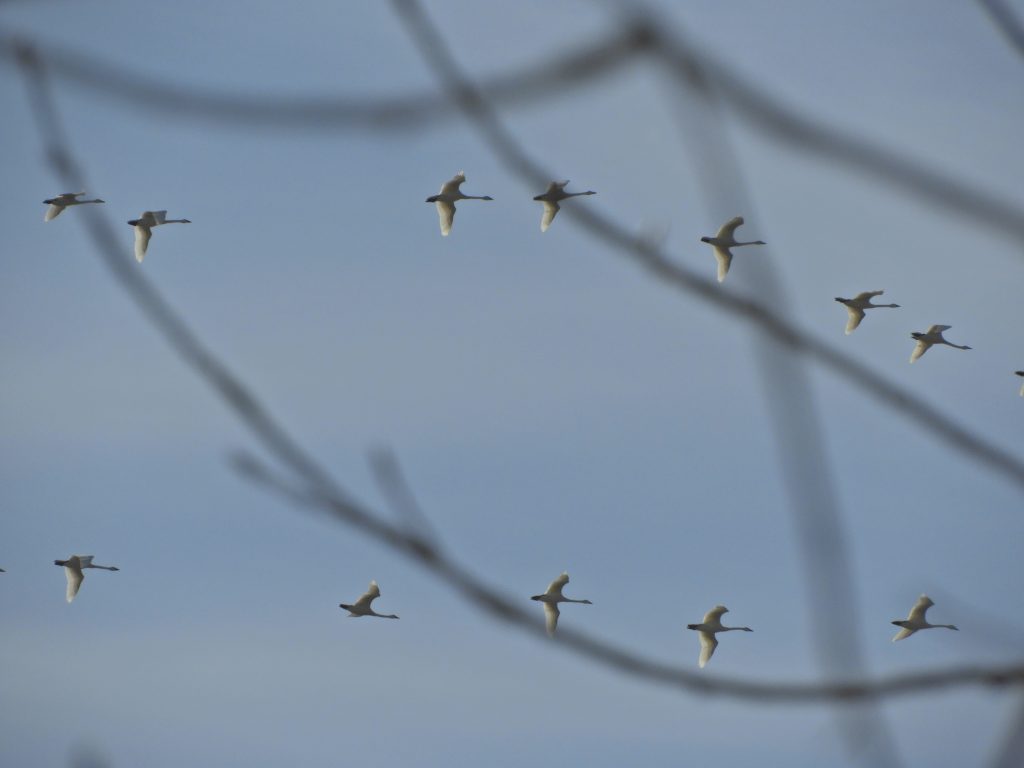
The swans in their thousands have wintered the dark days in sheltered bays along the Atlantic coast. At the first easing of winter, it’s their time to start a two-month journey north to Canada’s coastal tundra; two months of following winter’s melting. After an overnight first leg, they stop to rest and re-fuel in quiet back waters of Lakes Ontario and Erie, which is where we find them.
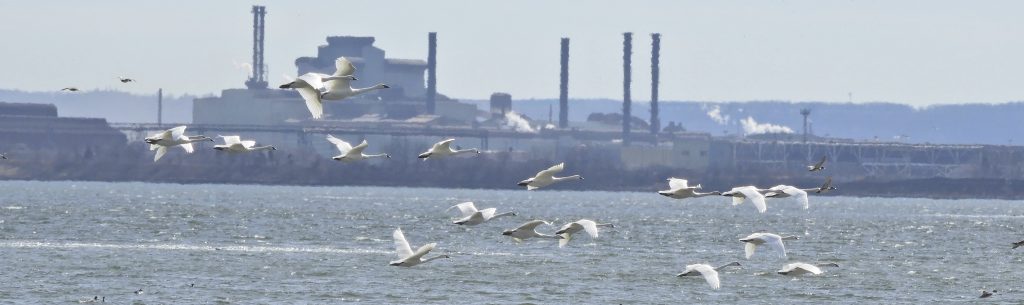
My first stop this morning was a small marina facing our industrial harbour. There were Trumpeter Swans, a close relative but not what I was looking for, I was on high alert for Tundra Swans. The first clue of the approach of tundras is their soft flight calls, suspected more than heard, and while binocular-sweeping the ice-scattered waters off the marina I felt a small nudge. An uncertain suggestion but I searched and soon found a smallish group of Tundra Swans, around twenty, struggling against a buffeting west wind flying low over the waters. Tundras for sure, and a mental check mark for 2026. 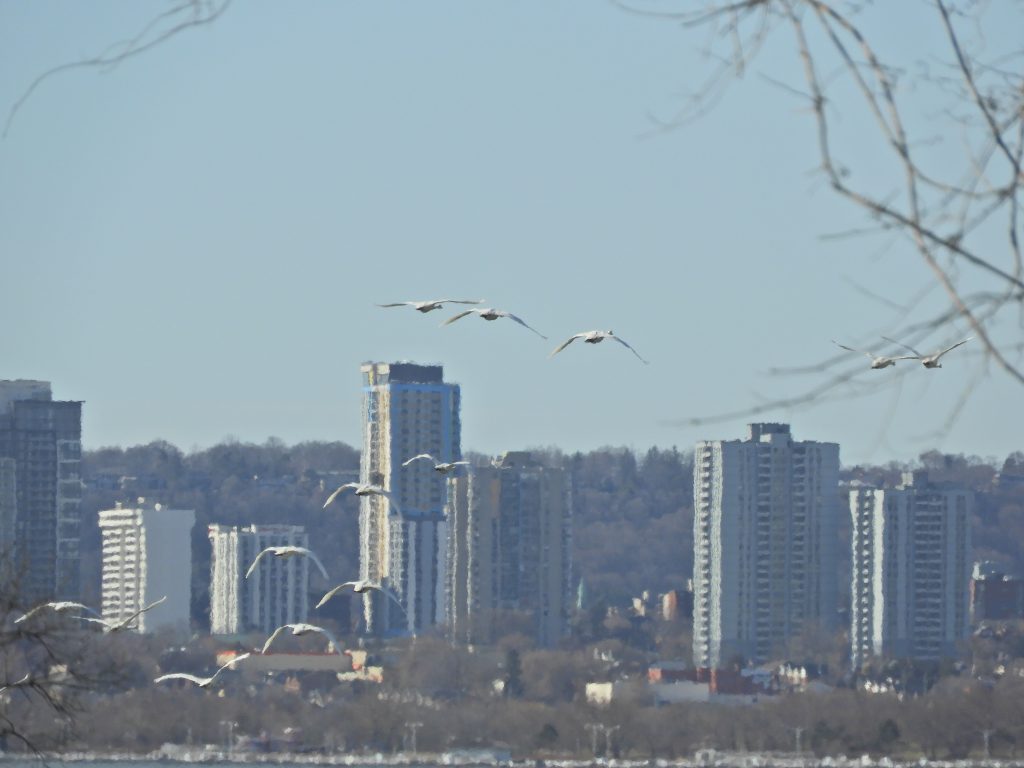
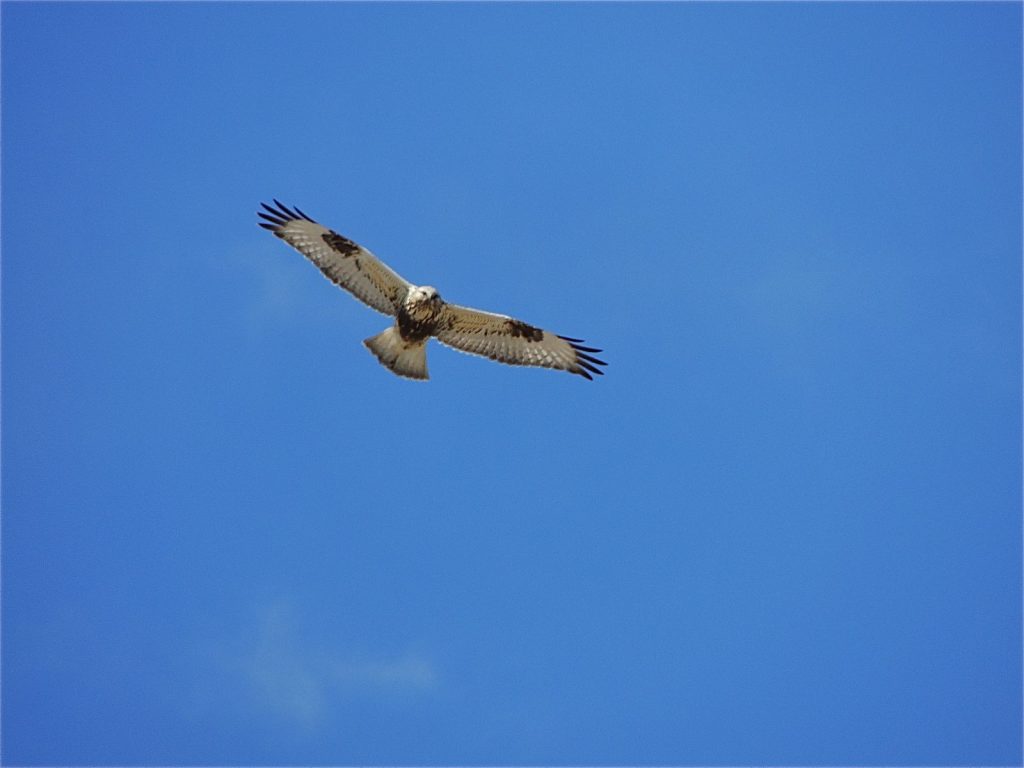
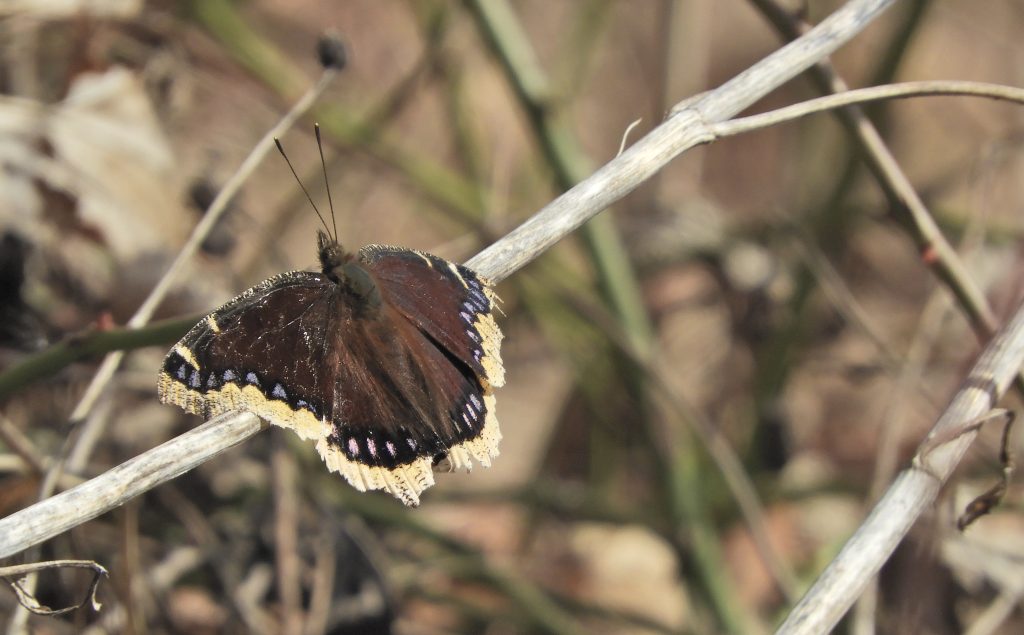
 Now I wanted to find more. A hike of trails beside a nearby lake was good exercise for my newly installed knee but produced no Tundra Swans. I was quite happy though with a dozen Ring–necked Ducks, some Gadwall , Northern Shovelers, American Wigeon and a high-soaring Bald Eagle. This Mourning Cloak butterfly was a welcome sight: it’s an insect of woodlands who over-winter as adults sheltered under loose bark and ready to take flight as soon as it feels the sun’s warmth.
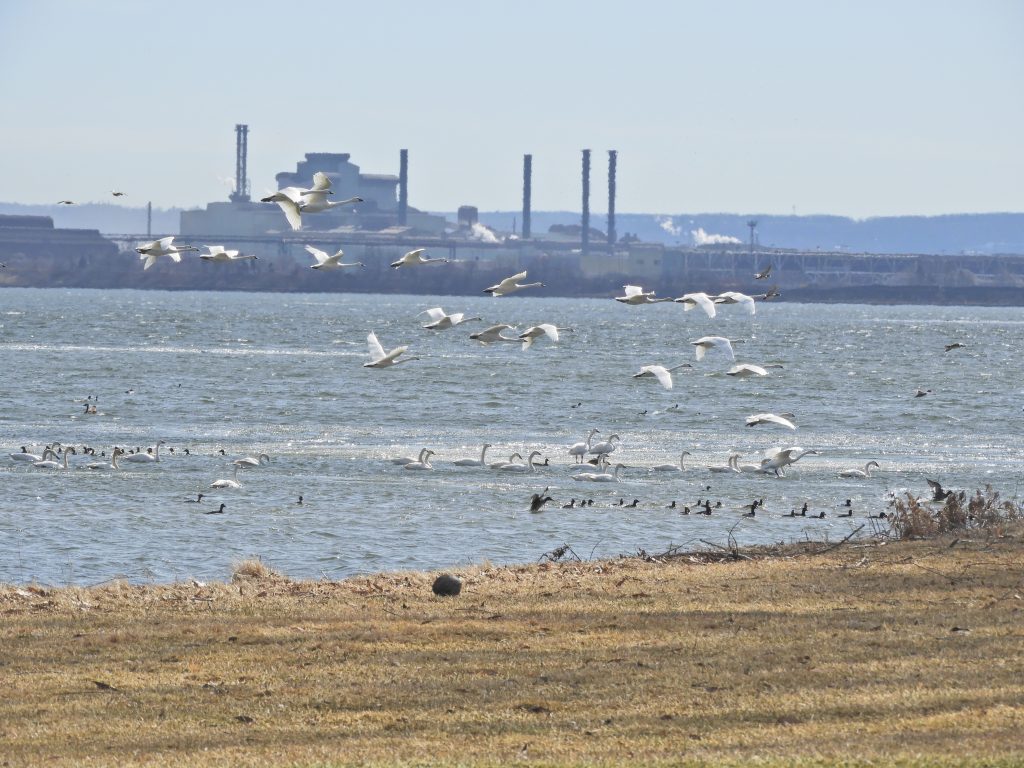
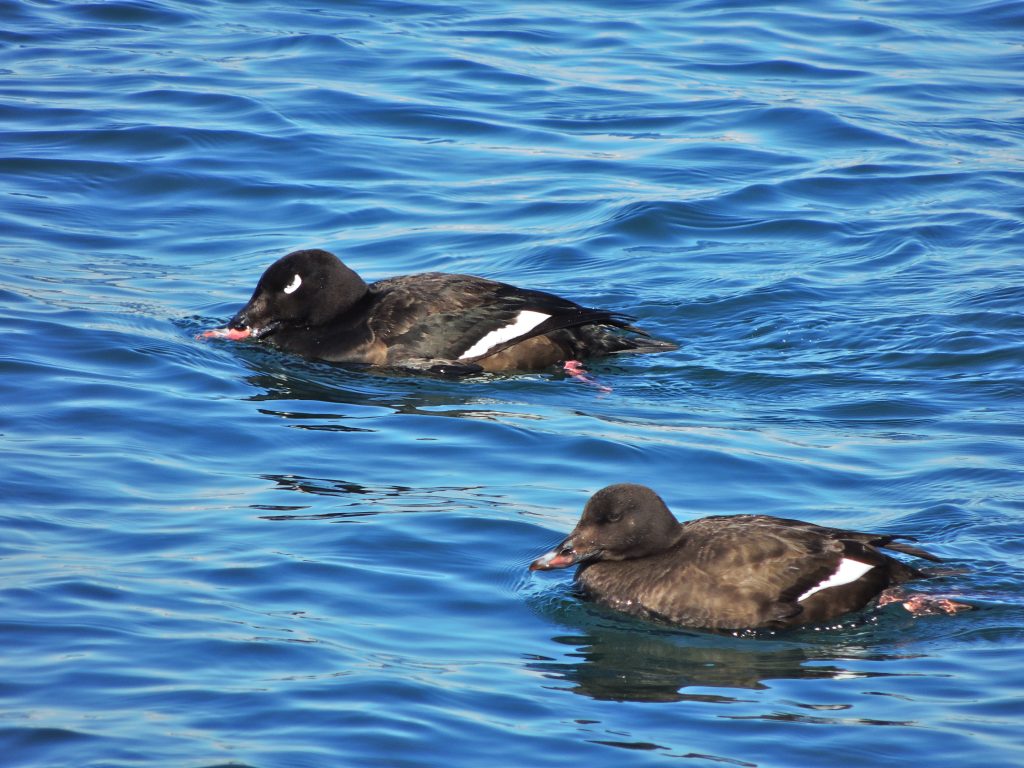
Returning to the marina, in case anything had changed, I ran into a fellow naturalist. We swapped ideas and suspicions, and with his instincts the two of us were able to find just the right bit of waterfront (mostly taken up with high-priced and sometimes imaginative housing) where we could get quite close to a quiet flock of resting Tundra Swans, about 150 of them, and a scattering of Mallards, Scaup, Goldeneye, Bufflehead and White-winged Scoters. It was a privilege to enjoy them like this. I’m not much of a species chaser or year-list keeper, but spring wouldn’t be complete without them. Birds of the Day of course.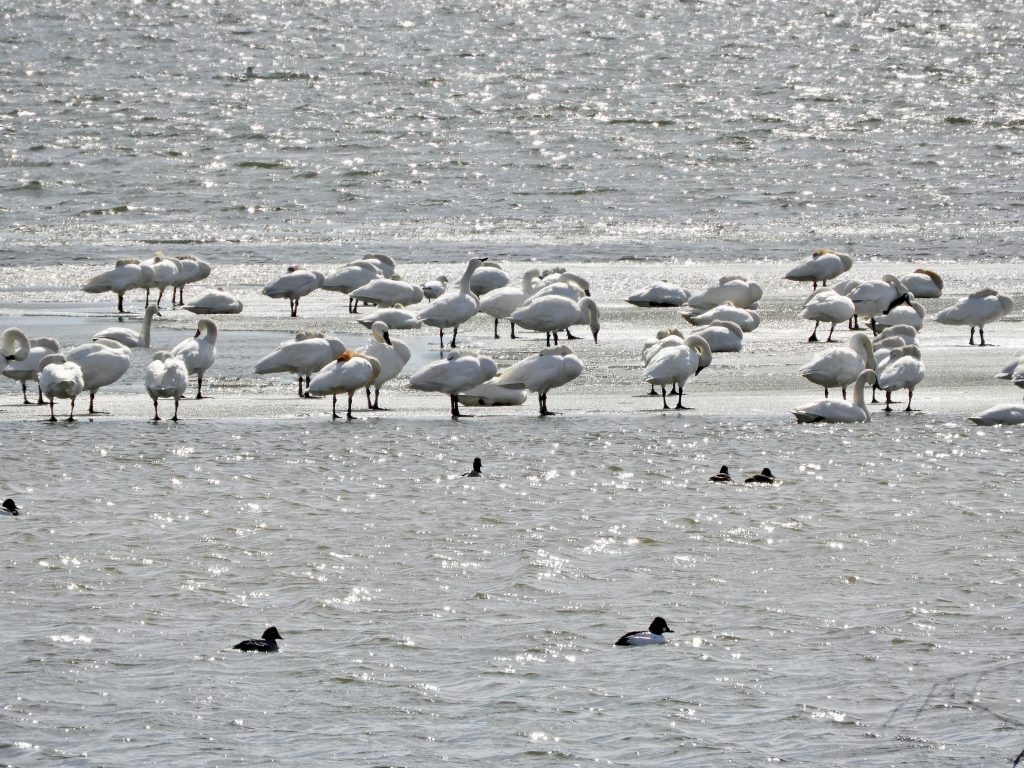
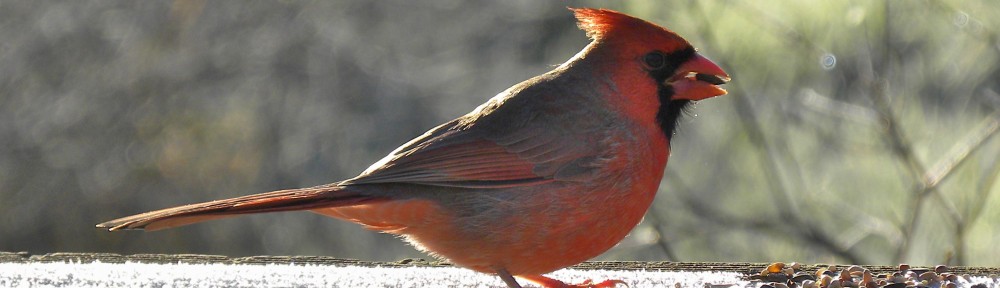 February 14 2026. This morning’s sky was almost cloudless, and a warmish sun was chipping at our thick snow cover. As I headed out on a pre-breakfast errand, I heard my first-of-the-year Northern Cardinal’s spring song coming from a garden a short distance away. Clear blue sky or not, his cue was probably daylight length. We now enjoy nearly 12 hours of daylight (ten and a half hours between sunrise and sunset). It’s amazing and heart-warming what a few notes of the cardinal’s clear and pure-toned “Tewww-tewww-tewww’ can do to a mid-winter morning.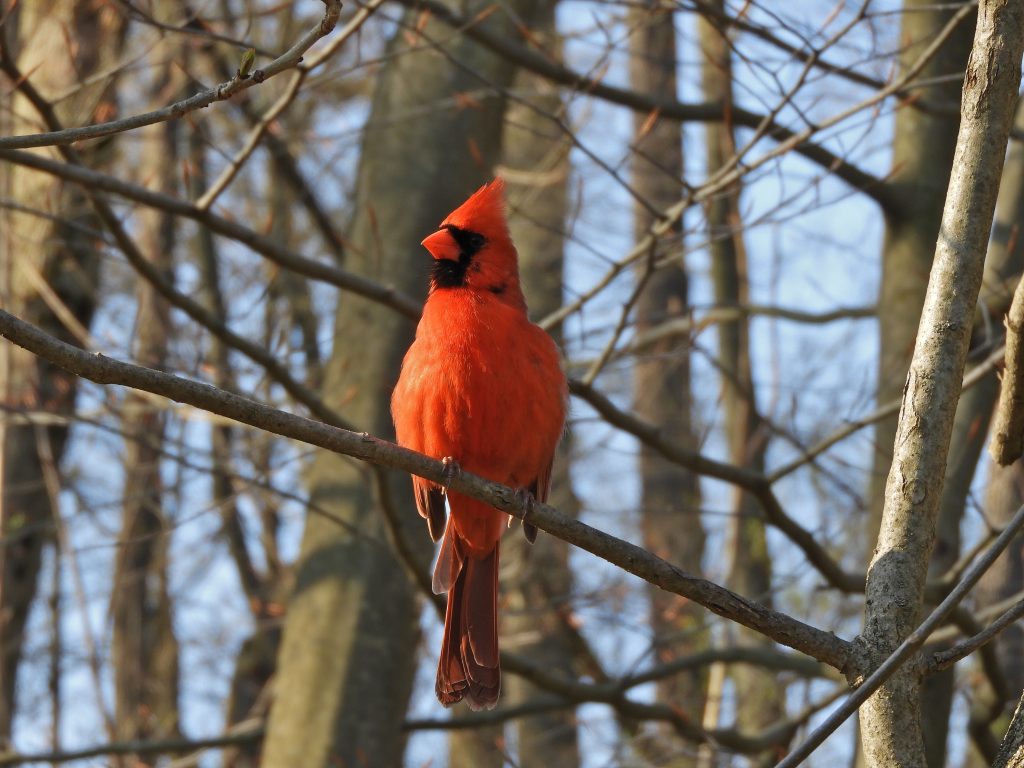
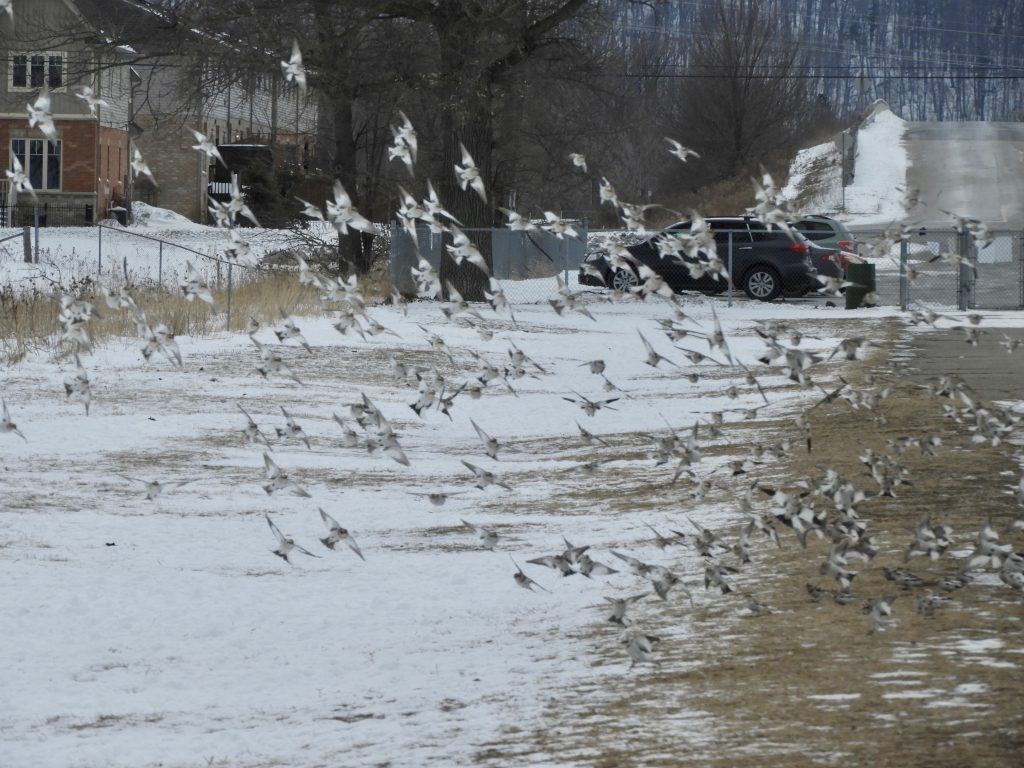
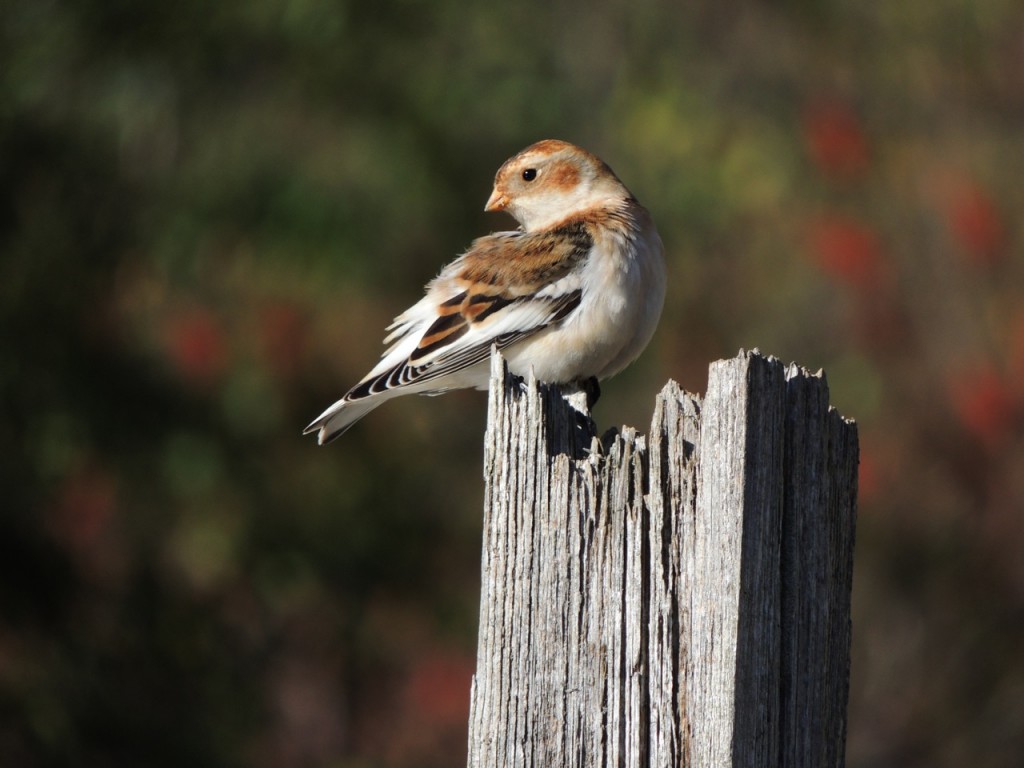
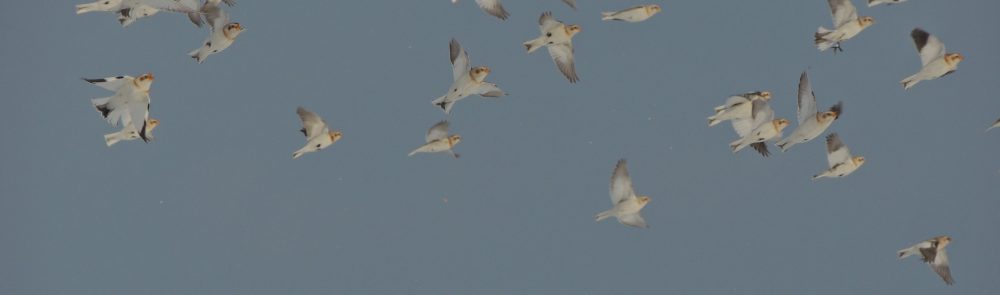 February 1 2026. Lincoln County, Ontario. January has laid a thick layer of snow and firmed it into place with weeks of deep cold; not birding weather, not for me anyway. But flipping the calendar today was a step in the right direction. February brings more sunshine than we’ve seen since the radiance of fall and soon will come the small heart-lift you get from sitting into a sun-warmed car. I thought finding some Snow Buntings would make a nice start to the month so, with valuable information from a friend, we made our way to a new-to-me corner of the province.