Turkey Vulture

17 March 2014. Vinemount ON. Still looking for spring.  The forecasters are all saying that today will be our last day of negative temperatures; we’ll see.  In the faint hope that the tentative warmth of a few days ago had made a difference, I drove around a rather dreary area of waterlogged farms hoping for standing water with ducks, or better yet, Tundra Swans, but nothing.  But…those waterlogged fields are vast expanses of gleaming ice and when it all melts (any day now ?) I predict they will be very enticing stopover spots for waves of migrant ducks, swans, and snipe
Turkey Vulture
Turkey Vulture

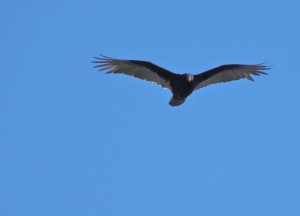
Birds of the Day were three wind-tossed Turkey Vultures sailing along the sharp edge of the limestone escarpment that dominates our landscape.  Their course is one used by thousands of migrant raptors every spring.  The abrupt escarpment lies close to the south shore of Lake Ontario and winds off the water create a cushion wave that holds these birds aloft as they head around the lake on their spring journey northwards.

The first parade of spring Turkey Vultures is usually a celebration for me, but somehow today’s scattered trio lacked the optimism that should come with heading for a place to call home for the summer, it seemed to be more of a foolhardy challenge to the frozen ground than anything else.  I guess they’ll survive; after all negative temperatures are about to be a thing of the past.
A Snowy Owl bulletin

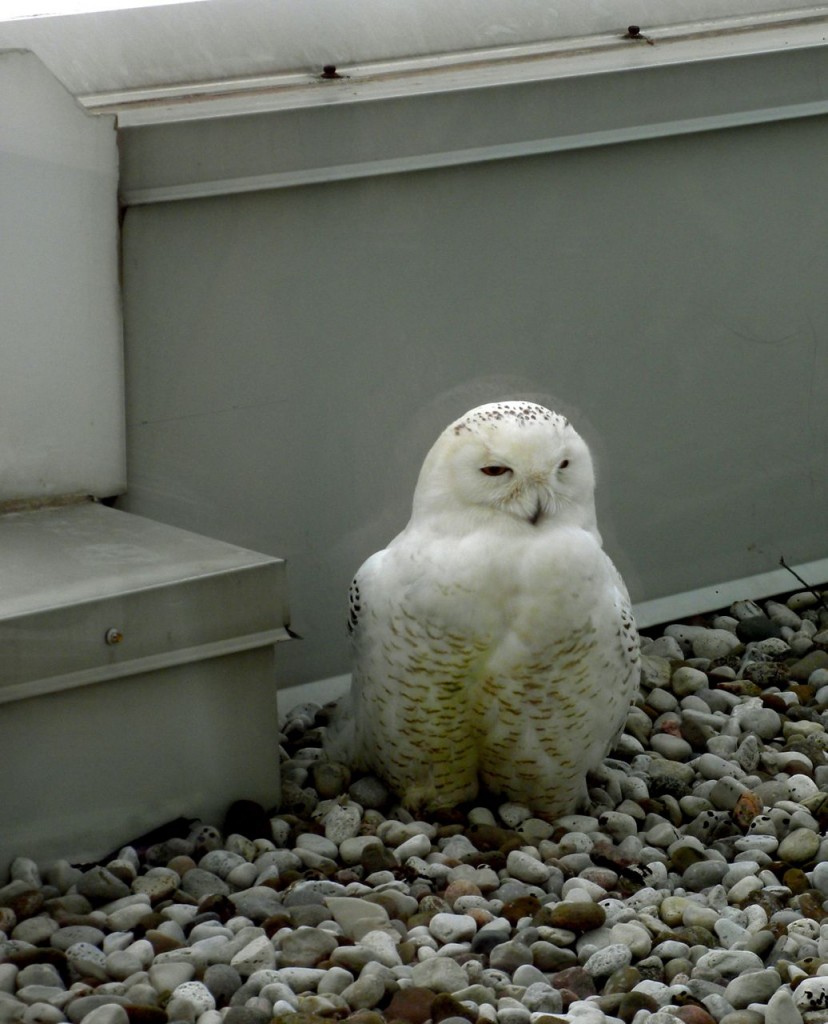
16 March 2014. This past winter may well become legendary as the Winter of the Snowy Owl.  It has been truly exceptional and as I write this the birding community has become almost dismissive of more Snowy Owl sightings.  This posting is really just to pass along a link to a couple of excellent websites.

NPR recently ran a five-minute feature on the Snowy Owl invasion.  Read more and listen to it by clicking on this link.  

And a newly cobbled together group of American ornithologists has started tracking Snowy Owls on their late winter/spring migration back to the Arctic.  Read more about Project Snowstorm by following this link

A Snowy Owl wo took up residence on the balcony of an office building in 2012
A Snowy Owl who took up residence on the balcony of an office building in 2012

Mute Swans

14 March 2014. Bronte Harbour, Ontario. I went out looking for spring today but most of it got blown away in the strong southwesterly wind.  My mistake may have been visiting places along the north shore of Lake Ontario where the wind had blown the lake’s distress into a choppy onshore frenzy.

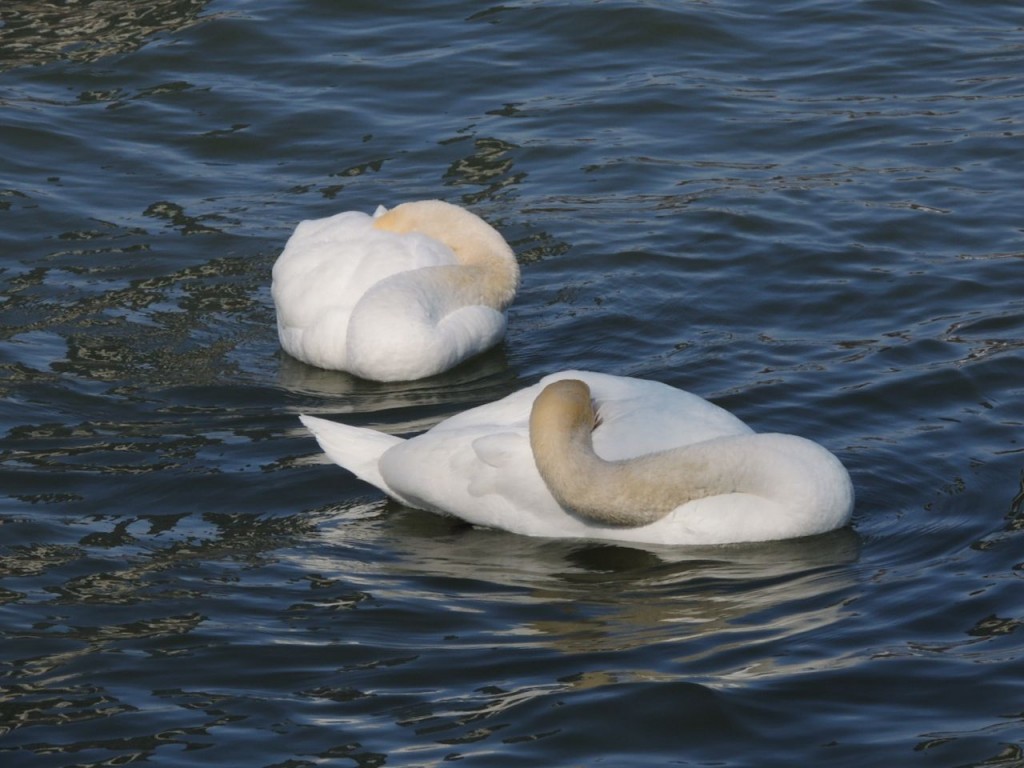
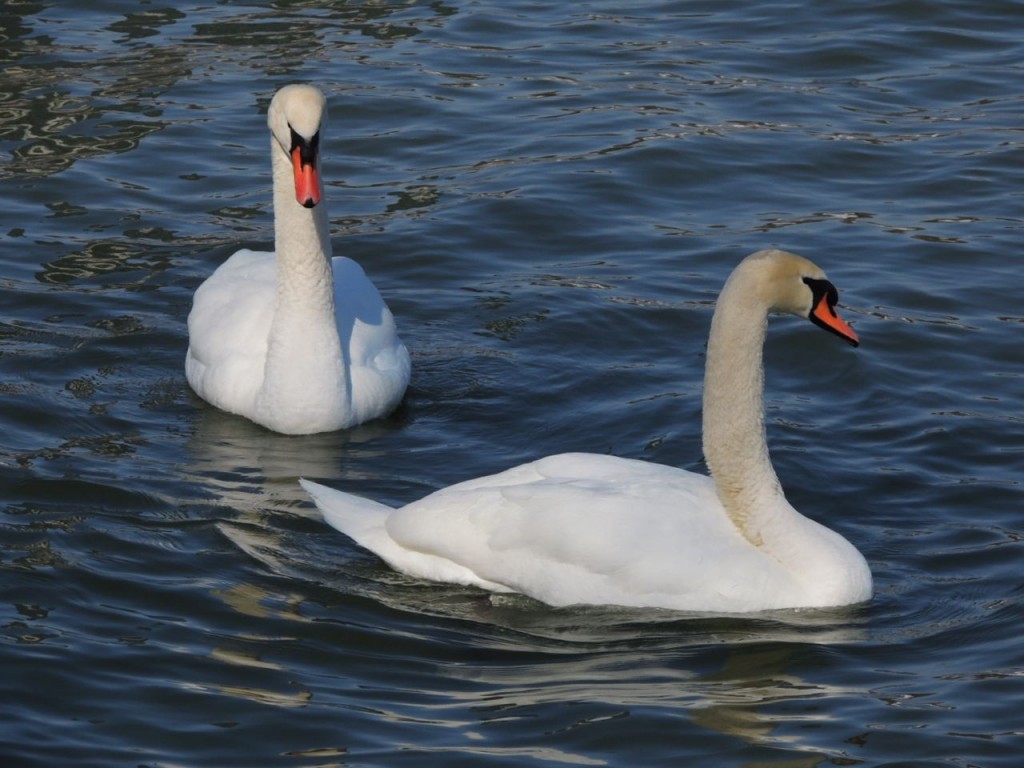
I sought backwaters and sheltered corners and soon found a small group of Mute Swans drifting around seemingly asleep.  These are the same two birds, apparently dozing one moment then fully alert the next.

Mute swans
Mute swans
Mute swans
Mute swans

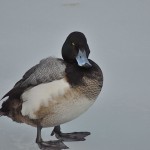
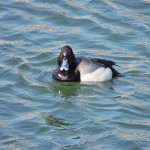
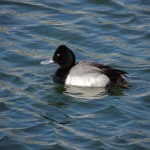
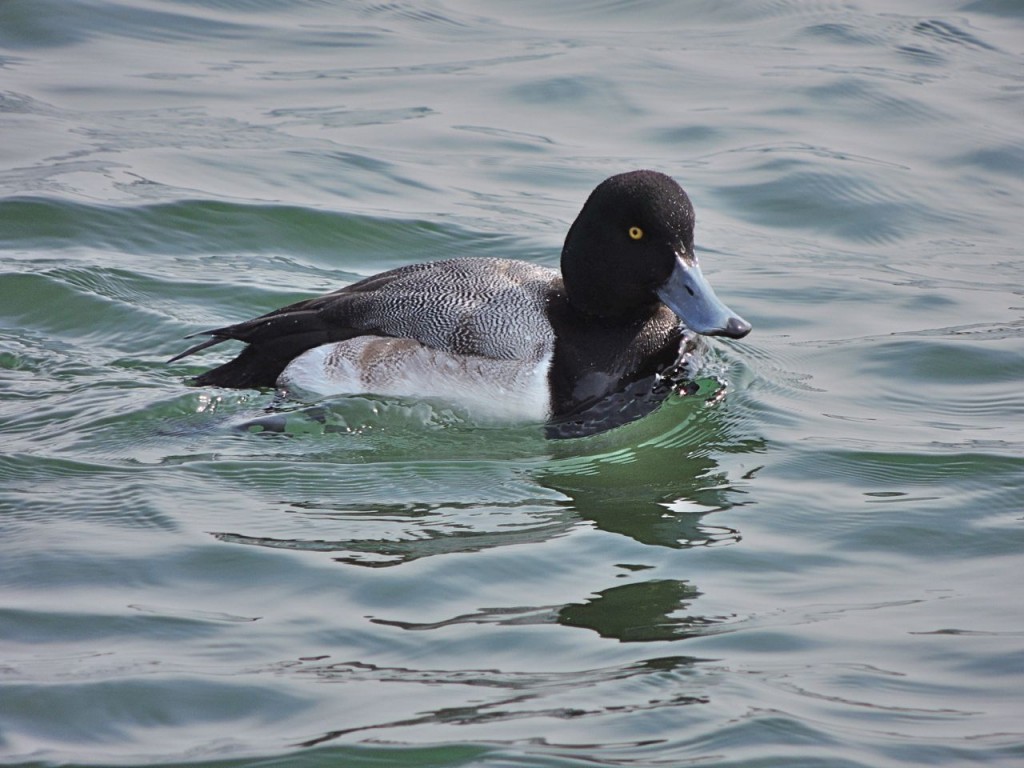
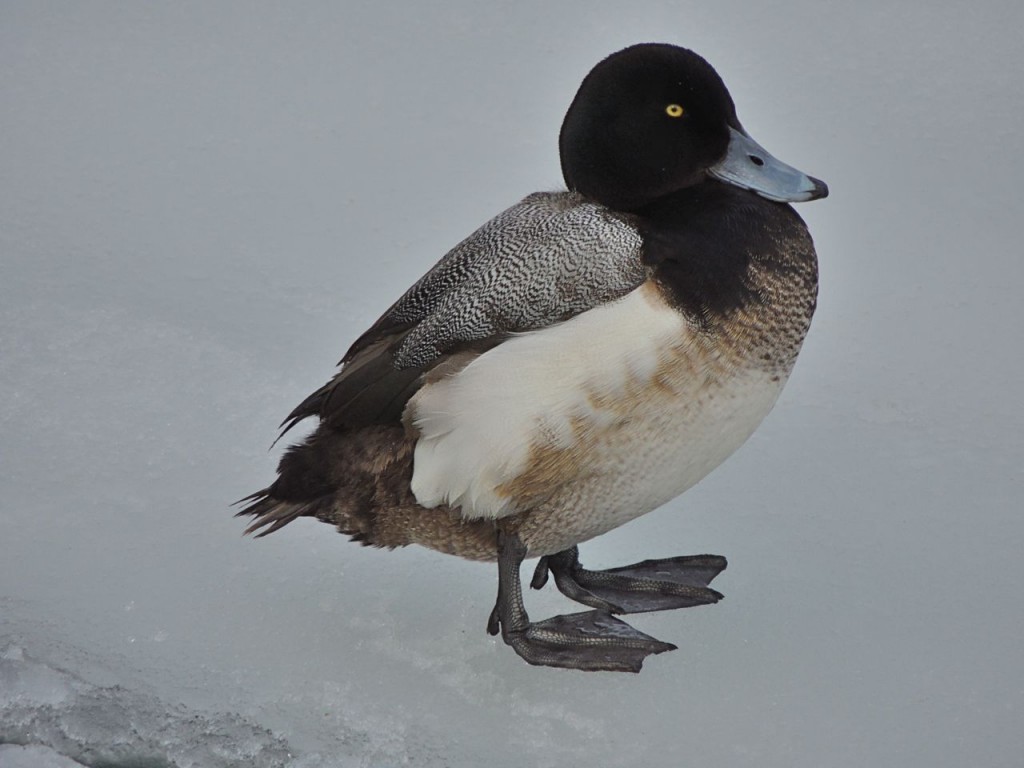
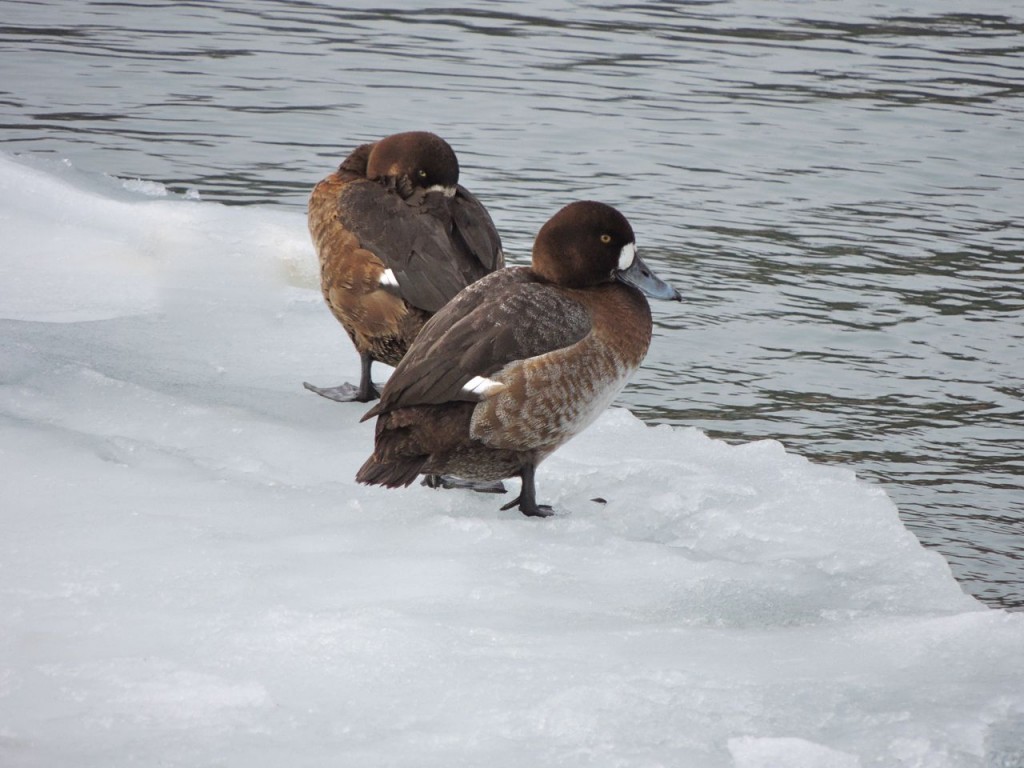
Later I spent a bit of time trying, for my own satisfaction, to separate two almost identical species: Greater Scaup and Lesser Scaup.  You could certainly be forgiven for giving up in despair or for deciding that in fact there is no difference, but all field guides list both species and even suggest generally unhelpful ways of deciding which is which.  I’ve been working at this field problem for several years and had come with a couple of safe solutions, it’s either a “‘probable’ Lesser/Greater Scaup” or  “Scaup species”.

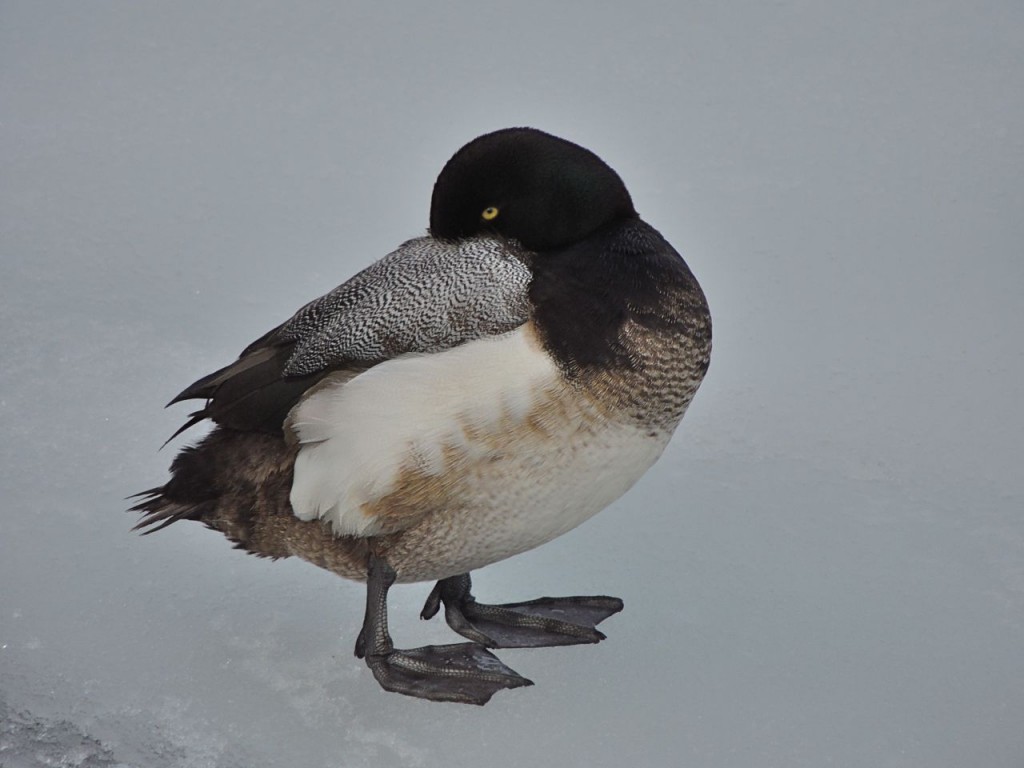
More recently I’ve taken to looking more carefully at the shape of the head. This is not the place for a detailed discussion of scaup morphology, but to cut to the chase I’ve found two, what I think to be reasonable, distinguishing differences.  First. The Lesser Scaup’s head profile has a bit of a peak at the front whereas the Greater Scaup’s head is distinctly rounded.  Second. The Lesser Scaup’s bill has a reduced narrow black ‘nail’ at the tip, whereas the Greater Scaup’s bill has a fairly wide nail.  These distinctions of course are useless at any distance greater than perhaps 10 yards, or 100 through binoculars.  Click on and enlarge these photos and see if you see what I mean.

These scaup photos are in a gallery visible only on the website, not if you’re reading this as an email.

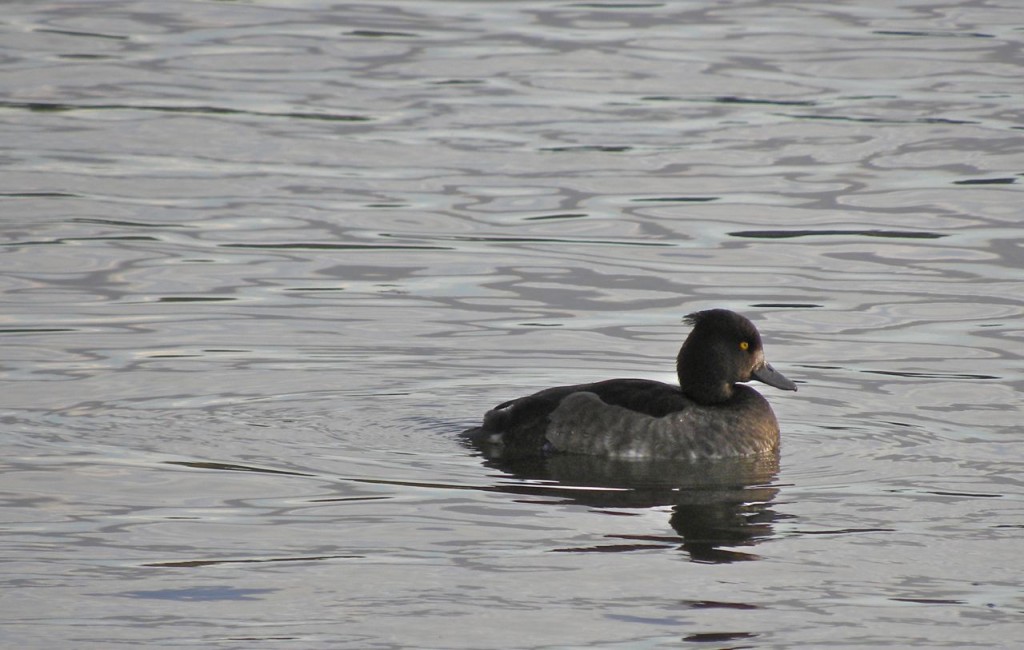
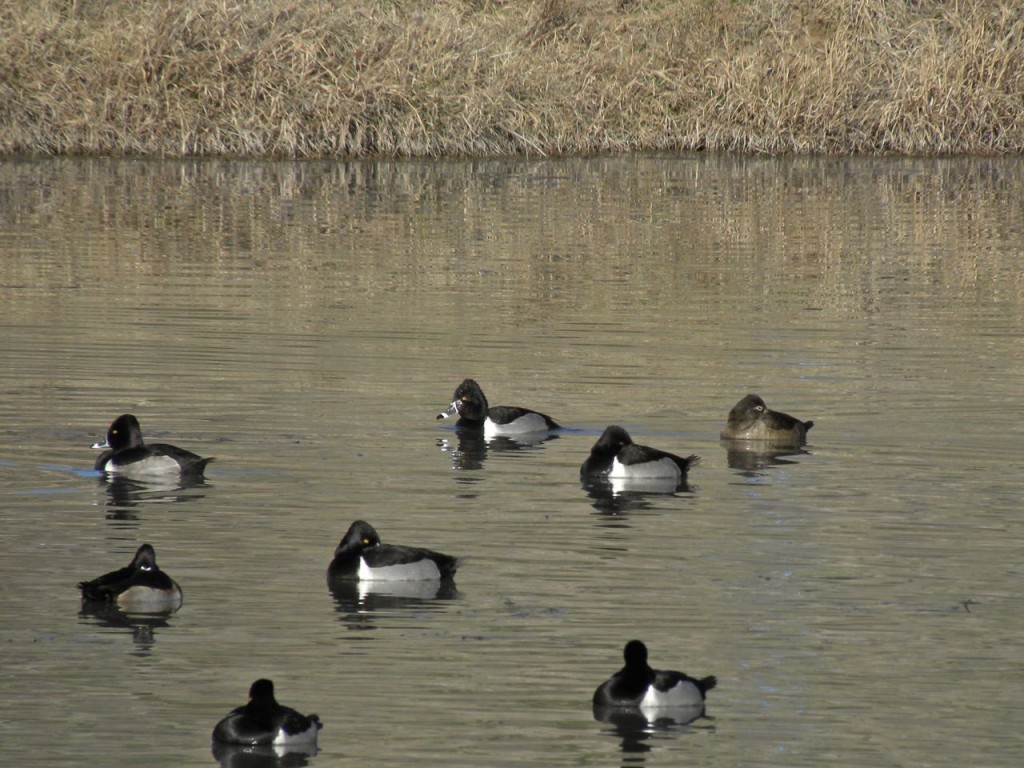
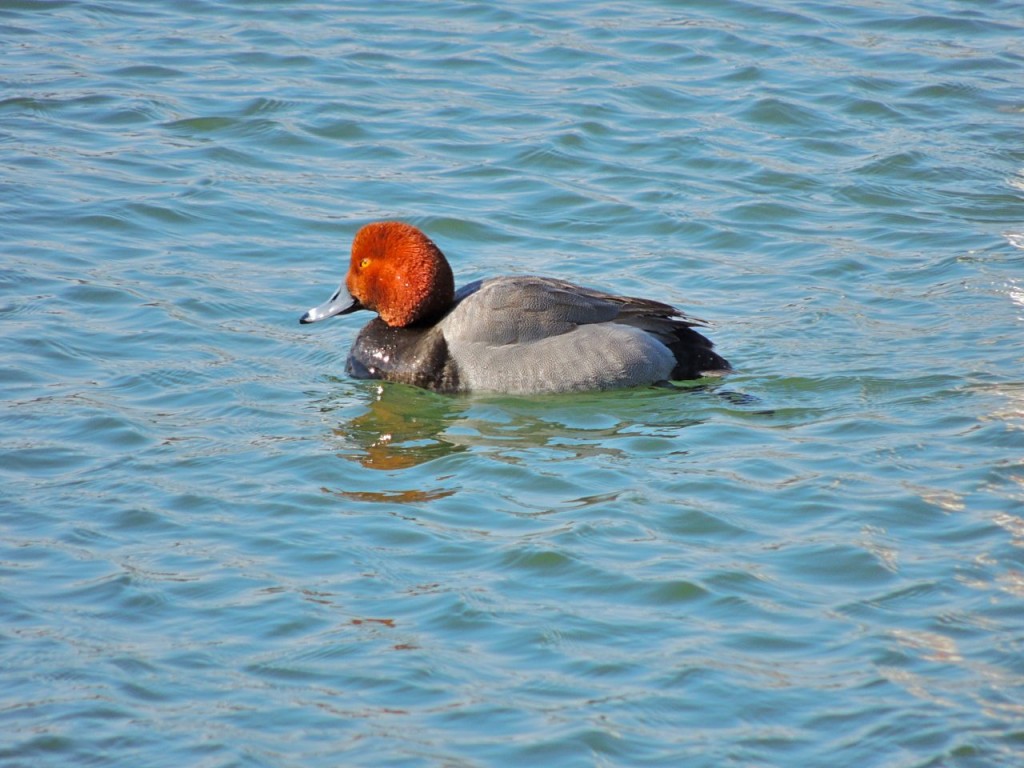
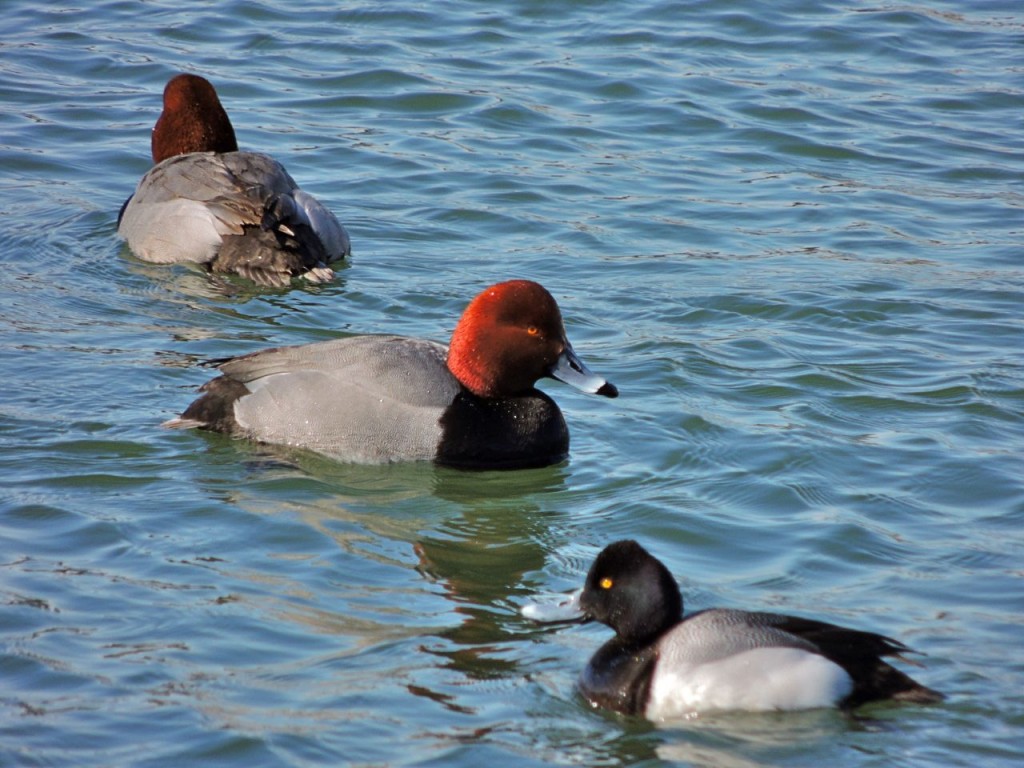
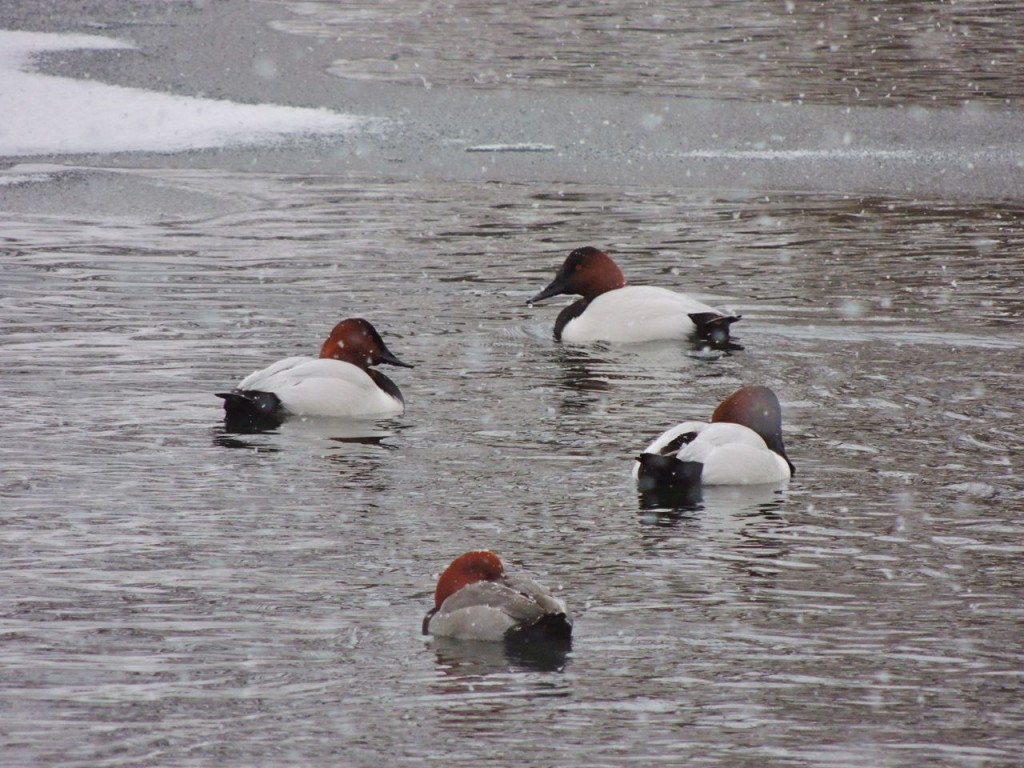
As a diversion from the finer points of scaup i.d, it’s perhaps of more interest that both scaup species are members of the Athya family of ducks.  Athyas include some really gorgeous and elegant species, most of which I’ve posted here at one time or another. They are Redheads, Canvasbacks, Ring-necked Ducks and even the Pochard and Tufted Duck from Eurasia.  Here’s a few photos.

Tufted Duck Reykjavik Sept 2012
Tufted Duck Reykjavik Sept 2012 (female?)
Ring-necked Ducks. Page Springs IBA.
Ring-necked Ducks. Page Springs Arizona
Redhead - Bronte 14 March 2014
Redhead (m)
DSCN4353
2 Redhead males and a Lesser scaup
Canvassbacks in Christmas snowstorm


Ducks

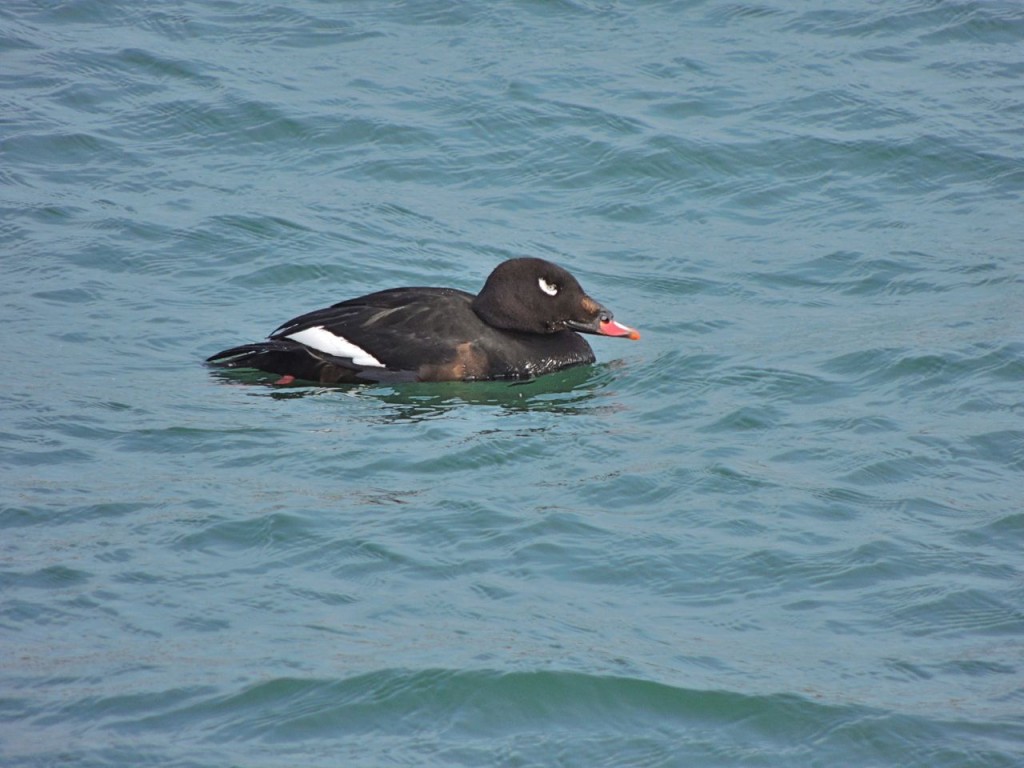
10 March 2014. Bronte Harbour, Ontario. Five days ago, my birds of the day were King Eiders, but I also mentioned a White-winged Scoter and its battle to subdue a mollusk.  Today I returned to that same marina to see if I could get a better idea of what the scoter and other ducks are feeding on.  I’m almost certain that they’re plucking Zebra Mussels from the lake bottom.  Zebra Mussels are a Eurasian mollusk that was introduced into the Great Lakes from the bilge water of a visiting ship, or so the conventional wisdom goes.  Over the past three decades or so, having few natural enemies, the mussels have spread throughout the Great Lakes and become a serious nuisance.  On the bright side, their abundance is a rich and easy source of food for several Arctic diving duck species that now stay to over-winter here rather than press on to the Atlantic, as they did formerly.

The harbour, where all of last week’s reported events took place and to where I returned today, allows for marvelous close-up views of waterfowl of every stripe.  A pier and extensive seawalls extend out into Lake Ontario and curl around to embrace a small craft marina. Under current ice conditions the majority of the marina is totally iced over, but the furthest point of the pier intrudes into an area of open, yet sheltered, water and it is here that hundreds of ducks, geese and swans have gathered all within a hundred feet or so of a safe viewpoint.

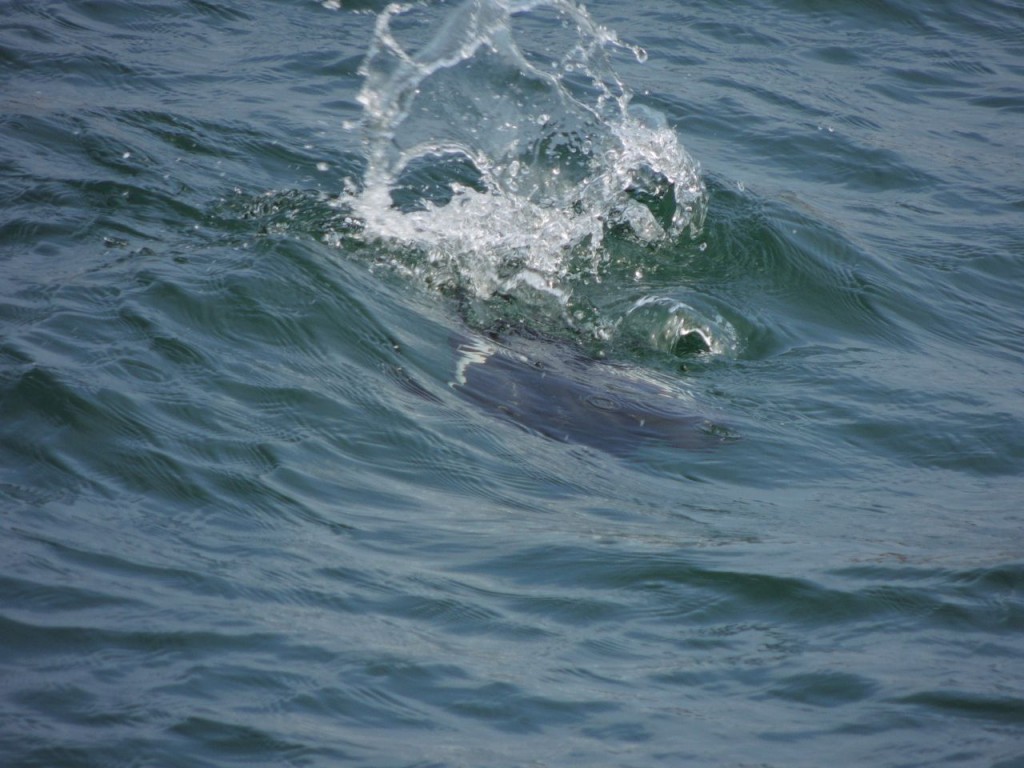
For quite a while I watched several White-winged Scoters diving for food, hoping to see one repeat the food control performance of five days ago.  While none of them managed to spear anything quite as succulent looking, several brought large mollusks to the surface and worked hard juggling them in their large bills to break them open.  Frequently the food-item would slip from the bird’s hold but a quick and easy dive got it back on board.  This whole nutcracker-without-the-hands-to-control-it process made a good case for the development of forelimbs, hands and opposable thumbs in particular; but how then would it fly?

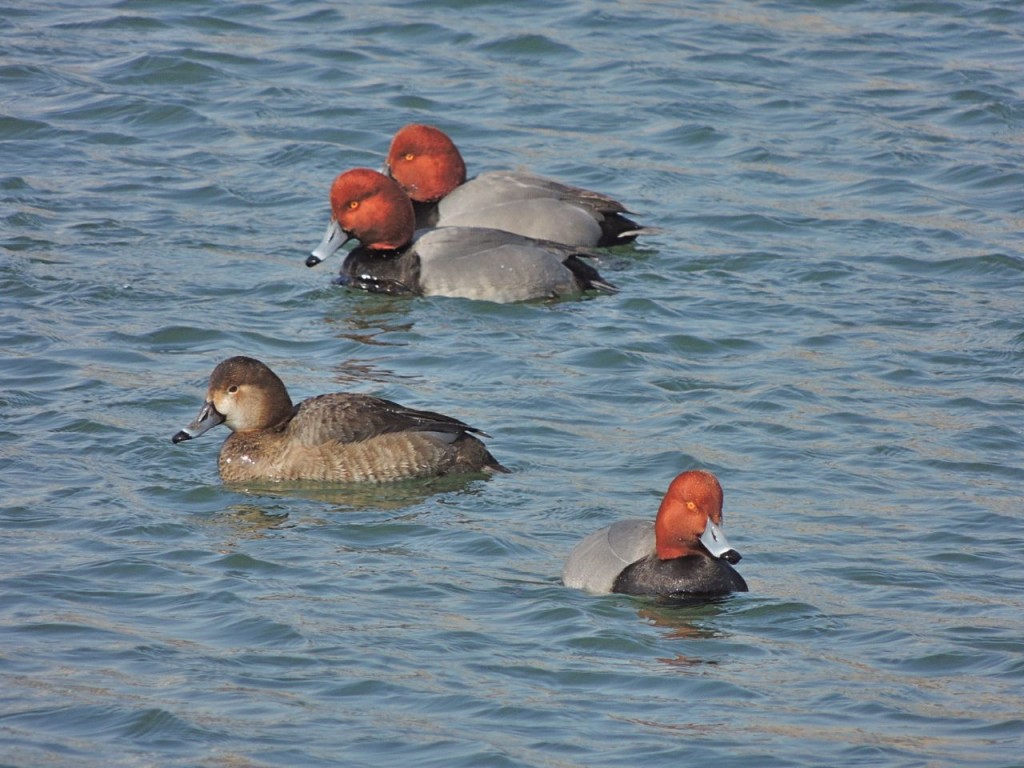
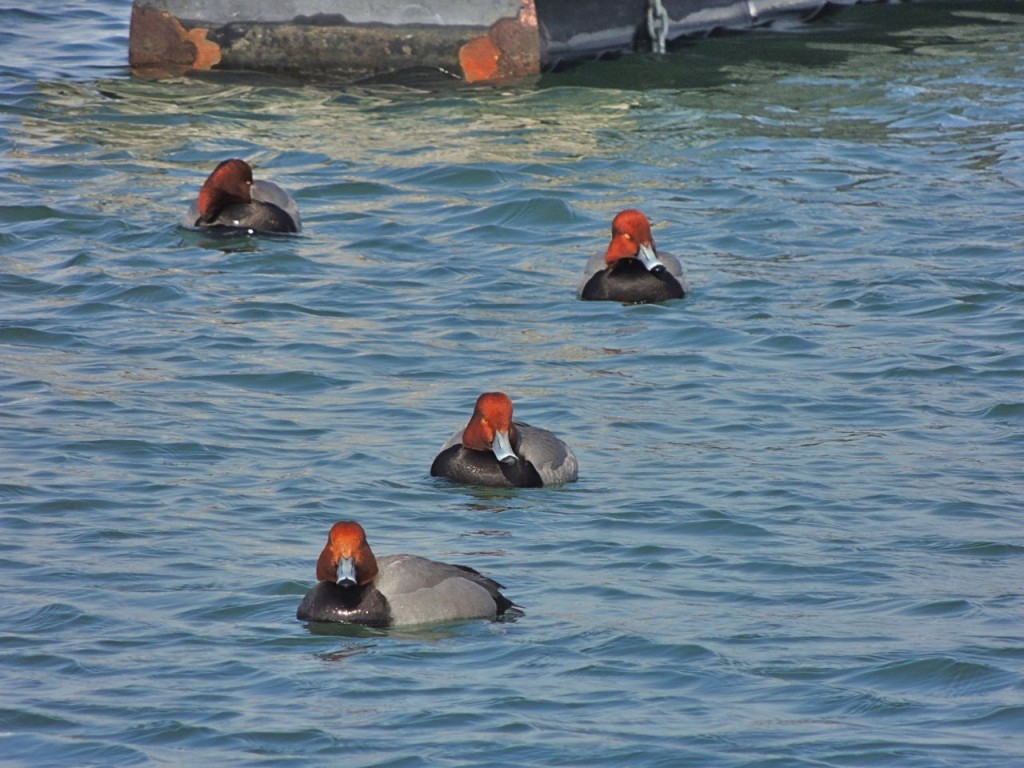
If a picture is worth a thousand words, I’ll save myself hours of typing and leave it to the following to illustrate how ducks in general were my birds of the day.  Click on any picture to enlarge it.

White-winged Scoter (m)
Missed (White-winged Scoter)
Redheads 3 males 1 female
Redheads (m)
Redheads (m)
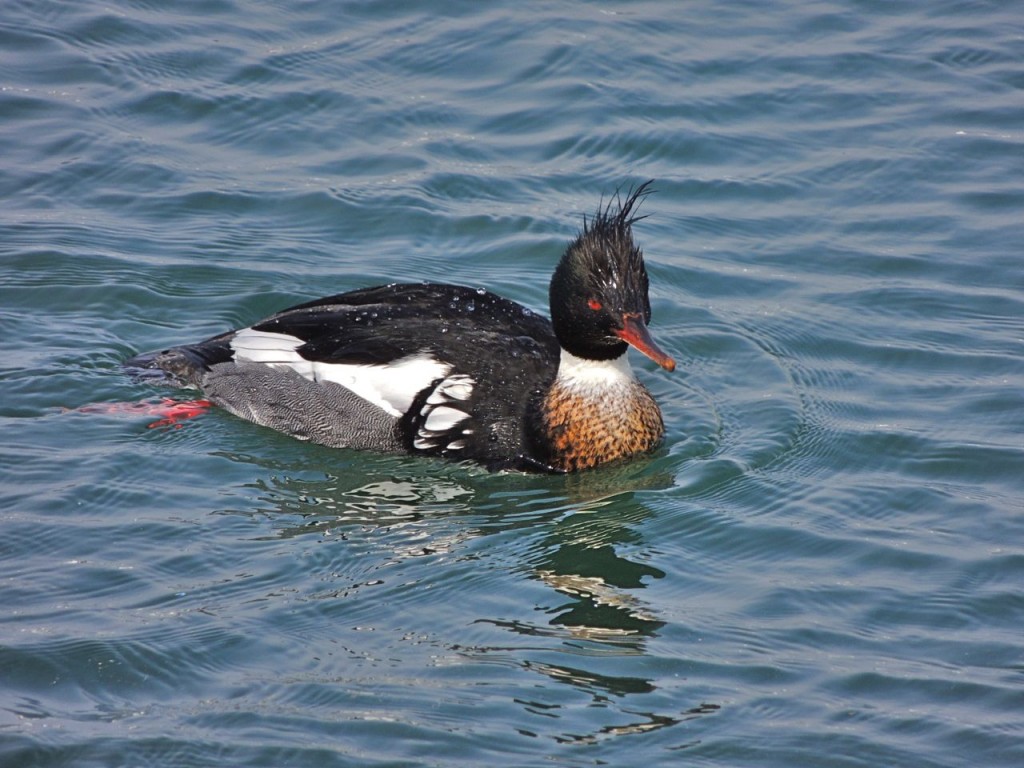
Red-breasted Merganser (m)
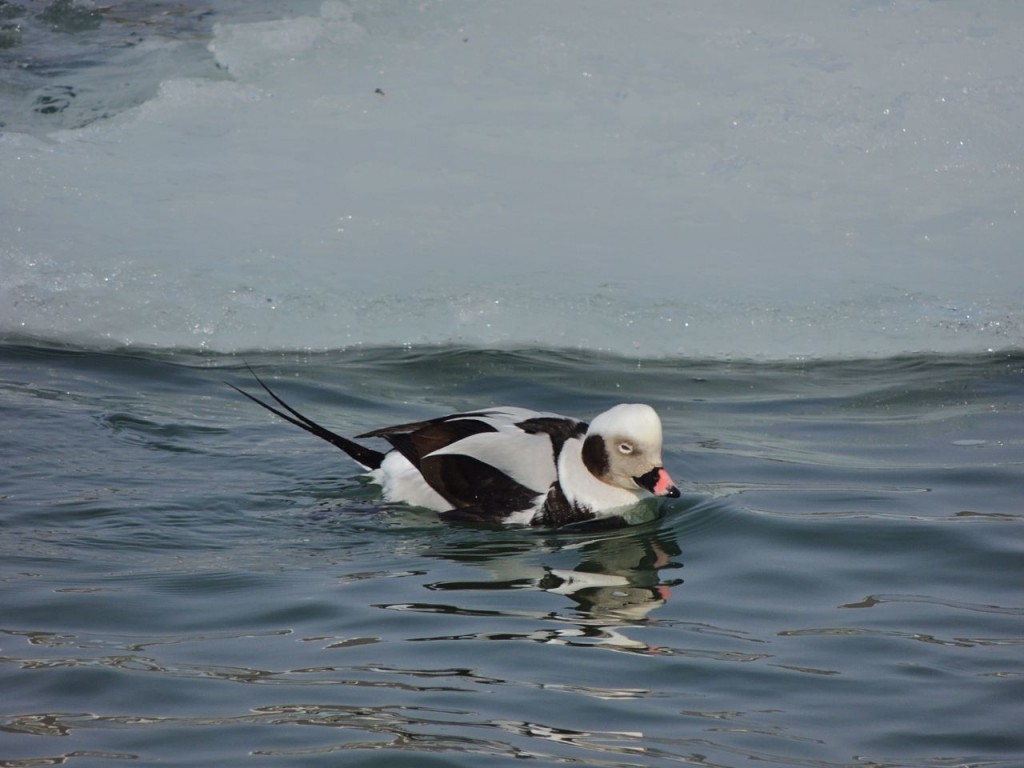
Long-tailed Duck (m)
Greater Scaup (m)
Greater (?) Scaup (m)
Greater  Scaup (m)
Greater Scaup (m)
Greater  Scaup (m)
Greater Scaup (m)
Greater  Scaup (f)
Greater Scaup (f)
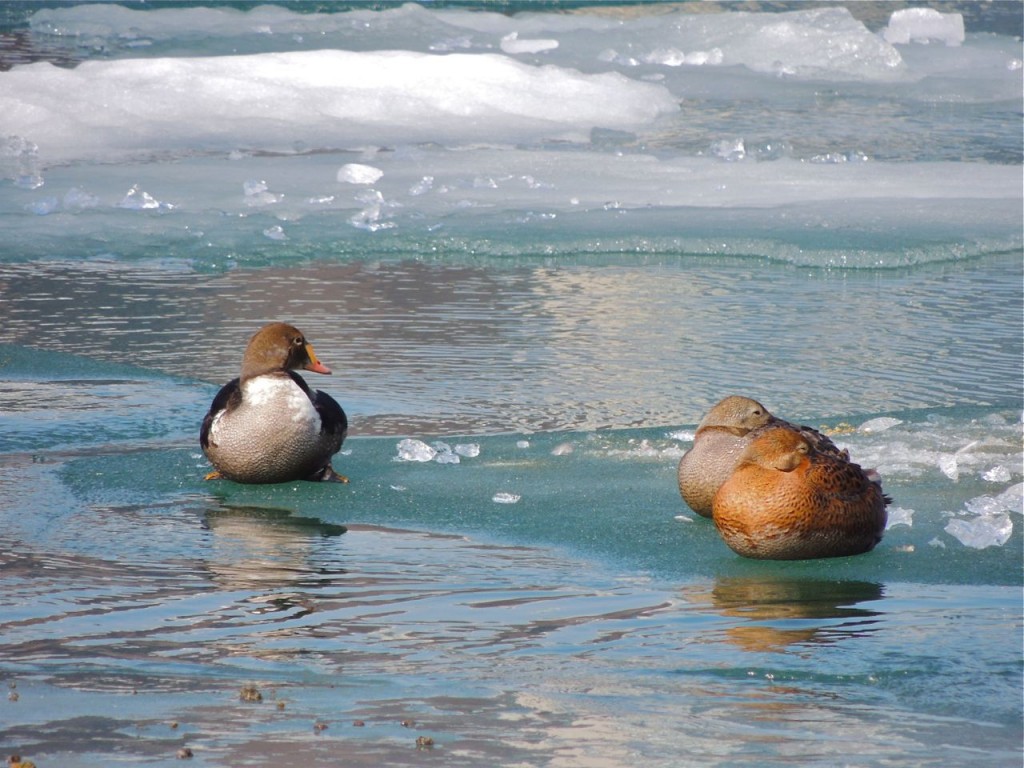
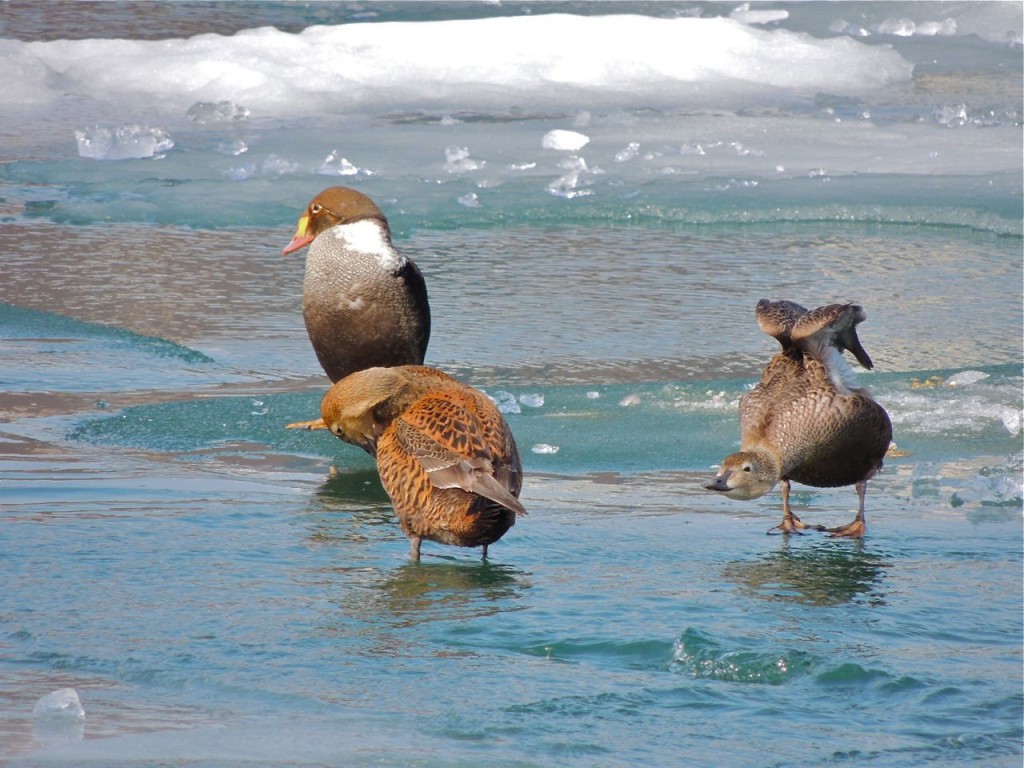
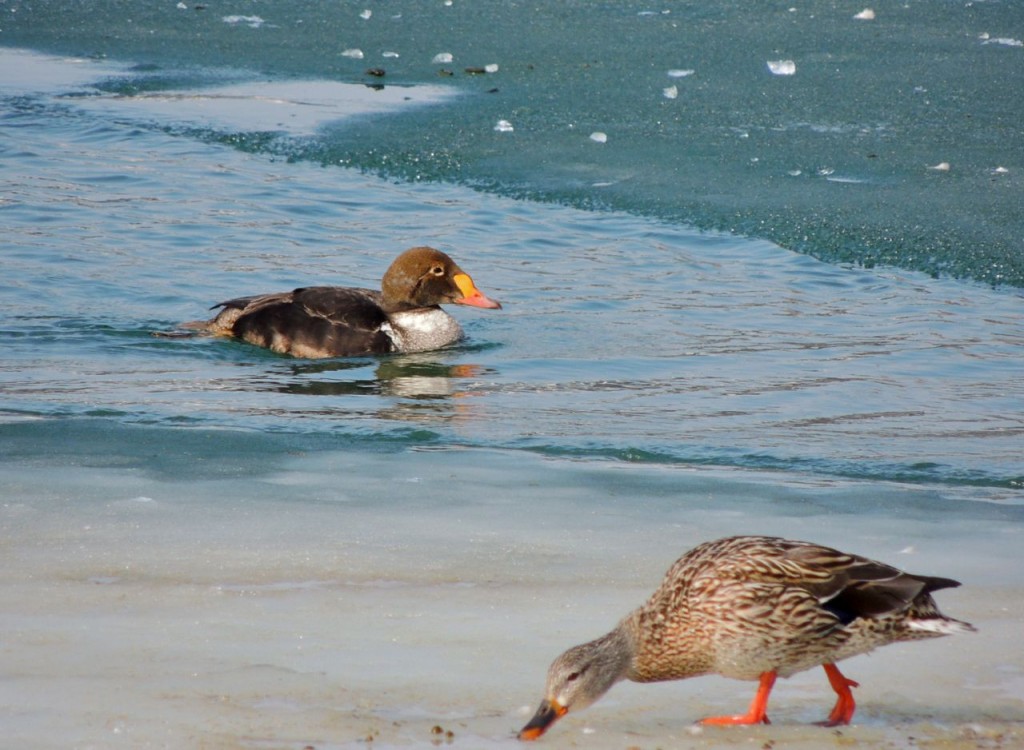
King Eiders (1 m & 2 f)
King Eider and Mallard
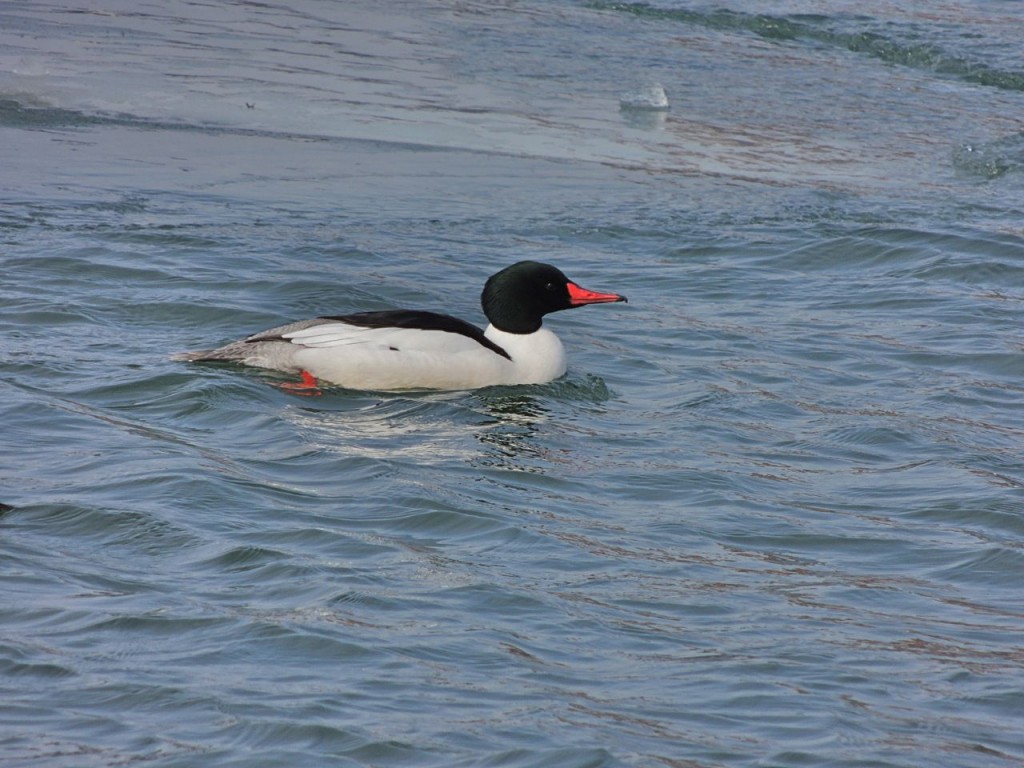
Common Merganser
Common Merganser
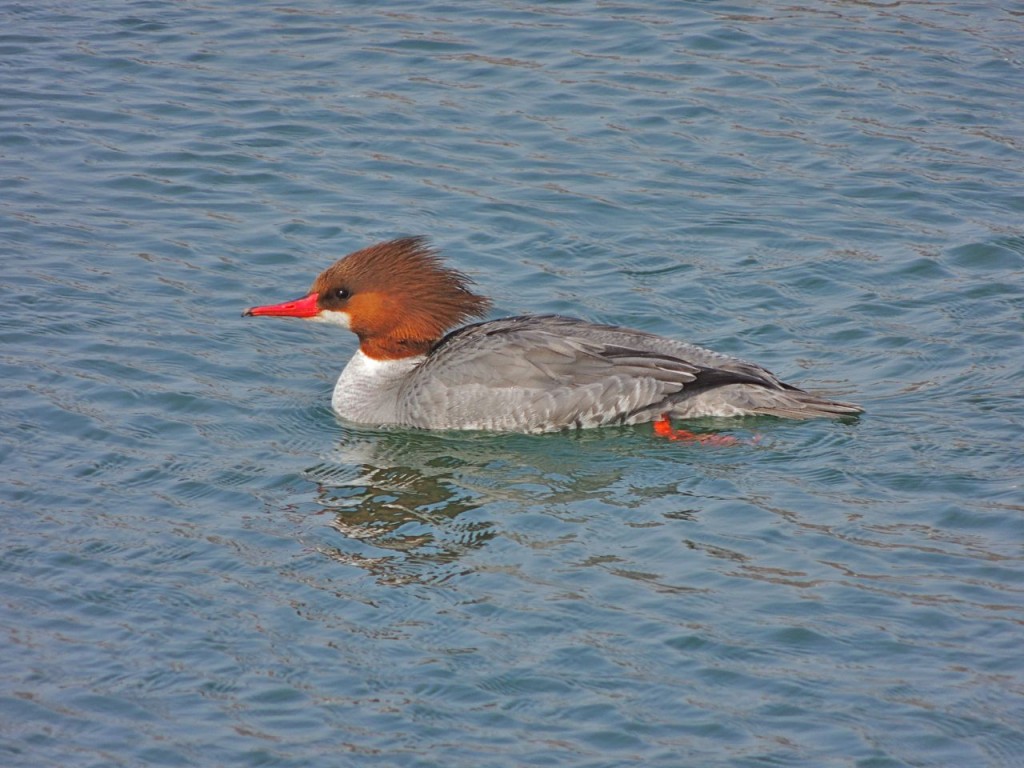
Common Merganser (f)
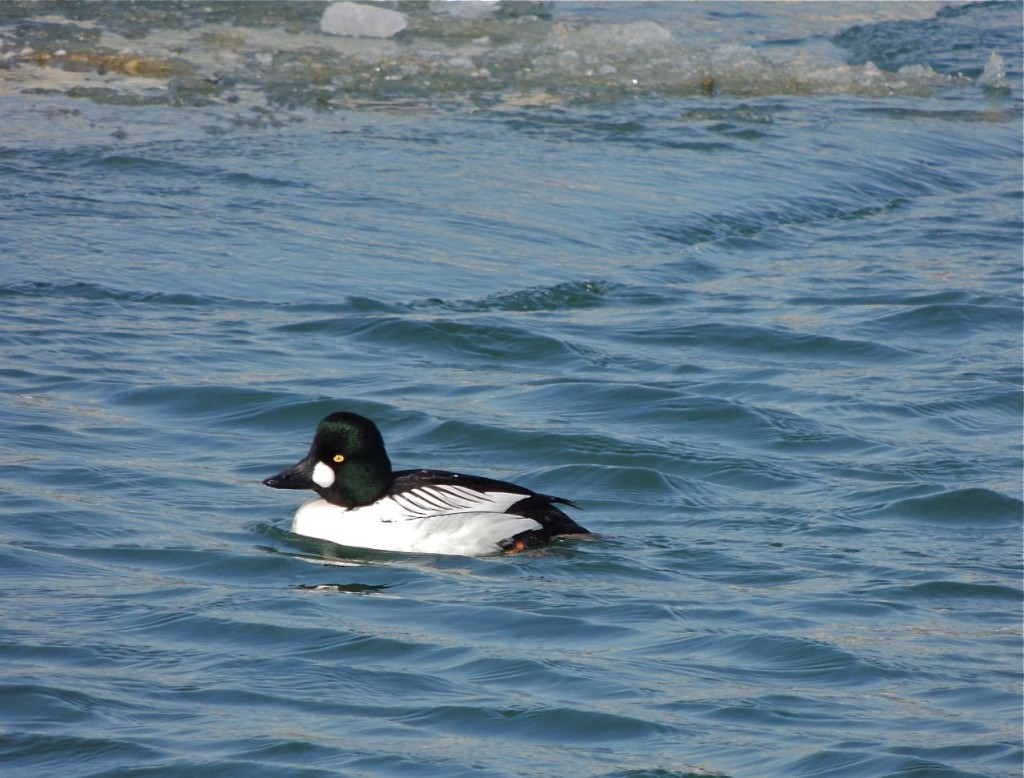
Common Goldeneye (m)
Common Goldeneye (f)
Black Ducks, King Eider, Red-breasted Merganser & Redheads


Trumpeter Swans

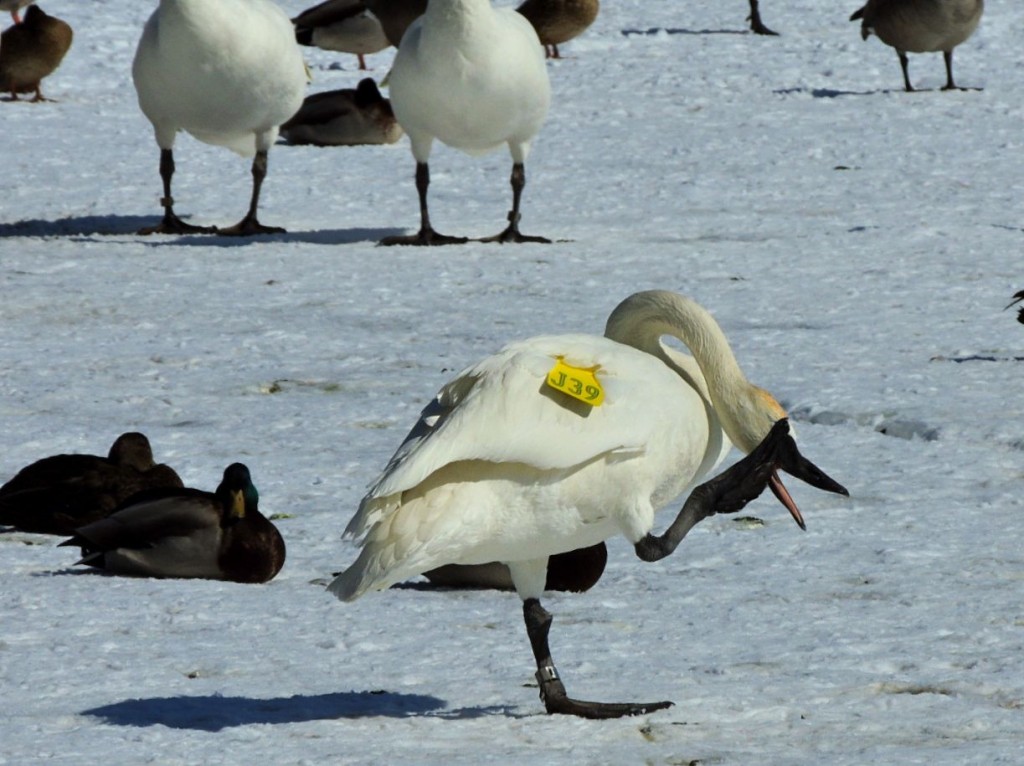
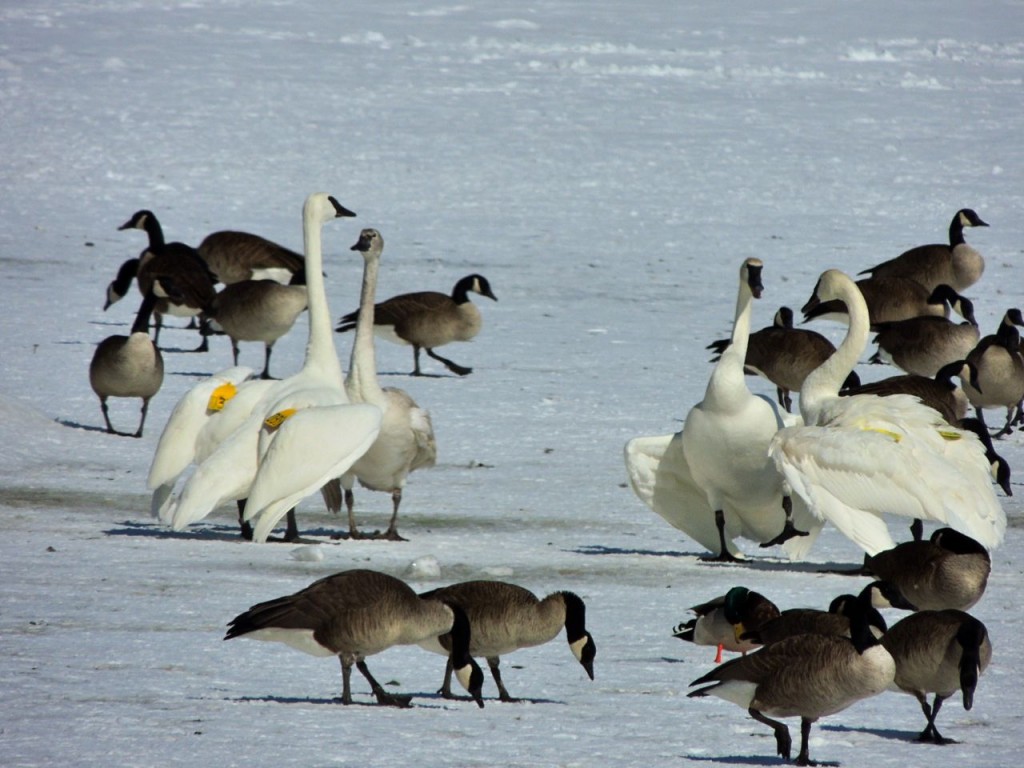
7 March 2014. Burlington, Ontario.  I witnessed a couple of unrelated mini-dramas unfold today: one a romance; the other a brush with danger, both involving Trumpeter Swans. Today for the first time in two and a half months the sun came delivering real warmth.  It will take several days of above zero to push back the ice, so when I visited one of our harbourside waterfowl gathering places it was no surprise to see Trumpeter Swans and Canada Geese standing around on the ice.  They were close to a small beach, watching a photographer who in turn was watching them; for all of the geese and swans’ anticipation there didn’t seem to be a promise of food involved.

Trumpeter Swan on March ice

The photographer was watching several pairs of swans performing what I can only assume was a courtship dance.  Couples facing each other with wings half open and heads held high, they were bobbing up and down, but at the same time watching the other pairs to see how they were getting on.  It gave me a feeling of déjà vu, they looked like teenagers anxious to impress, but wondering if the others were doing it any better. They impressed me though, enough to be Birds of the Day. In three or four weeks, once the ice has given way to open waters, these courting couples as bonded pairs will head for more northerly lakes and rivers to breed.

Tumpeter Swan courtship

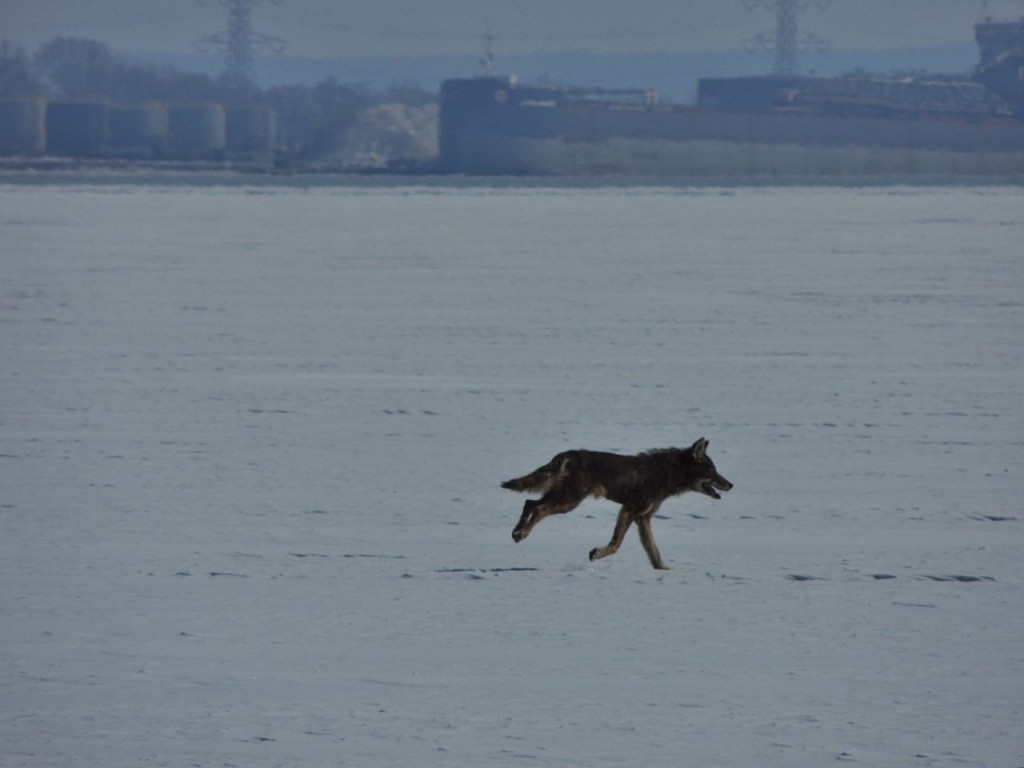
This crowd of perhaps two hundred geese and swans, apparently hopeful that food was yet in the offing, abruptly turned away from the photographer and started a quick march away from the shore.  A few moments later, three Eastern Coyotes ran out onto the ice.  For a moment I thought they were about to herd and harvest dinner, and so did the birds, but instead they kept on running and soon disappeared from view. I have no idea what the purpose of their dash was but it’s illustrative of how urbanized coyotes have become.

Coyote crossing
Coyote crossing