Belted Kingfisher

14 November 2015. Hendrie Valley, Burlington ON. This time last year the first snows fell, while it didn’t last long it ushered in a very cold winter. In contrast, today was not especially cold and there is a forecast for some balmy days ahead. I completed a census in Hendrie Valley and was struck by the quietness of the place. Just a month ago it was a birder’s challenge but the stiff broom of November has swept away almost everything.
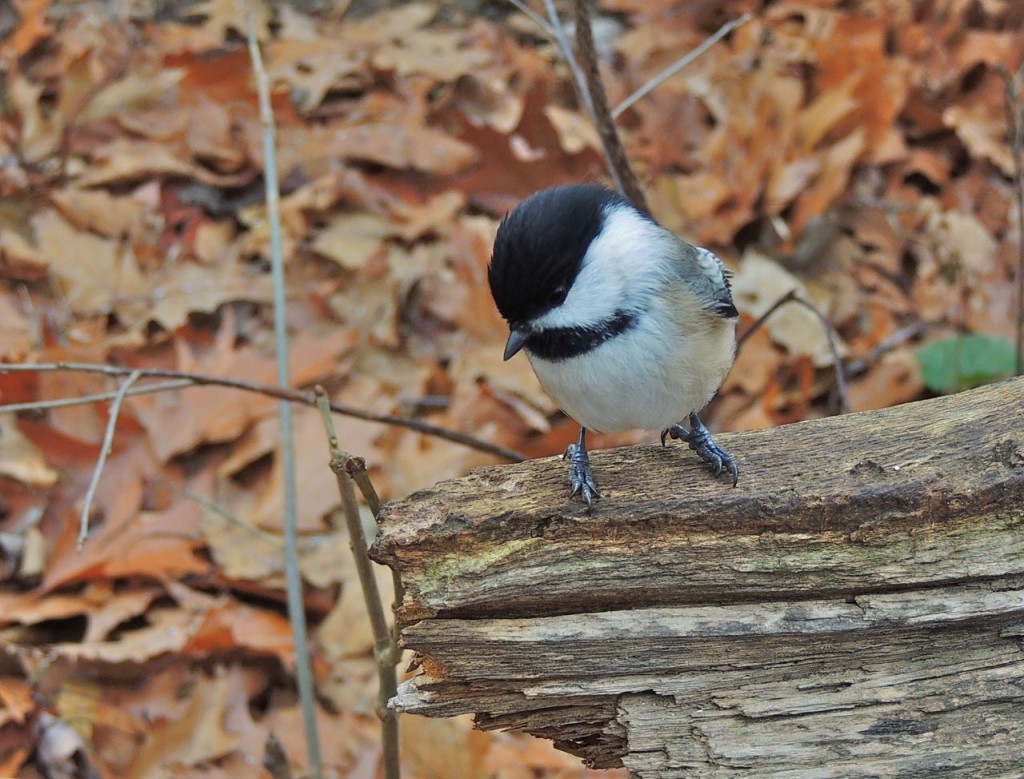
Black-capped Chickadee

I walked my circuit rather dismayed at the paucity of birds. When winter really takes hold I expect the few birds that remain to become more apparent as they become increasingly dependent on families with children coming to feed them. Indeed at almost any time of year the resident Black-capped Chickadees are extremely bold and many times a chickadee will land on my writing hand as I add entries to my field notebook. Today I counted more than thirty chickadees and for every three or four there’s an almost-as-bold White-breasted Nuthatch not far away.
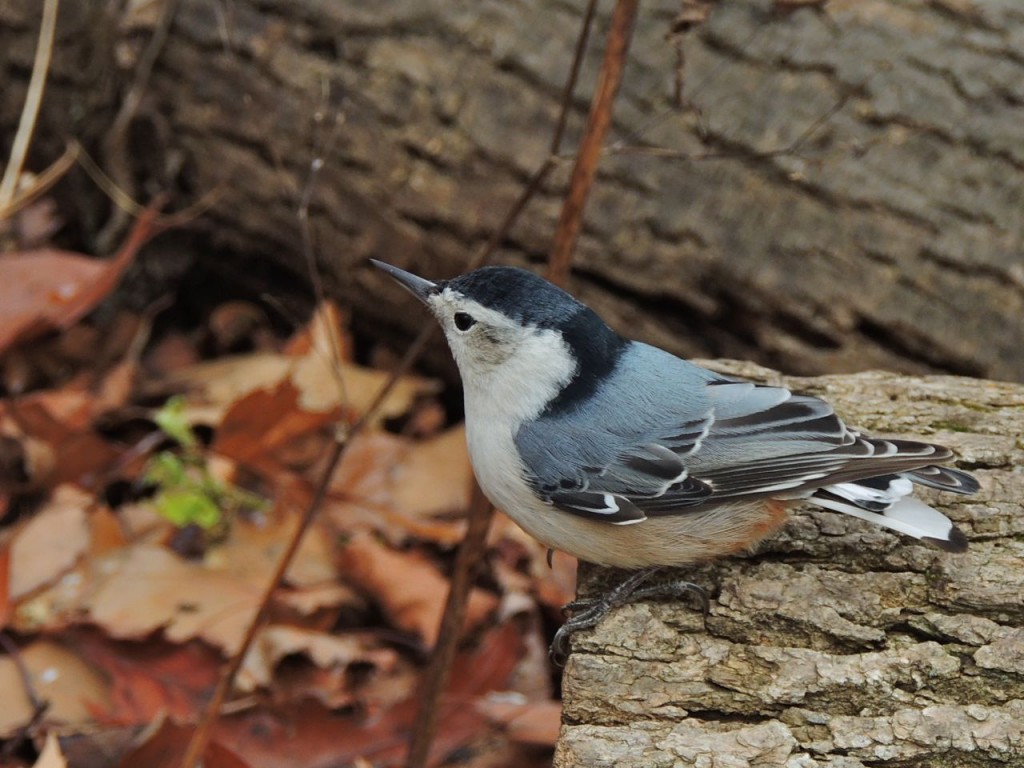
White-breasted Nuthatch

I wouldn’t say that I trudged around, that would imply that the circuit was burdensome and it was far from that, but it did lack sparkle. There were Blue Jays shrieking at imagined injustices, a couple of Carolina Wrens purring to mark their place in the order of things and several Mallards gossiping quietly in the tree-enclosed ponds.

The wow moment came when I heard the rattle call of a Belted Kingfisher and caught a fleeting sight of him flying upstream. I was surprised that he was still around, although perhaps I shouldn’t be for as long as there’s open water there will be fish to catch.
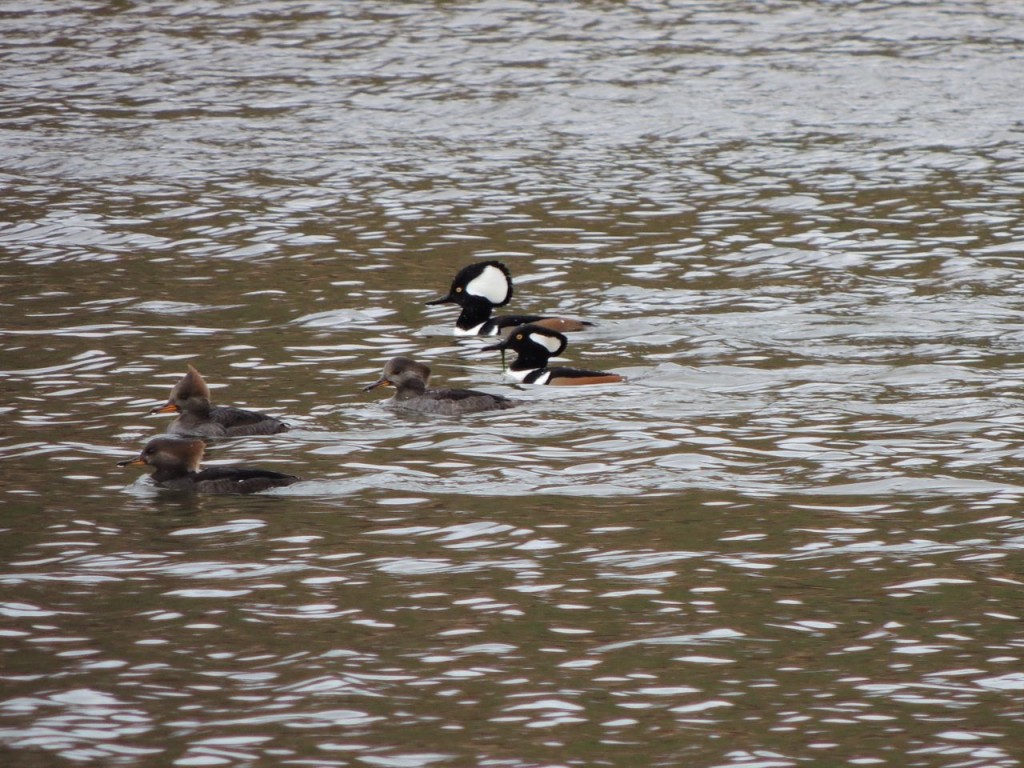
Hooded Mergansers
Hooded Mergansers

A little later I stopped at a large sprawling and somewhat shabby pond where I was pleased to find twenty or thirty Hooded Mergansers, males and females. They are late migrants and will continue heading south until they are out of reach of possible freeze-up. They were just milling around in little bands, padding nervously to avoid any movement or noise that seemed out of place; first one way then another.
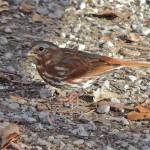
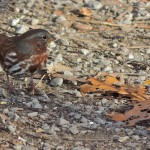
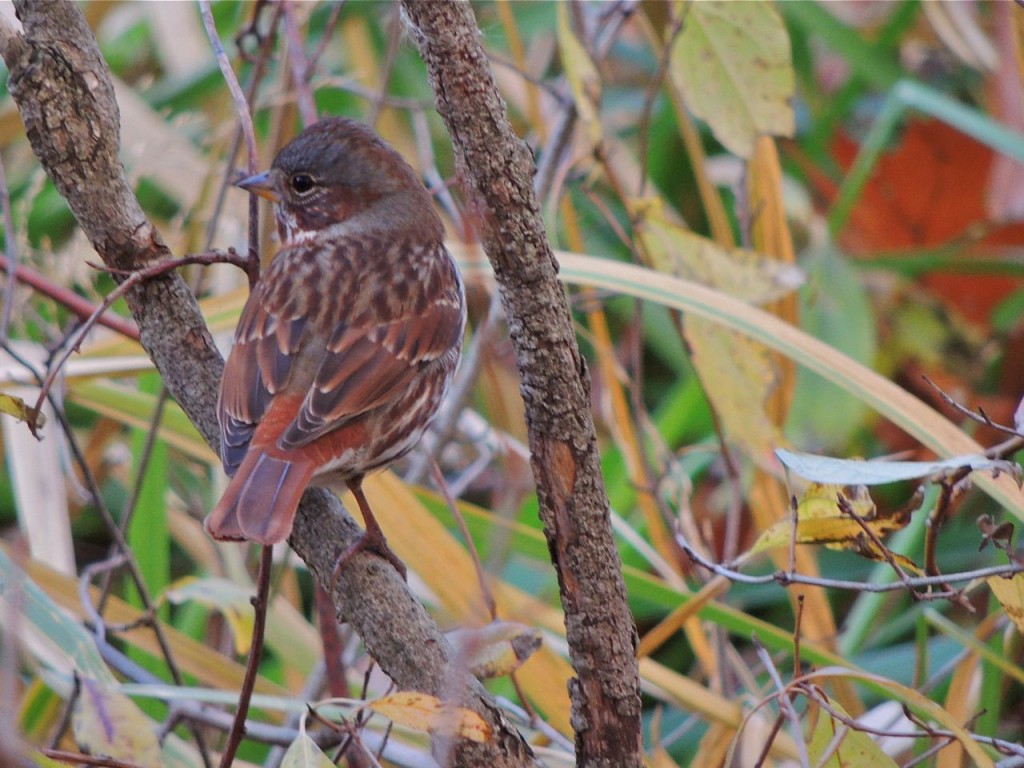
Fox Sparrow


7 November 2015. Hendrie Valley, Burlington ON. My Bird of the Day today was a Fox Sparrow found almost at the start of my census walk, but it had a good run for its money later in the morning from an Eastern Screech Owl. The Fox Sparrow was scratching for seed among the fallen leaves along with a small group of Dark-eyed Juncos. If it can be said that any sparrow is gorgeous, then it surely applies to a Fox Sparrow. Wher most sparrows are any shade of brown: crown, cheeks, back, wings and tail, Fox Sparrows are a rich rufous brown – like a fox; even the usual breast spots and streaks are rich, bold and almost showy.

Fox Sparrow. Hendrie Valley Nov 7 2015.-2
Fox Sparrow.

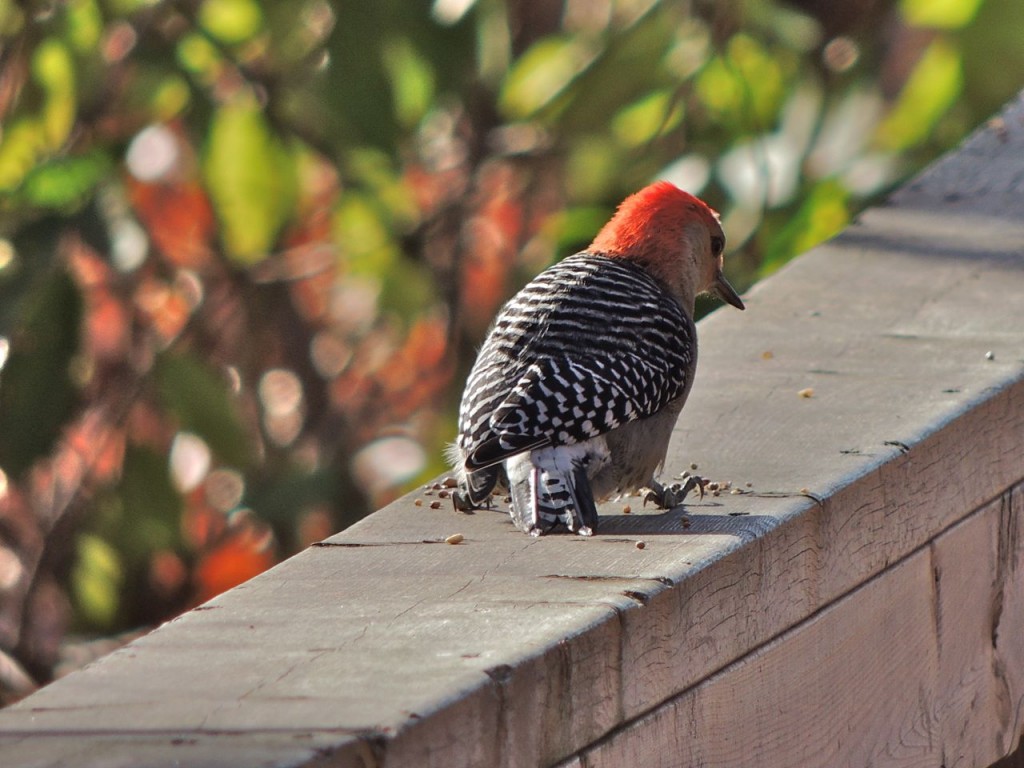
The census included a small but nevertheless satisfying selection including: a small flight of American Robins, Black-capped Chickadees by the dozen, four lingering White-throated Sparrows, a Belted Kingfisher and a handful of Red-bellied Woodpeckers.

DSCN0463
Red-bellied Woodpecker

I often refer to doing a census, so it’s perhaps worth some explanation. The purpose of regular censuses is to build a large body of data to reveal and maybe understand long-term population trends. The count from any one day taken on its own is of little consequence, except perhaps when something special turns up, in which case well, you’ve got a noteworthy bird record. But with ten years and more of accumulated census data you can start to see development of population trends. Clearly a census project is of increasing value the longer it continues.

This year at the Royal Botanical Gardens (RBG) in Hamilton and Burlington, Ontario, we have started such a bird population study by completing censuses at least three times per week over the four spring and fall months: April and May, and September and October. Each census walk is completed along a defined route in areas of great habitat diversity; our task is to count all birds seen and heard. (Find out more by clicking on this link)

Apart from the RBG project, I have for many years been volunteering at a bird observatory at Ruthven Park in Cayuga, Ontario. Whenever I’m there I usually complete the daily census. Ruthven’s observatory (more here) operates daily in those same four months and has done so for two decades, its census protocol is the model for the new RBG project.

Conducting a census sharpens my birding skills, I get to know and anticipate individual birds or pairs and it broadens my appreciation and understanding of the natural world; need I add that I love it?

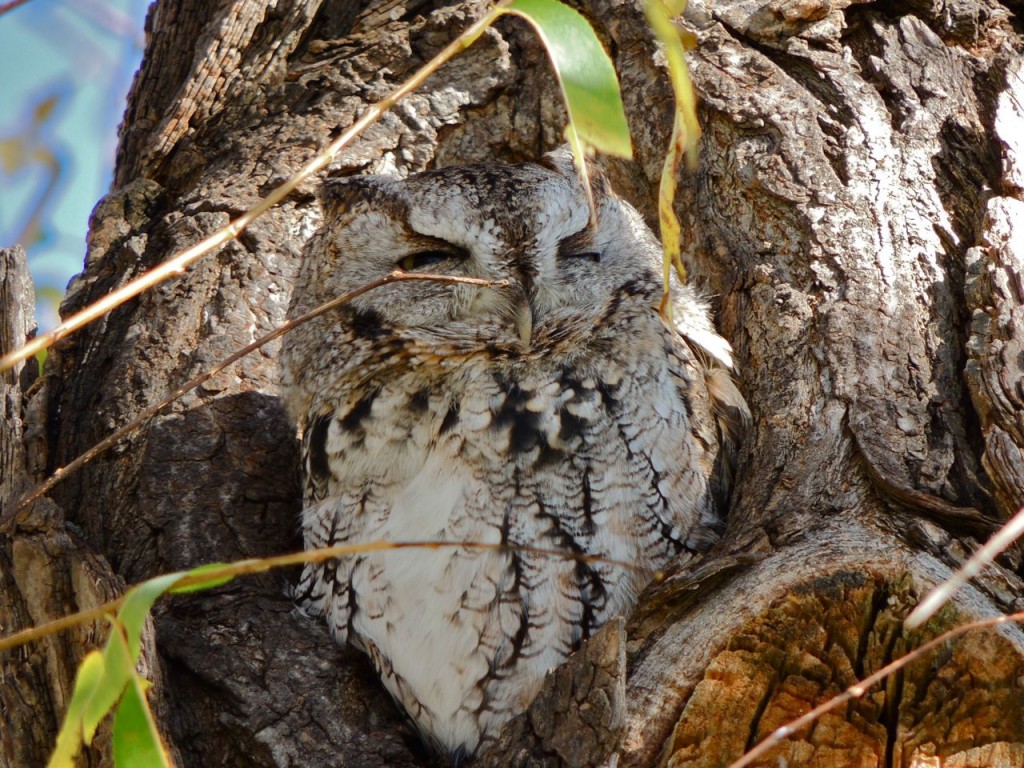
But back to today. Heading home after my census, I stopped at a marina to see if there were any, or many, newly arrived winter ducks on the large industrial harbour that defines our area. As I arrived I saw a group of Saturday strollers staring at something several feet up into a rather forlorn willow. Right away I knew what had got their attention; an Eastern Screech Owl.

Eastern Screech owl
Eastern Screech owl

For the cold months of the year, Screech Owls seek the shelter of a south or west-facing cavity, usually a hole in a tree but sometimes a nest box. When the sun shines, or maybe just when they feel like it, the birds sit up at the entrance, eyes closed to a slit, and while away the day. Shortly after sunset they leave the hole to do what owls do at night and return to their hideout just before sunrise. During spring and summer months, other than using a suitable cavity as a nest site, they are content to spend their daylight hours hidden in the thickness of trees.

My early Fox Sparrow had stolen the day but this afterthought Eastern Screech Owl was a special treat.

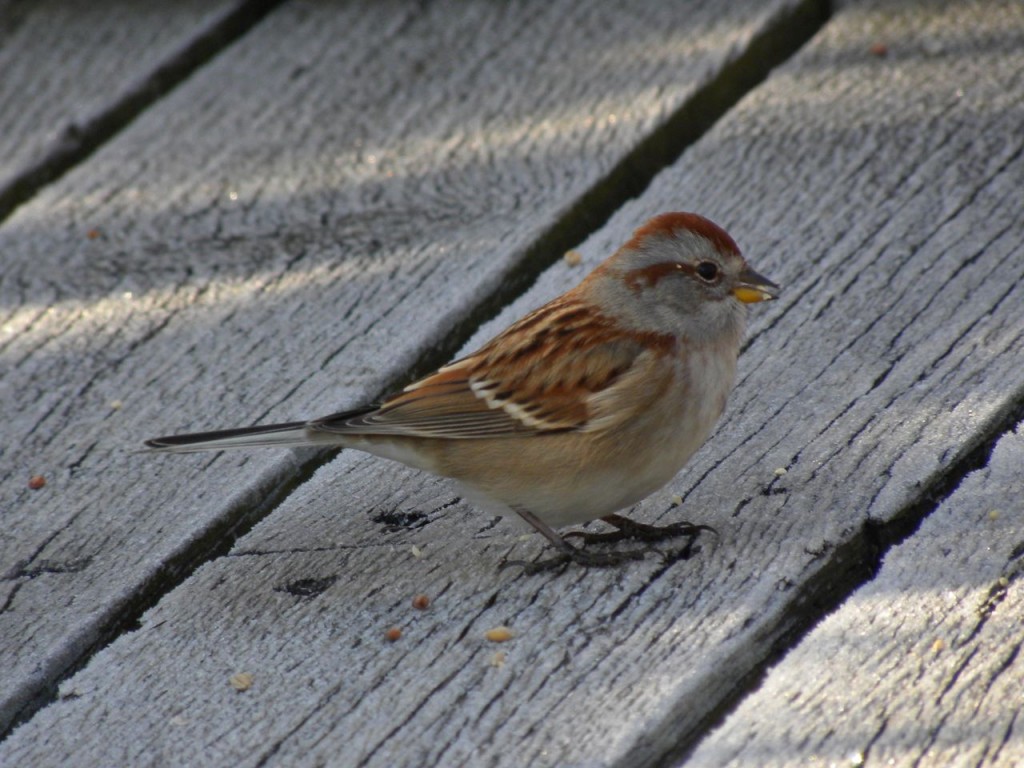
American Tree Sparrow

1 November 2015 Bronte Provincial Park, Oakville ON. For several decades our local naturalists’ club has been running a Fall Bird Count on the first Sunday in November. My participation has been intermittent but this year I offered to join a group who cover a large count territory not far from home. I was co-counter with Andrew, a young, sharp-eyed and sharp-eared man with a keen passion for adding birds to his lists. He had just returned from a five-hour-each-way trip to Ottawa to see a Pink-footed Goose. Not the way I enjoy the study of birds but each to their own.

We started our morning at a rough and ready parking area to the north of a large expanse of dry and unkempt (and therefore attractive to all wildlife) fields. We were scarcely out of the car when he called out “American Tree Sparrow”. That really caught my attention (and became instant Bird of the Day) because I’ve been watching for them for a couple of weeks, wondering when they’ll be back. They are endearing little winter visitors almost identical in plumage to Field Sparrows, a summer visitor. Last spring I observed that no sooner had winter’s American Tree Sparrows left for their northern breeding grounds than the Field Sparrows arrived to take their place.

American Tree Sparrow

There were dozens of tree sparrows here along with a handful of American Gold Finches, House Finches and a White-crowned Sparrow working over a weedy and seedy bank; a good start to our count exercise.

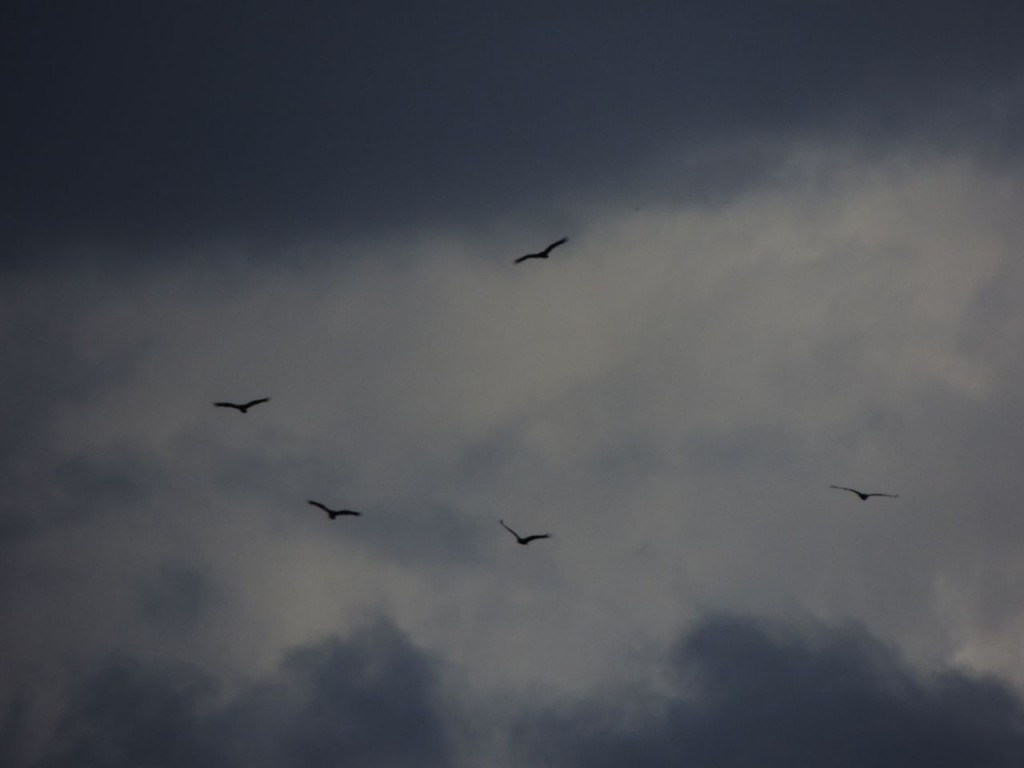
We spent the better part of three hours wandering around the fields, hedgerows and various bordering plantations and woods. I suppose it was about as good as November birding can get, not particularly remarkable, no rarities but plenty to see: There were massive swirling flocks of European Starlings, we estimated 560; widespread groups of American Robins; an American Kestrel and a few straggling Turkey Vultures.

Last Turkey Vultures of the fall on their way.

With few exceptions, we were seeing what amounts to the birds of the winter ahead. This is not necessarily their stopping place, many will continue to move southward and others will arrive from further north. Numbers will thin out, but almost anything seen today is likely to be findable anytime in the winter months.

Pine Siskins

29 October 2015 Hendrie Valley, Burlington ON. A few days ago a giant storm, Hurricane Patricia, emerged from the eastern Pacific Ocean to make landfall along the west coast of Mexico. There were dire warnings that this, by far the most powerful hurricane ever recorded in the western world, would lay waste to vast areas of Mexico. We held our breath for all the poor souls in lightweight homes but in the end the hurricane was merciful and damage was lighter than feared. Then Patricia continued on along a track to the north and east, drenching Texas as she went and us as almost her last gasp. So yesterday we had a full twenty-four hours of steady, sometimes torrential, rains. Today, winds blew at storm force all day long; presumably air rushing to ease Patricia’s low-pressure heart.

I ventured out to do a census expecting the valley to be relatively tranquil, and it was. Trees around the perimeter were roaring and tugging and the sky was full of flying-things-not-birds. My ninety-minute census was pleasantly varied and included a male Belted Kingfisher, a Rusty Blackbird, six Purple Finches, a Fox Sparrow and a Brown Creeper.  Here’s some of them in a slideshow gallery visible only on the website, not if you’re reading this as an email.

Pine Siskin 17 Oct 2012

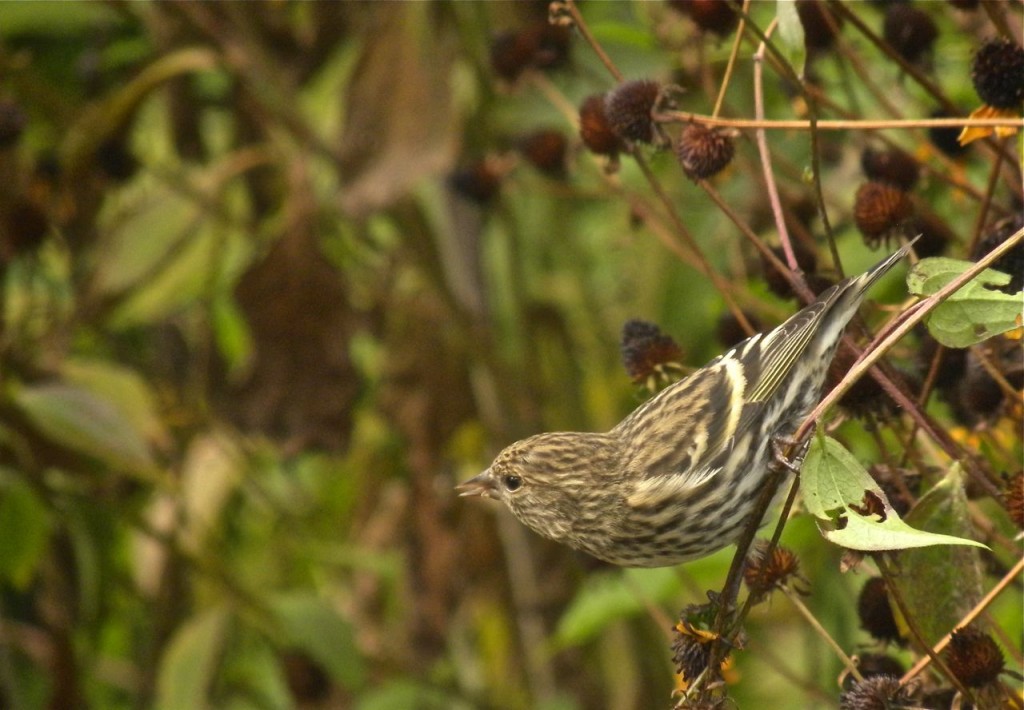
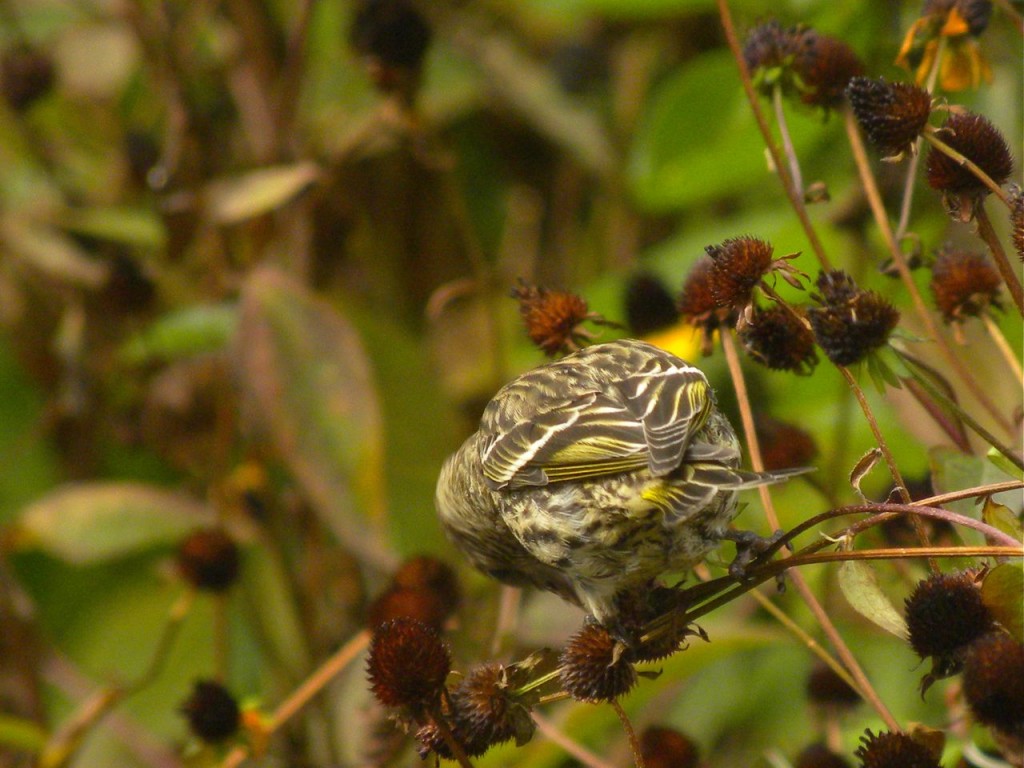
I was quite happy with the birds I’d seen, it spoke of the decline of fall and I had enjoyed the drama of the surrounding storm. I think three Pine Siskins were almost my last sightings, I heard them chattering to each other in their almost inaudible squeaks (tsee-wee, tseee tseee tseee) in the very top of a Yellow Birch where they were working over the seed cones. Content though I was with the kingfisher, the Brown Creeper and all the rest, the siskins were my Birds of the Day.

Pine Siskin 17 Oct 2012

We describe Pine Siskins as winter finches; they breed much farther north of here in the land of pine and spruce. It’s only when there’s poor pinecone crop that they are prompted to move south this early. Tempting though it may be to see them as precursors of more winter finches, the factors driving their winter wanderings are many. It may happen, it may not.

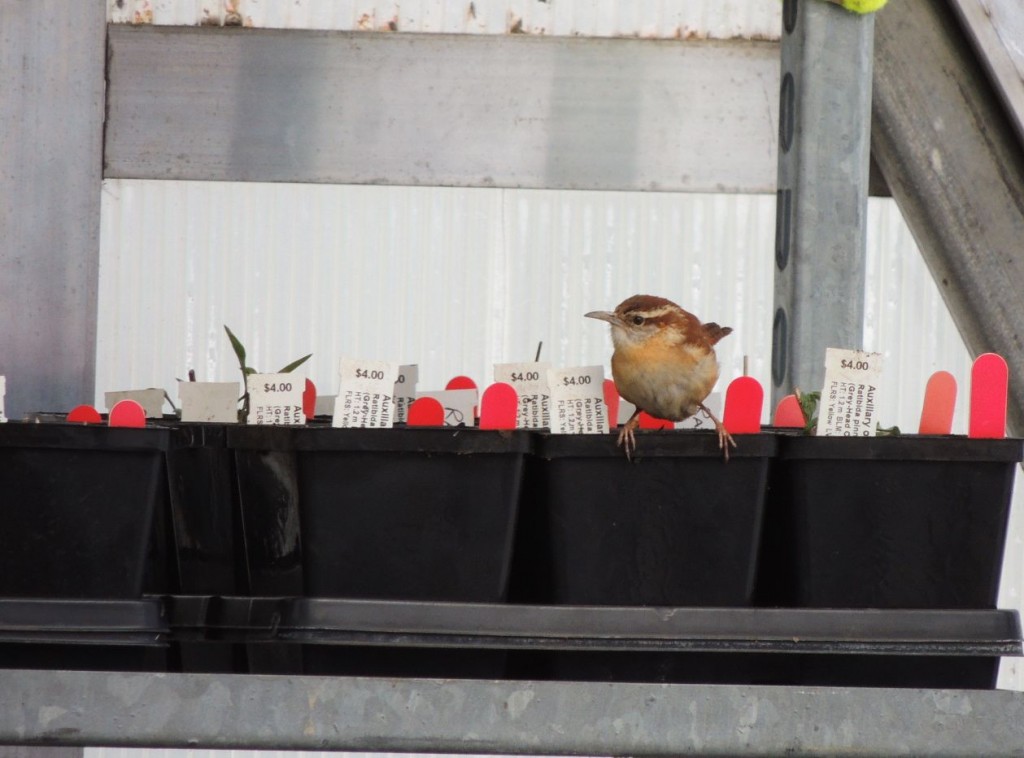
Carolina Wren

26 October 2015. Downtown Burlington ON. The vanishing of our birds has become increasingly noticeable in the past week or two; as the leaves fall so the birds leave town. I have conducted a few routine censuses recently, each one turning up fewer birds than the previous, but always with a highlight: A singing Purple Finch that baffled me for a while. I thought it was a Blue-headed Vireo, their songs are vaguely similar; A Fox Sparrow seen briefly as it darted into a thicket of dogwoods, allowing just a fleeting glimpse of the intense rust-red of its back and wings. Both of these species are late fall migrants; it’s their job to turn out the lights when they leave.

The four seasons in our temperate climate stand in clear contrast to each other. In the garden this is the season to clear away the exhausted, the depleted and the frost-bitten. We don’t have a compost pile, our garden debris is taken and composted by the city, but I’d rather not dispose of plants that still have seed heads. Instead I gather and tie sheaves of exhausted Woodland Sunflowers, Echinacea and Phlox and pile them in a quiet corner where birds, and probably rodents too, can find shelter and food for days and weeks to come. I’ve always hoped these piles serve their supposed purpose but had no sure way of knowing. But this morning when I looked out, I saw a small dark bird making its way down and around an old wooden barrel and into the pile. I reached for my binoculars and a few minutes later an alert Carolina Wren appeared, perching prominently on top of one of the sheaves and showing clearly the its rich brown plumage, pale eye-stripe and pale throat. Moments later I spotted a companion bird and since Carolina Wrens stay paired up all year, it was probably its mate.

Carolina Wren in greenhouse

We’ve had a pair (I assume) of breeding Carolina Wrens in the neighbourhood all summer, more often heard than seen. Now, of course I hope my pile of garden debris will continue to attract them through the winter.