Red-bellied Woodpecker

15 December 2015. Hendrie Valley, Burlington ON. If this were a normal year, a normal mid-December, we would have at least one of: sub-zero temperatures at night, frozen ground, snow cover, a rime of ice along creeks and rivers and complete ice cover on lakes and ponds; we might even have a Christmas card landscape. But the reality is we have none of that; instead temperatures remain well above freezing, the ground is soft, and daytimes almost invite shirt-sleeve nonchalance. Bizarre it is. I just wish we could have held back the birds of October; instead the trees and the birds affirm that it is winter; leaves gone, birds gone.

I continue my regime of census walks though, and today I was tailed as usual by Black-capped Chickadees and White-breasted Nuthatches, our constant hand-out-seeking companions. It’s hard to count birds that behave this way, my chickadee counts since the start of September vary anywhere from twenty to sixty individuals, more usually in the thirties and forties. What is a person to conclude?

Mallards too, so many of them! I routinely count forty to fifty. This out-of-the-wind valley with its numerous shallow and still unfrozen ponds is a perfect place to while away the time. There is an equal number of males and females, it makes for peace in the kingdom.

Gradually I’m learning to anticipate who’s where. I anticipate American Goldfinches, now all dressed in drab olive, feeding in the seedy tops of Yellow Birch trees. I find a wheeling Red-tailed Hawk usually around a bank of towering White Pines and there’s a dependable pair of Northern Cardinals stationed along the riverbank. I know too where to expect a Hairy or Red-bellied Woodpecker, I usually hear them long before I catch sight of them. Today’s bird of the day was a Red-bellied Woodpecker who was following a couple who were generously handing out peanuts, attracting Blue Jays in particular and hoping for a photo op.Red-bellied Woodpecker
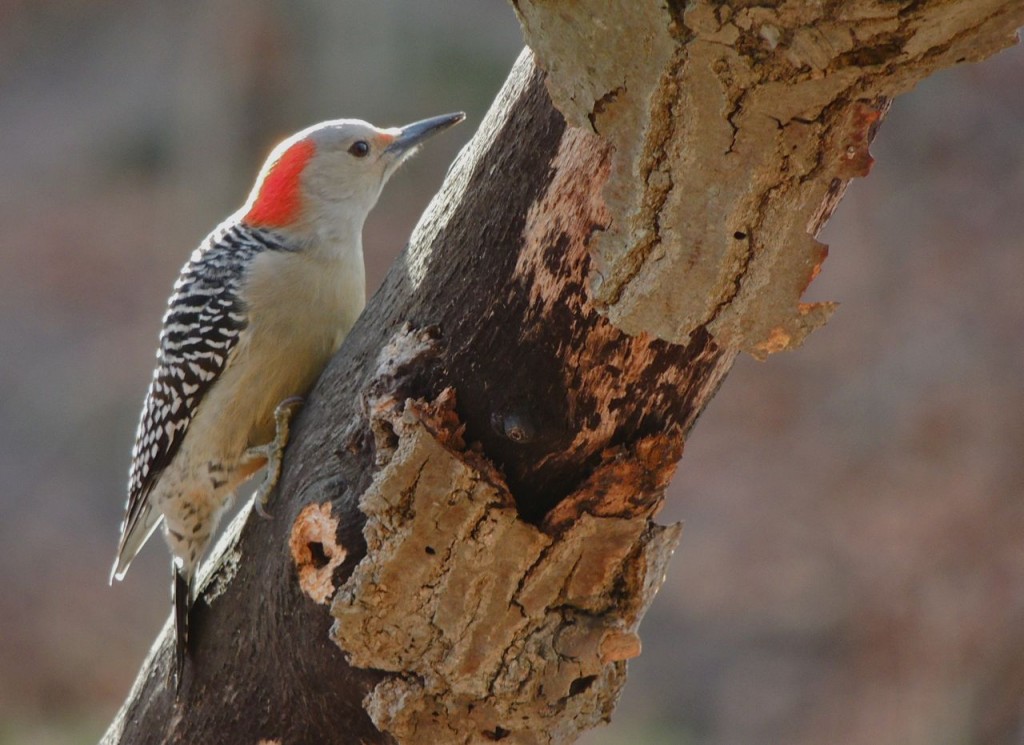
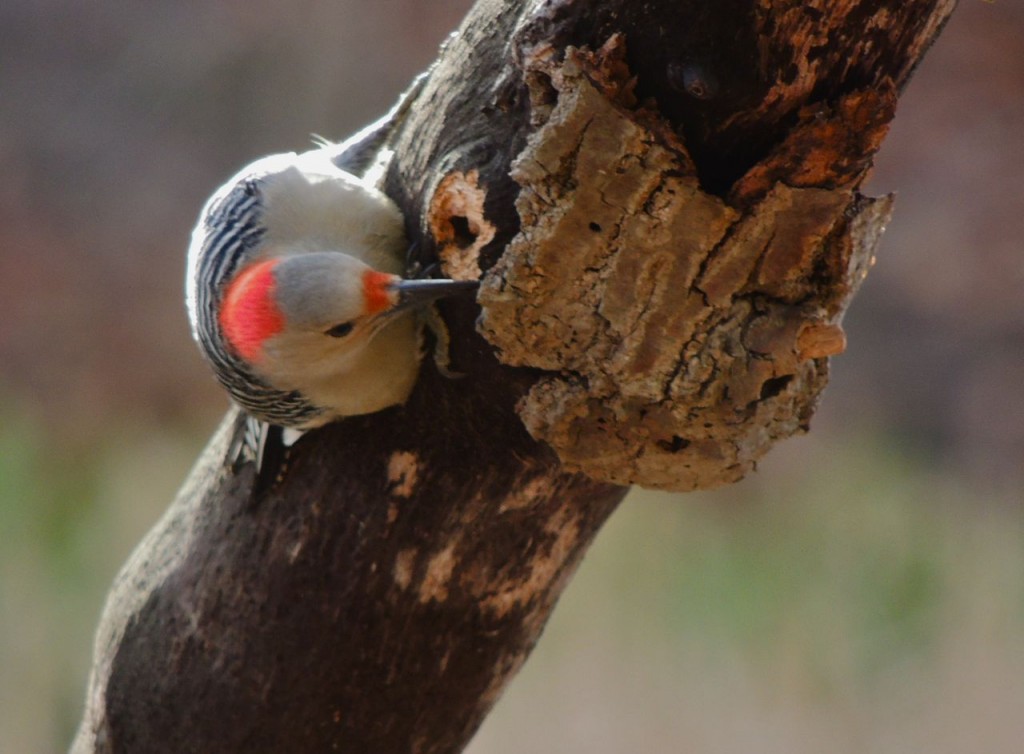
This female Red-bellied Woodpecker came close and allowed a good study of the distinguishing female plumage. On a male the entire crown is scarlet from nape to bill whereas on the female, the scarlet is limited to the nape and nasal tufts, leaving a creamy grey forehead.Red-bellied Woodpecker 2
Tundra Swans

9 December 2015. Cootes Paradise Hamiton ON. I cannot let today go by without some comment on the weather. Today the morning was positively October-ish yet it’s mid December. Cold has hardly touched us, barely a frost to speak of. It seems strange to be out in the field, everywhere swept clean of birds, yet warm enough that I wonder what an abundance of food remains available.

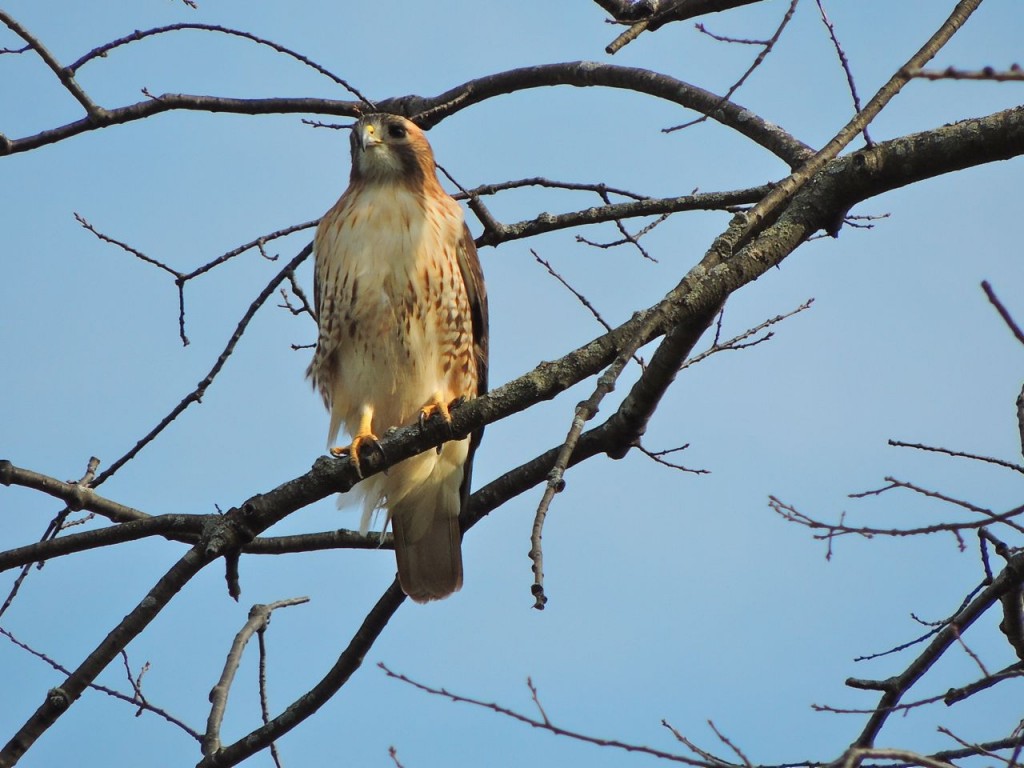
My afternoon hike along the shoreline of a shallow lake and out to a wooded promontory was marked more by micro-dramas than birds themselves. At the start, a crew of men were cutting to the ground some old, densely overgrown, evergreen hedges. I had worried that the hedges might hold some overwintering owls but my concern was ignored and down they came. However the hedges were home to many mice and as the chainsaws howled, so the mice ran for their lives; or so they thought. A Red-tailed Hawk had learned that the presence of these noisy men meant food and it stationed itself at the top of a nearby ash tree from where it periodically swept down to grab a meal.

Red-tailed Hawk ready for the next meal

Later, from the wooded promontory I could hear Tundra Swans. I could just make out a distant group on the other side of the lake so made my way down to the shore for a better look. I’m a sucker for Tundra Swans and these were my birds of the day. Out there among countless Mallards, Northern Shovelers and Green-winged Teal I counted eighty-three of them including what appeared to be several bonded pairs. One pair was engaged in a face-to-face display wherein, while cooing loudly to each other, both extended their neck horizontally barely above water level and set their wings quivering. I wondered if it was something Tchaikovsky might have written in to Swan Lake; maybe he did and I’ve missed it.

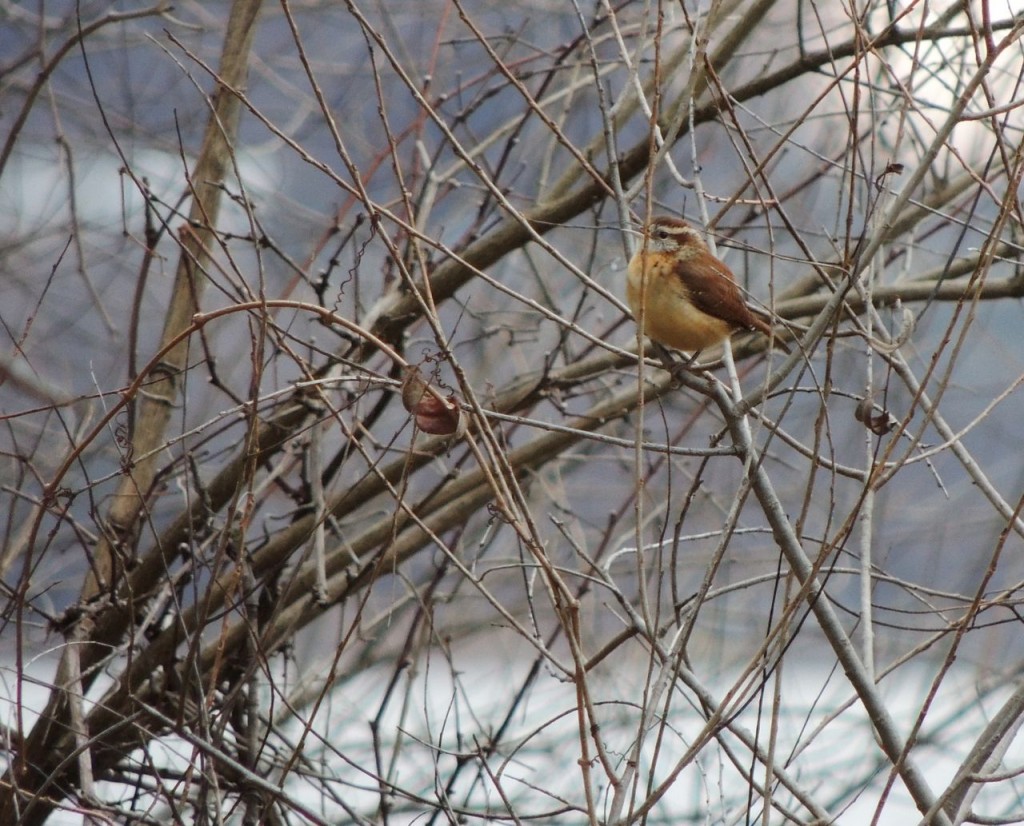
On the homeward stretch a Carolina Wren entertained me by singing loudly from a leafless willow. While I thought I’d managed to get a couple of decent long-shot photos what I couldn’t see from where I stood was the small twig that spoiled the whole thing.

Carolina Wren
Carolina Wren

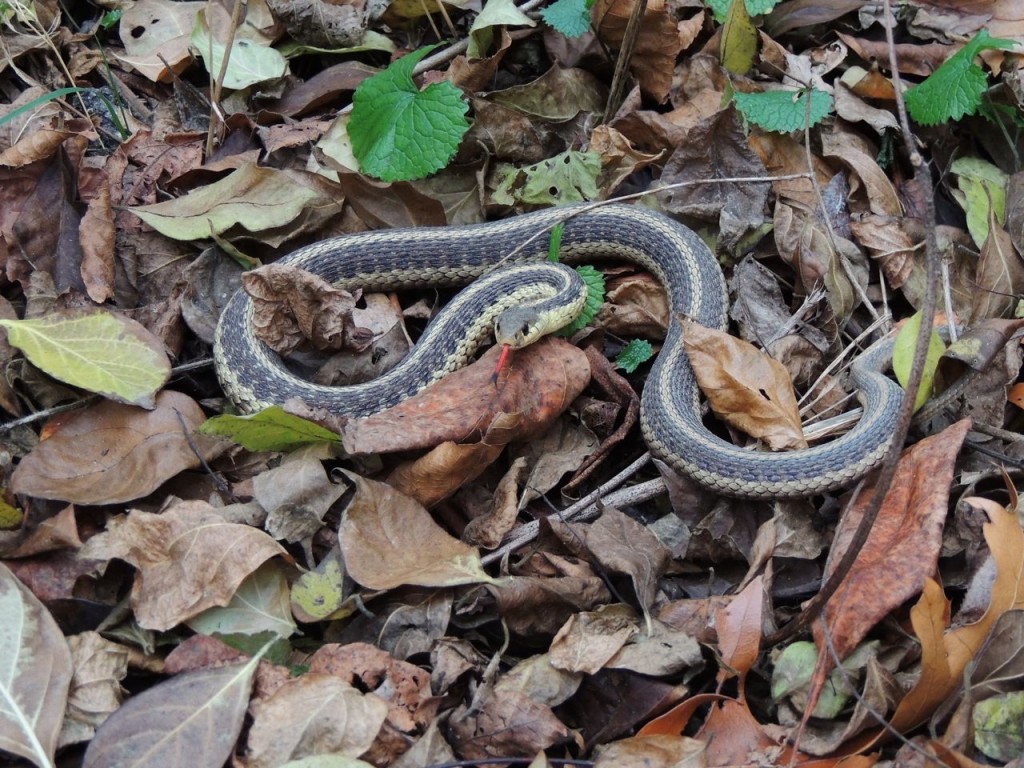
Perhaps best of the day, although not a bird, was an Eastern Garter Snake found making its way across one of the shoreline trails. It was quite active and at my approach it drew up into a rather defensive semi-coiled position and tried a couple of lunges at me when it thought I was getting too close. This was an extraordinarily warm December day and presumably the snake had roused from hibernation. I wonder whether such a disruption is risky; perhaps once aroused it was driven to fuel up. I didn’t see anything that would seem make good snake food, but then I don’t get around at that level.

Eastern Garter Snake

Merlin

30 November 2015. Queen Elizabeth Way, Mississauga, ON. It’s been a while since I needed birding to get away from a tedious day of work; indeed it’s been a while since I held a steady job at all. But a friend offered me casual work, one day per week, delivering product to various customers in and around the city of Toronto. I’ve been doing it for three months now; I manage.

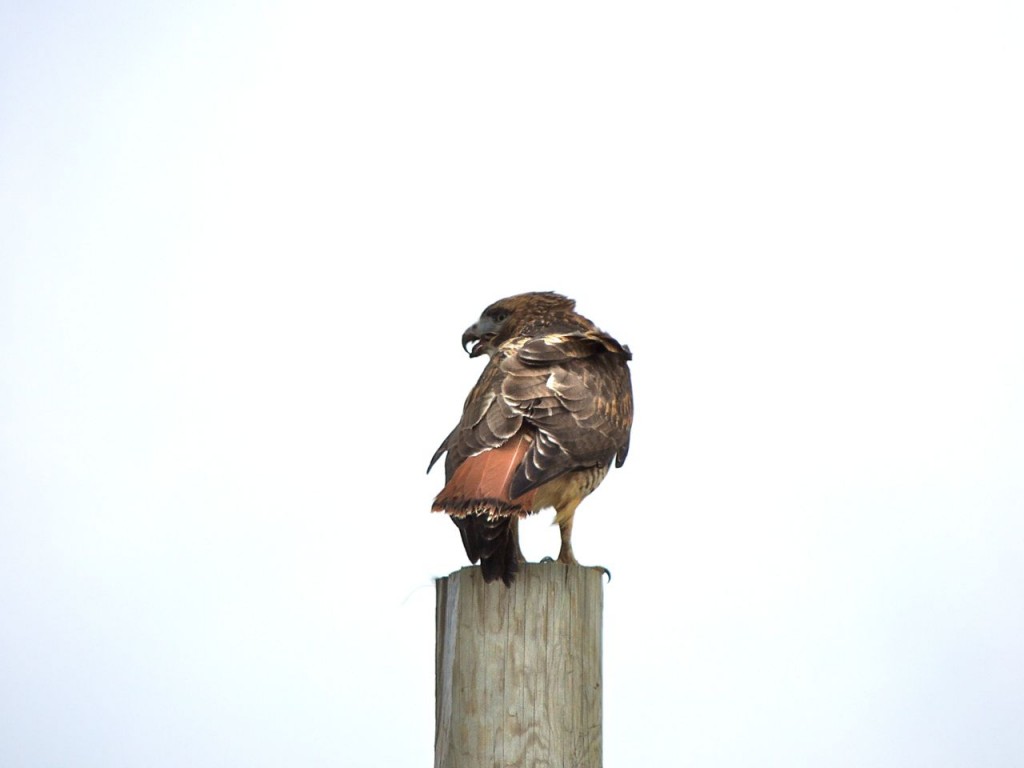
Mid-morning today, perched high above ordinary car traffic at the wheel of the largest truck my ‘G’ license allows me to drive, I was plodding along with the flow of city-bound traffic. I noted several Red-tailed Hawks: two were soaring in circles over a major interchange and others had moved into position as sentinels along our highways. In a way, they are the truck traffic among birds, heavy, deliberate and conspicuous; you wouldn’t want to be hit by a Red-tailed Hawk.

Red-tailed Hawk
Red-tailed Hawk

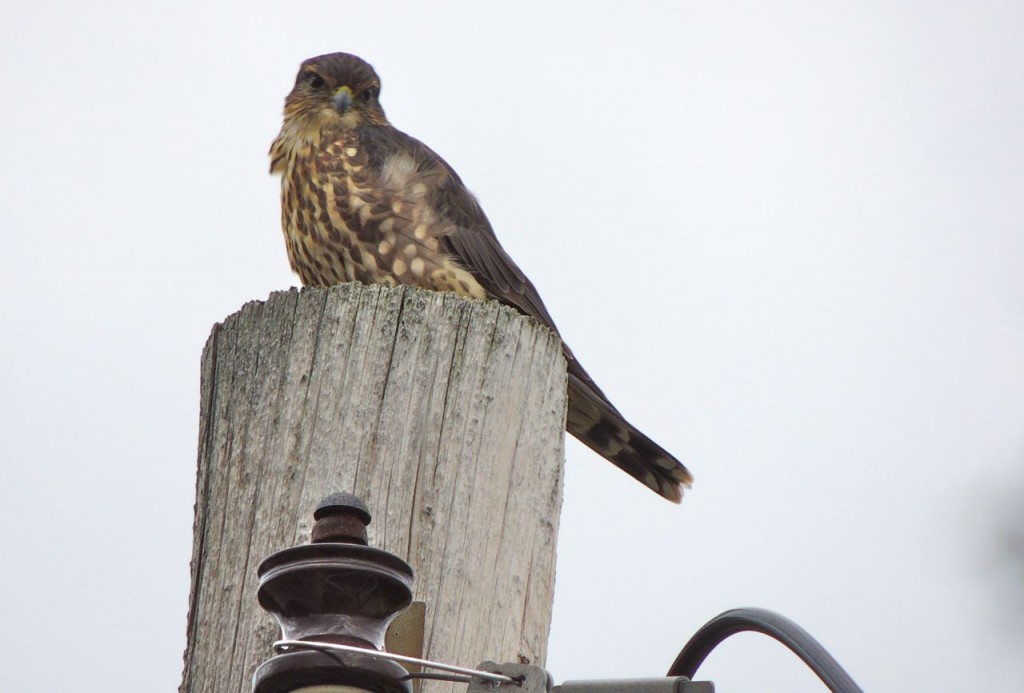
Thirty minutes into my journey and moving steadily with the flow of traffic, I glanced to my right at an uphill on-ramp delivering new traffic into our stream. A white something-or-other car was closing in about to join us, and then, going the other way a falcon flicked past on easy wing-beats. Just a fleeting glimpse, but enough to know it was a Merlin: too small, too brown and too much of a sprinter to be a Peregrine Falcon; too direct and purposeful to be an American Kestrel. This little sports car of a bird defying the rules of traffic added a defiant “See ya!” zip to the ordered progression of highway manners. Merlins, by the way, make flying look easy.

Merlin
Merlin

Wrens

27 November 2015. Hendrie Valley, Burlington ON. The inspiration for My Bird of the Day is the bird which, no matter how dismal the day, how slim the pickings, makes me say wow! There always one that makes the day.

Today it was an unexpected trio: a House Wren, a Carolina Wren and finally a Winter Wren, all at the same place and time. That sort of happy conjunction doesn’t happen very often. I remember some ten or maybe fifteen years ago having all seven of our woodpecker species in sight at the same time. It was early fall as I recall and taken individually all were more or less to be expected sightings. Today’s three wrens were a different matter, only the Carolina Wren could reasonably be anticipated.

Male Mallard
Male Mallard

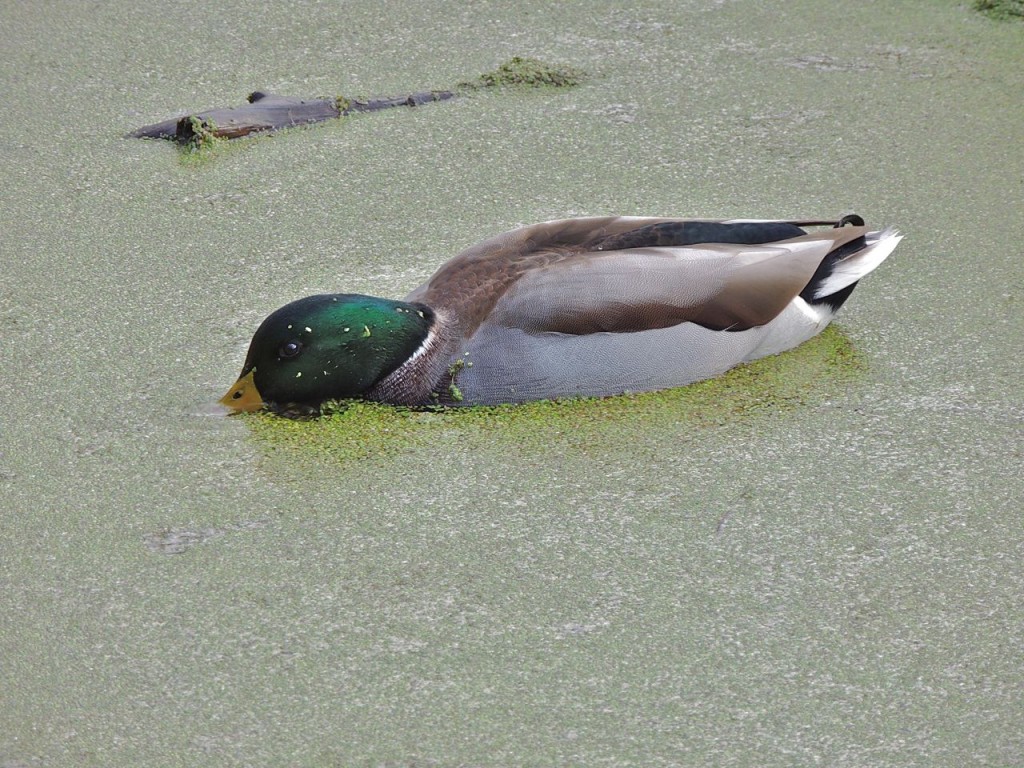
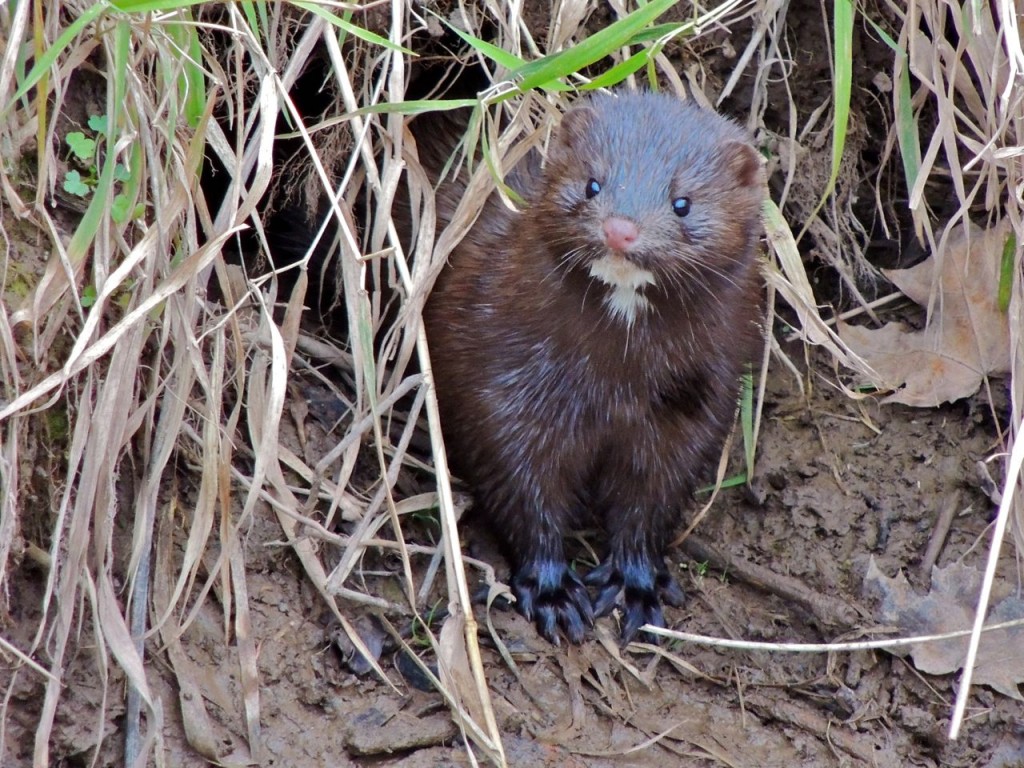
The day was unusually warm but as I went about my census walk there was rain on its way. It started falling gently as I was finishing up but most of the walk was dry and for a while all was quiet. Good old Mallards, fifty of them, were milling around in the shallow woodland ponds and connecting watercourses. A lovely dark brown Mink was watching three of them closely. I have no doubt the Mink would make short work of a Mallard if it got the chance, this one seemed to be weighing up the risks of staying around in the hope of duck dinner against any potential threat my arrival posed.

Mink
Mink

I sometimes wonder what to make of my six-and-a-bit-decade ears. As I walk these census rounds I hear, or think I hear, little high-frequency squeaks and chips that are impossible to pinpoint. I wonder am I nearly-hearing Brown Creepers above and around me, or is it just unseen chickadees?  Brown Creepers are a possibility but much of their song is out of my range and I was lucky enough to see three of them this morning.

It was during a hard-listening pause as I was trying to decide whether I was hearing something or nothing that things changed. I picked up a distant rasping chip, it sounded like a Song Sparrow (but unlikely I thought, they should have headed south a couple of weeks ago). I caught a far-off sibilant ’chack’ of a Red-bellied Woodpecker, then the maybe-Song-Sparrow again, now a Blue Jay scream or two. These, and more started to sound like alarm notes and when that happens, I look for a predator menace: a Coyote, an owl or a Cooper’s or Sharp-shinned Hawk perhaps. With that a Red-tailed Hawk drifted past and settled high in a leafless White Oak tree; now I understood.

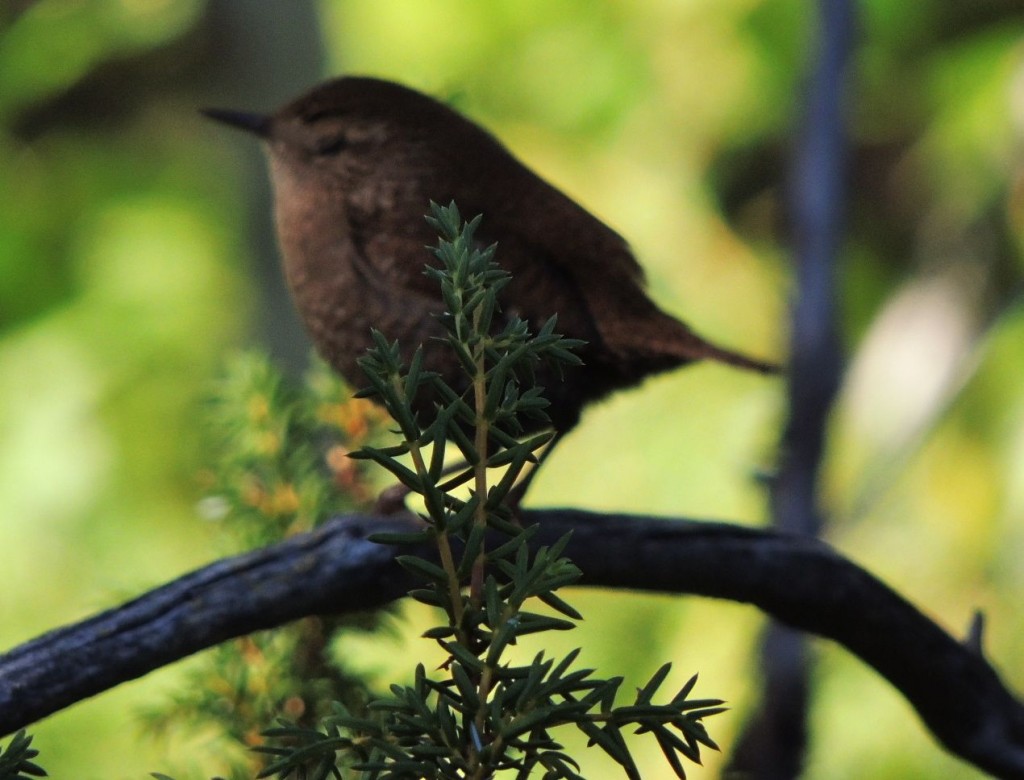
But that minor disturbance seemed to have been a wake-up call and there were now birds all around. Perhaps my hearing had switched on, or was I a new menace? I heard a few short, mechanical ‘bzzzt’ from deep in the dogwood tangle, it turned out to belong to a curious House Wren who had come to inspect me; I was surprised, almost shocked; it should have flown south long ago. I gave it an asterisk in my field book – bird of the day. A Song Sparrow appeared in front of me, and then another, so there are a few lingerers. A couple of American Tree Sparrows and a Dark-eyed Junco joined in the fun, and then off to the right a Carolina Wren started a musical purring. The piece de resistance was the cameo appearance of a Winter Wren who watched me for a second or two and then vanished into the deep undergrowth tangles. As I stood a little bemused at this late autumn richness, the Winter Wren sang its musical cascade of little notes from not far away.

Winter Wren
Winter Wren

This is perhaps a long account of what, at another time of year, would be just another day in the field. But I was thrilled to have had three wren species in front of me at once, and the appearances of the Song Sparrow was a bit of a surprise too. It makes me wonder if this little corner will turn out to harbour a number of out-of-the-ordinary winter birds. It’s an area of open water, pond margins, cattail marsh, thick deep grasses and woodland undergrowth; all of which amounts to shelter, food and survival. I’ll be watching closely.

Green-winged Teal

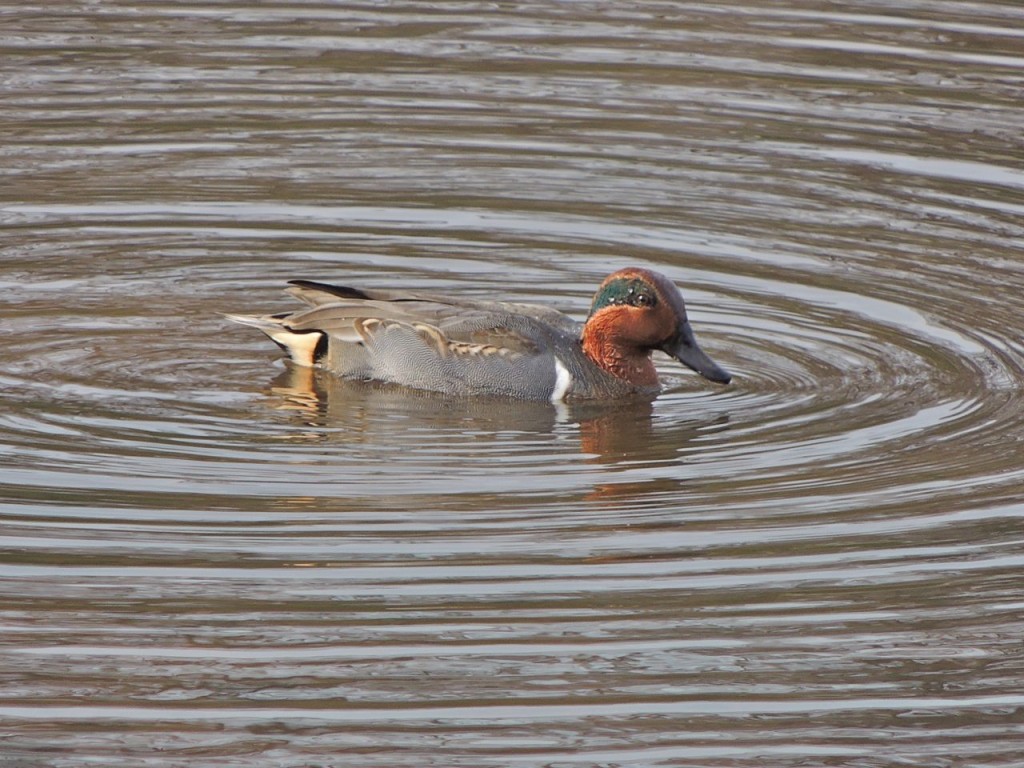
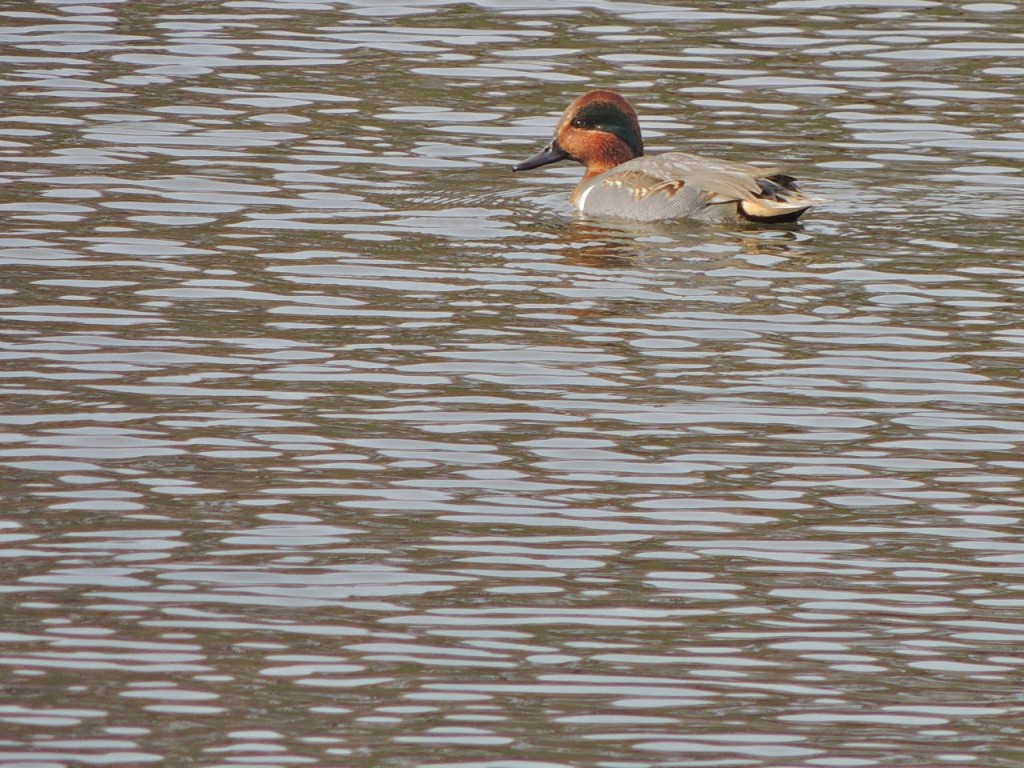
18 November 2015. Valley Inn Burlington/Hamilton, ON. The day didn’t allow much time for birding but I squeezed in two passing scans of likely sites. The first, a harbour-side park, produced a beautiful close encounter with a Carolina Wren and as I readied my camera a strolling passerby sent it scurrying for cover; that’s just the way it goes. My second stop produced close looks at this rather fine male Green-winged Teal. Although not apparent from my photos, Green-winged Teals are quite small ducks, when seen mingling with Mallards they appear to be half the size. Indeed according to the Sibley Guide to the Birds, a Mallard weighs in at around 1100 grams and a Green-winged Teal at 350 grams, a third of the weight.Green-winged Teal. Valley Inn

The markings of the adult male, from the delicate grey striations of its flanks to the bold bottle green backstrap on its chestnut head; make it well worth taking a few minutes to appreciate.Green-winged Teal. Valley Inn-2