Pied-billed Grebes

April 8 2016. Cootes Paradise Hamilton ON. Our team of volunteer-birders has resumed its regime of census walks counting birds around two bird-rich mixed-habitat loops throughout April and May. We start bundled up against the last blasts of winter and finish in T-shirt weather. I well remember the first census last year, it was April first and there was plenty of old snow still lying thick on the ground. It was stimulating to be out birding and even more stimulating to find a Hoary Redpoll among a flock of Common Redpolls.   When I wrote about that sighting I got into some discussion about whether or not Hoary Redpolls and Common Redpolls are one and the same species. It’s a hair-splitting task for the taxonomists and as far as I can see, still far from clear.
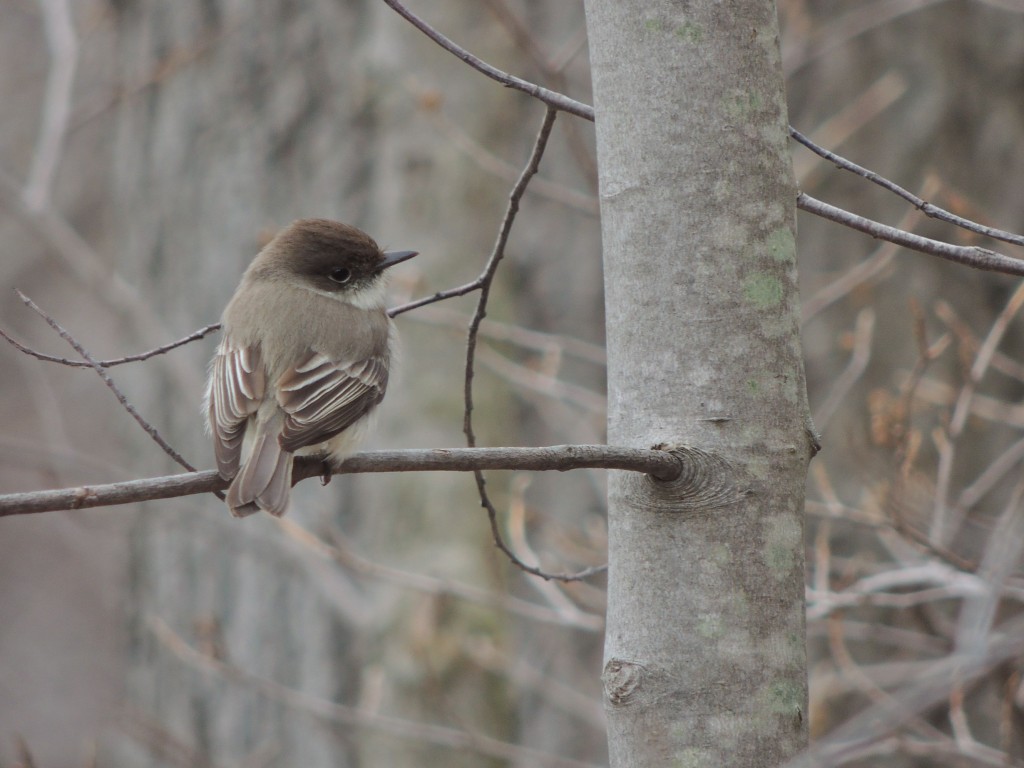
Eastern Phoebe
Eastern Phoebe

This year, (January and March anyway) has been much, much milder, but just as we were becoming complacent the first week of April played tricks on us, once again the month opened with snow on the ground. The surge of spring migrants has continued nevertheless and today and yesterday I walked around the same census route noting a few subtle (and possibly imagined) changes.
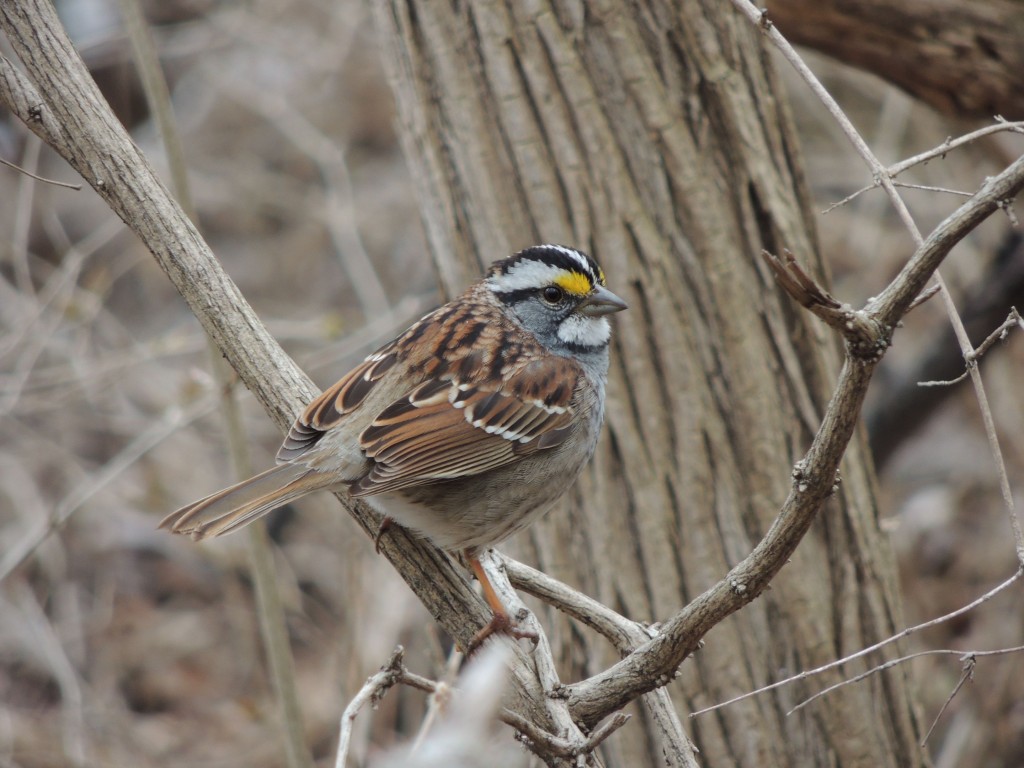
White-throated Sparrow

It was cold and raw; in a sheltered corner today we found perhaps a dozen White-throated Sparrows, a couple of lingering Dark-eyed Juncos and a handful of American Tree Sparrows; yesterday I saw none.   Two Eastern Phoebes were a bit of a surprise and there were lots of ducks whiling away the cold morning, including twelve Canvasbacks and seven Ring-necked Ducks. A large raft of snoozing Ruddy Ducks had almost doubled in size to 300 and suddenly Pied Billed Grebes appeared.

Odd ducks Pied-billed Grebes. Grebes as a family are well, different, at one end of the spectrum they are outlandish, I’m thinking of the dancer-on-water, the very elegant Western Grebe. It is as spellbinding in its athleticism as its cousin the Pied-billed Grebe is clownish and lumpy. A Pied-billed Grebe proclaiming its territory ‘sings’ of one of nature’s more hair-raising calls, a prolonged wailing, clucking and howling that eventually dwindles to a finale as if the bird is drowning itself. I’ve written about them a few times because, for all of that, the Pied-billed Grebe is in its own way sort of loveable, and despite some other enjoyable and notable sightings was my Bird of the Day.
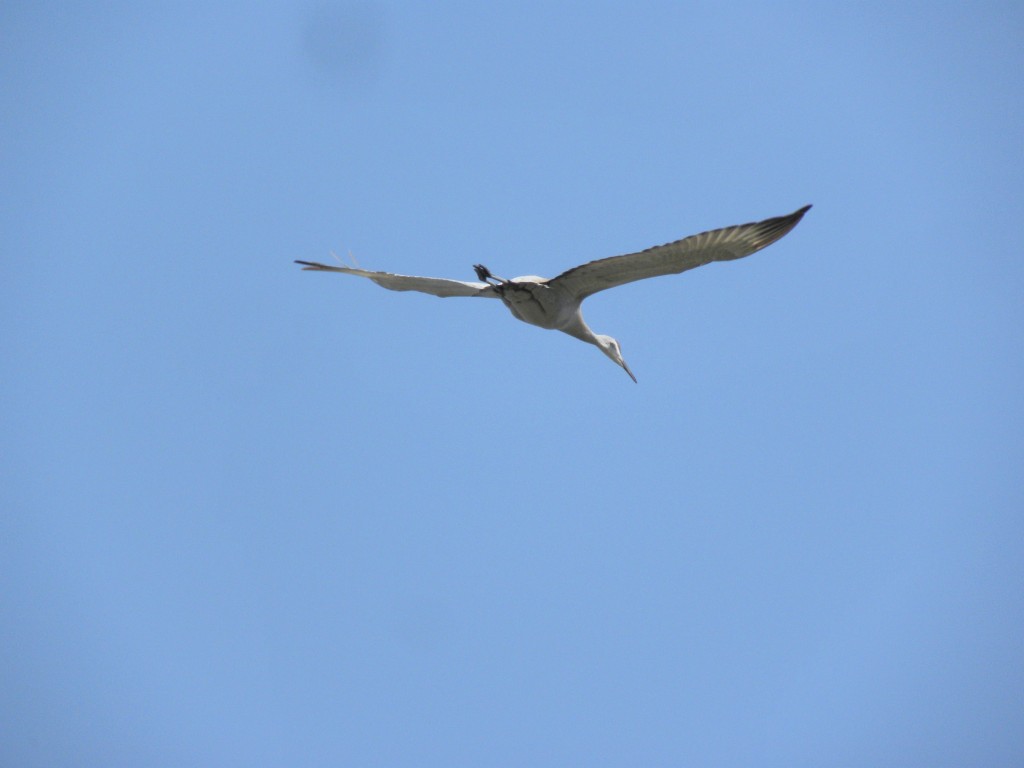
 

Sandhill Crane or Northern Harrier

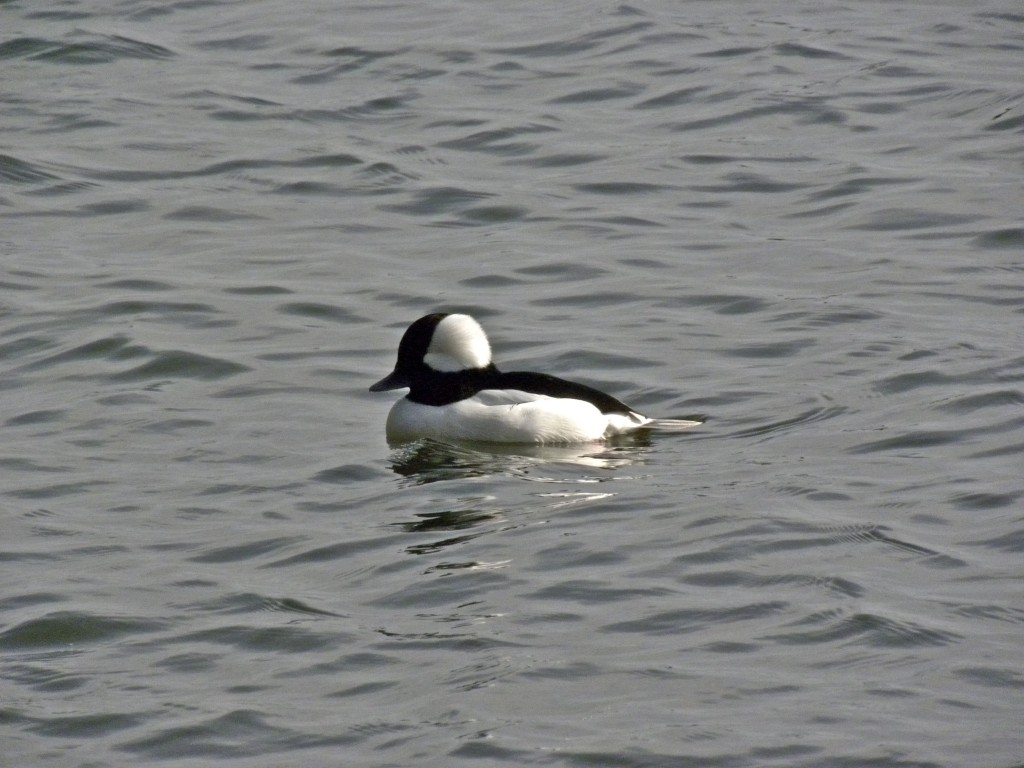
April 3 2016. Lakefield ON. We got up this morning to an obliterating snowstorm. Much as I’d like to view such arctic weather as having no future in April, it was the start of two or three truly wintery days. We had planned a weekend at a lakeside cottage and as I write, small groups of Buffleheads, Common Mergansers and Goldeneye appear and disappear on the sparkling, wind- rippled lake. Buffleheads are small ducks and dive so frequently that it’s easy to lose sight of them in anything other than a flat calm. More than once a Bufflehead took flight, one moment unseen, the next moment airborne as if by magic. They’ll be making their way north as the retreat of March ice permits and looking for small lakes and ponds to claim as their breeding territory, a place to produce the next generation.

Bufflehead
Bufflehead

On our way into a nearby town to shop for fresh market breads, two unexpected migrants crossed our path: First a pair of Sandhill Cranes, barely a hundred feet overhead and determinedly heading north.  Then minutes later a male Northern Harrier was seen quartering a winter-scalped field and rocking from side to side in the blustery west wind. Not quite under my breath I said, “Two good birds already this morning.” But I don’t think anyone else heard me; perhaps just as well. Both birds made me gasp in admiration and surprise, either might be Bird of the Day; just one person’s opinion.

Sandhill Crane - heading north.
Sandhill Crane – heading north.

Wilson’s Snipe

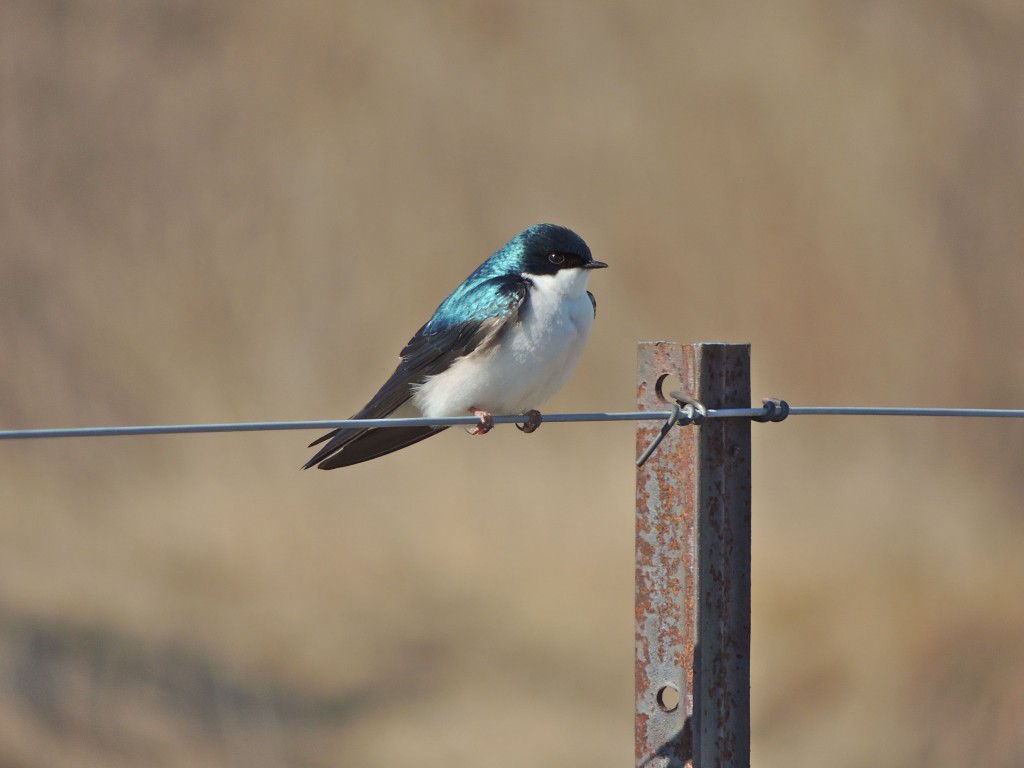
29 March 2016. Vinemount, Hamilton ON. I saw my first of the year Tree Swallows, Eastern Meadowlark, Red-shouldered Hawk and Northern Flicker today. The flicker was a surprise but all the others were more or less to be anticipated. A brisk off-the- lake north wind set my eyes streaming and I wondered how insectivores like Tree Swallows manage to eke out a living on these days.

First of the year Tree Swallow

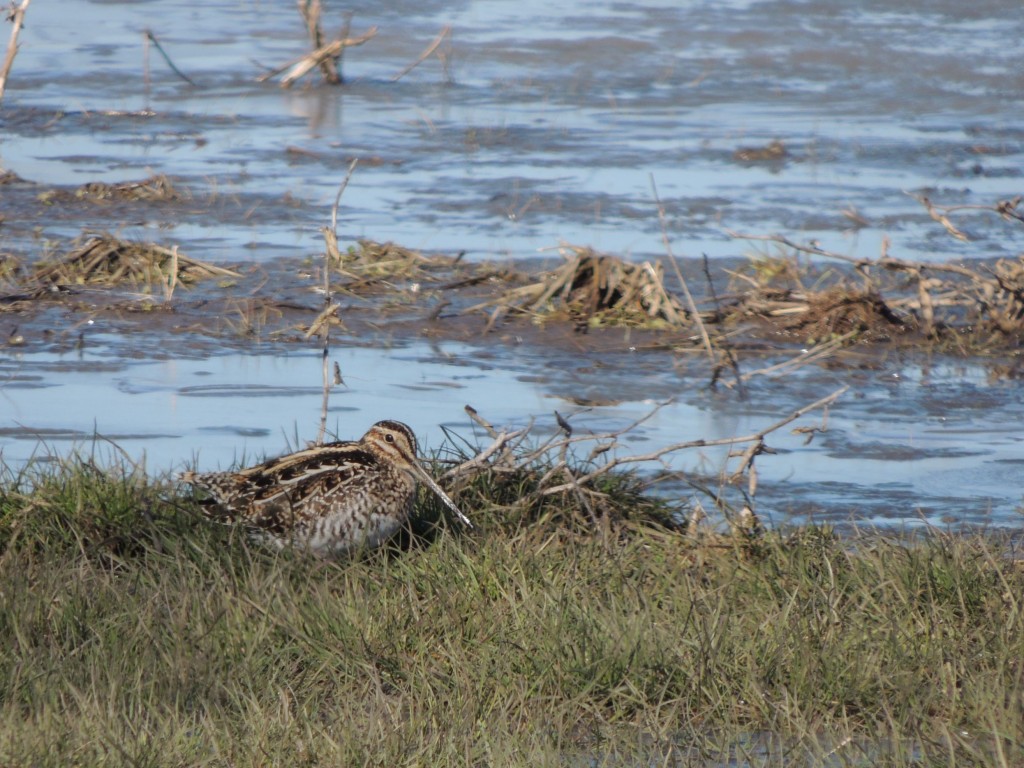
I stopped beside an expanse of flooded fields in hope and expectation of finding some Kildeer, Wilson’s Snipes and assorted ducks. No ducks but a few Kildeer and four or five Wilson’s Snipe were there.

Wilson's Snipe happy on its own.
Wilson’s Snipe happy on its own.

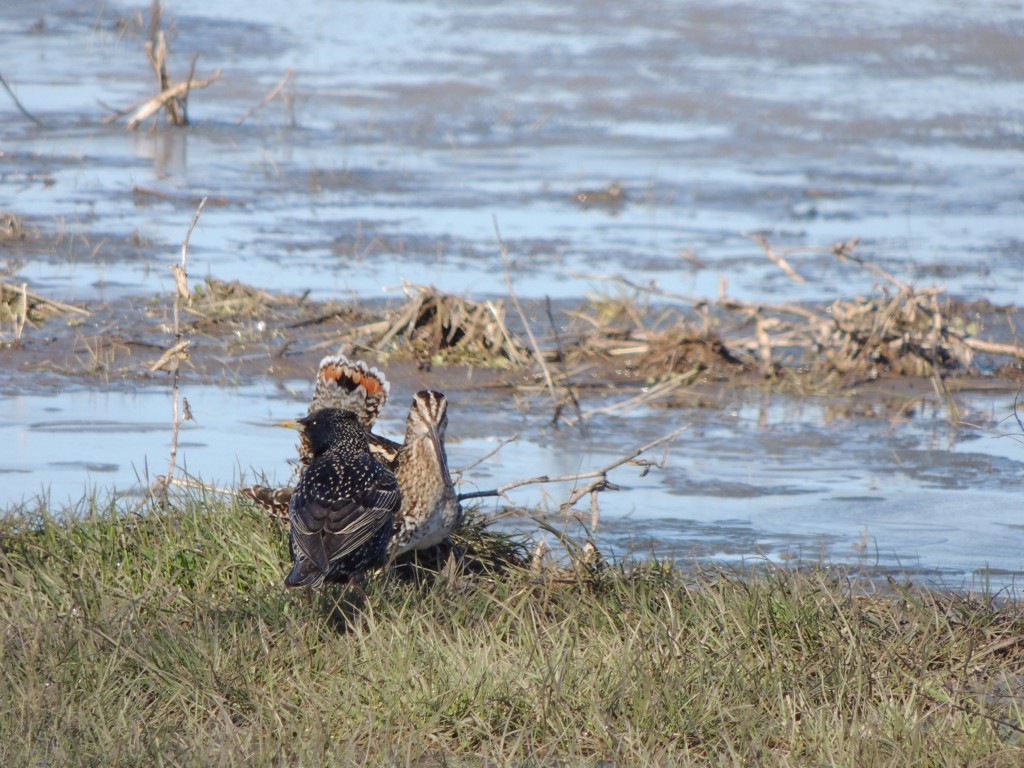
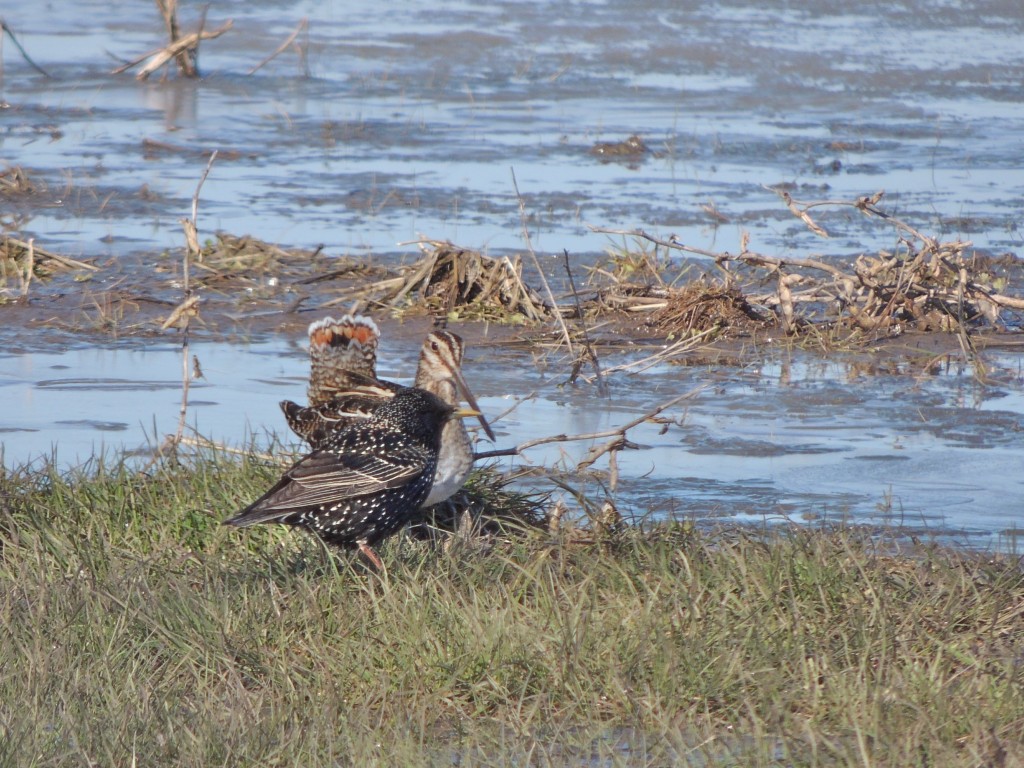
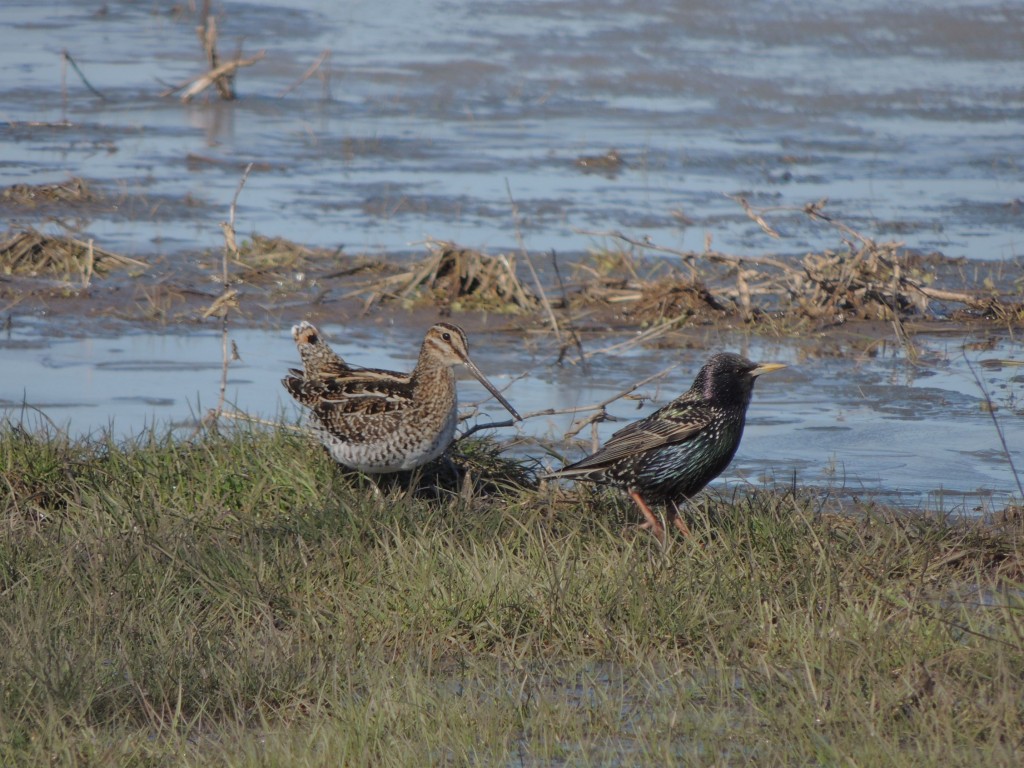
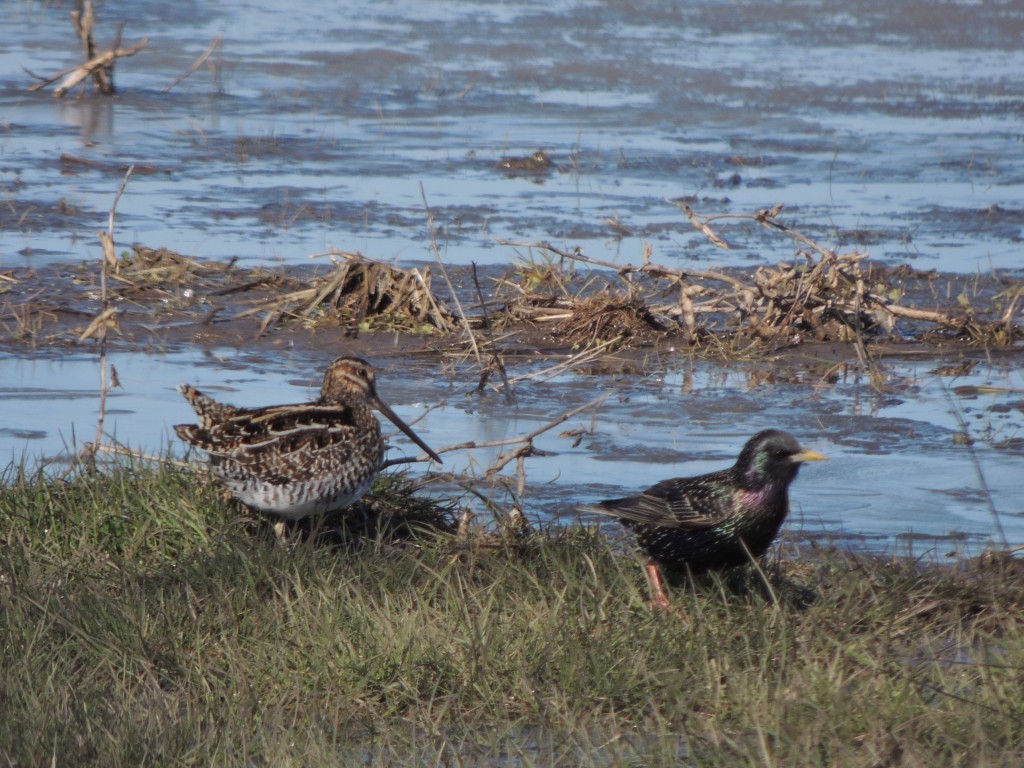
One of the snipes was just a few yards off the road and I was able to move my car slowly forward to watch and study it . You don’t often see snipe well or for long periods, but this one was easy. I watched and snapped away for several minutes and was lucky to have my camera aimed and focused when a European Starling landed right beside the it. I don’t think the starling could have seen the snipe or anticipated its defensive and aggressive reaction; the snipe stood tall and fanned its strongly patterned tail; it was all over in one or two seconds. The sequence below seems to show the starling a little taken aback by where it finds itself as the snipe takes a Who are you? Why are you here? Move on! stance.

In a what are you doing here? stance
You'll be leaving now
You’ll be leaving now
Goodbye
Goodbye
Wilson's Snipe6
..and don’t come back

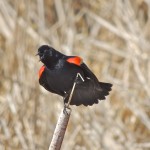
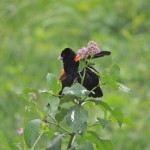
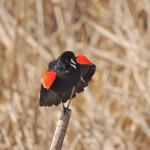
Red-winged Blackbird

27 March 2016. Cootes Paradise, Hamilton ON. There are days in the field when I expect to see the usuals yet still hope that maybe something odd will show up. At this stage in the unfolding of spring, not much odd shows up, it’s all pretty much old favourites. Today, bright, sunny and passably warm, seemed like a good opportunity to walk some familiar trails and get reacquainted with some familiar birds; which is exactly how it worked out.

Carolina Wren
Carolina Wren

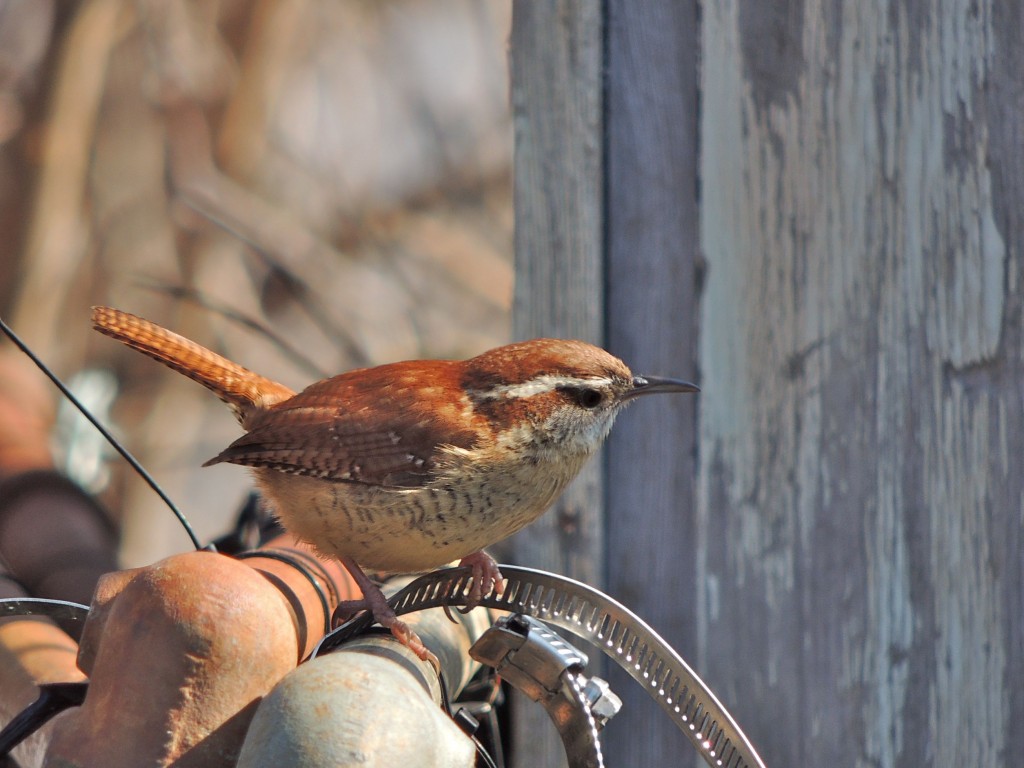
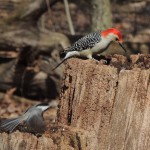
I was stopped in my tracks by a Carolina Wren who scolded me for coming too close to what I suspect will be a nest site in the tangles of man-made debris and discards around a boat house. For a while I stopped to watch a pair of Red-bellied Woodpeckers and a handful of Black-capped Chickadees finishing off a pile of sunflower seeds.(Click on any picture to enlarge.)

It was all very nice, good to be outdoors, and to be comparing this bright, northern hemisphere, winter-in-retreat March day with my birding experiences in Uganda just a month ago. And it was as I sifted through those memories that I was struck by the similarities between the territorial displays of this Bird-of-the-day Red-winged Blackbird and a Ugandan Fan-tailed Widowbird.

Birding in Uganda

After many days of sorting, captioning and editing photos and cross referencing them with field notes, and even more time writing, just plain writing, I have posted a page all about Birding in Uganda; well, the little corner of Uganda where I spent last month.  I hope you find it readable, I tried to avoid clogging the narrative with endless lists by moving them to an appendix.  See what you think by following this link or clicking on “Birding in Uganda” in the titles bar above.

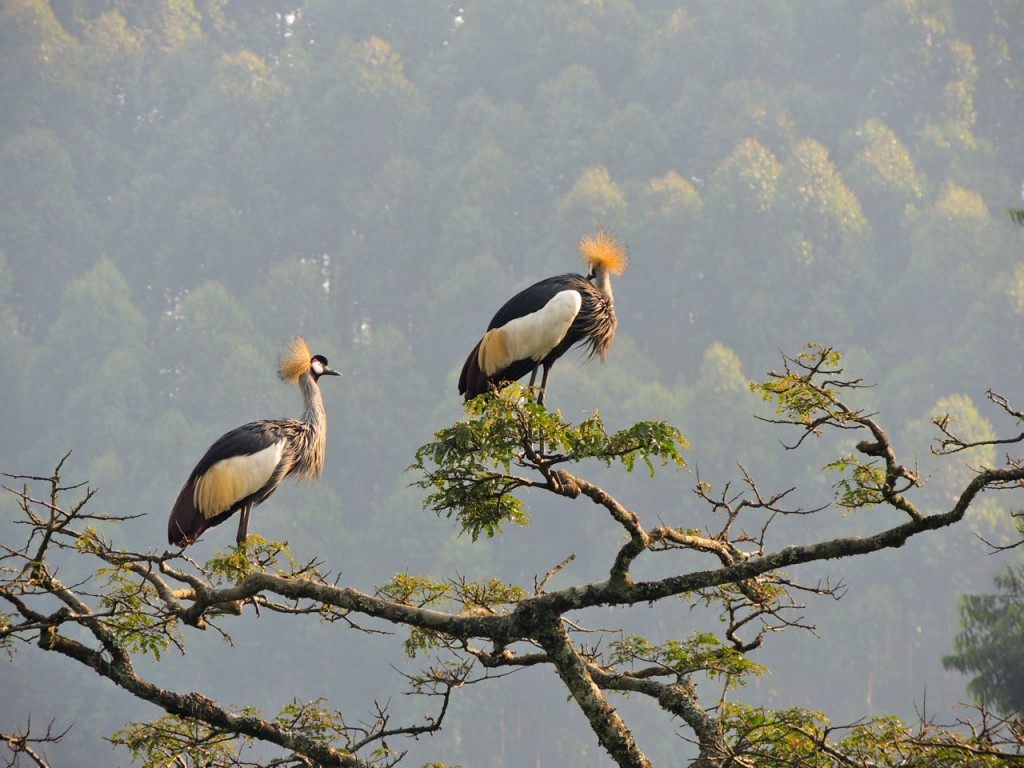
Here’s a photo of a pair of Grey-crowned Cranes, Uganda’s national symbol, to set the stage.

Grey-crowned Cranes
Grey-crowned Cranes