Northern Lapwing

September 23 2012. Gelderland Province, Holland.   Even though Holland is still very much a landscape of wide green fields, canals and low farm buildings, it is now criss-crossed with soulless motorways that slice across the gentle land.

It was on a fast motorway ride that I noticed a field dotted with stationary Lapwings. Our driver first pointed them out, proclaiming: “Kievit” I knew exactly what she meant because in Britain they’re also known as the Peewit, an onomatopoeic name reflecting its anxious call. Lapwings, Peewits, Kievits, call them what you will, they are one of those birds that capture the imagination and hearts of country folk.  They are plovers and have the characteristic stand-up-and-pay-attention posture of members of that family, they are boldly marked in bottle green above and white below with a bold black bib and, most distinctively, a cow-lick of a crest.  They fly as if tossed on the wind with big sideswiped swoops and calling urgently: ‘peeeWit’.

At this time of year Lapwings gather in large flocks to forage over open fields alongside Grey-lag Geese, Mute Swans and the occasional sentinel Buzzards. This photograph is courtesy of Andreas Trepte whose site www.photo-natur.de is full of neat bird pictures.
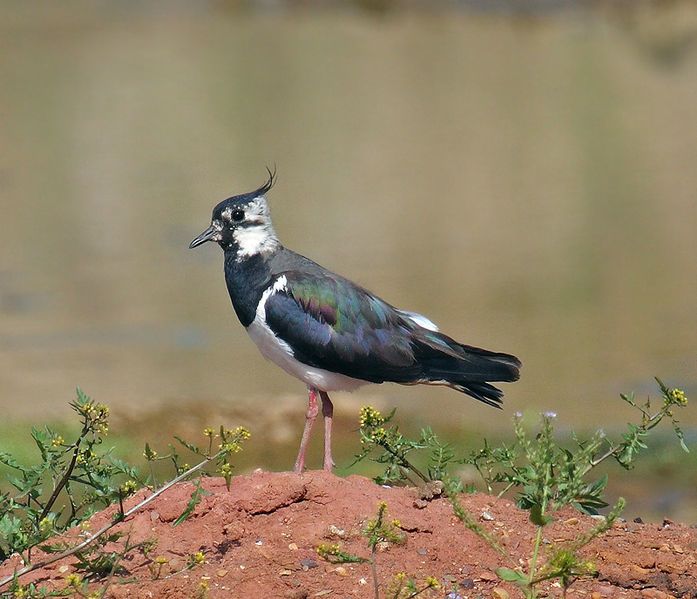
Northern Lapwing.


Flemish Jay

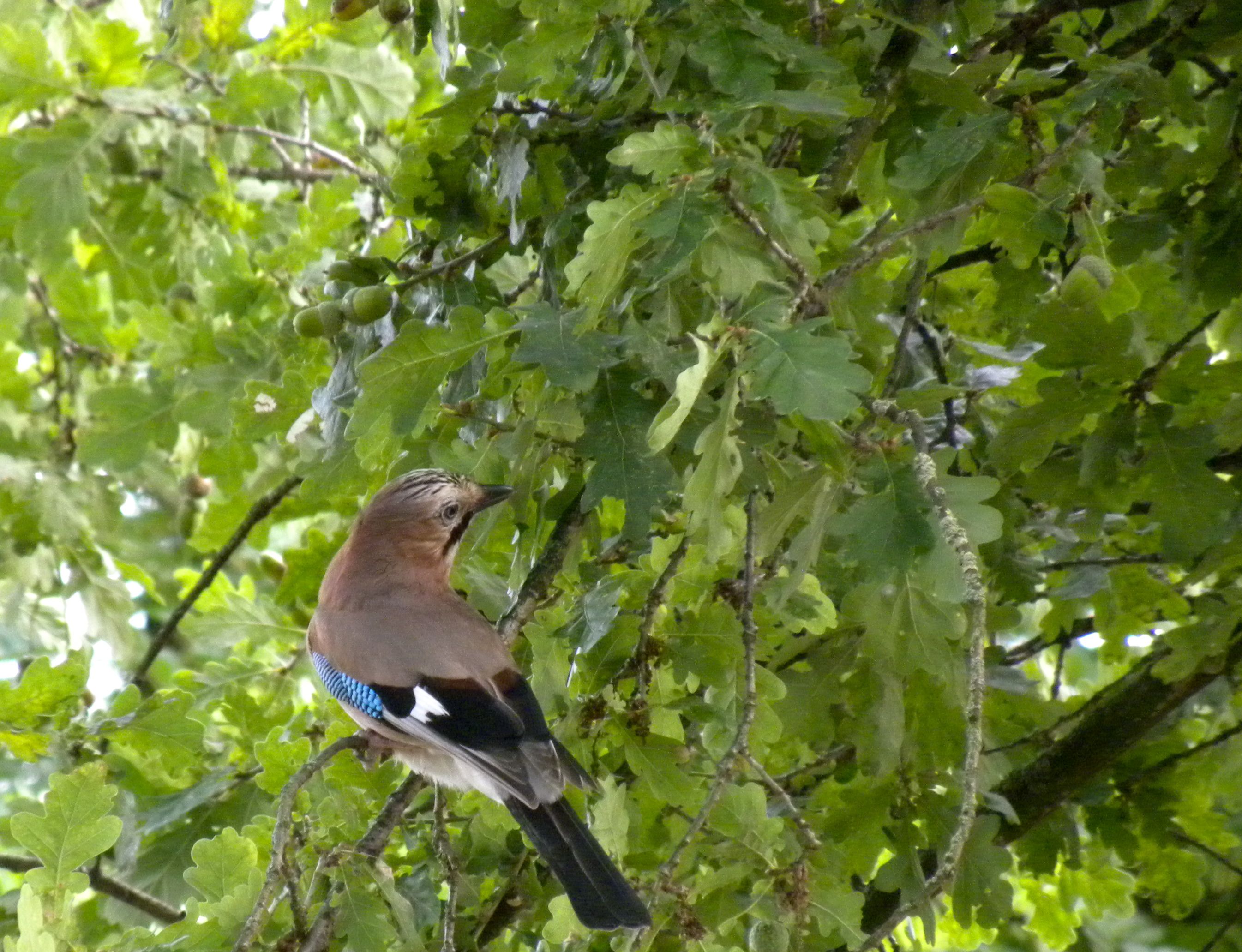
September 20 2012. Gelderland Province, Holland.  Here in Holland, the Jay of my childhood  is called the Vlaamse Gaai, or Flemish Jay. I was pleased to learn this slightly different twist on the old and familiar because the bird-naming folks of 19th century England tended to seize and over-simplify the definitive names of many animal and plants. They named Britain’s tiniest bird ‘the Wren’ before anyone could speak up for the Cactus Wren or Carolina Wren, they appropriated the Toad before the Fowler’s Toad showed it’s face and did much the same thing with the Crow, Jay, and Kestrel.

But whatever its name, the Jay (Garrulus glandarius – say that to yourself a few times; it’s rather melifluous) shares all of the flash and dash of the American continent’s Blue Jay, Steller’s Jay and Mexican Jay.  They’ll eat anything, including acorns, small animals and anything they can seize from another bird’s nest: eggs or young; and it’s this latter predilection that loses them friends. English gamekeepers made (and perhaps still make) a point of shooting Jays on sight on grounds that they raid the nests and young of their employers’ pheasants.  It’s important to keep a pheasant alive you see, so that when it’s fully grown you can go out with friends and shoot it.  As a young man I remember being both impressed and appalled when I watched a gamekeeper bring down a high-flying Jay in one smooth, loud and accurately destructive act. Jays in England were both uncommon and understandably skittish.

Today we visited a home in rural Gelderland, it was surrounded by oak trees that were heavy with acorns upon which Jays and Wood Pigeons were happily feasting.  The acorns seemed to be swallowed whole, which would be quite an accomplishment, so it was maybe not surprising that a few Magpies chattered with amazement in the background.

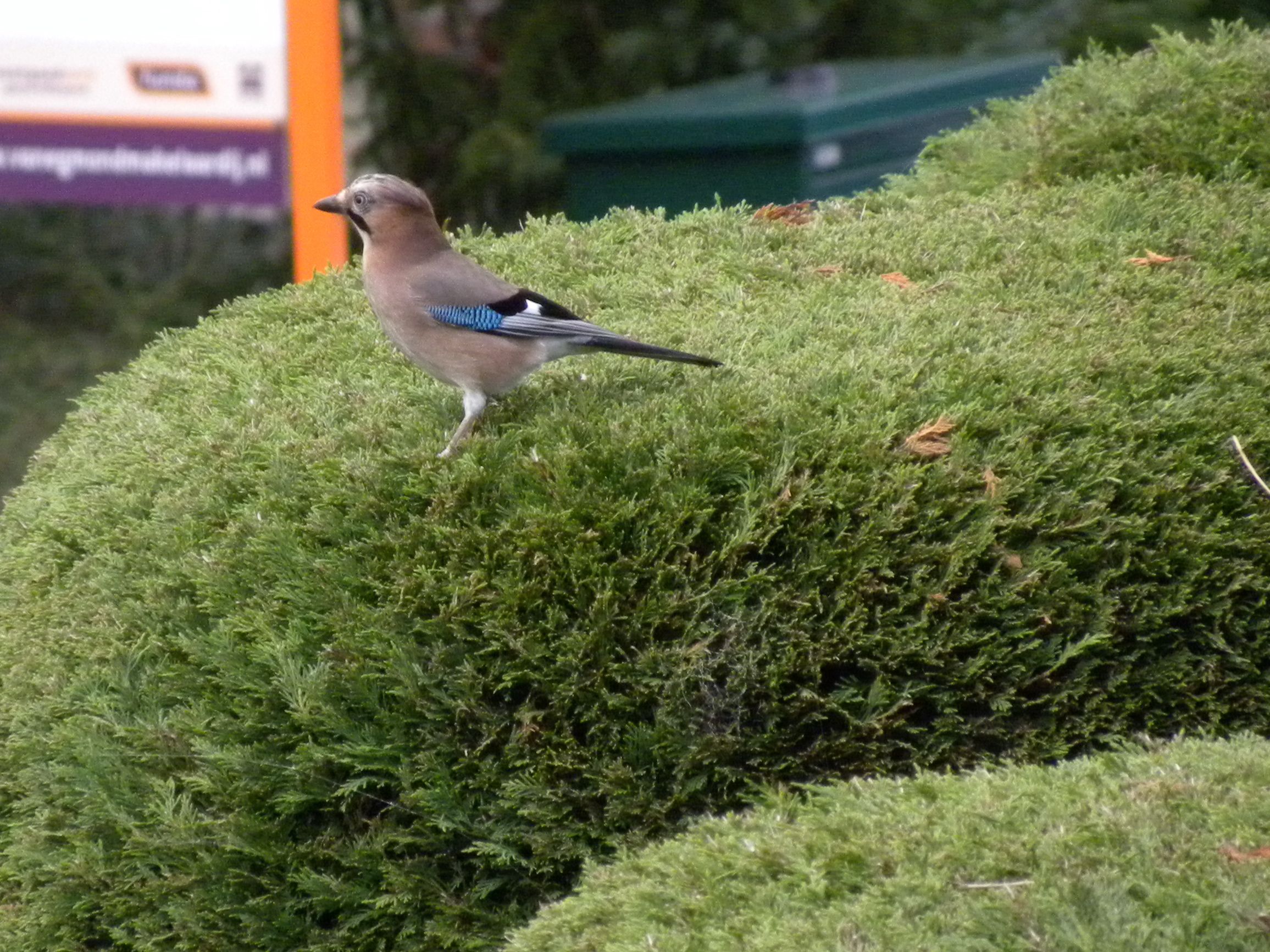
The Jay, the definitive, the Flemish Jay is handsomely dressed: it has bold black moustachial stripes, an overall wash of pinkish buff across its back, tail and breast, and its wingtips are black while its primary and greater coverts are a bold and showy slash of Blue Jay-blue. These Jays had no apparent fear of being shot down so I was able to watch and admire them for quite a while, I wish I could have enjoyed them so closely fifty years ago.

(European) Jay in Great Britain, Flemish Jay in Holland. September 2012
Jays are quite comfortable in urban areas too.


Black-headed Gull

September 16 2012, Reykjavik, Iceland.  I never imagined that I might one day see a Black-headed Gull as anything much more than just a seagull; something to throw dry sandwich crusts to.  Where I grew up the Black-headed Gull was the default seagull. I really didn’t know much about other gulls except for an awareness of the existence of the Great Black-backed Gull and Herring Gull.  Several years ago a friend asked me if I’d be interested in going to Niagara Falls to see a reported Black-headed Gull, Without really thinking I replied that I wouldn’t cross the street to see one.  Rather glib I suppose, but  not being one to chase species for the sake of a year-list, that’s how I felt about them.

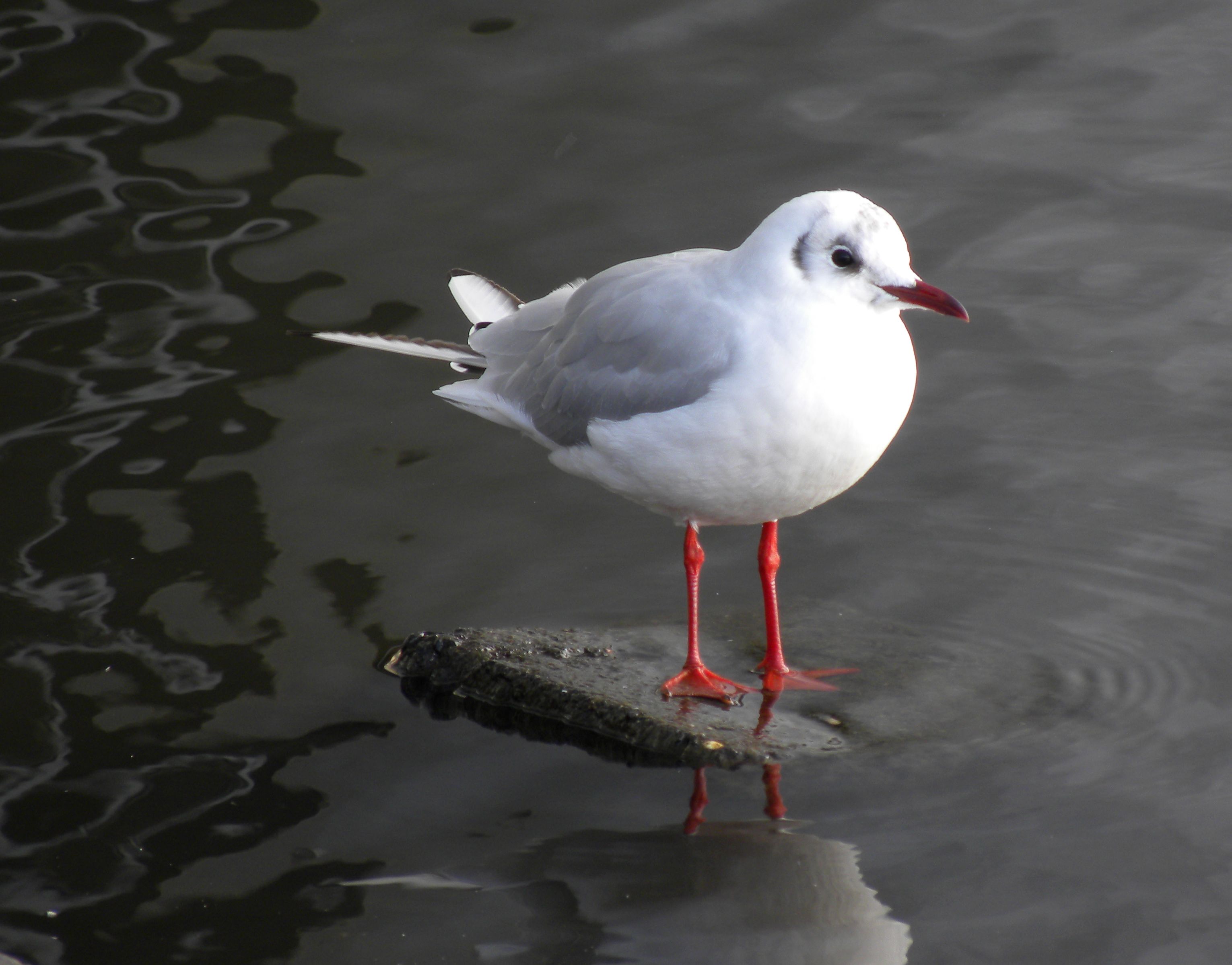
But today I found a group of Black-headed Gulls loafing beside a duck pond.  In Iceland this bird is pretty commonplace but I took a quick for-the record picture of one and was later struck by how stunningly elegant this little bird really is.  While various field guides talk of reddish legs and bill, I think they fall short.  This one has the most gorgeous full crimson-red legs and bill which perfectly compliment the pure white and pearl grey of it’s body and wings.

Black-headed Gull in Reykjavik Iceland

By the way, neither the Black-headed Gull nor its North American look-alike, the Bonaparte’s Gull, has a black head at this time of year, just two pretty little smudges of sootiness over and behind the eye, the black head is a breeding affectation.


Whooper Swan

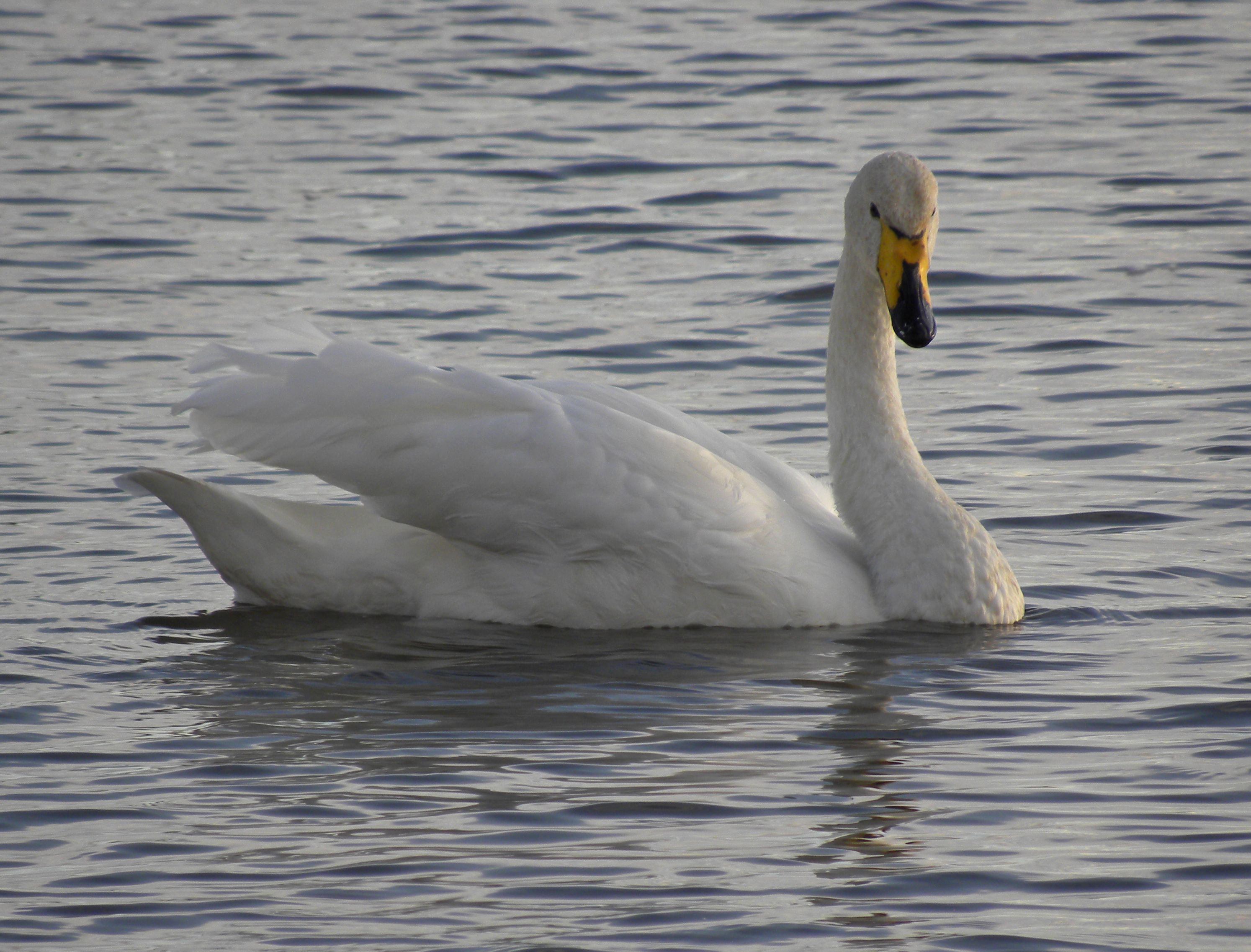
September 17 2012, Reykjavik, Iceland.  I had never seen a Whooper Swan before today, so when I caught sight of a small group of them in a gravelly river valley it was something of a triumph. They could well have been my Bird of the Day on their own merits but they happened to be almost the only bird of any note seen today,

We’re in Iceland and I had expected to be enthralled by lots of new birds here, but it turns out that while Iceland is a good place for seabirds and shorebirds in the summer, it is somewhat low on passerines all year, and even the seabirds and shorebirds are few and far between now that summer’s over.  We spent the day well inland and other than a solitary Common Raven and the cluster of Whooper Swans, I didn’t see any birds until we returned to coastal Reykjavik this evening.

Whooper Swans are closely related to North America’s Tundra and Trumpeter Swans, indeed they’re the Eurasian equivalent of the Trumpeter and some consider them to be the same species.  However the Whooper has a mostly yellow bill while the Trumpeter’s bill is all black. 


A distinct population of Whooper Swans breeds in Iceland, but as winter closes in the Icelandic population heads southeast crossing a vast expanse of open Atlantic Ocean ( 2+ hours by Icelandair) to overwinter in the British Isles.  Iceland sits just south of the Arctic Circle so winters are long and tough, these swans will be heading south very soon.

Lesser Yellowlegs

September 12 2012. Ruthven Park, Cayuga ON. This may be looking a gift horse in the mouth, but today’s birding while quite varied and done in beautiful weather, was not really all that memorable. I went to the bird observatory early, early enough to be there before the mist nets were all open and with the door to the banding lab still locked.

As is usually the case, around mid-morning I did the daily census but was quite surprised at how quiet the grounds and woods were, in fact I only found 24 species; usually at this time of year I’d get more like 35 to 40 .  I couldn’t even find a single Song Sparrow, Killdeer or Red-winged Blackbird.  There was an Osprey fishing along the river and I was lucky enough to see it rise from the waters carrying a nice sized something-or-other. There were flocks of Cedar Waxwings working over a couple of Red Cedars trees picking berries and occasionally sallying out for an insect meal, and a Redbellied Woodpecker was noisily scratching for a living from the top branches of a Shagbark Hickory.

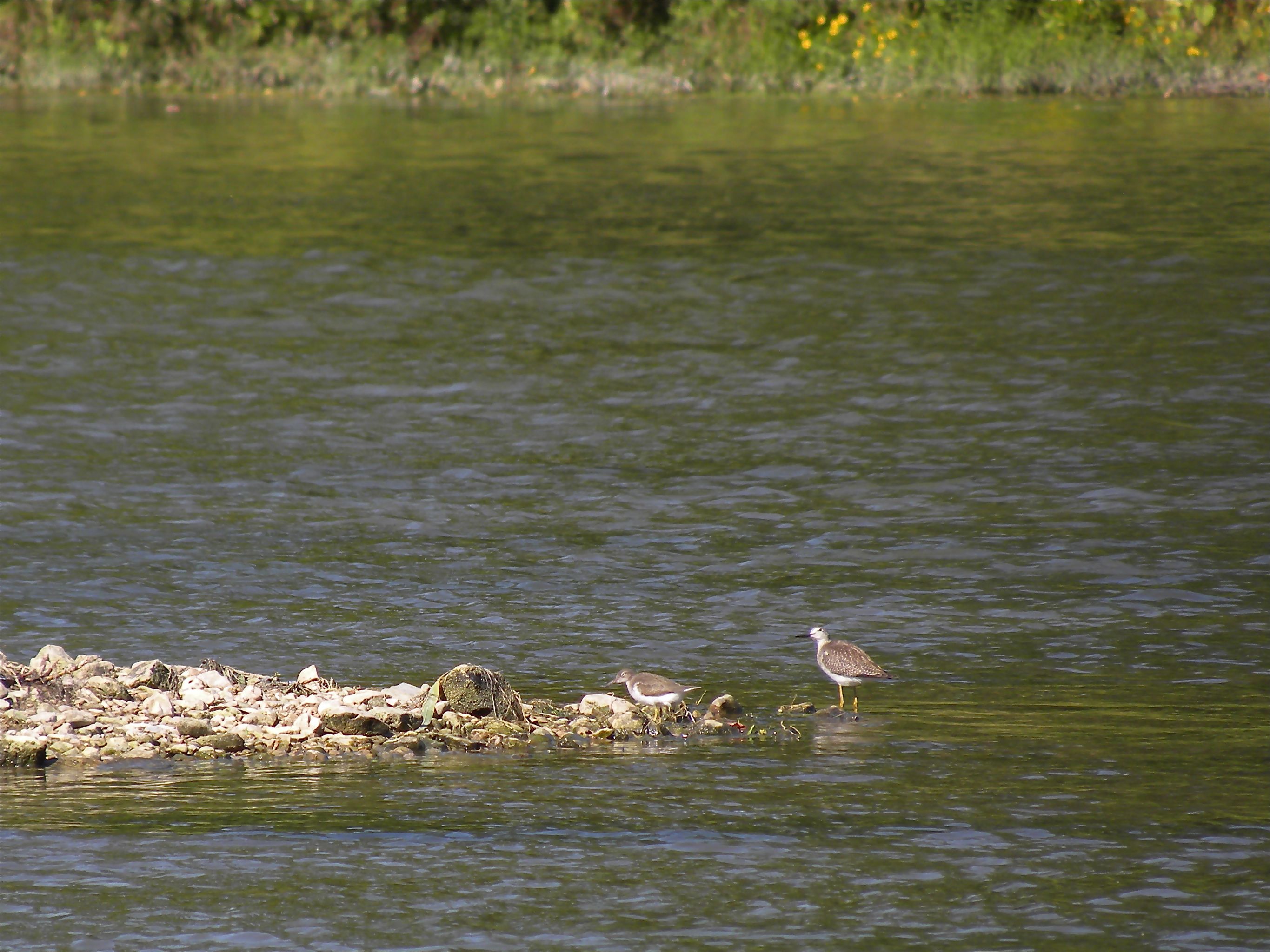
The river has a small gravel bar in the middle, which has been uncovered long enough this year to be quite well vegetated, mostly with Pink Knotweed.   I scanned the length of it and the nearby shallows hoping for some ducks or shorebirds, at first there was nothing, but then a pair of Lesser Yellowlegs appeared from behind the Knotweed and as I watched a Spotted Sandpiperjoined them.  They were a welcome addition to an otherwise quiet census round, and Lesser Yellowlegs always seem to add charm to a shoreline, enough to be today’s Bird of the Day. I managed to get a couple of long-shot photos, here’s one of them withe Spotted Sandpiper, like one of those funny mid-blink, looking-the-wrong-way holiday snaps.

Spotted Sandpiper & Lesser Yellowlegs.