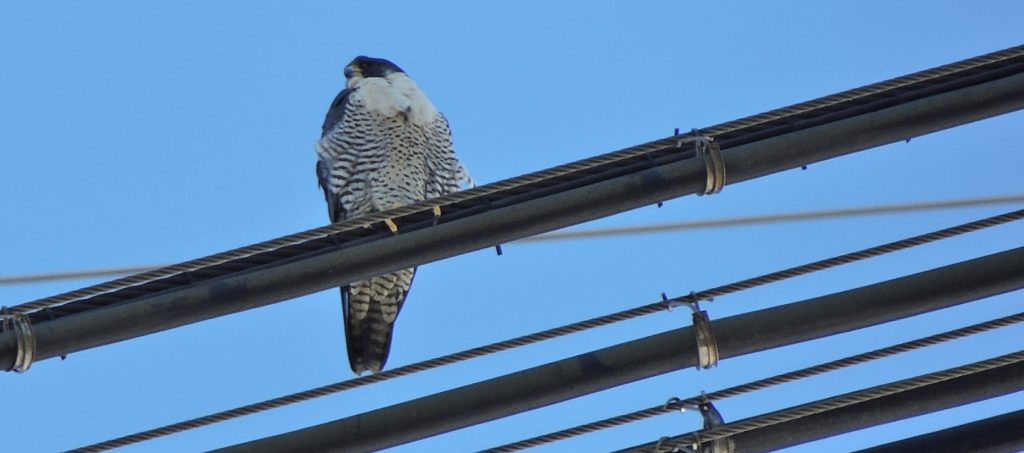
February 16, 2026. Not far from home a 800M-long, important ship canal links Lake Ontario with our industrial harbour, the canal is crossed by three important roads. The two busiest roads pass high overhead on twin arching bridges, and a much quieter service road crosses by way of a lift bridge, the scene of today’s bird of the day. The lift bridge is rather monstrous, and while the engineering details really don’t matter for our purposes, it is quite something to watch as the road deck is hoisted between opposing steel towers by a system of cables and counterweights. Like many such structures, these bridges are home to a large community of feral pigeons, Rock Doves strictly speaking. And the canal below is a winter refuge for ducks who breed in the far north. They are here in their thousands sometimes, of several species who live by deep diving for Zebra and Quagga Mussels. The water in the canal remains open all winter regardless of ice conditions of the harbour or lake.
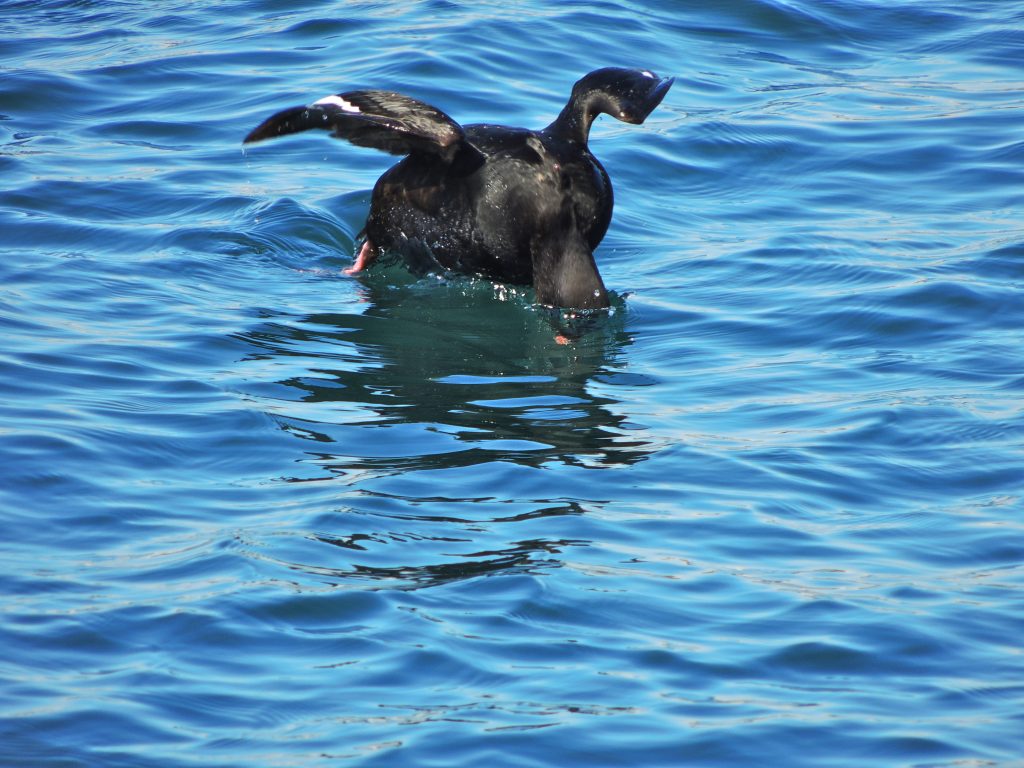
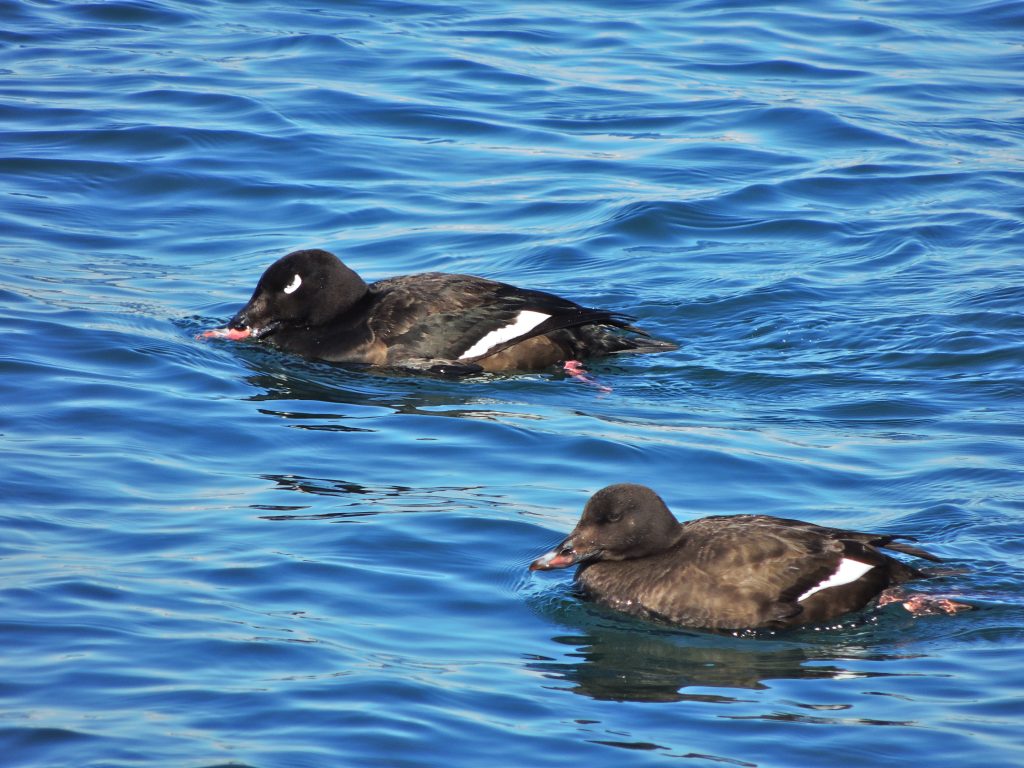
To further set the stage, those pigeons and ducks are an important year-round source of food for a resident pair of Peregrine Falcons; pigeons at any time, ducks when in season.
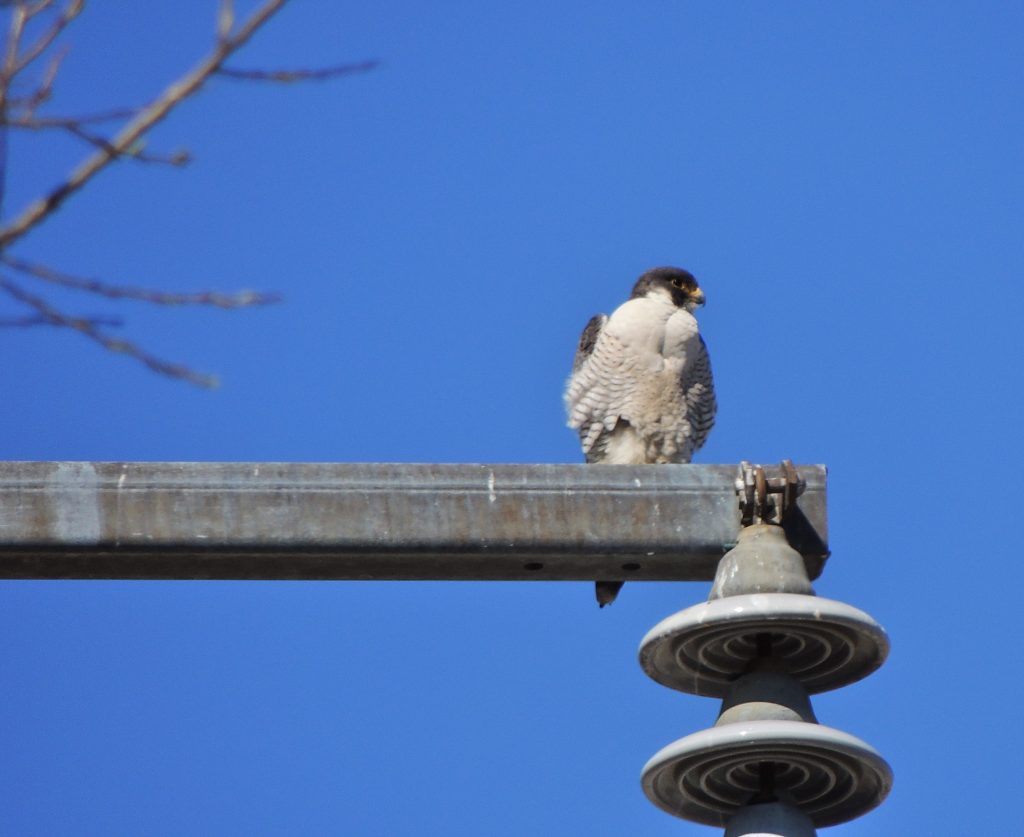
I stopped at the canal this morning hoping to admire thousands of ducks, but they weren’t there in anything like the usual numbers, the canal was rather quiet, presumably the lake was more enticing. I helped a couple of novice birders sort out differences between the few White–winged Scoters, Long–tailed Ducks, Mallards and Red–breasted Mergansers. They urged me to walk further and join them counting heads, but lunch sounded like a better plan to me, so I turned to leave. Walking away I became aware of a different sound, not traffic, not industry, something new, a kind of aggravated che-che-che-che. I turned back, suspecting right away a Peregrine Falcon, and looked up to where they might be seen if it were breeding season. I quickly found them both. I guess it’s close enough to breeding season, territory-claiming time anyway, for the male was posturing and calling. The female watched as he flew out and away in a wide loop, his broadly pointed wings made a marked impression. For the other birder pair, this was utterly unexpected, a totally new experience. For me it was spine tingling the way a surprise peregrine encounter usually is and on a winter day that was otherwise pretty lean on bird life, Peregrine Falcons were easily My Birds of the Day.
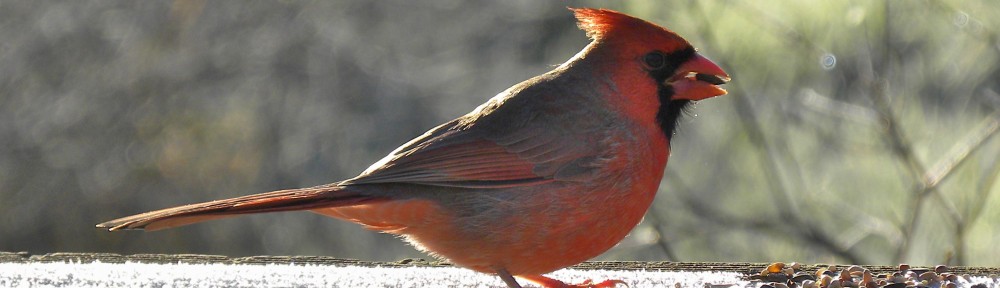 February 14 2026. This morning’s sky was almost cloudless, and a warmish sun was chipping at our thick snow cover. As I headed out on a pre-breakfast errand, I heard my first-of-the-year Northern Cardinal’s spring song coming from a garden a short distance away. Clear blue sky or not, his cue was probably daylight length. We now enjoy nearly 12 hours of daylight (ten and a half hours between sunrise and sunset). It’s amazing and heart-warming what a few notes of the cardinal’s clear and pure-toned “Tewww-tewww-tewww’ can do to a mid-winter morning.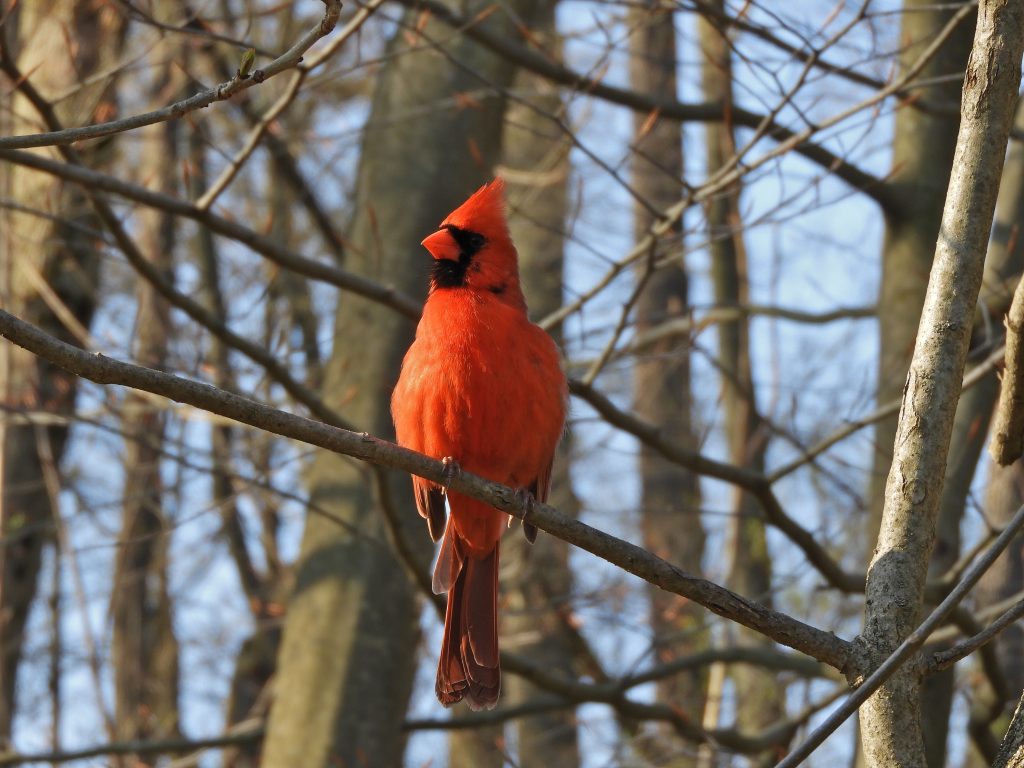
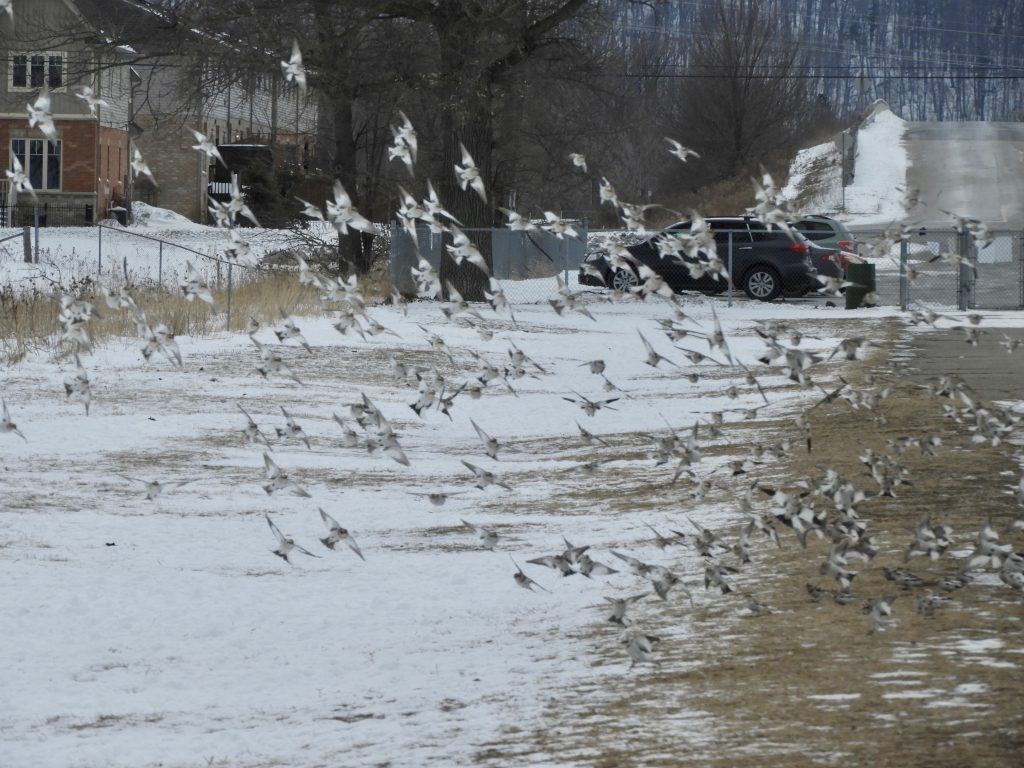
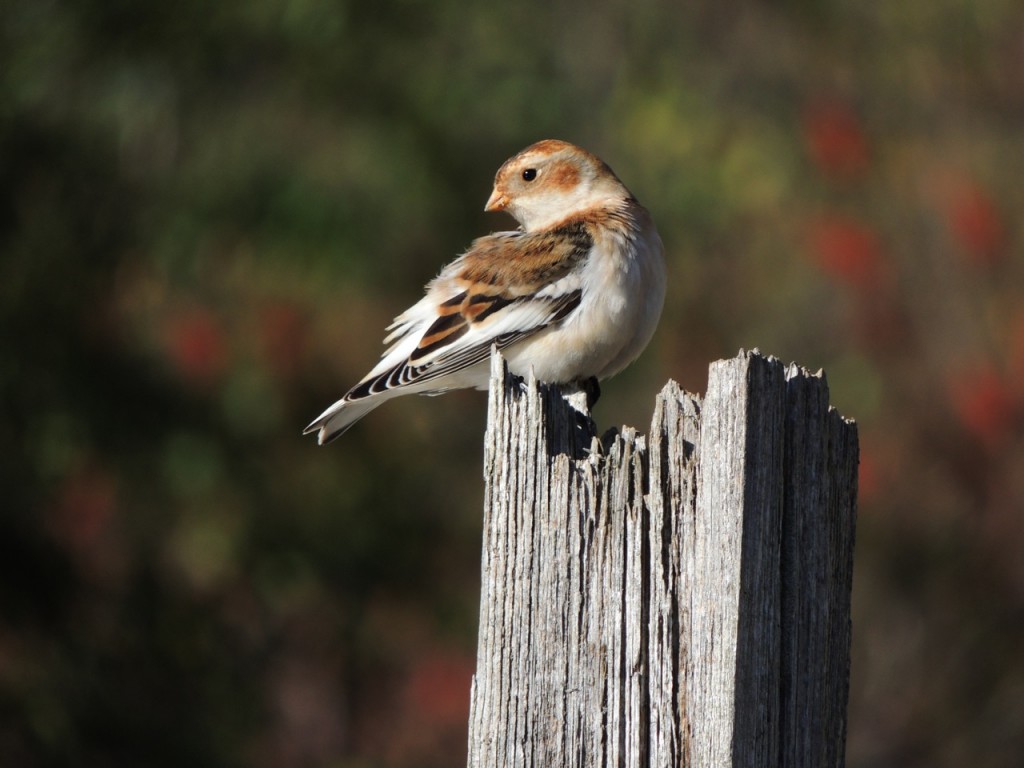
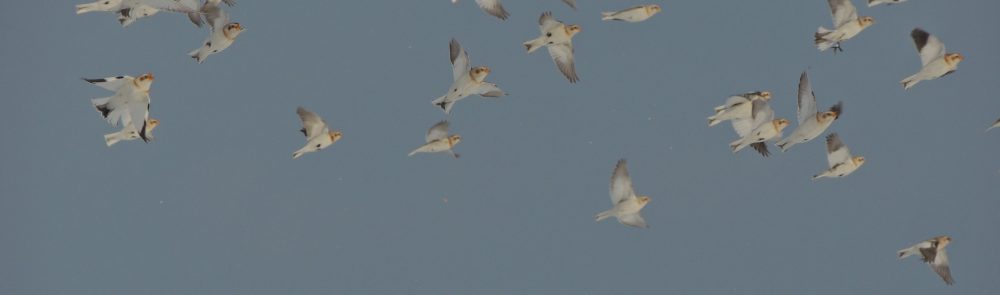 February 1 2026. Lincoln County, Ontario. January has laid a thick layer of snow and firmed it into place with weeks of deep cold; not birding weather, not for me anyway. But flipping the calendar today was a step in the right direction. February brings more sunshine than we’ve seen since the radiance of fall and soon will come the small heart-lift you get from sitting into a sun-warmed car. I thought finding some Snow Buntings would make a nice start to the month so, with valuable information from a friend, we made our way to a new-to-me corner of the province.