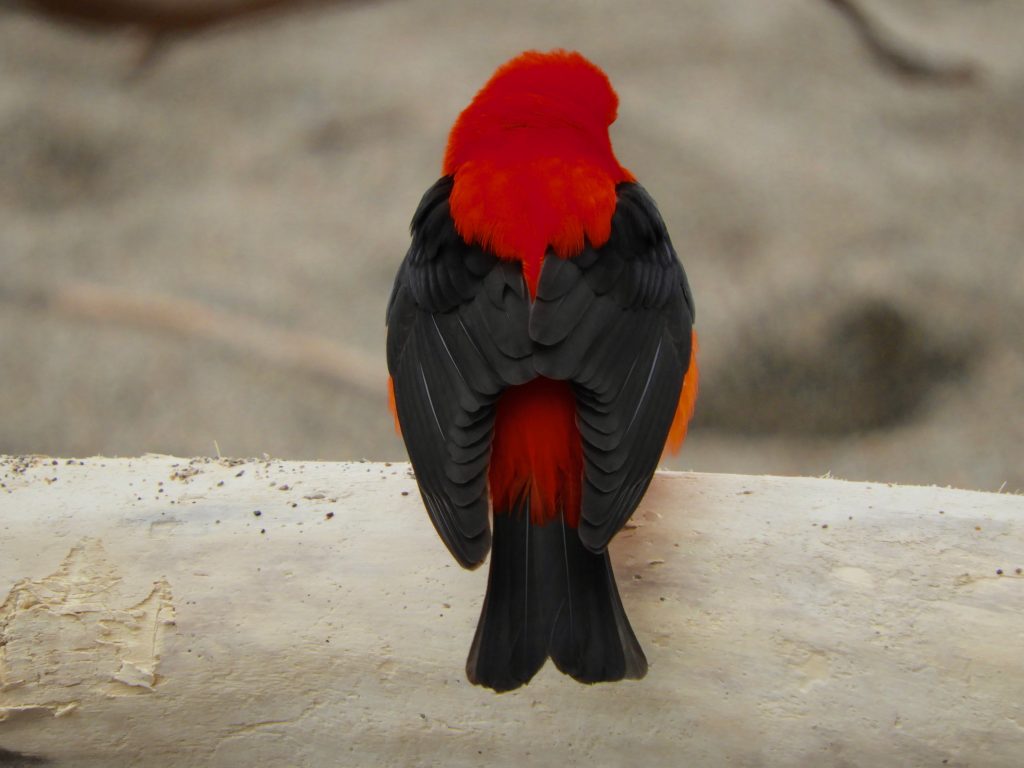
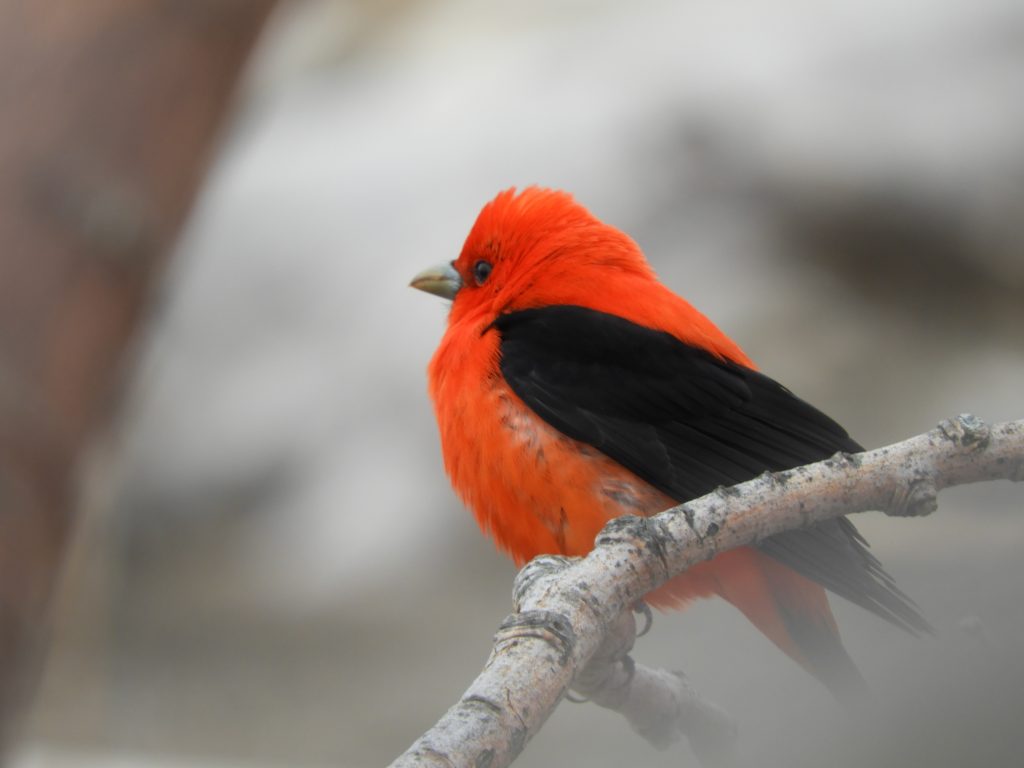
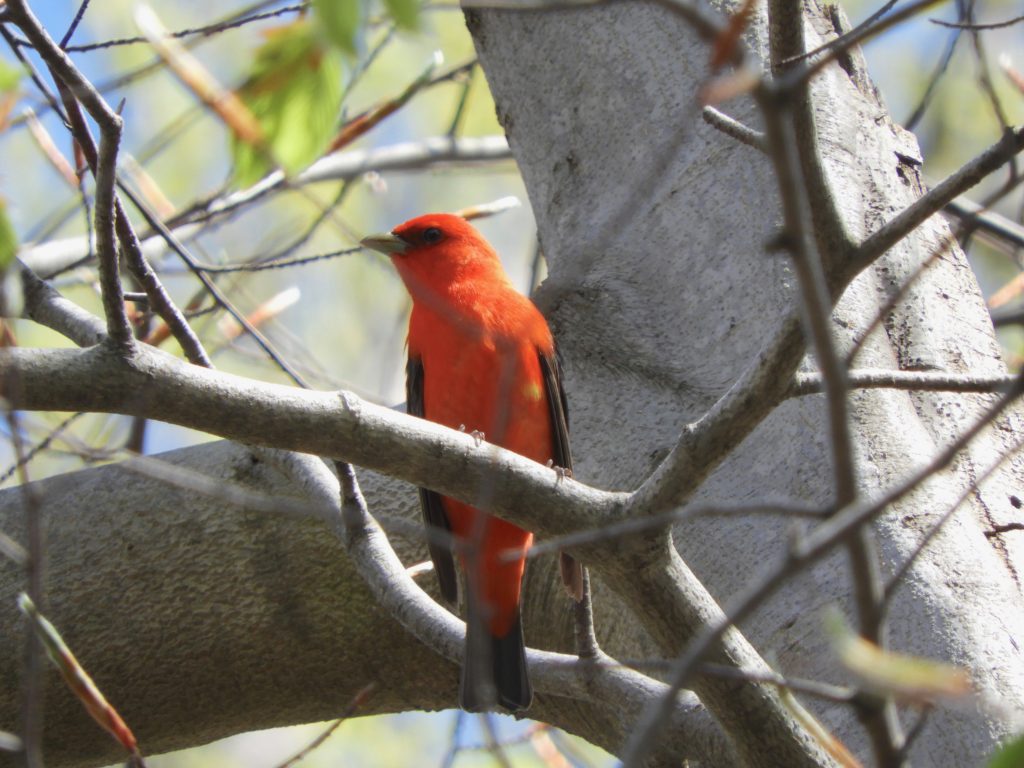
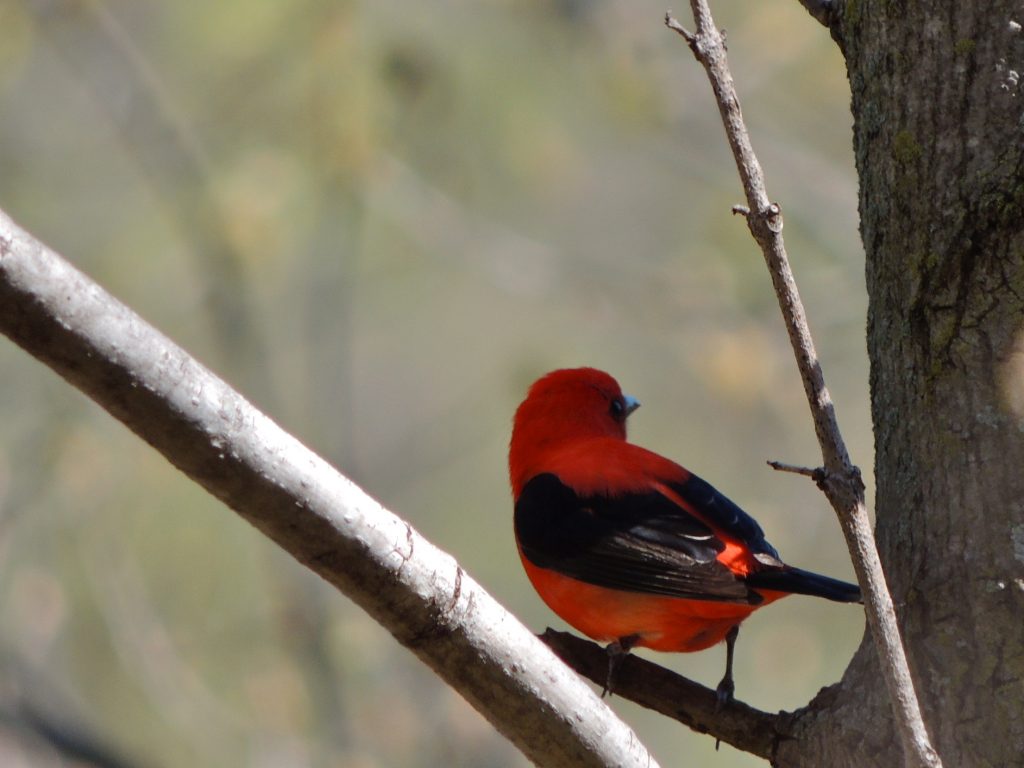
Hidden Valley, Burlington ON. July 28th.2021. Scarlet Tanagers are reasonably common in the right habitat at the right time of year, but they can be hard to find. During migration they may be easier to spot at lower levels and in leafless trees. A spring male is an unforgettable sight so, if people tell me they’ve never seen one I believe it, there’s no way they could be mistaken. Here’s a male photographed one May morning in 2015, the colour is so intense that my cameras struggled to process the overload.
The problem with seeing Scarlet Tanagers is that, most of the time, they are birds of the loftiest tree tops; it’s only when you hear them that you clue into their whereabouts, and knowing their song, birding by ear, is hard going.
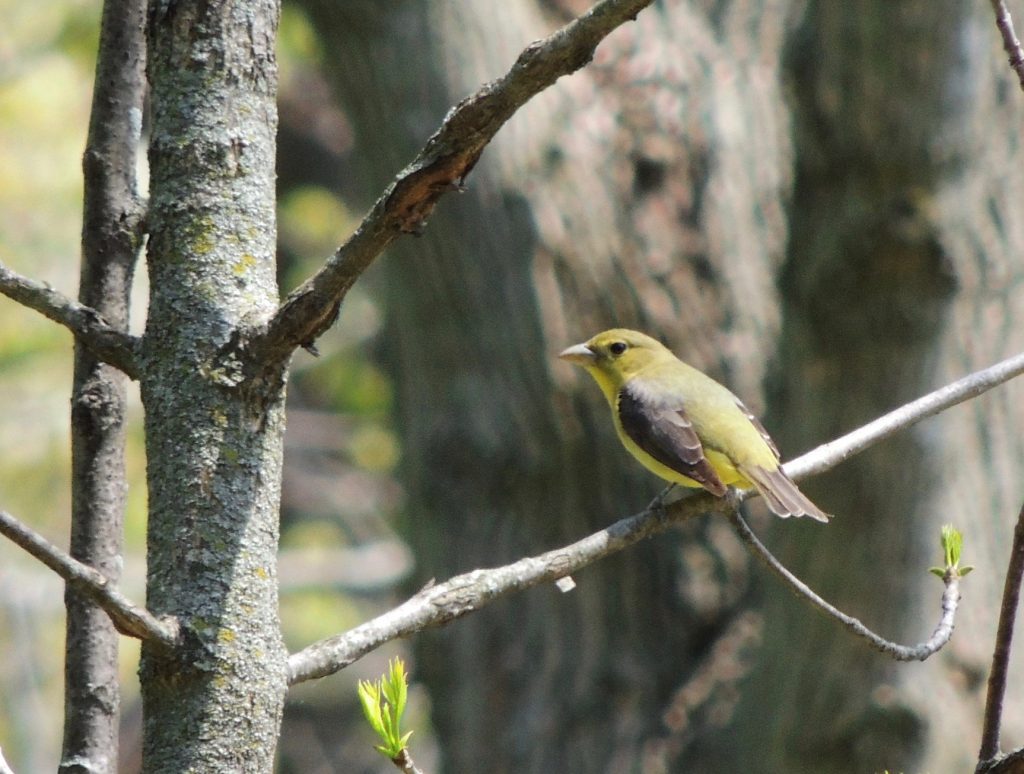
Female Scarlet Tanager
Today
I encountered a Scarlet Tanager but it had none of the dramatic, clinching
field marks, it was a rather drab olive yellow, so either a female or young of
this year, and it was not singing at all.
It was moving slowly around the heights of an oak and muttering the species’
less well-known call, ‘chik-burr’.
Still, I was pleased to find it. For all of my Breeding Bird Atlas efforts last month I had not seen or heard a Scarlet Tanager. I hadn’t really paid much attention to the omission, they are around, it is just one of many species missing, or at least not found this year, but which I’m sure will be uncovered in due course. If today’s tanager was on or near its home turf then I expect I’ll find them next year with a bit of effort. So, call it a lead for future years’ work; a valuable enough lead to be My Bird of the Day.
Home. July 27 2021. I’ve been wrestling with some camera problems lately, I’ll spare you the details but that crumb of information is relevant to today’s birds of the day.
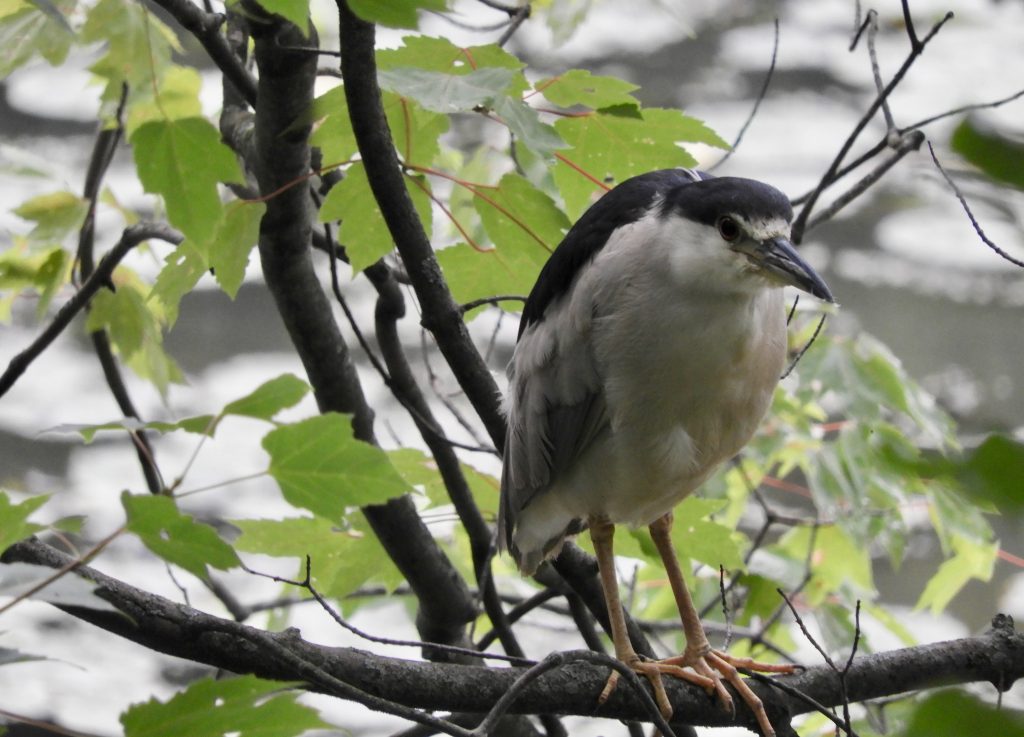
Late July is not good birding, it’s so quiet. The frenzy of spring migration is far behind us, most birds have either raised their broods to independence or are tending their second or third ones. I left home this morning, long before breakfast, to walk one of my favourite circuits, mostly for the exercise. It was a pleasant walk but, for birds, it was unexceptional – although I suppose an EasternScreechOwl, a Black–crownedNightHeron (photo below) and a three sunlit GreatBlueHerons like marble statues in the early light must count for something.
Back home, digesting
breakfast in my colourful back yard, I thought it would be good practice to
have binoculars and camera at hand; I was right. An out of sight but nevertheless
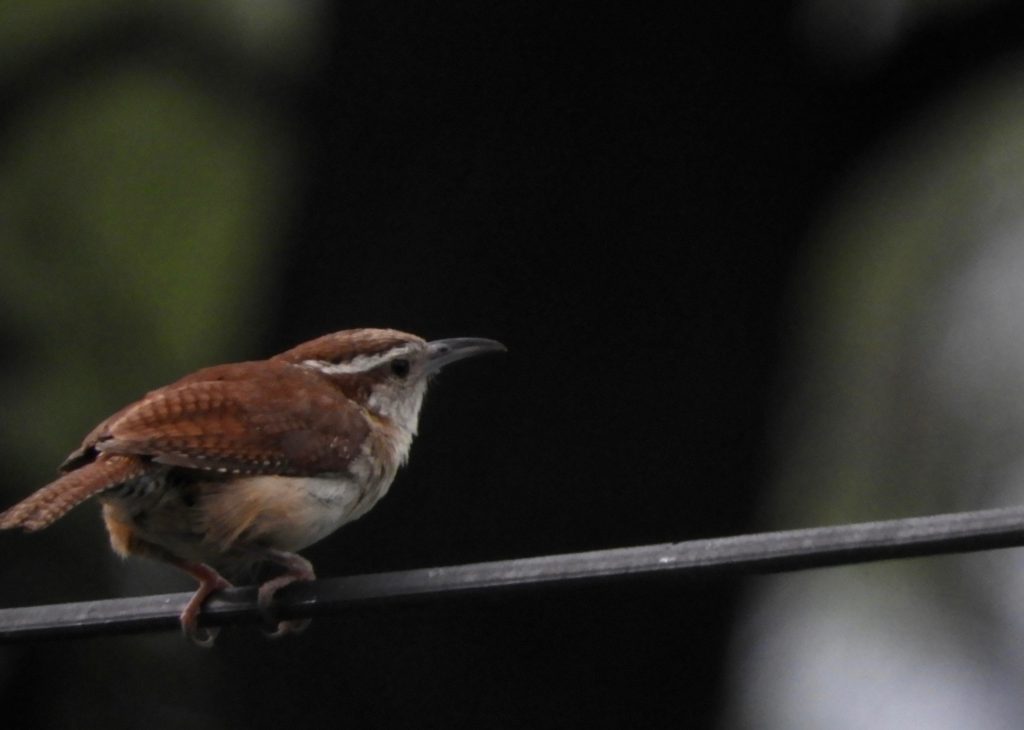
close Carolina Wren starting belting
out its I’m-in-charge territorial song. I don’t think Carolina Wren know any way
of singing other than loud; while they can purr and mutter softly to themselves,
their song is for broadcasting and is always delivered at full-volume. After a
few minutes, it moved into my line of sight, perched on a wire, nicely lit, nicely
positioned and with a clean background; perfect for a photo. I pointed and
clicked off two pictures, the second one just as it flew; for my troubles I got
one barely acceptable picture and one empty one. I could have done better, the camera
and I were not quite the team I wish for, still, this is it. Not a great photo.
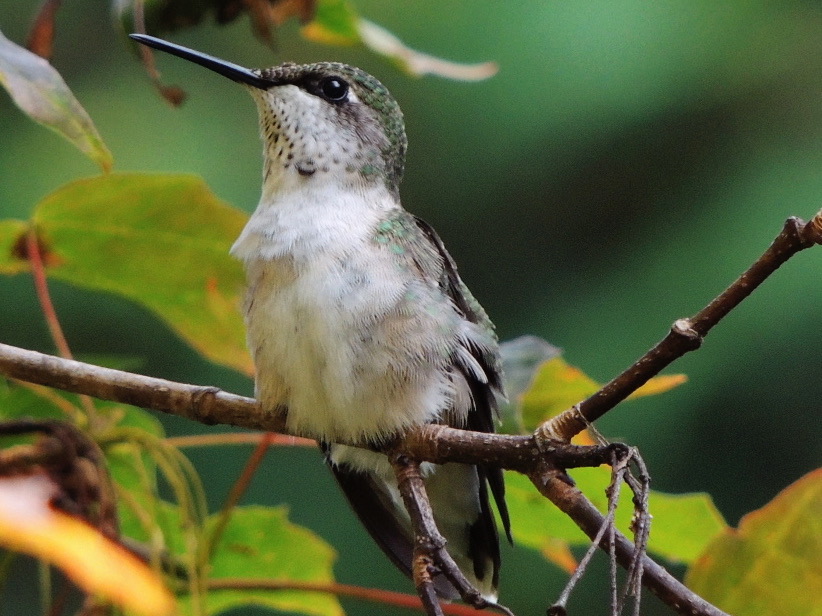
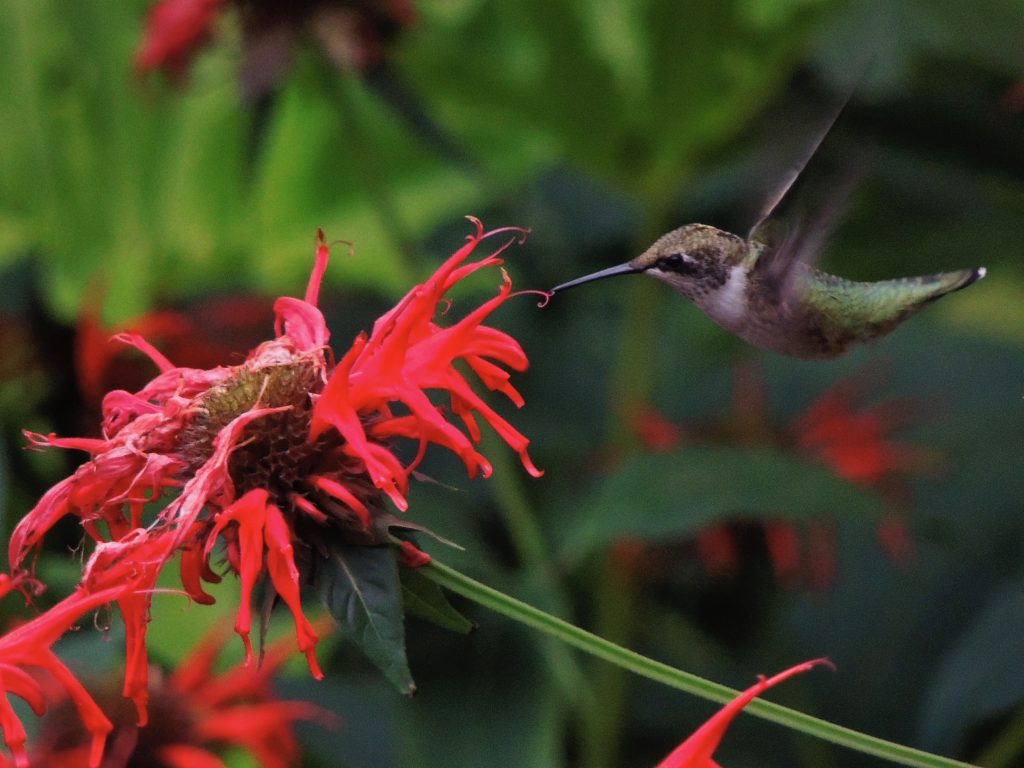
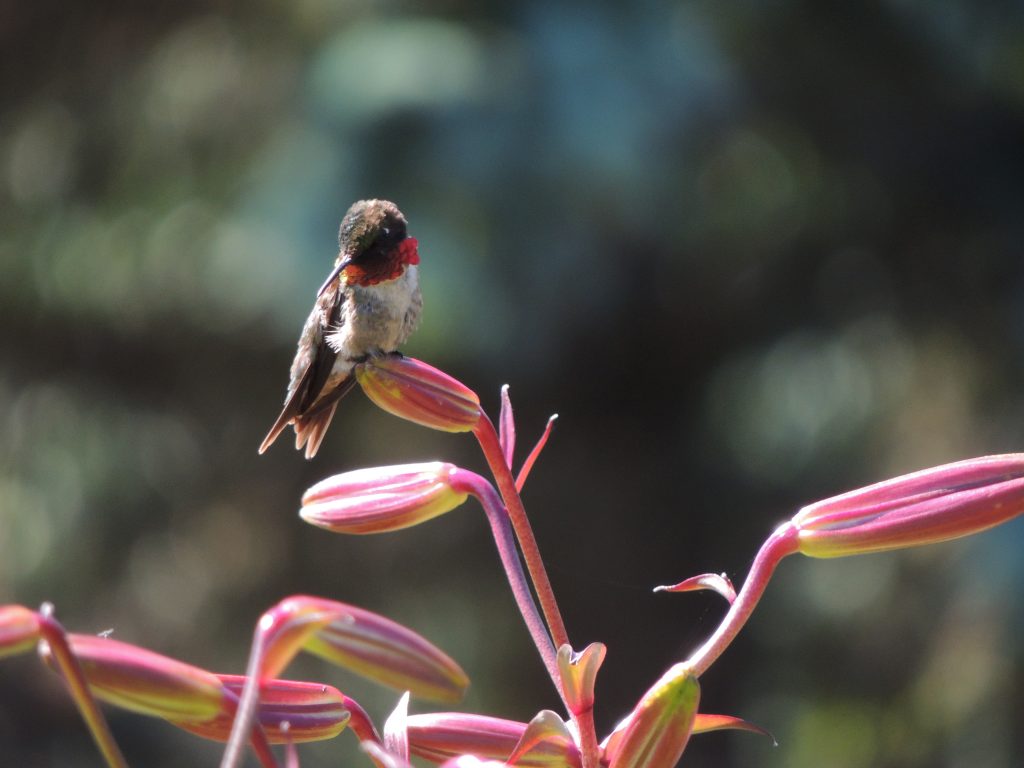
A few minutes later, a Ruby–throatedHummingbird paid a visit to our small patch of scarlet Bee–balm or Monarda didyma. Hummingbirds favour red flowers and it’s a frequent, if usually fleeting, visitor. I had a reasonable line of sight and the bird stayed fairly steady in its hovering but my camera and I, as a team, were non-existent . To be fair to the camera, it did what it was instructed, but my instructions were all wrong and I ended up with half a dozen pictures either way out of focus, over-exposed or hopelessly under-exposed. This photo below was taken six years ago at the same patch of Bee-balm.
I enjoyed
both of these back-yard birds, they added something to this soft summer morning
and were my joint Birds of the Day.
RBG. Hendrie Valley, Burlington ON. July 1 2021. If June is the most frantic of breeding-bird months, then July is the winding-down. Now, at the tipping point, the young of the year are pretty well all out of the nest. (Those that have survived predation by squirrels, jays, crows, rats and snakes; or starvation due to a late burst of cold weather). I’ve learned that an effective approach to gathering evidence for the Breeding Bird Atlas is to go often, go slowly, and listen, linger, and watch. I concentrate on a few very productive places, each different in habitat and bird species.
Today I walked (at a pace that could hardly be called exercise) along a streamside trail. At first it was busier with people than with birds, probably because today is Canada Day, a day when Canadians too often ask themselves whether they are worthy, unlike Americans who, I think, believe the whole world celebrates the 4th of July with them, or the English few of whom could tell you what, or when, is St. George’s Day. But never mind, it was a productive breeding-bird morning.
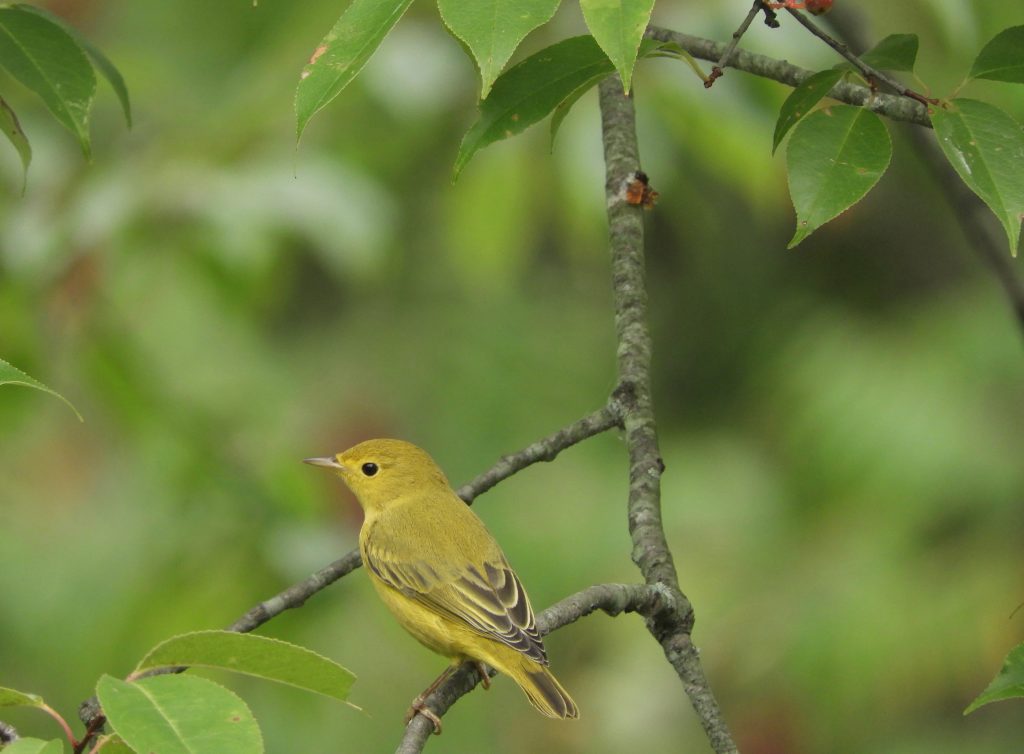
Female Yellow Warbler
For some time, I was absorbed watching a pair of YellowWarblers tending their hungry brood. Fledgling Yellow Warblers are pale below, washed out, versions of the female parent, their conspicuously beady eye makes them reminiscent of Nashville Warblers, to me anyway.
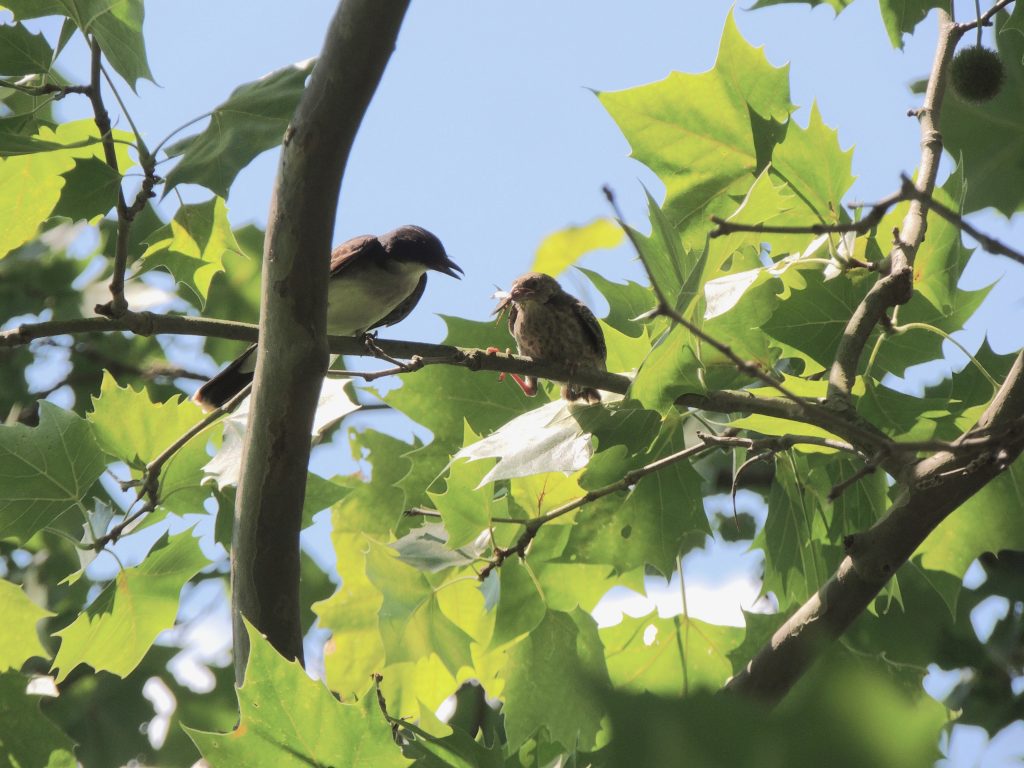
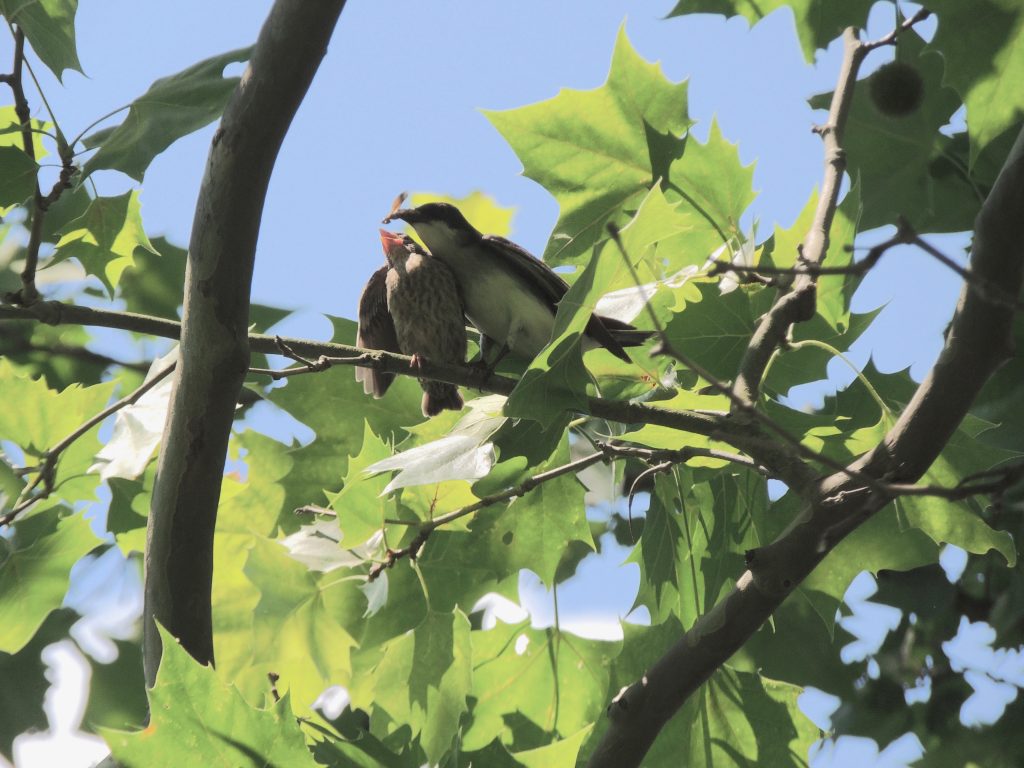
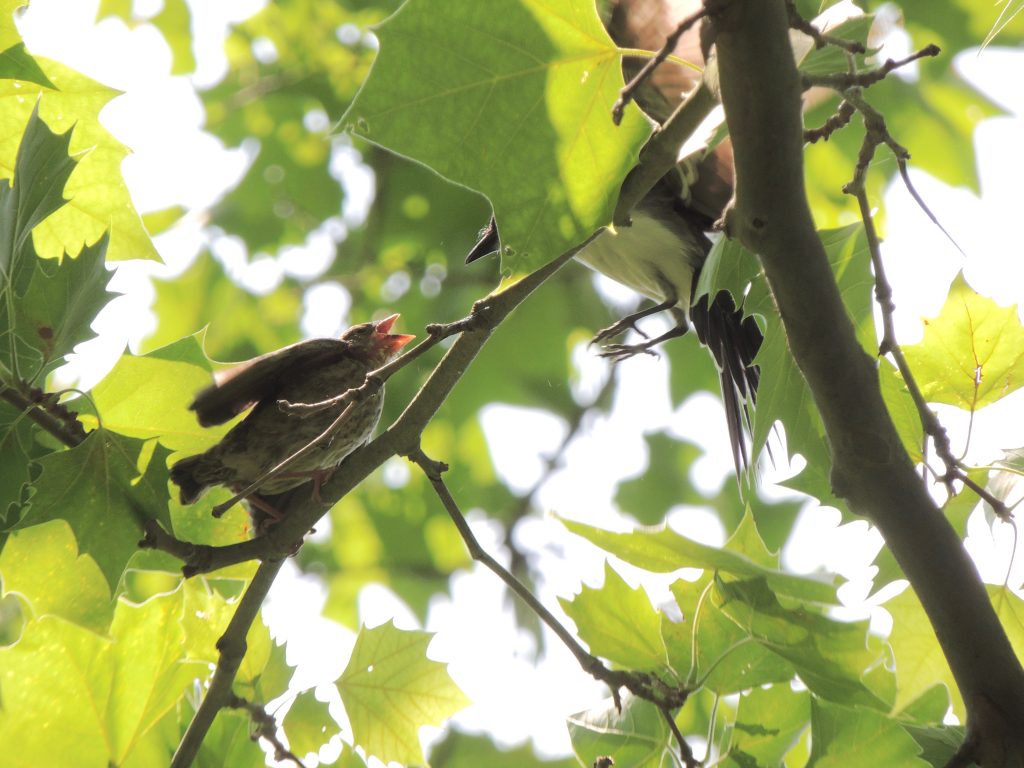
The Birds of the Day were a young Brown-headed Cowbird and a pair of attentive EasternKingbirds, they made for a very interesting hour. It started when I heard a thin, wheezy, call coming from the lower branches of an American Sycamore. It sounded like a Blue-gray Gnatcatcher but when I located the source it turned out to be a drab and stubby juvenile Brown-headed Cowbird. I wouldn’t say that I knew right away what it was but when, moments later, an Eastern Kingbird landed beside it and stuffed a beak-load of insects down its throat, I knew. North Americans are generally familiar with cowbirds as nest parasites, but cowbirds aren’t musical, nor are they wrapped in anything like the colourful folklore of Eurasia’s Common Cuckoo. But in both cases, the females lay their eggs opportunistically in the nests of other species. It then falls to the hapless host to raise the young cuckoo or cowbird.
Kingbird arriving but mostly hidden behind the leaf on the right
I spent the best part of an hour watching the comings and goings of the kingbirds. The cowbird kept up its ‘Feed-me Feed-me” pleading but as soon as one of the food-delivering hosts drew near it stopped, crouched a little and quivered in supplication.
This parasite & host drama is a successful breeding strategy for the Brown-headed Cowbird, their population seems to be growing. What I find especially interesting about this particular cowbird/kingbird match-up is that Eastern Kingbirds are very aggressive protectors of their nest and immediate surrounds. The name Kingbird is apt, as is their family name of Tyrant Flycatchers. Territorial males forcefully challenge and drive off intruding birds of all species whether they mean harm or not; How did one slip by, and worse, leave behind an egg?
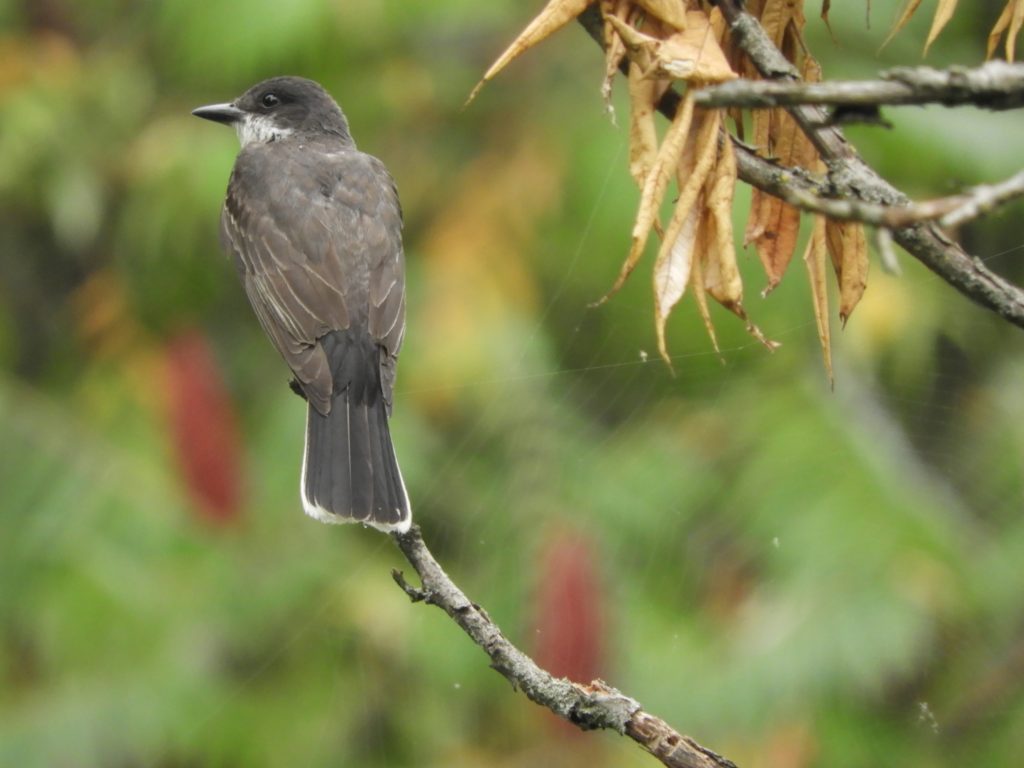
Eastern Kingbird – on guard duty
I
took many photos in difficult conditions against the bright midday sky. I’m
quite pleased with a few and you can almost sense some parental tenderness.