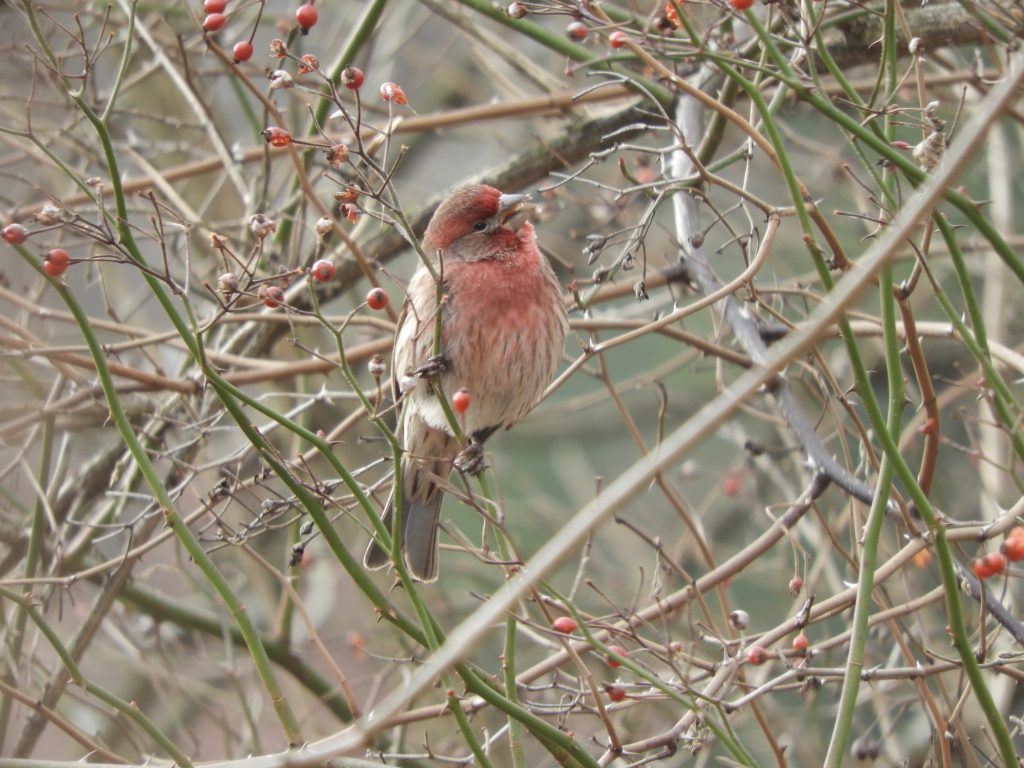
December 31st. 2020. I was out birding this morning, actually out getting exercise but the two are inevitably indivisible, indistinguishable. As exercise it was a good uphill-downhill walk, but poor fare as birding goes. Best of the morning was a bunch of House Finches who I disturbed while feeding on the fruit of a Multiflora Rose. The light was poor and the footing slippery but I managed to get a few shots, here’s a nice one.
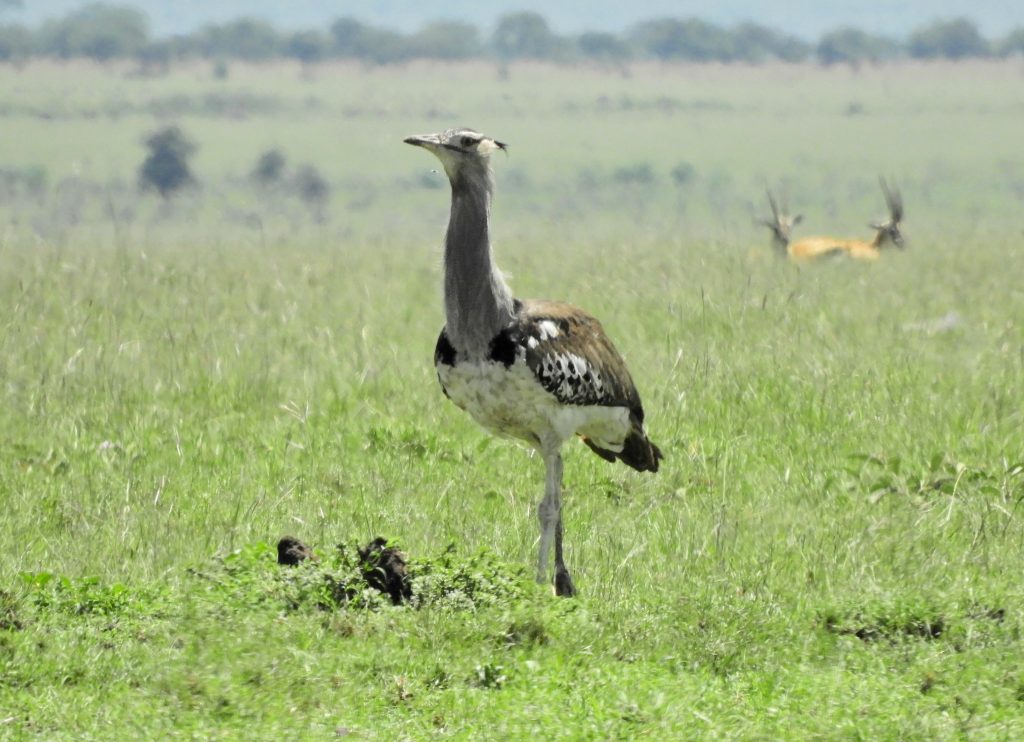
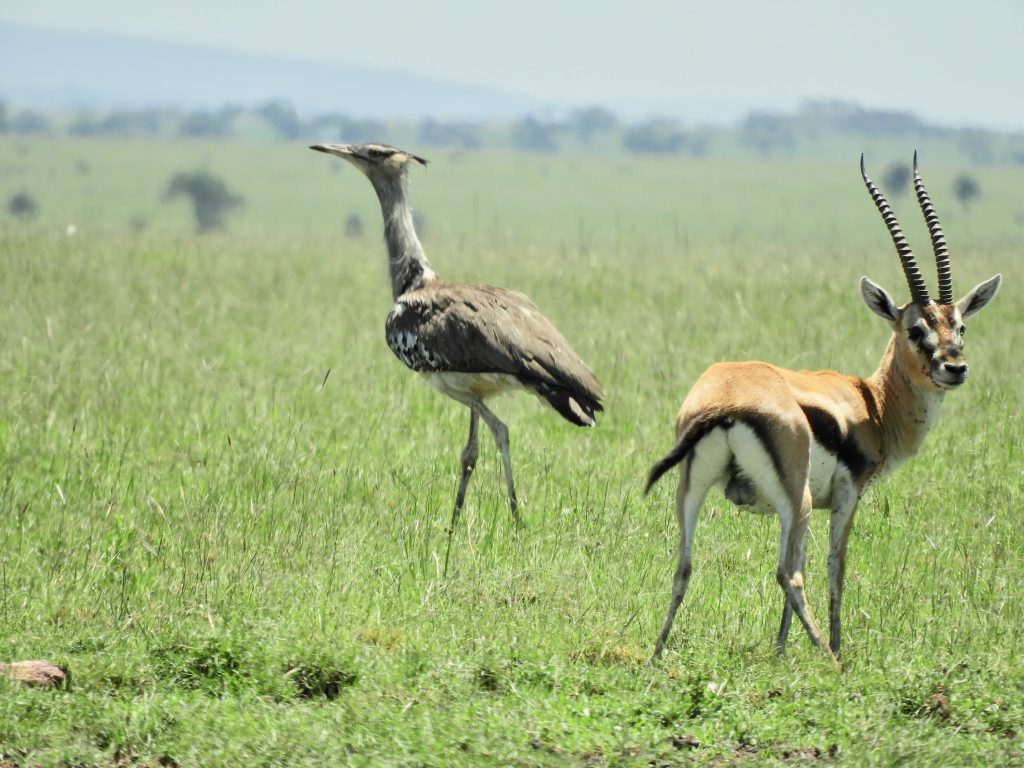
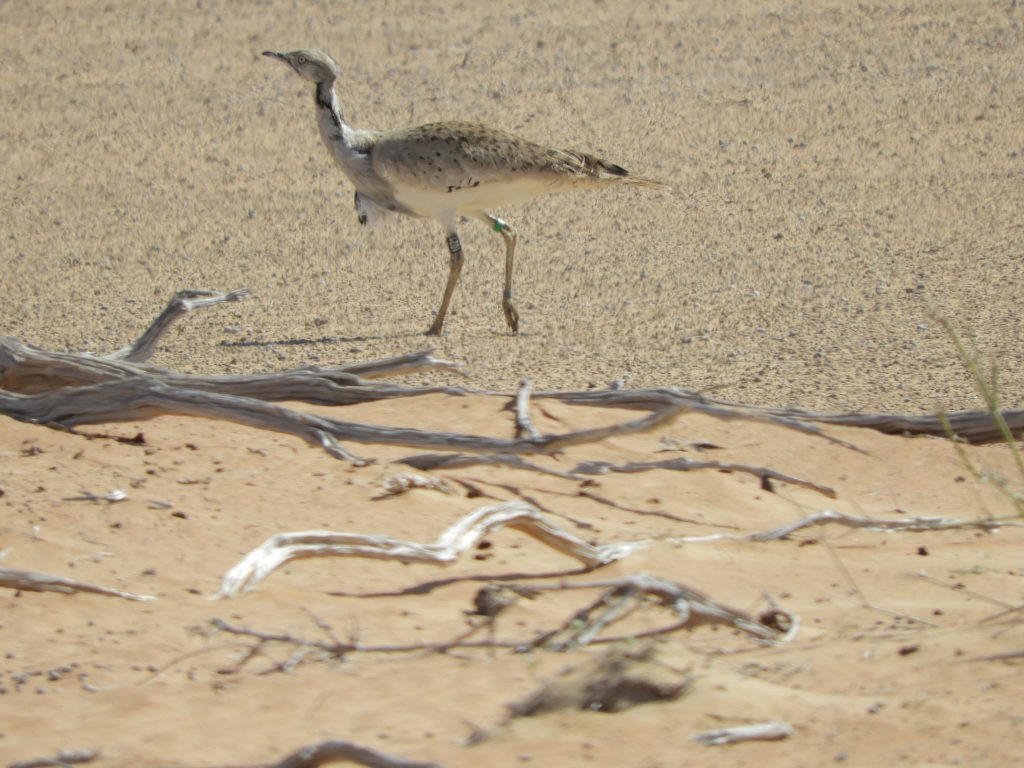
I was musing that this was the year-end, a year that many have taken to calling the worst ever; I suppose it depends how long you’ve been around. 1919 and 1928 were less than banner years in North America, 1940 was a bad ones for Londoners, as were 1665 and 1666; not that I remember any of them. My wife and I have been very lucky, the worst I can say is that it’s been notably inconvenient. But to shine a light on 2020, I wondered what bird could have been my Bird of the Year. A moment’s reflection and I singled out February’s Kori Bustard in Kenya. It was a realisation of boyhood daydreams when I had absorbed books and stories about animals (mostly birds) of all kinds. Some I knew first-hand but just as many I believed to be unattainable to me; bustards being one of those. But then, 60+ years on, I was face to face with them. Macqueen’s Bustards at first in the Arabian Desert, but now the huge Kori Bustard, shoulder to shoulder with a Thomson’s Gazelle. My Bird of the Year? Probably yes.
But it’s all very well picking from the privileges of an exotic time and place, but what about the rest of the year, the at-home stuff? Luckily for me this site serves well as a diary. Here’s a look back.
January. I spent much of January getting ready to leave winter behind. Domestically a couple of Northern Mockingbirds lightened a cold and damp day of counting birds. But I was in Arabia by mid-month and there was much to choose from and I think an Eagle Owl , the world’s largest owl, set my spine tingling more than anything else. It hung around our desert campsite, we could hear it and almost feel its presence, we managed occasional glimpses.
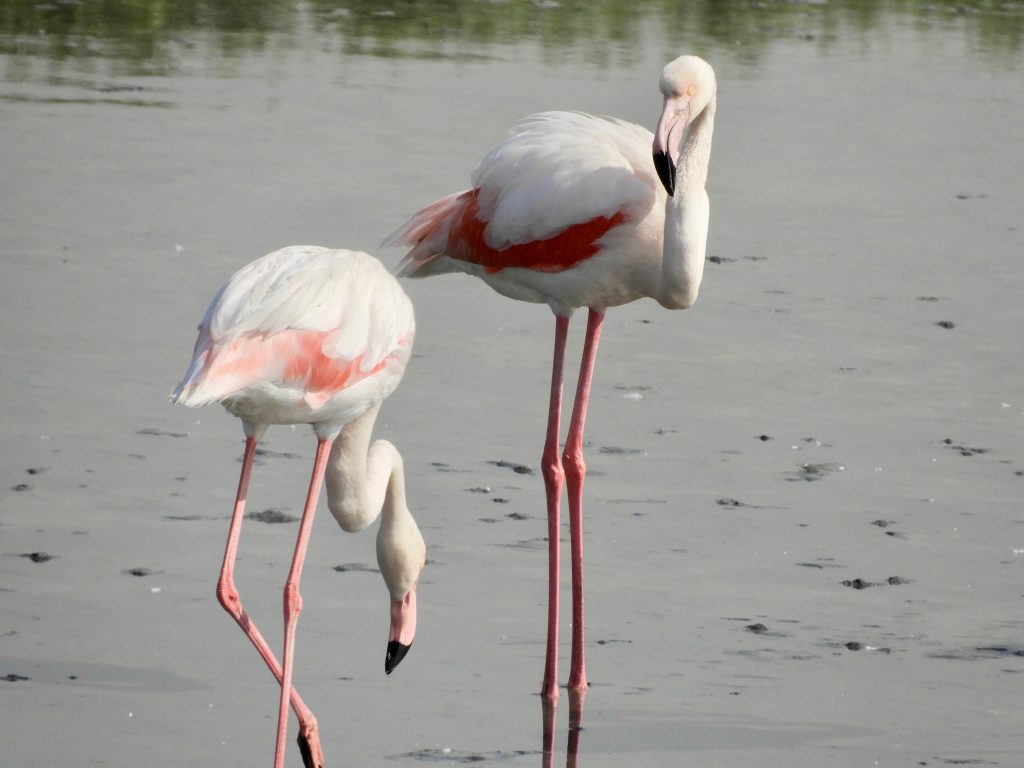
February was the Kori Bustard month, (and much more) but a half day watching hundreds of Greater Flamingos in Dubai was an almost surreal experience.
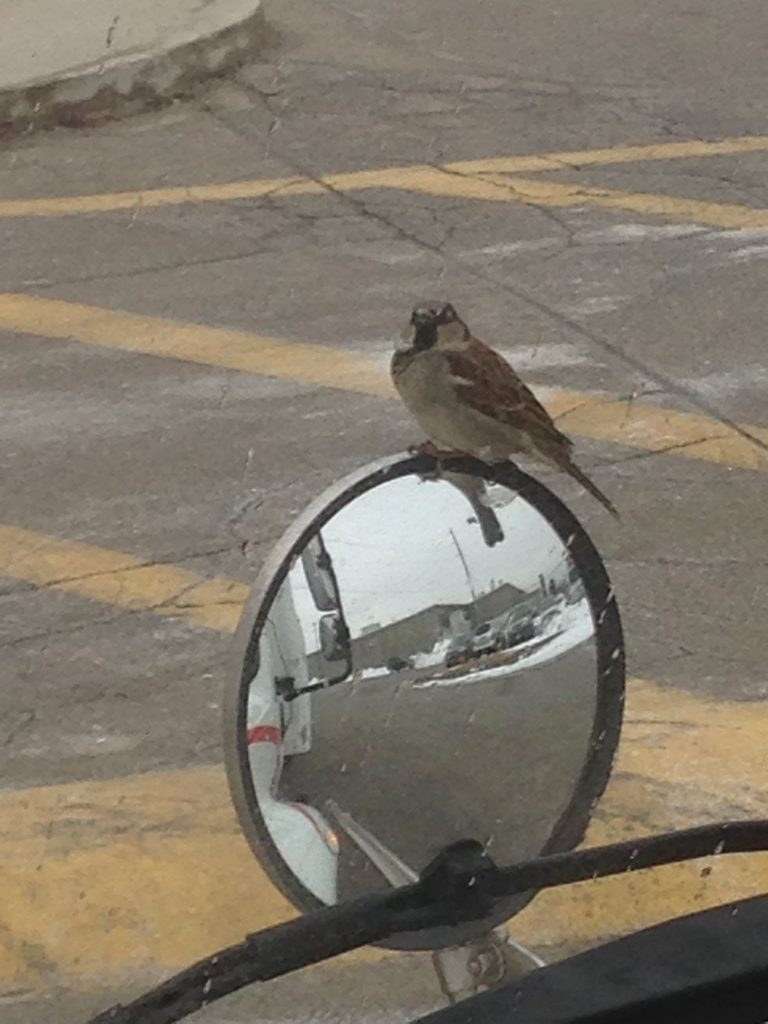
March introduced a new word to our lexicon, lockdown. I think we were bemused by it for a while and we thought it might all be over by the end of summer. March is more about birding promise than delivery and I had dipped into many years’ notebooks for posting inspiration. A surprise flight of Sandhill Cranes stands out as special but this very homely House Sparrow added a delightful twist to an otherwise mundane Monday.
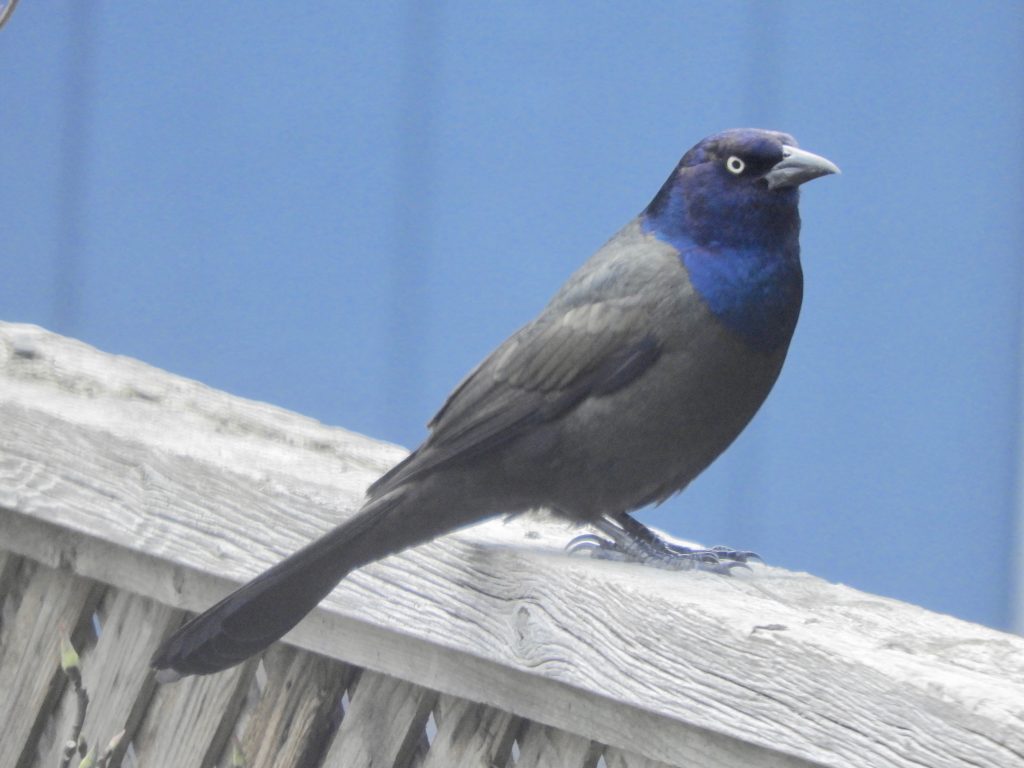
April. The birding picks up as the lockdown tightens down. Without meaning to be deliberately morbid, it’s self-evident that there isn’t an awful lot going on in a cemetery, except maybe the comings and goings of birds and squirrels. It’s a good place to avoid close contact with vectors of a contagion, besides there’s usually a scattering of trees and shrubs that all those birds and squirrels species. On an exploration of one such cemetery I found a pair of Merlins getting a start on nest building. Looking back, I reread my post about a Common Grackle, it was a pretty average bird but its colour was an eye-opener.
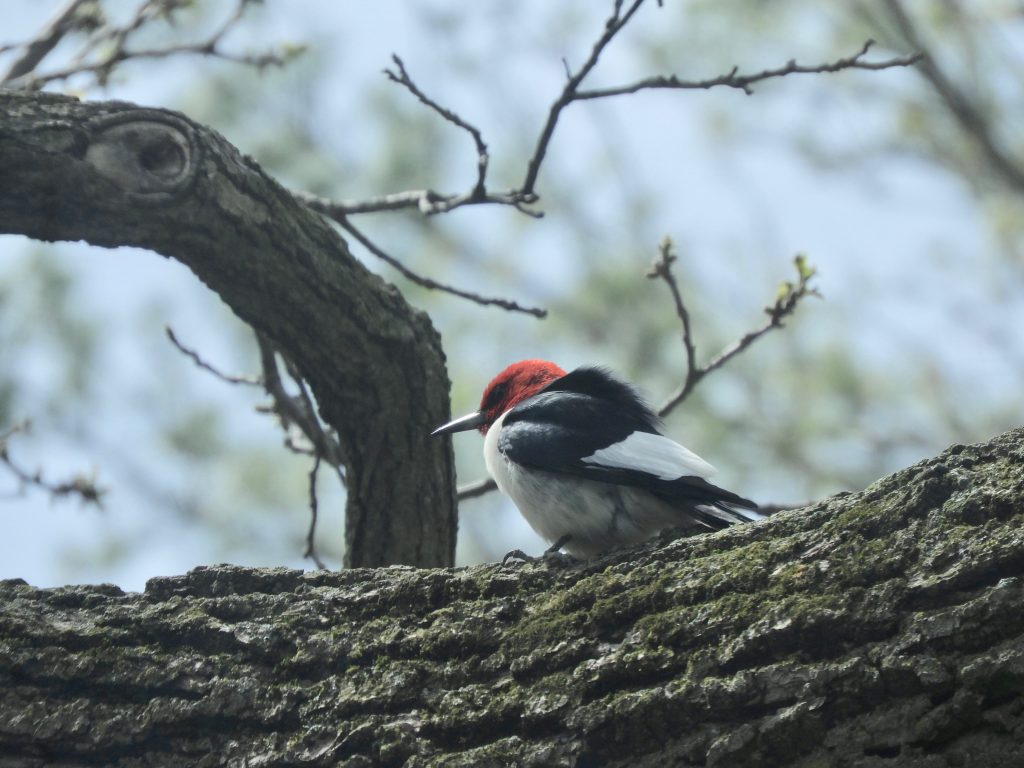
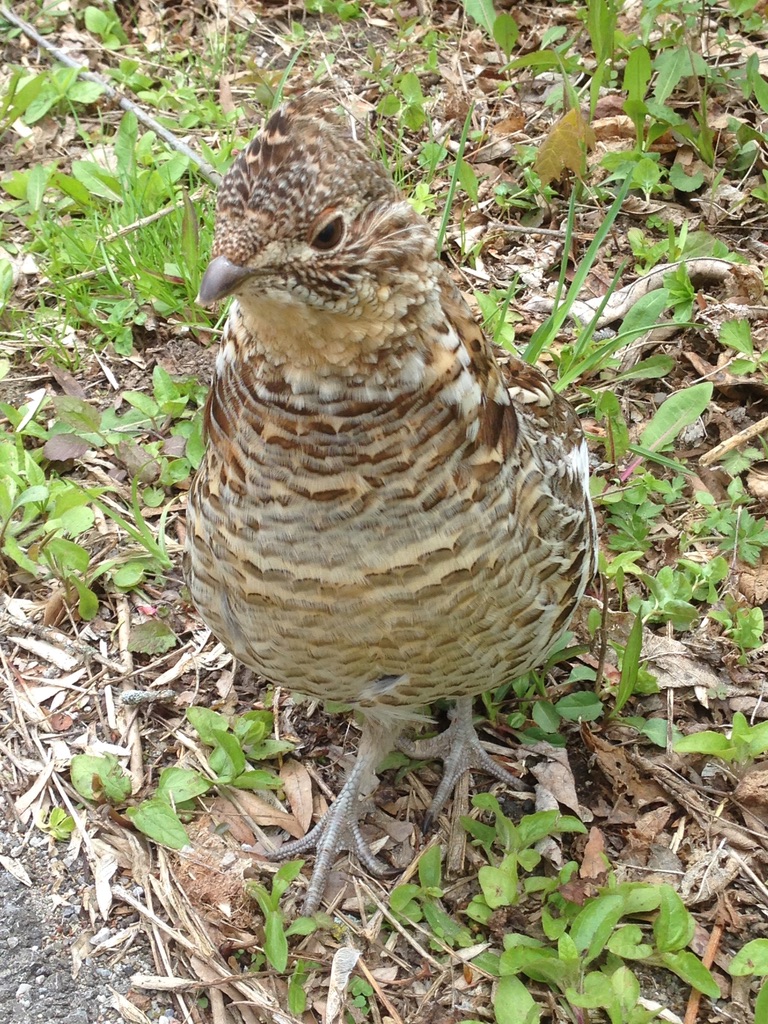
May. May should always be a blockbuster of a birding month. But two things got in the way: I suffered a middle ear infection that clipped my wings and upset my sense of balance (which continues at times) and we, the birding community, did a lot of staying home. Speaking of which, a Red-headed Woodpecker visited a near neighbour’s back yard, and I was there in a trice to get some photographs – marvellous! But a close and very odd, almost intimate, encounter with a Ruffed Grouse was one of the strangest bird experiences of my life.
June. This month I posted nothing and when I look at my field notebook there is only one day of observations, June 1st. The best bird of the day seems to have been a couple of Great-crested Flycatchers or maybe a Pileated Woodpecker. Lockdown did this?!
July and August. At the end of July, I spent time at a large wetland where Virginia Rails had successfully nested. Virginia Rails are secretive birds and occasional glimpses are usually the best you can expect. But this was different and a species which for many years I have considered a rare treat, became an easy catch.
Through summer we moved from tight lockdown to codes of acceptable behaviours and varying prohibitions. But we knew that with winter on its way things might become difficult. Governments around the world imposed different directions on differing scales at different times and we were all a bit confused. But birding is an outdoor pursuit by definition, and I felt safe and responsible.
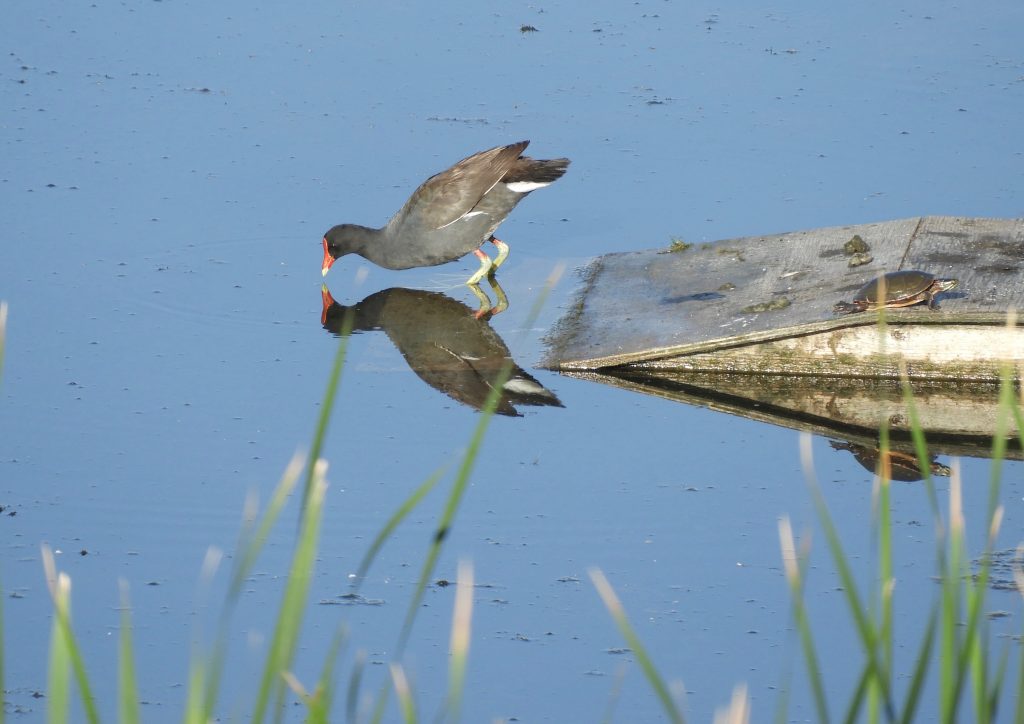
At almost the same place as the rails, I watched and photographed a Common Gallinule. Its unabashed behaviour was almost as unexpected, parading around out in the open.
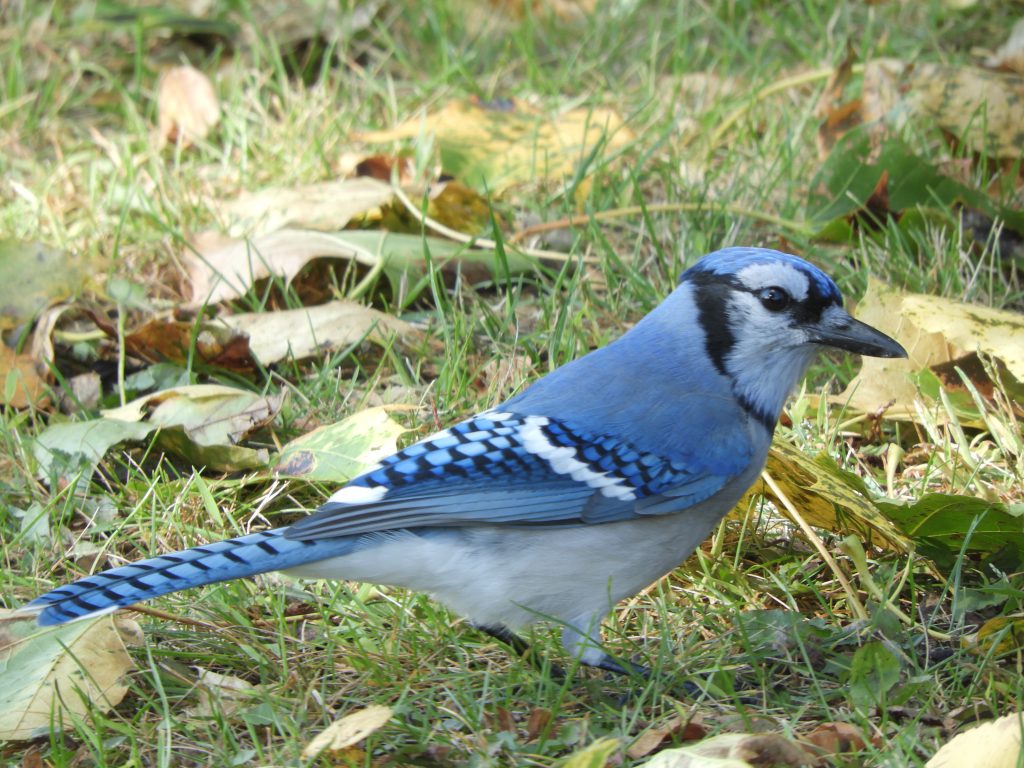
September. I revelled in watching Blue Jays in migration this month. I had always denied having a favourite bird species but, if pressed, I’d mutter about vireos in general and perhaps Red-eyed Vireos in particular. Now I found myself thinking that maybe I like Blue Jays better than any other. I think if I could have a native bird as a pet I’d go for a Blue Jay. My birding friend Bob hates them – very much his loss!
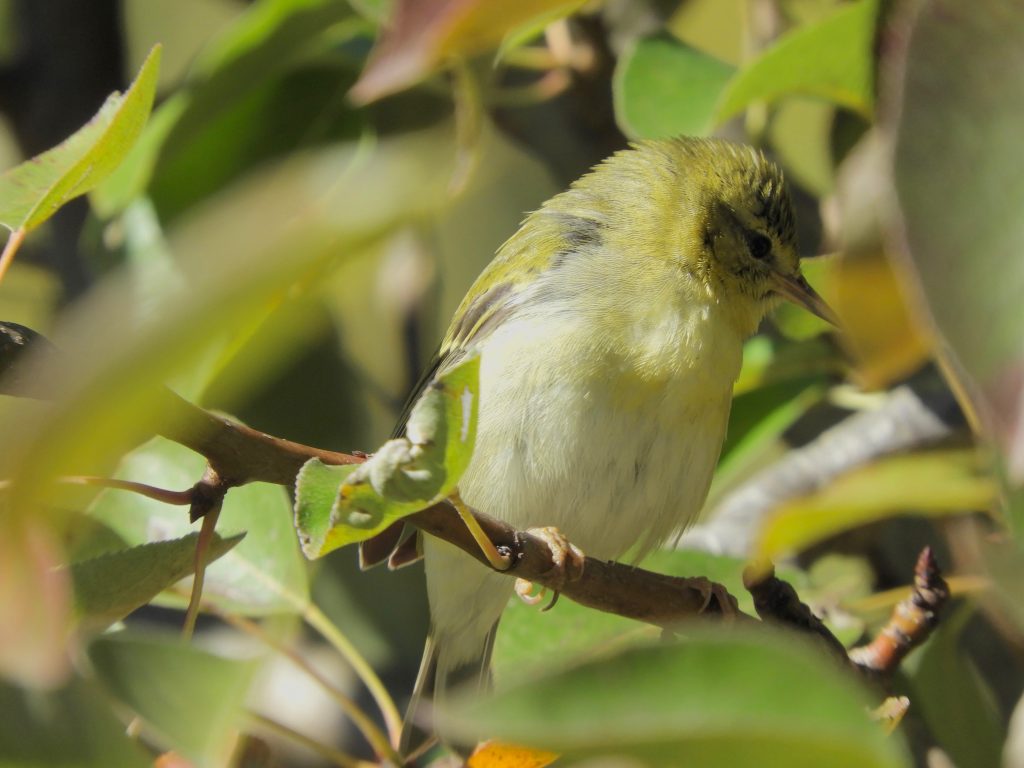
October. A Tennessee Warbler that entertained me by my back door was the month’s most memorable bird. I got more Tennessee Warbler for my money in that half an hour than I had in my whole life so far. It is an often-invisible species that scores higher as a checklist tick than the eye candy scale (where it barely registers).
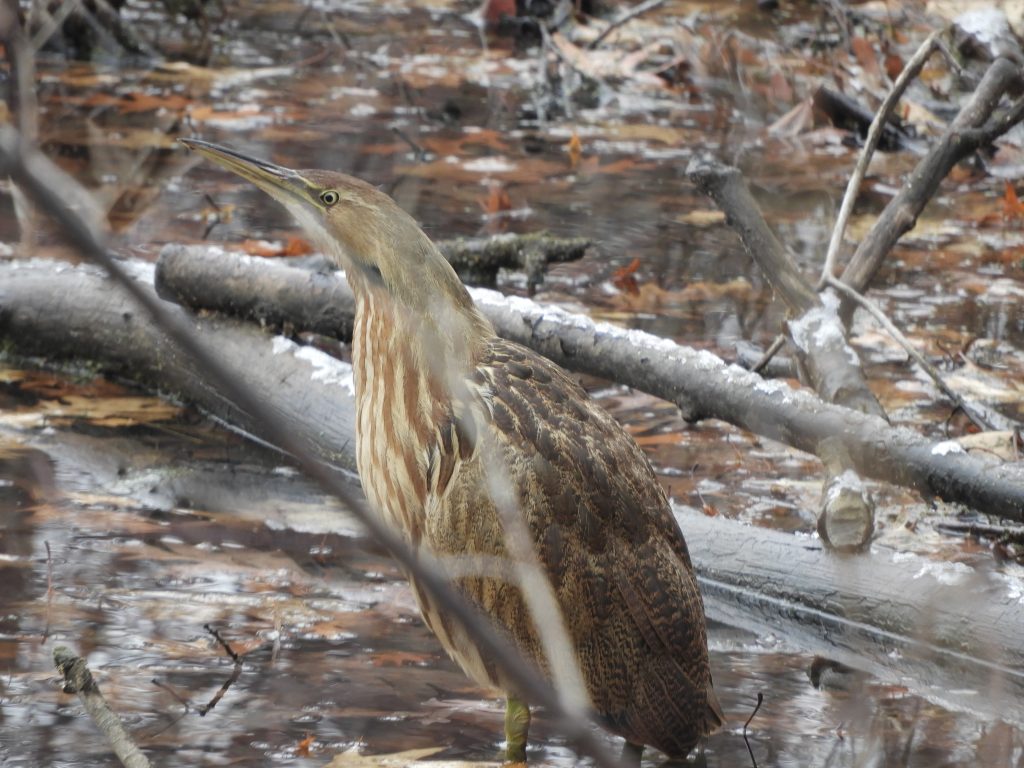
November. I think this rather sad American Bittern was bird of the month. Sad because it was still around as winter drew closer and it should have been long gone. Even now, as I write this, I wonder if is still there, at that same pond but now a ragged corpse – food for scavengers, foxes, minks and crows.
December. We are locked down again, there is more than enough written about it elsewhere. December memories are all rather fresh so it’s hard to pick on one bird as more memorable than others. Perhaps when I look back I will remember one icy winter day when, from the warmth of my car, I watched Common Redpolls scratching a living out of the weeds along a snow-touched country road.
Twelve months, seventeen best birds.
Happy New Year & thank you for your thoughts and photos.
A pleasant look back on an otherwise forgettable year.
Thanks, Peter, for those 12 months and 17 birds.
Happy birding in 2021.