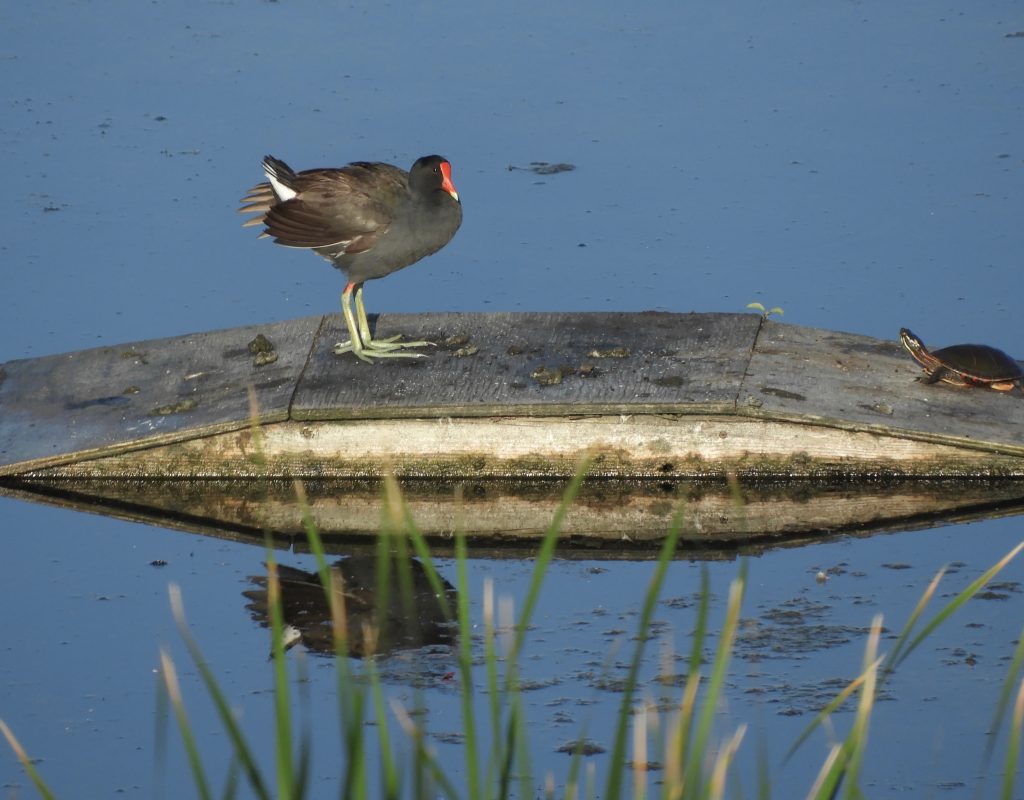
Grimsby Wetlands, Grimsby, ON , August 7, 2020. I was fairly sure I’d run into a Common Gallinule today, a family of adults and young have been much discussed and celebrated among birder circles lately. Although this part of Canada is considered well within Common Gallinules’ range they are nevertheless a little uncommon and noteworthy when found.
Where I grew up in the south of England, their very close lookalike cousin the Eurasian Moorhen was reliably common and could be found on almost any reed-edged water by almost any band of wandering boys. For a while the gallinule and moorhen were considered to be the same species but closer study put paid to that belief. I did a bit of research and found the gallinule family to to be globally widespread with some member-species found solely on some very lonely mid-South Atlantic islands; and they all look much the same.
Today’s Common Gallinule was easily seen and watched from a screened viewing platform so it was hardly an exercise in birding skill, but satisfying nonetheless. My fieldcraft skills had been tested a little earlier sorting through a number of shorebirds, mostly Lesser Yellowlegs, although a lone Semi-palmated Plover was rewarding particularly as it was a lifer-triumph for a youngish birder-friend who happened to be there at the same time.
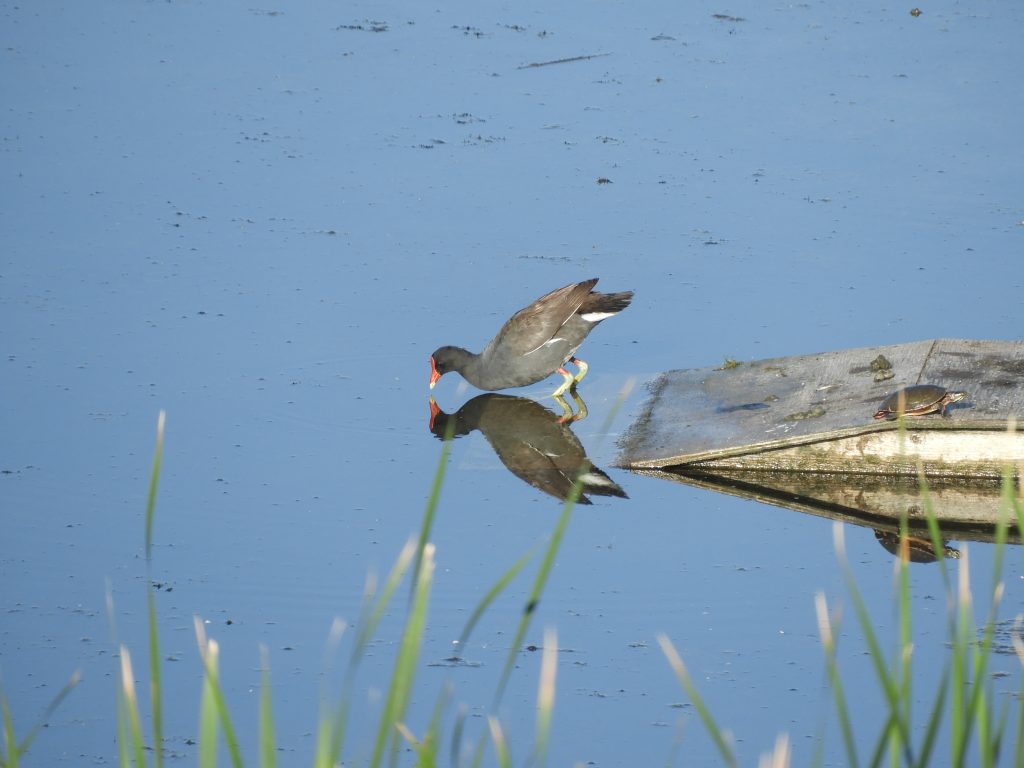
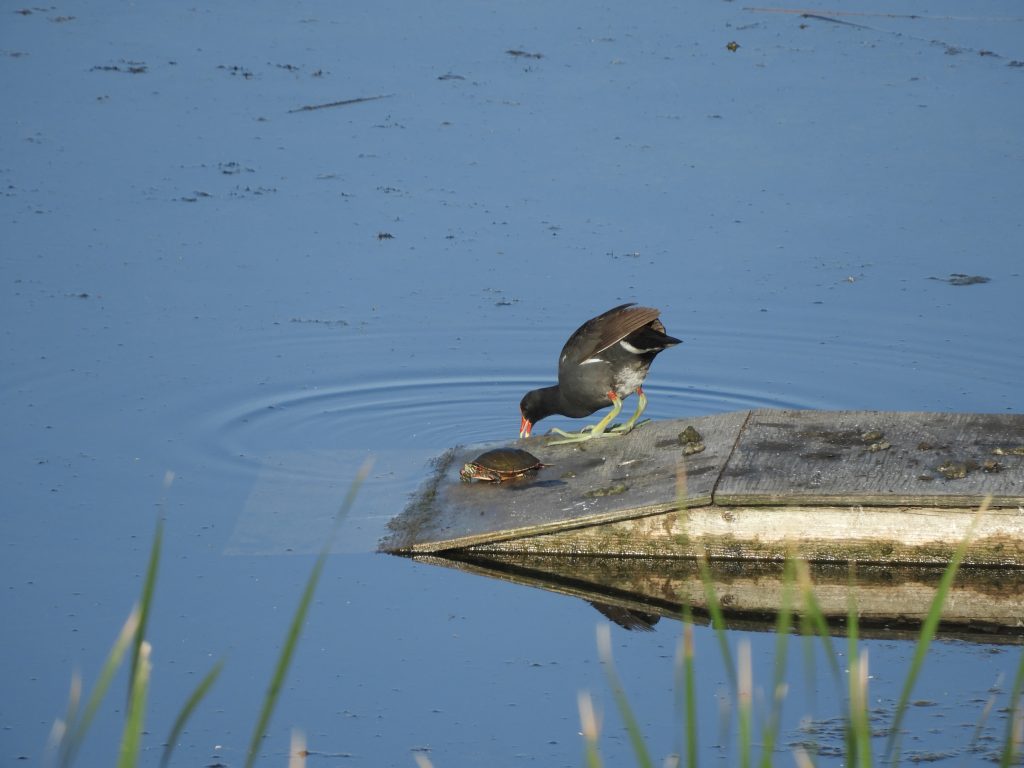
We watched the gallinule for quite a while, both of us with our cameras working overtime, I came home with around 350 photos to sort through. It was very photogenic, preening and occasionally dipping for something edible, note the little Painted Turtle sharing the platform.
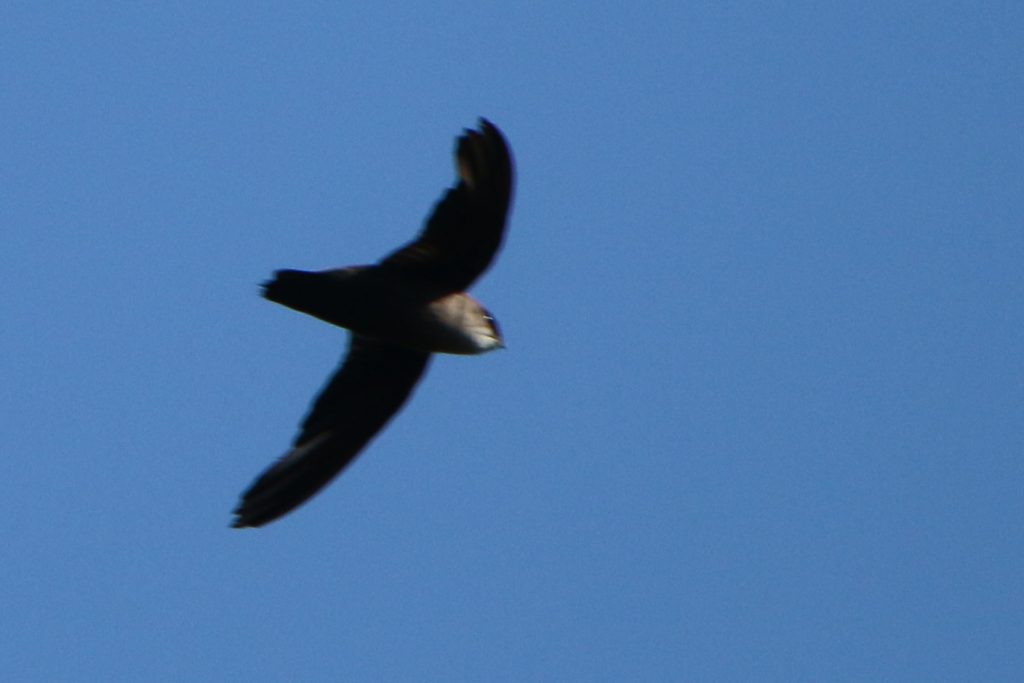
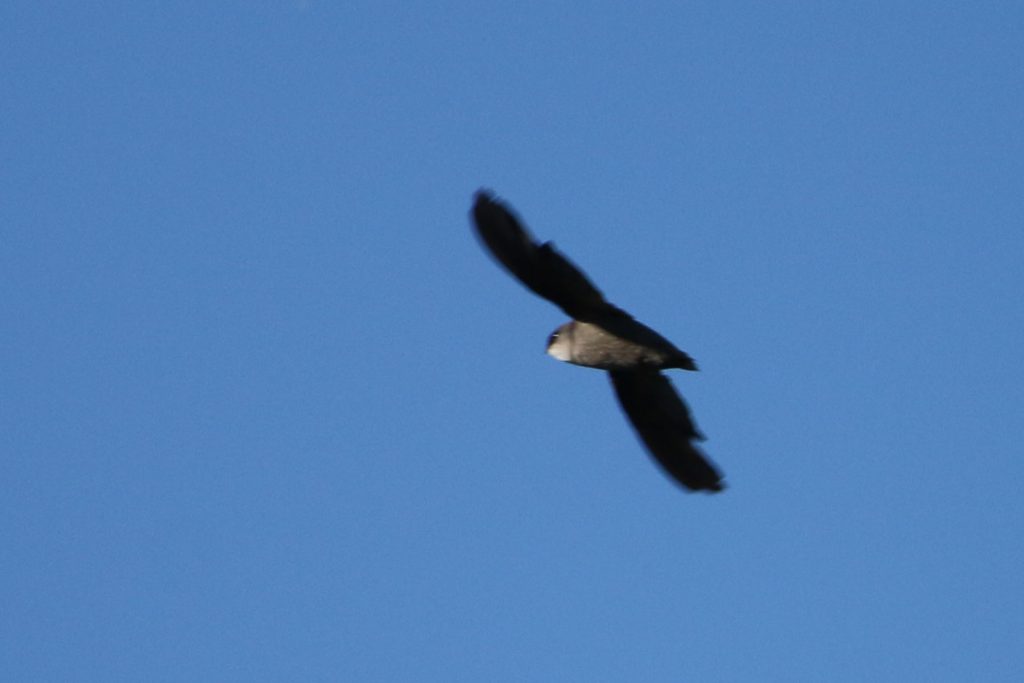
As I was preparing to leave, I made a passing comment on a couple of Chimney Swifts wheeling around. My youngish birder-friend was somewhere between startled and impressed, “I’ve never seen a swift.” She said. They were her second lifer for the day and as I left she was following the swifts with her long-lens camera. Here’s a couple of her photos, an accomplishment because swifts in flight are hard enough to follow visually and surely that much harder to photograph.