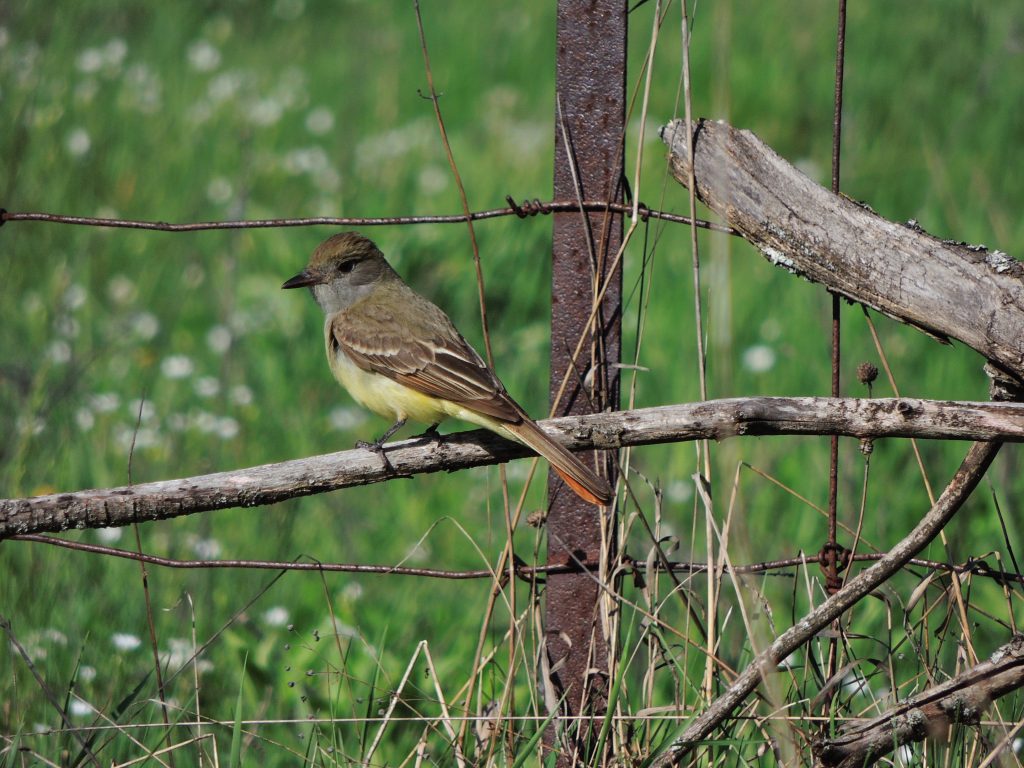
Philadelphia Vireo

Paletta Park, Burlington, ON. May 24 2020.  Many times, in this space, I’ve had kind words to say about vireos, and here I go again.  There are a five, perhaps six, vireo species that we encounter hereabouts: Warbling, Red-eyed, Blue-headed, Yellow-throated and Philadelphia Vireos. That’s five, the sixth is the White-eyed Vireo, but it belongs a bit further south, occurring here rarely and causing much fuss and admiration among birders when it does. They are all summer visitors.
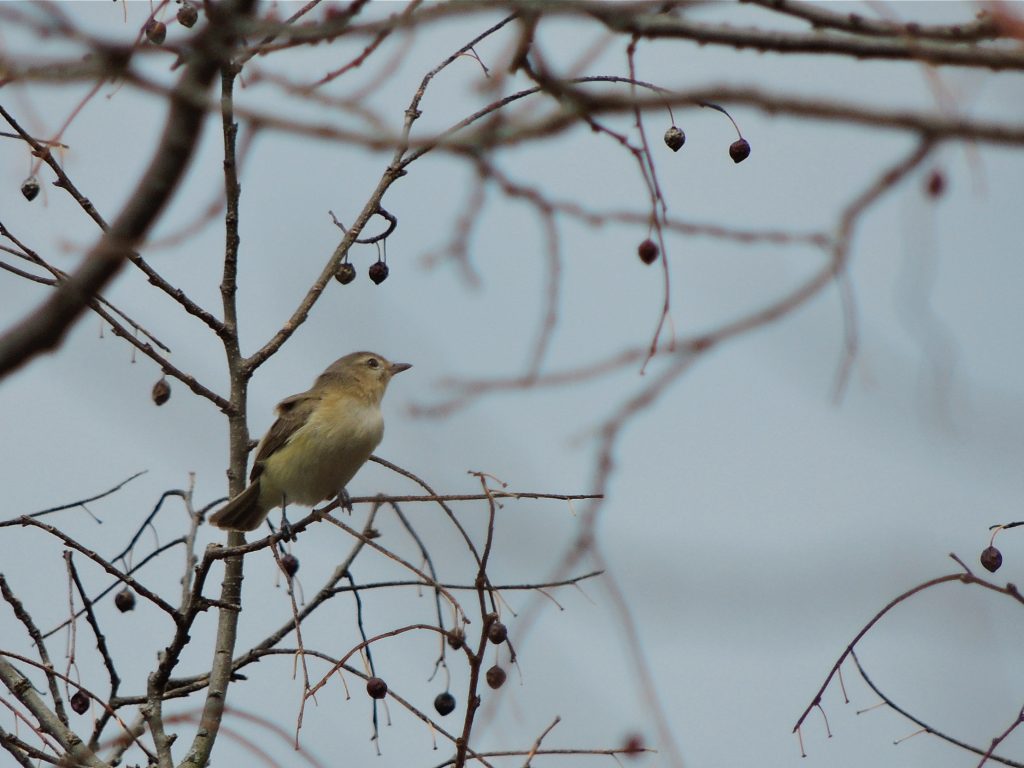
Warbling Vireo

I met two of them this morning, first a Warbling Vireo singing dutifully from the upper levels of a Black Walnut tree. I say dutifully because they certainly nest here and I’m sure he was staking his territorial claim. Warbling Vireos aren’t much to look at, being generally a drab greenish grey, it’s their rambling and cascading treetop song that distinguishes them and, like all vireos, they have a sort of pugnacious outlook towards the rest of the world. They’re quite common through summer months. The photo above is of one taken six or seven years ago.
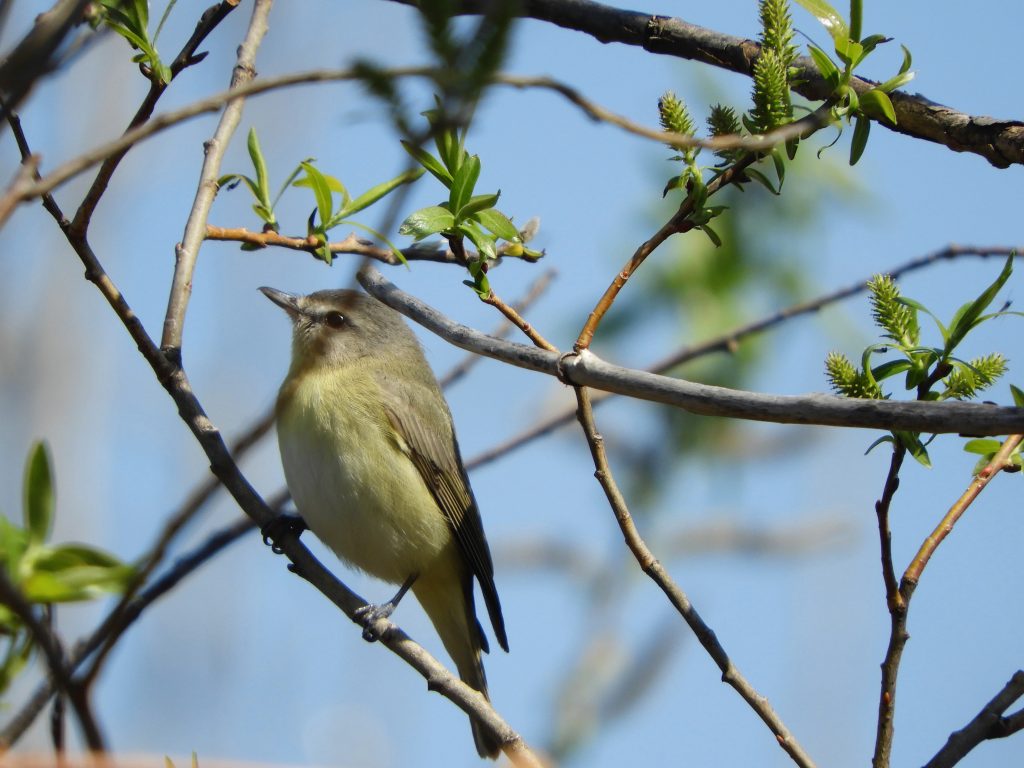
Philadelphia Vireo

Much less common and my second vireo of the day was a Philadelphia Vireo, found lazily picking insects from the scarcely open canopy of an elm. We see Phillys infrequently and only as passage migrants on their way to and from the boreal forest where they are a widespread breeding bird. It might be easily confused with its near lookalike the Red-eyed Vireo (below) but the Philly is quite a bit smaller and the beauty of this bird is the subtle wash of yellow on its undersides. The Red-eyed, by the way, is a breeding summer resident here in southern Ontario and is a little more crisply marked than the Philly, their songs are almost identical which adds to the challenges in telling them apart. I’ll understand if you’re confused.  Today’s Philadelphia Vireo was my Bird of the Day, just for being here.
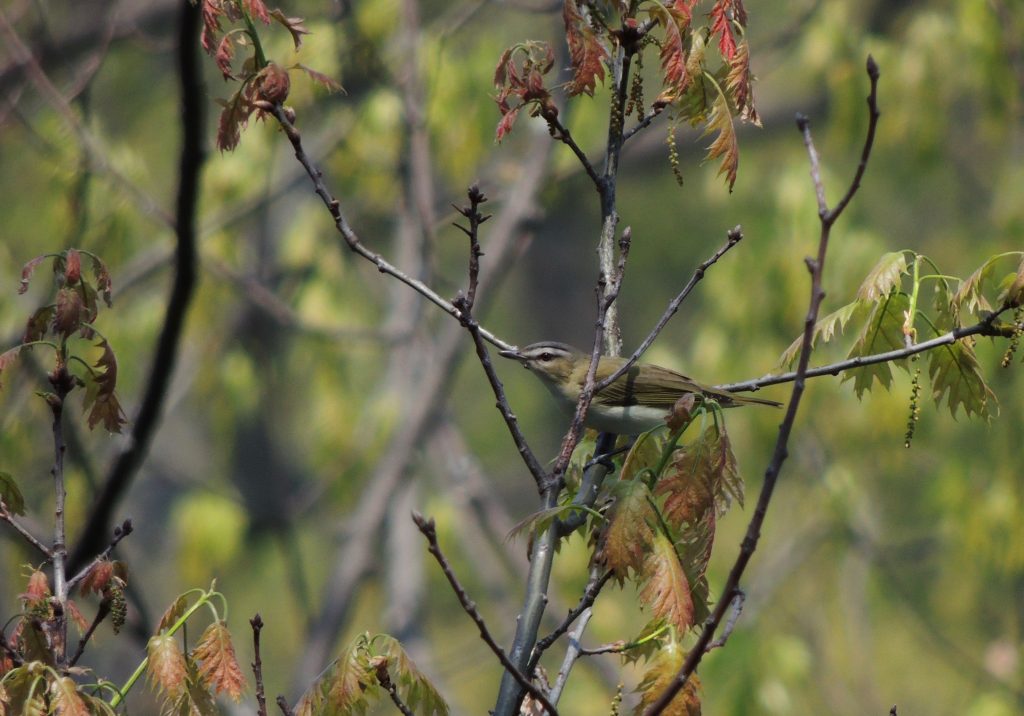
Red-eyed Vireo

Red-headed Woodpecker

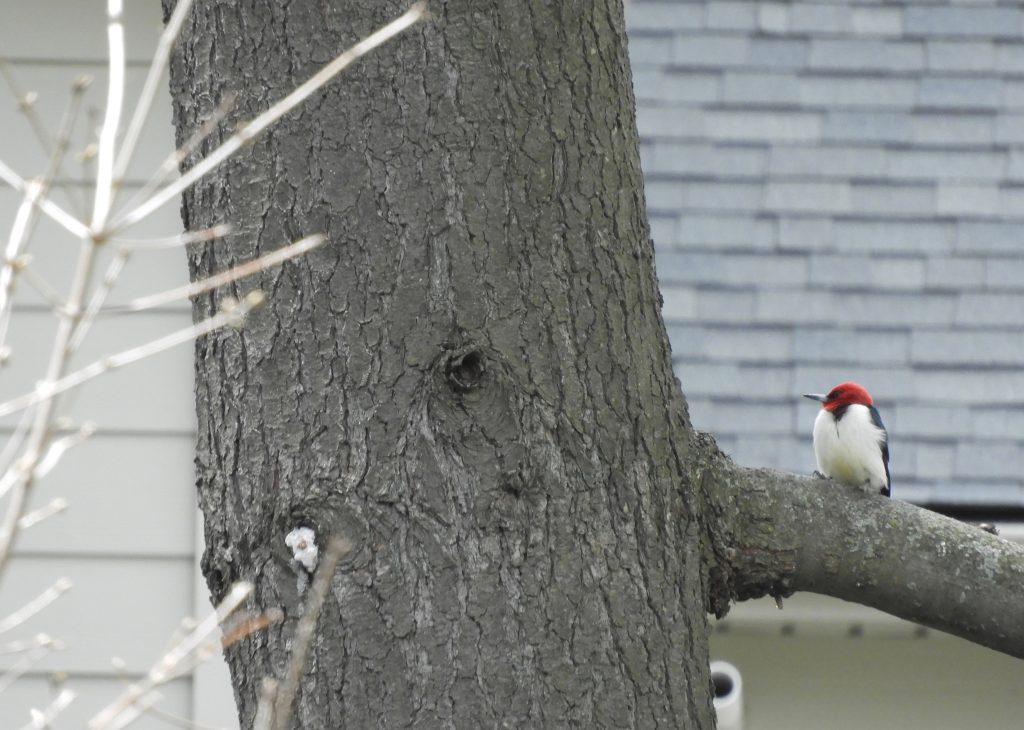
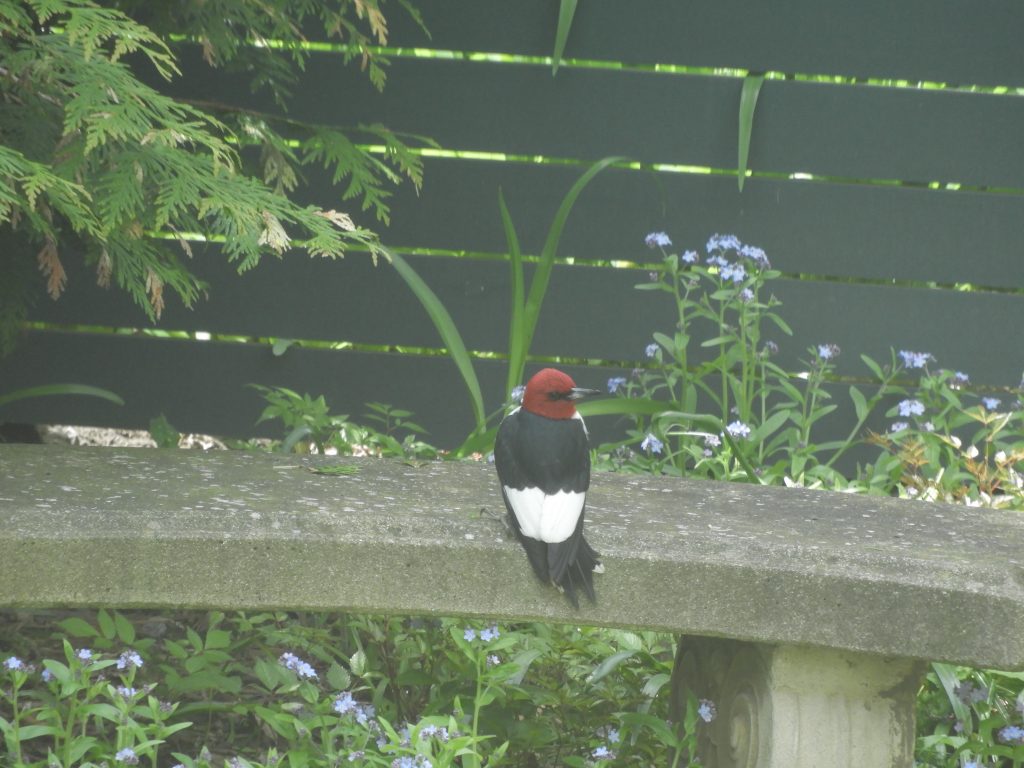
Around the corner from my house, Burlington, ON. May 19 2020.  I was unable to go very far from home today which was unavoidable and caused me some hand-wringing for a while. It was, by all accounts, a very good day to be out in the field but, that’s the way it goes some days. However, around midday a near neighbour called and breathlessly shared that he was watching a Red-headed Woodpecker in his back yard. “I’ll be right over.” I said, dropping everything to grab binoculars, camera and a spare battery.  As I hastened to his house I congratulated myself on my forethought in scooping up the battery, imagining how I’d feel if the camera were to blandly say ‘Battery Exhausted’ just when I had a prize bird at hand.

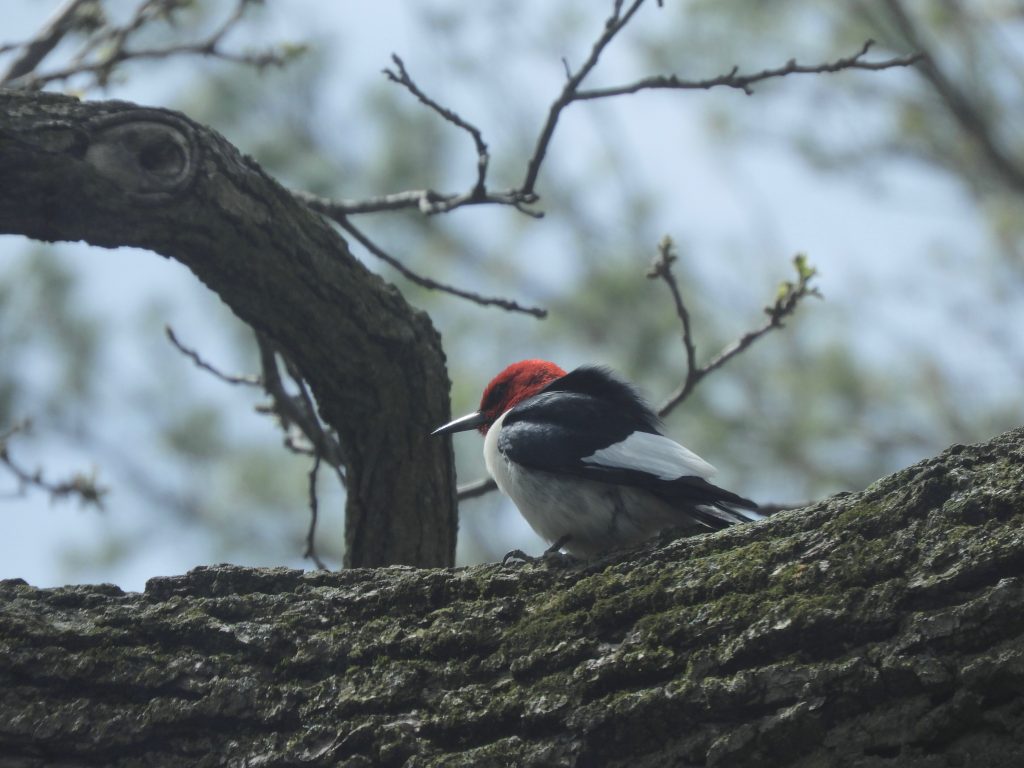
It all worked perfectly. On arrival, Richard called me through to his back yard and there was the woodpecker waiting for me. It was obliging as I took a number of photos.

Red-headed Woodpeckers are becoming few and far between in Ontario, very much a sighting to share with pride and a little smugness. The species’ population has fluctuated over the past century or two, going from great abundance to scarcity approaching extinction. Among factors over the years are variations in the crops of beech mast and acorns, the demise of American Chestnut and Elm and perhaps the disappearance of formerly abundant grasshoppers in the mid-west. In Ontario it is classified as ‘Threatened’.

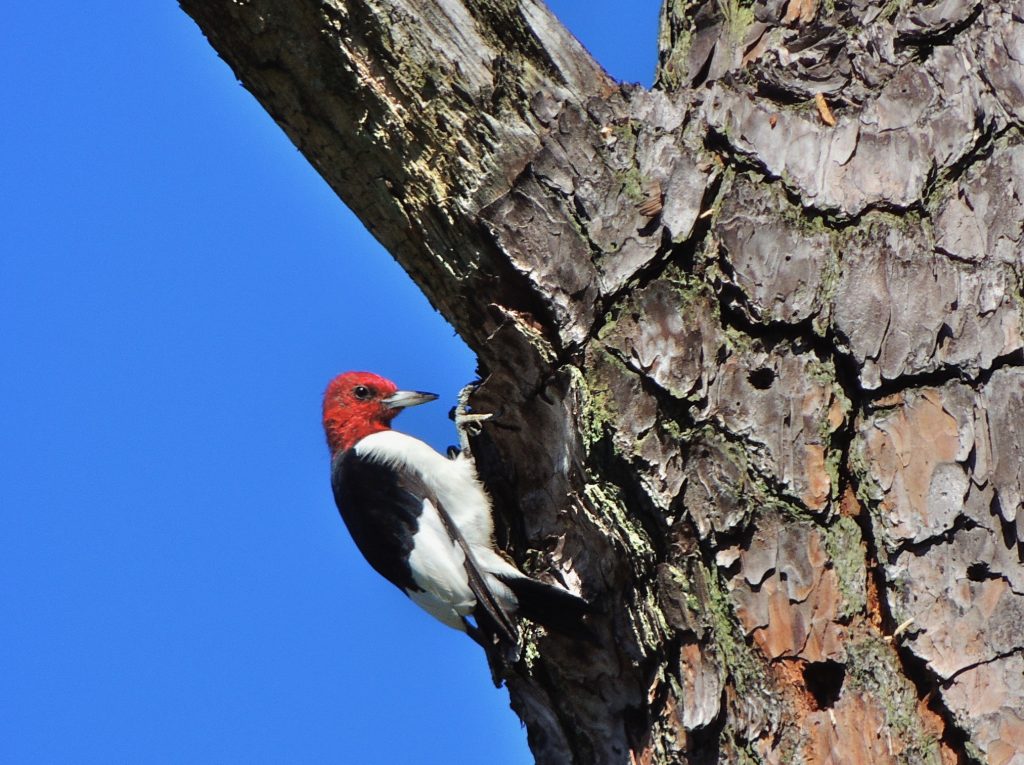
Its striking plumage (males and females are identical) has earned it some colourful common names such as white-shirt, half-a-shirt, shirt-tail bird, tri-coloured woodpecker, jellycoat, flag bird and the flying checkerboard. (ref. Cornell Lab of Ornithology, Birds of the World).  Woodpeckers seem to attract fanciful folk names, perhaps because of their size and conspicuousness, I’m thinking of the UK’s Green Woodpecker, aka Yaffle, an onomatopoeic name; and the now extinct Ivory-billed Woodpecker sometimes called the Lord-God Bird on account of the woodsman’s reaction to its size.

For me today it was quite simply My Bird of the Day.

Red-headed Woodpecker. Virginia October 2014

Swainson’s Thrush, Common Yellowthroat and Yellow-rumped Warblers

Yellow-rumped Warbler

My house, Burlington, ON. May 18 2020.  I could easily have written off today as a washout, literally and metaphorically. It has been raining for nearly 24 hours as I write, and another 12 hours of steady rain is forecasted.  In the normal course of things, we take cover on days like this and expect little more than a lot of grass cutting in the days ahead. But it’s May, the much-delayed spring migration is in full swing and the birds have an urgent mission. So, on this soggy and overcast day there was a lot of bird activity. Friends called or wrote with stories of unexpected sightings including: Swainson’s Thrushes, a Golden-winged Warbler and an American Bittern, all good stuff.

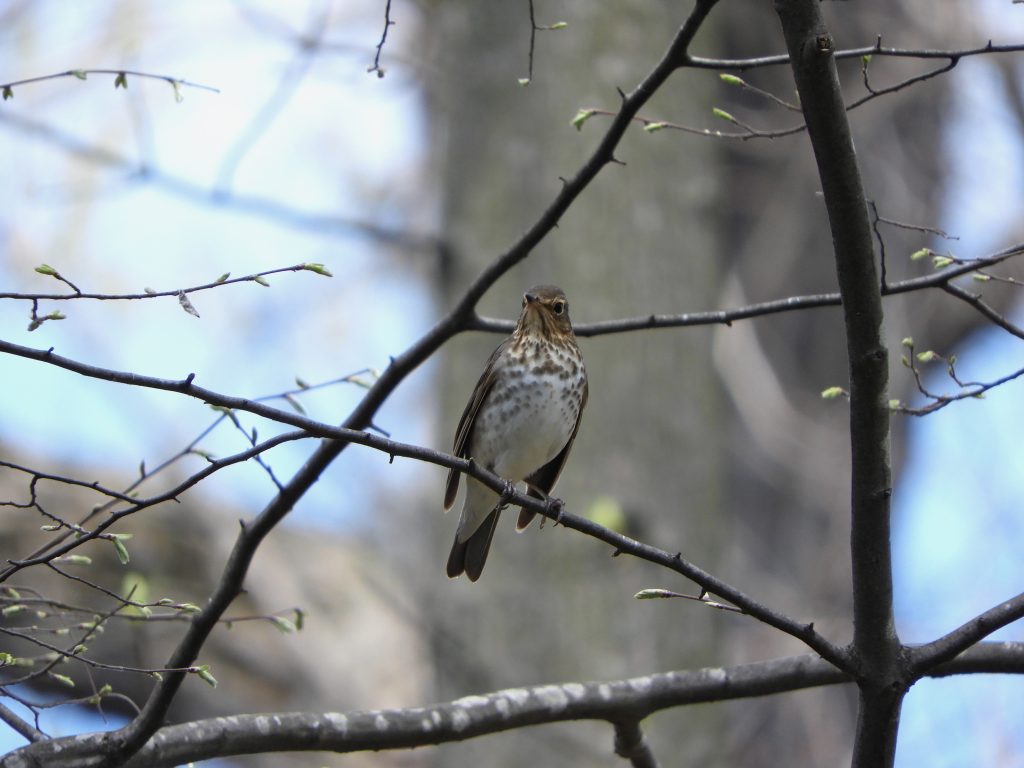
Swainson’s Thrush on a drier day

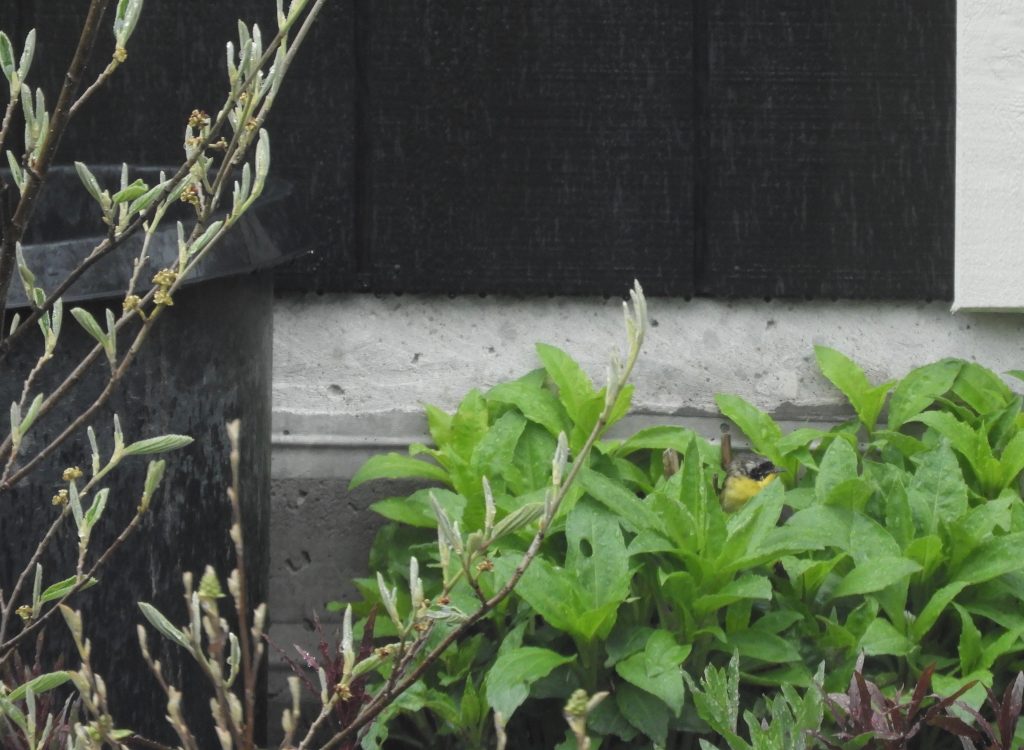
At my front window I was looking at nothing in particular until a quick movement caught my attention, and there, now I had a Swainson’s Thrush too! It was hard to make out, it’s grey/brown back blended so perfectly with the leaf litter it was searching through.  Happy to have been treated to this little bit of urban wildlife I went to share the good news with my wife and noticed something flit quickly across my back yard and lo, a Common Yellowthroat to add to my wet-day collection!

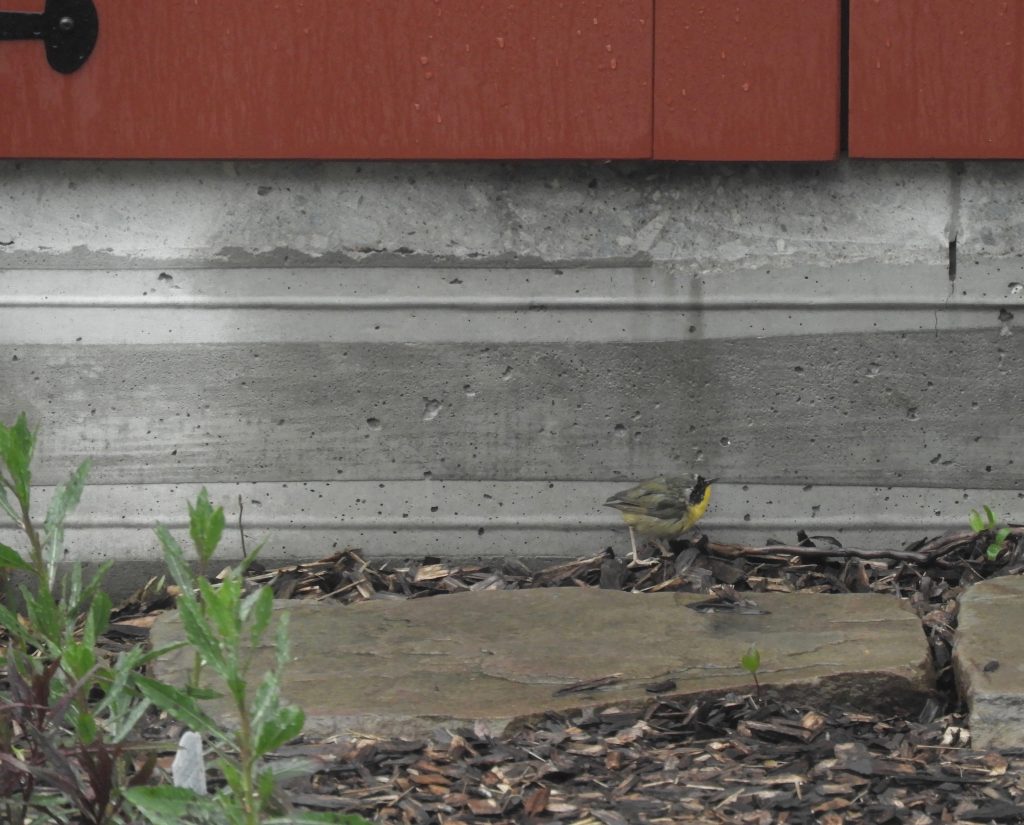
Somewhere along the way, it had had a near-death experience I think, for it had no tail feathers, perhaps it had been ambushed by a cat or fox and barely escaped, leaving the predator with a mouthful of feathers. Here are a couple of long-shot photos of it, one where it is peering out of some early growth of Woodland Sunflowers (above), the other to show its disconsolate tailless condition. Not great photos, simply for-the-record, in case word gets out and people don’t believe me. 

Disconsolate Common Yellowthroat, sans tail

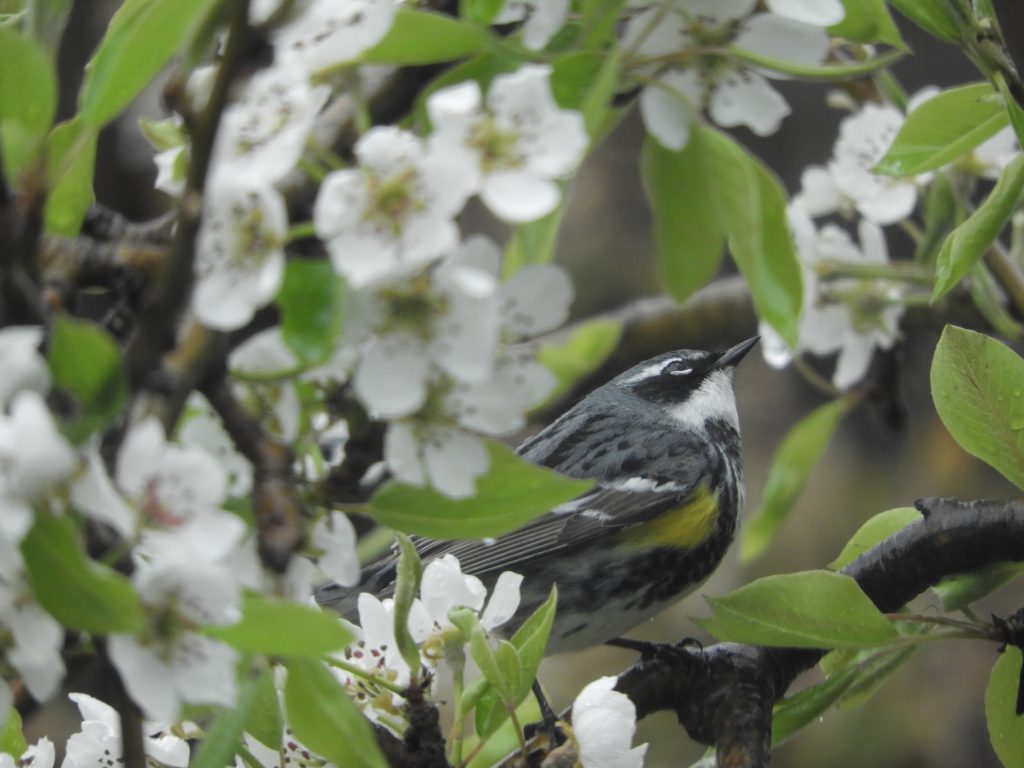
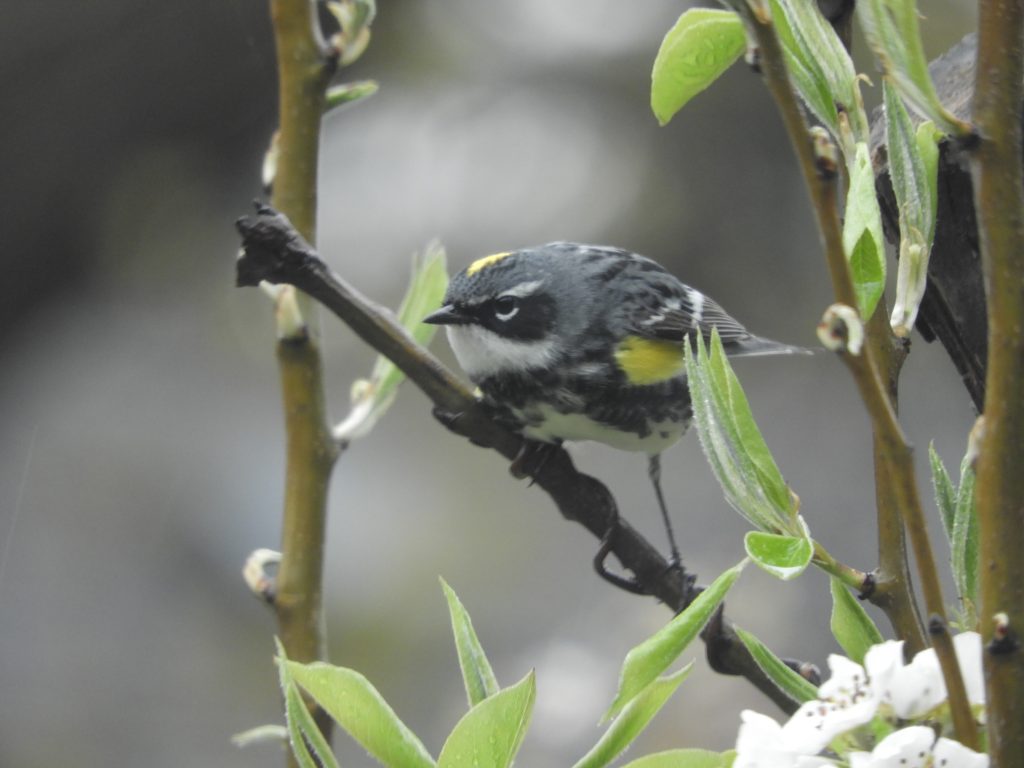
There was more to come: two brightly dressed, male Yellow-rumped Warblers foraging in my floriferous old pear tree, looking almost like calendar photos – and might have been had I not had to photograph them through two panes of window glass. We celebrate Yellow-rumped Warblers as first to arrive among warblers but then they become a bit pedestrian, outshone by the likes of Black-throated Green, Blue-winged, and Blackburnian Warblers. But today they were stars in the gloom, all three are Birds of a rainy Day: Swainson’s Thrush, Common Yellowthroat and Yellow-rumped Warblers.

Yellow-rumped Warbler

Veery

Paletta Park, Burlington, ON. May 15 2020.  You know how how some people look like their dog? You’ve seen those pictures. I once met a woman who bore a striking resemblance to her poodle; lanky and a bit pointy, but I didn’t say anything. My wife’s family really liked English Bulldogs and I’m glad to say the operative word is liked not likeness. This is a rather rambling way of tackling a thought that came to me as I ate my breakfast toast: that some birds’ songs seem appropriate to their appearance. You could, in a pinch I suppose, draw a parallel between the bright boldness of a Blue Jay with its characteristic shriek or the dry wheeze of a Pine Siskin to its streaky browns. It’s a stretch I’ll admit but…

Well this morning, before anyone else was up and about, and with a big bank of wet weather making its way from the west I went birding. What else is there after all? It had been a wet night and I was not terribly optimistic but the birds absolutely have to get on with their northward migration, and damn the torpedoes. It was early, barely first light, and heavily overcast.

The birding was good, if challenging, and I learned a lot about the limits of my camera, of about fifty photos taken only two or three are keepers. New to me this year were a couple of Ovenbirds and at least two, maybe more, Veerys, which brings me back to my point about poodles and bird song.

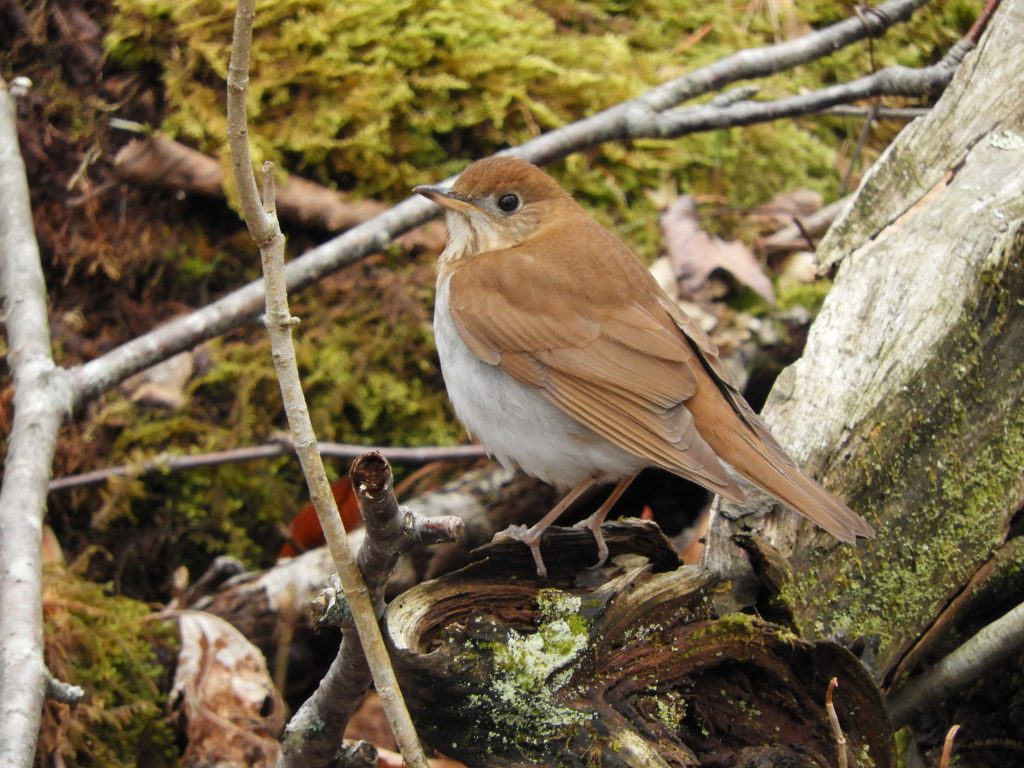
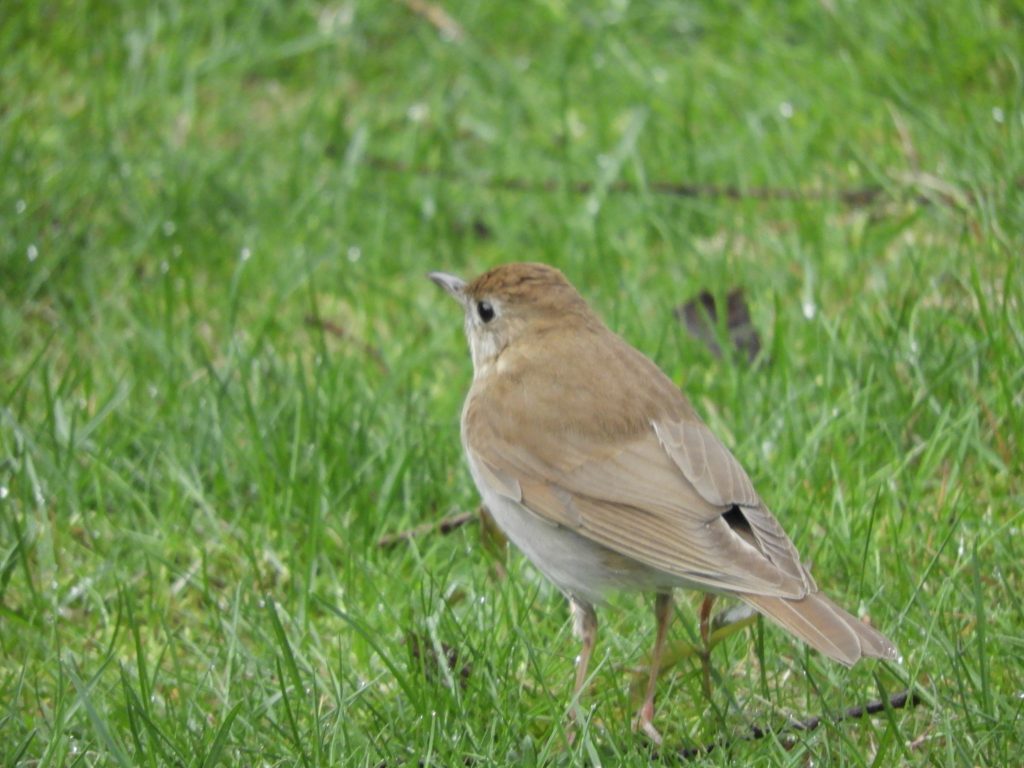
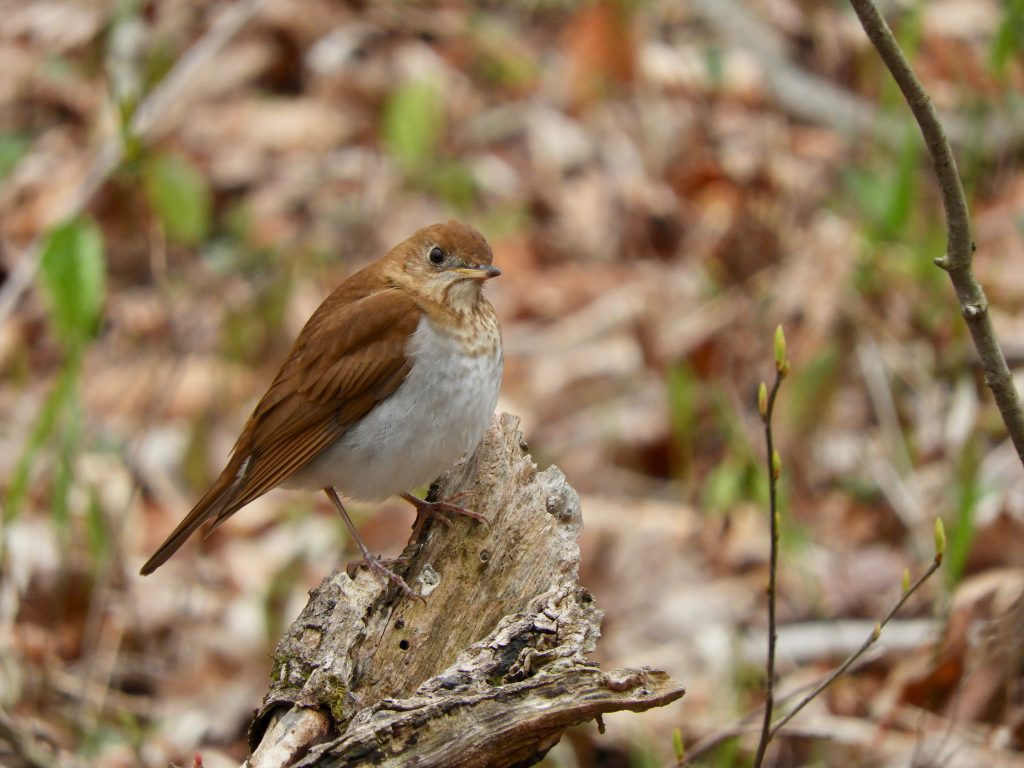
Veery, now there’s a bird! At risk of being unoriginal, I’ll quote from my my post of June 2013. ‘Veerys aren’t often seen, they’re delicate, subtle and elegant and there’s not much in the way of visual fireworks about them, it’s mostly about their song, they seem to prefer the depths of a forest to sing their “Veer-veer-veer-vv tktktkt” song.  It starts emphatically, quickly fades and tapers as if, really, it’s a secret.  It has a rolling cadence that makes you think it might be trickling down a long, cast-iron drainpipe; it’s obviously hard to describe.  I used the adjective ethereal, one that every writer seems to fall back on; nothing else quite captures the breathless will-o-the-wisp essence of this song – a song that can stop me dead in my tracks.’

Today I watched and photographed a pair of Veerys close to me on the lawn and it struck me that their natural beauty is so understated, so ethereal too. Plain yes, but not the slightest touch of lip-gloss, blush or eyeliner needed. Birds of the Day – so far anyway. The rain has stopped and I’m going back out, damn the torpedoes.

Great-crested Flycatcher

Paletta Park, Burlington, ON. May 14 2020.  This was a morning we’d been waiting for, finally a day not dominated by Arctic weather, finally a day to meet some southern migrants. Those migrants were perhaps more desperate to be here than we were to see them, they’ve been on their way north for weeks from tropical spots like El Salvador, Panama, Columbia and even Brazil, they have a breeding agenda, an appointment to keep with the future.

Our eight-strong warbler tally was Black-throated Blue, Black and White, Black-throated Green, Nashville, Chestnut-sided and Blue-winged Warblers, Northern Parula, and Northern Waterthrush, not bad. The last four were new to me this year.

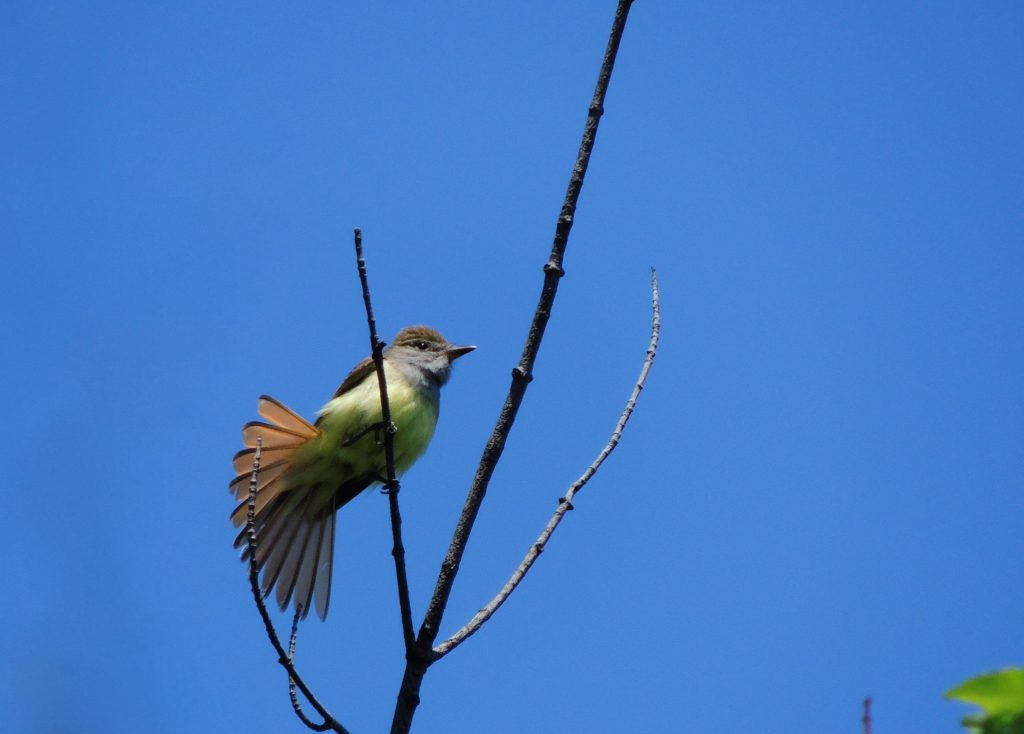
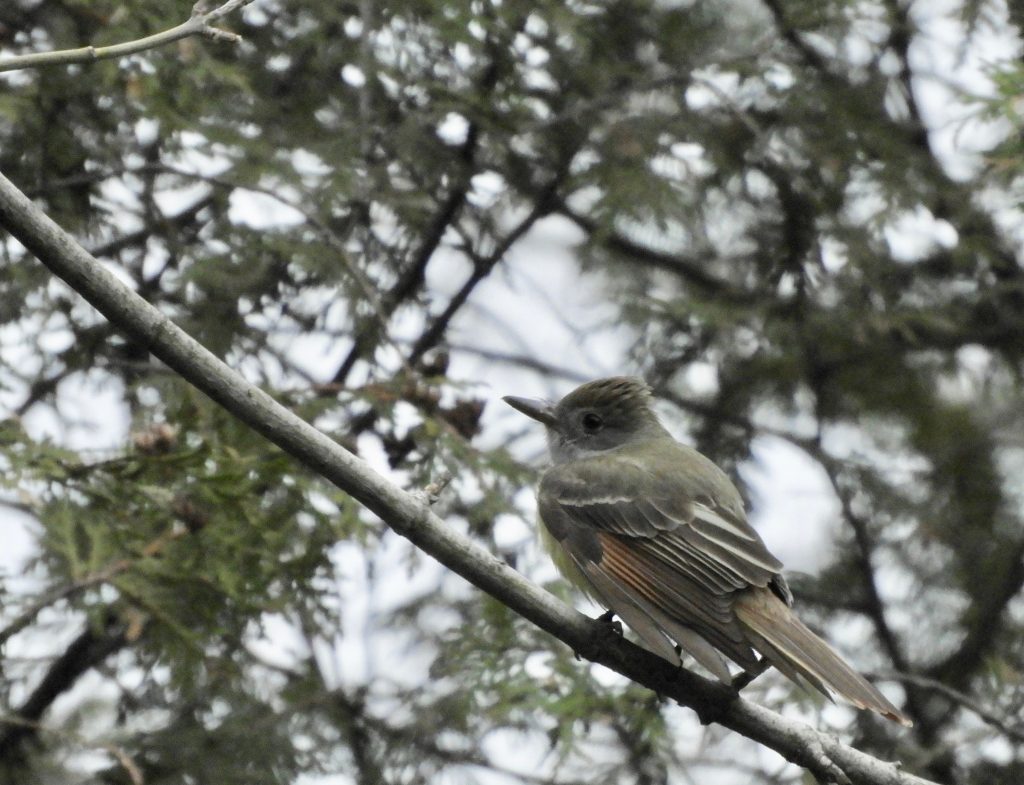
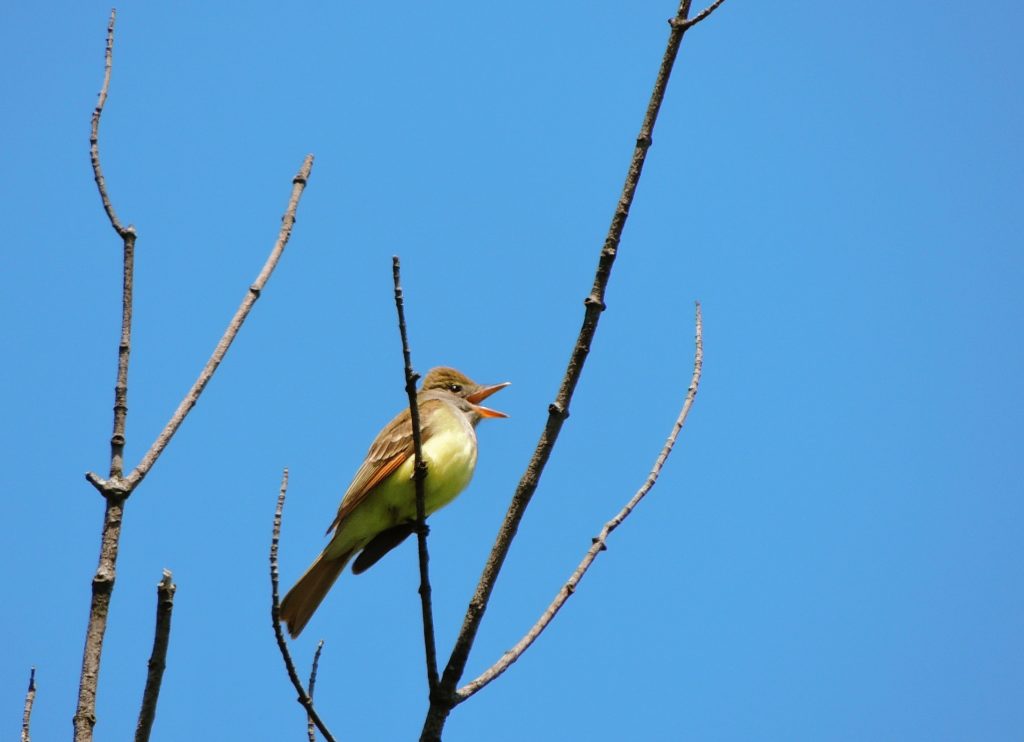
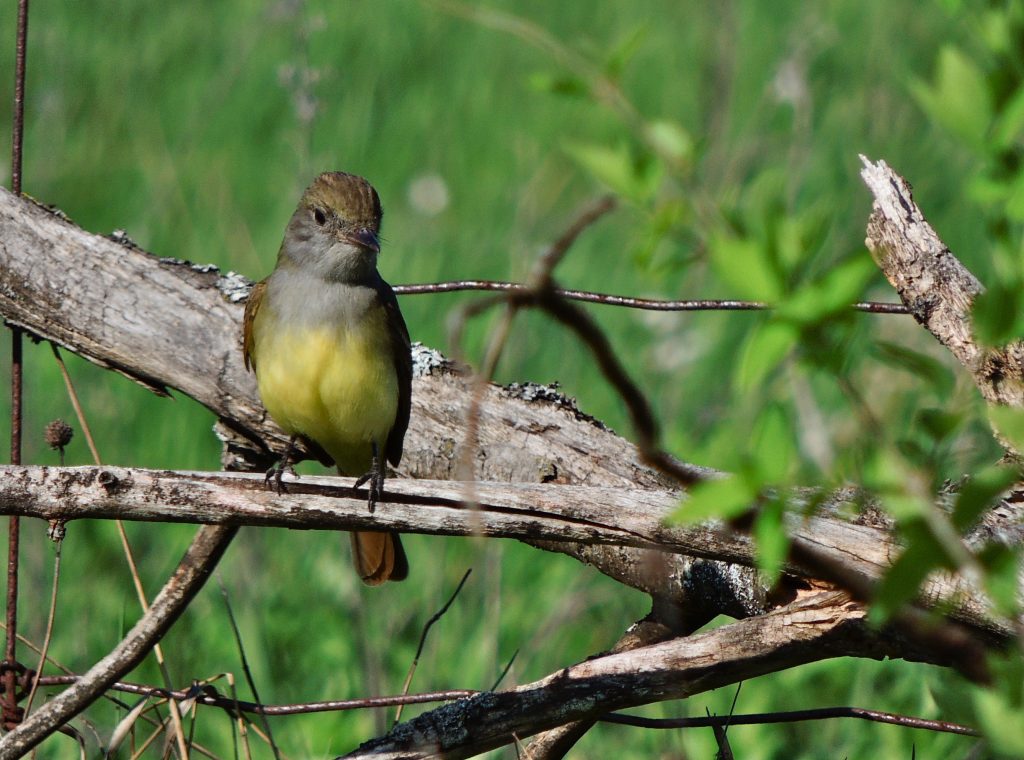
It’s not all about warblers though, and I was more taken by a Great-crested Flycatcher than anything else, it was my Bird of the Day on a day most will remember for the warblers. It’s one of those birds with attitude, self-assured and a touch pugnacious.  Later, after all this migration fuss is over, I’ll probably encounter Great-crested Flycatchers again in their wet-woodland territory. They really like soggy, mosquito-marshy clearings in deciduous forests, places with plenty of dead and dying trees, any of which might have a suitable hole for a nest site.

Above is a shot of today’s bird but the light was difficult and the cedar branches don’t help. Below are photos from other days that do justice to the subtle beauty of this creature, that lovely chestnut in the tail and wings and the sulphur yellow breast.