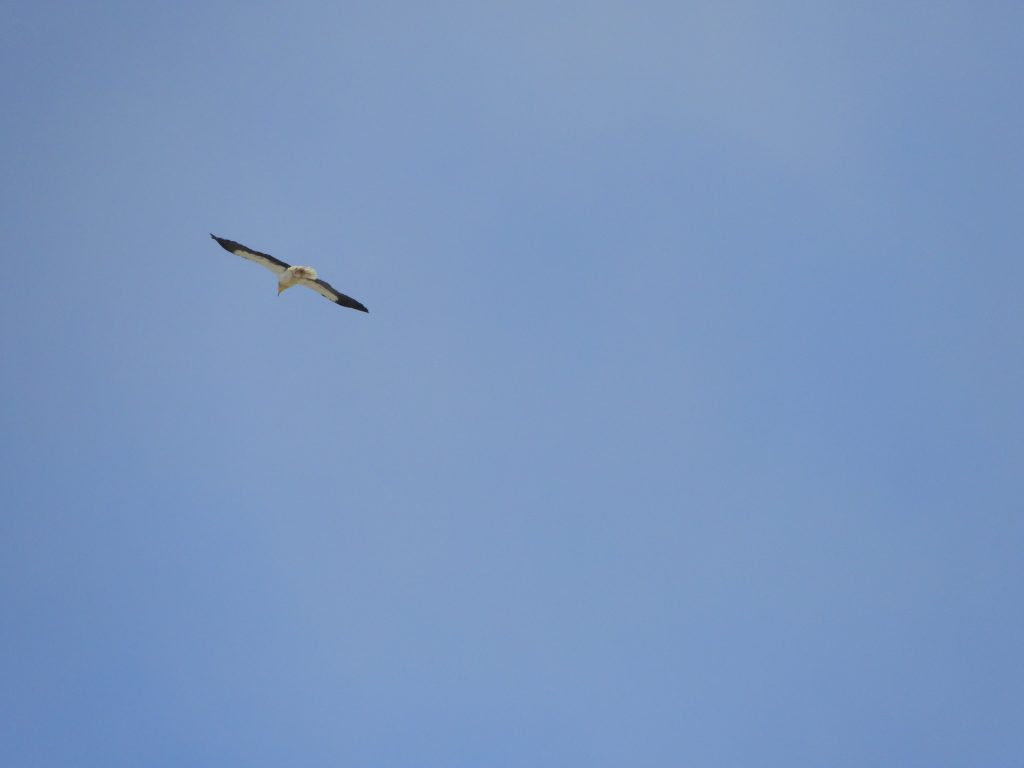
Egyptian Vulture

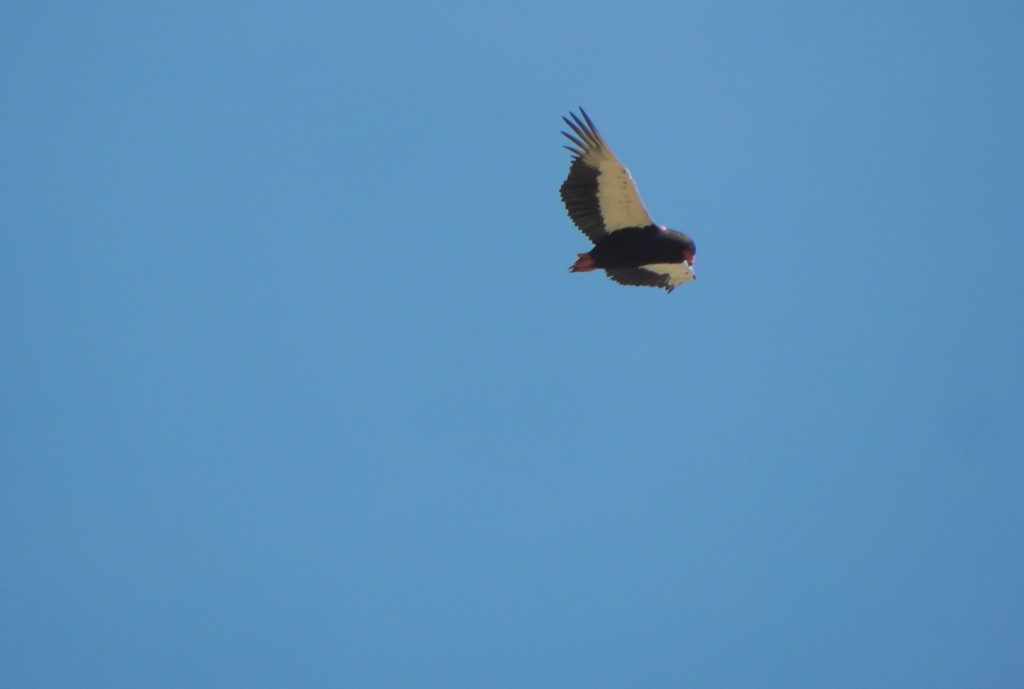
A lucky shot of the Egyptian Vulture

Al-Hamra, Oman. January 29 2020. From a 3,000-metre-high pass in the Al-Hajar mountains of Oman I was privileged to follow the path of an Egyptian Vulture as it soared overhead, spiraling higher until drifting away on the wind. My driver-guide companion stopped without hesitation to allow me to watch this strikingly marked bird. He was experienced enough to patiently wait out my enthusiasm, not that he shared a scrap of it, but he’d taken birder-tourists around before and was good at responding to urgent demands to stop.

It was quite cold on that short stretch of road, we were at the range’s highest point where a fiercely rugged back-country track abruptly gives way to a smooth slide off the mountain’s spine to Al-Hamra, a sizeable town on the desert plateau below. Its name, I was told, means red as in red-hot, a reference to its searing summer months.

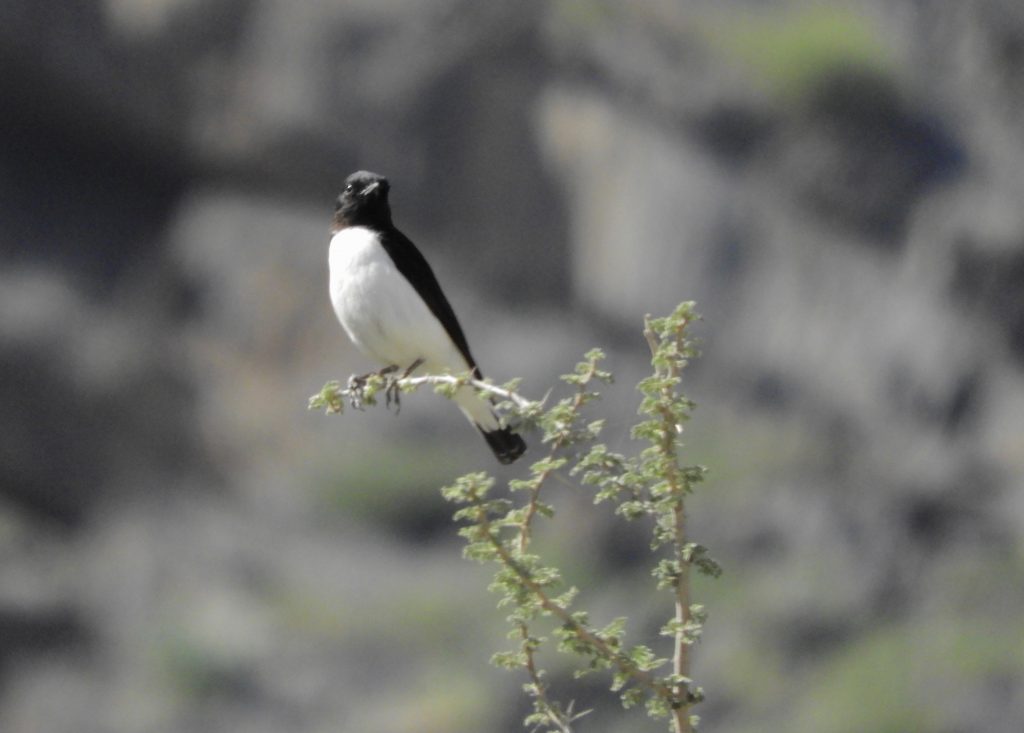
I had no idea what the vulture was at first but large, black and white, eagle-size with bright yellow legs and beak didn’t take long to identify as an Egyptian Vulture. It was easily Bird of the Day and would have been even against stiff competition; although there wasn’t any, unless I count this lone Variable Wheatear.
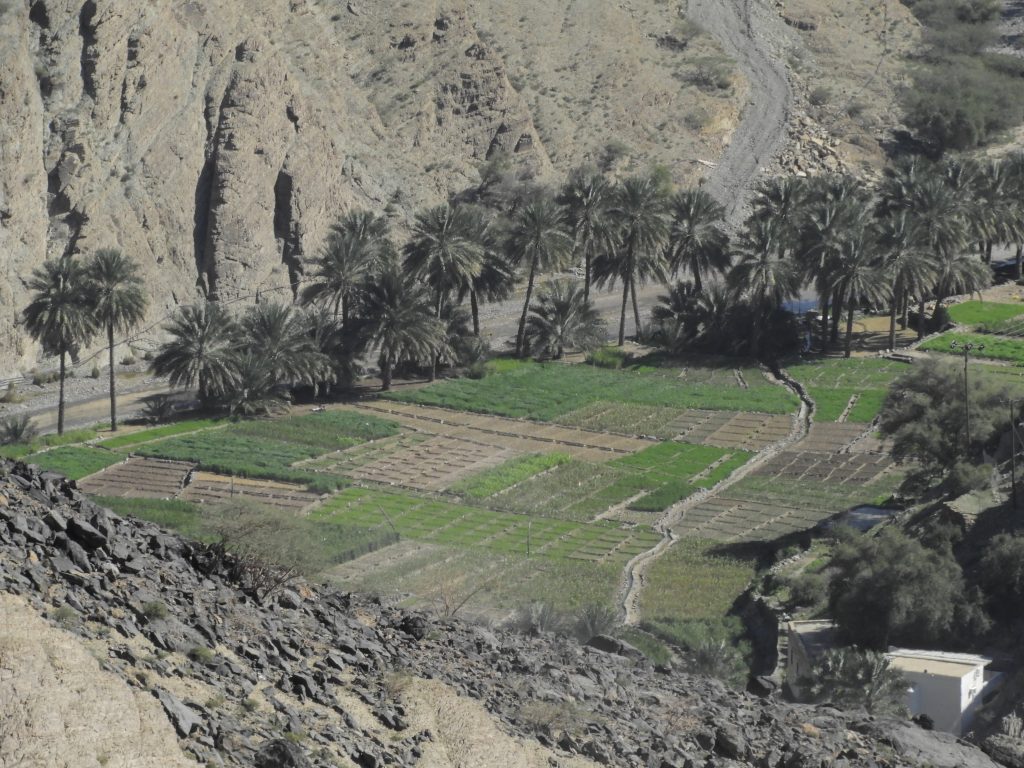
The Al-Hajar Mountains are a dry and harshly rugged range that stands between the peopled coastal plain of north-east Oman and the endless Arabian Desert. To travel through these mountains is to glimpse valley communities who have probably seen scant change in hundreds of years. They are little villages wedged in the tight folds of austere cliffs and peaks and occupied by farmers and herders who thrive by capturing and rationing the surprisingly abundant sweet water to irrigate Date Palms and small pockets of land.
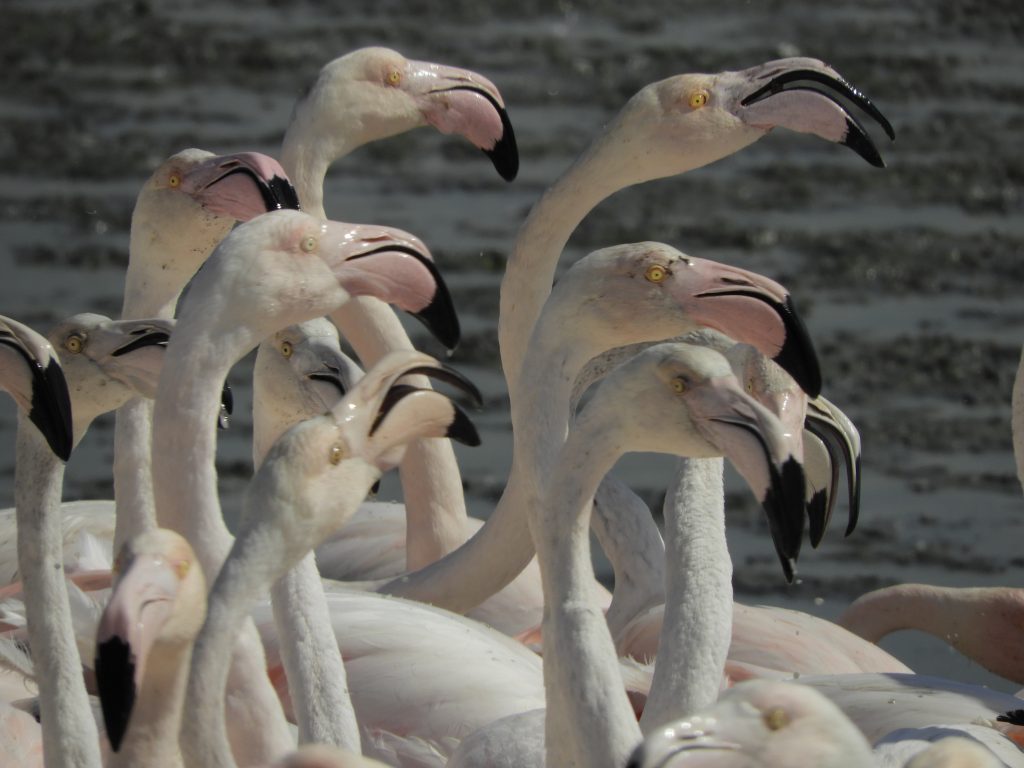
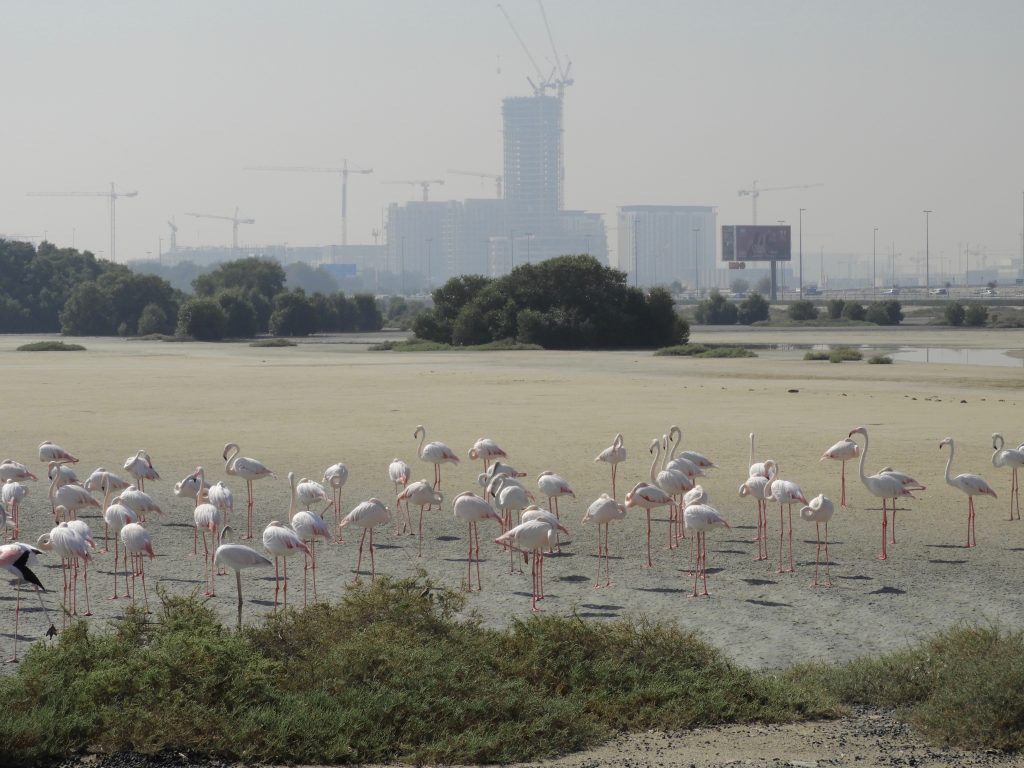
Greater Flamingos

Ras al Khor Wildlife Sanctuary, Dubai, UAE, February 16 2020. There really aren’t many birds here.  Dubai is legendary as the new and easy-to-reach destination for shopping, beaches and a good time in the sun; it’s all about humankind. It’s easy to see its seduction, it is a futuristic city of fanciful architecture where everything looks new, and roads are wide, smooth, orderly and carrying only new cars to sparkle in the sun. Here is the world’s tallest building, Burj Khalifa, a148 floor-high icon.   But if you need relief from the tedium of brand new, you can explore some of the traditional souqs flanking the dhow-choked Dubai Creek. Dubai is the product of free-flowing oil, outsourced professionals and cheap, unskilled labour. Not a place for birds though.

Not quite true, Dubai has flamingos and I went to see them; although not many people do. It was hard explaining to a taxi driver quite where I wanted to go, Ras al Khor Wildlife Sanctuary drew blank expressions but I knew the general directions so we set off speeding along quiet, multi-lane roads.  For a while we found ourselves skirting a large construction site where I was told a 200 storey (!) building was coming out of the ground.

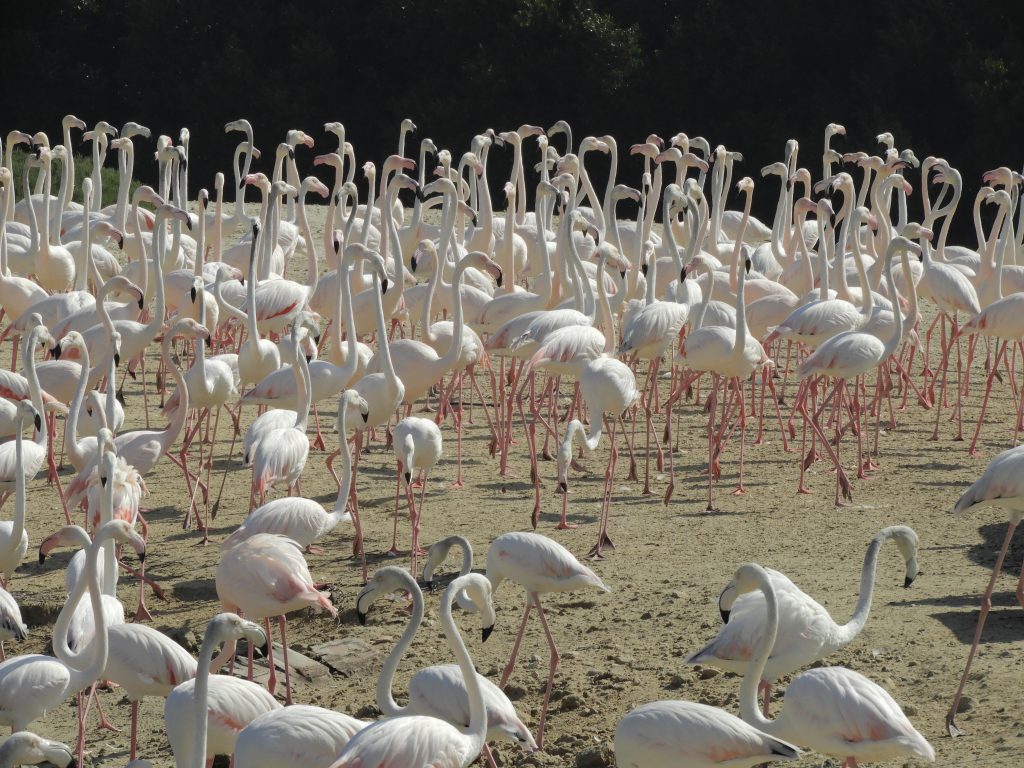
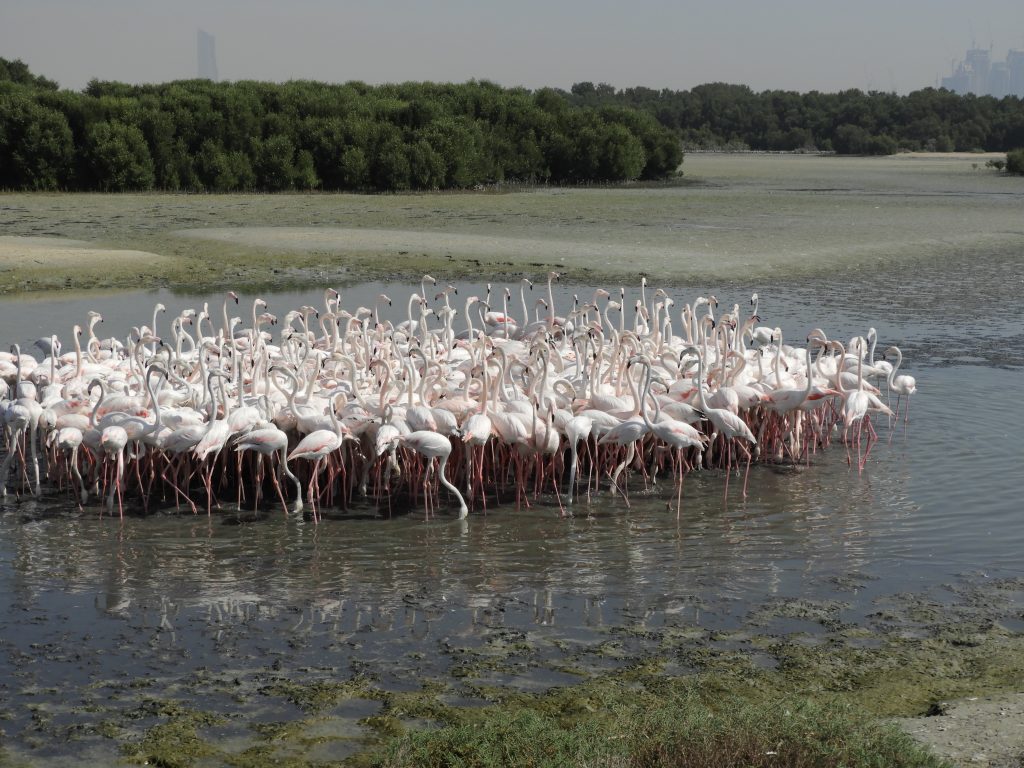
Ras al Khor Wildlife Sanctuary is noted in my Lonely Planet Guide as an important stopover for migratory waterbirds and that avid bird watchers can spot more than 170 species in this pastiche of salt flats. Maybe, but this was the wrong time of year and I only saw four species: one Eurasian Curlew, an indeterminate Cormorant, a single Great Egret and thousands of Greater Flamingos. The flamingos hang out obligingly close to a nice shady hide with comfy seats and convenient windows. It also happens to be where they get fed at eleven each morning.

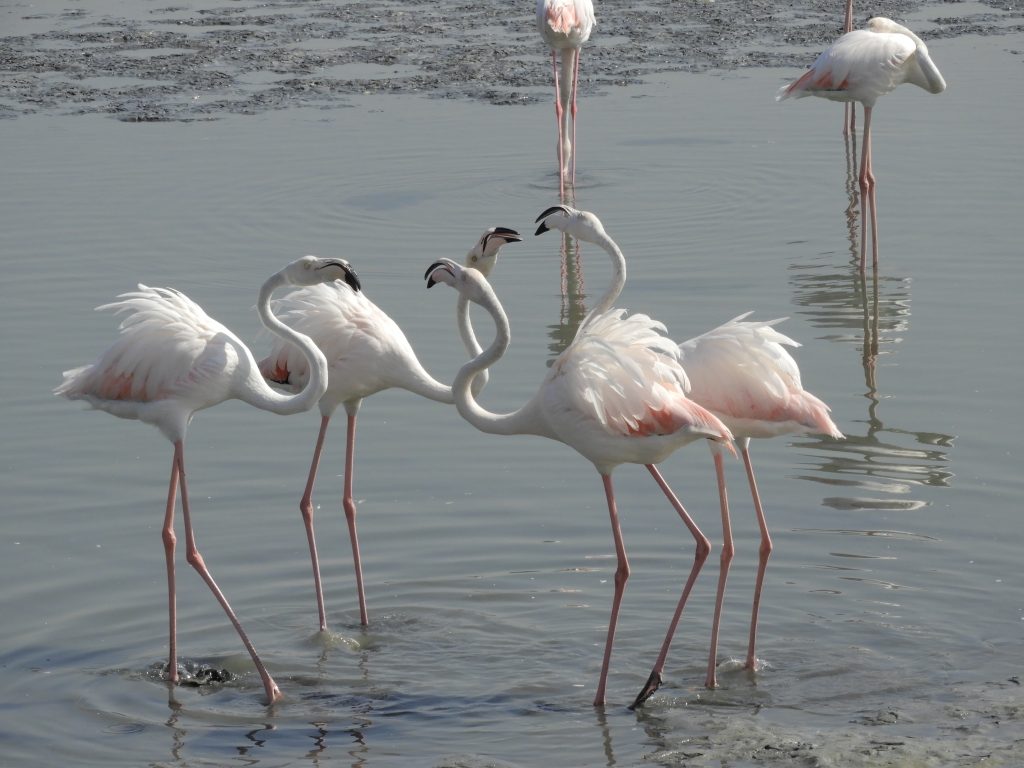
They are a chattering spectacle of pink and white on long red legs and, as a group crowded like this, they smell a bit funny too. But, with perhaps the longest legs of any wading bird and down-drooped bill to sieve mud for invertebrates, they are wonders of adaptation. 

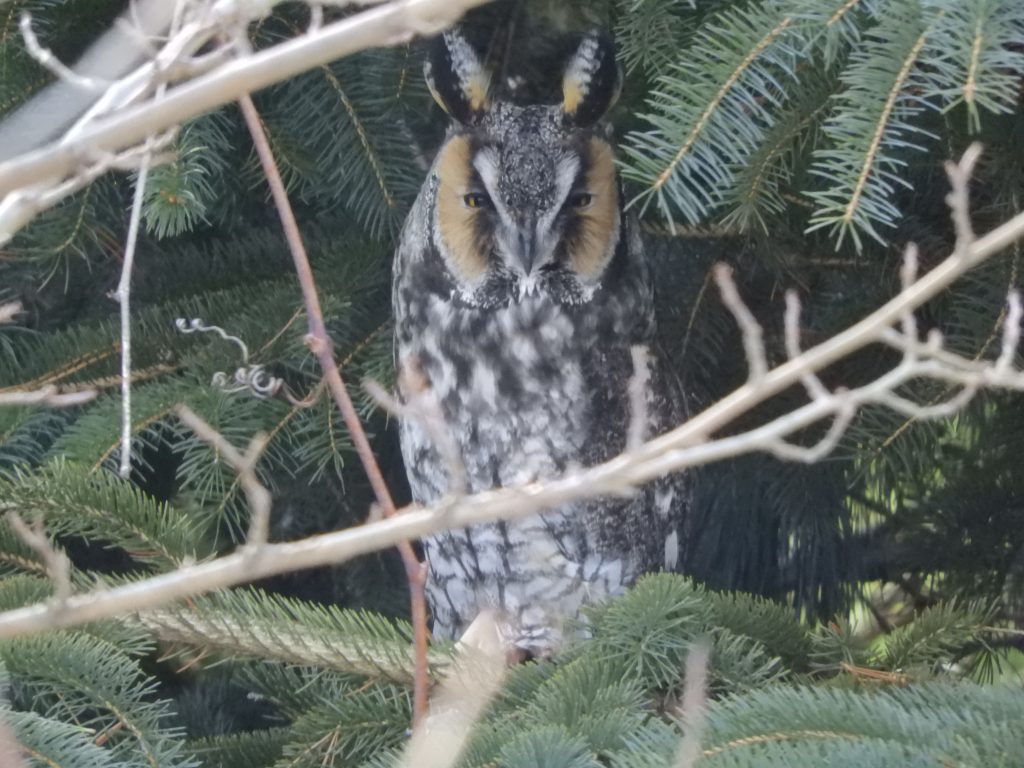
Long-eared owl

Burlington, ON. February 20 2020. I solicited a couple of friends to come out with me for a walk, we needed and welcomed the exercise. It was cold though not too cold, but still the kind of day when you like to get out of the wind. We hiked a valley edge and found just five bird species: first a group of three Red-tailed Hawks circling or maybe being blown over the nearby fields, a sleek, too-fast-for-us, mystery raptor maybe or maybe not a Merlin, a couple of Black-capped Chickadees, two probable Northern Cardinals and, Bird of the Day, a Long-eared Owl!

Our walk took us by plantations of mixed-age Norway Spruces and White Pines and the combination of open fields and the shelter afforded by the dense conifers is just the sort of place where owls like to hang out by day. We threaded our way carefully between sheltering clusters in hope that we might happen upon a Saw-whet Owl. There was some evidence of owls: the piled feathers and legs of a Mourning Dove under one pine and owl poop scattered on the branches of a dense spruce.  It was of course a Long-eared Owl that made the day.

It was well worth celebrating. It was a lifer for Alex and I couldn’t remember when I’d last seen one in the wild; maybe thirty years ago (?) Here it is.

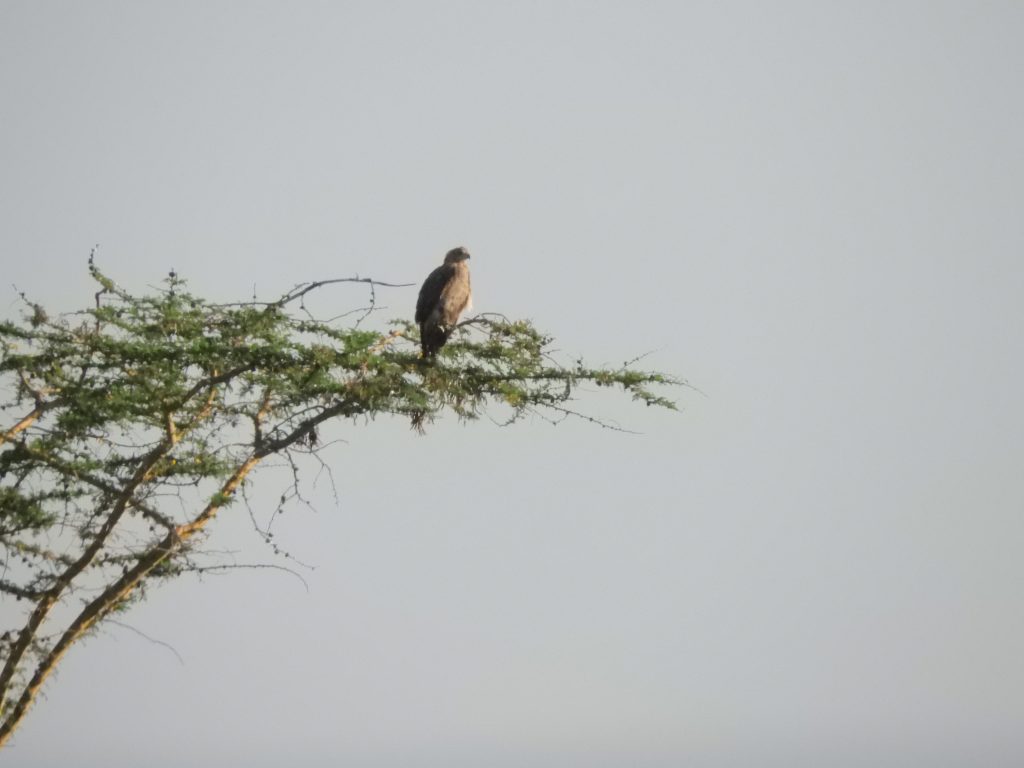
Bateleur

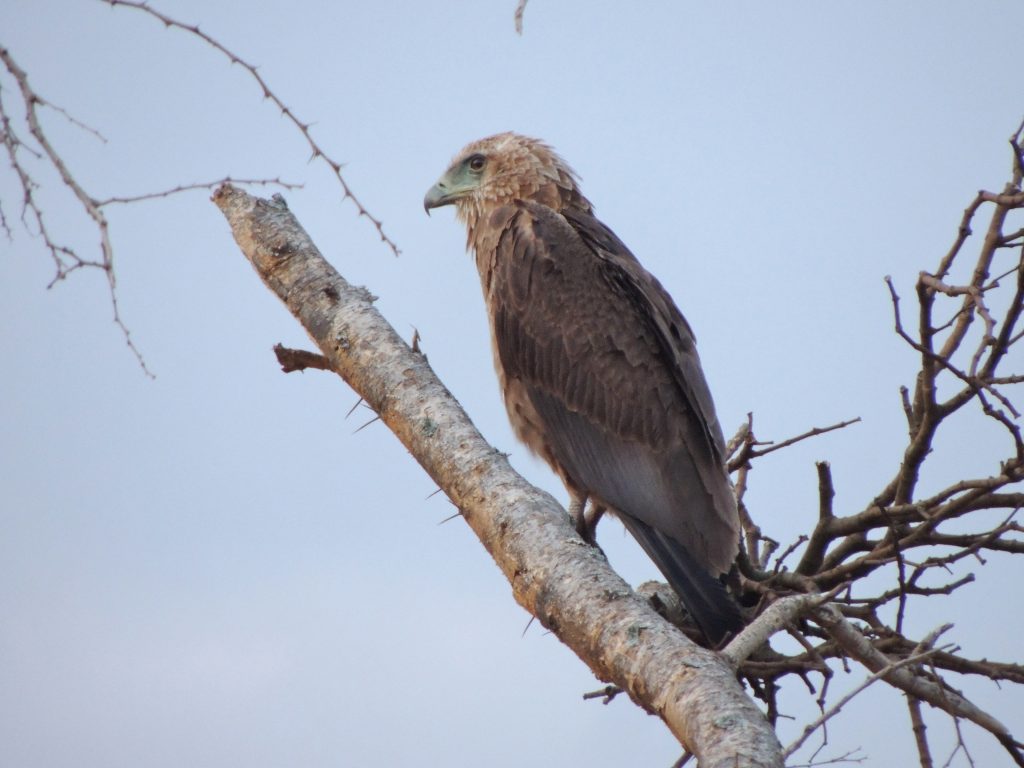
Enonkishu Conservancy, Kenya. February 12 2020.   I think this one has to go in the ‘probable’ category. I had little faith in this long-distance photo of a large bird spotted in the morning haze. I might have deleted it until, on close examination, I fancied I could just make out a hint, just enough facial detail to spark a memory from a few years ago. A memory from February 2017 when I was in Uganda with a guide and we spotted this bird.

We could not for the life of us identify it despite long looks and this high quality photo for reference. Later that day we asked knowledgeable birding tour guide who quickly said ‘It’s a young Bateleur.” The clincher, he said, is the bare skin behind and around its beak, the only plausible conclusion; it was one of those lessons that sticks with you. I’ve seen adult Bateleurs since and they are unmistakable in flight, colour and under-wing patterning and are spectacular. The name comes from French, means street performer or tumbler, a reference to their teetering soaring flight; how picturesque.

Comparing the photo from three years ago with today’s and considering the overall size and posture I was able to persuade Alan, my ornithologist companion, to consider it a Bateleur. He went for it and even muttered ‘Good call”. Probably.

Kori and other Bustards

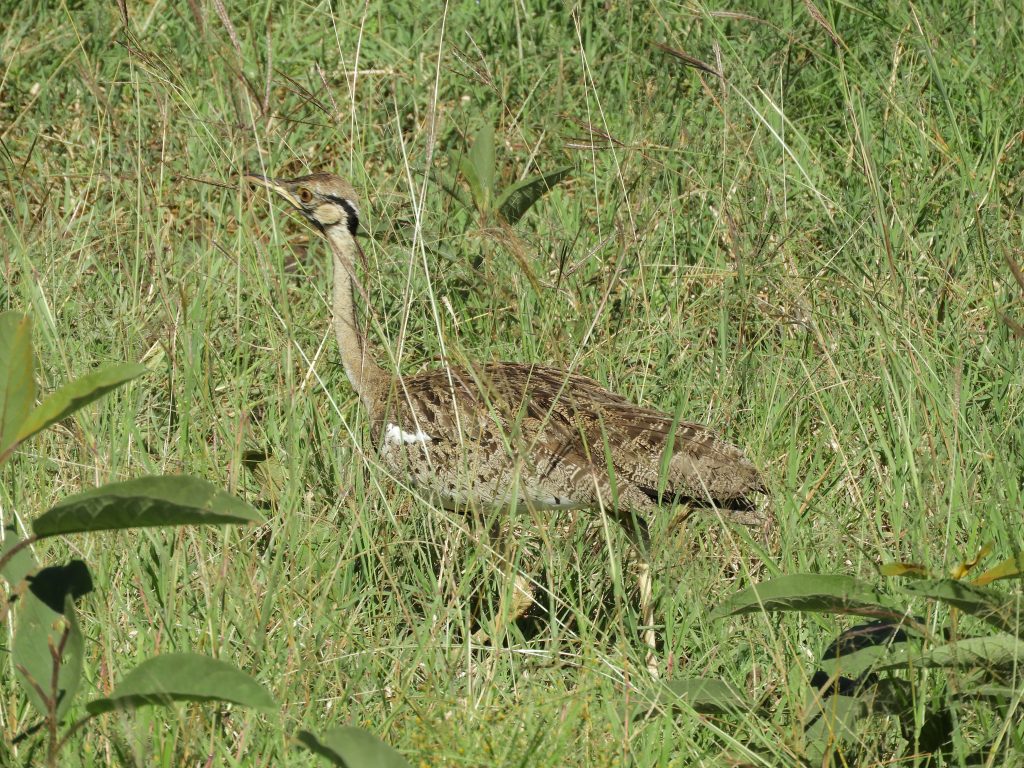
February 7 2020. Maasai Mara, Kenya. Bustards take a bit of believing: maybe not as much as Ostriches, but they’re large grasslands birds who prefer walking over flying, are still hunted in some low latitude countries and have been extirpated from much of their former range in northern Europe. This month I’ve had close encounters with three bustard species: Macqueen’s Bustard in the Arabian Desert and now Black-bellied and Kori Bustards here in Kenya’s Maasai Mara. It’s all rather exotic.

Black-bellied Bustard

Today’s encounter with a Kori Bustard came towards the end of a day of birding a new-to-us expanse of African grassland. It was the quintessential Maasai Mara landscape of all around grass contained within distant escarpment faces and punctuated only by lone Acacia trees and groups of animals.

We were thrilled to spot a tree-top nest of White-backed Vultures. Not so long ago it was a common bird of the African grasslands but, like all Old-World vulture species,  it is now rare and threatened with extinction through intentional poisoning and/or ingestion of second-hand,  lethal-to-them medications in cattle carcasses.

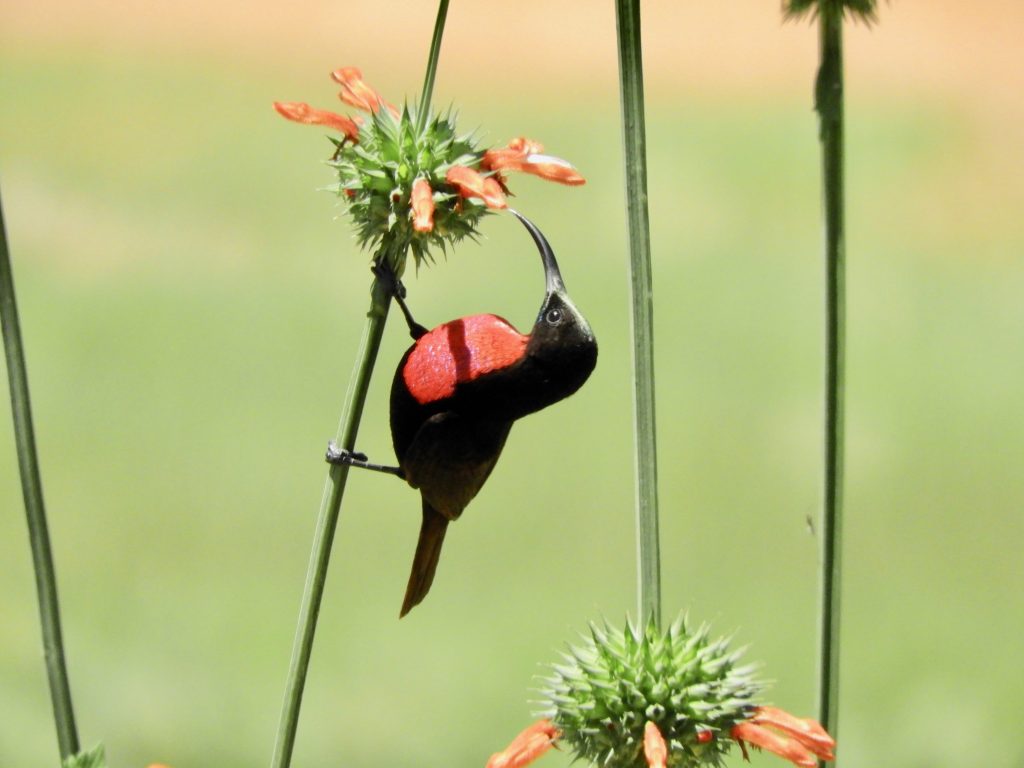
Other notable birds this day were a low-flying Montague’s Harrier, a nectar-sipping Scarlet-chested Sunbird, two rather distant Secretary Birds, Lilac-breasted Rollers and a lark-like Pink-throated Longclaw.

Scarlet-chested Sunbird

Companion Alan was continuing his species-logging efforts while Malika (not a birder) was our driver. (Despite our best efforts at pointing out some spectacular birds, at the end of the day, the best Malika could do was acknowledge our excitement.)

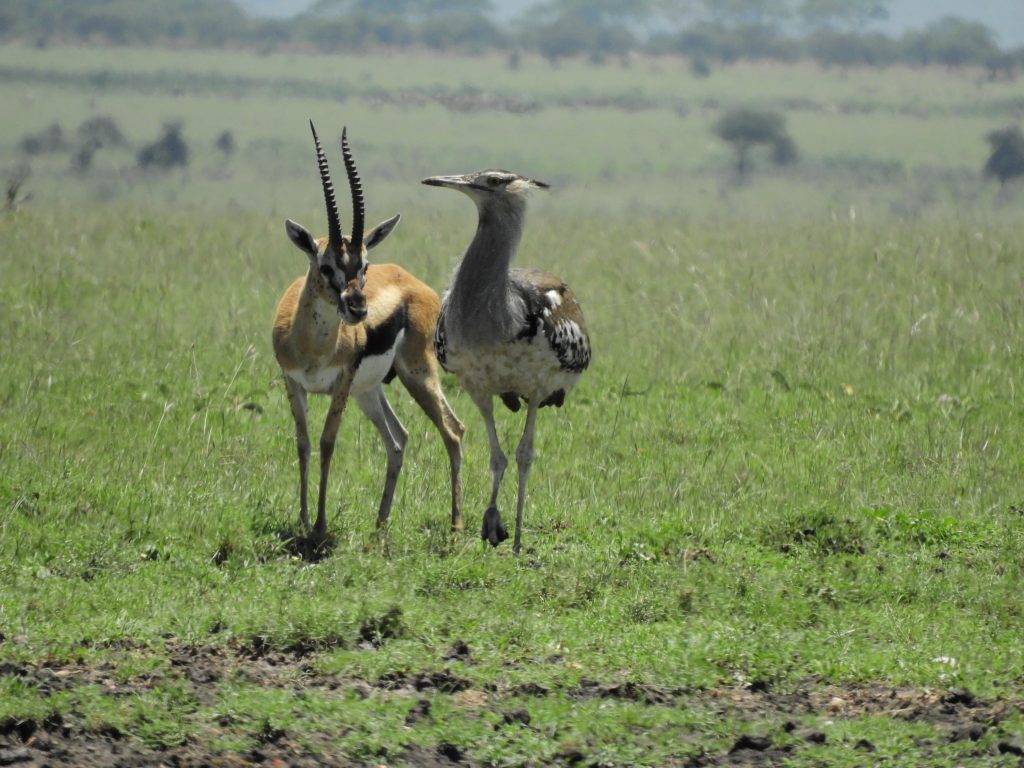
Both Bustards were a wonder to see but the Kori especially so because of its novelty and size. It was keeping company with a small group of Thomson’s Gazelles. This picture makes it clear that not only is the Kori Bustard a big bird but the Thomson’s Gazelle is a pretty small gazelle, barely a meal for a family of lions.

Kori Bustard and Thomson’s Gazelle