Bay-breasted Warbler

May 22 2017. Paletta Park, Burlington, ON. I had to run a ten-minute, early morning errand and as I left the house I could hear warbler song coming from the old cedars in our back yard.  Thin, wispy hey-I’m-here notes tied together in a cascade; probably Yellow-rumped Warblers, although this late in the migration month it could be any of half a dozen species. I made a mental note to self: probably a good birding day. A little further up the street I caught another song, a Swainson’s Thrush, singing a hauntingly beautiful stop-you-in-your-tracks arietta that defies description, you’ll be far better off if you follow this link and listen, far better than me doing it an injustice. With two hard-to-ignore calls to action I set a few domestic chores aside for later and visited a nearby park.
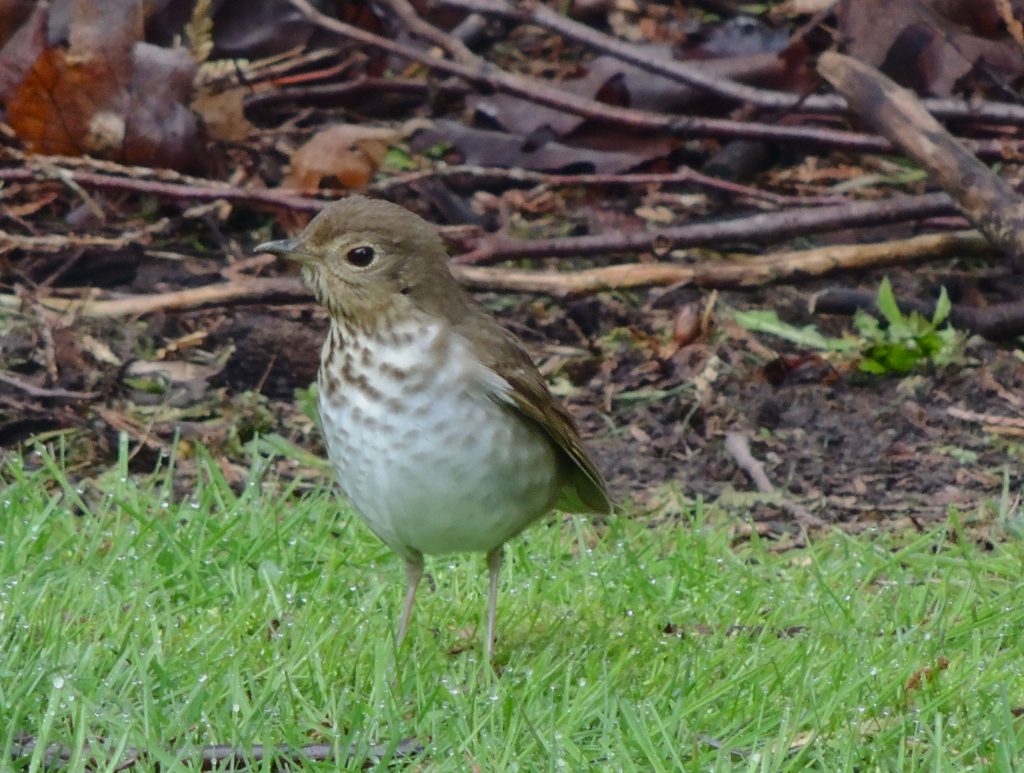
Swainson’s Thrush.

The park was busy, busy with people and busy with birds, but it was not easy birding. Over the course of several hours I saw with some difficulty four place-name warblers: Nashville, Canada, Tennessee and Cape May; two named for the early shotgun-toting ornithologists: Blackburnian and Wilson’s and others self-descriptive: Yellow, Yellowrumped and Blackthroated Green Warblers; and in that latter category My Birds of the Day a few Baybreasted Warblers.

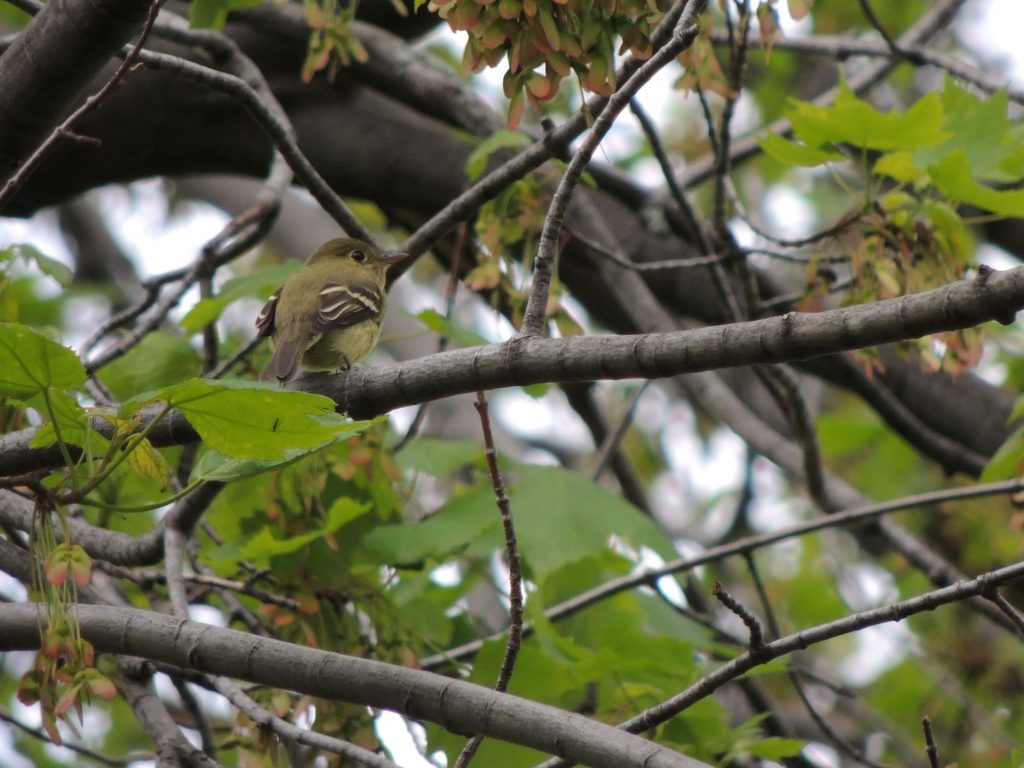
Yellow-bellied Flycatcher.

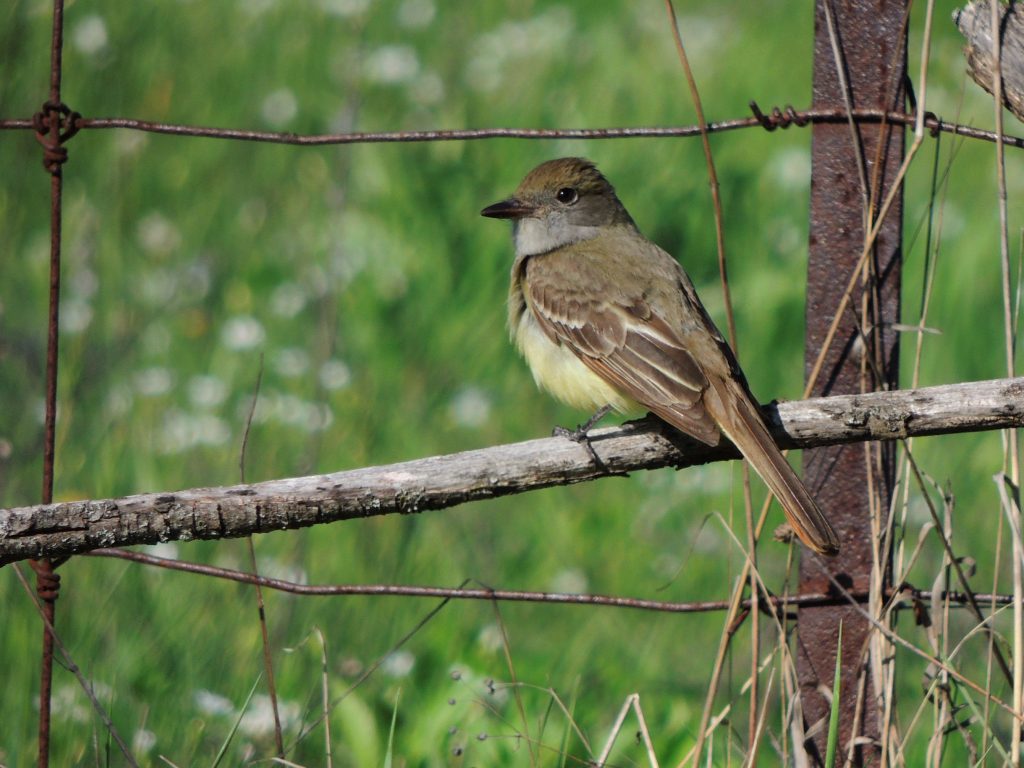
There were other heart warmers: a demure Swainson’s Thrush (the songster noted above) Warbling Vireos and Redeyed Vireos, Least Flycatchers, a Yellowbellied Flycatcher, an Eastern Kingbird and an oddity, a Fish Crow. This latter species is very common in a broad band along the Atlantic coast, but hardly ever is it seen far inland. Yet over the past couple of years several reports tell of solitary Fish Crows heard rather than seen (usually) around this end of Lake Ontario. Fish Crows are only slightly smaller than the ever-present American Crows and are only told apart by voice. Fish Crows don’t waste breath on multiple, long, drawn out ‘Caw’s, instead they limit themselves to an abrupt nasal ‘Hah!’ – or maybe two.
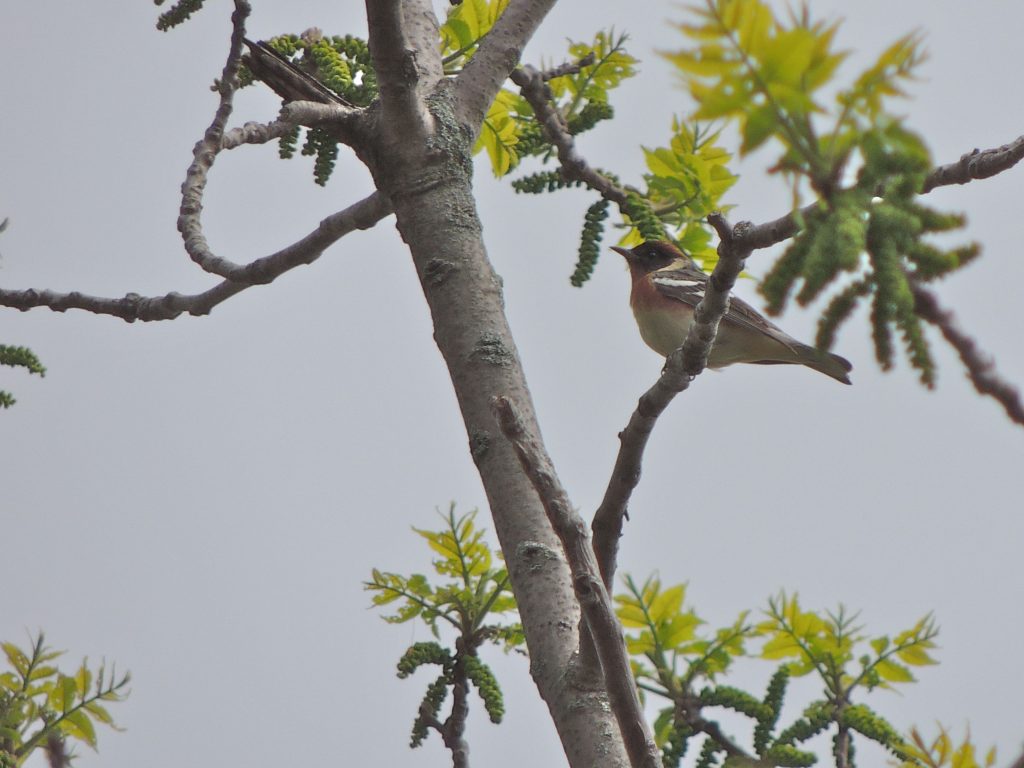
Bay-breasted Warbler

The Baybreasted Warbler, my Bird of the Day, is usually a tough bird to see well. They are fairly late migrants who seem to favour the upper branches of deciduous trees which are usually fully leafed out by now; however this spring remains cool and the forest canopy still has a long way to go.  Bay-breasted Warblers fit into the handsome and restrained category. A little on the chunky side and clothed in muted tones of cream, grey and chestnut, they are well-mannered, more like Jeeves than Bertie Wooster or his Drones Club chums. For that I salute them.
Wilson’s Warbler

May 19 2016, Morgans Point Rd. Ostryhon Corners, ON A map, mental, electronic or paper will help in understanding how I met up with today’s Bird of the Day.  Because, from where we met a Wilson’s Warbler and a Philadelphia Vireo, a Swainson’s Thrush and uncountable numbers of swifts and swallows there is a view across Lake Erie to its southern shoreline in western New York State and the mountainous Allegheny Plateau in Pennsylvania beyond; a context that is key to this account.

My companion and I had made our way, a longish drive by the way; to Morgan’s Point, a small conservation area on the north shore of Lake Erie. It is a roughly triangular, pleasantly wooded promontory, which juts out into the lake pointing its nose towards the New York shore. In spring Morgan’s Point can be a very good place to watch for northbound migrants; it’s a landing spot for birds that have dared to fly across the lake rather than take the longer way around.

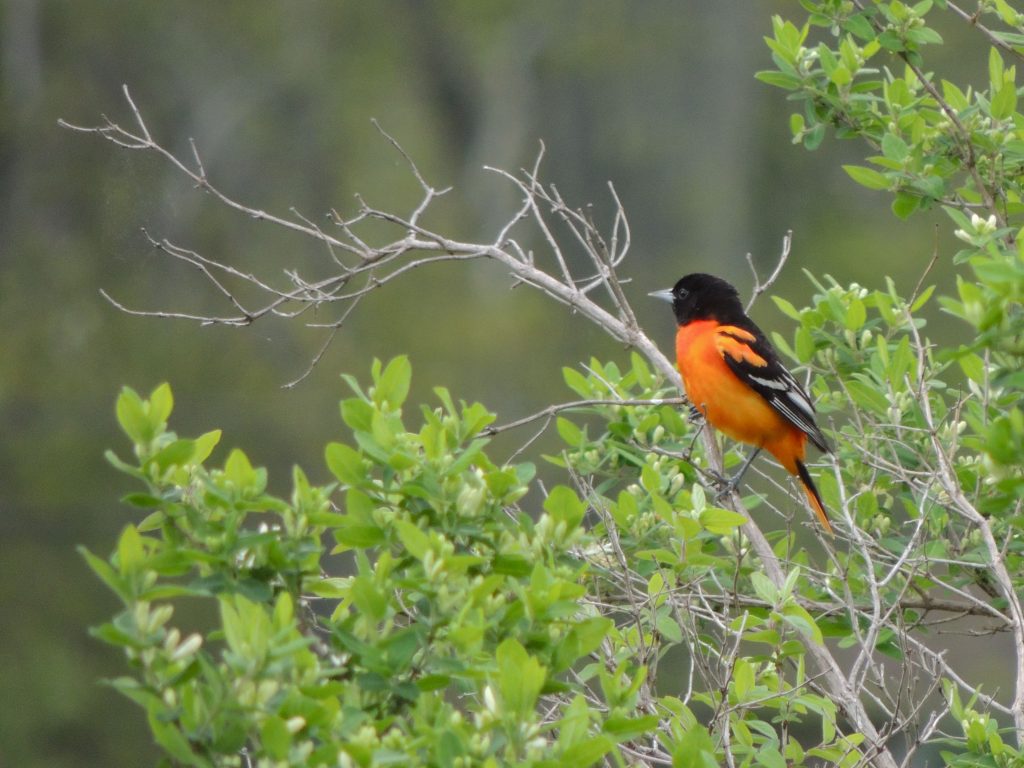
Baltimore Oriole

When we arrived early this morning the woods, parkland and lake-side dunes were distractingly busy with singing Baltimore Orioles and fluttering Yellow Warblers. We didn’t try to keep count, you couldn’t possibly.  Everywhere we looked we saw them; if it was small and moved it was a Yellow Warbler, if it was large and moved a Baltimore Oriole. I exaggerate for effect of course, but there were hundreds of both as well as many Blue Jays, Gray Catbirds and Common Grackles. We heard and/or saw singles of Eastern Phoebe, Eastern Wood Peewee, Scarlet Tanager, Wilson’s Warbler and Least Flycatcher. Close to the water’s edge were Spotted Sandpipers and, Bird of the Day for Barry, a single Redheaded Woodpecker.

After a couple of hours of oriole-exhaustion and Yellow Warbler wobbles we took a break and headed inland for a change of pace and scenery. A drive along quiet country roads turned up Eastern Meadowlarks, Bobolinks, Greatcrested and Willow Flycatchers, Common Yellowthroats, Eastern Towhees and Wood Thrushes among others.

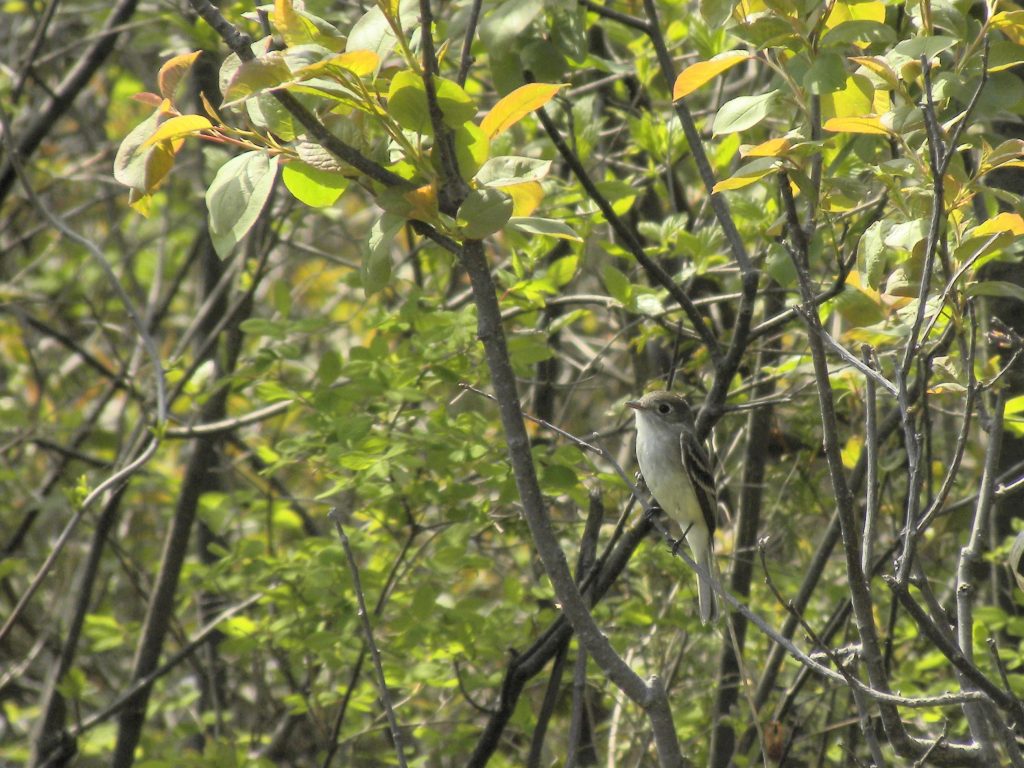
Willow Flycatcher

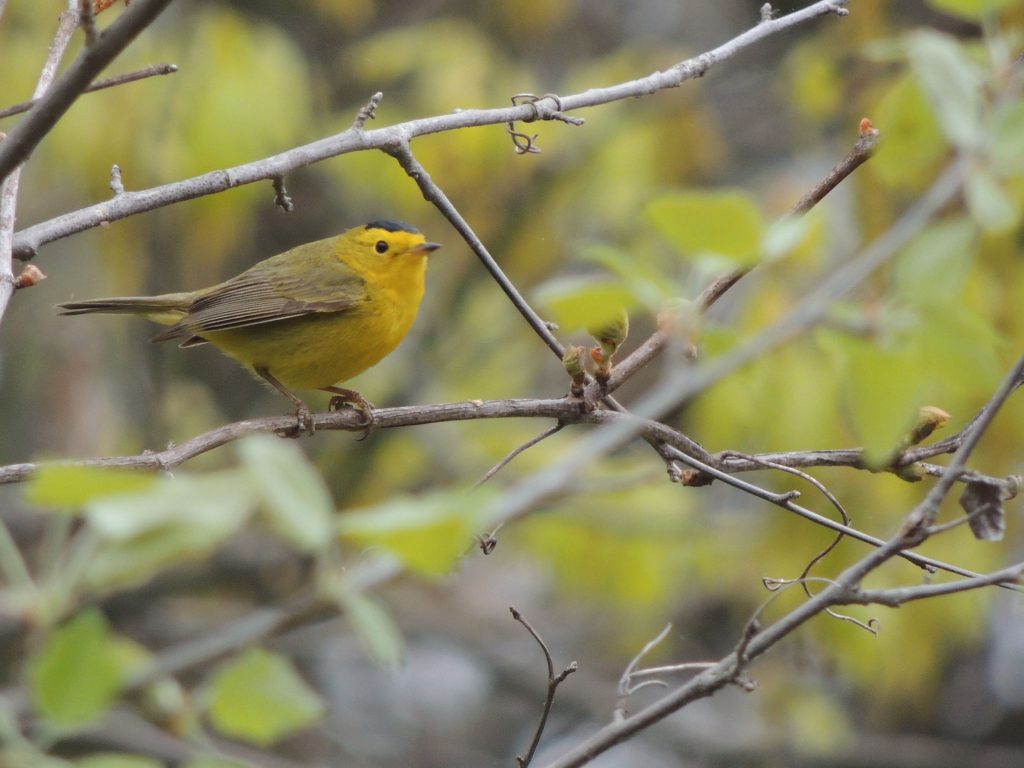
We returned to Morgans Point later hoping that that a new mix of migrants had made the arduous hop across the lake. We were right and wrong. The place was still seething with Baltimore Orioles and Yellow Warblers (a few pairs had decided this was home and had started nest building). We found a Magnolia Warbler, a Winter Wren, an indeterminate Flycatcher (either a Willow or an Alder Flycatcher – they are impossible to tell apart) and re-found the Wilson’s Warbler, an engaging little warbler who I pronounced to be my Bird of the Day on account of its colourful cuteness and personal rarity, since I hadn’t seen one for a number of years; good enough reasons.

Wilson’s Warbler.

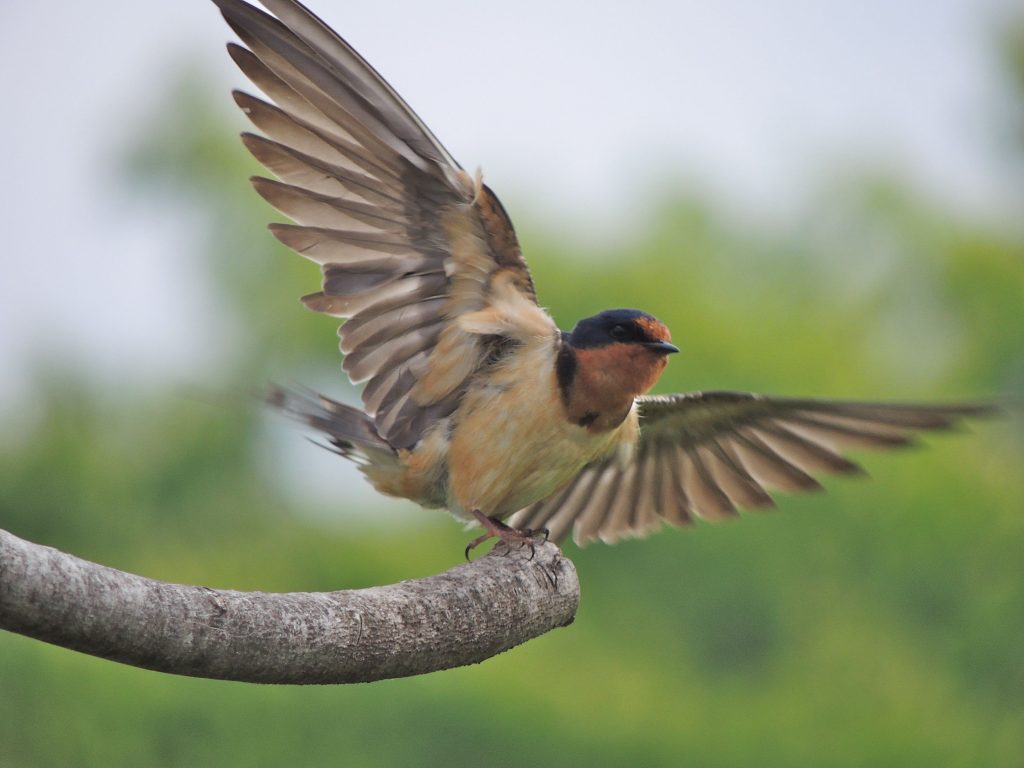
Perhaps most wondrous though was the hundreds, if not thousands, of Chimney Swifts, and Barn, Tree and Northern Roughwinged Swallows apparently making landfall at the tip of Morgans Point. At Lake Erie’s surface uncountable numbers cruised, swooped and picked for insects, but above them and far beyond, out over the lake, the air was equally crowded, like a big fishing line tangle.

It’s my belief that we were seeing birds that had crossed the lake very recently and that, as we watched, more were arriving. Equally, others perhaps having fuelled up on insects were departing, heading inland, driven to reach suitable nesting habitat. Many may have a very long way to go yet.

Barn Swallow

Blackburnian Warbler

May 16 2016, RBG Arboretum, Hamilton ON Counting birds today on the back edge of a three-week system of grey, wet and cold was to be offered many candidate Birds of the Day (summer weather is supposed to start this afternoon). I teamed up with a companion who was scheduled to complete the daily transect and it didn’t take long to fill a page or two of our field books.

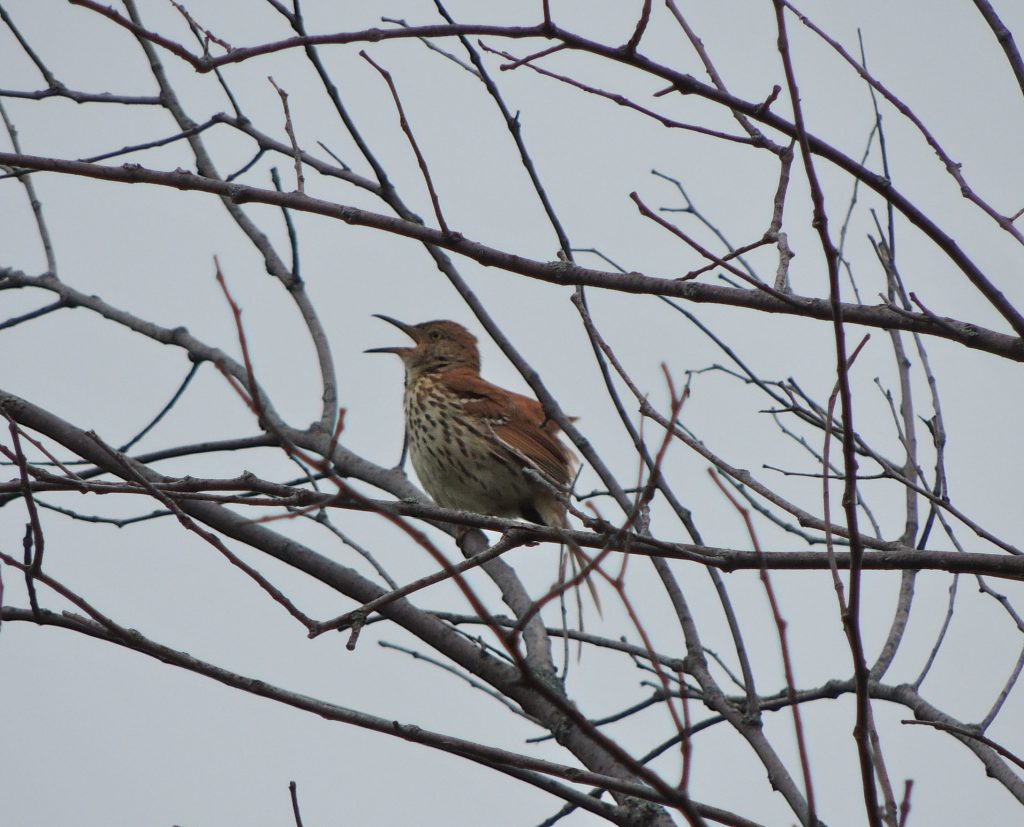
Brown Thrasher in song

First B.o.t.D candidate, entered on line six of my book, was a Brown Thrasher seen and heard singing boldly from a treetop. Funny how they hold a hunch-backed posture when they sing, it’s as if they have a bit too much body and not quite enough neck.

We were never out of earshot of Baltimore Orioles announcing their arrival and intention to control the world. We could hear but almost never see many Pine Warblers, Red-eyed Vireos, Blue Jays, Yellow Warblers, Ovenbirds, House Wrens and Ruby-crowned Kinglets.

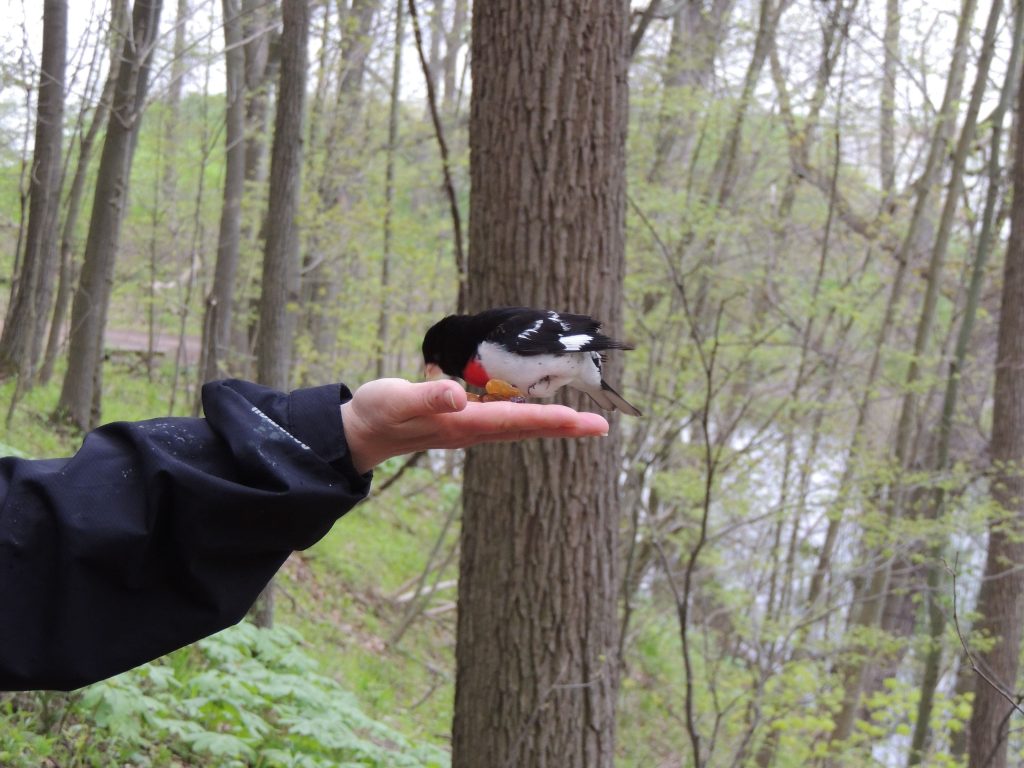
Rose-breasted Grosbeak

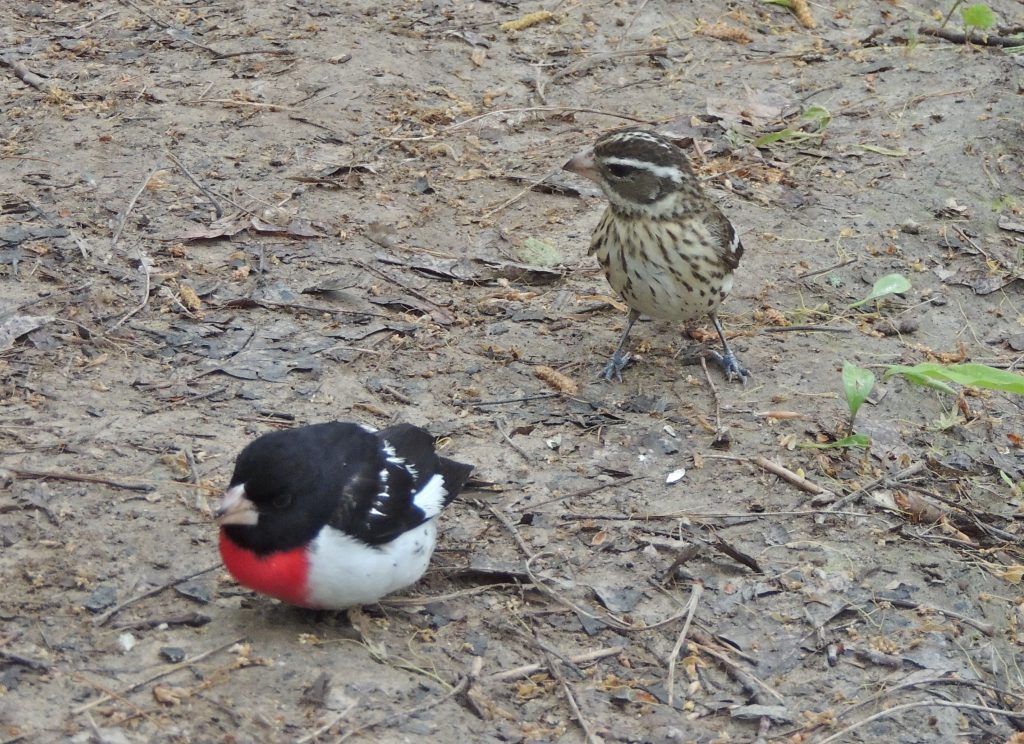
Second B.o.t.D candidate was a male Rose-breasted Grosbeak who dared to take food from my companion’s outstretched hand. In a way you could hardly blame him, she was offering whole cashews, almonds, peanuts, dried cranberries and apricot chunks! A female grosbeak watched longingly from a wing-flap away, she was sorely tempted but somehow couldn’t quite make the leap of faith.

Rose-breasted Grosbeaks

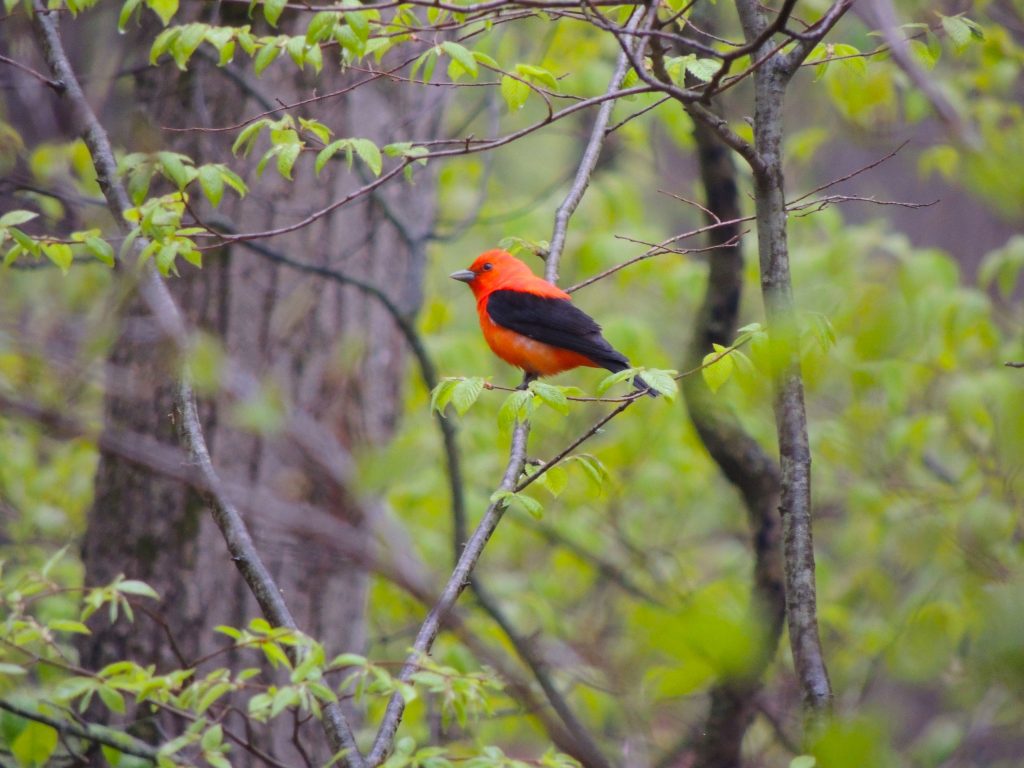
With a bit of ear-stretching we could make out a far-off Scarlet Tanager in song, it seemed to be getting closer and in time we were treated to a few sightings: two scorching-red males and a couple of demure olive-green females. There must have been a pulse of tanagers passing through because we continued hearing the melodious, ‘sounds-like-a-robin-with-a-sore’ throat song on and off all morning.

Scarlet Tanager

It had started to rain lightly, I was getting chilled and my enthusiasm was threatened. My companion was in good form though and she has a good ear for bird song, she could hear the high-flying ‘zee,ee,ee,ee,eeZIP’ crescendo buzz of a Northern Parula and together we struggled to make sense of the silhouettes of several flitting warblers high in the forest canopy. Against a flat grey sky it’s really tough to make out features and we were missing far too many. The old expression, ‘A bad workman always blames his tools’ nags at me in times like this. Is the ambient light a tool?

Anyway, after a while we were sure that we were watching Bay-breasted and Chestnut-sided Warblers, Northern Parulas and quite probably Tennessee Warblers too. A Bay-breasted Warbler would make a good Bird of the Day but I was hardly exultant at my laboured sightings.

Great-crested Flycatcher

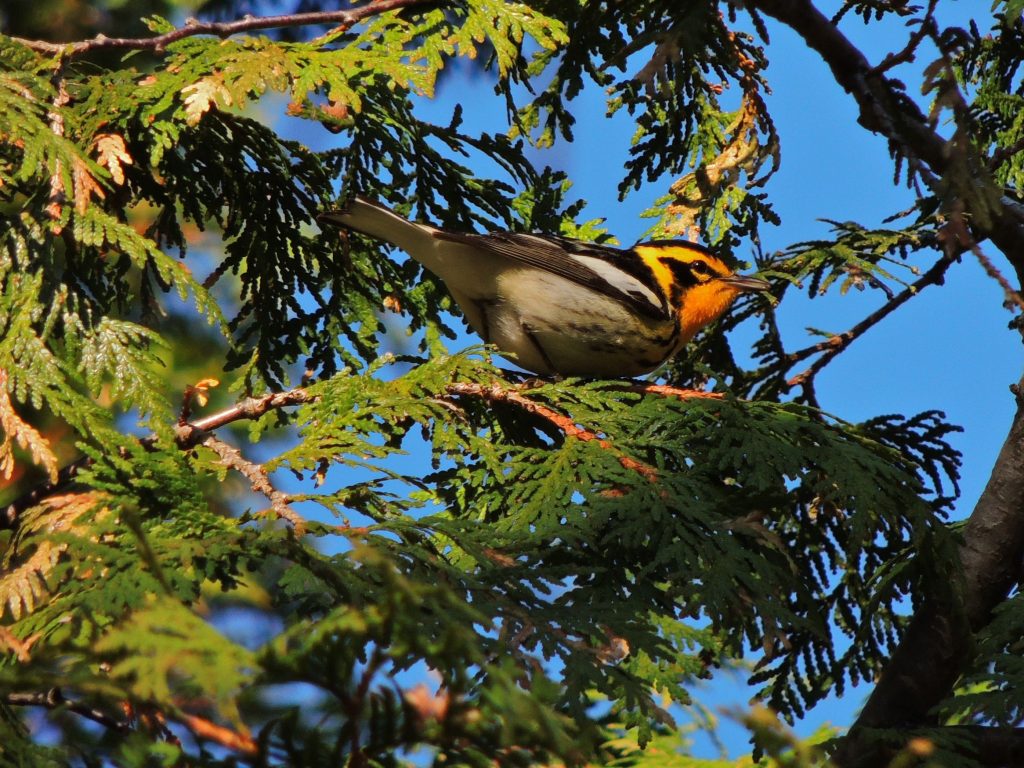
Our day’s list grew filling pages in our field books with Great-crested Flycatchers, Field Sparrows, Indigo Buntings and much, much more (59 species in fact). The day was capped off with a brief but dramatic face-to-face encounter with a couple of Blackburnian Warblers. Thinking back to my musings a couple of postings ago on suitable adjectives for warblers, I think Blackburnian Warblers alone earn the term fiery, nothing in warbler world has quite the punch of a testosterone-loaded male as the Blackburnian. It was my Bird of the day, pushing aside Brown Thrasher, Rose-breasted Grosbeak, Scarlet Tanager, and Bay-breasted Warbler – tough competition.

Blackburnian Warbler

Ovenbird

May 13 2017. Ruthven Park Cayuga, ON. Several weeks ago I agreed that I would lead a birding hike for visitors to this park today. It was billed as Warblers and Other Spring Wonders or something like that and almost no-one came! Still, I enjoyed the company of two well-informed but admittedly bird-perplexed women, one was the mother of a young lad who was thoroughly engrossed in the activities of the banding lab.

Frankly it wasn’t very birdy, or at least not what you might expect of a May morning. It is so rewarding when you can show people the drama of spring migration, you know: flashy warblers, tanagers and grosbeaks, but I couldn’t; visible birds were in short supply. I was having a wonderful time, I could hear many birds and usually knew what I was hearing, but drawing someone’s attention to an intermittent bird song is a poor substitute. My companions seemed happy enough though and while I may have thought they were captivated by my bird-lore patter it was more likely the beauty of woodlands in spring; and why not?

It wasn’t without it’s wow moments: a beautiful male Indigo Bunting had us all gasping and I was able to show them a Chestnut-sided Warbler and a Black and White Warbler, both fairly high up. To me a Swainson’s Thrush was pretty special although they are hardly spectacular to look at and my Bird of the Day was an Ovenbird a few yards in front of us.

Ovenbird

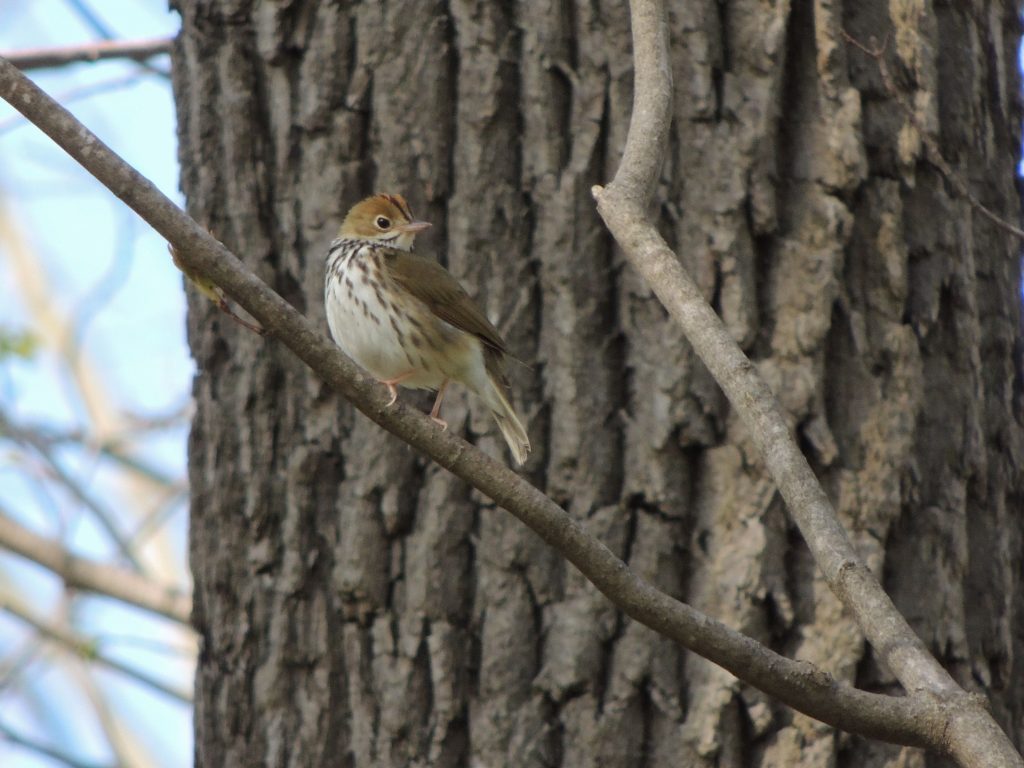
Ovenbirds are far more often heard than seen. They have a ringing song that carries far in thickly vegetated deciduous woodlands, but seeing them is more often a matter of luck, they stay low and keep their distance. Today’s was more at ease with our presence than is usual and I was able to get some decent photos. That name, Ovenbird, is a rather folksy reference to their domed nest, like a miniature Dutch oven, constructed on the forest floor.

Twenty-six species was our count, a low one for mid May. For all the promise of May it still can be hit and miss.

Prairie Warbler

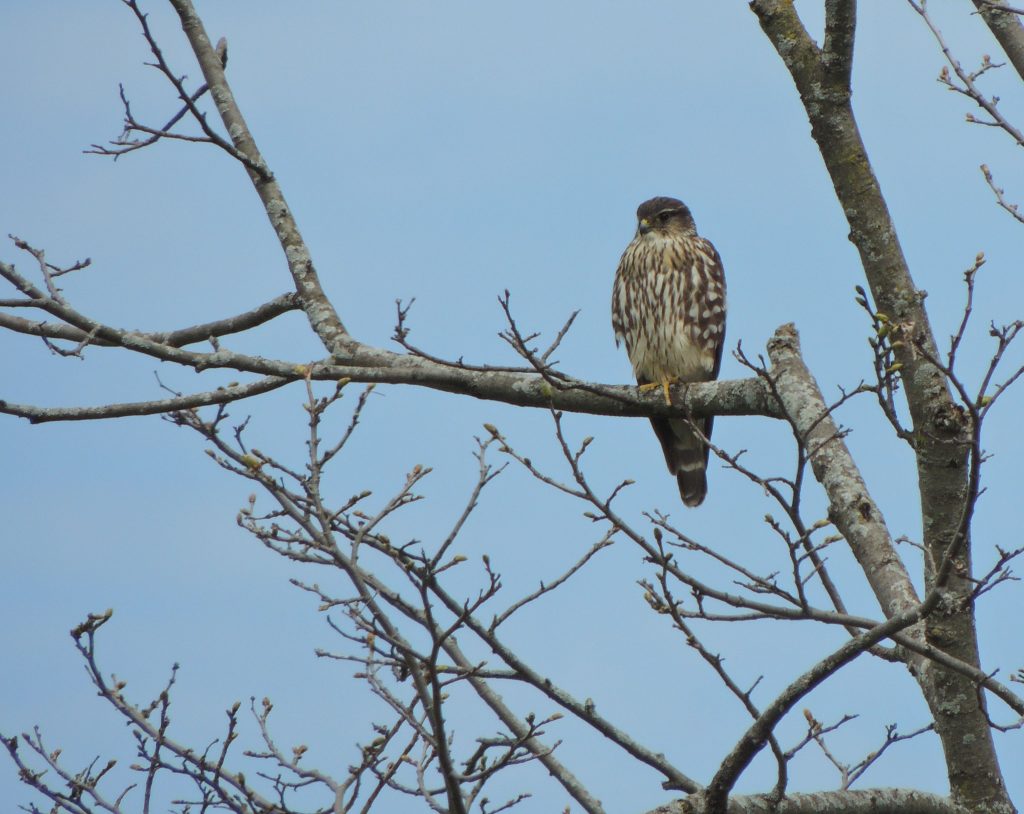
May 10 2017 Paletta Park Burlington, ON. I don’t know where to start with today except that well, it’s mid May, and if the birding is good, that’s as it should be. I spent an almost indecent stretch of time checking out favourite birding spots and two out of three were very rewarding. The not-so-good one yielded a single calling Virginia Rail barely meeting my minimum standards for a thirty kilometer drive. Still, just around the corner from it I found a pair of Merlins who looked as though they were setting up home.

Merlin female

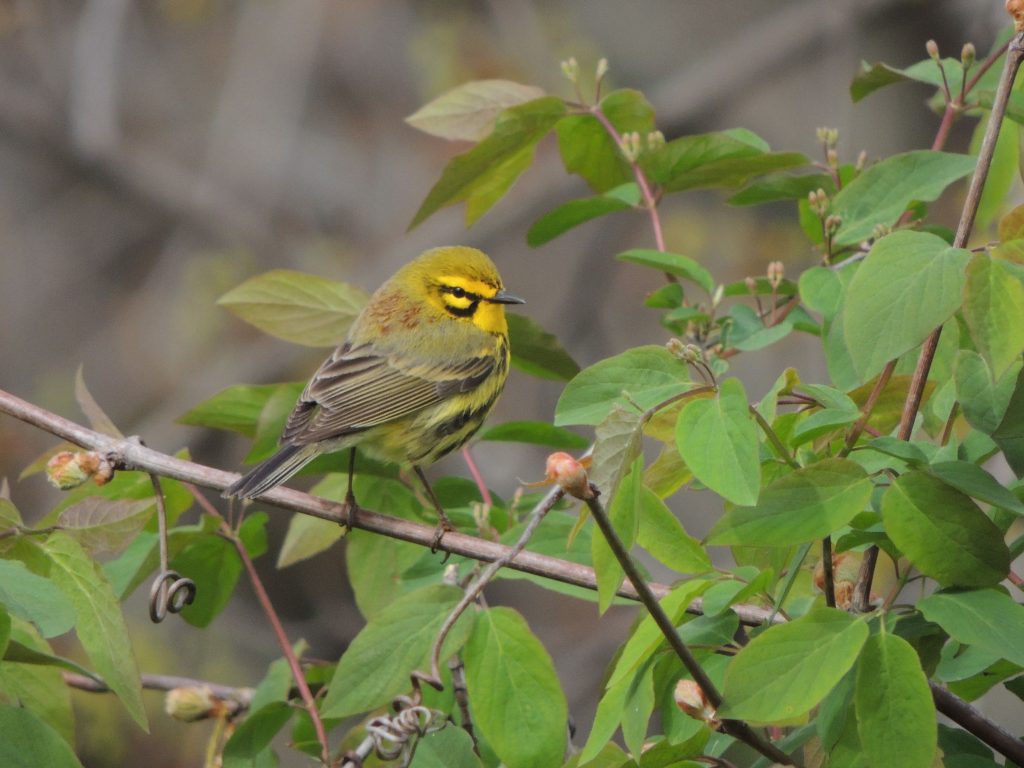
But the best experiences of the day came not far from home at a small lakeside park with a rambling old stone house, unkempt hedges, wet spots and a small creek. Arriving there shortly after breakfast and while early-morning dog exercise was in full swing, my first impression was that of a quiet morning. But down almost at the shoreline I could hear a faintly familiar and slightly disturbing song coming from a dense honeysuckle bush, disturbing because I felt I should know it although somehow it kept eluding me. Then a bright yellow warbler popped up showing bold black streaks on the side of its chest. Hmm, which warblers have a yellow breast and a necklace of black pearls?, Magnolia Warbler? Canada Warbler? Black-throated Green Warbler? And with that it flew up and away and was lost against a bright sky high in a nearby maple, although hauntingly it continued singing.

My brain’s Bird Song Analysis Dept. kept trying for a match while the rest of me turned to other birds: a startling Black-throated Blue Warbler and an American Redstart in particular.

Eventually, with the help of a passing dog-walker, we re-found the mystery bird and somehow fragments of memory came together and my birding subconscious started to suggest Prairie Warbler. I latched on to the idea, pulling in old fragmentary memories, then, aided by a few photos, the bits fell into place and before long I remembered when and where I’d heard that song before (eight years ago). Yes a Prairie Warbler. Here it is, Bird of the Day, rare in Ontario and a tingling start to a day that would deliver many more glorious birds.

Prairie Warbler. Copyright Peter Thoem

I could rattle off a string of sightings for the day but I’ll touch on just a couple more highlights. Three Merlins, one seen at the lakeside park chasing a crow hoping to make a meal of a bird three times its size and then the pair I mentioned above; three Merlins in one day is a lot!

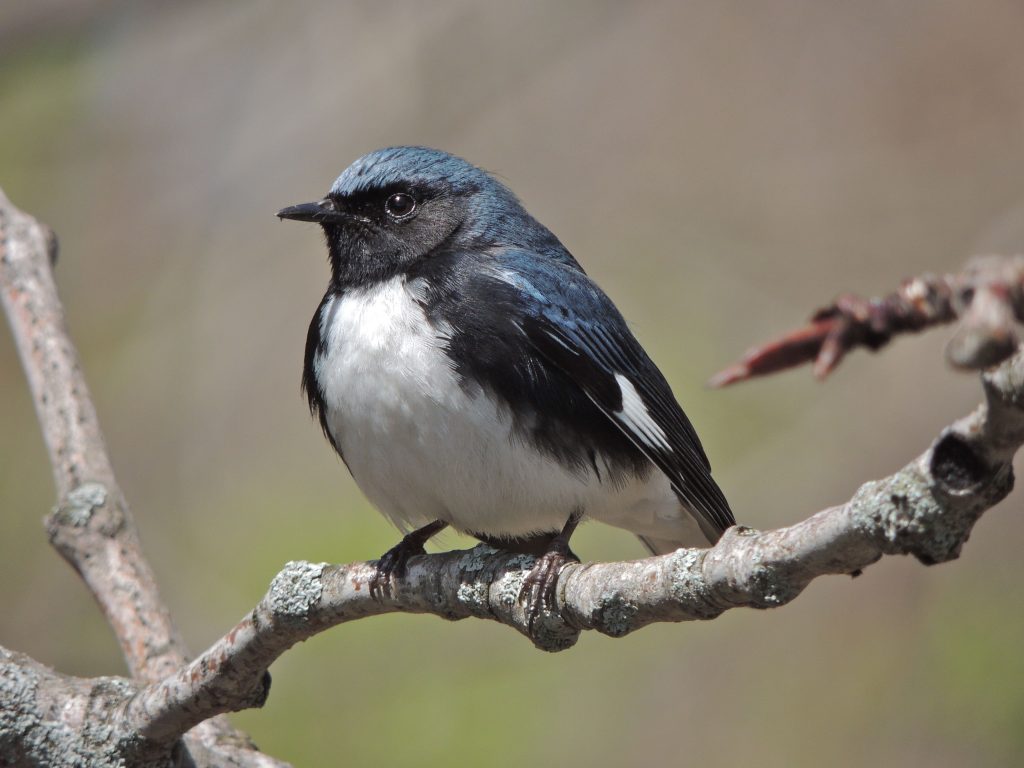
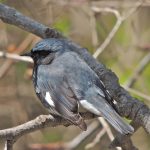
Black-throated Blue Warbler. Copyright Peter Thoem

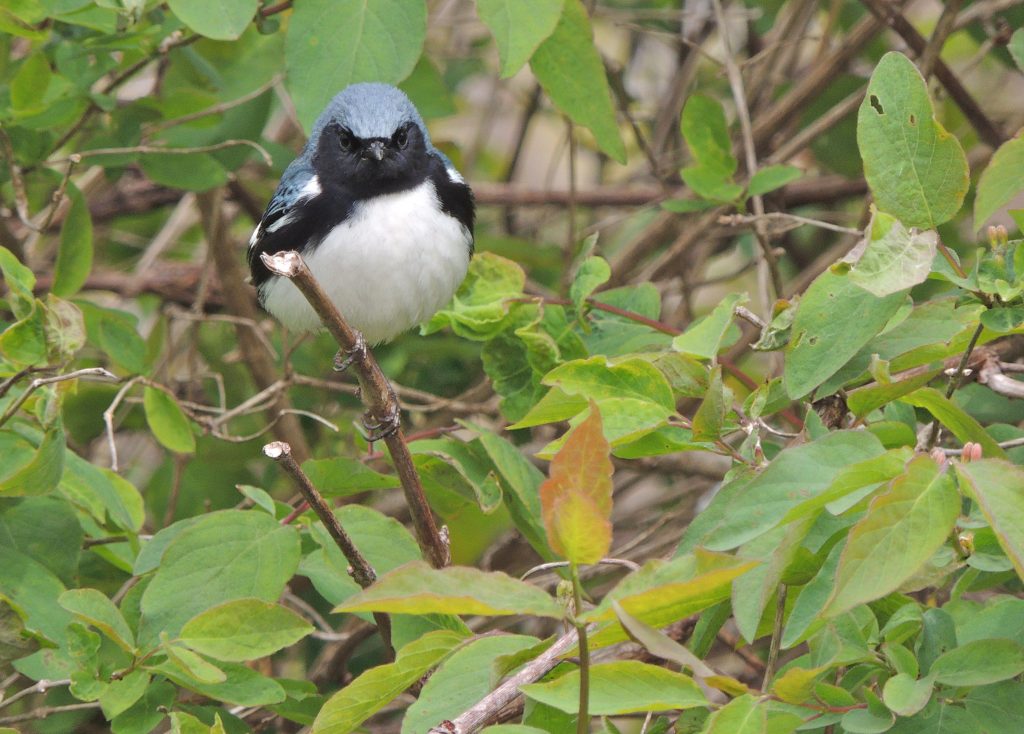
More Black-throated Blue Warblers today (all males) than I’ve seen in the past ten years I think. Some years I miss them all together, other years I’m triumphant finding just one, but this year there must be some kind special on Black-throated Blue Warblers. Spring warblers challenge my repertoire of suitable adjectives: Many are dazzlingly colourful, some subtly beautiful but none are as crisply handsome as male Black-throated Blue Warblers.

Black-throated Blue Warbler. Copyright Peter Thoem

Today’s birds moved around slowly and deliberately enough for me to capture some great photos, perhaps they were exhausted. Above are my best Black-throated Blue Warbler shots followed by this gallery below of a few more. (visible only on the website not if you’re reading this as an email. Click on any image to enlarge it.)