Merlin

April 7 2017. RBG Arboretum Hamilton, ON. A very birdy day today despite a nasty, totally uncalled-for blast of winter; twenty-four hours of cold wind and rains and overnight snow almost everywhere. But as this late-winter unkindness eased up, I set out to do one of our regular census circuits. In a fairly brisk hike around I tallied thirty-three species. Always the usual suspects: Downy Woodpeckers, White-breasted Nuthatch, Black-capped Chickadees, Red-winged Blackbirds and Song Sparrows, I could go on. And it was pleasant but not out of the ordinary to find several American Tree Sparrows, a couple of singing Carolina Wrens, a Belted Kingfisher and a pair of anxious Wood Ducks.
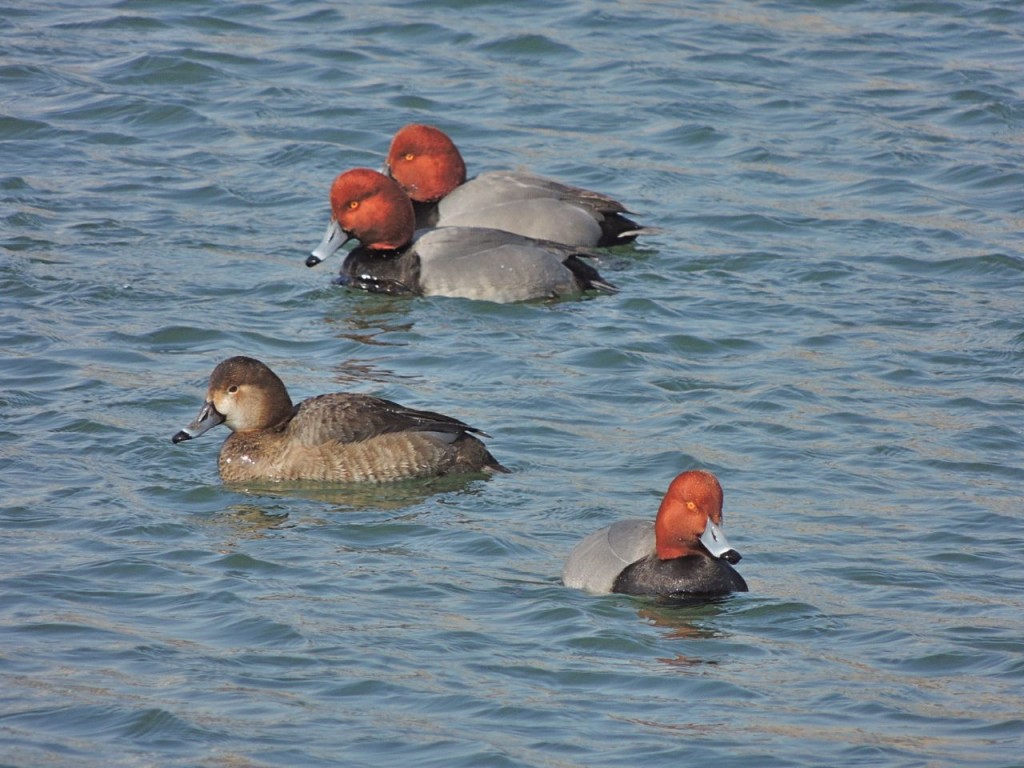
Redheads 3 males 1 female

I had some special surprises, again not really out of season, but welcome: four Redheads, a subtly elegant, tidy and compact duck, and half a dozen Goldencrowned Kinglets picking their way through the lower levels of winter-bare trees. Kinglets are tough little customers, weighing six or seven grams (roughly the weight of a couple of coins) they are very late to head south in October and equally early to return – if return is the right word because they don’t go very far south and are known to be able to survive our northern winters.
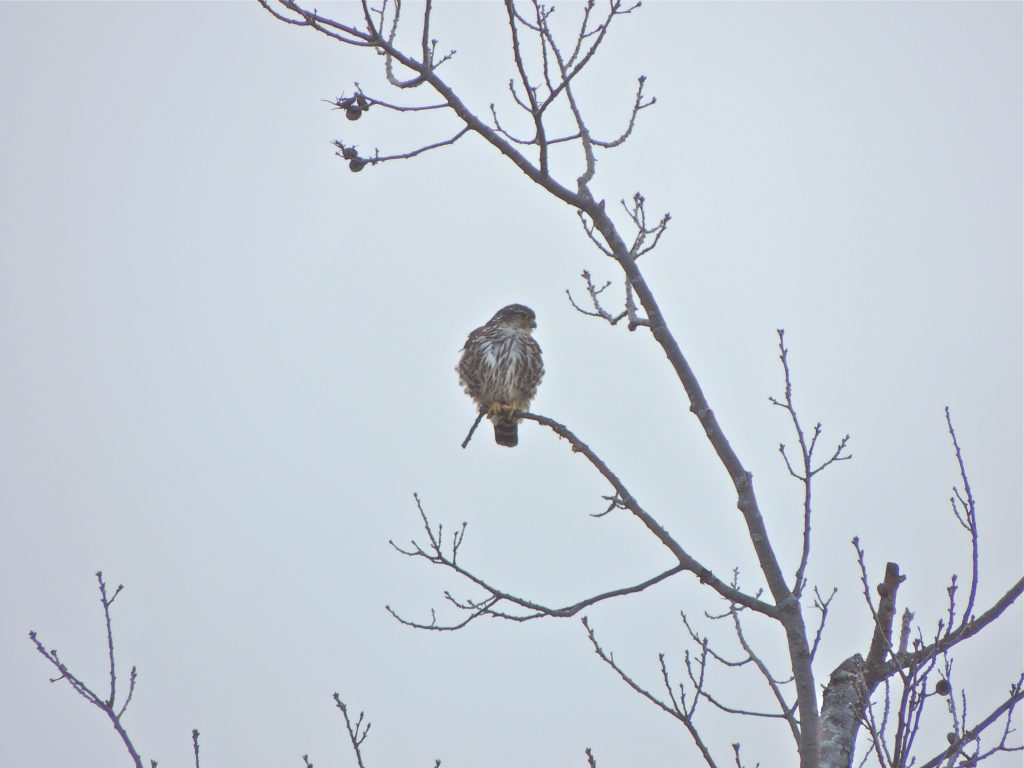
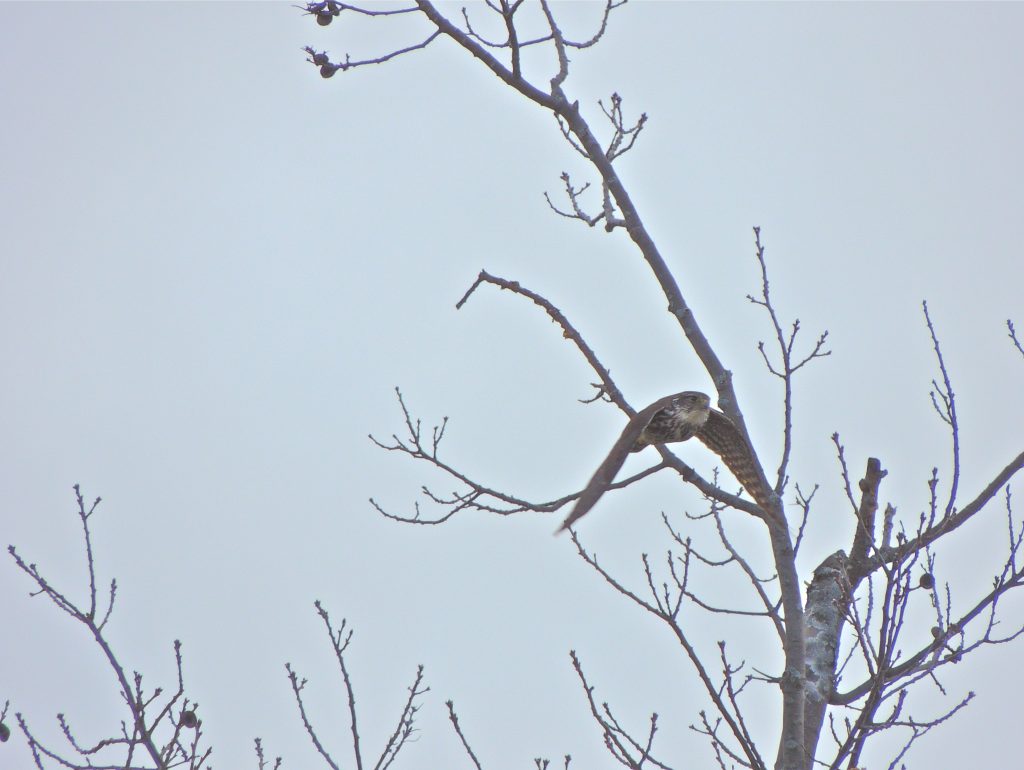
Merlin.

I would still be weighing which of the Redheads or the kinglets was my bird of the day had I not come across a Merlin as I approached the end of my census circuit. It was perching on the top of an exposed oak being buffeted by the strong northwest wind. I stared at it appreciatively taking in its overall brownness and strongly streaked breast, both key identification marks to distinguish it from an American Kestrel, the only other similarly sized North American falcon. It stayed long enough on its station that I was able to return to my car and drive to a reasonably close spot and take a number of photos. It is always tricky shooting a subject silhouetted against a bright sky or water, but I’m reasonably happy with the much computer-corrected results and very happy with the final shot below, as it took flight. So happy that it instantly became my Bird of the Day.
Wood Ducks

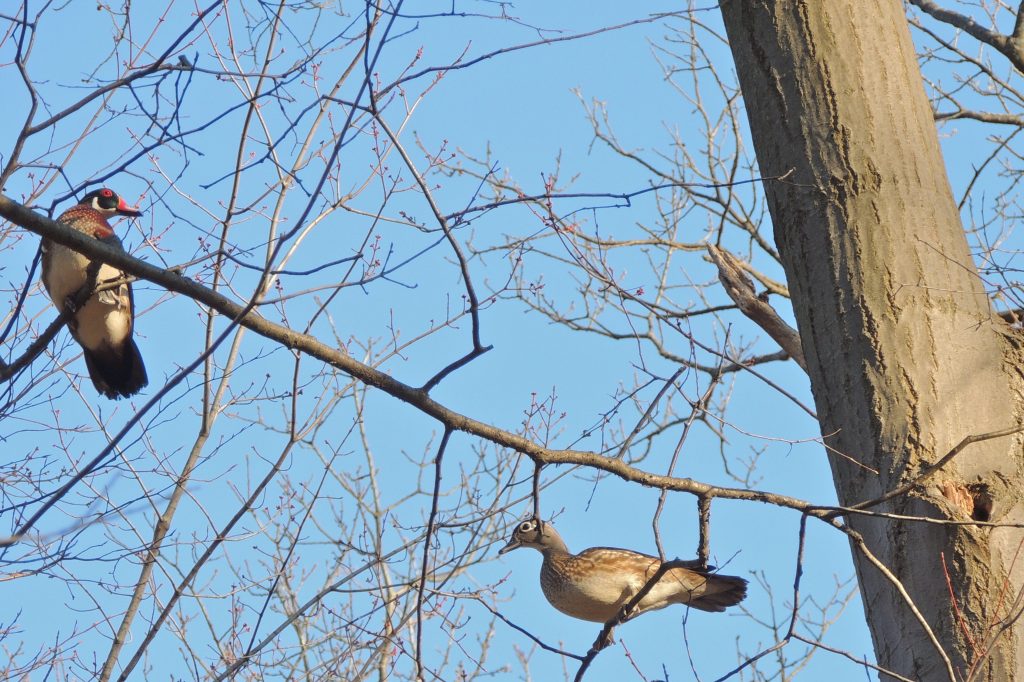
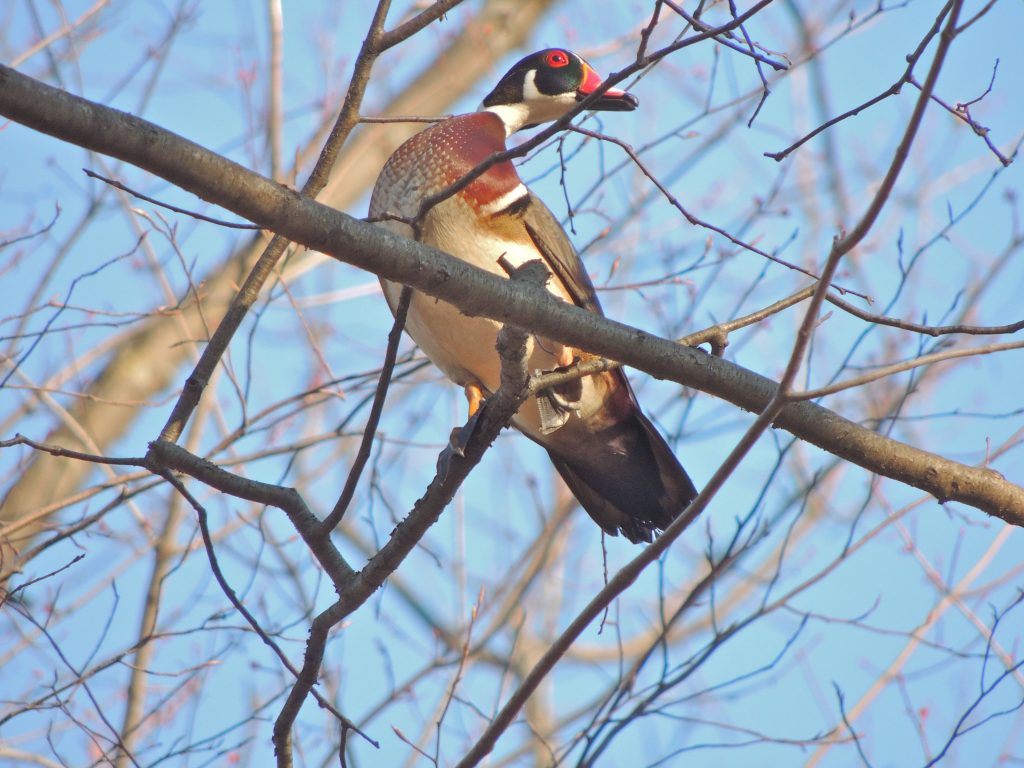
April 2 2017. RBG Hendrie Valley, Burlington, ON.  Starting a census walk this morning with two companions, we had hardly gone a hundred meters, three minutes walking and commenting on the Red-winged Blackbirds all around us, when we saw a large bird fluttering against the trunk of an oak just a short distance in front of us. My first thought was Pileated Woodpecker, but no, it was a male Wood Duck. As we grasped what we were seeing he flew a few meters to alight on a slender branch and we saw he was in the company of a female, then it all made sense. A bonded pair, spring arrivals, needing a suitable nest cavity – house hunting. As we watched them for a few minutes I told my companions that we’d have to find something really exceptional to top these two as birds of the day. Evidently the small knothole he’d been examining when we first spotted him was not up to their standards because they soon left.

Wood Duck pair

The census took a three hours; there were more birds this time than last. The steady but quiet surge of new arrivals reminded me of the ebb and flow of the ocean tides: you know it’s happening, you can watch and measure the trickle (as we birders do) and every now and then appreciate just how thoroughly all the ecological bays and inlets have filled up (or drained out). Our morning species list reached thirty-two, ten more than the same route just three days ago.

New on today’s rising tide were the Wood Ducks, an Eastern Phoebe, two each of Golden Crowned Kinglets, Northern Flickers and Brownheaded Cowbirds. A wide, shallow pond held half a dozen Gadwall and a pair of Buffleheads as well as many more male Wood Ducks, Mallards and a Mute Swan.

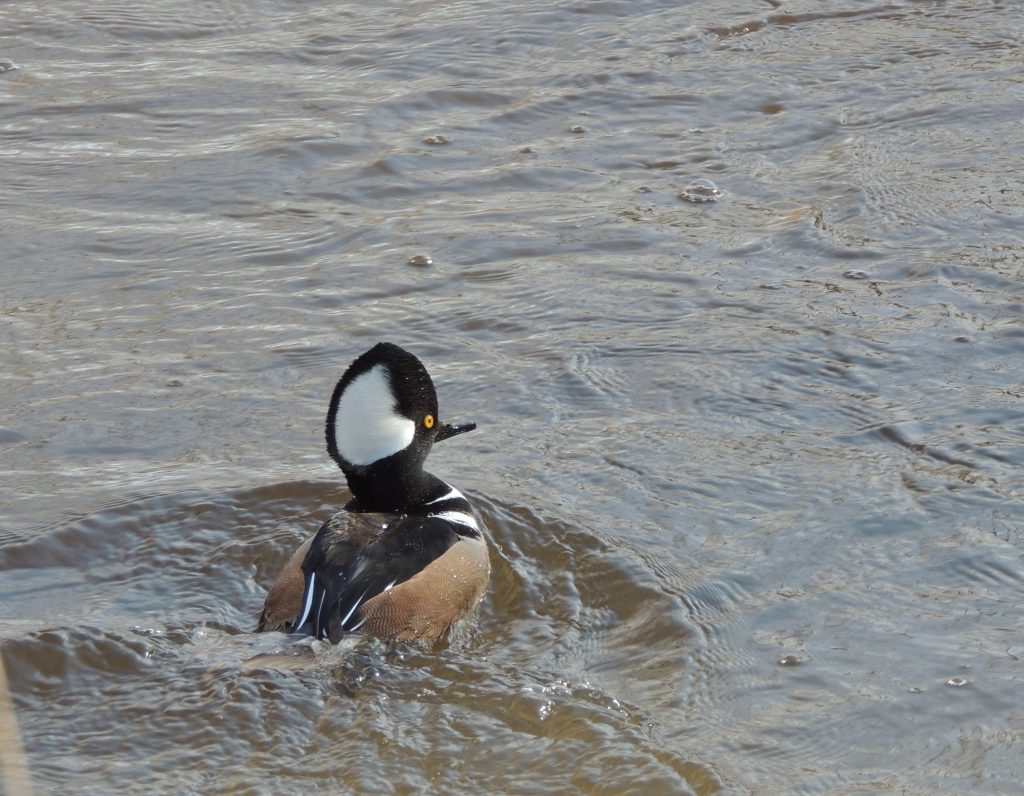
Hooded Merganser

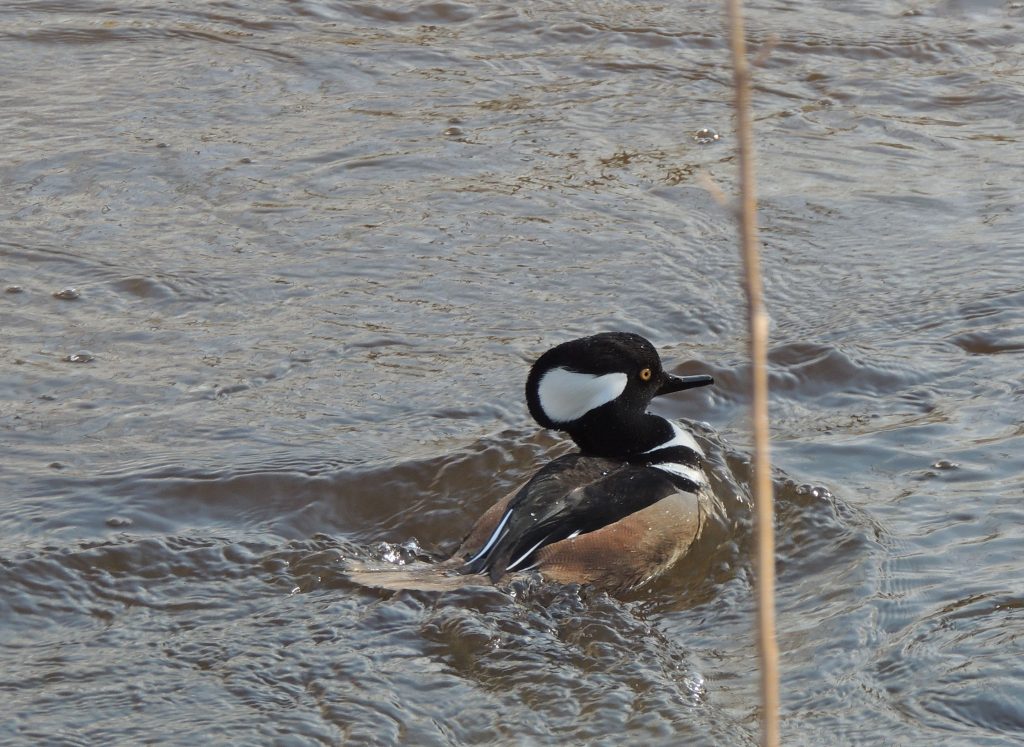
In the small rushing river that makes this valley what it is, we watched this handsome, male Hooded Merganser fight the current in his efforts to get away from us.

Hooded Merganser

All nice birds and welcome spring arrivals many of them. But none of them could steal the Bird of the Day prize from the Wood Ducks.

Turkey Vultures

1 April 2017. Vinemount, Hamilton ON. A day of nasty, stay-indoors, weather behind us I went out looking for some of the shorebirds and ducks some people have been seeing. Just as in my posting of three or four days ago, I watched a mass of puddle-ducks for a while: Mallards, Northern Pintails, American Black Ducks, Gadwall, American Wigeon and Green-winged Teal. They were happily resting and feeding in a waterlogged farm field and would probably still be there if a couple of young guys on noisy dirt-bikes hadn’t shattered the silence and scattered them. I watched for a little while longer as small groups flew around high overhead, I decided it was a good opportunity to work on identifying ducks on the wing; a skill that many hunters acquire through hours huddled in an icy November marsh. I did advance my knowledge a little noting that Northern Pintails in flight look long and lean, have slender angular, pointed wings, and the males’ long tail feathers are quite obvious.

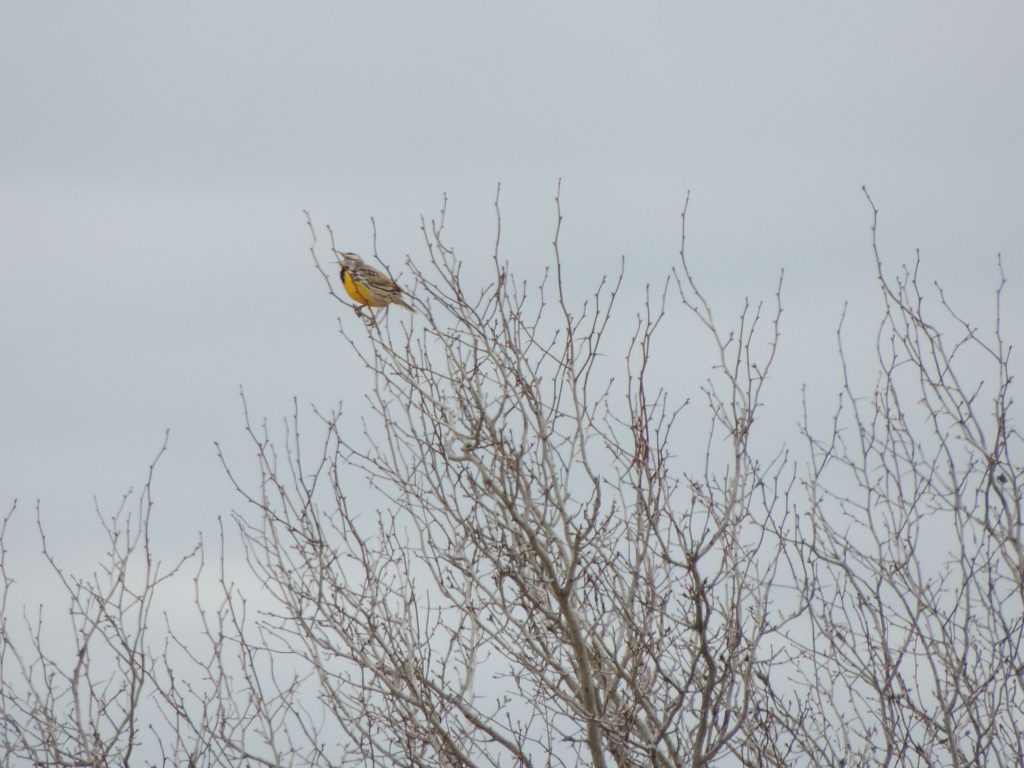
Eastern Meadowlark

I did a bit more, rather aimless, driving around and looking; an approach to birding I find unsatisfying. I spotted a couple of early Eastern Meadowlarks singing from the top of hawthorns in a dry field, they’re regulars at this site and one of the treats of early spring.

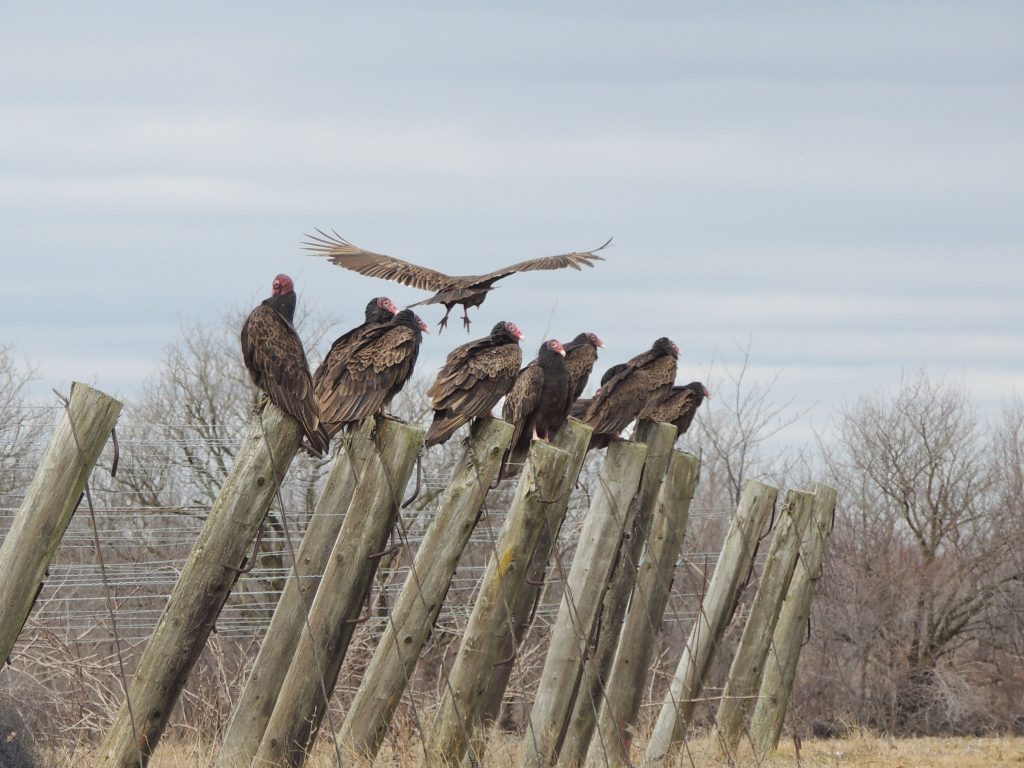
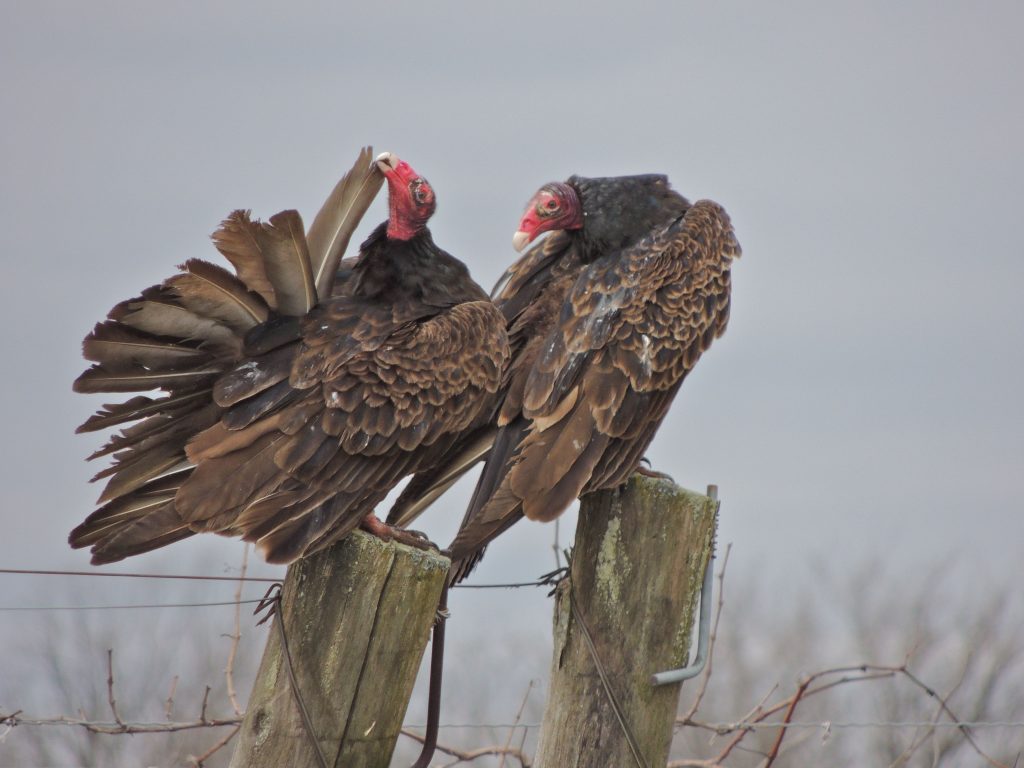
The spring flight of inbound Turkey Vultures is going full tilt and it didn’t surprise me to see a low-flying swirl of them not far up the road. As I drove towards them I realized they had taken a break from migration and their interest was something lying in the ditch, delectable and probably well aged. This wasn’t just a gathering of Turkey Vultures it was a dinner party.

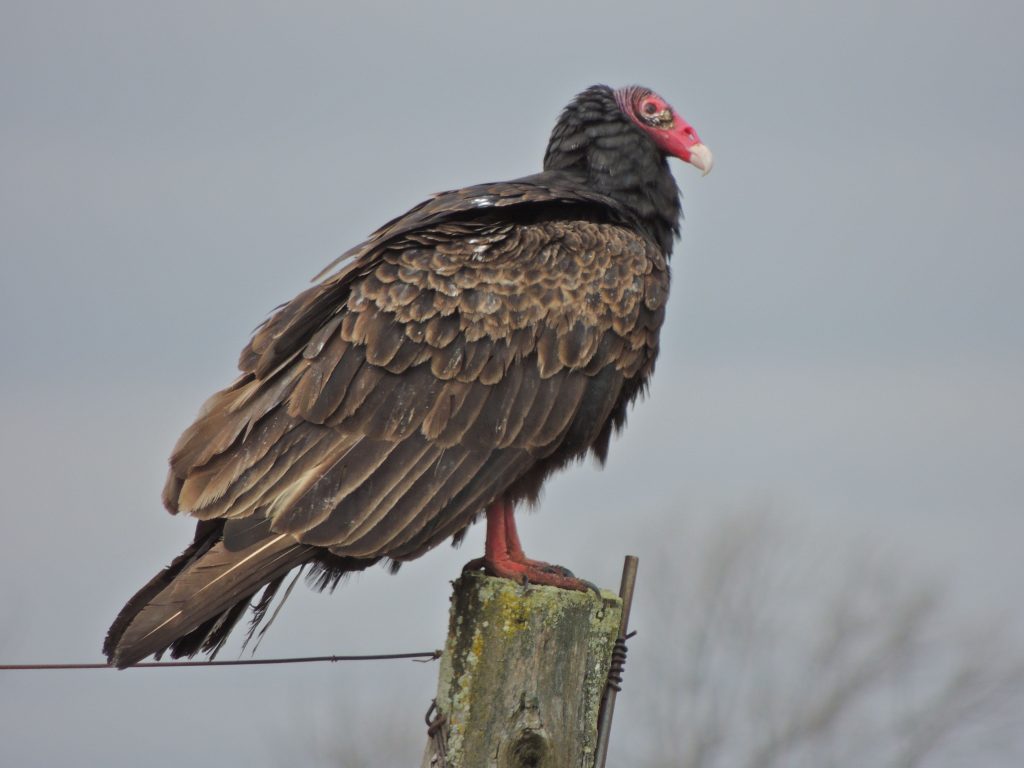
Turkey Vulture

My car’s approach caused them to disperse, albeit reluctantly, they really didn’t want to abandon the feast. Sensing that their urge to continue eating was greater than their concern about me in my car, I pulled carefully and strategically to the side of the road hoping to photograph them as they returned. Then, in the opposite direction, I was intrigued to see that up to a dozen of them had settled barely twenty meters away on the end-posts of a series of grapevine fences. It was a captivating sight and far from static as they jostled for room and as new birds arrived.

They don’t have a great reputation Turkey Vultures. Viewed from our cultural vantage point we see an ugly, bare-skinned head on a bird known to clean up corpses. It doesn’t help that they roost communally and apparently poop on each other; many of the individuals I watched were streaked with white. But they are well adapted to their role as scavengers of carrion: the featherless head is perfect for sticking inside a body cavity, they soar and wheel high in the summer sky taking advantage of helpful breezes and thermals and find their meals by following the distinctive odor of carcasses. I wouldn’t say I like them exactly, not the way I like vireos or bee-eaters, but admire them? Yes I do.

Turkey Vultures