Blue Jays

30 September 2015, Hendrie Valley, Burlington ON. Last night the weather changed, it turned cold and blustery and millions of migrants took heed.  On a day when the Toronto Blue Jays baseball team made some sort of scoreboard history, their namesake Blue Jays, the originals, took to streaming west in enormous numbers vacating the north as fast as they possibly could.
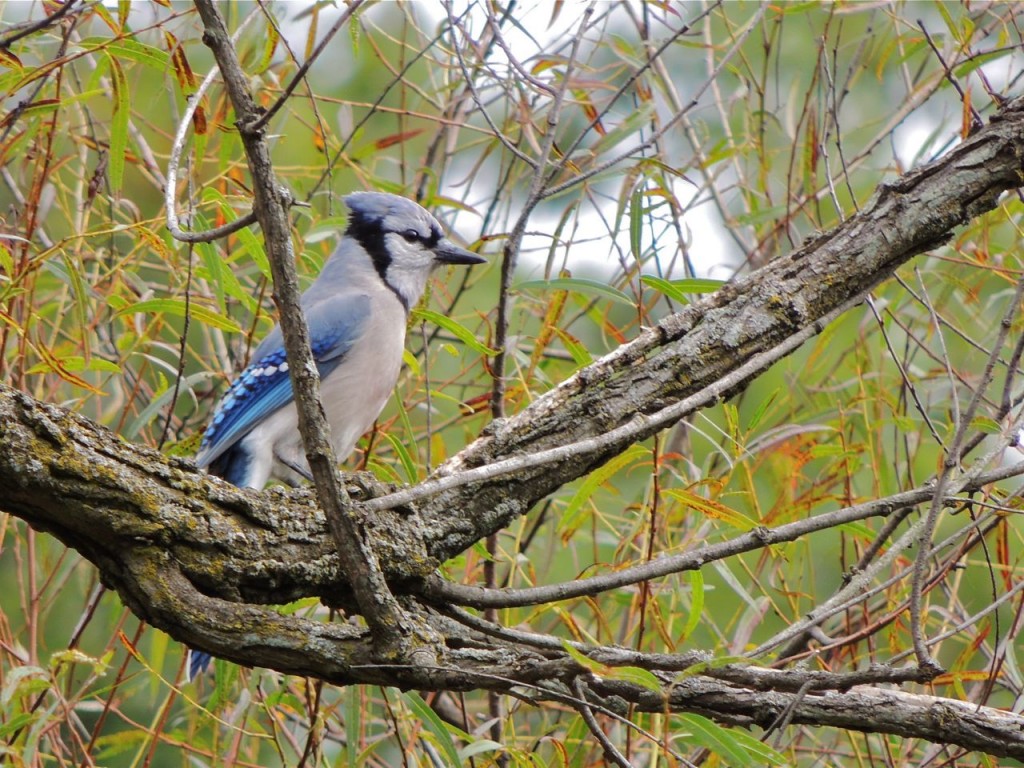
Blue Jay. Just one of thousands

On my census round today I counted one hundred and fifty-seven Blue Jays, shrieking, screaming and riding south-westward on the brisk north-east wind. If I saw that many over two hours in my little slice of the sky, the total number making their way must have been immense. For the sheer wow-value spectacle of this exodus, Blue Jays were my Birds of the Day.
But there were lots more on the move and I seemed to be in the thick of it. The geography of our little corner of Ontario creates something of a natural funneling corridor for birds heading south in fall, it was as if rush-hour had been uncorked. There were uncountable numbers of Yellow-rumped Warblers, and White-throated Sparrows. The Yellow-rumps, looking nothing like the handsome birds of spring, were especially fond of the margins of cattail marshes where there were lots of insects; while the White-throated Sparrows stayed low in woodlands, scattering in front of me along the paths; who knows how many there were away from the paths. Four Winter Wrens seen may not seem like many, but they are usually all but invisible creeping through dense underbrush; for every one seen there could well be dozens not seen.
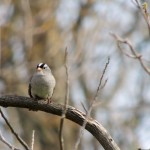
Two young White-crowned Sparrows were an identification challenge. Adult White-crowns are very handsome birds with three bold slashes of bright white on their heads, the youngsters definitely lack that heraldic distinction, but fortunately the give-away was their hefty size (for a sparrow) clear grey-buff breast and pinkish bill.

The trees were bouncing with Ruby-crowned and Golden-crowned Kinglets, Nashville Warblers, Common Yellowthroats and Western Palm Warblers. I watched as two Red-bellied Woodpeckers harassed a young Yellow-bellied Sapsucker for no apparent reason. The sapsucker clung quietly to a dead limb hoping its attackers would lose interest and helpfully posed for this picture.
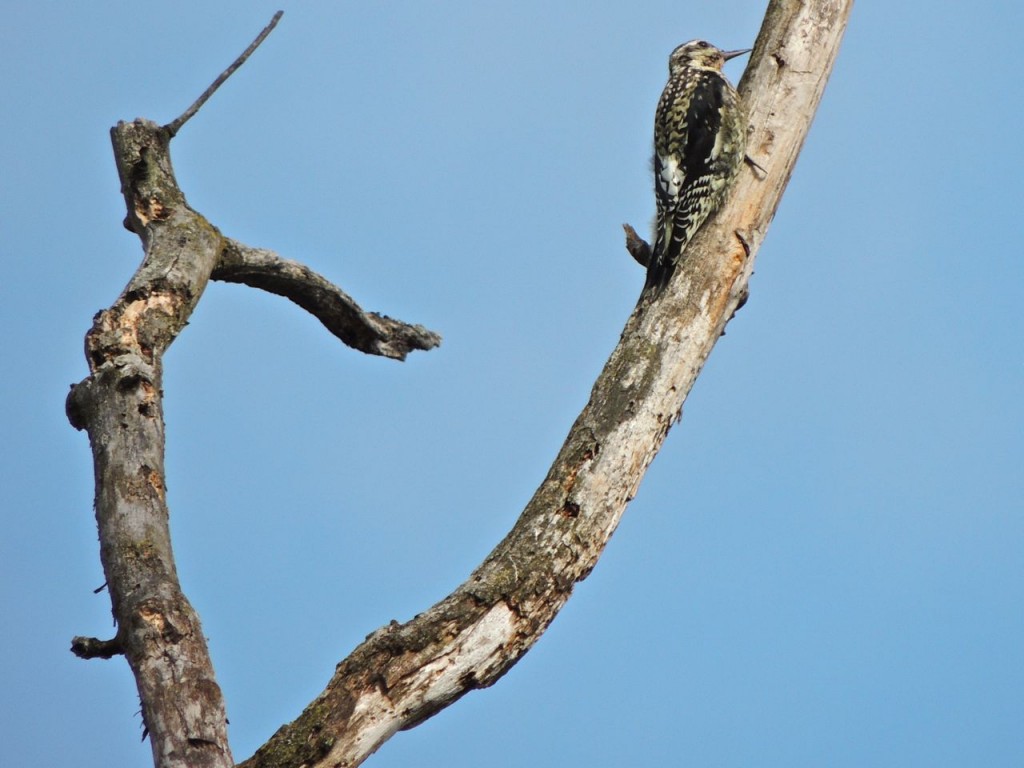
Yellow-bellied Sapsucker

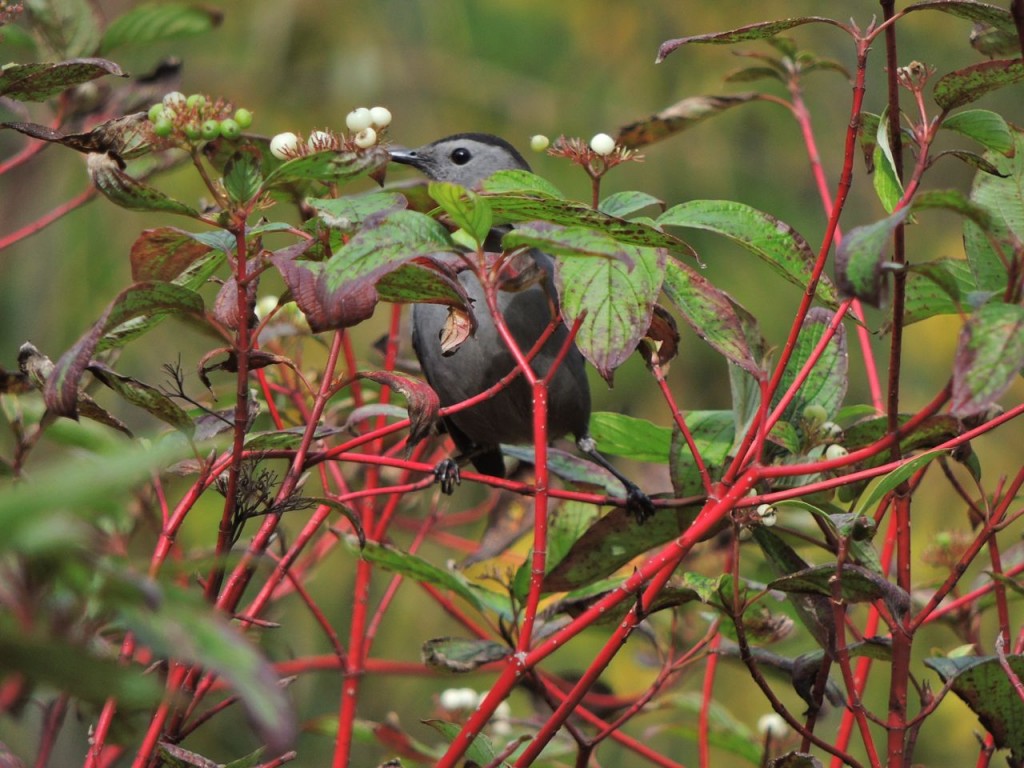
This Gray Catbird caught my camera-sense when it fed briefly on some Red Osier Dogwood berries.Gray Catbird. Hendrie V. Sept 30 2015
Even after my census was done the day kept on delivering surprises. Dozens more Yellow-rumped Warblers, swirls of Cedar Waxwings and high in the troubled skies were circling Sharp-shinned and Red-tailed Hawks, while a young Bald Eagle flapped manfully against the wind or maybe it was just enjoying the change of season.
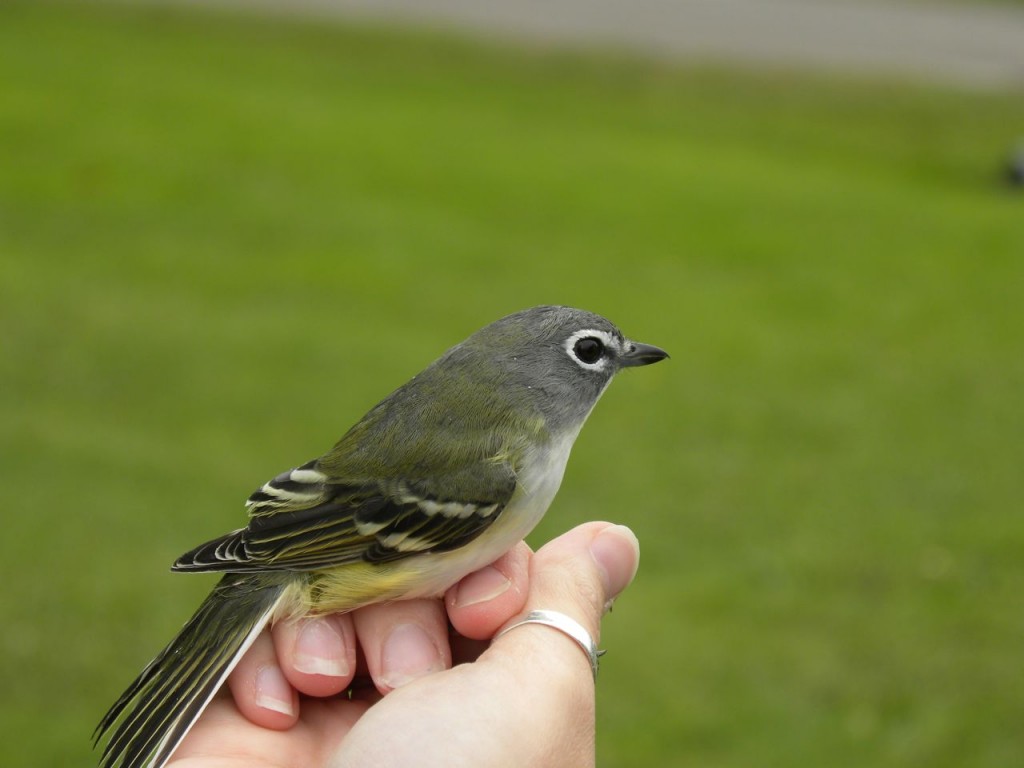
Blue-headed Vireo

27 September 2015, Hendrie Valley, Burlington ON. It was my happy pleasure to lead a group of four birders into this very bird-rich valley this morning. We were there to conduct the almost-daily census which, I had suggested, would take two hours although in the end we spent the best part of three at the task. The weather was perfect and the valley full of late summer colours and vegetative exuberance, just the place for a morning walk and lots of birds.

We can always count on plenty of resident White-breasted Nuthatches, Black Capped Chickadees, Mallards and Northern Cardinals, I expect that most of them will stay somewhere around here for the winter. Nearly everything else was on the move, either heading south with some sense of urgency or hanging around long enough to fatten up until forced out by the first hard frosts. There were dozens of Blue Jays passing overhead, screaming as they went. (I noted sixty-three but if any-one had told me I was mistaken and the real count was a hundred and sixty-three, I wouldn’t argue.)

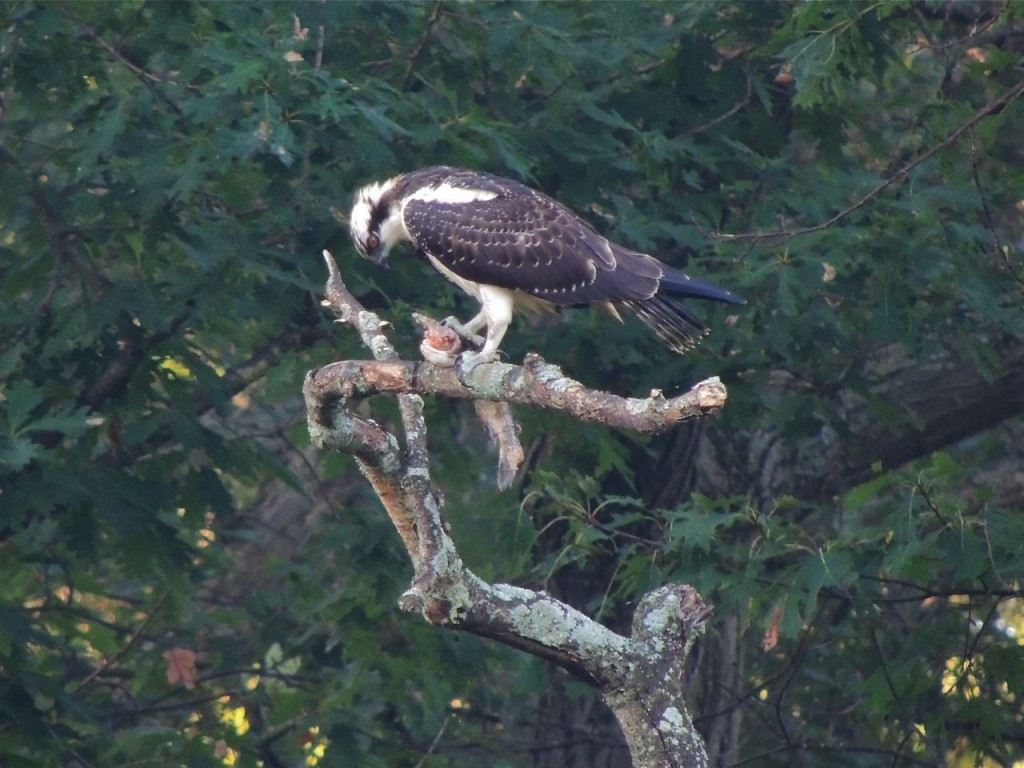
Osprey at breakfast
Osprey at breakfast

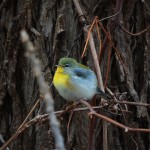
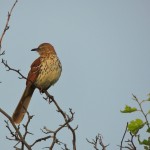
A wheeling Osprey landed close by and ripped a few shreds from a captive fish before leaving to find a more private place to eat. Flocks of young Cedar Waxwings hung around tree-tops everywhere, we found a House Wren skulking deep in a grape tangle and heard but didn’t see two Carolina Wrens. Our list grew to thirty-eight species and towards the end of our walk there was a cascade of notables: A couple of cautious-looking Brown Thrashers skulking deep in the undergrowth trying to avoid being seen; a pair of Cooper’s Hawks glimpsed skimming overhead and a young Yellow-bellied Sapsucker among them. As the sun warmed the air and lit up the tree-tops we found quite a few migrant warblers; American Redstart, Nashville Warbler, and a Common Yellowthroat. A bright yellow Wilson’s Warbler and a Northern Parula gave short bursts of colour to remind us of the good old days of spring. (Three photos below are visible only on the website, not if you’re reading this as an email.)

The best came last, a Blue-headed Vireo. Faithful followers will have read of my soft spot for vireos in general and a particular place in my heart for Yellow-throated and Blue-headed Vireos. On the ‘in general’ point, vireos have the sort of tenacious here-I-am-take-it-or-leave-it air about them that makes them rather like the sometimes-left-out kid in the class who goes on to great success despite the  conventional wisdom of others. They work the middle and upper levels of forests and woody margins, looking for insects, moving deliberately from branch to branch while singing a casual two or three phrase song that is discernibly similar among many of the vireo species.

Blue-headed vireo
Blue-headed vireo

The Blue-headed Vireo prefers coniferous forests so is not much found around here; I usually see one or two each fall and count myself lucky when I do. I don’t think they’re particularly rare; it’s more that they tend to be solitary, generally undemonstrative and well, not secretive but inconspicuous. Today’s Blue-headed Vireo was singing brightly, minding its own business as if spring was in the air. It was working through the canopy over the heads of many family groups who were feeding chickadees and chipmunks. I heard it first and in time we all managed to see it clearly when it lingered in the open. It’s not a particularly large bird, sparrows sized, and were it not for its plumbeous blue head and startling white spectacles you might not pay it much attention. Hearing and then seeing this bird so well, almost text-book quality, pushed aside any thoughts that our Brown Thrashers, Cooper’s Hawks or especially the Northern Parula might be Birds of the Day. They are all good candidates, and have had their days in the sun, but they are not vireos and do not have a soft spot reserved for them by me.

Scarlet Tanager

22 September 2015. Ruthven Park, Cayuga ON. I was back at the bird observatory today ready to do the daily census. It was early when I arrived, a touch on the cool side and quite dewy, so I took part in a bit of bird- banding for a while.

Banding is not a time to linger too long with a bird in your hand, they have enough stress to deal with without a lot of oohing and aaahing. Nevertheless it is quite a privilege to hold a Magnolia Warbler, tiny, bright yellow and jet black, or a Blackpoll Warbler, a bird only half way through its autumn journey from Canada’s far north to the Amazon Basin. We hold these little mites just long enough to close a small aluminum band around their right tarsus, measure their wing length, assess fat deposits and muscle condition and finally weigh them.  The Blackpoll weighed in at 14.6 grams, a little over a typical 12 grams adult weight, but still a bit short of it’s probable weight of 18 to 20 grams that it will need before it sets out over the Atlantic Ocean.

I also enjoyed brief moments banding a Yellow-bellied Flycatcher, admiring its primrose yellow under-parts, orangey-yellow lower mandible and the screen of short bristles that surround the base of its bill protecting its eyes from flailing fly-bits; one of the hazards of catching flies for a living. Much later we had a flight of mostly young Cedar Waxwings in one of the mist-nets.

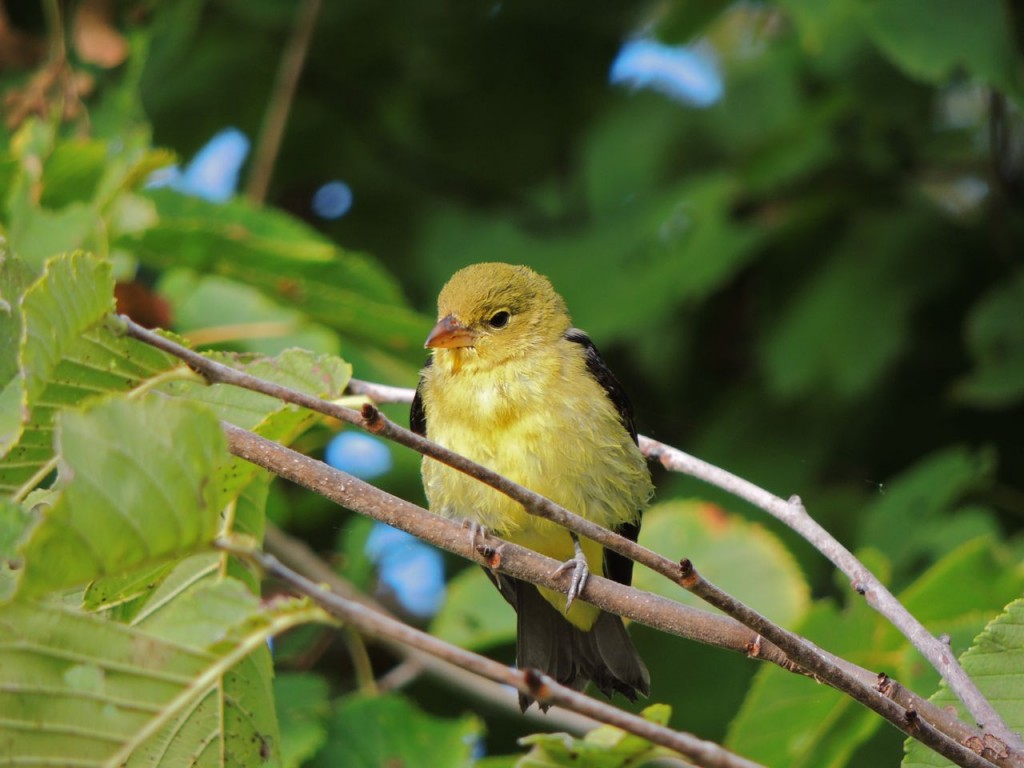
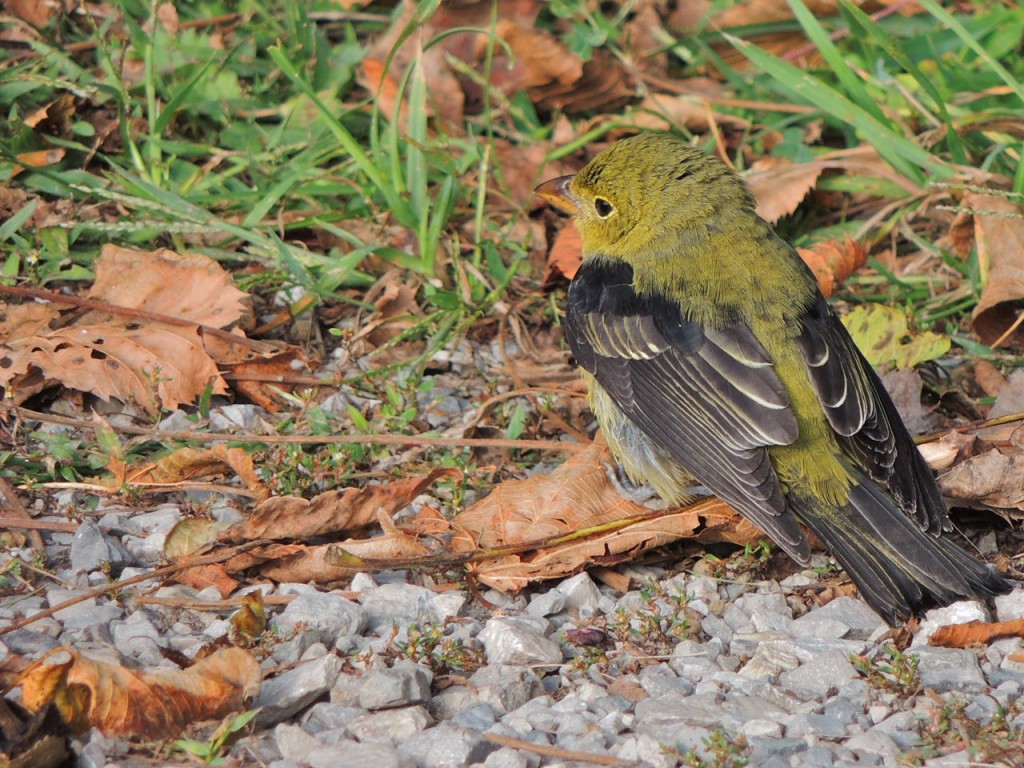
Young male Scarlet Tanager

The census round was unusually quiet, almost as quiet as a November morning might be. But it had its moments. Perhaps best (and Bird of the Day) was an encounter with a young male Scarlet Tanager. It flew down to the pathway in front of me and seemed oblivious to my closeness as it picked for food. I took several photos until it flew back up into the low branches of a small tree where it posed obligingly for even more shots. There was something quite wrong with its behaviour,yet it showed no signs of sickness, in fact it was a picture of health as far as I could tell. I managed to creep closer until I was within about four paces of it, clicking all the while as I approached.  You’ll see from the pictures that there is no trace of the fiery scarlet that we associate with this species, scarlet is a male affectation of spring and summer. The female is always a drab olive-green colour as are young of the year, which I believe this one is. The jet black of the wing coverts make this one a male; a female’s would be dark but not black. Scarlet Tanager. RP Sept 22 2015-2

Osprey

September 20 2015. Hendrie Valley, Burlington ON. I spent all of the daylight hours today on a bird survey, we started at daybreak, six-thirty, and stayed until the light faded well after sunset. Our task was to count all birds seen and heard from a single location. It was a rewarding and interesting day and I certainly slept well at the end of it. This exercise was part of a project we have put together called the Long Watch. To save me the laborious task of explaining the whole project here, it’s with considerable relief that I can now point anyone who wishes to read about it by following this link.

The upshot of it was that over a thirteen-hour period we saw fifty-three species and well over eleven-hundred individual birds. Our team was positioned on a small lookout platform between a string of large ponds, which are flanked by woodlands, and river flats; it is a very bird-rich area. At first light, when you could hardly make them out, the dark forms of forty or more Wood Ducks flew in wheeling and side-slipping to settle in the waters. Black Crowned Night Herons laboured past heading for their day-time roosts, and behind us an Osprey sat atop the remaining spike of a long-dead tree, I think it had been there all night, and when the sun finally warmed things up, it left for a while to catch a large gleaming and wriggling catfish which vigorously objected to being eaten.

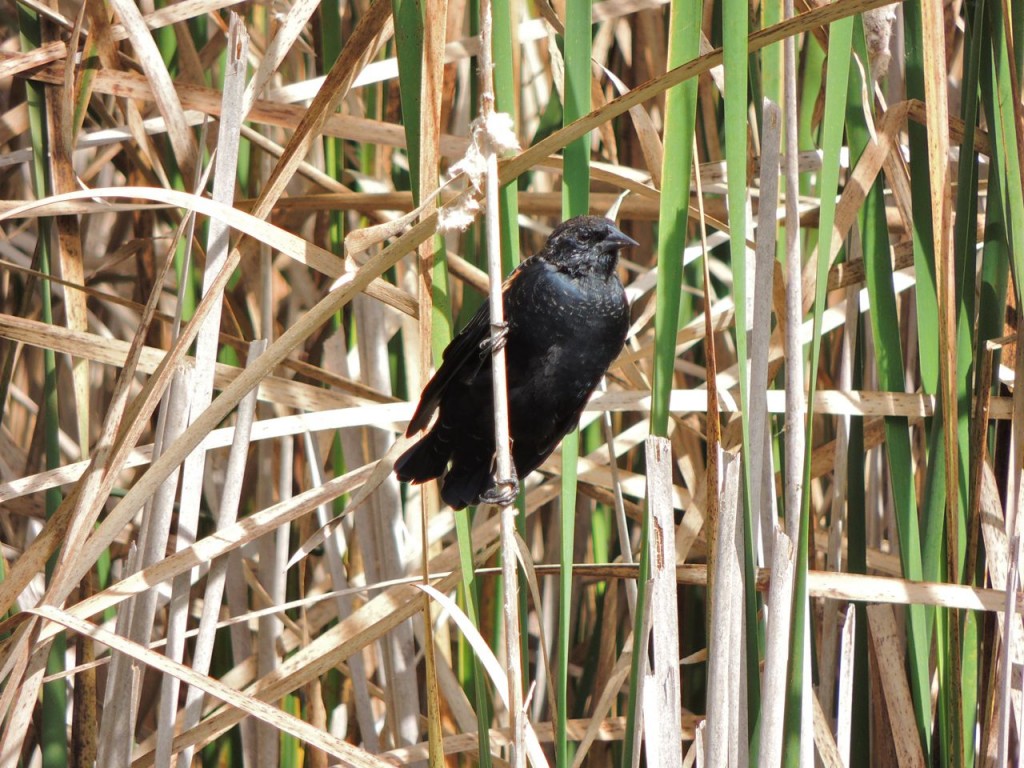
Red-winged Blackbird in fall plumage

The first rays of sun illuminated an ash tree which we found was hopping with Nashville Warblers and a Blue-headed Vireo, both very nice sightings. Around mid morning a pair of adult Bald Eagles passed heavily overhead to settle just out of sight in some tree tops. We were thrilled by a couple of Merlins, at least two Green Herons and day-long flights of Northern Flickers and Blue Jays.And so the day went on. There was a noticeable mid-afternoon lull but as the evening approached, somehow the birds came out again.

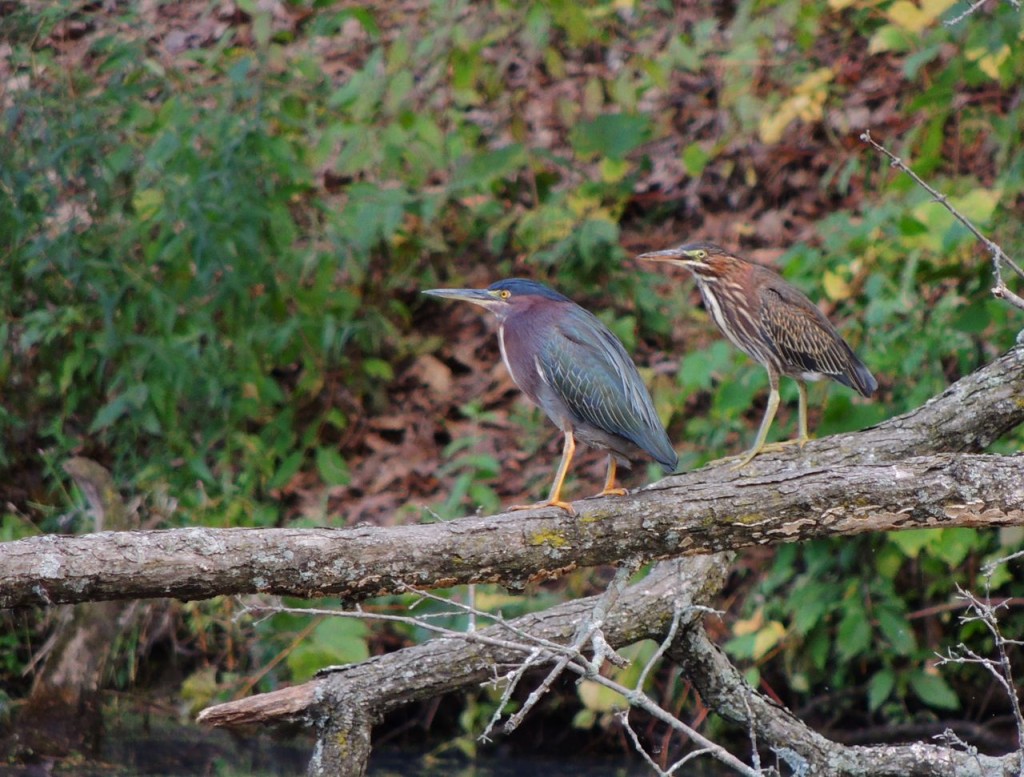
Green Herons. Adult with juvenile behind.

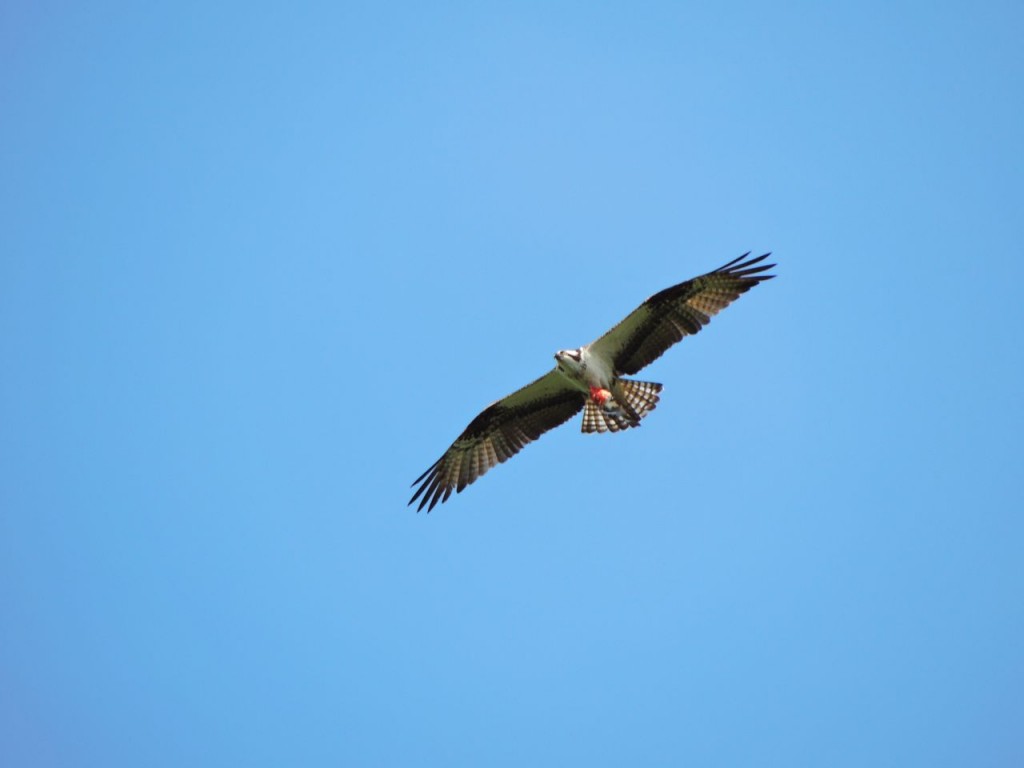
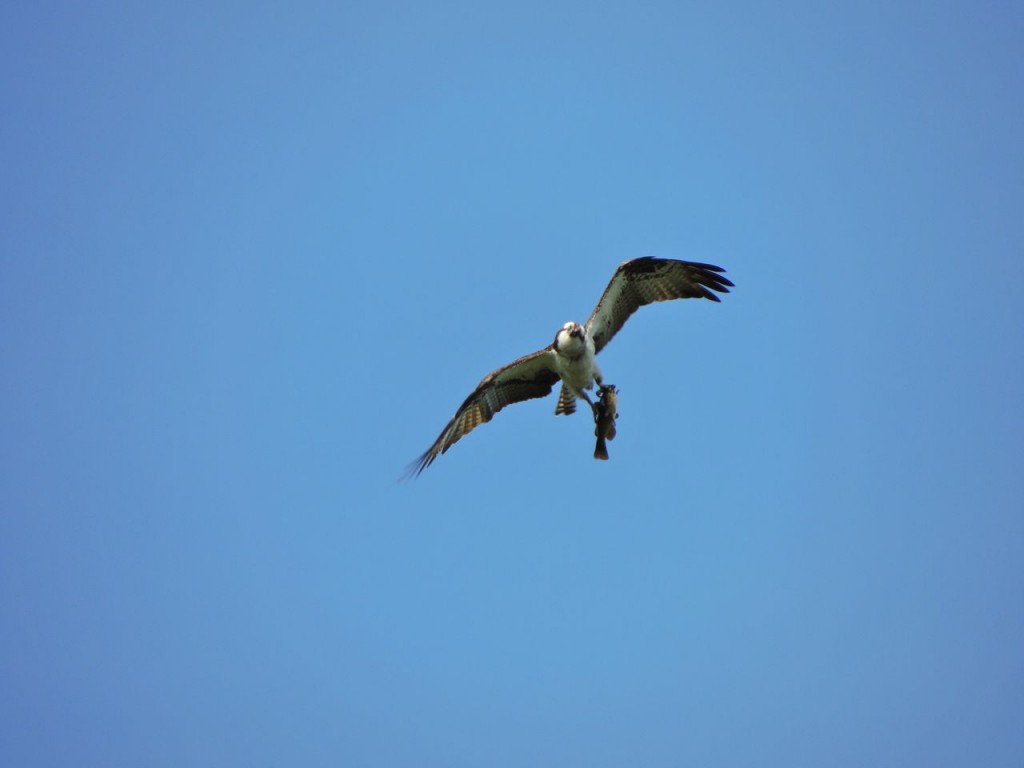
There were several birds that might qualify as Bird of the Day: An early morning Blue-headed Vireo, some Rusty Blackbirds and a heard-but-not-seen Carolina Wren. But I think an Osprey or two provided us with just the right level of dramatic spice to keep us entertained and somewhat awe-struck all day. They had a favoured perch just around the corner, out of sight and from there would periodically wheel into view, sometimes carrying a fish. In this first shot it is carrying something orangey-red, perhaps a goldfish.

Osprey over Hendrie Valley. Sept 20 2015-2

Osprey over Hendrie Valley. Sept 20 2015

Wallcreeper

September 10 2015. Hampshire England.  I am so excited about this that I’m not sure quite where to start. Perhaps if I blurt it out: My uncle, a country-man of advanced years but keen eye and secure in his identification of birds, saw a Wallcreeper yesterday, here in southern England. That’s the story. 

And so what? Well, it wasn’t my sighting. But I’m okay with that, there’s precedent, I celebrated a couple of my son’s bird sightings some three or more years ago: a Cock of the Rock in Peru and Andean Condors in Peru. Also, Wallcreepers are excruciatingly rare in the UK. Among those birders who would drop everything and drive across country regardless of domestic or employment consequences, a Wallcreeper is worth risking everything for; it’s sensational.

In size and shape a Wallcreeper is a bit like the familiar Brown Creeper of North America or Treecreeper of Eurasia (perhaps a touch larger) but much prettier and far, far more elusive. Wallcreepers favour mountain ranges with bleak, towering rock-faces where they inconspicuously work the crevices and cracks in search of insects. Birders seeking to add a Wallcreeper to their life-list must spend their days in the Pyrenees or Alps praying for a glimpse. Shaded rather like a nuthatch, it is a generally greyish bird, inconspicuous as it moves quietly around the sheer cliff faces but, as my Birds of Europe field guide notes, “…. when shifting position the broad rounded wings are spread, gaudily marked with red, black and white above….much red on wing.”

So, what was a Wallcreeper doing in southern England? It’s anyone’s guess. Obviously far from its normal range of southern Europe and central Asia, somehow it had lost its way like the scant dozen previously reported sightings in the UK over the past two decades.

My uncle has been a knowledgeable and competent bird-watcher for decades longer than I. He is not part of the rat-race of birders who share and celebrate their sightings publicly, he usually keeps his bird pleasures to himself but in his daily phone chat with his eldest daughter, my cousin, it came out. She mentioned his triumph to me, “Dad told me he saw a bird yesterday that he’d never seen before in his life. A Wallcreeper. He said he watched it for a long time, he’s very excited about it.” And so he should be. I am too, for him and his Bird of the Day.