Sharp-shinned Hawk

10 December 2014. Burlington ON. In past years I have offered food to our backyard birds but found that by December they’d all flown south and my urban neighbourhood became an avian wasteland; so I don’t do it much anymore. A touch paradoxical you might think, that a guy who clearly spends so much time in the study of birds doesn’t even hang up a piece of suet. Still, that’s the way it is. The upside is that my birding gets me out of the house.

But this morning, wandering into a back room, I look out to see a Sharp-shinned Hawk perched on the top rail of my back yard fence; It was certainly a wow! moment. It was looking around with quick movements, searching for food I imagine, and a few moments later it took off. Bird of the Day before the day had really got started.
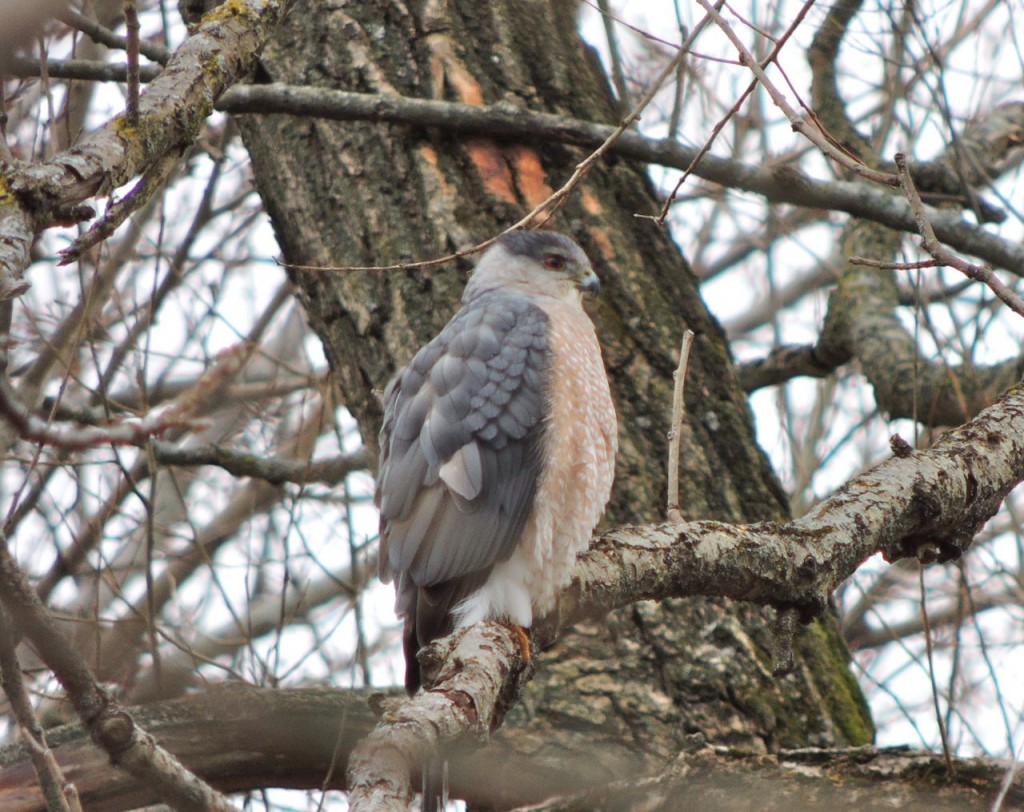
Adult  Sharp-shinned Hawk. Blue/grey back and finely barred breast.
Adult Sharp-shinned Hawk. Blue/grey back and finely barred breast.

I frequently hear from people that a hawk of some kind had appeared from nowhere to seize a Morning Dove from their bird feeder. As often as not it’s about the explosion of dove feathers amid the carnage, but sometimes it’s a tale of woe and rage against the vile hawk. My bet is that the hawk of some kind is a Cooper’s Hawk (which have a preference for larger birds like mourning Doves) or maybe a Sharp-shinned Hawk (which, being smaller, will usually go for smaller birds like juncos); both are ambush hunters built to fly fast through dense woodlands and grab unwitting prey. Backyards with bird feeders are nothing if not well-stocked wintering habitat.
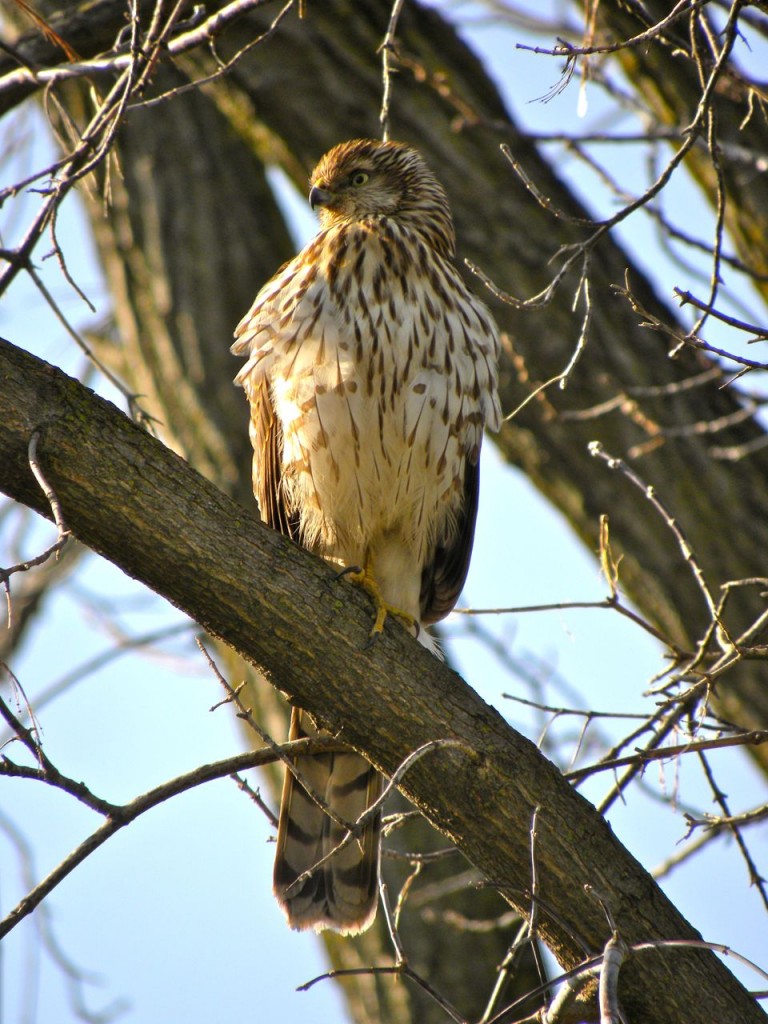
Cooper's Hawk, a first year bird.  Brown back and wings, brown spots and streaks on chest.
Cooper’s Hawk, a first year bird. Brown back and wings, brown spots and streaks on chest.

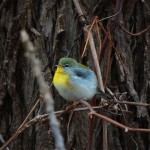
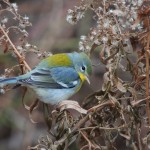
Northern Parula

5 December 2014. Oakville ON.  If you’re looking for the perfect Christmas present for the birder in your life, you might want to consider a field trip to a sewage treatment plant; he or she will surely love it! These past two days, I’ve spent a couple of morning hours at a treatment plant not far from home; it has a lot going for it really: free parking, out of the wind and crowds are small.

I should probably explain. It’s not that birders really like the sewage treatment plant itself, it’s the unusual and unexpected birds that hang around there that make them special. The ponds of warmish, biological froth generate lots of flies and mosquitoey things which are perfect for small insectivorous birds. Apparently some birds on the fall migratory trek are seduced by this man-made warmth and food and, ignoring their instincts (which would be telling them they’ve got another two thousand kilometers to go) decide to hang around. If their gamble pays off they will have a head start next spring and could reach and claim prime breeding sites ahead of anyone else. But chances are that sooner or later the winter will bite really hard, the insect life will dwindle to nothingness and the birds will perish; it’s a gamble, maybe even a microcosm of evolutionary effort. The only probable winners are the birders who hold their noses and prowl the perimeter on the lookout for special birds; I was one of them.

I’d heard there were Winter Wrens, Golden-crowned and Ruby-crowned Kinglets and several warbler species to be found. I was lucky to see many of them and more besides; the best in many ways was a Northern Parula. Parulas are always breathtakingly beautiful, today’s bird certainly was. They can be devilishly difficult to photograph because they rarely stay still, usually hang around well above eye level and seem to bury themselves deep in the overhead foliage; today’s bird actually did quite the opposite and although it was hunting for food, it well, judge for yourself…

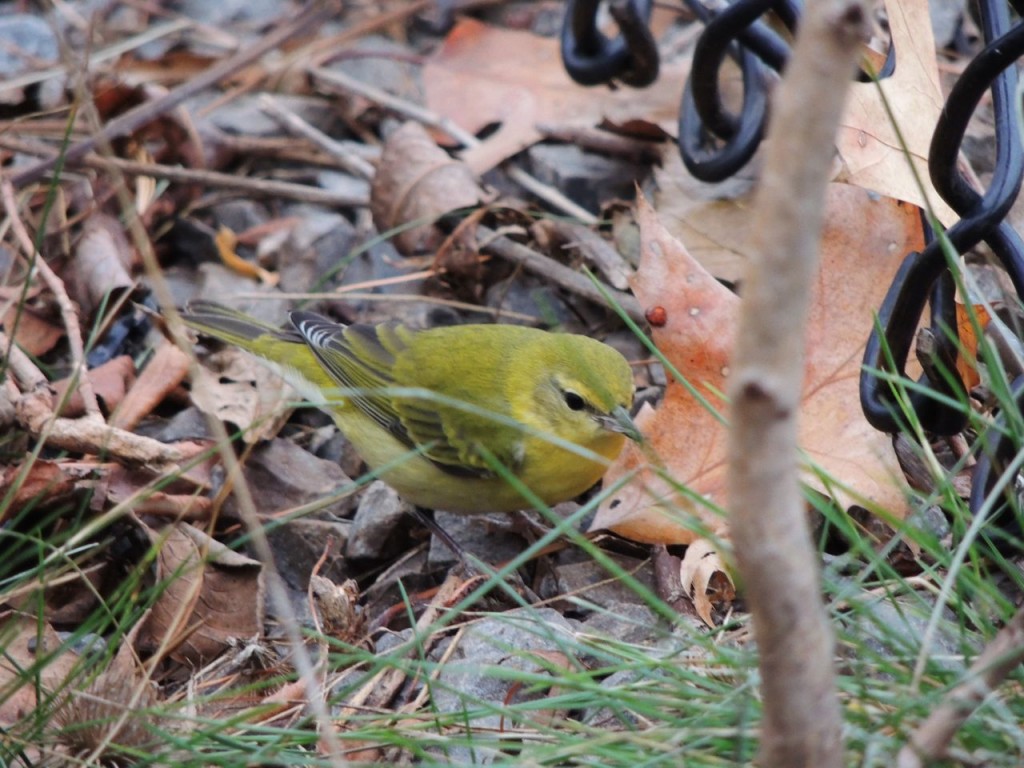
(The parula is in a gallery visible only on the website, not if you’re reading this as an email.) An Orange-crowned Warbler, a much overlooked and rarely encountered species was there too, as were a couple of Yellow-rumped Warblers, a Tennessee and a Wilson’s Warbler, all marvelous birds at any time.

Orange-crowned Warbler


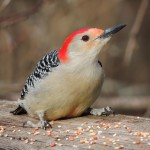
Red-bellied Woodpecker

2 December 2014. I have a favourite wooded valley, I’ve mentioned it many times before, most recently a couple of weeks ago in connection with my enjoyment of Black-capped Chickadees. The thing is, it’s close to home, sheltered from the worst of winter winds, full of birds and just a good place to walk around.

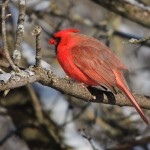
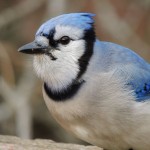
So many walkers scatter seed along the trails that you can easily watch birds close up; anyone can take good photos of many perennially popular species like Black-capped Chickadees, Northern Cardinals and Blue Jays. I spent a couple of hours there today and enjoyed watching those many always-expected birds and a few other common species like American Tree Sparrow, Belted Kingfisher and American Goldfinches. A solitary but wary Golden Crowned Kinglet came close and a couple of Purple Finches lingered for a moment.

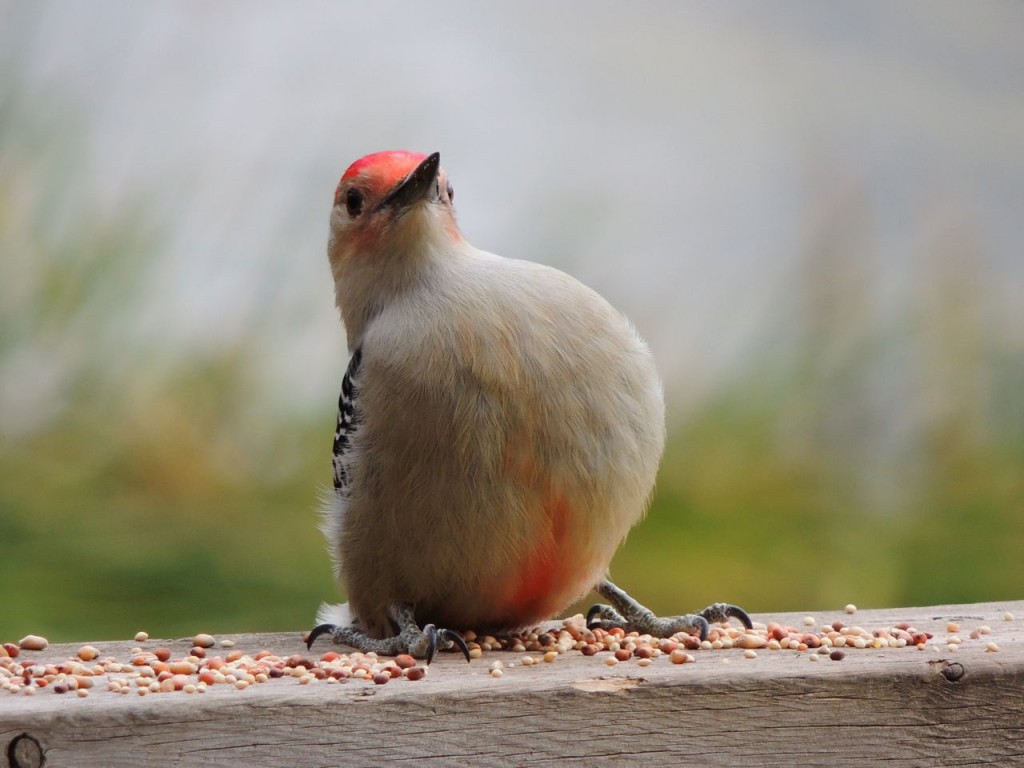
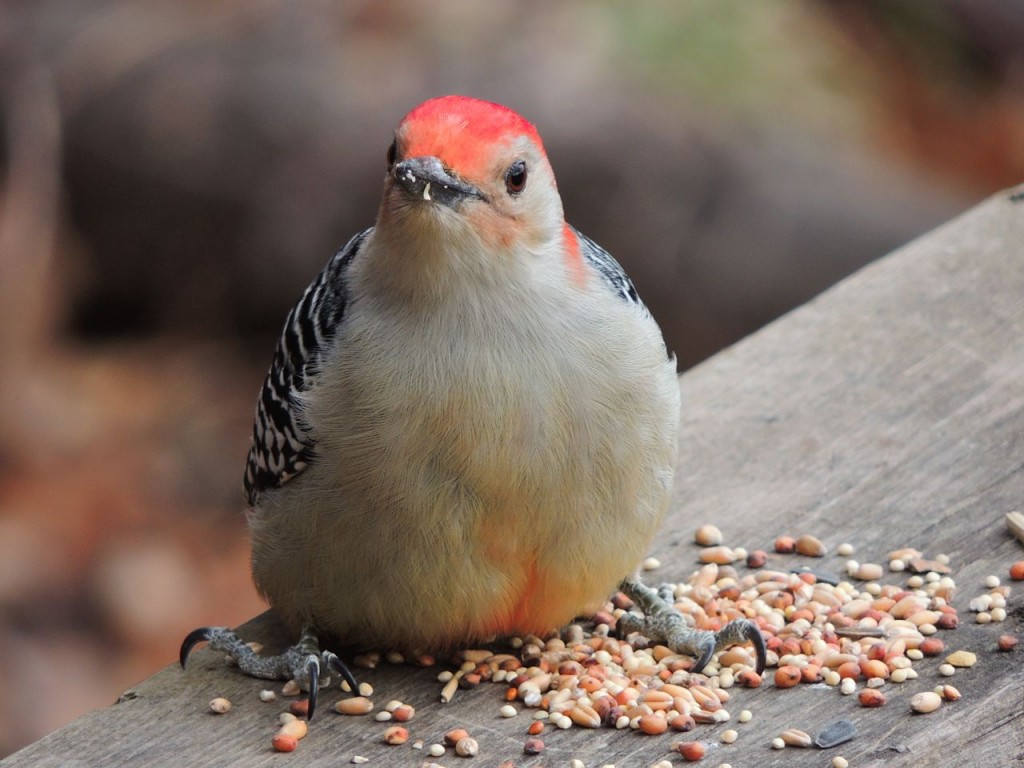
But perhaps one of the best moments came when a hungry Red-bellied Woodpecker showed off its red belly and allowed me to get a couple of illustrative shots.

Red-bellied Woodpecker - and why it gets its name
Red-bellied Woodpecker – and why it gets its name

Red-bellied Woodpecker 1-2

The question is frequently asked why the Red-bellied Woodpecker is so named when clearly it has a red head, not a red belly. I guess there’s a two-part answer: Firstly, the thoroughly well named Red-headed Woodpecker already has the name; and secondly,the Red-bellied actually does have a reddish belly — even though you can hardly ever see it. I suspect some nineteenth century biologist who was holding a museum specimen belly-up in his hand, originally gave it the name. Still, it’s not the best choice, surely someone in that arcane corner of ornithology that dishes out names, can come up with something less misleading.

Downloading my morning’s photos I realized how the morning’s Blue Jays, Northern Cardinals and Red-bellied Woodpeckers discredit my earlier gripe about the lack of colour in this December world. It would be a bit much to post all of the day’s photos here, the ones above are quite enough. But if you’d enjoy more of today’s full colour, eye-popping birds in reds and blues, follow this link to another site, it’s where I sometimes post photo collections. Feel free to browse around it.

This post contains six photos in a gallery visible only on the website, not if you’re reading this as an email.

Rough-legged hawk.

30 November 2014. On a mild, yet monochromatic, day I walked various sometimes-birdy stretches of the perimeter of the large industrial harbour that dominates our local geography. It was warm enough but, the bright orange berries of Bittersweet notwithstanding, I was quite conscious of how much natural colour had drained away. It was, as I noted above, a monochromatic day.

Interestingly, the few bird species I made note of were low on colour too. To wit: Several Horned Grebes in their winter greys and whites instead of summer gold and chestnut; A Northern Mockingbird, always pearly grey; A handful of Hooded Mergansers, the young ones in dusky brownish grey and the handsome adult males in black and white; And a young Common Loon, so people-shy that it seemed reluctant to admit to any buoyancy, showing only its mottled grey brown back.

A howling west wind, whipping up whitecaps, kept a windsurfer happy and I watched him for a while. I wondered about the efficacy of his dry-suit, the cold on his exposed hands and face and the advisability of spending any time whatsoever doused in the waters of this famously polluted industrial harbour. As I turned to leave, I noticed a Rough-legged Hawk high overhead making its way efficiently against the wind. At first I thought I was a Northern Harrier because it was so strikingly long-winged. But through binoculars I could see the diagnostic black belly and under-wing patches that mark a Rough-legged Hawk. I suspect the effort and dynamics of flying into the wind accentuated the relative long-winged-ness of this species, a characteristic that gives them a rather languid, floppy appearance when hunting low over winter fields.

I was glad of this Rough-legged Hawk for adding some metaphorical colour to the day even though splotches of black had been the keys to my identification of it.