European Starlings

October 27 2019.  Royal Botanical Gardens Arboretum, Hamilton, ON. Very few people were about this morning and there was a light drizzle in the air as I started on today’s transect.  This was the last of a very wet and blustery system that had swept across the eastern half of the continent overnight. Such stormy conditions obviously force birds to seek shelter and after perhaps forty-five minutes, and half way around the route, I’d noted only sixteen individual birds in four species. I wondered if I was setting an all-time record for fewest birds seen. But, as the theme of this site notes, there’s always something, some bird, that turns the dreariest of birding experiences into something special. Today it was European Starlings, my Birds of the Day.

The return leg of the transect route leads uphill and briefly through a stretch of thick deciduous forest. As I entered the forest I could hear bird song, I thought perhaps a number of American Robins were singing softly, as if in rehearsal as they sometimes do at this time of year. But the song came instead from starlings, hundreds of them gathered in the bare treetops. That they were up so high was, in itself, surprising because the west wind was a steady, punishing Force 6. (Beaufort Scale. 6Large branches in motion; whistling heard in telegraph wires; umbrellas used with difficulty.)

As I watched enjoying the sound and spectacle, the birds ceased as if commanded and took flight in a large swirling flock and returned moments later to the same tree tops to continue their song, they were impossible to count but I estimated them at perhaps 1,000 strong. I continued up hill and at the top turned to better appreciate the extent of the flock. They were on all treetops around me and on the open grass of the arboretum, socialising, whistling and chattering. I doubled my estimate. Time and again they’d pause the chatter and then, as one, take to the air in large swirling masses, parting and recombining liquidly as if on a multi-dimensional roller coaster.

Doubtless it is this flocking behaviour that has earned them the collective noun, a ‘murmuration of starlings’. The whistling, chattering, and warbling song of a thousand birds is indeed is a melodic murmur, but when, on an instant, it stops and they take off, the low overhead flight of thousands makes a blanketing whoosh.
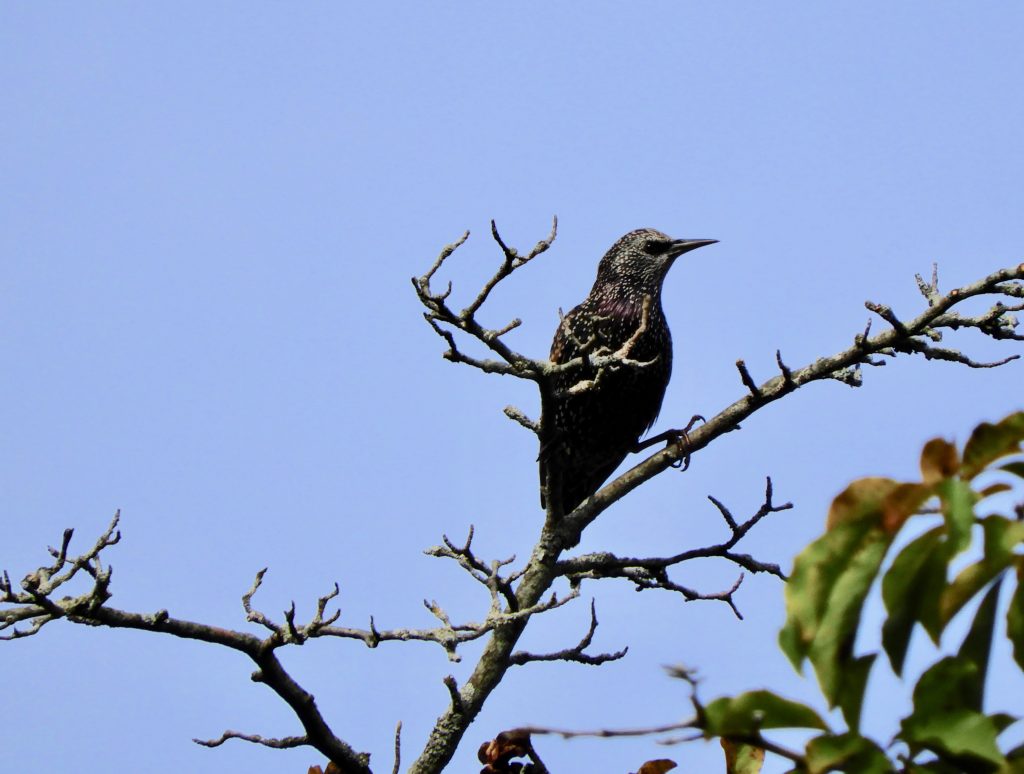
European Starling

They may not be the most beautiful or engaging birds, they no doubt have their supporters but that’s a topic for another day. Here is a photo of one showing a violet sheen that just underscores that there’s more to a starling than plain black drab.
Trumpeter Swans

October 24 2019.  Hendrie Valley, Burlington, ON. I made a quick circuit of the valley this afternoon partly to enjoy the leaf-colours on the late season Red and White Oaks, partly in hope that I might re-find the Northern Pintail from a few days ago, and partly because I had the time; it’s a hard place to beat.

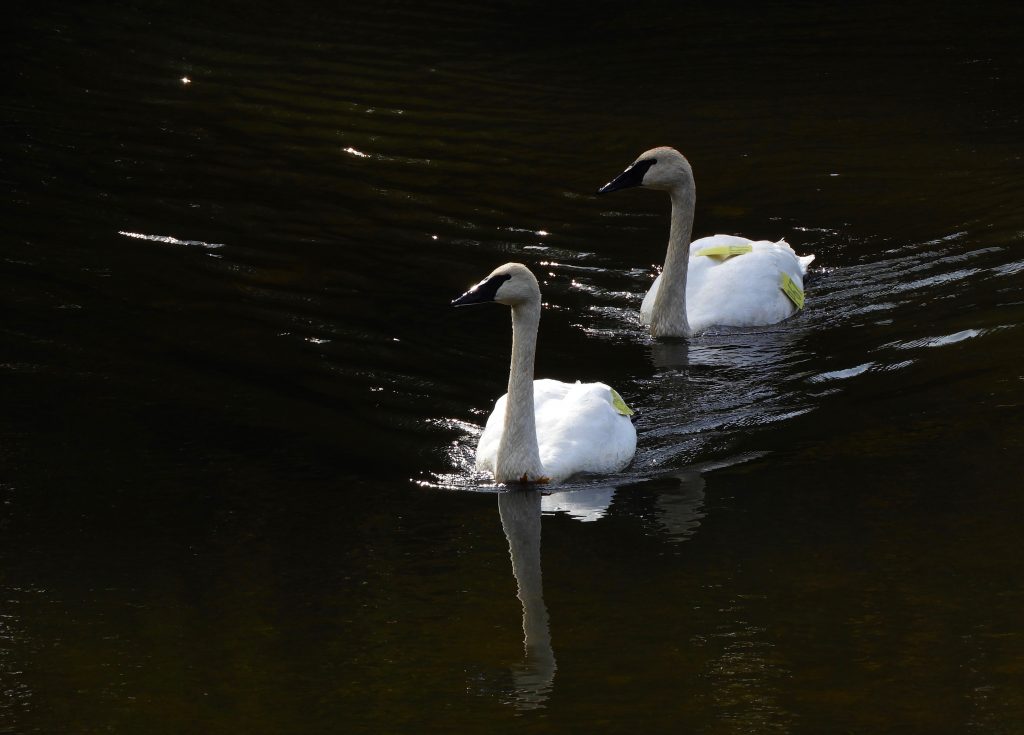
I spotted a pair of Trumpeter Swans paddling my way, they were around a bend in the river and all I could see above the river bank was their heads as they glided along, one dutifully following the other. A quick camera shot didn’t work out but I was soon ready for them to turn the corner and head my way.

Here they are. Just a couple of beautiful Trumpeter Swans on a quiet afternoon. My Birds of the Day.

Northern Pintail

October 19 2019.  Hendrie Valley, Burlington, ON. This valley is a bit of a gem sitting as it does between two thick urban sprawls and hemmed in by highways and railways. The urban growth is relatively recent, the surrounding area was farmed well into the late twentieth century and our valley was probably pasture.  I doubt it was ever much more than pasture because the straightened stream is prone to flooding.  In any event we now have an apparently natural valley with rich, deciduous woodlands flanking secretive ponds, soggy flatland and maintained trails; it’s a delight – and good birding too.

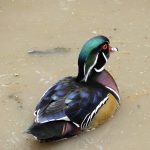
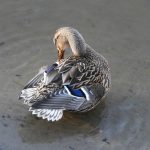
There is an elevated walkway that leads hikers, birders and families across and along a stretch of the valley, and below one short area, Mallards gather to receive handouts from families above; more than Mallards actually because there’s sometimes a few Wood Ducks mixed in. It’s all rather charming even if the selection of handout-food is inappropriate,  and when random ‘stuff’ like water bottles fall and hats blow away.

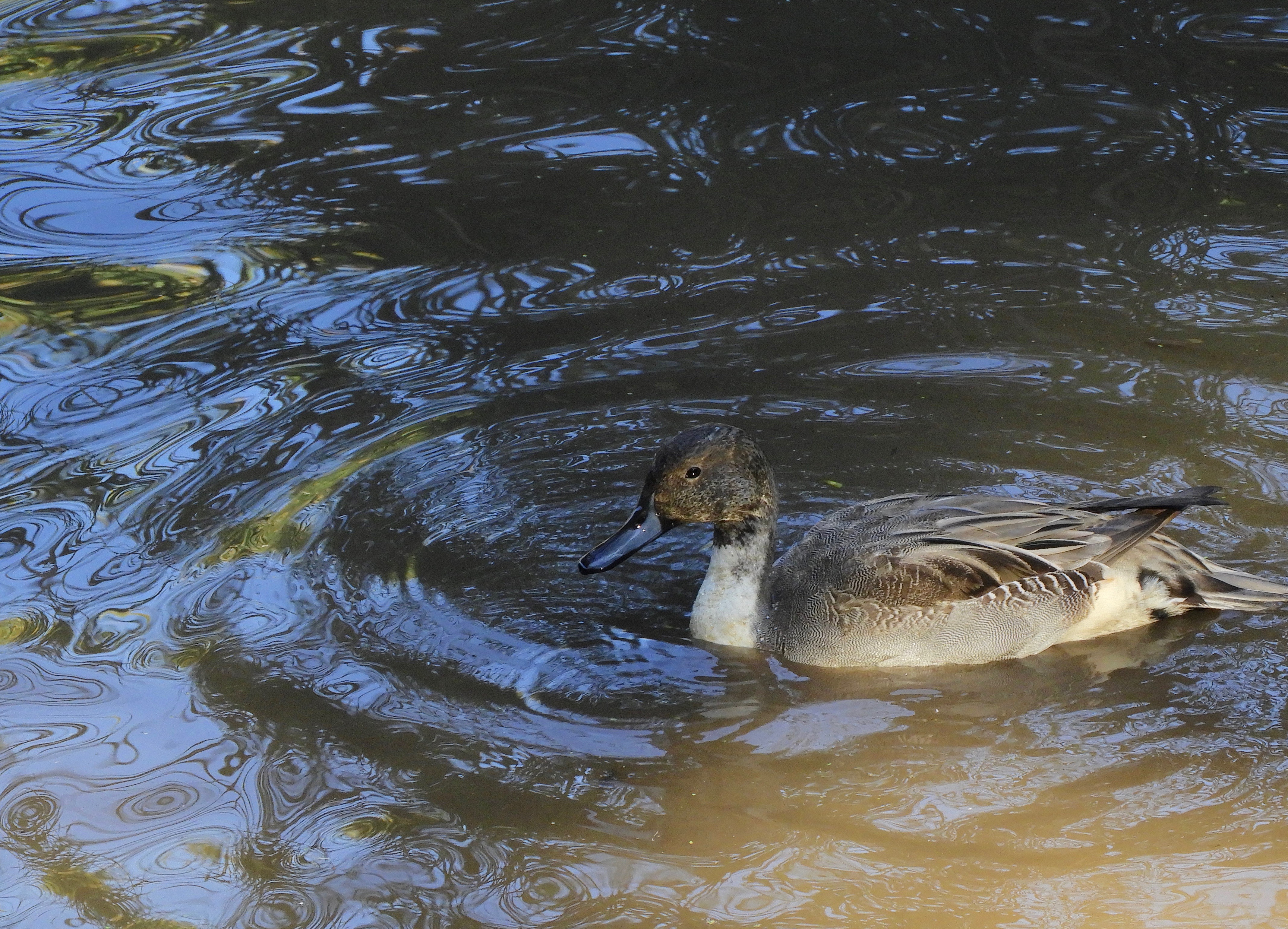
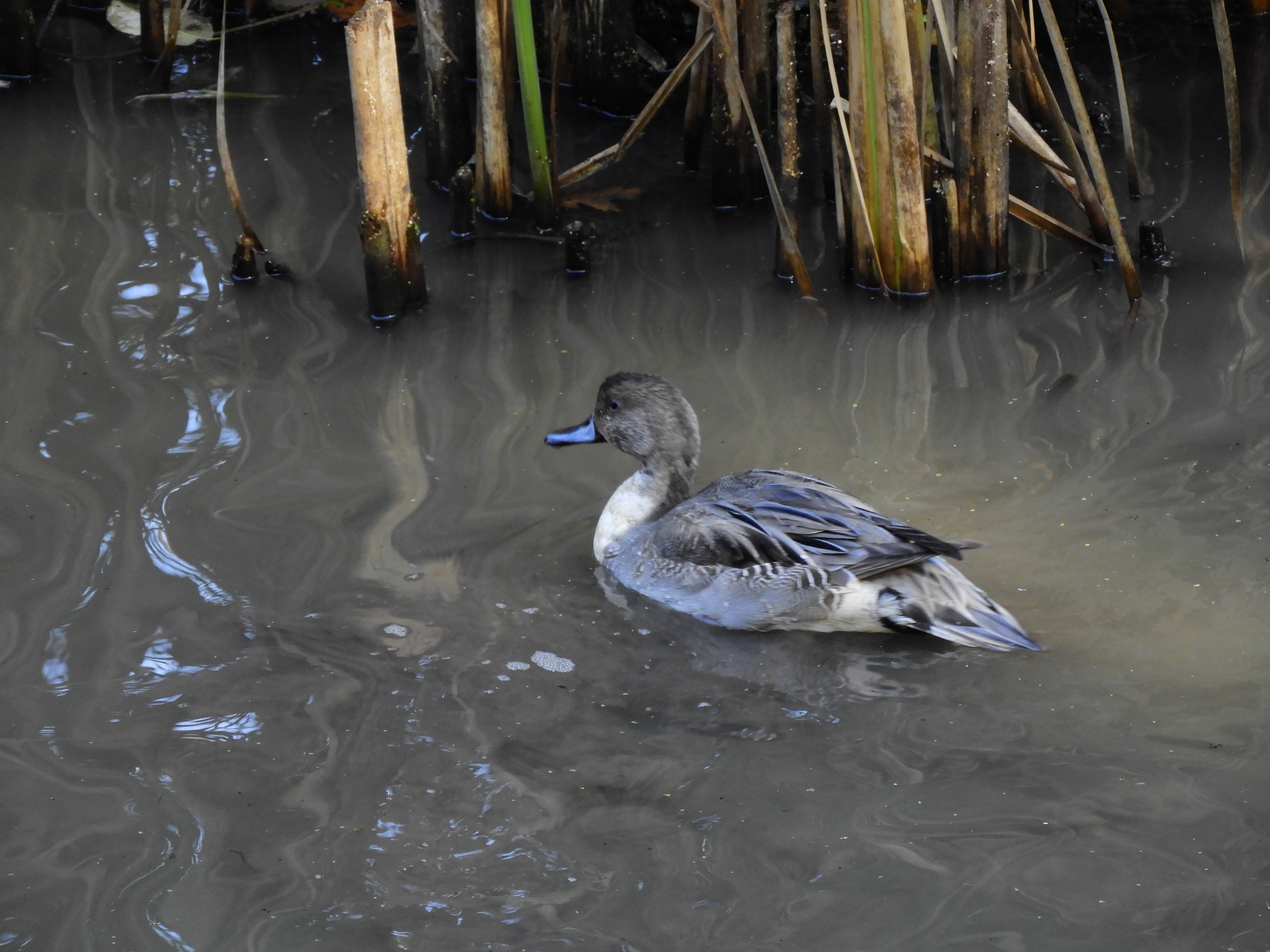
All of that is a rather long introduction to placing a Northern Pintail in this scene, it was my Bird of the Day. But without setting the scene in this way the pintail might be just another duck sighting. Pintails are, for me, usually a distant sighting and certainly not one I associate with Mallards begging crusts from pre-schoolers.

There’s a bit more to this picture I think. The days are distinctly cooler and it’s clear that most birds know it’s high time they were on their way somewhere warmer.  I believe this pintail had decided to take a break from its southward flight and and found itself consorting with Mallards. (If there’s snobbery among birds, I wonder what Pintails think of Mallards – and vice versa.) I write this a few days later and I know the pintail has not been seen here since.

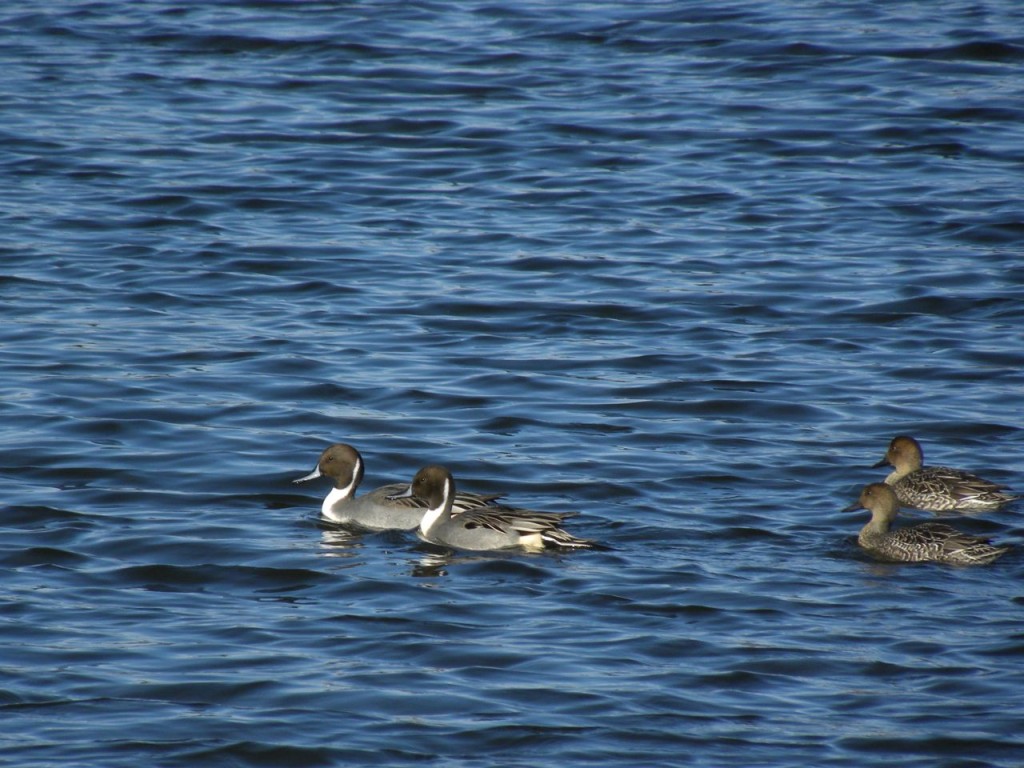
Northern Pintails (2 m 2 f)

When we came upon this duck it puzzled me for a moment, among all those Mallards and Wood Ducks it immediately stood out as different: longer and narrower and its posture a little more erect; Northern Pintail was not what came to mind, its plumage is not that of an adult male at its finest, it was muddier and less crisp. After some thought I concluded it is a male Northern Pintail in moult, the dowdy plumage of late summer is being replaced and will eventually reveal a bird like those above or this one.

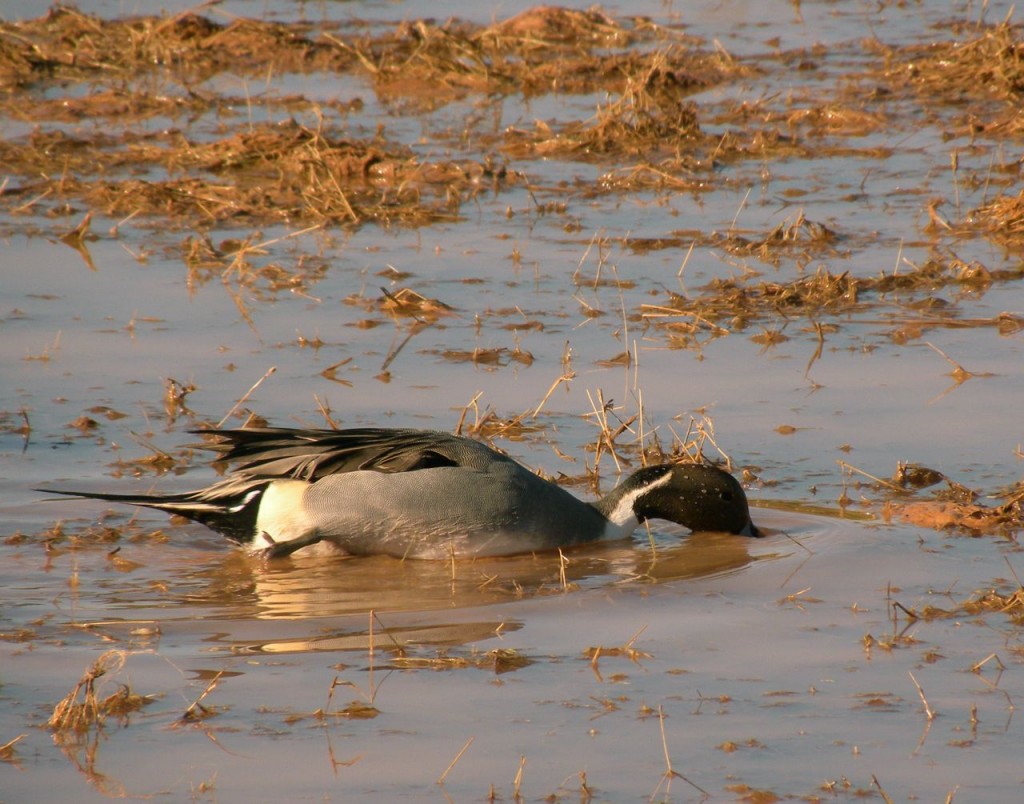
N. Pintail, Gilbert AZ

(Photographed by me in Arizona nearly ten years ago, it was on a small pond in an area of red clayey silt, a background colour that seems to distort the bird’s true colour.)

Blue Jays

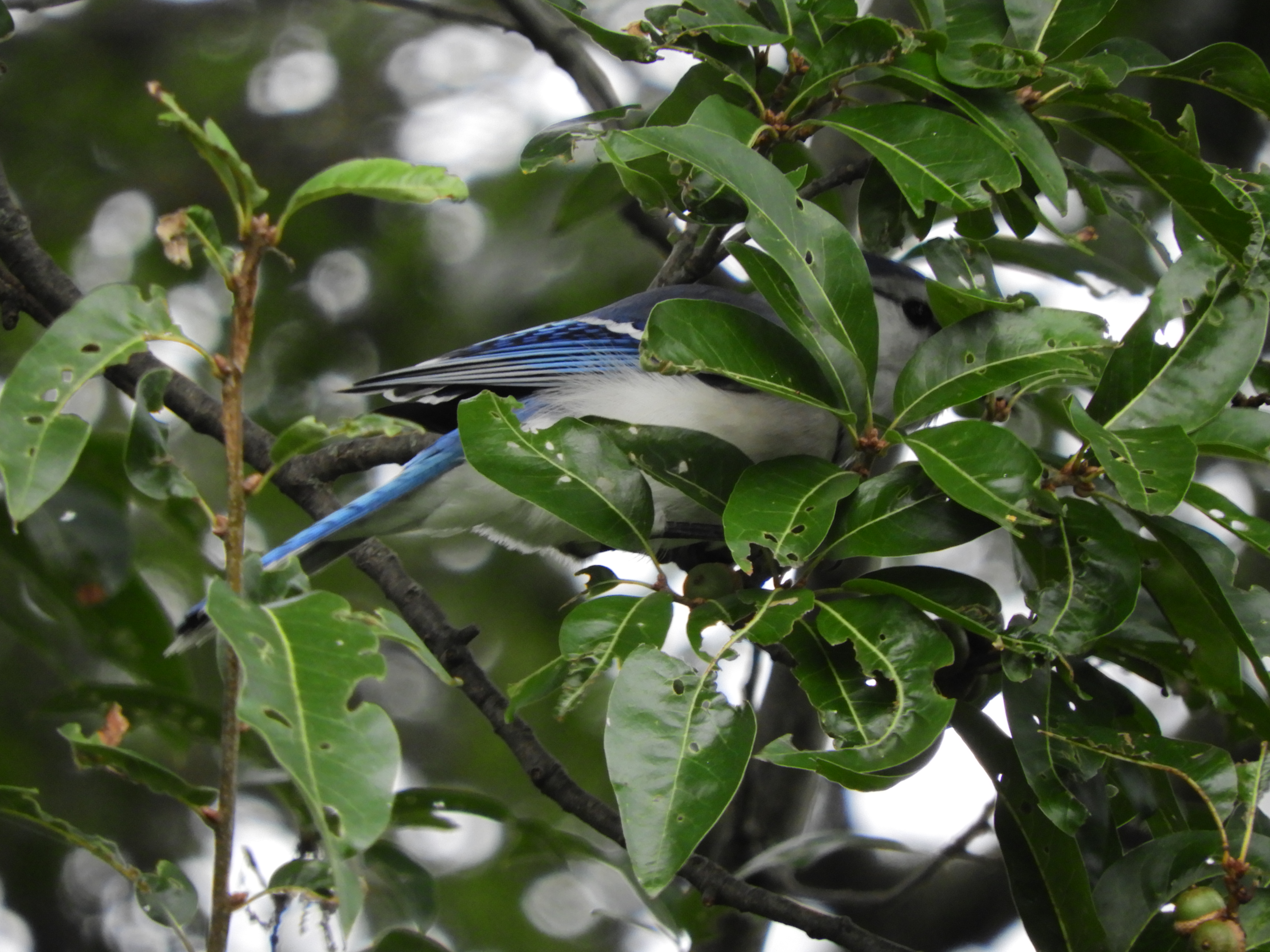
October 6 2019.  Royal Botanical Gardens Arboretum, Hamilton, ON.  Several years ago, I agreed to show a South African visitor some of our local bird life. I think it was around mid-summer when birding can be a bit slow, the visitor was unknown to me and I had no idea of the depth of her birding experience. I needn’t have worried, she was eager to learn, knew enough to latch on quickly and we passed a rewarding morning. My most vivid memory of her though was of her flabbergasted reaction when she focussed her binoculars on a Blue Jay for her first time, “What a gorgeous bird!” she exclaimed – repeatedly.

I remembered her astonished reaction today as I witnessed a huge morning flight of migrating Blue Jays. They were flying from east to west across the tree-dotted fields of the arboretum. I stopped counting at 74 because they were all around me, a moving target of new birds coming from the east, much sociable back and forth, some passing overhead heading straight towards the forests and others just milling around. Any total count would have been a crazy guess.

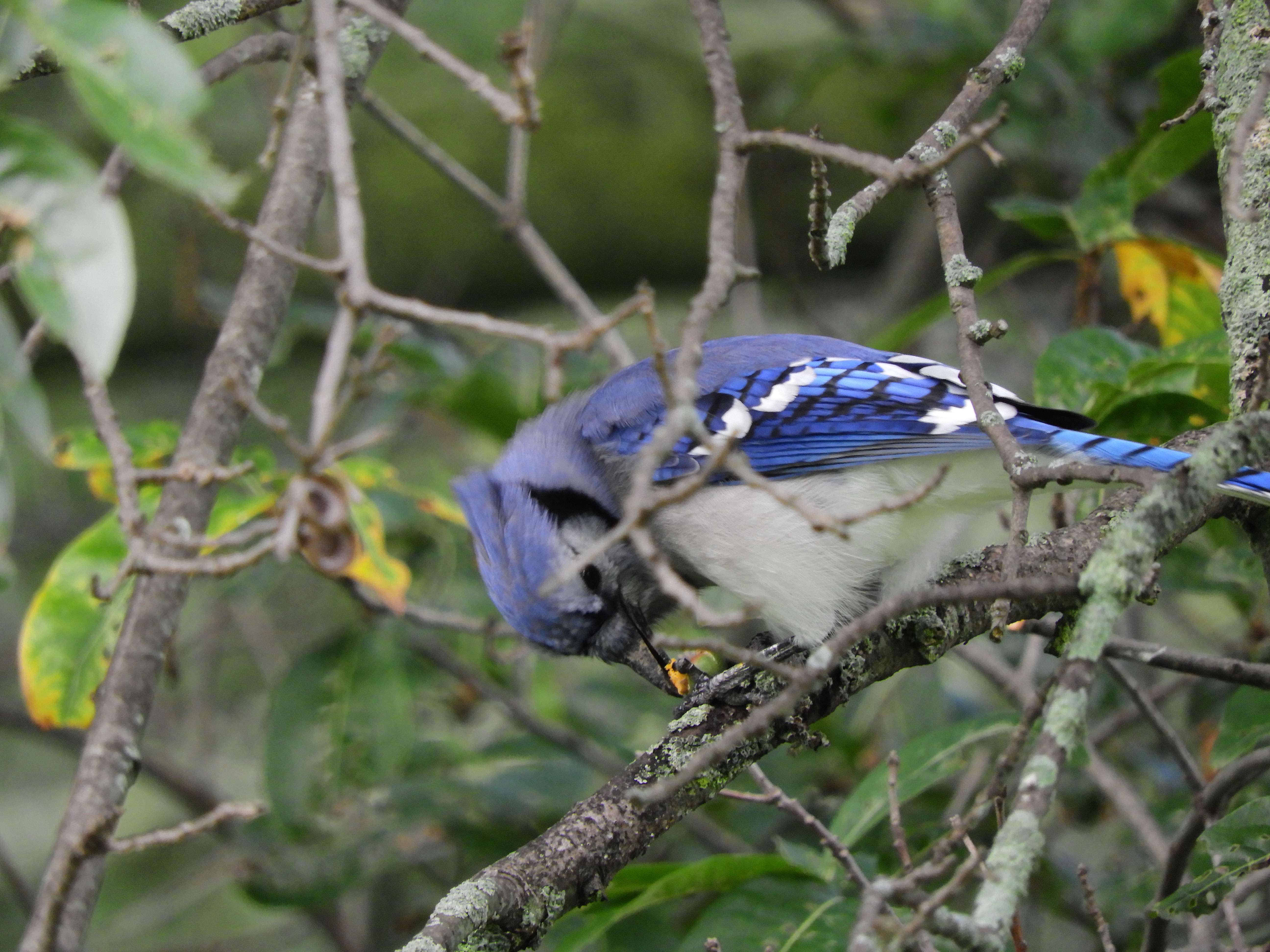
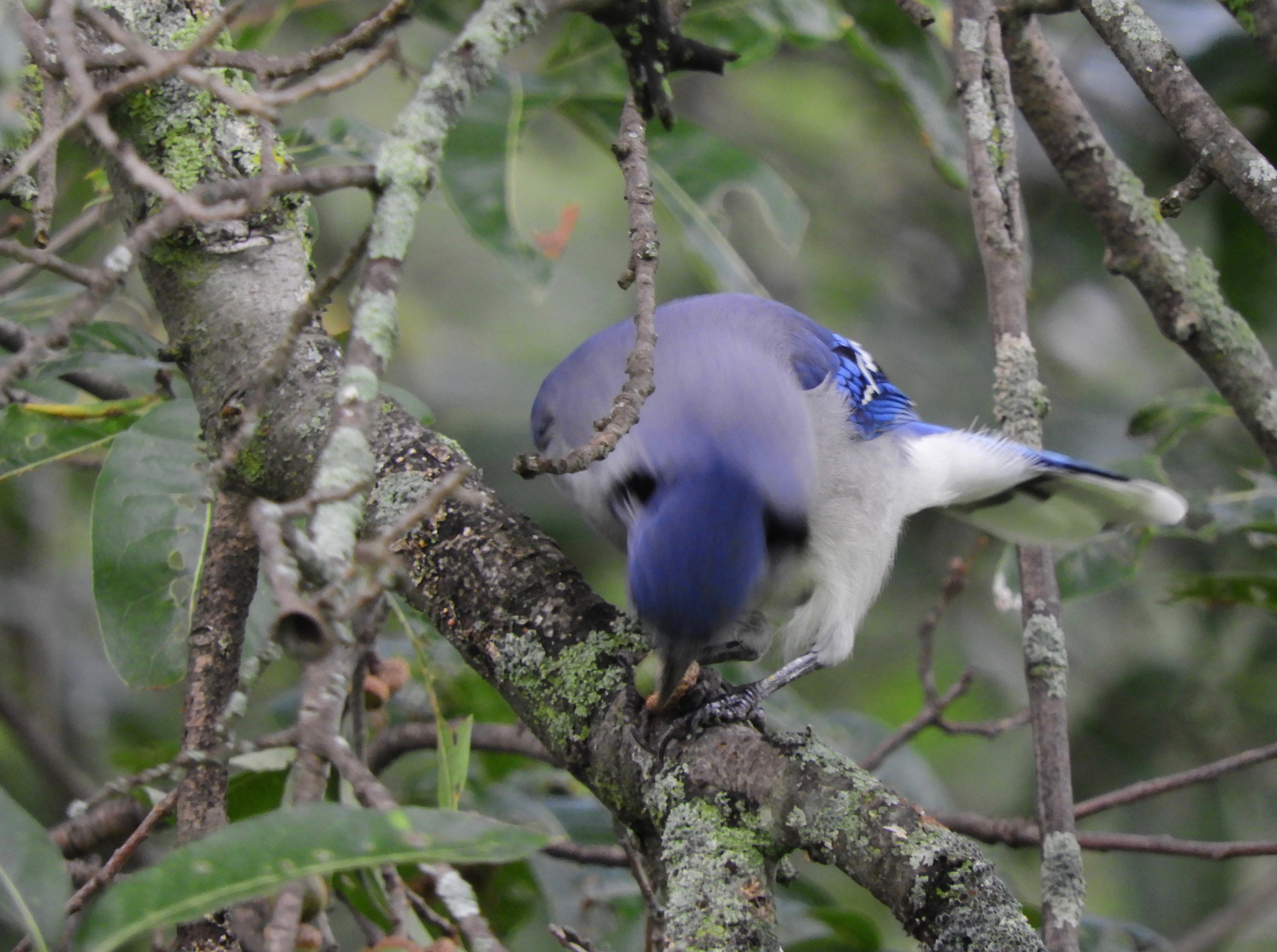
I stopped to watch while many of them (perhaps 10 or 20) excitedly fed on the acorns of a couple of specimen Shingle Oaks. There was a non-stop clamour of jays coming to these two trees to feed, an endless feast although I couldn’t be sure if it was the same few birds feeding, leaving and returning or whether there was a constant stream of new arrivals feeding for a few minutes and then moving on. In any event, the feeding was still going on two hours later on the return leg of my morning transect.

The flight was a spectacle of its own but the choice of food curious: there are many Red, Black and Pin Oaks in the arboretum, all bearing acorns, yet the jays were favouring the Shingle Oaks, a more southern oak that does not occur naturally in Ontario. Does the smaller size of Shingle Oak acorns make them easier to deal with? Is Shingle Oak tastier and do birds have a sense of taste anyway?  Maybe. They were extracting the meat rather than gulping them down the way European Jays do with the large acorns of English Oaks.

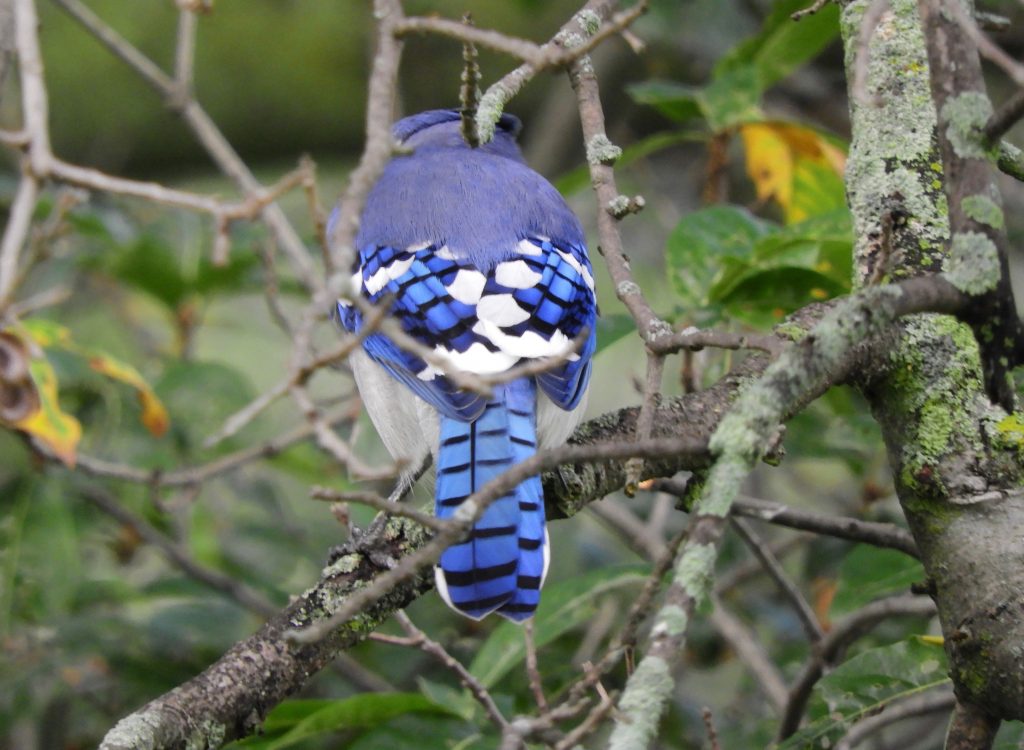
And, as that South African guest noted, what a gorgeous bird.

Gorgeous bird!

Swamp Sparrow

October 5 2019.  Hendrie Valley, Burlington, ON. Today’s birding was mundane at best. The sun shone all right but the wind was trouble, a howling Force 5 out of the east. Out of the east means that it has first swept the length of Lake Ontario raising whitecaps.  The day was cool but at another time of year such an easterly would make it bitterly cold, Lake Ontario’s 47 fathoms holds winter’s cold long into summer months.

Our valley is well sheltered but, on this day, birds knew better and preferred to stay low and out of sight. I struggled to find them and my meagre daily tally was built in ones and twos. I can usually count on a few Great Blue Herons, but the only one I saw had backed into a stand of cattails safe from gusts which, I suppose, might be treacherous for a bird that flies so lugubriously anyway and on such a wing spread.

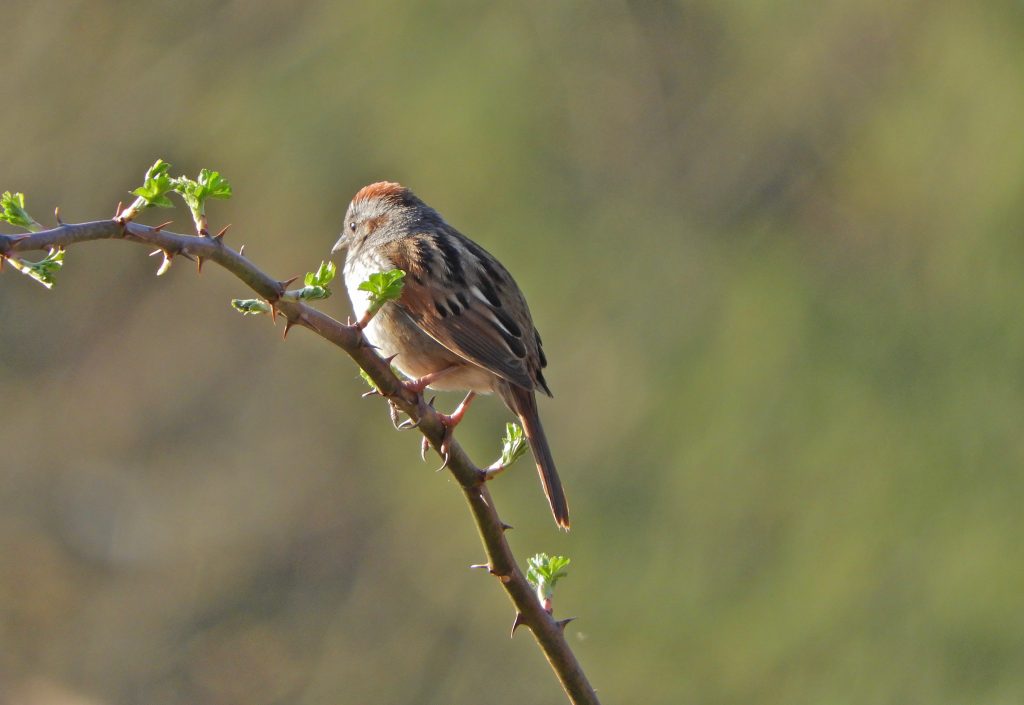
My Bird of the Day came as I threaded and slipped my way along a wet creek-side path. It was still mostly uninspiring going until I heard the cautious song of a Swamp Sparrow come from a reed bed some twenty or thirty feet away. Swamp Sparrows in spring and summer are, like most sparrows, inclined to be a bit reclusive but their song rings out across a marsh like a peel of bells. I was glad to hear it today, a welcome bright spot.

Swamp Sparrow